
东鹏饮料

Search documents
一周新消费NO.342|徐福记请全国人民吃1亿颗糖;东鹏饮料官宣闫妮代言海岛椰
新消费智库· 2026-01-04 13:04
New Consumption Highlights - Yili launched a garlic-flavored yogurt drink, a creative addition to its yogurt series with playful packaging [3] - Lays introduced a new Spring Festival limited series featuring Kung Fu Panda-themed packaging [3] - Watsons released an AI-designed series of Hong Kong landmark packaging for its distilled water products [3] - Heytea collaborated with Pop Mart for a second wave of co-branded products, including a tiramisu-flavored drink [4] - Yili announced plans to launch a -196°C frozen berry-flavored ice cream in 2026, utilizing liquid nitrogen technology [5] - Genki Forest upgraded its "Ice Blast Little Lime" sparkling water with a fresher lemon flavor and new packaging [7] - Nongfu Spring introduced a new "Pure Transparent Square Ice" product at Sam's Club, designed for wine and cocktail use [7] - Manner launched a winter specialty drink, grapefruit hot Americano, available from December 30 [8] - Guming began selling bottled juices in select stores, including 100% HPP apple juice [10] - Xu Fu Ji plans to distribute 100 million candies nationwide as part of a promotional campaign [12] - JD.com will fully implement national subsidies for various home appliances and electronics starting January 1 [15] - Cafe Deco Group from Hong Kong filed for an IPO in the US, aiming to raise up to $13 million [12] - The new Chinese health drink market is projected to reach a scale of 10 billion yuan, driven by the trend of convenient health solutions [12] - Qinghua Fenjiu was recognized as a world-renowned wine town, highlighting its significance in the liquor industry [12] Industry Events - Wuliangye received the Most Investment Value Listed Company award at the 2025 Jin Junma Awards [12] - JD.com announced a partnership with the national subsidy program to support consumer electronics purchases [15] - UU Delivery launched a cross-year rescue service in 20 cities to address transportation challenges during New Year's Eve [16] - Longan's Deep Blue Automotive secured over 6.1 billion yuan in Series C financing to support its electric vehicle platform [20] - Neurable, a brain-computer interface headphone brand, raised $35 million in Series A funding for commercialization [20] - Micro-Nano Star completed a 1 billion yuan Series D financing round, recognized for its capabilities in satellite manufacturing [20] Food Industry Developments - Nissin Foods announced its first foray into the ice cream business through the acquisition of Seria Roile [28] - Hema launched its 2026 New Year Festival, featuring a wide range of festive products [28] - Pizza Hut tested the night snack market with a new brand, Pizza Grill Skewers, in Shanghai [28] - Orion plans to invest 11 billion won to expand its production facilities in Russia by 2027 [28] - Yi Li released its first interactive drama short film in the dairy industry [28] - Xiangpiaopiao announced plans to establish subsidiaries in Singapore and Thailand, investing 268 million yuan in a beverage production base [28] New Brand Initiatives - FILA Kids opened a new store at Beijing Universal City, enhancing its retail strategy [33] - Adidas launched a new pet clothing line inspired by traditional Chinese aesthetics [33] - Kidswant opened a new flagship store in Beijing, marking a significant expansion in high-line cities [35] - Hunter opened its first store in Jiangsu, focusing on a nature-inspired shopping experience [36] - Arome Manpo launched its first flagship store in Shanghai, emphasizing a unique design concept [38]


元旦客流引领复苏,空调提价打响反内卷
Yin He Zheng Quan· 2026-01-04 11:19
Investment Rating - The report indicates a positive outlook for the service consumption sector, particularly in light of the government's efforts to stimulate consumer spending through various holidays and subsidies [1][4]. Core Insights - The report highlights a significant increase in service consumption during the New Year holiday, with a total of 590 million people expected to travel, marking a 19.5% year-on-year increase [2]. - The introduction of a large-scale subsidy program for replacing old appliances is expected to boost consumer spending, with an initial allocation of 62.5 billion yuan (approximately 9.1 billion USD) for 2026 [4]. - Midea's decision to raise air conditioner prices is seen as a strategic move to counteract intense competition in the industry, with price increases of 2% and 4% planned for early January [4]. Summary by Sections Service Consumption Growth - The report notes that during the New Year holiday, railway passenger volume is projected to reach 48.22 million, a 53.1% increase year-on-year, while road travel is expected to account for 540 million people, up 15.5% [2]. - The recovery in travel is anticipated to drive growth in the cultural tourism, hotel, and restaurant sectors, making service consumption a key driver of domestic demand recovery [2]. Domestic and International Tourism - The report indicates a substantial increase in inbound tourism, with ticket bookings for inbound travel during the New Year holiday rising by 110% year-on-year [3]. - Major cities like Shanghai, Beijing, and Guangzhou remain popular among international tourists, while smaller cities like Dali and Xishuangbanna have seen a threefold increase in inbound visitors [3]. Government Subsidies and Industry Response - The government has initiated a subsidy program for replacing old appliances, which is expected to support consumer demand during peak seasons like the New Year and Spring Festival [4]. - Midea's price adjustments are viewed as a necessary step to improve the competitive landscape of the air conditioning industry, which has faced rising costs due to increased copper prices [4].
量化大势研判 202601:宜攻守兼备:成长+质量
Minsheng Securities· 2026-01-04 07:25
- The report introduces a quantitative framework for market trend analysis, emphasizing the inherent attributes of assets and their lifecycle stages, categorized into five styles: external growth, quality growth, quality dividend, value dividend, and bankruptcy value[6][7][10] - The framework prioritizes asset comparison using metrics such as expected growth (gf), actual growth (g), profitability (ROE), high dividend (D), and bankruptcy value (PB/SIZE), each tailored to specific lifecycle stages[7][10] - The quantitative model has demonstrated strong historical performance, achieving an annualized return of 27.45% since 2009, with notable positive excess returns in most years, particularly post-2017[17][20][18] - The report recommends three dominant styles for January 2026: expected growth, actual growth, and profitability, supported by metrics like Δgf, Δg, and ΔROE, all showing expansion trends[15][33][29] - Expected growth strategy selects industries with the highest analyst forecasted growth rates, achieving significant excess returns since 2019. Recommended sectors for January 2026 include automotive sales, home appliances, tungsten, emerging financial services, and lithium[37][39][36] - Actual growth strategy focuses on industries with the highest Δg and related factors (sue, sur, jor), showing strong long-term excess returns. Recommended sectors for January 2026 include photovoltaic equipment, electronic chemicals, lithium battery chemicals, aerospace military, and home appliances[39][40][36] - Profitability strategy targets industries with high ROE and low PB-ROE valuation residuals, with notable excess returns from 2016 to 2020. Recommended sectors for January 2026 include agriculture, liquor, power distribution equipment, non-dairy beverages, and network connection/tower setup[42][43][36] - Quality dividend strategy uses DP+ROE scoring to select industries, with significant excess returns in 2016, 2017, and 2023. Recommended sectors for January 2026 include forestry/processing, boiler equipment, public transportation, fuel cells, and network connection/tower setup[45][46][36] - Value dividend strategy employs DP+BP scoring, achieving notable excess returns in 2009, 2017, and 2021-2023. Recommended sectors for January 2026 include security, daily chemicals, pet food, buses, and network connection/tower setup[48][50][36] - Bankruptcy value strategy selects industries with the lowest PB+SIZE scores, showing strong excess returns in 2015-2016 and 2021-2023. Recommended sectors for January 2026 include automotive sales, ceramics, cotton textiles, dyeing, and building decoration[52][53][36]
多点发力激活高质量发展新引擎
Xin Hua She· 2026-01-04 03:45
Group 1: Transportation Infrastructure and Economic Development - The recent opening of the Urumqi to Yili Expressway enhances the integration of logistics systems, releasing strong development momentum [3] - The Yangshan Port is a key support for Shanghai's international shipping center, becoming a comprehensive logistics hub and a platform for port and shipping technology advancements [6][8] - The Urumqi-Yili Expressway opens new pathways for cultural and tourism integration, positioning Urumqi as a "tourism transit hub" to stimulate local tourism consumption [7] Group 2: Industry Innovation and Market Expansion - Dongpeng Beverage, named after Shenzhen, is continuously innovating and focusing on niche markets, leveraging "small beverages" to create significant market impact [10] - The introduction of PET bottles with dust-proof caps by Dongpeng in 2009 has gained widespread market acceptance, enhancing consumer trust [12] - Dongpeng has developed a medium-temperature filling technology that allows beverages to be filled at 65°C to 70°C, maintaining quality while reducing plastic bottle weight, energy consumption, and costs [13] Group 3: Green Transformation in Logistics - The Chinese express delivery industry is advancing its green transformation, with ongoing policy support, technological empowerment, and practical enterprise initiatives showing continuous results [15] - Technological innovation, particularly the application of AI in packaging design, is becoming a crucial driver for green transformation in the logistics sector [17] Group 4: Overall Development Trends - Various regions are focusing on transportation infrastructure to enhance regional connectivity, open hubs to facilitate internal and external circulation, and innovate industries for quality improvement, collectively showcasing development vitality and painting a new picture of high-quality development [19]

2025年1-11月中国饮料产量为16560.6万吨 累计增长3.3%
Chan Ye Xin Xi Wang· 2026-01-04 03:36
Group 1 - The core viewpoint of the article highlights the growth trends in China's beverage industry, with a reported production of 10.46 million tons in November 2025, reflecting a year-on-year increase of 0.4% [1] - Cumulative beverage production from January to November 2025 reached 165.61 million tons, showing a cumulative growth of 3.3% [1] - The article references several listed companies in the beverage sector, including Yangyuan Beverage (603156), Chengde Lolo (000848), Dongpeng Beverage (605499), and Junyao Health (605388) [1] Group 2 - The data source for the beverage production statistics is the National Bureau of Statistics, with additional analysis provided by Zhiyan Consulting [2] - Zhiyan Consulting is recognized as a leading industry consulting firm in China, specializing in in-depth industry research reports and tailored consulting services [2] - The report titled "Analysis of the Market Operation Pattern and Future Prospects of the Beverage Industry in China from 2026 to 2032" is mentioned as a relevant document for further insights [1]


新华视点丨多点发力激活高质量发展新引擎
Xin Hua Wang· 2026-01-04 03:30
■航路拓宽增动能 港航经济向新而行 近期,各地聚焦交通赋能、开放拓局、产业升级、绿色转型,统筹协同发力,释放发展新活力,书写高质量发展坚实答卷。 ■高速贯通激活联动 商贸文旅双向赋能 作为全疆重要的国际、国内商贸物流枢纽,乌鲁木齐借助乌尉高速通车的契机,为商贸物流枢纽建设筑牢支撑。 近日,新疆乌鲁木齐至尉犁高速公路全线通车,这条新动脉与既有物流体系深度融合,正释放强劲发展动能。 洋山港作为上海国际航运中心建设的关键支点、全球航运市场的重要坐标,已经成为航运综合物流枢纽、港航技术跃升平台和高水平对外开放窗 口。 乌尉高速为乌鲁木齐文旅融合发展开辟了新路径,以"南北疆美景触手可及"为切入点,乌鲁木齐正借势打造"旅游中转枢纽",激活本地文旅消费 市场。 作为链接国内、国际双循环的重要枢纽航点,上海港加速了资源要素流动,便利了跨境贸易运输,更提升了城市经济运行功能。 未来,洋山北侧开发将成为新的增长极。小洋北工程作为国家重点项目,对于提升长三角世界级港口群整体竞争力具有重大战略意义。 着眼于更卫生、让消费者饮用更放心,2009年东鹏特饮推出PET瓶加防尘盖的设计,受到市场广泛欢迎。 ■科创赋能优供给 小饮品撬动大市场 ...

2025年谁流落亏损榜?“亏损王”爱调仓折腾,多位知名老将在列
Feng Huang Wang· 2026-01-03 23:21
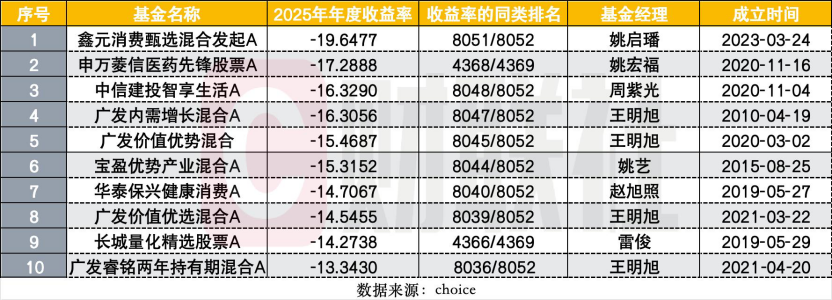
Core Viewpoint - The A-share market in 2025 exhibited a clear structural bull market, with significant performance disparities among active equity funds, highlighted by the top-performing fund achieving a record annual return of 233.29% while others faced substantial losses, including the worst performer with a -19.65% return [1][4]. Group 1: Market Performance - The Shanghai Composite Index, Shenzhen Component Index, ChiNext Index, and Sci-Tech Innovation 50 Index rose by 18.41%, 29.87%, 49.57%, and 35.92% respectively in 2025 [1]. - A total of 4888 active equity products from 160 public fund institutions reported positive returns, while 144 products from 68 institutions experienced losses [1][9]. Group 2: Fund Performance Disparities - The top-performing fund, Yongying Technology Smart Selection, achieved a record annual return of 233.29%, surpassing the previous record set by Wang Yawei in 2007 [1]. - The worst-performing fund, Xinyuan Consumption Selection, recorded a -19.65% return, marking a significant gap of 252.94% from the top performer [2][4]. Group 3: Xinyuan Consumption Selection Analysis - Xinyuan Consumption Selection's poor performance is attributed to aggressive trading strategies, frequent personnel changes, and scale challenges, leading to a lack of coherent investment logic [3][5]. - The fund's industry allocation showed erratic shifts, moving from heavy investments in pharmaceuticals to technology and later to media, missing key market trends [5][6]. Group 4: Fund Manager Insights - Notable fund managers, including Wang Mingxu and Han Weijun, saw their products listed among the worst performers, with their total managed assets shrinking by over 70% compared to previous peaks [3][9][12]. - Xinyuan Consumption Selection faced a critical challenge to meet its scale assessment, needing to grow from 0.29 billion to 2 billion within three months [7][8]. Group 5: Institutional Investment Trends - Institutional ownership in Xinyuan Consumption Selection dropped from over 95% to 42.94% by mid-2025, indicating a significant withdrawal of institutional funds [7]. - The trend of multiple products from the same fund manager appearing on the loss list highlights a broader issue within the industry, affecting even previously successful managers [9][10].
食品饮料行业周报:茅台市场化探索,看好大众品出行需求-20260103
国泰海通· 2026-01-03 08:19
Investment Rating - The industry investment rating is "Overweight" [16] Core Insights - The report highlights that the consumer sector is expected to rebound as domestic demand is elevated to a strategic position. The liquor sector is accelerating its bottoming process towards supply-demand balance. The demand for soft drinks, snacks, dining, and dairy products is anticipated to improve due to travel and gift box-related consumption [3][4] Summary by Sections Investment Recommendations - The investment strategy focuses on growth as the main line, emphasizing opportunities at supply-demand clearing points. Key recommendations include: 1. Preferred stocks with price elasticity: Kweichow Moutai, Wuliangye, Luzhou Laojiao, and those expected to clear inventory: Yingjia Gongjiu, Gujing Gongjiu, Shanxi Fenjiu, Jianshiyuan, Zhenjiu Lidu, Shede Liquor, and Jinhui Liquor [8] 2. Beverage stocks benefiting from travel demand: Dongpeng Beverage, Nongfu Spring (Hong Kong), and low valuation high dividend stocks: China Foods (Hong Kong), Master Kong Holdings (Hong Kong), and Uni-President China (Hong Kong) [8] 3. Growth stocks in snacks and food raw materials: Recommended stocks include Bailong Chuangyuan, Yanjinpuzi, Weilong Delicious (Hong Kong), Three Squirrels, and Ximai Foods [8] 4. Beer recommendations: Yanjing Beer, Tsingtao Brewery, Zhujiang Beer, and Bai Run Co., Huaren Beer (Hong Kong) [8] 5. Stable condiments and livestock production capacity reduction: Recommended stocks include Qianhe Flavor Industry, Baoli Foods, Ximai Foods, Babi Foods, Anji Foods, Haitian Flavor Industry, Angel Yeast, Yili Co., New Dairy, Youran Livestock (Hong Kong), and Modern Animal Husbandry (Hong Kong) [8] Liquor Sector - The liquor sector is in a process of bottoming out, with the industry accelerating its bottoming since Q3 2025. The report suggests that the clearing of financial statements will help reduce channel inventory pressure. Looking ahead to 2026, the price movements of leading brands like Moutai and Wuliangye are expected to stimulate sales, achieving a balance between volume and price. The macroeconomic and policy environment is anticipated to catalyze positive expectations for the consumer sector, with liquor being a cyclical asset that has entered an accelerated adjustment phase [11][12] Consumer Goods - The report notes that good traffic flow during the New Year period will benefit food and beverage demand related to travel. From December 31, 2025, to January 2, 2026, the nationwide cross-regional personnel flow is expected to grow by 25.4%, 20.3%, and 13.4% year-on-year, respectively. This positive flow is likely to enhance demand for soft drinks, snacks, and dining. Additionally, the relatively late timing of the 2026 Spring Festival is expected to favor the release of gift-related demand for snacks, soft drinks, and dairy products in Q1 2026 [13][14] Profit Forecast and Valuation - The report includes a profit forecast and valuation table for key stocks as of January 2, 2026, indicating expected earnings per share (EPS) growth and price-to-earnings (PE) ratios for various companies, with Kweichow Moutai having a market cap of 172.46 billion and an EPS forecast of 75.57 yuan for 2026, reflecting a 5% CAGR [15]

你好!港股
Guo Ji Jin Rong Bao· 2026-01-03 07:28
Core Insights - The Hong Kong stock market is experiencing a significant resurgence in 2025, with 114 new IPOs and a total fundraising amount of 286.3 billion HKD, marking a 63% increase in new listings and over 200% growth in fundraising compared to 2024, reclaiming the top position in global IPOs after four years [1][3][26] IPO Market Performance - The year 2025 saw a total of 114 new stocks listed on the Hong Kong Stock Exchange, a substantial increase from 70 in 2024 [1][3] - The total fundraising amount reached 286.3 billion HKD, representing a growth of over 200% year-on-year [1][3] - Eight new stocks raised over 10 billion HKD each, with Ningde Times raising 41 billion HKD, becoming the second-largest IPO globally [3] New Stock Subscription Records - The market witnessed record-breaking subscription rates, with Jin Ye International Group achieving a subscription multiple of 11,465 times, the highest in Hong Kong's history [4] - The IPO of Mixue Group saw a frozen capital scale of 1.84 trillion HKD, making it the "frozen capital king" of Hong Kong IPOs [4] - The IPO failure rate dropped to 28.83%, the lowest in five years, indicating a strong market sentiment [4] Company Listings and Trends - The new listings in 2025 can be categorized into three tiers: new consumer brands, A+H listed companies, and resilient companies transitioning from A-share failures [5][6][8] - New consumer brands like Mixue Group and Lin Qingxuan have shown strong market performance, with Mixue Group's market value reaching 109.3 billion HKD [7][8] - A+H listed companies contributed significantly to the IPO recovery, with 19 such companies raising about 50% of the total fundraising [8] Market Dynamics and Future Outlook - The IPO market is expected to remain active in 2026, with over 300 applications pending, predicting around 160 new listings and a total fundraising of at least 300 billion HKD [15][18] - The influx of southbound capital and selective foreign investment is reshaping the market structure, with domestic investors gaining significant pricing power [22][24] - The trend of A-share companies seeking dual listings in Hong Kong is likely to continue, supported by favorable policies encouraging domestic companies to list abroad [17][18] Capital Market Evolution - The capital market is witnessing a shift in funding structure, with southbound capital net purchases reaching nearly 1.41 trillion HKD, a record high [22] - The integration of companies into the Hong Kong Stock Connect is enhancing liquidity and valuation, creating a positive cycle for listed firms [22][24] - Companies are increasingly focusing on operational efficiency and sustainable growth to attract capital, moving away from mere storytelling [20][21]





食品饮料2026年投资策略报告:曙光渐显,在分化中前行-华源证券
Sou Hu Cai Jing· 2026-01-02 10:33
Group 1 - The report focuses on the food and beverage industry, highlighting the performance in 2025 and investment opportunities in 2026, with ROA (Return on Assets) as a key indicator for recovery [1][2] - The industry is currently in a differentiated recovery phase, with varying recovery paces across segments; soft drinks and snacks are leading, while liquor is still in the destocking phase [1][2] - The experience from Japan's consumption differentiation in the 1990s serves as a reference, emphasizing the importance of meeting consumer needs for cost-effectiveness and health [1][10] Group 2 - Investment strategies for 2026 focus on two main lines: "price" and "volume," with rising CPI expected to drive valuation recovery in traditional high-penetration sectors like liquor and dairy [2][3] - Key investment targets include leading brands in liquor (e.g., Kweichow Moutai, Luzhou Laojiao), dairy (e.g., Yurun Dairy, China Shengmu), and beer (e.g., Tsingtao Brewery) [2][3] - The report identifies three directions for volume growth: cost-effective consumption, low-penetration segments benefiting from health trends, and overseas market expansion [2][3] Group 3 - The industry is expected to progress through differentiation, with segments showing potential for valuation recovery as ROA stabilizes, while segments aligned with cost-effectiveness and health trends will continue to grow [3][10] - The report suggests that companies with efficiency and innovation advantages will further solidify their competitive positions [3][10]
