零跑汽车

Search documents
市场最前沿|记者手记:从两个“百万”看中国新能源汽车产业的量质齐升
Xin Hua She· 2026-01-08 11:49
Core Insights - The Chinese electric vehicle (EV) industry is experiencing a dual breakthrough in scale and brand, as evidenced by multiple companies, including NIO, Leap Motor, and Xpeng, each producing their one-millionth vehicle [1] - The collaboration between Huawei and JAC Motors to create the high-end model, the Zunji S800, signifies a shift in the luxury EV market, breaking the price barrier of 1 million yuan [1] Industry Overview - The production of one million vehicles by new energy vehicle manufacturers marks a significant milestone, reflecting both the growth of individual companies and the overall advancement of the Chinese EV sector [1] - The Chinese automotive industry is undergoing a transformation, with new players like NIO, Li Auto, and Xpeng leading the charge by moving away from traditional fuel vehicles and embracing electric and intelligent technologies [1] Technological Advancements - Huawei's comprehensive smart vehicle solutions, including the Harmony cockpit and advanced driving systems, position the Zunji S800 at the forefront of automotive intelligence [1] - The partnership between technology firms and automotive manufacturers is reshaping the industry, creating a new ecosystem that enhances manufacturing and innovation [1] Market Performance - In the first eleven months of 2025, China's new energy vehicle production and sales reached 14.907 million and 14.78 million units, respectively, reflecting year-on-year growth of 31.4% and 31.2% [1] - The Chinese EV market is transitioning from survival mode to a focus on value creation, indicating a maturation of domestic brands [1]

全球汽车业2026八大猜想
Zhong Guo Qi Che Bao Wang· 2026-01-08 11:43
Group 1 - The global automotive trade is expected to face increased tensions in 2026, with significant downward pressure on trade growth predicted by organizations like the WTO and IMF, projecting growth rates of only 0.5% and 0.6% respectively, down from 2.4% in 2025 [2][3] - The rise of trade protectionism is a core driver of this tension, as various countries implement unilateral trade measures, disrupting the established rhythm of the global automotive supply chain and increasing uncertainty in international trade [3] Group 2 - The global electric vehicle (EV) market is anticipated to experience a slowdown in sales growth in 2026, with the U.S. market showing particularly pessimistic trends due to the cancellation of favorable policies under the Trump administration, leading to a significant drop in consumer purchasing intent [4][5] - In China, the growth forecast for domestic electric vehicle sales has been revised down from 16% to 14% for 2026, attributed to high base effects and the reintroduction of purchase taxes despite continued government subsidies [5] Group 3 - Chinese automotive companies are accelerating their localization strategies overseas, transitioning from simple vehicle exports to localized production and comprehensive system output, as evidenced by projects like Changan's factory in Thailand and BYD's plans in Hungary and Malaysia [6][7] - Major Chinese automakers are implementing diverse strategies to enhance localization, including CKD exports to reduce tariff costs and partnerships with local firms to quickly integrate into new markets [7] Group 4 - The collaboration model between Chinese and foreign automotive companies is evolving, moving from a "market for technology" approach to a deeper integration based on technology output and resource sharing, extending cooperation beyond China to global markets [8][9] Group 5 - 2026 is projected to be a pivotal year for the commercialization of Robotaxi services, with advancements in technology, policy support, and reduced costs driving the transition from pilot programs to large-scale operations [11][12] - In China, companies like Pony.ai and Baidu are achieving significant milestones in Robotaxi deployment, with Baidu's service reportedly handling over 250,000 fully autonomous orders weekly [12] Group 6 - The year 2026 is recognized as a critical period for the validation of solid-state battery technology, with multiple automakers planning to conduct vehicle testing, marking a significant step towards overcoming limitations of current lithium-ion batteries [13] - Chinese automakers are actively pursuing diverse technological routes for solid-state battery production, with companies like SAIC and GAC announcing plans for testing and production timelines [13] Group 7 - The integration of AI large models into the automotive sector is expected to redefine value creation in 2026, with advancements in smart driving and intelligent cockpit technologies enhancing user engagement and operational efficiency [14][15] - The market for AI-driven automotive services is projected to expand significantly, with estimates suggesting that the AI model-derived market could exceed 100 billion yuan by 2028 [15] Group 8 - 2026 is anticipated to be a key year for the mass production and delivery of humanoid robots by automotive companies, with significant advancements in technology and a focus on commercial applications across various sectors [16][17] - Companies like Tesla and Xpeng are leading the charge in humanoid robot development, with plans for large-scale production and deployment in industrial and service contexts [17]

2025AIEV销量榜出炉!华为、小米等七强围攻10万亿特斯拉
Xin Lang Cai Jing· 2026-01-08 11:43
Core Insights - Tesla remains the top seller in the smart electric vehicle (AIEV) market but faces its largest sales decline in history, with a 8.6% drop in 2025, resulting in total sales of 1.636 million units [2][39] - In 2025, seven leading Chinese smart electric vehicle companies collectively achieved sales that are double that of Tesla, indicating a significant competitive challenge [2][40] - Despite the sales decline, Tesla's market capitalization remains robust at over 1 trillion RMB, significantly higher than the combined market value of its Chinese competitors [4][40] Tesla - In 2025, Tesla delivered approximately 1.636 million electric vehicles globally, with the Shanghai Gigafactory contributing 851,000 units, accounting for over 52% of total deliveries [10][46] - The company faces increasing pressure from rapidly rising Chinese competitors in the electric vehicle market, which is impacting its market share [10][47] - Tesla's innovation pace in key areas like autonomous driving and battery technology has slowed compared to previous years, while local competitors are catching up [10][47] Chinese Competitors - Leap Motor achieved sales of 597,000 units in 2025, surpassing its target of 500,000 units, marking a significant milestone in its growth trajectory [3][50] - Hongmeng Zhixing delivered 589,000 units, establishing a strong presence in both mainstream and high-end markets, with a notable average transaction price of 390,000 RMB [16][52] - Xpeng Motors reported a 126% year-on-year increase, delivering 429,000 units, exceeding its target of 380,000 units, although some new models underperformed [21][57] - Xiaomi Motors delivered over 410,000 units, significantly exceeding its target of 350,000 units, despite facing brand challenges [23][59] - Li Auto's sales fell to 406,000 units, down 18.8% from its target of 640,000 units, reflecting competitive pressures [26][62] - NIO delivered 326,000 units, achieving a 46.9% year-on-year growth, although it did not meet its target of 440,000 units [34][69] Market Dynamics - The combined sales of the seven leading Chinese smart electric vehicle companies indicate a growing competitive landscape that is beginning to challenge Tesla's dominance [2][40] - The market capitalization of Tesla remains a significant barrier for Chinese competitors, who have substantial growth potential but currently lack comparable valuations [4][42] - The ongoing strategic adjustments by Tesla and its competitors highlight the dynamic nature of the electric vehicle market, with companies striving to innovate and capture market share [8][44]





汽车与零部件行业周报(2025.12.29-2026.1.4):2026 汽车以旧换新政策落地,中国一汽入股零跑汽车成为重要战略股东-20260108
Shanghai Securities· 2026-01-08 11:41
Investment Rating - The industry investment rating is "Hold" [2] Core Views - The automotive sector has shown a weekly increase of 1.49%, with the auto parts sub-sector performing the best at +3.55% [3] - The report highlights the implementation of a large-scale vehicle replacement policy in 2026, providing subsidies for scrapping and replacing vehicles, which is expected to stimulate demand [5] - In November, China's automotive market share reached 40% of global sales, indicating a strong position in the international market [6] Summary by Sections Market Summary - The automotive sector's weekly performance was +1.49%, ranking 5th among 31 primary industries [3] - The average daily wholesale volume of domestic passenger cars was 118,900 units, down 13% year-on-year, while the average daily retail volume was 89,800 units, down 12% year-on-year [4] Policy and Regulation - The National Development and Reform Commission and the Ministry of Finance announced a policy to support vehicle scrapping and replacement, offering subsidies of up to 20,000 yuan for new energy vehicles and 15,000 yuan for fuel vehicles [5] - The policy aims to boost the automotive market and encourage consumers to upgrade their vehicles [5] Strategic Investments - China FAW Group invested approximately 3.744 billion yuan in Leap Motor, becoming a significant strategic shareholder, which is expected to enhance both companies' competitive edge in the global market [7] - The collaboration aims to leverage Leap Motor's technology and FAW's international network for better market penetration [7] Investment Recommendations - The report suggests focusing on companies involved in intelligent vehicle technology, those with potential overseas sales, and parts manufacturers benefiting from domestic substitution effects [9] - Specific companies recommended include BAIC Blue Valley for complete vehicles and several firms for auto parts [11]
造车新势力10年沉浮:既分高下,也决生死
经济观察报· 2026-01-08 10:29
Core Viewpoint - The article discusses the evolution of China's new car-making forces over the past decade, highlighting the contrasting fates of companies like Leap Motor and Neta Auto, and the emergence of new players like Xiaomi and Huawei's Hongmeng Zhixing [2][4]. Group 1: Market Dynamics - By 2025, Leap Motor is projected to achieve nearly 600,000 annual sales, becoming the sales champion among new car-making forces, while Neta Auto faces auctioning due to its decline [2]. - The number of new car-making enterprises has drastically reduced from over 60 in 2015 to only a few that still report sales [2]. - The new rankings for 2025 among new car-making enterprises include Leap Motor, Hongmeng Zhixing, Xiaopeng, Li Auto, Xiaomi, and NIO [2]. Group 2: Rise of New Players - Leap Motor's sales reached 597,000 units in 2025, a 103% increase year-on-year, marking its first time at the top of the sales chart [4]. - Hongmeng Zhixing, although not a traditional new car-making force, has seen rapid growth with its AITO brand, achieving 445,000 units in 2024 and 589,000 units in 2025, a 32% increase [5]. - Xiaomi, entering the market later, achieved 120,000 units in its first year of delivery and 412,000 units in 2025, surpassing NIO, which has been in the market for ten years [5]. Group 3: Challenges for Established Players - NIO, once a leader, saw its sales drop to 326,000 units in 2025, despite launching new brands and models to regain market share [8]. - Xiaopeng Motors sold 429,000 units in 2025, a 126% increase, but faced challenges with product positioning and market competition [9]. - Li Auto's sales fell to 405,900 units in 2025, a 19.6% decline, as it struggled to meet its annual target of 640,000 units [10]. Group 4: Industry Consolidation - Many once-prominent new car-making enterprises have disappeared, categorized into three groups: those that failed before mass production, those that made strategic errors, and those that faced funding issues [12][13][14]. - The industry has undergone a brutal elimination process, with only a few companies remaining competitive as they face increasing pressure from new entrants and established brands [14]. - The next decade is expected to be even more complex, testing the operational efficiency and competitive capabilities of the remaining players [15].


乘用车全球化策略:从全面扩张走向分市场、分主体的结构性出海
Soochow Securities· 2026-01-08 09:35
Group 1: Global Market and New Energy Penetration Forecast - The overall global passenger car sales are projected to reach 9,015 million units by 2026, with a growth rate of 1.7% year-on-year [16] - In Europe, the new energy penetration rate is expected to exceed 30% by 2026, driven by the launch of affordable models and the reintroduction of subsidies [2][34] - Southeast Asia is anticipated to see a new energy penetration rate of 19% in 2026, with significant contributions from Chinese automakers and local manufacturers [2][37] Group 2: Chinese Automakers' Global Market Share Forecast - The potential export market for Chinese automakers is estimated at 27 million units, with an export potential of approximately 9.08 million units by 2025 [3][5] - The market share ceiling for Chinese brands in regions prioritizing local brand development is expected to be lower compared to markets that do not emphasize local brand cultivation [5] - By 2025, the export share of new energy vehicles is projected to reach 42%, with BYD being a major contributor to this growth [3] Group 3: Export Predictions for Automakers - BYD is expected to have a high market match across most regions, particularly in Oceania and the UK, where there are minimal structural constraints [9] - Chery's core markets with the highest external environment match include Russia, Central Asia, and the Middle East, while the EU market presents more constraints [9] - Great Wall Motors is well-positioned in markets with stable demand for SUVs and pickups, particularly in the Middle East and Africa [9] Group 4: Investment Recommendations - The report suggests prioritizing investment in automakers with mature overseas systems and proven execution capabilities, specifically recommending BYD, Great Wall Motors, and Chery [11] - The export volume of various automakers is expected to increase significantly, with Chery projected to have an export share of 42% by 2026 [10] - The overall export volume for Chinese automakers is forecasted to reach 745,000 units by 2027, with a year-on-year growth rate of 13% [12]




CES2026上,中国具身企业拉爆海外......
具身智能之心· 2026-01-08 09:30
Group 1: CES 2026 Overview - The CES 2026 in Las Vegas showcased over 4,000 exhibitors, with 942 Chinese companies participating, accounting for approximately 22% of the total, making China the second-largest exhibiting country globally [4] - This year's focus was on AI and hardware, with a notable increase in the presence of Chinese brands [3] Group 2: Embodied Intelligence Sector - Among the 38 humanoid robot exhibitors, 21 were from China, representing 55% of the total, indicating a shift towards showcasing engineering delivery capabilities and real-world operational abilities [6] - Chinese company UniX AI gained significant media attention at CES, being featured in major global news outlets shortly after its presentation [6] - Unitree showcased its H1 humanoid robot, which has a 360-degree perception capability and a 15 kg load capacity suitable for industrial inspections [7] - Galaxy General demonstrated a collaborative operation between humanoid and quadruped robots, introducing a new outdoor inspection model with enhanced environmental adaptability and an 8-hour battery life [9] Group 3: Autonomous Driving Sector - Companies like Geely, Great Wall, Leap Motor, and New Stone presented their products at CES, indicating that autonomous driving is becoming a consumer product [11] Group 4: AI Glasses and Consumer Products - Among the 23 AI glasses brands, nearly 70% were Chinese, including Alibaba, XREAL, and Thunderbird [15] - Domestic brands like TCL and Hisense showcased their strengths, while emerging brands like MOVA and Yingshi also made their presence felt [17]

车市2025|从监管智驾到准许L3上路 十大事件解码多维博弈
Xin Jing Bao· 2026-01-08 08:45
Core Insights - The Chinese automotive market in 2025 is undergoing a multifaceted transformation driven by policy regulations, capital restructuring, technological breakthroughs, and safety standards, marking a significant shift from mere technological iterations to a comprehensive industry evolution [1] Regulatory Changes - The Ministry of Industry and Information Technology (MIIT) has mandated that automotive companies clarify system functionalities and safety responses, effectively ending the use of vague terms like "L2.999" and "quasi-L3" in marketing, promoting a focus on safety over flashy terminology [2] - A new regulation requires large enterprises to pay small and medium-sized suppliers within 60 days, significantly reducing the previous average payment period of 170-200 days, thus improving cash flow for smaller suppliers and enhancing the overall supply chain stability [3][4] Industry Restructuring - The establishment of the China Changan Automobile Group as a new state-owned enterprise marks a significant shift in the industry landscape, enhancing decision-making autonomy and financing capabilities, and allowing a concentrated focus on new energy and intelligent vehicles [5] - Dongfeng Group has accelerated its transformation by divesting inefficient fuel assets and focusing on high-end new energy brands, exemplifying a successful capital operation strategy in the traditional automotive sector [6][7] Safety and Quality Standards - New safety regulations for hidden door handles in vehicles emphasize that aesthetics should not compromise safety, requiring mechanical emergency functions to be retained in designs, thus addressing safety concerns in the industry [8] - A significant lawsuit against battery manufacturer Xinwanda highlights the critical importance of quality in the battery sector, as a major claim for 2.314 billion yuan has been filed due to quality issues, prompting a shift towards prioritizing quality over mere scale in the industry [12][13] Strategic Collaborations - A partnership between FAW Group and Leap Motor, involving a 3.74 billion yuan investment, illustrates a strategic collaboration aimed at leveraging each other's strengths in manufacturing and technology, potentially enhancing both companies' market positions [14]
【快讯】每日快讯(2026年1月8日)
乘联分会· 2026-01-08 08:38
Domestic News - The Ministry of Industry and Information Technology and seven other departments have issued an implementation opinion to accelerate the integration of artificial intelligence in industrial mother machines and industrial robots, focusing on developing new-generation AI numerical control systems and conducting tests for intelligent connected vehicles [7] - Hefei's 14th Five-Year Plan emphasizes the growth of emerging industries, particularly in sectors like "chip, display, automotive, and integration," aiming to enhance the scale and advantages of leading industries, including smart connected new energy vehicles [8] - Geely Auto has obtained an L3-level autonomous driving road test license in Hangzhou, which is the largest in terms of area and mileage in the country, allowing access to over 7,000 traffic data points [9] - Dongfeng Motor plans to start localized production of passenger vehicles in Turkey within the year, targeting a market with an annual sales volume of approximately 1.4 million vehicles [10] - Li Auto has launched a total of 3,900 Li Supercharging stations across 286 cities in China as of January 4, 2026 [11] - BAIC and Horizon Robotics have established a joint venture, Zhiyu Technology, focusing on core technologies for intelligent driving [12] - Baidu's Apollo Go has received the first full unmanned testing license in Dubai, marking a significant milestone in autonomous driving [13] - Intramco has partnered with Leap Motor to apply its charging products in Leap Motor's future European factory for electric vehicles [14] International News - Turkey's automotive market is projected to reach a record high of 1.37 million units in 2025, reflecting a year-on-year growth of 10.5% despite high taxes and tightening financing conditions [16] - Ford plans to launch a new driver assistance system by 2028, which will allow drivers to completely disengage from monitoring while driving [17] - Mercedes-Benz will introduce both fuel and electric versions of the next-generation S-Class, with separate platforms for each, indicating a strategic shift in their electric vehicle lineup [18] - Mobileye intends to acquire the humanoid robot manufacturer Mentee Robotics for $900 million, aiming to enhance its capabilities in autonomous driving and robotics [19] Commercial Vehicles - Henan Province will exempt hydrogen fuel trucks from tolls on expressways until the end of 2027, and electric trucks will receive a 50% toll discount [21] - Foton's Oumark has launched the "Zhi Nuan Core" thermal management system for electric trucks, addressing winter operational challenges with advanced temperature control technologies [22] - The Long-distance company has introduced its 3.0 generation product matrix, focusing on AI integration and high-efficiency solutions for various commercial vehicle segments [23] - Chongqing has released policies to support the development of intelligent connected new energy commercial vehicles from 2025 to 2027, including incentives for R&D and financing [24]


实探车市:宝马有车型降30万,小米销售坐收新SU7订单
3 6 Ke· 2026-01-08 08:32
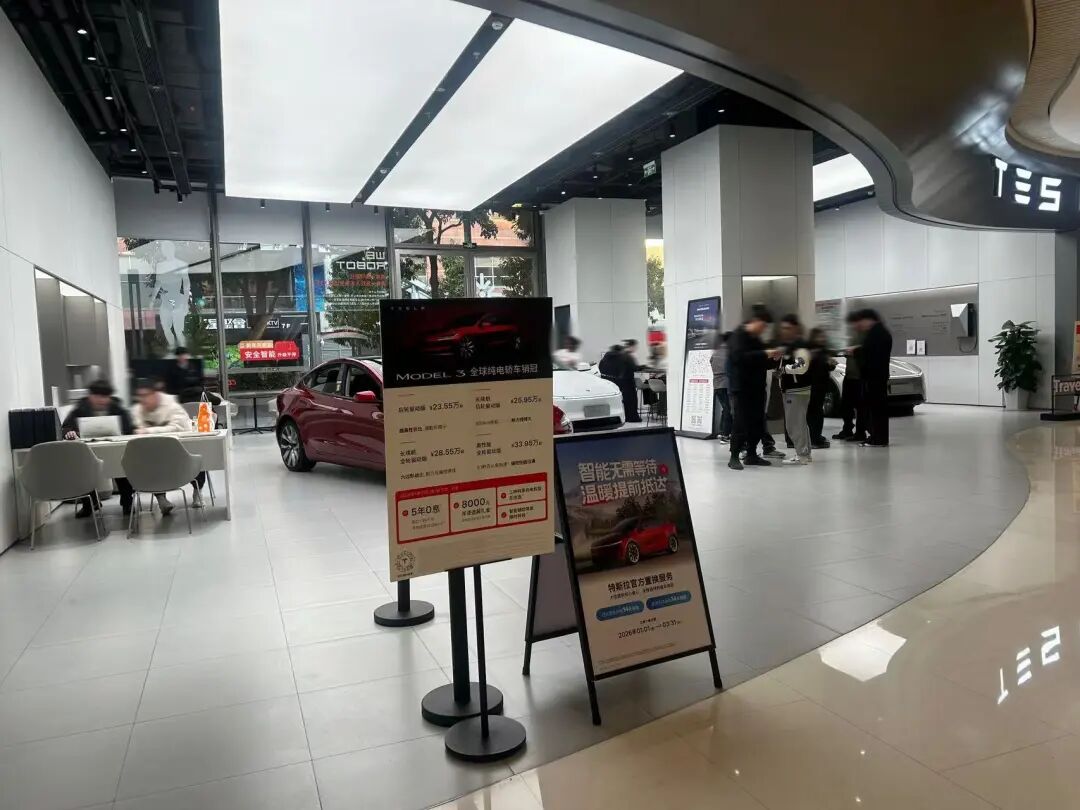
Group 1 - The automotive industry is experiencing intensified competition at the beginning of the year, with various companies launching promotional activities to attract consumers in response to new policies such as halving the new energy vehicle purchase tax and adjusting national subsidies [1][7] - Tesla introduced a limited-time long-term purchase plan on January 6, which attracted a significant number of consumers, indicating strong interest in their financial policies [1][9] - Xiaomi announced the new generation SU7 and a 3-year interest-free financing plan for the YU7, showing confidence in the market for 2026 [1][13] Group 2 - BMW adjusted the prices of multiple models at the start of the year, with the largest price drop of 301,000 yuan for the i7 M70L, reflecting a proactive response to market dynamics [2][6] - The price adjustments by BMW do not affect popular models like the 3 Series and 5 Series, which continue to have significant discounts at the terminal level [5][6] - Other companies, such as Zeekr and Haopai, are also offering new incentives in response to the reduction in purchase tax, including substantial subsidies for early buyers [7][11] Group 3 - The introduction of new models is also a key focus, with Xiaomi's new generation SU7 set to launch in April 2026, and Xiaopeng's new models undergoing winter testing [13][14] - BYD is responding to consumer demand for long-range hybrid vehicles by launching models with a pure electric range exceeding 210 km, in line with new regulations [15] - The overall market dynamics for 2026 are expected to be influenced by early national subsidies and the upcoming Spring Festival, with optimistic growth projections for January [15]