
雀巢

Search documents
“苏超”燃爆:“吸金力”飙升,品牌玩梗出圈
Guo Ji Jin Rong Bao· 2025-07-09 10:05
Group 1 - The "Su Super" league has set a new attendance record for amateur football events in China, with 60,396 fans attending the match between Nanjing and Suzhou [1] - The league's innovative model of "events + culture + consumption" is driving deep integration of economic and cultural development in Jiangsu, serving as a national example for sports IP empowering urban development [3] - The popularity of "Su Super" is leading to a chain reaction, with other provincial leagues following suit, indicating a shift from "single-point breakthroughs" to "cluster development" in local sports events [4] Group 2 - The match between Nanjing and Suzhou has significantly boosted local consumption, with 254,000 viewers at 66 live viewing locations, generating a total foot traffic of 1.425 million and sales of 340 million yuan, alongside a 33.2% increase in local hospitality and dining revenue [5] - Jiangsu is integrating commercial, tourism, and cultural resources around event venues to create diverse and immersive consumption experiences, with a 305% increase in scenic area bookings and over 10 million yuan in sales of event-related products [6] - The total retail sales in Jiangsu reached 1.98839 trillion yuan from January to May 2025, marking a 5.6% year-on-year growth, with Suzhou and Nanjing leading the province [6] Group 3 - "Su Super" has evolved into a platform for regional cultural display, with matches incorporating local historical and culinary themes, enhancing audience engagement and regional pride [7][8] - The interaction between brands and the league has become a highlight, with numerous sponsors joining, increasing from 6 to 27 in a short period, indicating a growing commercial interest in the league [9][10] - The competition for sponsorships is intensifying, with brands eager to secure partnerships, reflecting a healthy competitive environment despite some uncertainties in sponsorship terms and conditions [11]


一瓶988元,揭秘天价水的暴利真相
3 6 Ke· 2025-07-08 09:03
Core Insights - The bottled water business is fundamentally a game of distance and pricing [34] - The emergence of luxury bottled water brands is driven by unique marketing strategies and storytelling [21][32] Group 1: Luxury Water Branding - The high price of "Czech Floming Ice Age Water" at 988 yuan for 750ml is justified by its claimed rarity and historical significance [1][2] - Successful luxury water brands like Perrier and San Pellegrino leverage their historical narratives to enhance perceived value [6][14] - The concept of "bloodline" in luxury goods applies to water, where the source and story behind the water significantly influence its marketability [11][21] Group 2: Marketing Strategies - The marketing of bottled water often emphasizes the uniqueness of the water source, creating a compelling origin story that enhances its luxury appeal [12][18] - Brands like San Pellegrino position themselves as "meal companions," associating their products with high-end dining experiences to target affluent consumers [27][30] - The concept of Veblen goods is relevant, where higher prices increase demand due to the status associated with luxury consumption [33] Group 3: Industry Dynamics - The bottled water industry faces challenges related to transportation costs, which can significantly impact pricing strategies [34][36] - The necessity for brands to transition towards luxury positioning is driven by the inherent limitations of the bottled water category [37][39] - The strategic choices made by companies in the bottled water sector are often influenced by the nature of the product and market dynamics [38][40]

2025Q2线下零售速报
3 6 Ke· 2025-07-08 08:17
Overall Summary - The offline retail consumption situation for Q2 2025 shows a general decline in sales across major categories such as food, beverages, alcohol, and daily chemicals, although the rate of decline has narrowed compared to previous quarters [2][4][6]. Group 1: Retail Performance Overview - The analysis is based on data from the "Shangma Ying Brand CT," which monitors offline retail across various city levels and includes over 30,000 brands and 14 million product barcodes [2]. - The overall sales revenue for Q2 2025 is down approximately 7% year-on-year, with a better performance in order volume compared to average spending, indicating consumer pressure on budgets and prices [4][6]. - The price index for food, beverages, alcohol, and daily chemicals shows a gradual recovery, but remains under pressure, with most categories below the baseline index of 100 [4][6]. Group 2: Key Category Insights - In the food category, frozen products like frozen sausages have shown significant market share growth, while dairy products are stabilizing after previous declines [13][22]. - The beverage category has seen strong growth in sports and plant-based drinks, with some products exceeding 30% year-on-year growth, although the overall market remains competitive [17][29]. - The snack category is experiencing a decline in market share due to health trends and new retail formats, with significant drops in sales for various subcategories [14][22]. Group 3: Consumer Behavior and Trends - The average spending per order has increased for certain categories like ready-to-drink juices and plant-based beverages, indicating a shift in consumer preferences towards higher-quality products [34][35]. - The average purchase quantity per order has decreased across all selected categories, suggesting a trend towards larger packaging or a focus on value [40]. - The competitive landscape is intensifying, particularly in the frozen food and beverage sectors, with numerous brands vying for market share [46][47].


长红30多年,全球第一的冰淇淋公司要IPO
创业邦· 2025-07-07 10:27
Core Viewpoint - The article discusses the recent developments in the ice cream market, particularly focusing on the independence of Magnum Ice Cream Company from Unilever and the competitive landscape in China's ice cream industry. Group 1: Company Developments - On July 1, Magnum Ice Cream Company officially completed its separation from Unilever, which previously held a 20% global market share in the ice cream sector with brands like Cornetto and Magnum [5][6]. - The new company plans to go public with an IPO in Amsterdam by Q4 2025, with additional listings in London and New York [8]. - The ice cream market in China is projected to reach a scale of 183.5 billion yuan in 2024, indicating significant growth potential [18]. Group 2: Market Competition - The article highlights the competitive dynamics in the Chinese ice cream market, where local brands like Yili and Mengniu are gaining market share against Unilever [16]. - In 2024, the top three companies in the Chinese ice cream market by retail sales are Yili, Unilever, and Mengniu, with the leading brands being Chao Le Zi (Yili), Yili, and Kele Duo (Unilever) [16]. - The market is experiencing a surge in new entrants, with over 41,200 ice cream-related companies registered as of May 2023, indicating a rapidly evolving competitive landscape [21]. Group 3: Consumer Trends - The article notes that consumer preferences are shifting, with new tea and coffee brands entering the ice cream space, offering products at lower price points [31]. - Instant retail is becoming a significant channel for ice cream sales, with a projected sales scale of over 63 billion yuan by 2026 [34]. - The diversification of consumption scenarios for ice cream, including workplace snacks and outdoor activities, is becoming a trend, suggesting that brands need to adapt to changing consumer behaviors [34].



美国开心果有点不“开心”
Jing Ji Ri Bao· 2025-07-06 01:20
Core Insights - The pistachio market has experienced significant fluctuations, initially gaining popularity due to a viral chocolate product but later facing challenges from trade policies and environmental factors [1][2][4][5] Market Overview - The global pistachio market is dominated by three main producers: the United States (approximately 45% market share), Iran (about 35%), and Turkey (around 10%), maintaining this structure for nearly 30 years [1] - The European Union and China are the largest importers of pistachios, with the latter emerging as a significant consumer market [1] Price Dynamics - The price of pistachios surged from $7.65 per pound to $10.30 per pound, marking an increase of approximately 35% due to heightened demand driven by the popularity of a chocolate product [2] - The U.S. pistachio market is projected to see prices rise by 30% to 50% due to new tariffs, which could severely impact market competitiveness [4] Supply and Demand - Global pistachio production is expected to rise by over 40% in 2024, reaching a record 1.1 million tons, with exports increasing by nearly 55% [3] - The demand for pistachios has led to a "stockpiling craze," disrupting the supply-demand balance in the market [2] Competitive Landscape - The U.S. pistachio industry is seeking new markets in the Middle East and India due to anticipated losses from tariff increases, but faces challenges from established suppliers and local production [4][5] - Iran and Turkey are capitalizing on the situation, with lower production costs allowing them to increase exports and compete effectively against U.S. pistachios [5] Environmental Challenges - California's prolonged drought has raised production costs for U.S. pistachios, prompting research into drought-resistant varieties and adjustments in planting strategies [5]
研判2025!中国冰淇淋行业产业链图谱、市场规模、竞争格局及未来前景分析:冷链建设及电商平台发展持续为冰淇淋市场增长提供支持[图]
Chan Ye Xin Xi Wang· 2025-07-05 23:50
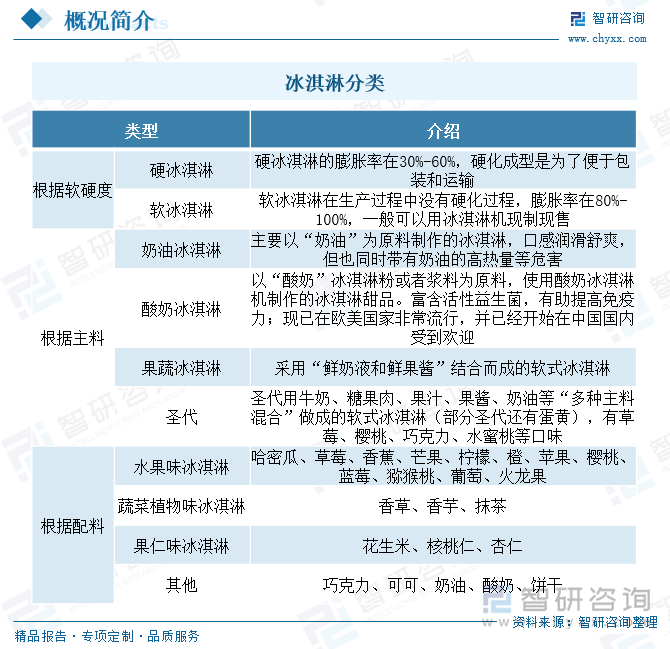
Industry Overview - Ice cream is a frozen food made primarily from drinking water, milk, cream, sugar, and food additives, produced through various processes [1][6] - The domestic ice cream industry in China is experiencing rapid growth, with market size projected to increase from 83.9 billion yuan in 2015 to 183.5 billion yuan in 2024, and expected to exceed 200 billion yuan by 2027 [1][6][8] Market Dynamics - The average per capita ice cream consumption in China is 2.9 kg, which is higher than the Asia-Pacific average of 2.1 kg but still below the global average of 4.5 kg, indicating significant growth potential for the market [8] - Consumer acceptance of ice cream prices generally falls between 3 to 10 yuan, with 70.9% of consumers preferring this price range, while higher-priced ice creams face lower acceptance [10] Consumer Preferences - In 2025, 64.29% of consumers expressed interest in fruit and herb flavors, while 47.61% preferred nut and spice flavors, indicating a trend towards innovative flavor combinations [12] - Health-conscious trends are driving demand for low-sugar, low-fat, and additive-free ice cream products, with functional ice creams like probiotic and collagen varieties gaining popularity [20] Competitive Landscape - Leading companies in the Chinese ice cream market include Yili, Unilever (Wall's), Mengniu, and Nestlé, with market shares of 19%, 15%, 9%, and 8% respectively [14] - New brands and traditional companies are entering the market, intensifying competition [14] Development Trends - The ice cream industry is witnessing a diversification of flavors and forms, with companies innovating to meet changing consumer preferences [21] - The expansion of online sales channels, driven by e-commerce and cold chain logistics, is providing broader market access for ice cream products [23]


朝阳区市场监管局成功举办全球数字经济大会“数智广告产业创新与发展”专题论坛
Zhong Guo Chan Ye Jing Ji Xin Xi Wang· 2025-07-04 09:45
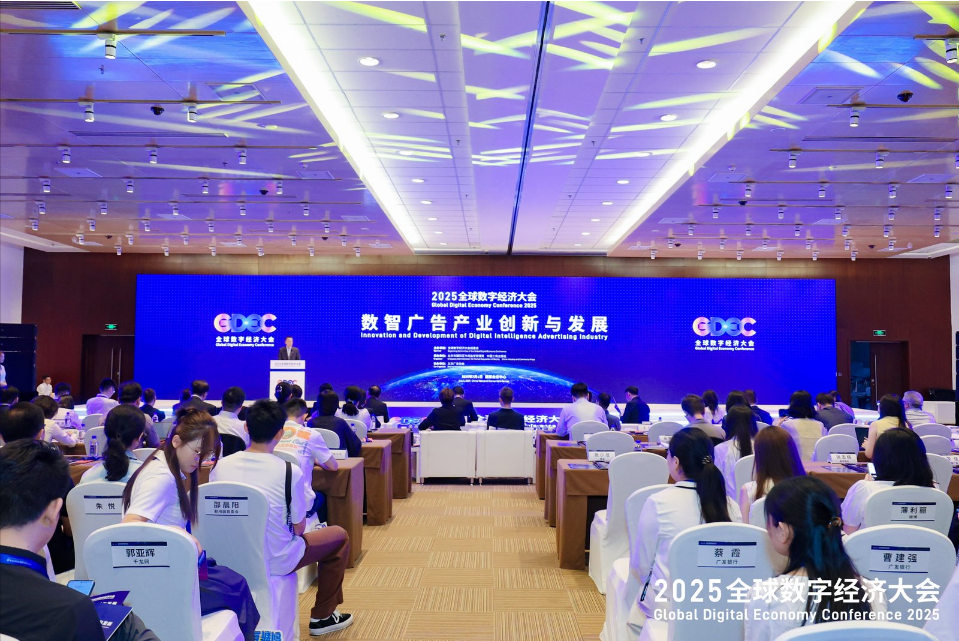
Group 1 - The Global Digital Economy Conference focused on the innovation and development of the digital advertising industry, highlighting the positive growth trend in China's advertising sector [1] - The advertising industry in China is projected to exceed 1.5 trillion yuan in revenue by 2024, maintaining its position as the second-largest market globally [1] - The digital transformation of the advertising industry is progressing steadily, with innovation indicators expected to rise to 124.2 points in 2024, reflecting a year-on-year increase of 9.9% [1] Group 2 - Beijing's digital regulatory ecosystem is being constructed to support the development of the digital advertising industry through policy supply, industrial clustering, and financial empowerment [3] - Chaoyang District is recognized for its significant role in leading the advertising industry, leveraging its dense resources and strong capabilities in advertising operations [3] - The district aims to create a new ecosystem of collaborative growth by utilizing cultural resources and advanced technology to enhance advertising operations [3] Group 3 - Key industry leaders discussed global advertising trends and the application of artificial intelligence in advertising during the forum, emphasizing the importance of innovation and governance in AI advertising [4] - The forum attracted over a hundred companies from the advertising industry, showcasing Chaoyang District's leadership in promoting digital transformation and high-quality development in advertising [6] - The local market authority is committed to enhancing service quality and efficiency in the advertising industry, contributing to Beijing's status as a global digital economy benchmark city [6]
29万小镇母婴店托举之下 海拍客“背债”闯关港交所
Hua Er Jie Jian Wen· 2025-07-02 20:15
Core Viewpoint - Yangtuo Technology Inc. (海拍客) has submitted an IPO application to the Hong Kong Stock Exchange, aiming to leverage its position as a leading B2B e-commerce platform in the maternal and infant care sector, despite facing significant challenges in recent years [1][8]. Group 1: Company Overview - Yangtuo Technology Inc. was established in 2015 and has quickly become the largest B2B e-commerce platform in China's low-tier market for family care and nutrition products, with a total transaction volume of 11 billion yuan in 2024, capturing a market share of 10.1% [1]. - The company has completed six rounds of financing, with notable investors including Shunwei Capital, Fosun International, and Hillhouse Capital [1]. - The platform's transaction volume surged from 5 billion yuan in 2017 to 15 billion yuan in 2019 [3]. Group 2: Financial Challenges - In 2024 and 2025, the company faced financial strain due to unmet performance targets with investors, leading to share buybacks costing 11 million USD and 24 million USD, respectively, along with the issuance of 158 million USD in promissory notes [5]. - The company has a significant financial burden, with convertible redeemable preferred shares valued at 2.4 billion yuan, contributing to a net debt of 2 billion yuan [6]. - The adjusted net profit for the company was reported at 19.3 million yuan and 25.8 million yuan, excluding the impact of preferred shares [7]. Group 3: Market Dynamics - The maternal and infant care market is experiencing a decline in birth rates, with the number of newborns in China dropping from 14.7 million in 2019 to 9 million in 2023, leading to intensified competition [22]. - The company's revenue in 2024 was 1.023 billion yuan, reflecting a year-on-year decline of 3.3% [20]. - The number of registered buyers increased from 240,000 to 290,000 over three years, but the actual transaction buyers remained stagnant at around 170,000 [21]. Group 4: Strategic Shifts - In response to market challenges, the company is shifting its focus from rapid expansion to improving profitability, with self-operated business transactions exceeding 700 million yuan in 2024, contributing 56% to overall revenue [25]. - The company is also exploring private label products, with its children's food brand "Meow Little Hero" achieving significant market penetration [27]. - Future strategies include expanding into Southeast Asia and seeking acquisition opportunities within the industry [34].
特殊医学用途配方食品:政策红利与临床刚需驱动的蓝海市场,头豹词条报告系列
Tou Bao Yan Jiu Yuan· 2025-07-02 12:22
Investment Rating - The report indicates a positive outlook for the special medical purpose formula food industry, driven by policy support and clinical demand, suggesting a potential for rapid market expansion [3][10]. Core Insights - Special medical purpose formula foods (medical foods) are designed to meet the nutritional needs of specific populations and must be consumed under medical supervision. The market is expected to grow significantly due to increasing product diversity, enhanced policy support, and improved clinical nutrition practices [3][4][10]. - The industry is characterized by a growing number of approved products, a significant advantage for domestic brands, and a diverse range of entering companies [11][12][40]. Summary by Sections Industry Overview - Special medical purpose formula foods cater to individuals with restricted diets, absorption disorders, or specific medical conditions, and are becoming a vital part of treatment strategies for various diseases in China [4][6]. - The market currently has a low penetration rate due to insufficient awareness and regulatory standards, but it is poised for growth as recognition and product availability increase [32][33]. Regulatory Environment - The "Special Medical Purpose Formula Food Registration Management Measures (2024)" aims to standardize registration processes, ensuring product quality and safety while encouraging innovation [9][10][39]. - As of September 30, 2024, a total of 206 special medical foods have been registered, with 174 being domestic products, indicating a strong growth trend for local brands [11][12]. Market Dynamics - The industry is witnessing a diversification of companies entering the market, with 58 companies having obtained registration, and Nestlé leading in the number of approved products [12][40]. - The distribution channels for medical foods face challenges, particularly in offline retail, where awareness and proper categorization are lacking. However, online sales are expected to grow as regulations become clearer [22][33]. Product Analysis - Among the registered products, 58 are special medical infant formula foods, accounting for 28.2% of the total, while 82 are non-full nutritional formula foods, and 65 are full nutritional formula foods [21]. - The report highlights a trend towards convenience in product forms, with a majority being powder-based [11]. Competitive Landscape - The competitive landscape shows that domestic products outnumber imports, but there is a noted lack of product diversity among local companies, which may impact future growth [40][41]. - Companies are encouraged to pursue differentiated product strategies to enhance their market positions, with a focus on both infant and non-infant medical foods [42].
雀巢中国进入马凯思时间:增长存在压力丨消费参考
2 1 Shi Ji Jing Ji Bao Dao· 2025-07-02 01:26
Group 1 - Nestlé China has appointed Kais Marzouki as Chairman and CEO starting July 1, 2025, marking a significant leadership change in the company [1] - Marzouki has extensive experience within Nestlé, having previously served as Chairman and CEO of Nestlé Philippines and held various senior management roles across different regions [2][3] - Under Marzouki's leadership, Nestlé Philippines regained growth, increasing its market share by over 200 basis points and boosting daily consumption of Nestlé products from 0.9 to 1.1 servings [3] Group 2 - In 2024, Nestlé Greater China reported sales of 5 billion Swiss francs, reflecting a 1.3% decline in sales, with currency fluctuations contributing to a 3.5% decrease [4] - The company experienced growth in its infant nutrition and confectionery segments, while its seasoning and dairy businesses saw a decline in market share [4] - The operating profit margin decreased by 40 basis points to 16.1%, attributed to higher input costs and increased investments in advertising and marketing [4]