
蜜雪冰城

Search documents
今年国内新茶饮消费市场规模有望突破2000亿元 新茶饮何以持续火爆(农产品新消费观察)
Ren Min Ri Bao· 2025-09-04 22:15
Group 1: Agricultural Product Consumption Promotion - The implementation plan for promoting agricultural product consumption has been released by ten departments, focusing on optimizing supply, innovating circulation, and activating market potential to enhance diverse and quality consumption [1] - The new consumption trends in agricultural products are driven by personalized, diversified, and quality-oriented demands, with new scenarios, models, and channels becoming significant growth points [1] Group 2: New Tea Beverage Market Growth - The new tea beverage market in China is expected to exceed 200 billion yuan this year, indicating a significant expansion in consumer demand [3] - The new tea drinking methods reflect changing consumer preferences and are linked to the promotion of agricultural product consumption [4] Group 3: Consumer Engagement and Health Trends - Consumers are increasingly seeking interactive and participatory experiences in beverage consumption, moving beyond passive consumption to active engagement [5] - Health-conscious trends are leading to the incorporation of various vegetables and fruits into tea beverages, providing consumers with more choices [6] Group 4: Cultural Integration in Tea Consumption - Cultural elements are becoming integral to tea consumption, with brands innovating by collaborating with art and cultural themes to enhance consumer engagement [7] Group 5: Impact on Agricultural Producers - The rise of new tea beverages has positively impacted agricultural producers, with specific examples like the yellow skin fruit seeing a price increase of 60% and farmers benefiting from better sales channels [9][10] - Collaborations between tea companies and farmers have led to significant income increases for producers, with some farmers reporting an average income boost of 8,000 yuan per acre [9] Group 6: Quality Improvement in Agricultural Products - The new tea beverage market is driving improvements in agricultural product quality, with initiatives to enhance farming practices and reduce chemical usage [11] - The transformation of traditional tea industries is expanding the consumption boundaries of tea, with new products like matcha ice cream and matcha desserts gaining popularity [12][13]

哔哩哔哩202509004
2025-09-04 14:36
Summary of Key Points from Conference Call Industry Overview - The new consumption sector in Hong Kong has shown strong performance, with stocks like Pop Mart, Lao Pu Gold, and Mixue Ice City significantly outperforming the Hong Kong Stock Connect Consumption Index and the Wind Consumption Index, primarily driven by young consumers, easing US-China trade tensions, and liquidity injections by the Hong Kong Monetary Authority [2][3][4] - The new consumption sector in Hong Kong has outperformed the A-share market due to a higher concentration of new consumption stocks and a more balanced representation of sub-sectors, capturing new growth points [2][10] Core Insights and Arguments - The new consumption sector's performance is attributed to the young consumer demographic, who prioritize quality-price ratio, emotional value, and social attributes, leading to new consumption trends such as self-indulgent and social consumption [4][5] - Despite a general weakness in consumer sentiment, specific segments within new consumption, such as pet products and educational entertainment, are experiencing rapid growth, with pet food sales increasing by 36% during the 618 shopping festival [7][8] - The current trend in new consumption reflects a dual focus on personalization and rationality, with the Z generation valuing experiences and companionship needs driven by single and elderly demographics [9][11] Financial Performance of Bilibili - Bilibili reported a revenue of 7.3 billion yuan in Q2 2025, a 20% year-on-year increase, with a gross profit of 2.7 billion yuan, reflecting a 46% increase and a gross margin of 36.5% [12][13] - The advertising business accounted for 33% of total revenue, with a significant increase in the number of advertisers, while the gaming segment contributed 22% to the revenue [12][13] - The company is transitioning its valuation from price-to-sales (PS) to price-to-earnings (PE), with adjusted net profit forecasts indicating a return to a reasonable valuation range [12][18] Market Dynamics and Future Outlook - The Hong Kong new consumption sector's total market capitalization exceeds 60%, with revenue growth rates and gross margins outperforming those of the A-share market [4][11] - The anticipated inflow of 300 to 450 billion yuan through the Hong Kong Stock Connect reflects strong interest from domestic public funds in new consumption assets [5][11] - Despite recent adjustments in stock prices, the long-term outlook for new consumption remains positive, driven by ongoing demand for personalized and rational consumption [9][11] Additional Important Insights - The adjustment period from June to August 2025 saw significant declines in representative stocks within the new consumption sector, with average declines around 25%, attributed to previous high valuations and trading volumes [6] - The overall consumer sentiment in China remains weak, with retail sales growth at 5% in the first half of 2025, still below pre-pandemic levels [7] - Bilibili's IP derivative business, while facing short-term pressures, has long-term potential with expected gross margins of 40% to 45% and operating profit margins of 15% to 20% [16] This summary encapsulates the key points from the conference call, highlighting the performance of the new consumption sector, Bilibili's financial results, and the broader market dynamics affecting these trends.

政策预期 高切低下,商社投资机会展望
2025-09-04 14:36
Summary of Conference Call Notes Industry Overview - The conference call discusses the service consumption promotion policy, focusing on local services and travel consumption, which is expected to benefit sectors such as dining, OTA (Online Travel Agencies), scenic spots, and hotels [1][4]. Key Points and Arguments - **Service Consumption Promotion Policy**: The policy aims to stimulate local service consumption and travel services, with specific benefits expected in the dining and travel sectors [1][4]. - **Dining Sector Benefits**: The dining industry is anticipated to benefit significantly from consumption vouchers, with companies like Yum China, Green Tea, and Haidilao expected to gain from increased consumer spending [1][5]. - **Travel Industry Gains**: OTA platforms such as Ctrip, Tongcheng, and Didi are expected to directly benefit from subsidies. Mid-to-high-end hotels like Atour, Huazhu, and Jinjiang are also likely to see positive impacts [1][6]. - **Sports Industry Growth**: A new policy aims for the sports industry to exceed 7 trillion yuan by 2030, significantly surpassing market expectations. The current size of the sports industry is approximately 3.67 trillion yuan, indicating a need for substantial growth over the next seven years [1][9][10]. - **Specific Measures in Sports Policy**: The policy includes 20 specific measures aimed at expanding sports product supply, stimulating consumption, and enhancing service levels [1][11][12]. Additional Important Insights - **Impact of Upcoming Holidays**: The alignment of the Mid-Autumn Festival and National Day in 2025 is expected to create a long holiday effect, boosting travel demand [1][14]. - **Stock Market Reactions**: Recent stock price increases are attributed to positive outlooks for the upcoming holiday season and changes in investor sentiment, with recommendations for various companies across H-shares and A-shares [1][15]. - **Potential Beneficiaries**: Companies involved in the ice and snow economy, such as Changbai Mountain and Tianfu Culture Tourism, are identified as clear beneficiaries of the new sports policy [1][13]. This summary encapsulates the key insights from the conference call, highlighting the expected impacts of government policies on various sectors and the potential investment opportunities arising from these developments.
“秋天的第一杯奶茶”,流行到海外了
创业邦· 2025-09-04 10:43
Core Viewpoint - The article discusses the globalization of new tea beverage brands, highlighting their strategies to adapt to local markets while maintaining their unique identity. The success of these brands is attributed to innovative product offerings, effective supply chain management, and cultural integration with local preferences [5][27][35]. Group 1: Product Innovation and Market Adaptation - The introduction of unique products like "抹云椰蓝" and "三倍厚抹" demonstrates how brands are leveraging local ingredients and preferences to create appealing offerings in international markets [5][7][14]. - New tea beverage brands are not merely replicating their domestic menus abroad but are instead creating localized versions that resonate with local tastes, such as using local fruits and flavors [9][10][12]. - The success of limited-time offerings and seasonal flavors has been noted, with brands like 喜茶 and 蜜雪冰城 effectively utilizing these strategies to attract consumers [9][10][22]. Group 2: Supply Chain and Operational Efficiency - The article emphasizes the challenges of establishing a supply chain in unfamiliar markets, including compliance with local regulations and sourcing quality ingredients [19][21]. - Companies are increasingly adopting digital tools and refined processes to enhance their product development and supply chain efficiency, significantly reducing the time required to launch new products [21][22]. - The establishment of local warehouses and logistics centers by brands like 喜茶 ensures consistent product quality across different regions [22][24]. Group 3: Cultural Integration and Marketing Strategies - The integration of local culture into product offerings and marketing strategies is crucial for success in international markets, as seen with 喜茶's culturally inspired products [27][29][33]. - Collaborations with local influencers and cultural figures help brands build a connection with consumers, enhancing their market presence [33][34]. - The article highlights the importance of visual appeal and social media engagement in attracting younger consumers, particularly the Z generation, who value aesthetic and shareable experiences [17][35]. Group 4: Market Growth and Future Prospects - The global ready-to-drink beverage market is experiencing significant growth, with projections indicating a compound annual growth rate of 7.2% from 2023 to 2028 [28]. - The article notes the regional differentiation in market opportunities, with Southeast Asia presenting unique challenges and opportunities due to its demographic and climatic characteristics [28][29]. - The ongoing cultural exchange facilitated by these brands is reshaping consumer habits and preferences, indicating a shift towards a more integrated global beverage culture [35].


三棵树(603737):社区店vs茶饮店,如何理解涂料新消费
SINOLINK SECURITIES· 2025-09-04 09:49
Investment Rating - The report maintains a "Buy" rating for the company, indicating a positive outlook for future performance [4][22]. Core Insights - The company is positioned in a growth phase with improved profitability and high growth potential in new business models. The net profit forecasts for 2025 and 2026 have been raised to 1.0 billion and 1.4 billion RMB, respectively, reflecting optimism about the company's expansion and profit recovery [4][22]. - The "马上住" community store model is compared to the tea beverage industry, highlighting similarities in brand standardization and service enhancement to address consumer trust issues. The tea beverage sector has reached a mature stage, while "马上住" is still in the growth phase, indicating significant market potential [2][10][21]. Summary by Sections Company Overview - The company has launched the "马上住" one-stop service system since 2016, with strategic upgrades leading to a comprehensive service ecosystem. The goal is to provide a seamless home renovation experience, with plans to expand the number of community stores significantly by 2026 [9][21]. Financial Projections - Revenue projections for the company are as follows: 12,476 million RMB in 2023, with a growth rate of 10.03%, and expected to reach 16,212 million RMB by 2027. The net profit is projected to grow from 174 million RMB in 2023 to 1,759 million RMB by 2027, indicating a robust growth trajectory [8][22]. Market Comparison - The initial investment for a "马上住" store is approximately 100,000 RMB, significantly lower than the average costs for tea beverage stores, which range from 170,000 to 800,000 RMB. The average payback period for "马上住" stores is around 6 months, suggesting a favorable investment environment [3][16]. Competitive Landscape - The report emphasizes the importance of establishing a strong supply chain and human resource management to support rapid expansion. The company aims to leverage its existing brand recognition and operational standards to create a competitive edge in the home renovation market [21][22].

狂卷加盟、冲击一线城市,幸运咖硬刚瑞幸库迪?
3 6 Ke· 2025-09-04 00:51
Core Viewpoint - Luckin Coffee is rapidly expanding its presence in the coffee market, aiming to replicate the success of its parent brand, Mixue Ice Cream, by leveraging a low-cost model and aggressive franchise strategies [1][4][10]. Expansion and Growth - As of July 2025, Luckin Coffee has signed over 7,000 stores nationwide, a significant increase from approximately 4,000 at the end of 2024, with a target of exceeding 10,000 stores by the end of 2025 [1]. - The company reported a 164% year-on-year increase in new store signings in Q2 2025, with 1,291 new stores opened in July alone, representing a month-on-month growth of over 330% [1][2]. Market Strategy - Luckin Coffee has shifted its focus from lower-tier markets to first and second-tier cities, particularly targeting the Yangtze River Delta and Pearl River Delta regions, with commercial streets as key expansion points [2]. - The franchise model requires full ownership by franchisees, allowing for unified market management and operational transparency, which facilitates rapid store replication [6]. Pricing and Supply Chain - The pricing strategy includes a low-cost model, with an American-style coffee priced at 5.9 yuan, benefiting from the supply chain advantages shared with Mixue Ice Cream [1][4]. - The company has established direct sourcing channels for coffee beans in major producing countries, enhancing its procurement scale and cost efficiency [4]. Franchisee Performance - Despite rapid expansion, franchisee profitability varies, with some reporting significant challenges and losses, leading to store closures or transfers [8][10]. - A franchisee in a university area reported a winter daily revenue of only 1,200 yuan, far below initial projections, resulting in a loss of 250,000 yuan before transferring the store [8][9]. Competitive Landscape - Luckin Coffee faces stiff competition from established brands like Luckin and Kudi, with franchisees noting that brand recognition significantly influences consumer choices [8][10]. - The company’s low-price strategy may not be sufficient to attract a broader customer base, as many consumers still prefer more recognized brands despite the lower franchise costs [8][10].
拆解五家上市茶饮企业半年报 外卖补贴大战谁赢谁输?
Nan Fang Du Shi Bao· 2025-09-03 13:51
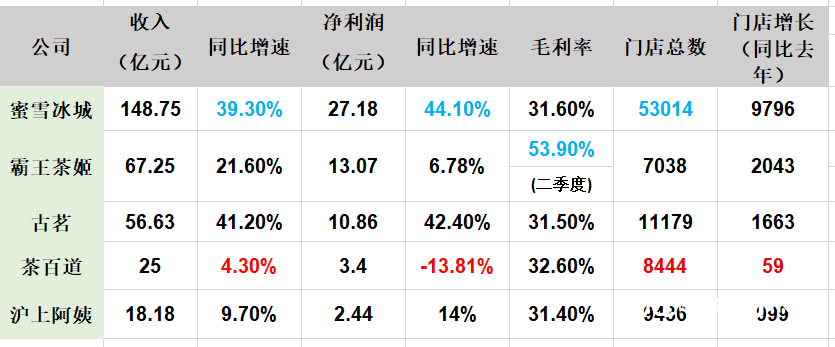
Core Viewpoint - The ongoing "subsidy war" in the food delivery sector is leading to a phase where certain tea beverage companies are emerging as potential "winners," with significant revenue growth reported across major players despite varying net profit performances [1][2]. Group 1: Company Performance - Major tea beverage companies, including Mi Xue Bing Cheng, Gu Ming, Cha Bai Dao, and Hu Shang A Yi, all reported positive revenue growth in the first half of the year, with Mi Xue Bing Cheng achieving over 100 billion yuan in revenue, marking a 39.3% year-on-year increase [1][2]. - Gu Ming's revenue reached 56.63 billion yuan, a 41.2% increase, while Hu Shang A Yi, despite having the lowest revenue at 18.18 billion yuan, showed a growth rate of 9.7% [1][2]. - Cha Bai Dao was the only company to report a decline in net profit, with a year-on-year decrease of 13.81% [1][2]. Group 2: Market Dynamics - The "subsidy war" has led to a significant increase in order volumes for tea beverage companies, particularly benefiting those with a large number of stores, such as Gu Ming, which added 1,663 new stores, bringing its total to 11,179 [3][4]. - Mi Xue Bing Cheng also capitalized on this trend, increasing its global store count to 53,014, with a net profit of 27.18 billion yuan, reflecting a 44.1% increase [2][4]. - In contrast, Cha Bai Dao's slow expansion, with only 59 new stores added, limited its ability to leverage scale effects, leading to increased marketing expenditures to maintain market share [5][6]. Group 3: Competitive Strategies - Gu Ming's low delivery costs and effective supply chain management allowed it to maintain profitability despite the competitive landscape, with delivery costs being less than 1% of total GMV [3][4]. - Cha Bai Dao's increased marketing expenses, which rose by 42.7% to 150 million yuan, were aimed at countering market competition and launching new products [5][6]. - Bawang Chaji, which chose not to participate in the subsidy war, faced customer attrition, reporting a significant drop in same-store GMV by 23% [6][7]. Group 4: Long-term Outlook - The long-term sustainability of the current growth driven by subsidies remains uncertain, as companies must navigate the transition from subsidy dependence to value-based competition [7][8].
景气度为王:股市牛熊更迭,新老龙头交替上演资本盛宴
Sou Hu Cai Jing· 2025-09-03 09:37
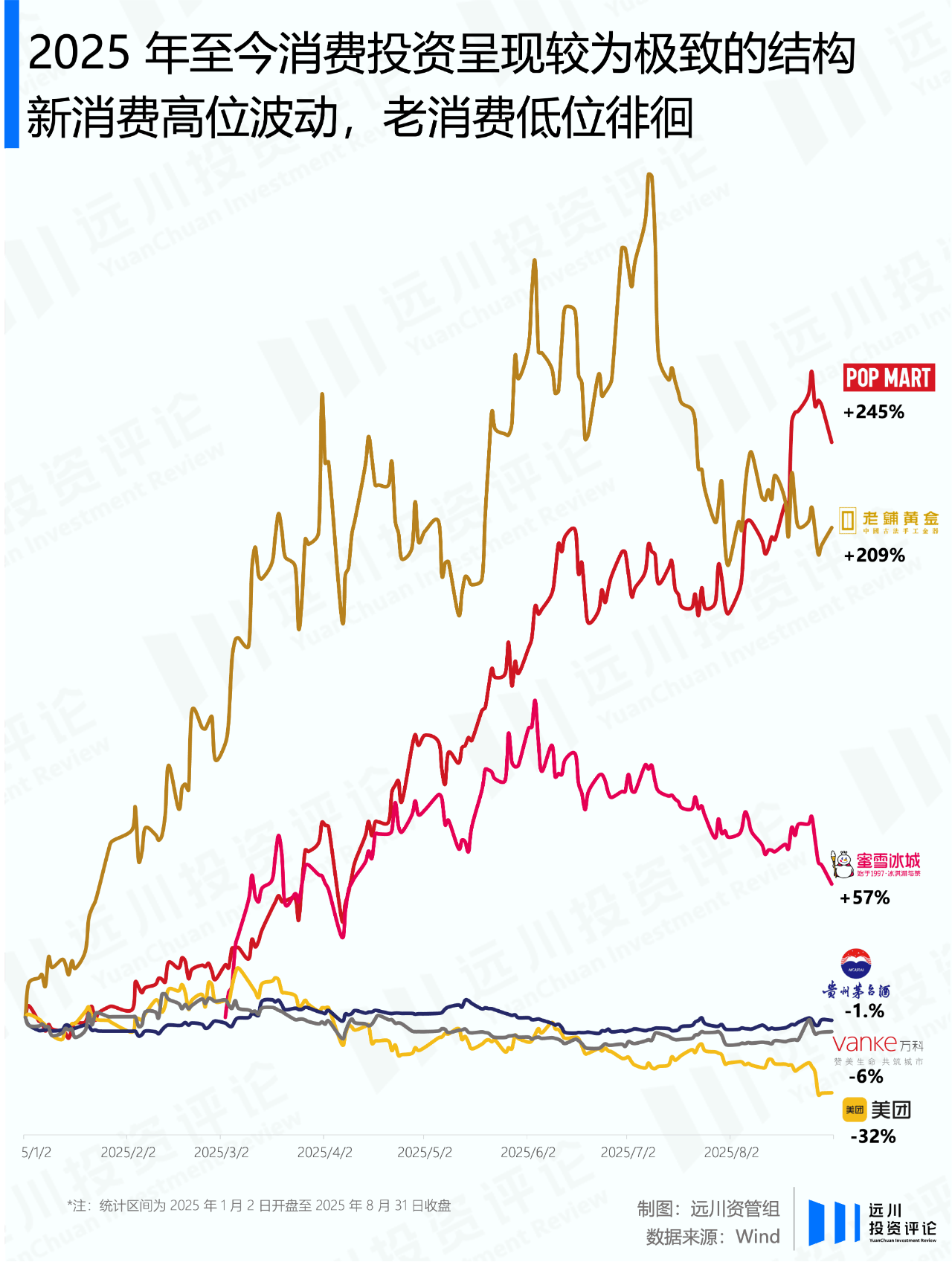
Group 1 - The concept of "景气度" (economic prosperity) is crucial in the Chinese stock market, serving as a common code behind high-performing stocks and a "safety valve" for measuring current corporate performance growth [1] - The market landscape for the first half of 2025 reveals a significant performance gap between new growth forces and established leaders, highlighting a shift in consumer preferences and market dynamics [1] - The rise of new consumption trends, particularly among the post-2000 generation, is changing market dynamics, with a preference for lifestyle and emotional value over traditional investments like real estate [1] Group 2 - The previous bull market saw sectors like solar energy, lithium batteries, and electric vehicles undergo a dual cleansing of performance and valuation, with high penetration rates leading to significant declines in both areas [2] - The AI industry is emerging as a new growth driver, with companies like Cambrian witnessing a 43-fold increase in revenue, challenging established market leaders [2] - Fund managers are showing generational differences in performance, with newer managers excelling in AI and innovative pharmaceuticals, while veteran managers remain cautious [2] Group 3 - The stock market is characterized by constant changes, with investors either chasing high-prosperity new stars or adhering to traditional value investment strategies [5] - The performance of various companies varies significantly, with some like POP MART showing a 286% increase, while others like Vanke and Kweichow Moutai experiencing declines of -21% and -38% respectively [7]

开卖599元外套,霸王茶姬要做“百货店”?
3 6 Ke· 2025-09-03 01:23
Core Insights - Bawang Chaji has expanded its product line to include clothing, which has surprised consumers and sparked discussions about its brand strategy [1][11] - The company aims to position itself as a competitor to Starbucks, with ambitions to modernize and globalize Chinese tea culture [10][24] - Despite a significant increase in store count and revenue growth, Bawang Chaji has faced a decline in net profit and same-store sales, raising concerns about its market performance [18][19] Group 1: Product Expansion - Bawang Chaji has launched a clothing line with a premium pricing strategy, including items like denim jackets priced at 599 yuan and t-shirts at 199 yuan, which are higher than some fast-fashion brands [1][18] - The brand's merchandise strategy has evolved from simple promotional items to a diverse range of products, including bags and accessories, which have gained popularity among consumers [13][23] - The company has developed a unique "1+1+9+N" franchise model that allows for efficient market expansion and localized product offerings [14][15] Group 2: Market Performance - Bawang Chaji reported a 21.61% increase in revenue to 6.725 billion yuan in the first half of the year, but net profit fell by 38.22% to 755 million yuan [18][19] - The company has 7,038 stores globally, with a net increase of 598 stores in the first half of the year, but has seen a decline in average monthly GMV and same-store sales [18][19] - The brand's stock performance has been volatile, with a significant drop of 54.3% from its peak shortly after its IPO, indicating market skepticism about its business model [24][26] Group 3: Brand Strategy - Bawang Chaji is attempting to create a long-term customer relationship by diversifying its product offerings and enhancing its brand image to appeal to younger consumers [21][27] - The company aims to leverage its cultural heritage and unique aesthetic to attract international consumers, particularly in the North American market [27][29] - The brand's strategy includes positioning itself as a lifestyle brand, moving beyond traditional tea consumption to encompass broader lifestyle aesthetics [23][29]

现制茶饮,跨界抢了乳企市场丨消费参考
2 1 Shi Ji Jing Ji Bao Dao· 2025-09-03 01:08
Group 1 - The takeaway from the news is that the competition in the food delivery market is impacting the dairy industry, particularly affecting companies like Mengniu and Yili, with Mengniu's revenue declining while Yili's revenue shows growth despite challenges [1][2] - Mengniu's revenue for the first half of 2025 decreased by 6.95% to 41.567 billion yuan, with liquid milk revenue down by 11.2% to 32.19 billion yuan [1] - Yili's revenue increased by 3.37% to 61.933 billion yuan, although its liquid milk revenue fell by 2.1% to 36.13 billion yuan [1] Group 2 - The overall sales of dairy products across all channels dropped by 9.6% in June 2025, with offline sales declining by 12.7% [1] - Yili noted that the demand for liquid milk remains stable, but packaging liquid milk is under pressure due to the rise of ready-to-drink tea beverages [1][2] - Yili expressed confidence in the long-term growth potential of liquid milk, citing factors such as aging population and health awareness driving demand [2] Group 3 - The financial performance of tea beverage companies like Mixue Ice City and Luckin Coffee is strong, with Mixue's revenue growing by 39.3% to 14.87 billion yuan and Luckin's revenue increasing by 47.1% to 12.36 billion yuan in the second quarter [1] - Yili believes that the pressure from ready-to-drink tea beverages is manageable and that the impact of such competition will weaken over time [2]
