奈雪的茶

Search documents
Z世代零食消费偏好:口味创新与包装社交属性
千禧研究· 2025-06-06 09:25
Investment Rating - The report does not explicitly state an investment rating for the industry Core Insights - Generation Z is becoming the main consumer force in the snack industry, with a significant impact on market dynamics and brand strategies [10][9] - The consumption habits of Generation Z reflect a strong preference for innovative flavors and health-conscious options, leading to a dual trend of "healthification" and "stimulation" in product development [11][12] - The report emphasizes the importance of packaging aesthetics and social attributes, as Generation Z is willing to pay more for visually appealing packaging [29][30] Summary by Sections Generation Z - Snack Consumption Powerhouse - Generation Z has a monthly disposable income that is 49.36% higher than the national average, indicating strong consumption potential [5] - Over 80% of Generation Z spends more than 400 RMB on snacks and beverages monthly, with significant portions spending over 800 RMB [7][8] Snack Flavor Preference Trends - There is a noticeable shift towards healthier options, with a focus on low-sugar and low-salt products due to health awareness [16][17] - Despite health concerns, there is a strong demand for bold flavors, such as spicy snacks, which are popular among Generation Z [19][20] - Generation Z shows a strong desire for diverse and unique flavors, driving innovation in the snack market [21][22] Snack Flavor Innovation Cases - Brands like Jin Zai Xiao Yu have successfully introduced multiple flavors to cater to diverse preferences, achieving significant market success [25][26] - The industry is witnessing a blend of health and stimulation trends, with brands innovating to meet these dual demands [27] Generation Z's Packaging Requirements - High aesthetic appeal in packaging is crucial, as Generation Z prioritizes visual attractiveness when selecting snacks [29][30] - Practical and convenient packaging is also essential, with products like Xiao Xian Dun's instant bird's nest addressing consumer needs for ease of use [31][32] Social Attributes of Snack Packaging - Generation Z enjoys sharing their snack experiences on social media, making packaging with social currency attributes more appealing [35][36] - Unique packaging designs can spark conversations and enhance brand visibility through social sharing [39] Strategies for Snack Brands to Cater to Generation Z - Brands should focus on health-related innovations and functional ingredients to address Generation Z's health concerns [60][61] - Packaging design should align with Generation Z's aesthetic preferences while also being practical [62][63] - Engaging marketing strategies, including social media interactions and influencer partnerships, are vital for brand success [66] Future Trends in Snack Consumption - Future innovations will likely emphasize the combination of health and taste, with brands reducing unhealthy ingredients while introducing unique flavors [69] - Packaging will evolve towards sustainability and personalization, reflecting Generation Z's values [73][77] - The competitive landscape will intensify as new brands emerge to meet the diverse demands of Generation Z [81][82]
对话商社:新消费的黄金纪元:新场景+新客群+新产品+新渠道
2025-06-06 02:37
Summary of Conference Call Records Industry Overview - The conference call discusses the "New Consumption" sector, which differs from traditional consumption by focusing on emotional value, cost advantages, and innovative pricing strategies. Traditional consumption relies on economic growth and income increases, while new consumption is driven by consumer emotions and utility [1][2]. Key Insights - **New Consumption Growth**: Guotou Securities is optimistic about the continuous growth of the new consumption sector in 2025, despite potential volatility. Factors such as tax policies and domestic demand are expected to drive the development of emerging companies like Laopu Gold and Pop Mart [1][5]. - **Investment Performance**: The New Consumption 50 portfolio launched by Guotou Securities in early 2025 has shown good excess returns, indicating the investment potential in this sector [4]. - **Market Dynamics**: The current new consumption trend is not solely about new product cycles but is driven by changes in channels, scenarios, and customer groups. The market is characterized by a diverse range of offerings, supported by actual performance rather than speculative narratives [9]. Industry Trends - **Pet Food Sector**: There is a clear trend of domestic brands replacing imported pet food, with companies like Zhongchong and Guai Bao gaining traction. The focus is on higher-margin staple food products and reaching younger consumers through innovative marketing strategies [17][18]. - **Cosmetics and Medical Beauty**: The cosmetics market remains vibrant, while the medical beauty sector shows signs of weakness. Domestic brands are increasingly favored, with a notable shift towards cost-effective local products [14][15][13]. - **Tea Beverage Market**: The tea beverage industry is experiencing a shift towards low-cost, high-volume models, with brands like Mixue Ice City leading the way. The competitive landscape is evolving, with a focus on product differentiation and market expansion [20][24]. Investment Opportunities - **Emerging Brands**: Companies that align with the emotional consumption model, cost-effectiveness, and innovative pricing strategies are seen as potential investment opportunities. The ability to cultivate and leverage intellectual property (IP) is crucial for valuation [12][11]. - **Market Expansion**: New consumption brands are exploring international markets, particularly in Southeast Asia, where cultural similarities and geographical proximity provide a favorable environment for expansion [26][25]. Risks and Considerations - **Market Volatility**: The new consumption sector may experience fluctuations due to changing market sentiments and the potential for capital to shift between new technology and new consumption sectors [5]. - **Consumer Behavior**: The success of high-end brands like Nayue and Xicha is under pressure due to changing consumer income expectations and high operational costs, necessitating strategic adjustments [22]. Conclusion - The new consumption sector presents a dynamic landscape with significant growth potential across various industries, including pet food, cosmetics, and tea beverages. Continuous monitoring and strategic investment in emerging brands that can adapt to changing consumer preferences and market conditions are essential for capitalizing on these opportunities [27].

食品营销莫把冒犯当创意
Xiao Fei Ri Bao Wang· 2025-06-06 02:36
Core Viewpoint - The article discusses the controversy surrounding a restaurant's marketing strategy that used offensive language, highlighting the broader issue of "vulgar marketing" in the food industry and its negative impact on brand image and consumer respect [1][2]. Group 1: Marketing Trends - "Vulgar marketing" has become a recurring issue, with many companies using lowbrow humor and offensive content to attract attention, often disregarding consumer feelings and brand integrity [1][2]. - Some businesses mistakenly believe that edgy or vulgar content can effectively drive short-term traffic and engagement, leading to a misunderstanding of consumer preferences [2][3]. Group 2: Consumer Behavior - The rise of emotional consumption indicates that consumers are willing to pay for products that fulfill emotional or psychological needs, suggesting a significant market potential for brands that can tap into this trend without resorting to vulgarity [3]. - Successful brands have managed to create engaging marketing campaigns that resonate with consumers while maintaining respect and creativity, contrasting with those that rely on lowbrow humor [2][3]. Group 3: Regulatory and Industry Response - There is a call for stronger regulatory measures and legal frameworks to deter companies from using offensive marketing tactics, emphasizing the need for a balance between creativity and consumer respect [3]. - The article suggests that media and consumers should play a role in monitoring and promoting positive marketing practices, fostering a healthier marketing environment in the food industry [3].
一瓶4.9元,椰子水战争刀刀见红
3 6 Ke· 2025-06-05 04:13
Core Insights - The increasing demand for coconuts in China is evident, with significant consumption figures such as 1.2 billion cups of Luckin Coffee's coconut latte over four years and 1.1 billion yuan worth of Thai coconut water consumed in one year [1][4][12] - The domestic coconut production in Hainan can only meet 10% of the demand, leading to a heavy reliance on imports, primarily from Southeast Asia, where coconut prices have surged [1][13][14] - Major Chinese companies and entrepreneurs are actively engaging in the coconut supply chain in Southeast Asia, aiming to secure fresh coconut sources, marking the beginning of a "coconut water war" [1][14] Market Dynamics - The coconut water market in China is rapidly expanding, with projections indicating a growth from $101.8 million in 2019 to $1.0933 billion by 2024, reflecting a compound annual growth rate of 60.8% [21] - The market is characterized by two business models: the "lazy win" model, which relies on overseas raw materials and brands, and the "laborious model," which involves building local brands and managing the entire supply chain [16][20] - Companies like IMCOCO and Shanghai Jianong Foods are establishing themselves in the coconut market, with IMCOCO planning to produce 600 million bottles of coconut water annually [11][21] Competitive Landscape - The competition is intensifying, with numerous new entrants in the coconut water market, leading to a potential oversaturation of brands, which could complicate consumer choices [25] - The lack of industry standards for coconut water quality has resulted in consumer trust issues, as some products have been reported to contain additives that compromise their natural appeal [26] - Price wars are emerging, with coconut water prices dropping significantly despite rising production costs, raising concerns about product quality and sustainability [27] Economic Impact - The surge in coconut demand from China is impacting local economies in Southeast Asia, with rising prices affecting the affordability of coconuts for local consumers [28] - The coconut processing industry in Indonesia is facing challenges due to increased raw material costs, leading to reduced profit margins for small manufacturers [28] - Experts predict that China's annual coconut demand will far exceed local production capabilities, necessitating a shift towards sustainable practices and innovation in the coconut industry [28]



瑞幸切入果蔬茶赛道,依旧是9.9
3 6 Ke· 2025-06-05 04:13
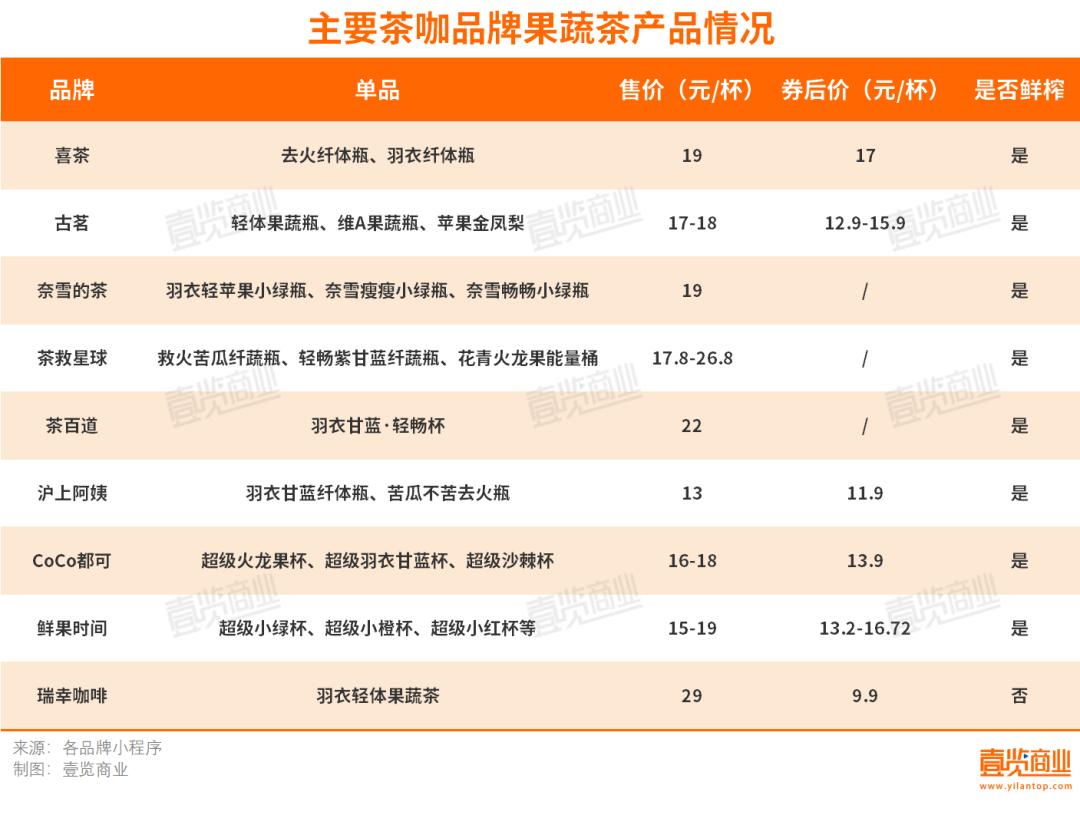
Core Viewpoint - Luckin Coffee is entering the vegetable and fruit tea market with its new product, "Yuhui Light Body Vegetable and Fruit Tea," aiming to expand its product offerings and enhance revenue during non-peak hours [2][3]. Product Launch - On May 31, Luckin Coffee announced the launch of its first vegetable and fruit juice product, priced at 29 yuan, with a promotional price of 9.9 yuan [2]. - The product is made from frozen kale, mixed fruit juice, jasmine tea, and syrup, indicating it is not freshly squeezed [2]. Market Positioning - The introduction of vegetable and fruit tea aligns with Luckin's strategy of combining coffee and tea, creating a "morning coffee, afternoon tea" positioning to broaden consumption scenarios [2]. - Luckin aims to leverage its supply chain advantages to standardize the production of vegetable and fruit tea, allowing for easier assembly at stores without the need for extensive preparation [2]. Competitive Landscape - Luckin's entry into the vegetable and fruit tea market comes later than competitors such as Heytea, Naixue, and others, which have already established their products in this category [3]. - Competitors have successfully linked their products to fitness and weight management, making it challenging for Luckin to stand out as a newcomer [3]. Pricing Strategy - Luckin Coffee's vegetable and fruit tea is the cheapest among major brands, potentially attracting price-sensitive consumers [6]. - However, the health narrative associated with fresh-squeezed products is a significant factor in consumer preferences, which may limit Luckin's appeal despite its lower price [6]. Market Challenges - The tea and coffee market is highly competitive, with a significant number of new store openings and closures reported recently [6]. - Luckin must invest more time and resources into product innovation and understanding consumer demand in the new tea beverage market to succeed [6].
卖爆了!一杯不到3元,网友:没有最低只有更低……
新华网财经· 2025-06-05 03:12
Core Viewpoint - The article discusses the impact of aggressive subsidies from major food delivery platforms on the pricing and sales of coffee and tea beverages, leading to significant price reductions and increased sales volumes for brands like Kudi Coffee and Luckin Coffee [1][4][6]. Group 1: Pricing Strategies - Major food delivery platforms have implemented substantial subsidies, resulting in prices for beverages dropping to as low as 1 yuan for coffee and 1.68 yuan for American coffee [1][4]. - Kudi Coffee's prices have been reduced to 3.9 yuan and 4.9 yuan per cup due to these subsidies, with some drinks previously priced at 10 yuan now selling for under 5 yuan [6][7]. - The competitive landscape has intensified, with Luckin Coffee also entering a lower price bracket, offering drinks for as low as 6.9 yuan [4][6]. Group 2: Sales Growth - Kudi Coffee has experienced a surge in sales, with daily orders increasing from around 500 to over 900 during peak times due to the subsidies [4][6]. - The average daily revenue for Kudi Coffee has increased from approximately 3,000 yuan to between 12,000 and 15,000 yuan, marking a growth of 4 to 5 times [6][7]. - Luckin Coffee reported a same-store sales growth rate of 8.1%, indicating a positive turnaround in performance [7]. Group 3: Market Dynamics - The article highlights that the coffee price war is not new, with previous instances where brands like Luckin Coffee used low pricing strategies to capture market share, prompting competitors like Starbucks to respond with discounts [7]. - The entry of JD.com into the food delivery market has reignited competition among platforms, leading to a resurgence in aggressive pricing strategies for coffee and tea [7]. - Economic experts suggest that while the price war may create short-term opportunities, it also poses challenges related to supply chain management, operational efficiency, and product quality, indicating a potential for market consolidation in the future [7].

资深茶饮专家交流
2025-06-04 15:25
Summary of Conference Call Records Company Overview - The company discussed its overseas expansion strategy, primarily focusing on Southeast Asia, with Indonesia, Malaysia, and Thailand being the top three markets for store openings [1][5]. Key Points and Arguments Market Potential and Challenges - Indonesia is identified as having significant market potential, while Vietnam presents a complex business environment with low consumer brand loyalty, making it one of the most challenging markets in Southeast Asia [1][5]. - The company has adjusted its product offerings based on consumer preferences in different Southeast Asian countries, such as high sugar preferences in Indonesia and health-conscious choices in Vietnam [1][9]. Financial Metrics - The gross margin for overseas single-store models is approximately 45%, with raw material costs accounting for 55% and labor costs being relatively low, around 16% of revenue [1][19]. - The actual net profit margin for stores in Southeast Asia ranges from 25% to 30%, with minimal VAT or consumption tax obligations [1][20]. Expansion Strategy - The company plans to open 1,000 to 1,500 new stores overseas in 2025, with a focus on Malaysia and Thailand, each expected to add around 400 stores [18]. - The long-term goal is to establish 20,000 overseas stores by 2028, with a significant push starting in 2026 [43]. Consumer Behavior Insights - Consumer loyalty varies significantly across Southeast Asian countries, with Vietnamese consumers showing lower brand loyalty and a tendency to follow trends [6][7]. - Different countries require tailored marketing strategies, such as higher sugar content in Indonesia and health-focused products in Vietnam [9][10]. Competitive Landscape - The company holds the leading position in the tea beverage industry in Indonesia, Vietnam, Malaysia, and Thailand, with local brands like Toco Toco in Vietnam and various coffee chains posing competition at different price points [31][23]. - Local brands benefit from established consumer bases and often provide superior in-store experiences, making competition challenging for Chinese tea brands [24][25]. Operational Challenges - The company has faced issues with rapid expansion, particularly in customer and store location audits, leading to a closure rate of about 1.6% due to poor site selection [12][14]. - Adjustments have been made to the franchisee selection process, focusing on operators who can actively manage stores rather than just financially capable individuals [13]. Supply Chain and Production - The company emphasizes the importance of a strong supply chain for successful international expansion, utilizing domestic super factories and establishing local warehouses in Southeast Asia to reduce costs and improve efficiency [25][26]. - Plans are in place to establish raw material factories in Vietnam and the Philippines by 2028, which will enhance supply chain capabilities across the region [27]. Future Outlook - The company aims to penetrate new markets in Central Asia, South Asia, South America, and North America, with a gradual expansion strategy expected to take 2 to 3 years for each new market [36]. - The domestic market remains a priority, with approximately 40,000 stores currently and plans to expand into rural areas and unique flagship locations [38][42]. Additional Important Insights - The average daily sales per store vary by market, with Vietnam averaging around 2,300 RMB per day, while Malaysia performs better with higher sales volumes [10]. - The company has successfully relocated underperforming stores, significantly increasing their sales post-move [35]. - The labor cost advantage in Vietnam is notable, with the company paying significantly lower wages compared to local textile or shoe factory workers [32]. This comprehensive overview captures the essential insights from the conference call, highlighting the company's strategic focus, market dynamics, financial performance, and operational challenges in its overseas expansion efforts.

2025年第21周:跨境出海周度市场观察
艾瑞咨询· 2025-06-04 09:13
Industry Environment - The globalization of e-commerce has entered a new phase, with digital marketing becoming a key weapon for companies going abroad. From 2012 to 2021, China's cross-border e-commerce market grew 5.7 times to 14.2 trillion yuan, becoming a crucial support for stable foreign trade. The core capability for companies going abroad has shifted to digital marketing, with a projected growth rate of 19% in digital marketing [2] - Mobile phone manufacturers are experiencing a new wave of overseas expansion, focusing on the mid-to-high-end market. Brands like Honor, OPPO, and Xiaomi are achieving success in Europe and Southeast Asia through localized operations and ecosystem building. However, they face challenges such as policies, patent issues, and supply chain complexities [3] - Chinese tea brands are accelerating their expansion into the U.S. market, with companies like Luckin Coffee and Nayuki opening new stores and focusing on health-oriented product innovation [6] New Opportunities in Europe - The synchronous lifting of restrictions between China and Europe presents new opportunities for expansion. The European market is witnessing trends of consumption upgrading and green transformation, with 80% of consumers willing to pay a premium for sustainable products. Chinese companies are advised to enhance product quality and adapt to cultural differences [7] Trade Relations and Globalization - A pause in the tariff war has led to a new consensus on globalization. The U.S. has canceled 91% of additional tariffs on China, with a reciprocal response from China. This reduction is expected to alleviate foreign trade pressures in the short term, but the long-term strategy will shift towards regional and global layouts [8] Brand Building and Global Competition - Chinese brands are transitioning from "brand recognition" to "brand building," with a focus on global competition. Companies like Anker and Xiaomi are leveraging platforms like Amazon for efficient market penetration, while AI technology is enhancing advertising returns [9] Autonomous Driving and Technology Export - In the global tech race, China and the U.S. are leading in autonomous driving. Companies like Waymo and RoboTaxi are expanding globally, with RoboTaxi leveraging its experience in complex Chinese road conditions to enhance competitiveness [11] Home Appliance Industry Trends - The Chinese home appliance market is shifting towards high-end products, with major players like Haier and TCL focusing on brand strategies to enhance overseas performance. The industry faces challenges from homogenization, but smart, high-end, and branded products are seen as key drivers for future globalization [12] Smart Cleaning Robots Market - The global market for smart cleaning robots is expected to reach $21.01 billion by 2030, growing at an annual rate of 23.7%. Chinese manufacturers are strong in cost control but need to improve in multi-modal sensing and cloud AI technologies [13] Tea Beverage Market Expansion - Chinese tea brands are rapidly expanding overseas, with the global ready-to-drink beverage market projected to exceed $1.1 trillion by 2028. Companies like Mixue Ice Cream and Nayuki are adopting different strategies to capture market share [14] Automotive Industry Developments - Changan Automobile aims to accelerate its overseas expansion, with a target of 3 million vehicle sales by 2025, including 1 million in new energy vehicles [16] Internationalization of Chinese Baijiu - Moutai is transitioning from product export to brand and cultural internationalization, with overseas revenue expected to reach 5.189 billion yuan in 2024, reflecting a growth of 19.27% [21] E-commerce Trends in Europe - TikTok Shop is rapidly expanding into the European market, with a projected e-commerce market size of $3.96 trillion by 2024. However, sellers must navigate challenges related to product quality and tax compliance [22] AI Industry Growth - Kunlun Wanwei has emerged as a leader in AI exports, achieving a revenue of 1.76 billion yuan in Q1 2025, with 94% of its income coming from overseas. The company is focusing on building an ecosystem around AI applications [25]

蜜雪集团股价再创新高涨近5% 上市以来累计涨幅接近190%
Jin Rong Jie· 2025-06-04 06:51
Core Viewpoint - The news highlights the strong performance of the company Mixue Group in the stock market, driven by external factors such as aggressive competition in the food delivery sector and positive institutional outlooks on its long-term growth potential [1][4]. Group 1: Company Performance - Mixue Group's stock price increased nearly 5% on June 4, reaching a record high of 610 HKD, with a total market capitalization of 231.8 billion HKD and a trading volume of 153 million HKD [1]. - The stock has seen a cumulative increase of over 11% in the last ten trading days and more than 20% in the last twenty trading days, with an overall rise of nearly 190% since its listing on March 3 [1]. Group 2: Industry Dynamics - The launch of a 10 billion RMB subsidy plan by JD.com on April 11 has intensified competition in the food delivery industry, prompting rivals like Ele.me and Meituan to increase their subsidy efforts [3]. - This subsidy war has significantly impacted the ready-to-drink beverage sector, leading to substantial stock price increases for related companies, with major brands like Luckin Coffee and Kudi Coffee seeing high order volumes [3]. - The tea and coffee categories remain key targets for subsidies, providing transaction opportunities for companies that actively participate in promotional activities, thereby stimulating market demand [3]. Group 3: Institutional Outlook - Multiple investment institutions have issued positive research reports on Mixue Group, viewing it as a long-term beneficiary of the food delivery subsidy competition [4]. - Goldman Sachs raised its profit forecasts for Mixue Group for 2025 to 2027 by 2% to 3%, adjusting the 2026 price-to-earnings ratio from 26x to 32x, and increased the target price from 484 HKD to 597 HKD while maintaining a "Buy" rating [4]. - Daiwa Securities raised its target price for Mixue Group from 539 HKD to 608 HKD, maintaining an "Outperform" rating, and predicted that price competition among delivery platforms would boost same-store sales growth [4]. - Mixue Group is set to be included in the Hang Seng Composite Index effective June 9, which is expected to attract more institutional investment and enhance stock liquidity [4].

微博-2024年度饮品行业:社交生态解析及热点价值洞察
Sou Hu Cai Jing· 2025-06-03 10:41
Industry Growth and Market Performance - The beverage industry is experiencing positive growth, with total production nearing 190 million tons, a year-on-year increase of 7% [2] - Revenue growth is at 5%, and profits have increased by over 10%, outpacing the average growth rate of the food and beverage sector [2] - The packaged beverage market is steadily expanding, while the ready-to-drink tea and coffee segment is seeing a slowdown in growth but is still achieving positive results through a "milk tea + coffee" dual-drive strategy [2] Consumer Groups and Demand Characteristics - The primary consumer demographic is shifting towards younger generations, including those born in the 1990s, 2000s, and even 2010s, with three main consumption characteristics: strong willingness to try new flavors, emphasis on emotional value, and an upgrade in health demands [3] - Consumers in first- and second-tier cities show lower price sensitivity and prefer higher-priced products, while those in third- and fourth-tier cities focus on cost-effectiveness, leading to increased sales of large-capacity sugary teas [3] Social Hotspots and Content Ecology - Social media has become a key influence on beverage consumption decisions, with over 470 billion discussions on beverages on Weibo, and more than 5.2 billion interactions [4] - Four major social hotspots emerged throughout the year: health and wellness discussions, cross-industry collaborations, curiosity-driven flavor innovations, and emotional consumption trends [4][5][6] - Health and wellness topics, particularly around low-sugar and nutritious ingredients, saw a 345% increase in interaction [4] Future Trend Predictions - The industry is expected to continue four major trends into 2025: deepening emotional needs, refined health and wellness focus, diversification of IP collaborations, and the emergence of local specialty beverages [7] Brand Strategy Insights - Brands should enhance social media marketing by leveraging celebrity endorsements and creating emotional connections through contextual content [8] - Emphasizing health benefits and regional characteristics can help build differentiated brand recognition [8] - Brands need to adapt to the evolving social ecosystem by innovating content to capture the interests of younger consumers, transitioning from "functional consumption" to a multi-faceted approach that includes "emotion + health + social" elements [8]