
新型政策性金融工具

Search documents
2026年1-2月经济数据点评:投资带动开年经济向好
BOHAI SECURITIES· 2026-03-17 08:13
Economic Growth Indicators - In January-February 2026, industrial added value increased by 6.3% year-on-year, exceeding the expected 5.3% and the 2025 annual growth of 5.9%[2] - Retail sales of consumer goods rose by 2.8% year-on-year, surpassing the expected 2.5% and the 2025 annual growth of 3.7%[2] - Fixed asset investment grew by 1.8% year-on-year, significantly better than the expected decline of 5.1% and the 2025 annual decline of 3.8%[2] Industrial Performance - The growth rate of industrial added value in January-February 2026 improved compared to the 2025 annual level, with export delivery value growth reaching a recent high, indicating strong external demand[3] - High-tech manufacturing sectors showed growth rates significantly above the overall level, supported by the transition of new and old growth drivers[3] Consumer Behavior - The retail sales growth reversed the downward trend seen in the second half of 2025, with service retail boosted by an extended Spring Festival holiday[4] - Consumption patterns showed divergence, with limited contributions from certain goods due to reduced subsidies and previous consumption overextension[4] Investment Trends - Fixed asset investment saw a substantial increase, with manufacturing investment growth rising by 2.5 percentage points to 3.1% year-on-year, driven by high export growth and technological upgrades[5] - Infrastructure investment rebounded significantly, supported by fiscal deposit allocations and a robust increase in public utilities and transportation sectors[5] Real Estate Market - Real estate sales area and value showed a year-on-year decline, with first-tier cities experiencing slight positive changes in new and second-hand home prices, but overall market remains weak[6] - The decline in personal mortgages and down payments has negatively impacted real estate investment funding sources, with new construction and project completions also declining[7]
野村首席观点 | 陆挺:经济增速目标设定合理,8000亿新型政策性金融工具是亮点
野村集团· 2026-03-17 04:01
Economic Growth Target - The government has set a GDP growth target of 4.5% to 5% for 2026, which is seen as reasonable and not conservative. However, achieving this target may be challenging due to weak consumption, real estate drag, and declining capital returns [7][8] - The slowdown in China's GDP growth is viewed as a structural and long-term trend, but the pace of decline is relatively mild compared to other major economies [8][9] Investment Expansion - The government plans to issue 800 billion yuan in new policy financial instruments, increasing from 500 billion yuan last year, which is expected to leverage an additional 2 trillion to 3 trillion yuan in funds [10][11] - The total investment from these instruments, combined with other financial tools, could reach 1.3 trillion yuan, significantly enhancing project capital [10][11] Consumption and Real Estate - "Boosting consumption" remains a top priority, with plans to implement a 100 billion yuan special fund to support consumer loans and financing guarantees [12] - The real estate market is expected to take time to recover, with policies likely to be implemented on a city-by-city basis [12] Capital Market Insights - The capital market is seen as having a limited but positive impact on economic growth, particularly in supporting strategic sectors like AI and semiconductors [13] - The role of the stock market should not be overestimated as a substitute for fiscal and monetary policies [13]


专访野村陆挺:经济增速目标设定合理,8000亿新型政策性金融工具是亮点
第一财经· 2026-03-16 03:37
Core Viewpoint - The government work report sets a 2026 economic growth target of 4.5% to 5%, which is seen as reasonable but challenging to achieve due to current economic pressures such as weak consumption and real estate drag [3][5][6]. Economic Growth Target - The target of 4.5%-5% is considered rational and not conservative, with expectations that China's GDP growth will enter the "4 era" [6]. - The slowdown in GDP growth is viewed as a structural and long-term trend, with a relatively mild decline compared to other major economies [6][7]. Investment Expansion - The government plans to issue 800 billion yuan in new policy financial instruments, increasing from 500 billion yuan last year, which is expected to leverage an additional 2 trillion to 3 trillion yuan in funding [9][10][11]. - The total investment from these instruments, combined with other financial tools, could reach 1.3 trillion yuan, enhancing project capital and supporting local government investments [10][11]. Export Performance - China's exports saw a significant increase of 21.8% year-on-year in January and February, while imports rose by 19.8%, although this high growth rate may not be sustainable [7][8]. Consumption and Real Estate - "Boosting consumption" remains a top priority, with plans to implement a 1,000 billion yuan fund to support consumer loans and financing guarantees [14]. - The real estate market is expected to take time to recover, with policies likely to be implemented on a city-by-city basis [15][16]. Capital Market Insights - The role of the stock market in driving economic growth is acknowledged but considered limited; it cannot fully replace fiscal and monetary policies [16].

2月金融数据与开年广义流动性简评
GF SECURITIES· 2026-03-13 15:34
Group 1: Social Financing and Credit Growth - In February, social financing increased by 2.38 trillion yuan, exceeding the market expectation of 1.8 trillion yuan, with a year-on-year increase of 146.9 billion yuan[3] - The total social financing scale for the first two months of 2026 reached 9.6 trillion yuan, an increase of 316.2 billion yuan compared to the same period last year[3] - The growth rate of social financing stock remained stable at 8.2% compared to the previous month[3] Group 2: Loan Distribution and Trends - In February, loans to the real economy increased by 5.75 trillion yuan, a year-on-year decrease of 124.8 billion yuan, while foreign currency loans increased by 43.3 billion yuan, a year-on-year increase of 110.5 billion yuan[3] - Corporate loans increased by 5.94 trillion yuan in the first two months, with short-term loans rising by 2.65 trillion yuan and medium to long-term loans increasing by 4.07 trillion yuan[4] - The demand for loans from the corporate sector improved, with short-term loans increasing by 2.7 trillion yuan and long-term loans by 3.5 trillion yuan[4] Group 3: Government and Corporate Bonds - In February, government bonds increased by 1.4 trillion yuan, but this was a year-on-year decrease of 290.3 billion yuan due to a high base effect[6] - Corporate bonds saw a net financing increase of 655.4 billion yuan, a year-on-year increase of 39.8 billion yuan, with significant contributions from infrastructure and consumer sectors[6] - The issuance of new policy financial instruments and increased local government special bond quotas are expected to support corporate long-term loans and social financing expansion[6] Group 4: Monetary Supply and Deposits - M1 growth rate was 5.9%, up by 1.0 percentage points from the previous month, influenced by a low base and increased financing from the real sector[6] - M2 growth rate remained stable at 9.0% compared to the previous month[6] - In the first two months, total RMB deposits increased by 9.26 trillion yuan, with household deposits rising by 5.24 trillion yuan[6]
【广发宏观钟林楠】2月金融数据与开年广义流动性简评
郭磊宏观茶座· 2026-03-13 14:34
Core Viewpoint - The article discusses the increase in social financing (社融) in February, which amounted to 2.38 trillion yuan, exceeding market expectations and showing a year-on-year increase of 146.9 billion yuan. The growth rate of social financing stock remained stable at 8.2% [1][6]. Group 1: Social Financing and Credit - In February, social financing increased by 2.38 trillion yuan, higher than the market average expectation of 1.8 trillion yuan, with a year-on-year increase of 146.9 billion yuan [1][6]. - The stock of social financing grew at a rate of 8.2%, unchanged from the previous month. Notably, the increase in entity credit and non-discounted bank acceptance bills was significant, while government bonds saw a year-on-year decrease [1][6]. - Entity credit rose by 850 billion yuan in February, a year-on-year increase of 197.2 billion yuan, with a cumulative increase of 5.75 trillion yuan for January-February, comparable to the same period in 2023-2025 [7][10]. Group 2: Demand Structure and Financing Environment - The improvement in demand was primarily observed in the corporate sector, with short-term loans increasing by 270 billion yuan and long-term loans by 350 billion yuan. This was influenced by the central bank's requirement for "balanced credit allocation" [2][10]. - The financing environment for enterprises was supported by rising industrial prices, particularly in the non-ferrous and AI sectors, which improved profit expectations and led to increased inventory and capital expenditure [2][10]. - In contrast, household financing remained weak, with short-term loans decreasing by 195.2 billion yuan and long-term loans by 66.5 billion yuan, likely due to the timing of the Spring Festival affecting consumption patterns [2][11]. Group 3: Government Bonds and Corporate Bonds - Government bonds increased by 1.4 trillion yuan in February, but this was a year-on-year decrease of 290.3 billion yuan. The supply of government bonds this year is similar to that of 2025, shifting from a supportive to a neutral impact on social financing [3][11]. - Corporate bonds saw an increase of 152.1 billion yuan in February, although this was a year-on-year decrease of 18.1 billion yuan, primarily due to reduced financing in the real estate and construction sectors [3][12]. Group 4: Monetary Aggregates - The year-on-year growth rate of M1 was 5.9%, an increase of 1.0 percentage point from the previous month, influenced by a low base effect and increased financing from the real sector [4][13]. - M2's year-on-year growth rate remained stable at 9.0%. An analysis of January-February data showed a decrease in household deposits and loans, while non-bank deposits increased, indicating a trend towards deleveraging and a shift towards equity assets [4][13]. Group 5: Overall Financial Data Insights - Cumulatively, social financing increased by over 310 billion yuan year-on-year for January-February, with M1 and M2 growth rates improving, indicating overall liquidity remains relatively ample [5][14]. - The strong performance of equity assets in January-February was supported by significant exports and rising industrial prices, although geopolitical factors and rising oil prices in March may alter this dynamic [5][14].

专访陆挺:要格外注意1.3万亿新型政策性金融工具的作用
经济观察报· 2026-03-13 14:18
Group 1 - The core viewpoint of the article emphasizes the need for the Chinese government to adopt a more proactive fiscal policy to increase basic pensions and healthcare subsidies for vulnerable groups, which can stimulate consumption, promote equity, and enhance future economic growth potential [3][14]. Group 2 - The GDP growth target for 2026 has been set at 4.5% to 5%, marking the first time since the reform and opening up that the target has fallen below 5% [2][5]. - The downward adjustment of the GDP growth target reflects a broader trend of declining growth rates, influenced by factors such as diminishing marginal returns on investment and a slight shrinkage in the labor force [6][10]. - Compared to Japan and South Korea, China's GDP growth rate decline is relatively moderate, with historical examples illustrating more severe downturns in those countries [7][8]. Group 3 - The real estate sector remains under pressure, and its recovery is uncertain; new home sales and land acquisition by developers are critical for economic support, rather than relying solely on second-hand housing transactions [5][10]. - The government maintains a steady fiscal policy without large-scale stimulus measures, indicating confidence in the capital market and export performance to support economic growth [10][12]. Group 4 - Increasing farmers' pensions can significantly boost consumption, as approximately 55% of pension recipients are elderly farmers with a high marginal propensity to consume [15]. - A proposed increase of 40% in farmers' pensions would require an additional annual expenditure of about 200 billion yuan, which is approximately 0.15% of China's annual GDP [16]. Group 5 - The goal of synchronizing growth in disposable income with GDP growth reflects a shift in economic strategy, aiming to enhance consumer spending as a key driver of GDP growth [17][18]. - The recent high growth in exports is not sustainable, and a more realistic expectation for 2025 is a 5.5% increase, with 2026 exports projected to grow between 4% and 6% [19].

如何理解2026年财政政策安排?|政策与监管
清华金融评论· 2026-03-09 10:25
Core Viewpoint - The article emphasizes the implementation of a more proactive fiscal policy in China, focusing on stimulating consumption and investment, ensuring the operation of grassroots finances, mitigating debt risks, and supporting the construction of a unified national market. The policy aims to enhance local government motivation and improve fiscal sustainability in the long term [4][5]. Fiscal Policy Strength - The fiscal policy is characterized by a high deficit rate of 4%, with the deficit scale reaching 5.89 trillion yuan, an increase of 230 billion yuan from 2025. The total public budget expenditure is projected to reach 30 trillion yuan in 2026, marking a significant increase in necessary spending to stabilize overall demand and support economic and livelihood goals [6][7]. - The issuance of special bonds remains at the same level as the previous year, balancing the needs for growth stabilization and debt resolution while expanding the range of eligible projects [7][8]. Structural Optimization of Fiscal Policy - The article highlights significant optimization in expenditure structure, deficit structure, and transfer payment structure, aiming to enhance the effectiveness of limited fiscal funds. There is a notable increase in spending on social welfare and technological innovation, with a shift towards balancing investment and consumption [14][15]. - The central government's deficit share has increased significantly, accounting for 86.4% of the total deficit, which alleviates local financial burdens and optimizes the debt structure between central and local governments [15]. Tax and Subsidy Policy Regulation - The article discusses the need to standardize tax incentives and fiscal subsidy policies to promote a unified national market. This regulation aims to break down regional barriers, foster healthy competition among enterprises, and enhance the efficiency of fiscal fund utilization [18][19]. Local Government Support - The report stresses the importance of ensuring the "three guarantees" for local governments, addressing fiscal difficulties caused by real estate adjustments. It suggests increasing central transfer payments and raising local debt limits to restore local governments' economic development capabilities [21][22]. Debt Management and Risk Mitigation - The article outlines a shift in debt management from short-term risk policies to long-term structural mechanisms. It emphasizes the need for a unified government debt management system and the importance of categorizing and regulating local government financing platforms to prevent operational debt from becoming hidden government debt [23][24].
信号明确决心很大!国常会部署稳投资,这些领域谋划一批重大工程
2 1 Shi Ji Jing Ji Bao Dao· 2026-02-09 10:36
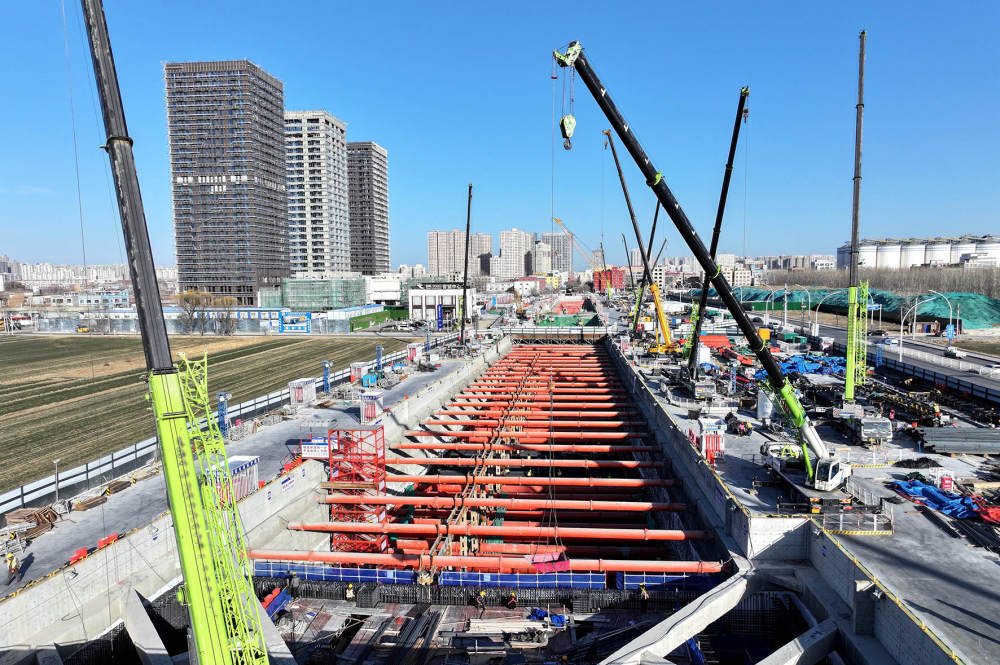
Core Viewpoint - The State Council's recent meetings emphasize the need to stabilize and promote effective investment in 2026, focusing on innovative policy measures and significant projects in key sectors to support economic growth [1][2]. Investment Tools - The State Council has outlined several investment tools for 2026, including central budget investments, ultra-long-term special bonds, local government special bonds, and new policy financial instruments, with a focus on enhancing their effectiveness [2][3]. Investment Scale and Trends - In 2025, China's fixed asset investment was 48.5 trillion yuan, a decrease of 3.8% year-on-year. The government aims to reverse this trend in 2026, with expectations for more investment stabilization policies to be implemented [1][3]. Major Projects Planning - The State Council plans to initiate significant projects in infrastructure, urban renewal, public services, and emerging industries, aligning with long-term development needs and competitive advantages [1][7]. Role of State-Owned Enterprises and Private Investment - The government aims to leverage state-owned enterprises to expand investment and support private investment development, recognizing the importance of private sector confidence in driving overall investment [10][12]. Economic Growth Potential - Despite a decline in private investment by 6.4% in 2025, there remains substantial potential for growth in investment, particularly in infrastructure and technology sectors, as the government seeks to enhance the investment environment [12][8].
重点领域将谋划推动一批重大项目 涉及基础设施、城市更新、公共服务、新兴产业和未来产业
Sou Hu Cai Jing· 2026-02-09 01:59
Core Viewpoint - The article discusses the Chinese government's recent initiatives to promote effective investment in key areas such as infrastructure, urban renewal, public services, emerging industries, and future industries, aiming to stimulate economic growth and improve investment efficiency [1][3]. Group 1: Investment Policies and Measures - The State Council's recent meeting emphasized the need to enhance the effectiveness of central budget investments, ultra-long-term special bonds, local government special bonds, and new policy financial tools to support major projects [1][2]. - A total of approximately 2.95 trillion yuan (about 295 billion) has been allocated for the early batch of "two heavy" construction projects and central budget investments for 2026, with around 2.2 trillion yuan (220 billion) for "two heavy" projects and over 75 billion for central budget investments [2]. - The focus is on improving the quality and maturity of project planning and reserves to ensure effective use of funds and support for eligible private investment projects [2][3]. Group 2: Investment Focus Areas - The government aims to invest in traditional infrastructure such as transportation, energy, water conservancy, and municipal projects, while also focusing on new infrastructure like low-altitude airspace and computing power [3]. - There is a growing demand for investment in high-end manufacturing, smart technology, and green transformation, particularly in sectors like new energy vehicles, intelligent robotics, and quantum technology [3]. - Urban renewal is highlighted as a key area for investment as cities shift from large-scale expansion to improving existing infrastructure and public services [3][4]. Group 3: Shift in Investment Philosophy - Historically, investment in physical infrastructure was prioritized to quickly stimulate economic growth, but as the economy matures, the marginal returns on such investments are decreasing [4]. - There is a shift towards integrating investments in physical infrastructure with investments in human capital, focusing on improving public services in healthcare, education, elderly care, and housing security [4].
重点领域将谋划推动一批重大项目
Xin Lang Cai Jing· 2026-02-08 20:36
Group 1 - The State Council's recent meeting emphasized the need to enhance effective investment policies, focusing on utilizing central budget investments, ultra-long-term special bonds, and local government special bonds to support key areas such as infrastructure, urban renewal, public services, and emerging industries [1][2] - The fixed asset investment in China is projected to decline by 3.8% in 2025, amounting to 48,518.6 billion yuan, prompting the government to prioritize stabilizing investment in 2026 [1][3] - Specific measures were outlined to improve the efficiency of government investments, aiming to avoid inefficient and redundant construction while maximizing the impact of government funding [1][2] Group 2 - The National Development and Reform Commission has allocated approximately 295 billion yuan for early-stage "two heavy" construction projects and central budget investments for 2026, with a focus on accelerating the disbursement and utilization of funds [2] - The meeting highlighted the importance of enhancing investment efficiency and ensuring that various funding sources, including new policy financial tools, are effectively utilized to support private investment projects [2][3] - Future investment directions will focus on traditional infrastructure such as transportation and energy, as well as new infrastructure in areas like low-altitude and computing power, with significant potential for investment in high-tech sectors like electric vehicles and quantum technology [3][4]