流动性收紧

Search documents
京东集团股价创60日新低,市场担忧行业竞争与业绩压力
Xin Lang Cai Jing· 2026-02-20 15:34
Core Viewpoint - JD Group's stock price has declined significantly, reflecting broader pressures in the technology and e-commerce sectors, driven by liquidity tightening and increased competition [1][2]. Industry Overview - The Hong Kong technology sector is under pressure, with the Hang Seng Technology Index dropping by 2.91%. Major internet companies like Alibaba, Baidu, and Tencent have also seen substantial declines in their stock prices [1]. - The e-commerce industry is facing intensified competition, including challenges from live-streaming e-commerce and ongoing price wars, raising concerns about consumer recovery and platform profitability [1]. Financial Performance - For Q3 2025, JD Group reported revenue of 299.06 billion yuan, a year-on-year increase of 14.85%. However, non-GAAP net profit decreased by 56% due to increased investments in new businesses like food delivery, which have pressured short-term profits [2]. - The company plans to hold a board meeting on March 5, 2026, to approve Q4 2025 and full-year results, indicating ongoing scrutiny of its financial performance [2]. Market Dynamics - The stock price has fallen below key moving averages (5-day, 10-day, 20-day, and 60-day), with technical indicators showing signs of being oversold, as evidenced by a MACD histogram in negative territory and a KDJ J-line at 13.83 [3]. - On the funding side, there was a net inflow of 65.87 million HKD from institutional investors, while retail investors showed a net outflow, indicating internal market divergence [4].

国际金银、美股、石油、BTC等均现下跌,春节应如何防范大波动?
Sou Hu Cai Jing· 2026-02-13 02:05
Market Overview - The international financial market experienced a widespread decline, with gold, silver, oil, US stocks, the dollar, and Bitcoin all showing weakness, particularly COMEX silver futures which fell by 10.62% [1] - The overall market trends indicate a tightening monetary policy from the Federal Reserve amidst a positive US economic outlook, which may alter trading logic by 2025 [1][3] - The pricing of dollar-denominated assets is currently volatile due to the Federal Reserve's indecision, leading to a potential shift of assets into European safe havens [1][3] Precious Metals - Gold futures dropped by 3.08% and silver futures by 10.62%, with the decline attributed to normal technical developments rather than a change in core reasons [6] - The market is witnessing a significant divergence between supply and demand for silver, particularly in key industries like photovoltaics and electronics, which has led to a warning from the International Silver Institute [6] - The current trading environment for gold and silver is characterized by a lack of liquidity and a potential shift to a second platform, indicating a consolidation of positions [6] US Stock Market - The US stock market saw significant declines, particularly in technology stocks, with the Dow Jones falling by 1.34%, the S&P 500 by 1.57%, and the Nasdaq by 2.03% [4] - Concerns over the impact of artificial intelligence on job markets and economic growth have led to increased selling pressure, exacerbated by tightening liquidity expectations [4] Bitcoin and Cryptocurrency - Bitcoin fell by 3%, dropping below $66,000, marking a nearly 48% decline from its historical high in October 2025, driven by regulatory pressures and a collapse of its narrative as a safe-haven asset [8] - The outflow from cryptocurrency ETFs has reached nearly $4 billion over the past three months, contributing to downward pressure on Bitcoin prices [8] - Regulatory actions in China and the US have intensified, further constraining the cryptocurrency market and accelerating capital withdrawal [8] Asset Correlation and Market Dynamics - The traditional hedging relationships between different asset classes have broken down, with all core assets experiencing simultaneous declines due to tightening liquidity and extreme panic [11] - The correlation between Bitcoin and US tech stocks has risen to 0.8, indicating that Bitcoin is now viewed as a high-risk asset, moving in tandem with the stock market [11] - The current market environment is characterized by a panic selling trend, driven by multiple uncertainties including AI impacts, economic recovery challenges, and regulatory tightening [12]

美股下跌 黄金、白银上涨
Zhong Guo Zheng Quan Bao· 2026-02-11 23:23
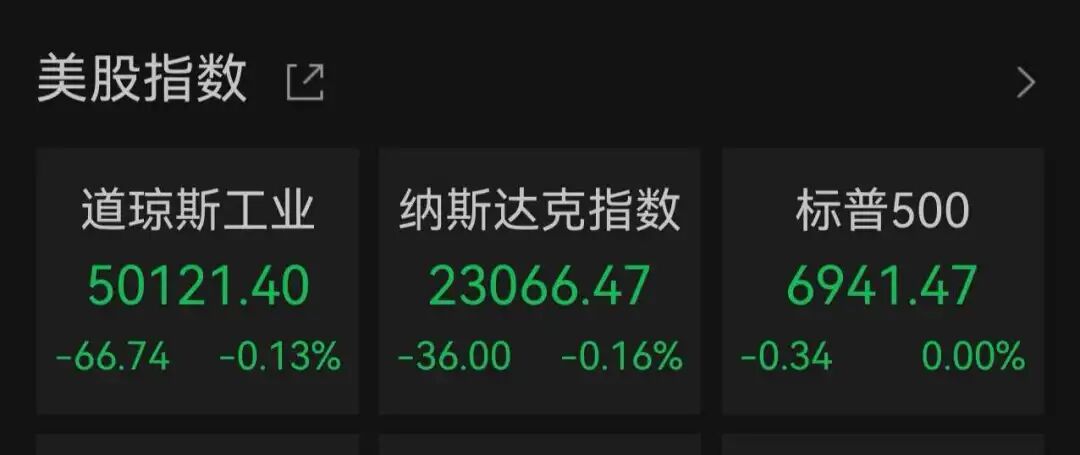
Market Overview - The US stock market experienced slight declines, with the Dow Jones down 0.13% at 50,121.4 points, the S&P 500 down marginally at 6,941.47 points, and the Nasdaq down 0.16% at 23,066.47 points [1][3] - The Wind US Technology Seven Giants Index fell by 0.57%, with notable declines in Alphabet-C and Microsoft, both dropping over 2% [1][3] Employment Data - The US Labor Department reported that non-farm payrolls increased by 130,000 in January, significantly exceeding market expectations, while the previous month's figure was revised down to 48,000 [1] Technology Sector Analysis - The technology sector is experiencing a shift from "unilateral growth" to a "painful transition," facing dual pressures: AI-related anxieties and tightening liquidity [3] - Concerns over the valuation of software stocks have intensified, particularly due to fears that non-public large model companies may disrupt the software ecosystem, leading to a reevaluation of software stock valuations [3] Commodity Prices - International gold and silver prices saw increases, with COMEX gold futures rising by 1.53% to $5,107.80 per ounce and COMEX silver futures up 4.6% to $84.085 per ounce [4] - NYMEX WTI crude oil and ICE Brent crude oil both rose by over 1% [4] Venezuela-US Energy Discussions - The interim president of Venezuela met with the US Secretary of Energy to discuss energy-related agendas, including oil, natural gas, mining, and electricity projects [5] - This meeting marks a significant diplomatic engagement following recent military actions by the US in Venezuela, with discussions aimed at establishing a "new relationship" [6]
[2月8日]美股指数估值数据(全球股票、商品深V反弹;全球指数星级更新)
银行螺丝钉· 2026-02-08 13:39
Group 1 - The global stock and commodity markets experienced significant volatility this week, with a 1.5% decline in the global stock index and a 4% drop in the Nasdaq 100 index [3][4][5]. - Commodity prices also saw large fluctuations, with gold dropping by 10% and silver experiencing even larger declines [6][7]. - However, by Friday evening, global markets rebounded sharply, with the global stock index rising over 2% and commodities like gold and silver also increasing significantly [10][11][12]. Group 2 - The initial market volatility was attributed to concerns over the uncertainty surrounding the Federal Reserve's interest rate cuts, especially following Trump's nomination of a hawkish candidate for the Fed [15][16]. - This uncertainty led to a tightening of liquidity, adversely affecting leveraged investors and growth-style stocks, which are sensitive to liquidity changes [17][23]. - The Fed's recent comments indicating a potential decrease in inflation helped alleviate short-term liquidity concerns, contributing to the market rebound on Friday [18][20][22]. Group 3 - The tightening of liquidity this year has been particularly unfavorable for leveraged investors and growth/small-cap stocks, leading to potential short-term volatility [23][24]. - Despite this, the Fed is expected to cut rates again in 2026, and there is currently ample liquidity in both USD and RMB markets [25][27]. - Attention should be paid to the trends in USD interest rates in the second half of the year, as the Fed's rate cycle typically lasts 3-5 years [28][30]. Group 4 - A star rating chart for the global stock market indicates that the market was undervalued in previous years (2018, 2020, 2022) and has recently returned to a rating of around 4.1-4.2 stars after a significant drop in April 2025 [32]. - Currently, the global stock index is rated around 2.9 stars, suggesting it is not particularly cheap [32]. - The star rating system indicates that a 4-5 star rating represents relatively low valuation, while a 1-2 star rating indicates a high valuation [33]. Group 5 - There are global stock index funds available in overseas markets, with a total scale exceeding one trillion USD, but there are currently no such funds available in mainland China [35]. - The company has launched a "Global Index Advisory Portfolio" that diversifies investments across various stock markets, including US, UK, Hong Kong, and A-shares [36]. - Interested investors can engage with the advisory service to simulate similar investment effects [37][39]. Group 6 - The new book "Dividend Index Fund Investment Guide" has been released and quickly topped sales charts on platforms like JD.com [41]. - This book aims to address common questions about dividend products and is designed to be accessible for beginners, allowing for quick reading and understanding [43][44].

国际市场修复,如何影响国内市场?
Hu Xiu· 2026-02-08 11:46
Group 1 - The global stock market has shown signs of recovery, with a notable rebound in the last two trading days, particularly in the US market, which rose approximately 2% last Friday [3] - The rebound in the US and European markets is attributed to two key factors: the latest economic data was not as concerning as previously feared, and investors reassessed the new Federal Reserve chairman, viewing him as potentially less hawkish than initially thought [3] - The recovery in the stock market is expected to have a stabilizing effect on the Hong Kong market, which is closely linked to overseas markets and typically exhibits a high positive correlation [3] Group 2 - The recent movements in the consumer and brokerage sectors were not detailed in the provided content, thus no specific insights can be summarized for these areas [1][4]
黄金暴跌原油跳涨为何反向?沃什政策信号引爆全球资产重定价
Sou Hu Cai Jing· 2026-02-06 15:19
Core Insights - The sudden divergence in the prices of gold and oil highlights a significant shift in market dynamics triggered by hawkish comments from Federal Reserve Vice Chairman Waller, indicating a potential end to quantitative easing [1][3] Group 1: Market Reactions - Gold futures plummeted by 9% within 15 minutes, while Brent crude oil prices surged past $70, showcasing an unusual separation between these traditionally correlated safe-haven assets [1] - Waller's remarks on "potentially ending quantitative easing early" prompted algorithmic traders to react swiftly, leading to a massive sell-off in gold futures, with over 200 tons sold during the Asian trading session [3][5] Group 2: Asset Sensitivity to Interest Rates - The sharp decline in gold prices is attributed to its nature as a "long-duration zero-coupon bond," where a 20 basis point increase in the 10-year Treasury yield significantly raises the opportunity cost of holding gold [5] - In contrast, the oil market's rally is driven by geopolitical risks, particularly tensions in the Middle East, overshadowing the impact of the Fed's tapering [5] Group 3: Trading Dynamics - The market witnessed a flash crash in gold due to the magnetic effect of algorithmic trading, with over 80 CTA funds triggering stop-loss orders as gold fell below the critical support level of $5,450 [5] - Conversely, algorithmic trading in the oil market acted as an accelerator for price increases, generating substantial buy orders as Brent crude surpassed a three-month high of $68 [5] Group 4: Long-term Implications - A significant revaluation is underway, with record outflows from gold ETFs and a surge in oil call option volumes to a five-year high, indicating a shift in how inflation-hedging assets are perceived [7] - The divergence between gold and oil may signal a more enduring style shift in investment strategies, reminiscent of the post-2008 bull market in gold, suggesting that 2025 could mark a new era for commodity rotation [7]
全球市场资金大撤离,黄金、白银、原油、币圈、美股全线下挫
Xin Lang Cai Jing· 2026-02-06 01:58
热点栏目 自选股 数据中心 行情中心 资金流向 模拟交易 客户端 片来源:智通财经 全球金融市场遭遇大规模资金撤离。 图 北京时间2月6日凌晨,美股三大指数大跌,道指跌约600点,纳指跌近2%。贵金属市场亦全线重挫,现 货白银一度暴跌超20%,现货黄金一度大跌超4%。 另外,国际油价也大幅下跌,WTI原油期货价格收跌2.84%,报63.29美元/桶;布伦特原油期货价格收跌 2.75%,报67.55美元。 截至北京时间08:30,比特币日内暴跌超13%,以太坊跌幅超23%。CoinGlass数据显示,最近24小时, 加密货币市场共有超43万人爆仓。 值得注意的是,自去年10月触及12.6万美元的历史峰值以来,比特币价格已累计暴跌超过48%,总市值 从巅峰时期的2.48万亿美元大幅缩水至1.27万亿美元。特朗普胜选后引发的加密货币投机行情带来的涨 幅,如今已悉数归零。 资金流向数据印证了市场的恐慌情绪。比特币交易所交易基金(ETF)在周一录得约5.62亿美元净流入 后,接下来两个交易日有超过8亿美元资金流出。CryptoQuant报告更指出,去年同期还在大量购买比特 币的美国ETF,如今已转为净卖出方。 1月30 ...

中信建投期货:2月3日工业品早报
Xin Lang Cai Jing· 2026-02-03 01:27
Group 1: Copper Market Analysis - The main copper futures in Shanghai fell by 1% to 100,820 yuan, while London copper is at the lower end of $13,000 [4][17] - The ISM manufacturing PMI in the US rebounded to 52.6 in January, exceeding market expectations, indicating an expansion in manufacturing sentiment which has stabilized copper prices [5][17] - The increase in copper warehouse receipts on the Shanghai Futures Exchange by 1,676 tons to 158,000 tons, and a decrease in LME copper stocks by 300 tons to 174,000 tons, suggests a mixed supply-demand outlook [5][17] - The current trading range for Shanghai copper futures is expected to be between 99,800 and 102,800 yuan per ton [17] Group 2: Nickel and Stainless Steel Market - The nomination of Waller as the next Federal Reserve Chair has led to expectations of tightened liquidity, causing a pullback in the non-ferrous sector [6][18] - Nickel ore shipments from the Philippines are hindered by weather conditions, while supply from Indonesia is also tight due to rainfall [6][18] - The market for stainless steel continues to face oversupply pressures, with limited terminal demand, although suppliers are showing a strong willingness to maintain prices due to low arrivals and strong cost support [6][18] Group 3: Aluminum Market Insights - Alumina futures prices have rebounded slightly, with spot prices stabilizing; a northwest aluminum plant has tendered for 10,000 tons of alumina at a price of 2,920-2,930 yuan per ton, reflecting a rise of 4-50 yuan from previous transactions [20][21] - The overall supply remains high, with both production cuts and restarts occurring, and the upcoming Spring Festival may lead to further maintenance by some companies [20][21] - The trading range for alumina futures is projected to be between 2,600 and 2,900 yuan per ton, with a strategy of high selling and low buying within this range [21] Group 4: Zinc and Lead Market Overview - Zinc prices opened lower but are expected to recover; the ISM manufacturing data from the US indicates a strong equity market, which may improve macro sentiment [22][23] - The supply side for lead remains tight due to limited primary lead concentrate availability, while recycled lead supply is relatively loose [23] - The trading range for lead futures is anticipated to be between 16,500 and 17,500 yuan per ton, with expectations of a range-bound market due to weak supply and demand dynamics [23] Group 5: Precious Metals Market Dynamics - Precious metals have experienced significant volatility, with gold and silver prices declining but palladium showing signs of recovery [25] - The strong ISM manufacturing PMI has bolstered the US dollar, adding pressure to precious metals, while geopolitical tensions and potential sanctions on Russian platinum may support palladium prices [25] - The recommended trading ranges for precious metals are as follows: gold at 1,050-1,140 yuan per gram, silver at 21,000-24,000 yuan per kilogram, and platinum at 530-590 yuan per gram [25]


贵金属市场遭遇黑色星期一 金银价格剧烈震荡原因找到了
Sou Hu Cai Jing· 2026-02-02 14:33
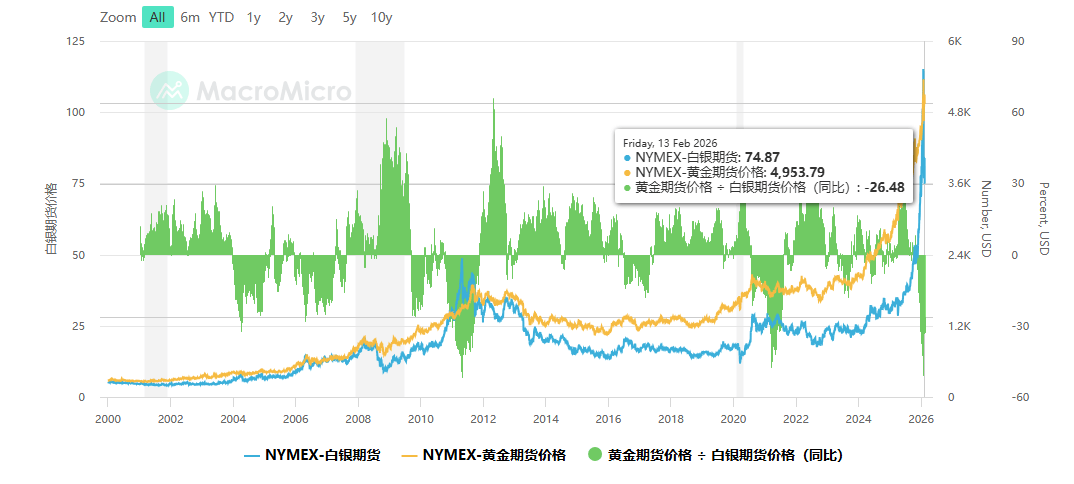
Group 1 - The core viewpoint of the article highlights the significant fluctuations in gold and silver prices, attributed to the nomination of Kevin Walsh as the next Federal Reserve Chairman, which raised concerns about tightening liquidity in the financial markets [1] - During the Asian trading session, gold futures prices dropped to $4423.2 per ounce, while silver futures fell to $71.2 per ounce, indicating a severe sell-off in the precious metals market [1] - The market reacted to Walsh's hawkish stance, which is perceived as less favorable for non-yielding assets like gold and silver, leading to a strong dollar index and reduced attractiveness for international buyers [1] Group 2 - The Chicago Mercantile Exchange raised margin requirements for gold and silver futures, increasing the margin ratio for gold from 6.6% to 8.8% and for silver from 12.1% to 16.5%, effective after the close on Monday [1] - The increase in margin requirements necessitates that investors provide more cash or equivalent assets to maintain their positions, which could lead to forced liquidations among leveraged traders and a freeze in liquidity [1] - Despite the recent sharp decline, several institutions believe that the long-term narrative regarding the dollar credit crisis and the restructuring of global order has not fundamentally changed, suggesting that precious metals may enter a phase of high volatility after the drop [1]
贵金属板块全线遭遇抛售 沪银、铂钯期货主力合约封跌停
Jin Tou Wang· 2026-02-02 07:00
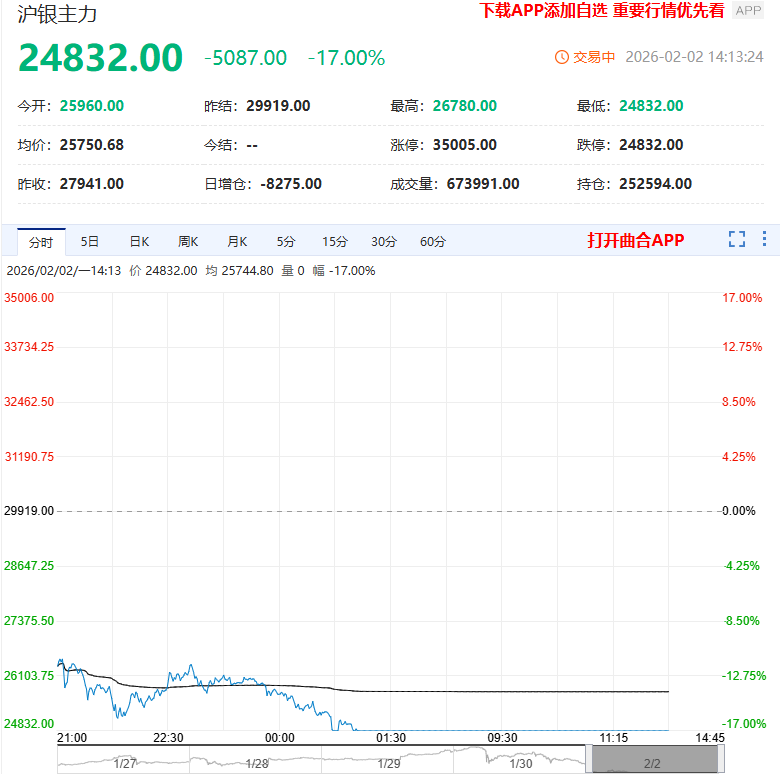
2月2日,贵金属板块全线遭遇抛售。其中,沪银、铂钯期货主力合约封跌停,跌幅达17%、16%,分别报 24832.00元/千克、552.15元/克和413.7元/克;沪金期货主力合约跌超11%。 国信期货表示,族金属走势锚定金银板块宏观情绪,沃什提名动摇宽松叙事,CME提保加剧流动性收紧;铂钯 或呈现震荡偏弱局势,建议采取多看少动的观望态度。 ...