
产能调控

Search documents
成材:关注周度基本面变化,钢价震荡运行-20250925
Hua Bao Qi Huo· 2025-09-25 03:52
Group 1: Report Industry Investment Rating - The investment rating for the industry is "Low-level operation" [2] Group 2: Core View of the Report - The steel price is oscillating. The downstream situation remains weak, and the price is consolidating at a low level. Attention should be paid to weekly fundamental changes [1] Group 3: Summary Based on Related Information Policy Information - The Ministry of Industry and Information Technology and other departments issued the "Work Plan for Steady Growth of the Building Materials Industry (2025 - 2026)", aiming to strictly control cement and glass production capacity and prohibit the addition of cement clinker and flat glass production capacity [1] Production and Inventory Data - In mid-September, key steel enterprises produced 20.73 million tons of crude steel, with an average daily output of 2.073 million tons, a 0.6% decrease from the previous period. The steel inventory was 15.29 million tons, a decrease of 530,000 tons (3.4%) from the previous ten-day period [1] Cost and Profit Data - This week, the average tax-excluded hot metal cost of mainstream sample steel mills in Tangshan was 2,228 yuan/ton, and the average tax-included billet cost was 2,986 yuan/ton, a week-on-week decrease of 5 yuan/ton. Compared with the billet ex-factory price of 3,030 yuan/ton on September 24, the average profit per ton for steel mills was 44 yuan, a week-on-week decrease of 25 yuan/ton [1] Market Performance - Yesterday, finished products oscillated and rebounded, driven by the rise of coking coal and glass in the afternoon [1] Factors to Watch - Macro policies and downstream demand conditions are the factors to watch in the later stage [2]
玻璃盘中大涨,发生了什么?
对冲研投· 2025-09-24 12:06
Group 1 - The Ministry of Industry and Information Technology held a meeting regarding the glass industry, with plans to increase prices by 100 yuan, leading to a surge in glass prices during trading [4] - The "Building Materials Industry Stabilization and Growth Work Plan (2025-2026)" was issued, emphasizing strict control over cement and glass production capacity, prohibiting new capacity and requiring capacity replacement plans for any new or modified projects [4][5] - The plan encourages the use of clean energy and the elimination of outdated production capacity, focusing on improving environmental performance and energy efficiency in the glass industry [5][6] Group 2 - The glass industry has seen marginal improvements in September, with inventory reduction driven by downstream stockpiling, although overall demand remains weak [8] - The current production capacity has slightly increased to 160,000 tons per day, which is historically high, but the market is still characterized by high supply and weak demand [8] - There is a potential for short-term price fluctuations due to increased sentiment and production control measures, but long-term prospects may revert to weak demand if capacity reductions do not materialize [10] Group 3 - The glass industry is currently in a low valuation environment, presenting opportunities for low long positions, especially if production capacity adjustments are implemented [9][10] - The expansion of soda ash production capacity poses a supply pressure that could negatively impact glass demand if capacity controls are enforced [10] - A strategy of going long on glass while shorting soda ash may be considered due to the anticipated supply adjustments in the glass sector [10]


商品日报(9月24日):玻璃午后大幅拉涨 原油系全线走高
Xin Hua Cai Jing· 2025-09-24 11:59
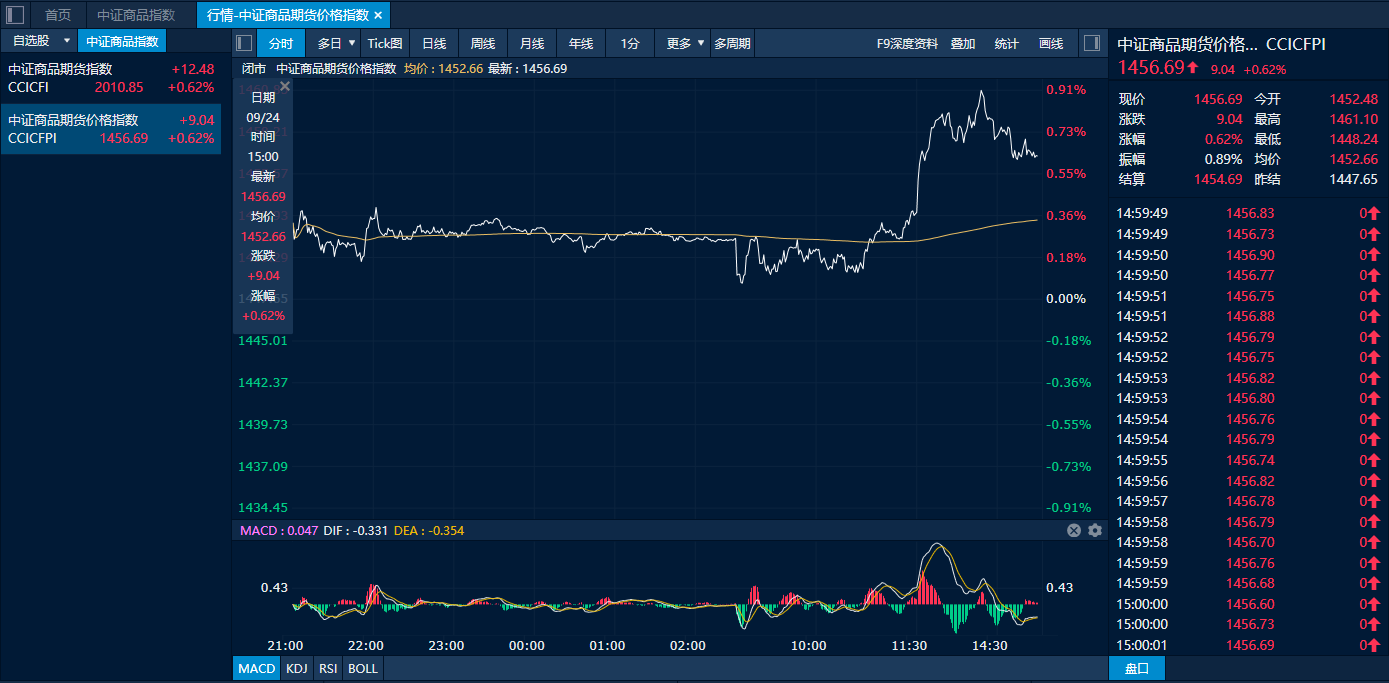
Group 1: Market Overview - The domestic commodity futures market on September 24 saw more gains than losses, with the glass main contract rising over 4% and fuel oil main contract increasing over 3% [1][2] - The China Securities Commodity Futures Price Index closed at 1456.69 points, up 9.04 points or 0.62% from the previous trading day [1] Group 2: Glass Industry Insights - The glass main contract experienced a significant increase, with a peak rise of nearly 8% during the trading session, ultimately closing with a 4.74% gain [2] - Market sentiment was driven by rumors of a meeting among glass enterprises and the issuance of a growth stabilization plan for the building materials industry by multiple government departments [2] - Despite the positive sentiment, the glass industry is still at the bottom of the real estate cycle, with weak demand and a need for capacity reduction to address oversupply [2] Group 3: Oil Market Dynamics - Domestic oil-related products rose across the board, with SC crude oil and fuel oil main contracts recording gains of over 1% and 3%, respectively [3] - Concerns over global supply tightening were heightened by recent drone attacks on Russian refineries and potential diesel export bans by the Russian government [3] - Short-term price trends for fuel oil are expected to remain strong due to cost support and recovering demand, although a potential decline in purchasing sentiment is anticipated post-holiday [3] Group 4: Other Commodity Movements - The shipping European line saw a rise, with the main contract increasing over 2% after peaking at over 6% during the session [4] - Oilseed and oil products remained weak, with the main contracts for soybean meal and oil experiencing slight declines, while palm oil showed a small increase due to tightening supply expectations [5][6] - Palm oil prices may rise by approximately 15% as the seasonal high production cycle ends, and potential shortages could arise if Indonesia implements specific policies [6]
农林牧渔行业投资策略报告:生猪养殖盈利收窄,宠物食品延续增长-20250924
CAITONG SECURITIES· 2025-09-24 08:07
Core Insights - The report indicates a narrowing profitability in pig farming while the pet food sector continues to grow [1][5] - The investment rating is maintained as "positive" for the sector [1] Pig Farming - Supply pressure has led to a decline in pig prices, with the average price in July-August 2025 at 14.63 CNY/kg, down from 14.96 CNY/kg in Q2 2025 [5] - The average profitability for self-breeding and purchased piglets in the industry has shifted to losses, with figures of 53.0 CNY/head for self-breeding and -106.7 CNY/head for purchased piglets as of September 19 [5] - The outflow of pigs from listed companies has shown a growth rate of 26.2% in Q2 2025 and 20.0% in July-August 2025 [5] - The report suggests that the ongoing policy guidance for capacity adjustment and weight reduction will likely elevate the price center of pigs in the future [5] - Recommended companies for investment include Muyuan Foods, Wens Foodstuff, Dekang Agriculture, Juxing Agriculture, Shennong Group, Tiankang Biological, and Tangrenshen [5] Animal Health - Demand for animal health products is on the rise, with significant year-on-year growth in various vaccines, such as a 30% increase for swine fever vaccines in July-August 2025 [5] - Companies like Keqian Biological and Ruipu Biological are highlighted for their strong internal growth potential due to new product launches [5] Poultry Farming - The price of white feather chickens has rebounded due to seasonal demand and tighter supply, with an average price of 6.92 CNY/kg as of September 19, 2025 [5] - The report notes a 17.66% year-on-year decrease in the number of breeding chickens updated in the first eight months of 2025, indicating potential long-term benefits for the white feather chicken industry [5] - Recommended companies include Shennong Development and Yisheng Livestock [5] Pet Food Sector - Domestic sales of pet food are driven by consumption upgrades and domestic substitution, with a reported growth rate of 11% across major e-commerce platforms from January to August 2025 [5] - The report highlights the introduction of new products and the strengthening of brand power among leading companies [5] - Recommended companies in the pet food sector include Guibao Pet, Zhongchong Co., Petty Co., and Lusi Co. [5]





生猪养殖行业月度跟踪:农林牧渔行业:猪价持续下行,政策调控再加强-20250924
Dongxing Securities· 2025-09-24 07:27
Investment Rating - The industry investment rating is "Positive" for the agricultural, forestry, animal husbandry, and fishery sector [5]. Core Insights - In August 2025, pig prices continued to decline, with average prices for piglets, live pigs, and pork at 33.63 CNY/kg, 14.35 CNY/kg, and 24.98 CNY/kg respectively, showing month-on-month changes of -5.87%, -3.77%, and -1.52% [1][16]. - By September 19, 2025, the national average price for live pigs dropped to 12.82 CNY/kg, marking the lowest level in three years [1][16]. - The supply side saw a significant increase in market pressure due to a recovery in supply and concentrated selling by smallholders, leading to a notable price drop [1][18]. - Demand was suppressed by high temperatures in August, resulting in weak sales of pork products, with limited uplift from the back-to-school season [1][18]. - The Ministry of Agriculture and Rural Affairs reported a slight decrease in the number of breeding sows to 40.42 million heads in July, indicating a trend of capacity reduction [22]. Summary by Sections Industry Supply and Demand - August saw a significant decline in pig prices, with the average price for live pigs falling below 14 CNY/kg [1][16]. - The supply pressure increased as smallholders concentrated their sales, leading to a clear price drop [1][18]. - Demand remained weak due to high temperatures affecting consumption [1][18]. Policy and Capacity Control - A meeting held on September 16 by the Ministry of Agriculture and the National Development and Reform Commission emphasized strict capacity control measures, aiming to reduce the number of breeding sows by 1 million heads by January 2026 [2][22]. - The government aims to stabilize pig prices while reducing excess capacity, with short-term downward pressure on prices expected [2][22]. Market Performance and Company Insights - In August, major companies like Muyuan Foods, Wens Foodstuff, and New Hope reported average sales prices of 13.51 CNY/kg, 13.90 CNY/kg, and 13.54 CNY/kg respectively, all showing month-on-month declines [9][30]. - The total sales volume for listed pig farming companies increased by 6.48% month-on-month, with a year-on-year growth of 28.44% [33][38]. - Companies with cost advantages, such as Muyuan Foods and Wens Foodstuff, are expected to maintain profitability and benefit from better earnings elasticity once price rebounds occur [27][40].


六部门:严格水泥玻璃产能调控
Xin Hua Cai Jing· 2025-09-24 07:25
Core Viewpoint - The Ministry of Industry and Information Technology, along with other departments, has issued a work plan for the construction materials industry aimed at stabilizing growth from 2025 to 2026, emphasizing strict control over cement and glass production capacity [1] Group 1: Capacity Control Measures - New production capacity for cement clinker and flat glass is strictly prohibited, and any new or modified projects must develop capacity replacement plans [1] - The transfer of cement clinker and flat glass production capacity from non-key air pollution prevention areas to key areas is strictly forbidden [1] - Cement companies are required to formulate capacity replacement plans by the end of 2025 for any capacity exceeding project filings, ensuring alignment between actual and filed capacities [1] Group 2: Environmental and Quality Standards - The plan aims to eliminate outdated production capacities for cement and flat glass through legal and regulatory means, focusing on quality, environmental protection, energy consumption, and safety standards [1] - Enterprises with low environmental performance are encouraged to gradually exit the market [1] Group 3: Industry Transformation Initiatives - The transition of risk warning for photovoltaic glass production capacity from project management to planning guidance is to be accelerated [1] - Leading companies are encouraged to collaborate with social capital to explore the establishment of green low-carbon transformation funds, promoting the exit of inefficient production capacities through market-oriented operations [1]
六部门:严禁新增水泥熟料、平板玻璃产能,新建改建项目须制定产能置换方案
Zheng Quan Shi Bao Wang· 2025-09-24 07:10
Core Viewpoint - The Ministry of Industry and Information Technology, along with five other departments, has issued a work plan for the construction materials industry aimed at stabilizing growth from 2025 to 2026, emphasizing strict control over cement and glass production capacity [1] Group 1: Capacity Control Measures - New production capacity for cement clinker and flat glass is strictly prohibited, and any new or modified projects must develop capacity replacement plans [1] - The transfer of cement clinker and flat glass production capacity from non-key air pollution prevention areas to key air pollution prevention areas is strictly forbidden [1] - Cement companies are required to formulate capacity replacement plans by the end of 2025 for any capacity exceeding project filings, ensuring alignment between actual and filed capacities [1] Group 2: Environmental and Quality Standards - The plan emphasizes the role of comprehensive standards related to quality, environmental protection, energy consumption, and safety in phasing out outdated cement and flat glass production capacities [1] - Enterprises with low environmental performance are encouraged to gradually exit the market [1] Group 3: Industry Transformation Initiatives - The transition of risk warning for photovoltaic glass production capacity is shifting from project management to planning guidance [1] - Key enterprises are encouraged to collaborate with social capital to explore the establishment of green low-carbon transformation funds, utilizing market-oriented operations to accelerate the exit of inefficient capacities [1]
六部门:严禁新增水泥熟料、平板玻璃产能 新建改建项目须制定产能置换方案
Mei Ri Jing Ji Xin Wen· 2025-09-24 07:06
Core Viewpoint - The Ministry of Industry and Information Technology, along with other governmental departments, has issued a work plan for the construction materials industry aimed at stabilizing growth from 2025 to 2026, with strict controls on cement and glass production capacity [1] Group 1: Capacity Control Measures - New production capacity for cement clinker and flat glass is strictly prohibited, and any new or modified projects must include capacity replacement plans [1] - The transfer of cement clinker and flat glass production capacity from non-key air pollution prevention areas to key areas is strictly forbidden [1] - Cement companies are required to develop capacity replacement plans for any production capacity exceeding project filings by the end of 2025, ensuring alignment between actual and registered capacity [1] Group 2: Environmental and Quality Standards - The plan emphasizes the importance of quality, environmental protection, energy consumption, and safety standards in phasing out outdated cement and flat glass production capacities [1] - Companies with low environmental performance are encouraged to gradually exit the market [1] Group 3: Industry Transformation Initiatives - There is a push to transition risk warnings for photovoltaic glass production capacity from project management to planning guidance [1] - Leading companies are encouraged to collaborate with social capital to explore the establishment of green low-carbon transformation funds, facilitating the exit of inefficient production capacities through market-oriented operations [1]
TrendForce集邦咨询:十一长假将至 LCD电视面板大厂计划调降稼动率稳运维
Zhi Tong Cai Jing· 2025-09-24 05:49
Group 1 - TrendForce's latest survey indicates that demand for LCD TV panels is expected to slow down by Q4 2025, prompting major manufacturers like BOE, CSOT, and HKC to implement production breaks during China's National Day holiday [1][2] - The estimated production utilization rate for October is projected to decrease by six percentage points from the manufacturers' August plans, dropping to 79% [1] - The holiday strategy is aimed at maintaining low inventory levels before the end of October and reducing operational costs [1] Group 2 - BOE, CSOT, and Sharp plan to take a production break of five to seven days for their 10.5-generation production lines during the holiday, with an estimated utilization rate of around 74% for October [2] - HKC's main production lines are expected to implement a five-day holiday, leading to an estimated utilization rate of approximately 77.5% for the 8.6-generation panels [2] - Demand for October is supported by preparations for the Double 11 shopping festival, but is still expected to decrease by 4.8% compared to September, prompting manufacturers to control production to alleviate potential supply-demand pressure [2]



生猪行业进入亏损区间,反内卷或持续发力,建议关注成本优秀龙头:农林牧渔行业周报(20250915-20250919)-20250923
Hua Yuan Zheng Quan· 2025-09-23 07:20
Investment Rating - The industry investment rating is "Positive" (maintained) [3] Core Viewpoints - The swine industry has entered a loss-making phase, with policies aimed at reducing internal competition likely to continue, suggesting a focus on cost-efficient leading companies [3][5] - The latest weekly pig price is 13.15 CNY/kg (down 0.37 CNY/kg week-on-week), indicating the industry is in a loss zone, with a potential stabilization of prices in the future [5][15] - The agricultural policy is undergoing a significant transformation, emphasizing the protection of farmers' rights and the activation of corporate innovation, which may lead to a focus on technology and innovative business models [6][16] Summary by Sections 1. Swine Industry - The swine industry is experiencing capacity control measures, with a recent meeting involving 25 pig enterprises to implement production capacity adjustments [6][15] - The average weight of pigs at market is 128.45 kg (up 0.13 kg week-on-week), while the price of 15 kg piglets is 358 CNY/head (down 36 CNY/head) [5][15] - The report suggests that leading companies with cost advantages and community engagement will benefit from excess profits and valuation premiums [6][16] 2. Poultry Industry - The chicken industry faces a persistent contradiction of "high capacity, weak consumption," leading to losses that may force breeding farms to reduce capacity [7][17] - The price of chicken chicks is 3.40 CNY/bird (up 7.9% week-on-week), while the price of broilers is 3.38 CNY/kg (down 1.46% week-on-week) [7][17] - Focus on companies with improving ROE and sustainable growth, particularly high-quality imported breeding stock and integrated enterprises [7][17] 3. Feed Industry - The report recommends Hai Da Group due to improved management effectiveness and increased capacity utilization, leading to growth in volume and profit [8][18] - The prices of various fish species have shown mixed trends, with some experiencing significant year-on-year declines [8][18] 4. Pet Industry - The pet industry is seeing a consolidation of leading brands, with expectations of recovery in the third quarter following a weak second quarter [10][20] - Continued focus on strong domestic brands and companies with good performance in overseas markets [10][20] 5. Agricultural Products - The USDA's September report is bearish, with adjustments in soybean planting area and yield forecasts impacting market expectations [11][21] - The report highlights the importance of monitoring U.S.-China trade negotiations and weather conditions affecting soybean planting [11][21] 6. Market and Price Situation - The agricultural index has decreased by 2.70% compared to the previous week, with the overall market showing mixed performance [22][29] - The report notes the impact of external factors such as African swine fever outbreaks in neighboring countries on market stability [50]
