
供需矛盾

Search documents
广发期货《有色》日报-20250915
Guang Fa Qi Huo· 2025-09-15 12:30
1. Report Industry Investment Ratings No relevant information is provided in the reports. 2. Core Views Copper - The macro situation indicates that a September interest rate cut is certain, but the long - term impact on copper prices is limited. The fundamental situation shows "weak reality + stable expectations". In the future, copper pricing will return to macro trading, and prices will at least remain volatile. The main reference range is 79,500 - 82,000 yuan/ton [1]. Aluminum - For alumina, it is expected to fluctuate between 2,900 - 3,200 yuan/ton in the short - term. For aluminum, prices are expected to fluctuate around the peak - season expectations and actual consumption this week, with the main contract reference range of 20,600 - 21,400 yuan/ton [3]. Aluminum Alloy - The price of cast aluminum alloy futures followed the rise of aluminum prices last week. It is expected that the spot price will remain firm, and the inventory accumulation rate will slow down. The main contract reference range this week is 20,200 - 21,000 yuan/ton [5]. Zinc - The supply of zinc is expected to be loose, and the upside space of Shanghai zinc is limited. In the short - term, prices may rise due to macro - drivers, but the fundamentals lack the elasticity for continuous upward movement. The main reference range is 21,800 - 22,800 yuan/ton [8]. Tin - Supply remains tight, and the expectation of interest rate cuts in the US is strengthening. It is expected that tin prices will continue to fluctuate at a high level, with the operating range of 265,000 - 285,000 yuan/ton [11]. Nickel - In the short - term, there is limited unilateral driving force. It is expected that the market will adjust within a range, with the main reference range of 118,000 - 124,000 yuan/ton [13]. Stainless Steel - The short - term market is expected to fluctuate within a range, with the operating range of 12,600 - 13,400 yuan/ton [15]. Lithium Carbonate - The short - term market is expected to fluctuate and consolidate, with the price center of reference in the range of 70,000 - 74,000 yuan/ton [18]. 3. Summary by Directory Copper Price and Basis - SMM 1 electrolytic copper price increased by 0.72% to 80,755 yuan/ton; the import profit and loss increased by 264.49 yuan/ton to - 17 yuan/ton [1]. Fundamental Data - In August, electrolytic copper production was 117.15 million tons, a month - on - month decrease of 0.24%; in July, the import volume was 29.69 million tons, a month - on - month decrease of 1.20% [1]. Aluminum Price and Spread - SMM A00 aluminum price increased by 0.77% to 21,020 yuan/ton; the import profit and loss decreased by 134.8 yuan/ton to - 1374 yuan/ton [3]. Fundamental Data - In August, alumina production was 773.82 million tons, a month - on - month increase of 1.15%; electrolytic aluminum production was 373.26 million tons, a month - on - month increase of 0.30% [3]. Aluminum Alloy Price and Spread - SMM East China ADC12 price increased by 0.48% to 21,050 yuan/ton; the scrap - to - refined price difference in Foshan for broken primary aluminum increased by 6.98% to 1,432 yuan/ton [5]. Fundamental Data - In August, the production of recycled aluminum alloy ingots was 61.50 million tons, a month - on - month decrease of 1.60%; the production of primary aluminum alloy ingots was 27.10 million tons, a month - on - month increase of 1.88% [5]. Zinc Price and Spread - SMM 0 zinc ingot price increased by 0.23% to 22,230 yuan/ton; the import profit and loss decreased by 135.84 yuan/ton to - 2805 yuan/ton [8]. Fundamental Data - In August, refined zinc production was 62.62 million tons, a month - on - month increase of 3.88%; in July, the import volume was 1.79 million tons, a month - on - month decrease of 50.35% [8]. Tin Spot Price and Basis - SMM 1 tin price increased by 0.37% to 271,100 yuan/ton; the LME 0 - 3 premium decreased by 55.74% to 27.00 US dollars/ton [11]. Fundamental Data - In July, tin ore imports were 10,278 tons, a month - on - month decrease of 13.71%; SMM refined tin production was 15,940 tons, a month - on - month increase of 15.42% [11]. Nickel Price and Cost - SMM 1 electrolytic nickel price increased by 1.15% to 122,850 yuan/ton; the cost of integrated MHP to produce electrolytic nickel decreased by 2.81% to 118,531 yuan/ton [13]. Supply and Inventory - In August, China's refined nickel production was 32,200 tons, a month - on - month increase of 1.26%; the import volume was 17,536 tons, a month - on - month decrease of 8.46% [13]. Stainless Steel Price and Spread - The price of 304/2B (Yuantong Hongwang 2.0 coil) remained unchanged at 13,150 yuan/ton; the futures - spot price difference increased by 11.11% to 450 yuan/ton [15]. Fundamental Data - In August, the production of 300 - series stainless steel crude steel in China (43 enterprises) was 171.33 million tons, a month - on - month decrease of 3.83%; the import volume was 7.30 million tons, a month - on - month decrease of 33.30% [15]. Lithium Carbonate Price and Basis - SMM battery - grade lithium carbonate average price decreased by 0.55% to 72,450 yuan/ton; the lithium spodumene concentrate CIF average price decreased by 0.24% to 842 US dollars/ton [18]. Fundamental Data - In August, lithium carbonate production was 85,240 tons, a month - on - month increase of 4.55%; the total inventory was 94,177 tons, a month - on - month decrease of 3.75% [18].
“生产性”信贷的魔咒
一瑜中的· 2025-09-15 01:45
Core Viewpoint - Since 2020, productive credit (excluding real estate and infrastructure loans) has been continuously increasing, while terminal demand credit (related to real estate and infrastructure) has been declining, indicating that credit support is more reflected on the supply side rather than the demand side [2][4][5] Group 1: Productive Credit Needs to Decline - A clear definition is established: terminal demand credit includes infrastructure loans, real estate loans, and consumer loans, while productive credit includes business loans and non-real estate infrastructure loans [4][13] - Data observation shows that since 2020, the growth of productive credit has significantly outpaced that of terminal demand credit, with productive credit increasing by 4.8 trillion compared to a decrease of 4.9 trillion in terminal demand credit from 2019 to 2024 [4][13] - The excessive increase in productive credit may exacerbate supply-demand contradictions, where productive investment serves as both current demand and future supply [4][15] Group 2: Weekly Economic Observation - The Huachuang Macro WEI index as of September 7, 2025, is at 6.93%, up 0.17 points from the previous week, indicating a recovery in economic activity driven mainly by infrastructure and durable goods consumption [6][17] - Infrastructure indicators such as asphalt plant operating rates and cement shipment rates have improved compared to last year, with asphalt plant operating rates at 34.9%, up 9% year-on-year [7][26] - Real estate sales have shown a significant increase, with a 16.6% year-on-year growth in residential sales in 67 cities during the first five days of September [8][24] Group 3: Price Trends - Prices of gold, oil, and copper have risen, with COMEX gold at $3646.3 per ounce, up 1.3%, and LME copper at $10068 per ton, up 1.2% [8][44] - Domestic commodity prices have remained stable, while overseas prices have increased, indicating a divergence in price trends [8][44] Group 4: Interest Rates and Debt - The yield on government bonds has shown an upward trend, with the 10-year government bond yield at 1.8670%, reflecting a steepening yield curve [8][65] - The government has planned to issue new local government bonds amounting to 118.5 billion, indicating a proactive fiscal policy approach [8][49]

市场降温 黑色系期货多品种价格回落
Zheng Quan Shi Bao· 2025-09-03 23:43
Group 1 - The commodity market has cooled down significantly after a surge, with various products experiencing substantial corrections, indicating a shift from emotional speculation back to fundamentals [1][4] - On September 3, Tangshan's average profit margin for steel mills turned negative for the first time in six months, with an average loss of 21 yuan/ton, as rebar prices fell from 3400 yuan/ton to 3100 yuan/ton [1][2] - The decline in lithium carbonate prices is attributed to insufficient destocking, with prices dropping from a peak of 90,000 yuan/ton to 72,000 yuan/ton within two weeks [4][5] Group 2 - The black series futures have seen a rapid price decline due to increasing supply and weak demand, with rebar prices dropping over 300 yuan/ton from their July 30 high of 3439 yuan/ton [2][3] - The average cost of steel billets in Tangshan increased by 8 yuan/ton week-on-week, while the current ex-factory price is 2950 yuan/ton, leading to a loss for steel mills [2][3] - The lithium carbonate production in August reached a record high of over 85,000 tons, marking a 5% month-on-month increase and a 39% year-on-year increase, driven mainly by spodumene [4][5] Group 3 - The market sentiment has deteriorated, with expectations for destocking during the "golden September and silver October" period not meeting prior expectations, leading to short-term price corrections [5] - The overall supply capacity in the lithium industry has improved, although some flexible production lines have shifted to lithium carbonate production, contributing to increased output [4][5] - Future market dynamics may find a balance between policy expectations and fundamental constraints, with potential short-term recovery in market sentiment [5]
市场降温,黑色系期货多品种价格回落
券商中国· 2025-09-03 23:28
Core Viewpoint - The commodity market has recently cooled down after a surge, with various products experiencing significant corrections as the market shifts from emotional speculation back to fundamentals [1] Group 1: Black Metal Futures - On September 3, Tangshan's average profit for steel mills turned negative for the first time in six months, with an average loss of 21 yuan/ton [2][4] - Rebar prices fell from 3,400 yuan/ton to 3,100 yuan/ton, while coke prices dropped from around 1,850 yuan/ton to approximately 1,560 yuan/ton [4] - The steel market remains weak, with Tangshan's steel billet price decreasing by 60 yuan to 2,950 yuan/ton, indicating insufficient terminal demand [4] Group 2: Supply and Demand Dynamics - The black metal market has seen a rapid price decline due to increasing supply and weak demand, with the cost of steel production rising while prices fall [4] - Despite the weak demand for rebar, there are expectations of marginal improvement in demand during September, although overall steel inventory is increasing [5] - The coking coal market is also experiencing inventory accumulation, with a significant drop in auction prices and a high flow rate of unsold products [5] Group 3: Lithium Market Trends - The lithium carbonate futures market has seen a significant decline, with prices dropping from 90,000 yuan/ton to 72,000 yuan/ton in just two weeks [7] - The production of lithium carbonate reached a new high of over 85,000 tons in August, driven by increased output from spodumene sources [8] - Market sentiment remains poor, with expectations for inventory reduction during the "golden September and silver October" period not meeting prior expectations, leading to continued price corrections [8]

黑色建材日报:阅兵限产增加,首轮提降开启-20250902
Hua Tai Qi Huo· 2025-09-02 06:19
Group 1: Report Industry Investment Ratings - Glass: Oscillating weakly [2] - Soda Ash: Oscillating weakly [2] - Ferromanganese: Oscillating [4] - Ferrosilicon: Oscillating [4] Group 2: Core Views of the Report - The glass market has weak demand and high inventory, with insufficient decline in production, leading to continued supply - demand contradictions and weak prices. The soda ash market may see increased production after the end of summer maintenance, and with new capacity coming online in the second half of the year, demand is expected to weaken further, intensifying the supply - demand imbalance [1]. - The ferromanganese and ferrosilicon markets are both in a situation of over - supply. They need to suppress production through losses, and their prices will follow the fluctuations of the sector [3]. Group 3: Summary by Related Catalogs Glass and Soda Ash - **Market Analysis** - Glass: The glass futures market fell sharply yesterday. Downstream procurement is cautious, mainly for rigid demand [1]. - Soda Ash: The soda ash futures market opened low and moved lower yesterday. Downstream demand is mainly for rigid restocking, and prices have generally declined [1]. - **Supply - Demand and Logic** - Glass: Demand remains weak with no significant improvement, high inventory has great pressure to reduce, and production decline is insufficient due to remaining production profits in non - natural gas production lines, resulting in continued supply - demand contradictions and weak prices [1]. - Soda Ash: After the end of summer maintenance, production may gradually recover. With new capacity coming online in the second half of the year, demand is expected to weaken further, intensifying the supply - demand imbalance. The market needs to suppress capacity release through losses, and the premium in the futures market further suppresses prices [1]. - **Strategy** - Glass: Oscillating weakly [2] - Soda Ash: Oscillating weakly [2] Ferromanganese and Ferrosilicon - **Market Analysis** - Ferromanganese: The sentiment in the ferromanganese futures market continued to cool yesterday. The main contract closed at 5,736 yuan/ton, a decline of 0.97%. The spot market has a strong wait - and - see sentiment, with average trading volume [3]. - Ferrosilicon: The ferrosilicon futures market continued to fall yesterday. The main contract closed at 5,532 yuan/ton, a decline of 0.61%. The spot market sentiment is average, and prices have been slightly adjusted downward [3]. - **Supply - Demand and Logic** - Ferromanganese: Production and sales have increased month - on - month, inventory has continued to decline, and costs have slightly decreased. However, the industry still has obvious over - supply, and production needs to be suppressed through losses [3]. - Ferrosilicon: Production and sales have increased, and factory inventory has decreased, but the absolute inventory is still high, suppressing prices. The industry also has obvious over - supply and needs to suppress production through losses [3]. - **Strategy** - Ferromanganese: Oscillating [4] - Ferrosilicon: Oscillating [4]
智昇黄金原油分析:降息或已成定局 降幅或低于预期
Sou Hu Cai Jing· 2025-08-27 06:30
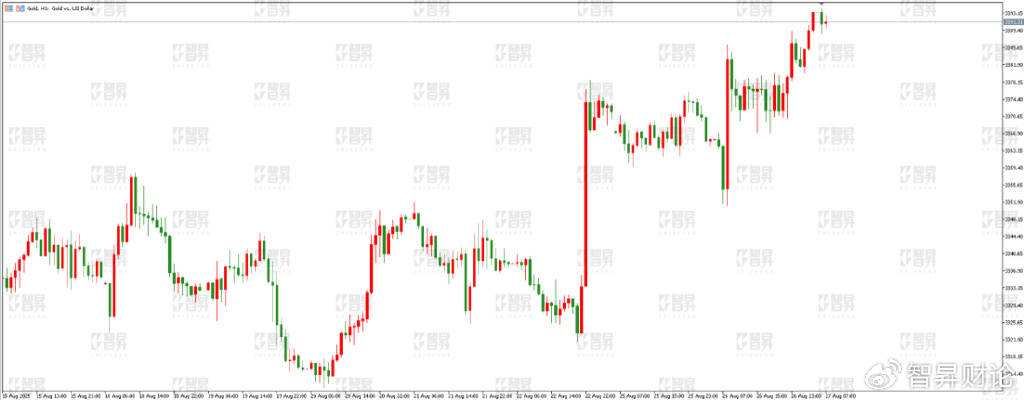
Group 1: Gold Market - Gold prices experienced a slight increase overnight, but the overall trend appears weak, indicating that the market may have already priced in the interest rate cut expectations [1] - The Federal Reserve's recent meeting minutes show a consensus among officials that maintaining the benchmark interest rate between 4.25% and 4.50% is appropriate, reflecting a strong agreement on the current rate level [1] - Technical analysis indicates that gold is approaching previous highs with signs of overbought conditions, suggesting a potential short-term pullback [1] Group 2: Oil Market - Oil prices remain weak, with indications that the mid-term rebound may be nearing its end, despite seasonal demand providing some support [3] - Recent data shows a decrease in U.S. crude oil inventories by 974,000 barrels, which is less than the expected decline of 1.725 million barrels, indicating a narrowing overall decline [3] - Global oil demand growth is expected to slow to an average of 650,000 barrels per day for the remainder of the year, down from an average of 990,000 barrels per day in the first quarter [3] Group 3: Copper Market - Copper prices have shown a series of small declines, suggesting a potential adjustment to previous significant declines, with a high likelihood of forming a downward ABC pattern [5] - The short-term outlook for copper indicates a possible rebound as prices return to a previous high transaction area, with a support level to watch at $4.44 [5] Group 4: Nikkei 225 Index - The Nikkei 225 index has formed a bearish candlestick pattern, indicating that a mid-term adjustment has begun [5] - The short-term downtrend structure is nearing completion, with a critical resistance level at 42,610; failure to break this level may lead to a decline towards 41,460 [5]
供需矛盾并不突出 短期棕榈油盘面或震荡调整运行
Jin Tou Wang· 2025-08-26 06:18
Core Viewpoint - Palm oil futures have shown a downward trend, currently priced at 9522.00 yuan/ton, reflecting a decrease of 0.96% [1] Inventory and Export Data - As of August 22, 2025, the commercial inventory of palm oil in key regions of China stands at 582,100 tons, a decrease of 35,200 tons from the previous week, representing a reduction of 5.70% [2] - Year-on-year, the inventory has decreased by 15,800 tons from 597,900 tons, a decline of 2.65% [2] - Malaysian palm oil exports from August 1 to 25 have increased by 10.9% compared to the same period last month [2] - Amspec reported that Malaysia's palm oil exports during the same period reached 1,065,005 tons, up 16.4% from 914,924 tons in the previous month [2] Market Analysis - Copper Crown Jin Yuan Futures noted that macroeconomic sentiment regarding interest rate cuts has cooled, with attention on the U.S. July core PCE data, while the dollar index has recovered some losses [3] - The firm highlighted that Malaysian palm oil production has seen moderate growth, but export growth has slowed, potentially suppressing demand due to high prices [3] - Domestic soybean crushing rates are high, leading to increased soybean oil inventories, while both canola oil and palm oil inventories have declined [3] - Overall, the market is expected to experience limited driving forces, with palm oil likely to undergo short-term fluctuations [3] - Donghai Futures indicated that the palm oil production cycle is not characterized by significant supply-demand imbalances, and there are no immediate policy-driven consumption expectations, suggesting a potential for market consolidation [3]
《有色》日报-20250826
Guang Fa Qi Huo· 2025-08-26 02:49
1. Report Industry Investment Ratings No relevant information provided. 2. Core Views of the Report Copper - Short - term, copper price is affected by the game of interest - rate cut expectations. The Fed's dovish stance on August 22 boosted the market's expectation of a September rate cut and copper prices. The inflation pressure may not prevent the restart of rate cuts, but the actual rate - cut amplitude is uncertain. - Fundamentally, the supply - demand contradiction of copper is the main line. The supply is tight, and there is support at the bottom. In the future, copper pricing will return to macro trading. The price may fluctuate in the range of 78,000 - 80,000 yuan/ton, and it is necessary to pay attention to the US economic data in August and the rate - cut path in the second half of the year [1]. Aluminum - Alumina: The alumina futures market was weak this week due to the increase in warehouse receipts. The spot market is divided between the north and the south. The medium - term supply surplus pattern is difficult to reverse. The main contract is expected to operate in the range of 3,000 - 3,300 yuan/ton next week, and short positions can be considered in the medium term. - Aluminum: The aluminum futures market fluctuated narrowly this week. The current supply - demand structure is under pressure, and the subsequent inventory build - up expectation is still strong. The short - term aluminum price is expected to fluctuate in the range of 20,000 - 21,000 yuan/ton [3]. Aluminum Alloy - The fundamentals of aluminum alloy showed marginal improvement this week. The social inventory decreased for the first time since mid - April. The supply of scrap aluminum is tight, and the demand from the communication die - casting sector has rebounded. The spot price is expected to remain firm, and the price difference between aluminum alloy and aluminum is expected to narrow. The main contract is expected to operate in the range of 19,600 - 20,400 yuan/ton [5]. Zinc - The upstream zinc mines are in the up - cycle of production resumption. The smelting profit has been repaired, and the smelting start - up rate has increased. The demand is in the seasonal off - season. The fundamentals of loose supply and weak demand are not enough to boost the zinc price to rise continuously, but the overseas inventory drawdown provides support. The zinc price is expected to fluctuate in the range of 22,000 - 23,000 yuan/ton [8]. Tin - The supply of tin ore is currently tight, and the demand is expected to be weak after the end of the photovoltaic rush - installation period and the entry of the electronic consumption off - season. The tin price will fluctuate widely in the short term. If the supply recovers smoothly, a short - selling strategy can be considered [11]. Nickel - Last week, the nickel futures market fluctuated weakly. The macro - sentiment declined, and the fundamentals of supply and demand changed little. The short - term nickel price will return to fundamental pricing, with limited downside space and restricted upside space by the medium - term supply surplus. It is expected to fluctuate in the range of 118,000 - 126,000 yuan/ton [12]. Stainless Steel - Last week, the stainless - steel futures market fluctuated downwards. The spot price decreased slightly, and the trading atmosphere was weak. The cost provides support, but the demand is weak. The short - term price is expected to fluctuate in the range of 12,600 - 13,400 yuan/ton [14]. Lithium Carbonate - Last week, the lithium carbonate futures market fluctuated sharply. The price center moved down to below 80,000 yuan/ton. The current fundamentals are in a tight balance, with supply contraction and stable demand. The price is expected to fluctuate widely in the short term, and there may be strong support in the range of 75,000 - 80,000 yuan/ton [16]. 3. Summaries According to Relevant Catalogs Copper - **Price and Basis**: SMM 1 electrolytic copper was at 78,830 yuan/ton, up 0.04% from the previous day. The refined - scrap price difference increased by 4.84% to 1,084 yuan/ton. - **Fundamental Data**: In July, the electrolytic copper production was 117.43 million tons, up 3.47% month - on - month; the import volume was 29.69 million tons, down 1.20% month - on - month [1]. Aluminum - **Price and Spread**: SMM A00 aluminum was at 20,710 yuan/ton, up 0.15% from the previous day. The import loss was 1,226 yuan/ton, down 74.1 yuan/ton from the previous day. - **Fundamental Data**: In July, the alumina production was 765.02 million tons, up 5.40% month - on - month; the electrolytic aluminum production was 372.14 million tons, up 3.11% month - on - month [3]. Aluminum Alloy - **Price and Spread**: SMM aluminum alloy ADC12 remained at 20,450 yuan/ton. The scrap - refined price difference of Foshan crushed primary aluminum increased by 1.28% to 1,588 yuan/ton. - **Fundamental Data**: In July, the production of recycled aluminum alloy ingots was 62.50 million tons, up 1.63% month - on - month; the production of primary aluminum alloy ingots was 26.60 million tons, up 4.31% month - on - month [5]. Zinc - **Price and Spread**: SMM 0 zinc ingot was at 22,200 yuan/ton, down 0.13% from the previous day. The import loss was 1,676 yuan/ton, up 8.13 yuan/ton from the previous day. - **Fundamental Data**: In July, the refined zinc production was 60.28 million tons, up 3.03% month - on - month; the import volume was 1.79 million tons, down 50.35% month - on - month [8]. Tin - **Price and Spread**: SMM 1 tin was at 266,000 yuan/ton, down 0.30% from the previous day. The import loss was 16,622.23 yuan/ton, up 6.26% from the previous day. - **Fundamental Data**: In July, the tin ore import was 10,278 tons, down 13.71% month - on - month; the SMM refined tin production was 15,940 tons, up 15.42% month - on - month [11]. Nickel - **Price and Basis**: SMM 1 electrolytic nickel was at 120,550 yuan/ton, down 0.45% from the previous day. The LME 0 - 3 was at - 176 dollars/ton, up 5.95% from the previous day. - **Fundamental Data**: The production of Chinese refined nickel products was 31,800 tons, down 10.04% month - on - month; the import volume of refined nickel was 19,157 tons, up 116.90% month - on - month [12]. Stainless Steel - **Price and Spread**: The price of 304/2B (Wuxi Hongwang 2.0 coil) was 13,000 yuan/ton, down 0.38% from the previous day. The spot - futures price difference was 420 yuan/ton, down 1.18% from the previous day. - **Fundamental Data**: The production of Chinese 300 - series stainless - steel crude steel (43 enterprises) was 171.33 million tons, down 3.83% month - on - month; the import volume of stainless steel was 7.30 million tons, down 33.30% month - on - month [14]. Lithium Carbonate - **Price and Spread**: SMM battery - grade lithium carbonate was at 80,668 yuan/ton, down 1.53% from the previous day. The lithium - spodumene concentrate CIF average price was 934 dollars/ton, down 1.48% from the previous day. - **Fundamental Data**: In July, the lithium carbonate production was 81,530 tons, up 4.41% month - on - month; the demand was 66,099.6 tons, up 2.50% month - on - month [16].
短期供需矛盾暂不突出 焦煤期货市场仍具上行动能
Jin Tou Wang· 2025-08-25 06:09
Group 1 - The coal futures market in China is showing a strong upward trend, with coking coal futures reaching a peak of 1229.5 yuan/ton, reflecting an increase of approximately 6.48% [1] - The production impact from recent restrictions is limited, with a gradual recovery in coal mine operating rates. The demand side is cautious about external demand weakening, but the decline in iron and steel production is expected to be limited in the second half of the year [1][2] - The supply side is experiencing slight recovery due to the resumption of production in some coal mines, although certain areas still face production cuts due to accidents. The average daily customs clearance at the Ganqimaodu port has increased to 1263 vehicles [1] Group 2 - The focus of the coking coal market is shifting from being supply-driven to a dual-driven model of supply and demand. Despite the upcoming traditional peak season, previous inventory replenishment has consumed some demand potential [2] - The stable iron and steel production at around 2.4 million tons provides consistent support for raw material demand, and the overall inventory pressure for coking coal is manageable, indicating continued upward momentum in the market [2]
锡矿进口维持低位 沪锡走势纠结【8月22日SHFE市场收盘评论】
Wen Hua Cai Jing· 2025-08-22 08:27
Core Viewpoint - The tin market is experiencing a slight decline in prices, with the main contract down by 0.64% to 265,930 CNY/ton, amid tight supply conditions and low processing fees from smelters. The supply situation is expected to gradually improve as Myanmar's tin mines resume production, leading to a weak short-term price outlook and a wide fluctuation pattern in tin prices [1]. Supply and Demand Dynamics - Tin ore supply remains tight, with low import levels. In July, domestic tin ore imports were 10,200 tons (approximately 4,335 metal tons), down 13.71% month-on-month and 31.79% year-on-year. Cumulative imports from January to July totaled 72,400 tons, a year-on-year decrease of 32.32% [1]. - Imports from Africa, particularly the Democratic Republic of the Congo and Nigeria, have declined due to extended transportation cycles and geopolitical disruptions. Myanmar's imports remain low due to rainy season hindrances and transportation bans from Thailand, making short-term supply improvements unlikely [1]. Market Sentiment and Trading Activity - Recent spot prices for tin have slightly decreased, with smelters maintaining a strong pricing stance but limited actual transactions. Traders are actively quoting prices, and there is a slight recovery in market activity as downstream buyers show increased interest in replenishing inventories [1]. - The tin market continues to exhibit weak supply and demand dynamics, with traders adjusting to market conditions. Downstream orders are on a downward trend, influenced by seasonal demand weakness in the electronics sector and declining solar energy orders [1]. Future Market Outlook - The future market outlook suggests that supply-demand contradictions are becoming less pronounced, with tin prices expected to follow macroeconomic trends and market sentiment. The tight supply of tin ore and scrap remains unchanged, supported by low LME inventories, but weak consumption and high domestic inventories limit upward price momentum [2]. - Short-term price movements are anticipated to remain within a narrow range, with integer resistance levels intact. Market participants are advised to monitor the impact of Powell's speech on interest rate expectations [2].