
拉尼娜现象

Search documents
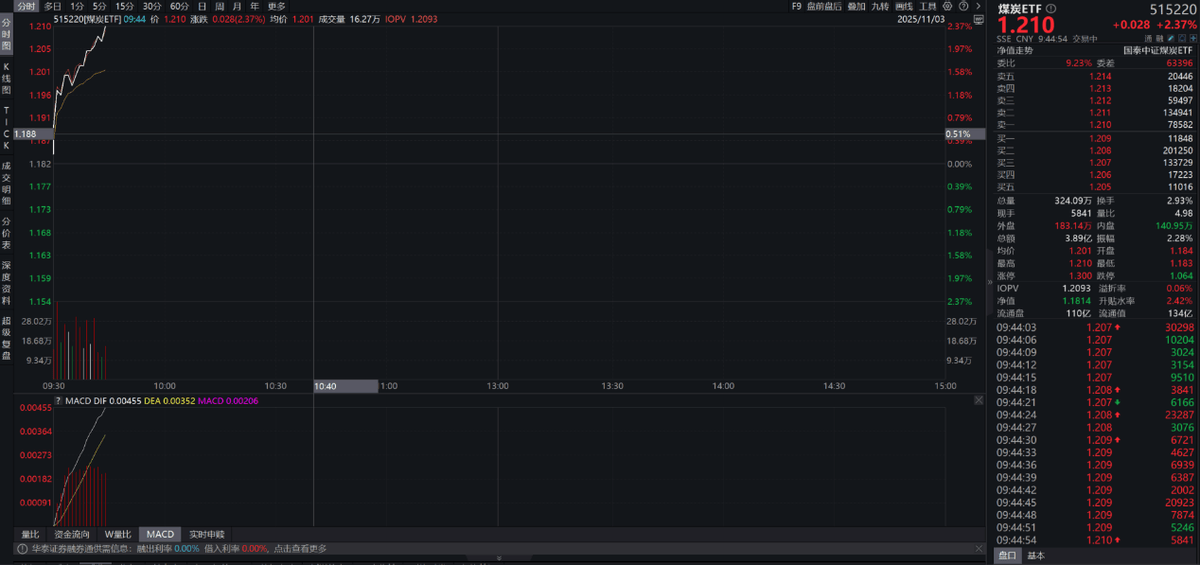
煤炭旺季需求显韧性,全市场唯一煤炭ETF(515220)大涨超2%
Sou Hu Cai Jing· 2025-11-03 02:16
Core Viewpoint - The coal market is experiencing strong demand resilience due to the La Niña phenomenon and supply constraints, leading to higher-than-expected coal prices. The coal sector's supply-demand dynamics are improving, presenting investment opportunities in the fourth quarter [1]. Group 1: Demand Factors - The probability of a cold winter is increasing due to the La Niña phenomenon, which is expected to persist from December 2025 to February 2026, potentially leading to lower temperatures in China's central and eastern regions [2]. - The current weather conditions, characterized by high temperatures in the south and sudden drops in temperature in the north, are significantly driving up coal consumption [2]. Group 2: Supply Constraints - The coal supply is being constrained by government policies aimed at curbing overproduction, with national coal production in July and August at 380 million and 390 million tons, respectively, which is below the average monthly production of approximately 400 million tons over the past year and a half [2]. - In August, the industrial raw coal production was 390 million tons, a year-on-year decrease of 3.2%, with expectations of a slight decline in production in Q4 due to ongoing checks for overproduction [2][3]. - The central government's environmental inspections in Inner Mongolia are causing disruptions in open-pit mining operations, further impacting coal production [3]. Group 3: Price Outlook - The coal prices are expected to remain strong due to ongoing supply constraints and rising winter demand, with both thermal and coking coal prices having upward elasticity [4]. - Current prices for thermal and coking coal are at historical lows, providing room for potential rebounds, supported by the supply-side policies and seasonal demand increases [4]. Group 4: Investment Opportunities - The only coal ETF in the market (515220) has seen significant growth, exceeding 13 billion yuan, and offers a high dividend yield of over 5.3% as of September 30, making it an attractive investment option [5]. - Investors are encouraged to consider gradually accumulating positions in the coal ETF (515220) to capitalize on the investment opportunities within the coal sector [5].

新世纪期货交易提示(2025-10-31)-20251031
Xin Shi Ji Qi Huo· 2025-10-31 03:39
Report Industry Investment Ratings - Iron ore: Rebound [2] - Coking coal and coke: Rebound [2] - Rolled steel: Oscillation [2] - Glass: Oscillation [2] - Soda ash: Oscillation [2] - CSI 500: Rebound [4] - CSI 1000: Rebound [4] - 2-year Treasury bond: Oscillation [4] - 5-year Treasury bond: Oscillation [4] - 10-year Treasury bond: Upward [4] - Gold: High-level oscillation [4] - Silver: High-level oscillation [4] - Logs: Weak oscillation [6] - Pulp: Bottom consolidation [6] - Offset paper: Weak oscillation [6] - Soybean oil: Range operation [6] - Palm oil: Range operation [6] - Rapeseed oil: Range operation [6] - Soybean meal: Rebound [6] - Rapeseed meal: Rebound [6] - Soybean No. 2: Rebound [8] - Soybean No. 1: Rebound [8] - Live pigs: Oscillation with a slight upward trend [8] - Rubber: Oscillation [10] - PX: On the sidelines [10] - PTA: Oscillation [10] - MEG: On the sidelines [10] - PR: On the sidelines [10] - PF: On the sidelines [10] Report's Core Views - The macro利好 has landed, and black prices are returning to fundamentals. The iron ore market has an oversupply situation, and the coal and coke market is affected by policies and supply concerns. The steel market's price stop depends on production cuts and anti-"involution" policies. The glass market has inventory pressure and weak demand. The financial market has different trends for various indexes, and the precious metal market is affected by multiple factors such as central bank purchases and geopolitical risks. The light industry and agricultural product markets have their own supply and demand characteristics, and the soft commodity and polyester markets also face different situations [2][4][6][8][10] Summary by Related Catalogs Black Industry - Iron ore: The main line is "loose supply, low demand, and port inventory accumulation." The supply has room for impulse, and the demand is weak due to the low level of real estate new construction. Follow-up attention should be paid to four main lines that may trigger price revaluation [2] - Coking coal and coke: Driven by multiple news, the price has risen. The market is concerned about demand-side policies, and the core contradiction lies in the low profit level of steel mills [2] - Rolled steel: The price is affected by the demand for steel, and the stop of the decline depends on production cuts and policy implementation [2] - Glass: There are contradictions in the market, with weak demand and increasing inventory pressure. The solution depends on reducing the daily melting volume and the support of policies [2] Financial Market - Stock index futures/options: Different indexes have different trends, and the market is short-term consolidated with increasing bullish sentiment [4] - Treasury bonds: The yield of 10-year Treasury bonds has declined, and the market has a slight upward trend. It is recommended to hold long positions lightly [4] - Gold: The pricing mechanism is changing, and it is affected by multiple factors such as central bank purchases, geopolitical risks, and interest rate policies. It is expected to oscillate at a high level in the short term [4] Light Industry - Logs: The supply is increasing seasonally, while the demand is weakening. The price is expected to oscillate weakly [6] - Pulp: The cost support is weakening, and the demand is poor. The price is expected to consolidate at the bottom [6] - Offset paper: There is supply pressure, and the demand has not improved. The price is expected to oscillate weakly [6] Oil and Fat - Oils: The supply is abundant, and the demand is weak. The overall is expected to continue range operation [6] - Meal: Supported by trade optimism and the rise of US soybean futures, it is expected to rebound in the short term [6] Agricultural Products - Live pigs: The trading average weight may increase slightly, and the settlement price may rise. The market is expected to oscillate with a slight upward trend [8] Soft Commodities and Polyester - Rubber: The supply is affected by weather, and the demand is improving. The inventory is decreasing. The price is expected to oscillate widely [10] - PX: The trade dispute risk is weakening, and the price follows the oil price [10] - PTA: The cost support is weakened, and the supply and demand are marginally improved. The price follows the cost [10] - MEG: The supply is at a high level, and the demand is worrying. The price is suppressed by the inventory pressure [10] - PR: The market may oscillate weakly [10] - PF: The market may be sorted narrowly [10]
棕榈油 承压运行
Qi Huo Ri Bao· 2025-10-30 01:06
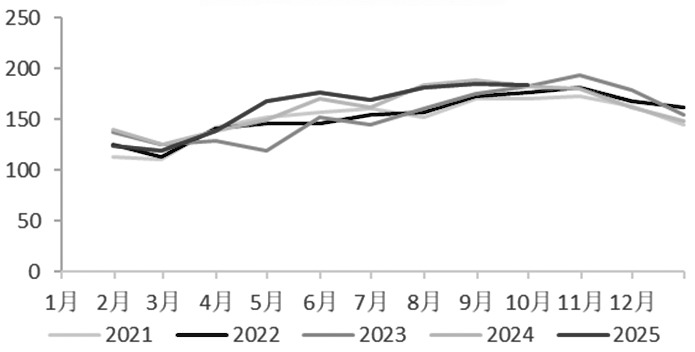
Core Viewpoint - Since October, palm oil prices have been continuously declining due to the accumulation of palm oil inventories and the increase in Argentine soybean oil production [1] Group 1: Palm Oil Production and Inventory - In September, Malaysia's palm oil production was 1.84116 million tons, a month-on-month decrease of 0.73% but a year-on-year increase of 1.06% [2] - The export volume for September was 1.42758 million tons, a month-on-month increase of 7.69% but a year-on-year decrease of 8.48% [2] - As of mid-October, Malaysia's palm oil production increased significantly by 10.77% month-on-month, contradicting market expectations of reduced production [2] - The palm oil inventory in Malaysia reached 2.3610 million tons in September, the highest level in nearly five years [2][10] - Historically, Malaysia is expected to enter a destocking period in November [2] Group 2: Demand Dynamics - Argentina's implementation of an export tax exemption policy in September led to a rapid decline in oil prices and weakened demand expectations [7] - India imported 300,000 tons of soybean oil from Argentina by the end of September, with expectations of over 450,000 tons in October, while palm oil imports are projected to drop to 600,000 tons [7] - From January to September 2025, India imported 5.6186 million tons of palm oil, a decrease of 12.29% year-on-year, while soybean oil imports increased by 27.51% to 3.5657 million tons [7] - Current edible oil stocks in Indian ports are high, indicating limited future replenishment demand [7] - The domestic soybean-palm oil price difference in China was -928 yuan/ton on October 24, the lowest level for the same period in five years, indicating poor price competitiveness for palm oil [9] Group 3: Global Market Trends - The EU's environmental policies have also suppressed palm oil demand, contributing to a decrease in demand from traditional consumer countries while increasing demand from regions like Africa and the Americas [11] - Overall, the global palm oil market is characterized by declining total demand [11] Group 4: Future Outlook - In the short term, palm oil futures prices are expected to remain under pressure due to inventory accumulation, increased Argentine soybean oil production, and weak demand [12] - In the medium term, there is potential for palm oil futures prices to rise due to tightening supply and the onset of the destocking period in Malaysia [12]
供应偏强需求偏弱 棕榈油短期或承压运行
Qi Huo Ri Bao· 2025-10-29 23:55
自10月以来,受马棕油库存持续累积、阿根廷豆油产量增长等因素影响,棕榈油价格持续下跌。 马棕油去库周期将至 9月马棕油产量为184.116万吨,环比减少0.73%,同比增加1.06%;出口量为142.758万吨,环比增加 7.69%,同比减少8.48%。根据MPOB数据,10月前20日马棕油产量环比大增10.77%,市场减产预期落 空。ITS出口高频数据显示,10月1日—25日马棕油出口128.38万吨,环比减少0.36%,出口表现偏弱。9 月马棕油库存为236.10万吨,处于近5年来最高水平。从历史规律来看,马棕油将在11月进入去库周 期。 印尼方面,据GAPKI数据,2025年1—7月印尼棕榈油累计产量为3058.8万吨,同比增加11.11%;累计消 费量为1430.6万吨,同比增加5.89%。近3个月印尼棕榈油国内月均消费量超过200万吨,月均出口量超 过250万吨,尚未出现累库迹象。受有利天气影响,GAPKI预计印尼2025年棕榈油产量将增长10%。 总需求下降 9月阿根廷推行出口免税政策,直接导致短期油脂价格迅速下跌、需求预期转弱。9月底,印度从阿根廷 采购了30万吨豆油,印度贸易商预计10月豆油进 ...
新世纪期货交易提示(2025-10-28)-20251028
Xin Shi Ji Qi Huo· 2025-10-28 03:12
Report Industry Investment Ratings - Iron ore: Oscillation [2] - Coking coal and coke: Rebound [2] - Rebar: Oscillation [2] - Glass: Oscillation [2] - Stock index futures/options: Shanghai and Shenzhen 300, Shanghai 50, and CSI 500 index futures are expected to oscillate, while CSI 1000 index futures are expected to rebound [2][4] - Treasury bonds: 2 - year and 5 - year treasury bonds are expected to oscillate, and 10 - year treasury bonds are expected to rise [4] - Gold and silver: High - level oscillation [4] - Logs: Weak oscillation [6] - Pulp: Bottom consolidation [6] - Offset paper: Weak oscillation [6] - Oils and fats: Wide - range oscillation [6] - Meal: Rebound [6][7] - Live pigs: Oscillation with a slight upward trend [7] - Rubber: Oscillation [9] - PX: Wait - and - see [9] - PTA: Oscillation [9] - MEG, PR, PF: Wait - and - see [9] Core Viewpoints - The macro - environment is generally warming up, with Sino - US talks and the Fed's potential interest rate cut boosting risk appetite, leading to a rebound in commodity prices at low levels. However, different industries face different supply - demand situations and price trends [2][4]. - The iron ore market has an oversupply situation with high supply and low demand, and the price is mainly affected by factors such as policies, steel mill profits, and terminal demand [2]. - The coking coal and coke market is affected by macro - policy expectations and industry supply concerns, and the core contradiction lies in the low profit level of steel mills [2]. - The steel market has weak domestic demand, and the price stop - falling depends on production reduction and anti - "involution" policies [2]. - The glass market has weak demand and increasing inventory pressure, and the price is expected to be weak in the short term [2]. - The stock index futures/options market has a short - term consolidation with rising bullish sentiment, and it is recommended to hold long positions [4]. - The treasury bond market shows a slight upward trend, and it is recommended to hold long positions lightly [4]. - The gold market is affected by factors such as central bank gold purchases, geopolitical risks, and interest rate policies, and is expected to oscillate at a high level [4]. - The log market has increasing supply pressure and weakening demand, and the price is expected to be weakly oscillating [6]. - The pulp market has weak cost support and poor demand, and the price is expected to consolidate at the bottom [6]. - The oils and fats market has sufficient supply and weak demand, and is expected to continue wide - range oscillation [6]. - The meal market is affected by weather and supply - demand factors, and is expected to rebound in the short term [6][7]. - The live pig market has sufficient supply, increasing demand, and is expected to oscillate with a slight upward trend [7]. - The rubber market has mixed supply and demand factors, and the price is expected to oscillate widely [9]. - The PX, PTA, and polyester - related product markets are affected by factors such as oil prices and supply - demand, and different products have different price trends [9]. Summary by Industry Ferrous Metals - **Iron ore**: The supply is expected to remain high as Rio Tinto and VALE have room for production increases to meet annual targets, and port arrivals are likely to stay at a high level. The demand is weak, with iron - water production declining and real - estate new construction at a low level. The market is in an oversupply situation, and the price is mainly affected by policies, steel mill profits, and terminal demand [2]. - **Coking coal and coke**: Driven by macro - policy expectations, the market is concerned about potential demand - side policies. The industry is facing supply concerns, and the core contradiction is the low profit level of steel mills. If steel products continue to weaken, steel mill overhauls may expand, putting pressure on raw materials. The second - round coke price increase has been implemented, and short - term attention should be paid to the resonance of macro and industry expectations [2]. - **Rebar**: The macro - environment is warming up, but the domestic demand for steel is weak, with real - estate new construction at a low level. The price stop - falling depends on whether production reduction of more than 5% can be strictly implemented in the fourth quarter of 2025 and the intensity of anti - "involution" policies. The steel market still has supply - demand contradictions and is expected to continue oscillating [2]. Building Materials - **Glass**: The current market has weak shipments and a strong price - cut atmosphere. The demand is weak, with real - estate completion declining during the peak season, and the inventory of glass factories is increasing. To solve the over - supply problem in the entire industry chain, the daily melting volume of glass needs to drop to about 154,000 tons by the end of the year. The price is expected to be weakly oscillating in the short term, and attention should be paid to macro and production - reduction policies [2]. Financial Products - **Stock index futures/options**: The previous trading day saw gains in major stock indices, with some sectors showing capital inflows and outflows. The market is in short - term consolidation with rising bullish sentiment, and it is recommended to hold long positions [2][4]. - **Treasury bonds**: The yield of 10 - year treasury bonds has declined, and the central bank has carried out reverse - repurchase operations. The market trend is slightly upward, and it is recommended to hold long positions lightly [4]. - **Gold and silver**: The pricing mechanism of gold is shifting from being centered on real interest rates to central - bank gold purchases. It is affected by factors such as currency, finance, risk - aversion, and commodity attributes. The current market is waiting for the Fed's interest - rate meeting, and gold is expected to oscillate at a high level [4]. Forestry Products - **Logs**: The port daily shipment volume has increased, but the downstream is entering the off - season, and demand may weaken. The import volume is seasonally increasing, putting pressure on supply. The port inventory is expected to turn to accumulation. The spot - market price is running weakly, and the price is expected to be weakly oscillating [6]. - **Pulp**: The spot - market price is relatively stable. The cost support for pulp prices is weakening, and the demand from paper mills is poor. The price is expected to consolidate at the bottom [6]. - **Offset paper**: The spot - market price is relatively stable. There is still supply pressure due to new production capacity in South China. The start - up rate has rebounded, but the market expectation is cautious. The price is expected to be weakly oscillating [6]. Oils and Fats and Meals - **Oils and fats**: The US government shutdown has led to a lack of official data. The high inventory of palm oil in Malaysia is suppressing the market. The production of palm oil is at the end of the increasing season, and the export volume varies. The demand for biodiesel in Indonesia is strong, and the inventory of US soybean oil has decreased. The domestic supply of oils and fats is abundant, and the demand is weak. The market is expected to continue wide - range oscillation [6]. - **Meals**: The weather in the US Midwest may delay crop harvesting, and the weather in Brazil is favorable for soybean sowing but the sowing rate is low. The La Nina phenomenon brings uncertainties to South American soybean growth. The domestic supply of soybean meal is increasing, and the demand is also rising. The price is expected to rebound in the short term [6][7]. Agricultural Products - **Live pigs**: The average trading weight of live pigs has increased slightly. The demand has weakened, and the slaughter volume has decreased, leading to a decline in pig prices to near the cost line. The price has rebounded, and the fat - to - standard pig price difference has widened. The demand for pork is increasing with the drop in temperature, and the price is expected to oscillate with a slight upward trend [7]. Soft Commodities and Chemicals - **Rubber**: The raw - material output in Yunnan is gradually recovering, but the profit from rubber tapping is negative. The output in Hainan is lower than expected, but the cost of local processing plants has decreased. The price of cup rubber in Thailand has risen, and the inventory in Vietnam is low. The demand from tire enterprises has increased, and the inventory of natural rubber is decreasing. The price is expected to oscillate widely [9]. - **PX, PTA, and Polyester - related Products**: The PX market has short - term supply - demand growth but medium - term pressure. The PTA market has a weakening supply - demand situation and uncertain cost support. Different polyester products have different price trends affected by factors such as supply, demand, and raw - material prices [9].
关注本月底中美贸易谈判的进展,豆菜粕短期或宽幅震荡
Hua Lian Qi Huo· 2025-10-26 13:40
1. Report Industry Investment Rating - No relevant information provided 2. Core View of the Report - It is expected that soybean and rapeseed meal will experience wide - range fluctuations in the short term. The Sino - US trade relationship remains uncertain, and attention should be paid to the progress of the trade negotiations at the end of this month. In South America, as of October 18, 21.7% of soybean sowing in Brazil has been completed, higher than 17.6% in the same period last year, and the rainfall in the central - western region in the next two weeks is favorable for sowing. The La Nina phenomenon may last until February next year, and the impact of weather on South American soybean production should be monitored. In China, high supply and high inventory suppress the price of soybean meal, but factors such as low prices of soybean oil and soybean meal, widespread losses in soybean crushing profits, and the strong willingness of oil mills to support prices form a support for the price. Considering the large actual supply pressure, the rebound height of soybean meal futures is expected to be limited [4][5]. 3. Summary by Relevant Catalogs 3.1 Weekly View and Strategy 3.1.1 Fundamental View - In the short term, soybean and rapeseed meal are expected to fluctuate widely. The Sino - US trade relationship is uncertain, and the progress of the trade negotiations at the end of this month should be followed. In South America, as of October 18, Brazil's soybean sowing progress is faster than last year, and the rainfall in the central - western region in the next two weeks is conducive to sowing. The La Nina phenomenon may affect South American soybean production. In China, high supply and high inventory suppress the soybean meal price, but the losses in soybean crushing profits and the oil mills' price - support intention support the price. After a large decline in soybean meal, short - sellers' concentrated stop - profit led to a small increase, but the rebound height of futures is limited due to supply pressure [4][5]. 3.1.2 Strategy View and Outlook - Unilateral: The pressure level of soybean meal 2601 is recommended to refer to 3100 - 3200. - Arbitrage: Temporarily on the sidelines. - Outlook: Attention should be paid to the weather in South American soybean - producing areas, the arrival of imported soybeans, domestic soybean meal demand, and Sino - Canadian and Sino - US trade relations. Overall, soybean and rapeseed meal are expected to fluctuate widely in the short term [6]. 3.2 Industrial Chain Structure 3.2.1 Futures and Spot Markets - Last week, soybean meal futures fluctuated strongly. The main reasons for the increase were poor soybean crushing profits, which supported the meal price, and the concentrated stop - profit of short - sellers. The September USDA report was slightly bearish. The estimated soybean yield per acre was reduced by 0.1 bushels to 53.5 bushels, the planting area was increased by 200,000 acres, the crushing volume was increased by 15 million bushels, the export volume was decreased by 20 million bushels, and the ending inventory was increased from 290 million bushels in August to 300 million bushels [15]. 3.2.2 Feed Futures Main Contracts - The spread between soybean and rapeseed meal fluctuated widely and is currently at a historically low level. It is recommended to wait and see [21]. 3.2.3 Inter - variety Futures Spreads - The 1 - 5 spread of soybean meal fluctuated weakly. It is recommended to wait and see [23]. 3.2.4 Spot Basis - Relevant data charts of the spot basis of Dongguan 43% protein soybean meal and Guangdong rapeseed meal are presented, but no specific analysis is provided. 3.2.5 Supply Side 3.2.5.1 US Soybean Sales Data - As of September 18, 2025, the net sales volume of US soybeans in the market year was 724,459 tons [31]. 3.2.5.2 US Soybean Crushing Data - As of the week of October 17, 2025, the US soybean crushing profit was 2.38 dollars per bushel, a 12.50% decline from the previous week and a 32.96% decline from the same period last year [37]. 3.2.5.3 China's Soybean Import Volume - In September 2025, China imported 12.869 million tons of soybeans, a month - on - month increase of 590,000 tons and a year - on - year increase of 1.498 million tons (13.17%). From January to September 2025, the cumulative import volume was 86.18 million tons, a year - on - year increase of 4.331 million tons (5.29%) [40]. 3.2.5.4 China's Rapeseed Import Volume - Relevant data charts of China's monthly and cumulative rapeseed import volume are presented, but no specific analysis is provided. 3.2.5.5 China's Soybean and Rapeseed Crushing Data - Relevant data charts of China's soybean and rapeseed crushing volume, rapeseed meal output, and imported soybean crushing profit are presented, but no specific analysis is provided. 3.2.6 Demand Side 3.2.6.1 Pig Price and Breeding Profit - Relevant data charts of China's commodity pig出栏 price, pig - grain ratio, self - breeding profit, and外购 profit of pigs are presented, but no specific analysis is provided. 3.2.6.2 Chicken Breeding Profit - Relevant data charts of the breeding profit of white - feather broilers and laying hens are presented, but no specific analysis is provided. 3.2.7 Inventory 3.2.7.1 Domestic Soybean and Soybean Meal Inventory - As of October 17, the national port soybean inventory was 7.687 million tons, a 0.38% increase from the previous week and a 27.49% increase from last year. The domestic oil mill soybean meal inventory was 976,200 tons, a 9.54% decrease from the previous week and a 4.16% increase from last year [69]. 3.2.7.2 Domestic Feed Mill Soybean Meal Physical Inventory Days - As of October 24, 2025 (week 43), the physical inventory days of soybean meal in domestic feed enterprises were 7.95 days, a 0.33% increase from October 17 and an 11.95% increase from the same period last year [72]. 3.2.7.3 Domestic Rapeseed and Rapeseed Meal Inventory - As of October 17, the coastal main oil mill rapeseed inventory was 0.6 million tons, a decrease of 1.2 million tons from the previous week; the rapeseed meal inventory was 0.78 million tons, a decrease of 0.37 million tons from the previous week; and the unexecuted contract was 0.98 million tons, a decrease of 0.67 million tons from the previous week [74].
申万公用环保周报:第二产业用电回暖,冷冬预期有望提升销气增速-20251026
Shenwan Hongyuan Securities· 2025-10-26 13:13
Investment Rating - The report maintains a positive outlook on the power and gas sectors, indicating a "Buy" recommendation for several companies within these industries [3][4]. Core Insights - The second industry is the main driver of electricity consumption growth, with a notable increase in electricity demand due to seasonal factors and high temperatures in Q3 [4][9]. - Global gas prices are rebounding, and expectations of a cold winter may enhance gas sales growth [18][19]. - The report highlights various investment opportunities across different energy sectors, including hydropower, green energy, nuclear power, thermal power, and gas [16][40]. Summary by Sections 1. Electricity: Q3 Second Industry Drives National Electricity Consumption - In September, total electricity consumption reached 888.6 billion kWh, a year-on-year increase of 4.5% [10]. - The second industry contributed significantly to this growth, with a 5.1% increase in electricity consumption, accounting for 51% of the total growth [4][9]. - The cumulative electricity consumption from January to September was 7767.5 billion kWh, reflecting a 4.6% year-on-year growth [13]. 2. Gas: Global Gas Price Rebound and Cold Winter Expectations - As of October 24, the Henry Hub spot price was $3.21/mmBtu, showing a weekly increase of 13.96% [19][20]. - The report notes a seasonal demand increase and geopolitical factors supporting gas prices, particularly in Europe [25][37]. - The anticipated La Niña phenomenon may lead to colder winter conditions, potentially boosting gas consumption [37]. 3. Weekly Market Review - The report indicates that the power equipment sector outperformed the Shanghai and Shenzhen 300 index, while the public utility, gas, and environmental protection sectors lagged [42]. 4. Company and Industry Dynamics - The report discusses significant developments in the energy sector, including the launch of innovative products in wind energy and updates on national energy policies [50][51]. - It highlights the performance of major companies, such as Huadian International, which reported a decrease in electricity generation due to increased renewable energy capacity [57].





饲料养殖周度报告-20251024
Xin Ji Yuan Qi Huo· 2025-10-24 13:11
Report Industry Investment Rating - Not provided in the given content Core Viewpoints - In the short - term, the "weak reality" of the market remains unchanged with many uncertainties. Attention should be paid to the sustainability of the soybean meal rebound. The market trading sentiment has cooled, and during the off - season of aquaculture, the continuous upward momentum of rapeseed meal is limited [36]. - In the medium - to - long - term, the global soybean supply is abundant, and the continuous upward momentum of the soybean complex is limited [37]. Summary by Relevant Catalogs Domestic Main Feed and Livestock Futures and Spot Price Trends - The closing price of the main soybean meal futures contract M2601 was 2938 on October 23, 2025, up 1.07% from the previous week. The spot price of 43% protein soybean meal in Shandong was 2940, up 0.68% [4]. - The closing price of the main rapeseed meal futures contract RM601 was 2339 on October 23, 2025, down 1.06% from the previous week. The average rapeseed meal price in China was 2460, down 1.60% [4]. - The closing price of the main corn futures contract C2601 was 2140 on October 23, 2025, up 1.37% from the previous week. The aggregated price of second - grade national standard corn with 14.5% moisture in Bayuquan Port was 2180, up 1.40% [4]. - The closing price of the main live hog futures contract LH2601 was 12200 on October 23, 2025, up 2.48% from the previous week. The average selling price of commercial hogs in Henan was 11.87, up 5.89% [4]. - The closing price of the main egg futures contract JD2511 was 3027 on October 23, 2025, up 7.42% from the previous week. The average price of eggs in the main producing areas in China was 2.86, down 2.39% [4]. Fundamental Analysis Cost Side - The La Nina phenomenon may last until February next year, and the key growing season of South American soybeans may face drought threats with a production reduction expectation [10]. - As of the week of October 16, 2025, the U.S. soybean export inspection volume was 1474354 tons. The total U.S. soybean export inspection volume for the 2025/26 season so far reached 5537802 tons, a year - on - year decrease of 30.9% [10]. - As of last Thursday, the planting rate of Brazil's 2025/26 soybean crop reached 24%, higher than the previous week and the same period in 2024. Brazil's Conab predicted a soybean harvest of nearly 1.78 billion tons this season, a 3.6% increase from the previous year [10]. - Argentina's 2024/25 soybean production is expected to be 51.1 million tons, and the soybean planting area for the 2025/26 season is expected to be 17.5 million hectares, a 2.8% decline from the previous year [10]. Supply - In September 2025, China's soybean import volume was 12.869 million tons, a month - on - month increase of 4.8% and a year - on - year increase of 13.2% [10]. Demand - The domestic spot market supply remains in a loose pattern, and the oil mill operation rate has recovered to over 60% [10]. - On October 23, the total soybean meal trading volume was 148,600 tons, an increase of 20,500 tons from the previous day [10]. Inventory - In the 42nd week of 2025, the soybean meal inventory of major domestic oil mills was 976,200 tons, a decrease of 102,900 tons from the previous week, a decrease of 9.54% [10]. Supply Side - Import - As of October 24, the CNF price of Brazilian soybeans was 487.00 US dollars per ton, an increase of 6 US dollars per ton from the previous week. The CNF price of U.S. West Coast soybeans was 454.00 US dollars per ton, an increase of 10 US dollars per ton from the previous week [17]. Supply Side - Pressing - As of the week of October 23, the soybean pressing profit was - 144.20 yuan per ton, a decrease of 20.65 yuan per ton from the previous week [23]. - As of the week of October 17, the weekly soybean pressing volume of domestic oil mills was 2.2988 million tons, an increase of 62,300 tons from the previous week [23]. - As of October 17, the operation rate of domestic soybean oil mills was 58%, a recovery of 1 percentage point from the previous week [23]. Inventory Side - As of October 24, the port inventory of imported soybeans was 8.1127 million tons, an increase of 924,800 tons from the previous week [30]. - As of October 17, the soybean meal inventory of oil mills was 963,100 tons, a decrease of 83,600 tons from the previous week [30]. Demand Side - As of October 17, the average daily trading volume of soybean meal in domestic mainstream oil mills was 122,300 tons, an increase of 81,800 tons from the previous week [34].
拉尼娜现象出现概率上升,短期天然气市场或受扰动 | 投研报告
Zhong Guo Neng Yuan Wang· 2025-10-24 02:56
Group 1 - The core viewpoint of the report indicates that the probability of a La Niña phenomenon occurring from October to December 2025 has risen to over 75%, which may lead to significant temperature fluctuations during winter in the Northern Hemisphere [2][3] - The report highlights that the sea surface temperatures in the equatorial central and eastern Pacific have remained below normal, around -0.5 degrees, confirming the La Niña indicators [3] - It is noted that while La Niña typically results in colder winters in the Northern Hemisphere, other factors such as the strength of East Asian winter winds and Arctic sea ice levels may influence the actual winter temperatures [3] Group 2 - In mid-October, a significant drop in temperatures was observed in Northern China, with many areas officially entering winter earlier than the average date, leading to a temperature decrease of over 10 degrees [4] - The demand for coal in the power generation sector has increased due to winter storage procurement, with average daily coal consumption rising by 12.5% from the previous week [4] - The report mentions that as of October 14, the EU's natural gas storage level was at 83.09%, which is 13.05% lower than the same period last year, indicating a potential rise in natural gas prices if a cold winter occurs [4] Group 3 - The long-term outlook for the LNG market suggests a gradual easing of supply and demand, with global LNG liquefaction capacity expected to grow rapidly from 2025 to 2029, particularly in North America [5] - The report anticipates that the price differentials between Asian, European, and North American natural gas markets may narrow, leading to a downward trend in gas prices [5] - The report identifies that the breakeven point for major U.S. natural gas wells is primarily in the range of $2.5 to $3.0 per MMBtu, which may serve as a support line for long-term prices at Henry Hub [5] Group 4 - The report suggests that the increased probability of La Niña may lead to a cold winter, which could elevate natural gas prices in Europe, prompting a focus on upstream natural gas production-related investments [6] - It also indicates that as the global LNG market gradually balances, the price centers in Asia and Europe are expected to decline, benefiting downstream natural gas sales and potentially increasing the penetration rate of natural gas in industrial energy consumption [6]
豆粕期货价格显著反弹 预期有变?
Qi Huo Ri Bao· 2025-10-24 00:22
Core Viewpoint - Recent fluctuations in soybean meal futures prices indicate a complex interplay of supply and demand dynamics, influenced by international trade negotiations and domestic inventory levels [1][2][3]. Group 1: Market Trends - Soybean meal futures prices have recently declined, with the main 2601 contract dropping to 2852 CNY/ton, a 10% decrease from mid-August highs, but rebounded by 2.3% in the latest session [1]. - The Chinese soybean import volume for the first three quarters reached 86.19 million tons, a 5% year-on-year increase, with a significant 15% surge from May to September [2]. - Domestic soybean meal inventories remain high despite a 9% increase in apparent consumption, leading to downward pressure on prices [2]. Group 2: Supply and Demand Dynamics - The fourth quarter is expected to see a gradual decline in imported soybean volumes, with total arrivals projected at 24.6 million tons, below the estimated crushing capacity of 27 million tons [3]. - The current high inventory levels, with soybean stocks at 7.687 million tons (up 27.49% year-on-year) and soybean meal stocks at 976,200 tons (up 4.16% year-on-year), are suppressing spot prices [2][3]. - Market expectations regarding supply shortages in Q1 of the following year have diminished, partly due to Argentina's temporary tax exemption policy allowing for the purchase of approximately 3 million tons of soybeans [3]. Group 3: Future Outlook - Analysts suggest that while the short-term outlook for soybean meal prices remains weak, potential tightening of supply in early next year could support prices [3]. - Key variables to monitor include the progress of US-China trade negotiations, the resumption of USDA reports which may adjust yield estimates, and the ongoing La Niña phenomenon that could impact South American soybean production [4].