资产配置

Search documents
金价跌到550元/克,是抄底良机还是陷阱?投资者该何去何从?
Sou Hu Cai Jing· 2025-11-04 07:16
Core Viewpoint - The international gold price experienced significant volatility in 2025, reaching historical peaks before a sharp decline, leading to uncertainty among investors regarding future trends and strategies [1][3]. Price Fluctuations - In 2025, international gold prices surged past $4100, $4200, and $4300 per ounce, but on October 21, a historic drop occurred with a single-day decline of 5.74%, causing prices to fall below $4000 [1][3]. - Domestic gold prices also reflected this volatility, with the price of gold jewelry dropping from 1294 yuan per gram to below 1200 yuan [1]. Influencing Factors - The Federal Reserve's monetary policy played a crucial role, with multiple interest rate cuts in 2025, but hawkish comments from Chairman Powell increased market volatility [3]. - Geopolitical developments, particularly statements from Ukrainian President Zelensky about ending the Russia-Ukraine conflict, reduced safe-haven demand, leading to capital withdrawal from precious metals [3]. - A strengthening dollar further pressured gold prices, as it increased the cost of purchasing gold for investors holding other currencies [3]. Investor Sentiment - The dramatic fluctuations in gold prices have caused significant distress among investors, with reports of substantial losses within short time frames [4]. - The volatility has even impacted personal decisions, such as marriage plans, due to the uncertainty surrounding gold purchases [4]. Institutional Perspectives - Despite the recent price corrections, many financial institutions remain optimistic about gold's long-term prospects, with UBS predicting a rebound to $4200 per ounce by year-end [5]. - Conversely, Citibank analysts express caution, suggesting a potential drop to $3800 within the next three months, while Bloomberg's commodity strategists foresee a possible 20% to 30% correction [5]. Investment Strategies - Experts recommend a cautious and strategic approach to gold investment, emphasizing the importance of asset allocation and long-term planning [6]. - Suggestions include maintaining a gold allocation of 5% to 10% of total assets, with varying strategies based on risk tolerance, such as physical gold for low-risk investors and gold ETFs for medium-risk investors [6][7].

鹏华基金践行“一司一省一高校”,携手央财共话养老投资新趋势
Zhong Guo Jing Ji Wang· 2025-11-04 05:09
Group 1 - The core viewpoint of the news is that Penghua Fund, in collaboration with Central University of Finance and Economics, is actively engaging in investor education focused on retirement planning and asset allocation for university students [1][2] - The event featured a presentation by fund manager Sun Bofei, who discussed the necessity of diversified asset allocation from a macro hedging perspective, emphasizing the importance of a China-specific all-weather strategy [1] - Sun Bofei highlighted that equities are the only asset class with high certainty of long-term returns, stressing the need to consider local market conditions and fundamental factors for effective domestic equity investment [1] Group 2 - Penghua Fund has been actively involved in investor education in universities since September 2022, launching a series of educational activities aimed at enhancing investor awareness and integrating financial literacy into the national education system [2] - The company plans to continue its efforts in investor education, using initiatives like "One Company, One Province, One University" to promote rational investment concepts and contribute to the high-quality development of the industry [2]
【资产配置快评】2025年第49期:Riders on the Charts:每周大类资产配置图表精粹-20251104
Huachuang Securities· 2025-11-04 04:41
Group 1: Inflation and Asset Performance - The total return ratio of gold to U.S. Treasuries has surged to 0.38 as of October 2025, indicating that high inflation risks may have been fully priced in[4] - The 10-year U.S. Treasury yield has risen to 4.1%, despite the Federal Reserve's 50 basis point rate cut, reflecting concerns over inflation rather than economic downturn[10] - The equity risk premium (ERP) for the CSI 300 index is at 4.4%, which is one standard deviation below the 16-year average, suggesting potential for valuation uplift[18] Group 2: Market Dynamics and Financing Pressures - The U.S. Treasury has increased debt issuance significantly, leading to a surge in the usage of the Standing Repo Facility (SRF), which reached over $50 billion, a five-year high[13] - Commercial bank reserves have dropped from $3.4 trillion to $2.9 trillion, resulting in increased short-term dollar financing pressures[16] - The 10-year Chinese government bond forward arbitrage return is at 27 basis points, which is 57 basis points higher than the level in December 2016[22] Group 3: Currency and Commodity Indicators - The 3-month USD/JPY basis swap is at -24.6 basis points, indicating higher offshore dollar financing costs, while the Libor-OIS spread is at 106.3 basis points, reflecting eased offshore dollar financing pressures[25] - The copper-to-gold price ratio has fallen to 2.7, while the offshore RMB exchange rate has risen to 7.1, indicating diverging signals between the two metrics[27] - The total return ratio of domestic stocks to bonds is at 28.6, above the average level of the past 16 years, enhancing the attractiveness of equity assets relative to fixed income[29]
量化点评报告:十一月配置建议:关注小盘+价值的均衡配置
GOLDEN SUN SECURITIES· 2025-11-04 03:44
- The "Odds + Win Rate Strategy" was constructed by combining the risk budgets of the odds strategy and the win rate strategy, resulting in a comprehensive score. The strategy has achieved an annualized return of 6.8% since 2011, with a maximum drawdown of 2.9%. Since 2014, the annualized return was 7.4%, with a maximum drawdown of 2.3%. From 2019 onwards, the annualized return was 6.5%, with a maximum drawdown of 2.3%[3][46][48] - The "Small Cap Factor" is characterized by medium odds (0.1 standard deviation), strong trend (1.3 standard deviation), and low crowding (-1.1 standard deviation). Its comprehensive score has risen significantly to 3.2, indicating improved allocation value[19][20][21] - The "Value Factor" exhibits high odds (1.0 standard deviation), moderate trend (-0.2 standard deviation), and low crowding (-1.4 standard deviation). Its comprehensive score is 3, suggesting it is relatively favorable compared to other factors[21][23][34] - The "Quality Factor" currently shows high odds (1.2 standard deviation), moderate crowding (-0.2 standard deviation), but weak trend (-1.0 standard deviation). Its comprehensive score is -0.6, indicating lower allocation value[24][25][26] - The "Growth Factor" is in a high crowding state, with odds at 0.5 standard deviation, trend at 0.3 standard deviation, and crowding at 1.3 standard deviation. Its comprehensive score has dropped to -0.8, highlighting higher trading risks[27][28][29] - The "Odds-Enhanced Strategy" focuses on overweighting high-odds assets and underweighting low-odds assets under a target volatility constraint. Since 2011, it has achieved an annualized return of 6.7% with a maximum drawdown of 3.1%. From 2014, the annualized return was 7.5%, with a maximum drawdown of 2.8%. Since 2019, the annualized return was 7.0%, with a maximum drawdown of 2.8%[40][41][42] - The "Win Rate-Enhanced Strategy" derives macro win rate scores from five factors: currency, credit, growth, inflation, and overseas. Since 2011, it has achieved an annualized return of 7.2% with a maximum drawdown of 3.4%. From 2014, the annualized return was 8.1%, with a maximum drawdown of 2.2%. Since 2019, the annualized return was 7.0%, with a maximum drawdown of 1.5%[43][44][45]
【财经分析】规模快速突破7000亿元 债券ETF成资产配置“新宠”
Xin Hua Cai Jing· 2025-11-03 23:25
Core Insights - The bond ETF market is transitioning from a "supporting role" to a "leading role" in the financial market, with total assets surpassing 700 billion yuan as of November 3, marking a historic growth rate [1][2] Market Growth and Product Innovation - As of November 3, the total scale of bond ETFs exceeded 700 billion yuan, reflecting a growth of 520.06 billion yuan since the beginning of the year, representing an increase of 289% [2] - The bond ETF market has seen rapid expansion, with 53 products currently available, 32 of which were launched this year, indicating strong demand for new products [2] - The number of bond ETFs with over 10 billion yuan in assets has increased significantly, with 30 products now exceeding this threshold, compared to 21 in mid-July [2] Key Drivers of Growth - Newly listed credit bond ETFs and technology innovation bond ETFs have been significant contributors to the growth in scale [3] - The unique advantages of bond ETFs, such as tracking bond indices, stable duration and credit risk exposure, transparency, and lower fees, have made them increasingly attractive to investors [3] Policy Support and Market Opportunities - Policy support has been crucial for the development of bond ETFs, with initiatives aimed at enhancing market efficiency and expanding product coverage [4] - The inclusion of bond ETFs in general pledge-style repurchase business has significantly increased their attractiveness [4] - Approximately 85% of bond ETFs are held by institutional investors, with broad-based funds being the largest group [4] Market Dynamics and Future Potential - The bond ETF market is undergoing a transformation, with increasing participation from individual investors, particularly in index funds [6] - Institutional investors remain optimistic about the future value of bond ETFs, expecting a continued bullish trend in the bond market [6] - Compared to mature markets like the U.S., China's bond ETF market has significant growth potential, with current market penetration rates being lower [6] Recommendations for Market Expansion - Suggestions for expanding the bond ETF market include diversifying the investor base and enriching product categories to fill existing gaps [7] - There is potential for growth in areas such as comprehensive bond strategies, green bonds, and central enterprise themes [7] - The rapid development of bond ETFs reflects a broader trend in the deepening of China's financial markets, positioning them as essential tools for asset allocation [7]
银行金条卖火了?金价持续下跌,但这三种黄金买了就套牢
Sou Hu Cai Jing· 2025-11-03 19:25
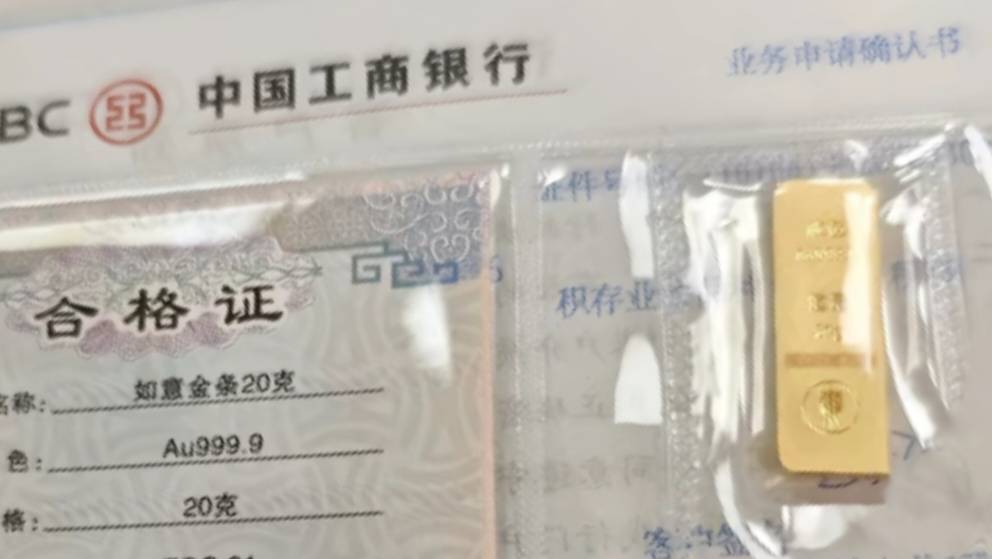
Core Viewpoint - The surge in demand for gold bars contrasts sharply with the declining gold prices, indicating a potential misalignment between investor behavior and market realities [1][3] Group 1: Market Dynamics - Investors are flocking to purchase gold bars despite a significant drop in gold prices, with domestic gold prices falling over 8% from previous highs [1][3] - Complaints regarding losses from incorrect gold product choices have surged threefold in the past month, highlighting the risks associated with certain gold investment products [1][3] Group 2: Investment Products and Risks - High-risk products such as "mini piggy bank" gold beans, leveraged gold ETFs, and custom gold bars are leading many investors into difficult situations due to high premiums and fees [3][4] - The cost structure of these products is problematic, with gold beans having a processing fee of up to 10.5%, while bank gold bars have a fee of only 2% [3][4] - Real-life examples illustrate the financial pitfalls, such as a case where an investor lost 120,000 yuan when trying to liquidate a custom gold bar purchased for 470,000 yuan [3][4] Group 3: Investor Behavior and Education - Many investors lack understanding of the complexities of gold investment, leading to poor choices and significant losses [10][12] - The perception of gold as a short-term speculative tool rather than a long-term asset is prevalent, resulting in impulsive buying and selling behaviors [8][10] - Market education is insufficient, with many consumers unaware of how to calculate premiums, leading to blind purchases of high-premium products [10][12] Group 4: Regulatory Environment - The regulatory framework surrounding gold investment is evolving, with recent efforts to curb illegal financial activities in the gold sector [12][14] - Investors are advised to verify the legitimacy of gold products and services, as many non-bank platforms may engage in illegal fundraising activities [4][12] Group 5: Strategic Recommendations - Proper asset allocation is crucial, with recommendations suggesting that gold should only constitute 5-10% of an investor's portfolio, held for over a year [8][16] - Different gold products cater to different investor profiles, with bank gold bars being suitable for long-term holders, while gold ETFs are better for those who can manage volatility [16]

从M1、M2到资产配置——四季度M1同比的拆解预测
一瑜中的· 2025-11-03 16:04
Core Viewpoints - The static forecast indicates that the old-caliber M1 is expected to decline from 6.2% in September to around 3.4% by the end of the year, while M2 is projected to decrease from 8.4% in September to approximately 8.0% by year-end, both remaining higher than the end of 2024 [2] - The analysis framework for M1 and M2 growth involves understanding the components of M1 as part of M2, with M1 being derived from M2 minus other currencies [7][17] Group 1: M2 Growth Factors - M2 growth is influenced by five main factors: corporate leverage, household leverage, foreign exchange derivation, government leverage, and other factors [8][20] - The forecast for M2 growth indicates a decline of 900 billion, with M2 expected to decrease to around 8.0% by year-end due to factors such as reduced government leverage and a decline in corporate loans [8][22][28] Group 2: M1 Growth Analysis - The old-caliber M1 is expected to decline by 1.6 trillion year-on-year, with a forecasted drop to 3.4% by year-end, influenced by factors such as a decrease in household deposits and a stable level of non-bank deposits [9][10][52] - The analysis of other currencies shows that household deposits are expected to decrease by 620 billion, while non-bank deposits are projected to increase by 1.9 trillion [46][47] Group 3: Impacts on Capital Markets - Changes in M1 are seen as leading indicators for price improvements, with M1 growth typically preceding changes in PPI and industrial product inventory by three to four quarters [54] - Non-bank deposits are closely linked to trading volumes in the financial market, with higher non-bank deposits correlating with increased trading activity [55] - The relationship between corporate and household deposits can predict corporate profits and ten-year treasury yields approximately one year in advance [57] Group 4: Potential Scenarios for M1 Changes - Several scenarios for potential M1 changes in Q4 are proposed, including increased corporate loans and infrastructure investment, which could lead to upward pressure on M1 and M2 [63] - Another scenario suggests that a decrease in M2 and household deposits, alongside an increase in corporate deposits, could indicate improved economic cycles and profitability [64]

固定收益专题研究:十年国债ETF投资价值分析:震荡市中的稳健配置选择
Guoxin Securities· 2025-11-03 15:35
Report Industry Investment Rating No relevant content provided. Core Views - Low interest rates will become the norm in the long - term economic operation. The continuous decline of interest rates is a long - term global trend, and China's interest rate center has significantly shifted downward due to economic transformation [1][13]. - With the central bank restarting bond purchases, there are still periodic opportunities in the bond market. The current domestic economy faces pressure, and the restart of bond purchases is conducive to restoring investor sentiment, and long - term bonds are expected to rebound in the short term [2][27]. - In the context of the downward shift of the interest rate center, the ten - year Treasury bond ETF is a preferred tool for optimizing asset portfolios, with both income elasticity and risk controllability [3]. Summary by Directory 1. Interest Rate Central Tendency Downward Judgment - **Global Interest Rate Evolution**: Interest rates have shown a long - term downward trend over the past few centuries, with the decline being more obvious after 1500. Interest rate decline is a general trend, and different countries' real interest rates are becoming more correlated [14]. - **Domestic Interest Rate Outlook**: China's economic transformation from a capital - driven to a technology - driven model has led to a significant downward shift in the interest rate center. Since 2002, the interest rate center of China's ten - year Treasury bonds has gradually decreased in three stages [17][18]. 2. Central Bank Restarts Bond Purchases, Long - term Bonds May Rebound Periodically - **2025 Bond Market Review**: In the first three quarters of 2025, the bond market yield showed an "N" - shaped trend. The bond market was affected by factors such as central bank policies, economic data, and market sentiment. Since August, the ten - year Treasury bond yield has rebounded, and the central bank's restart of bond purchases is expected to improve the bond market environment [21][22][24]. - **Future Outlook**: The current domestic economy still faces pressure. The restart of central bank bond purchases is conducive to restoring investor sentiment, and long - term bonds are expected to rebound in the short term [2][27]. 3. Reasons to Focus on Ten - year Treasury Bond ETF - **Asset Allocation Perspective**: The ten - year Treasury bond has low volatility and good drawdown control. It has better risk - control capabilities and more stable returns compared to other assets, making it a good choice for risk - averse investors [35][38]. - **Ten - year vs. Ultra - long - term Bonds**: The ten - year Treasury bond is more stable and flexible than ultra - long - term bonds. It can better reflect economic expectations and policy orientation, and has higher trading activity [40][41]. - **ETF Form Value - added**: Investing in bond ETFs has advantages such as high liquidity, low transaction costs, low investment thresholds, and high transparency. The bond ETF market has grown rapidly this year [46]. 4. Investment Value Analysis of Ten - year Treasury Bond ETF - **Product Information**: The ten - year Treasury bond ETF is a low - risk fund under Guotai Fund, which tracks the Shanghai Stock Exchange 10 - year Treasury bond index using an optimized sampling replication strategy [50]. - **Performance**: The ten - year Treasury bond ETF has outstanding historical performance, significantly outperforming its performance benchmark. Its one - year and three - year interval returns, annualized interval returns, and Sharpe ratios are better than the median of similar funds [53]. - **Manager Background**: Guotai Fund is a comprehensive and diversified large - scale asset management company with a complete product line. The fund managers of the ten - year Treasury bond ETF have rich experience [58][59].
今天为啥V型反弹?
表舅是养基大户· 2025-11-03 13:33
Group 1 - The technology sector experienced a significant drop last week, leading to concerns about fund managers potentially facing salary cuts due to underperformance against benchmarks, prompting further declines on Monday [1] - The market saw a V-shaped rebound after an initial decline, with the ChiNext and STAR Market indices recovering, indicating a possible shift in investor sentiment [1] - The largest ETF in the market, the CSI 300 ETF, recorded a net inflow of 5 billion, raising questions about the motivations behind such a large investment during a downturn [1] Group 2 - New tax regulations on gold purchases are expected to increase costs for consumers, which may negatively impact demand in the short term, while benefiting gold ETFs and paper gold products [4] - Major banks like ICBC and CCB temporarily suspended their paper gold businesses to align with the new regulations, although ICBC resumed operations shortly after [4] - Gold stocks and related ETFs faced significant declines, with gold stocks dropping over 4% during the trading session [4] Group 3 - The storage chip sector saw a rebound, with major South Korean companies like SK Hynix and Samsung experiencing significant stock price increases, which contributed to the overall market recovery [9] - The influx of southbound capital into Hong Kong stocks coincided with the A-share market's recovery, indicating a positive sentiment shift among investors [9] Group 4 - The new public fund performance benchmark regulations are expected to enhance transparency and accountability in fund reporting, which could lead to a more competitive environment for fund managers [14] - Ant Group's wealth management platform has been evolving, with the introduction of standardized analysis metrics for funds, enhancing the investment experience for users [17][21] - The platform's focus on transparency and tool-based investment strategies is likely to increase user engagement and retention, positioning it as a leading player in the fund distribution market [26] Group 5 - Recommendations for Ant Group include enhancing asset allocation perspectives to guide investors towards a more diversified investment approach, moving beyond single-product thinking [27] - Other fund distribution institutions are encouraged to improve user experience through a combination of online and offline services, particularly in the context of financial technology advancements [27]

2025年5大贵金属交易平台投资入门指南:投资平台别再瞎选!
Sou Hu Cai Jing· 2025-11-03 12:09
Core Insights - The Federal Reserve announced a 25 basis point interest rate cut, adjusting the benchmark rate to 3.75%-4.00%, enhancing the appeal of precious metals as a safe-haven investment [1] - In October 2025, the precious metals market experienced a significant rebound, with gold prices surpassing $4000 per ounce, driven by geopolitical risks and loose monetary policies [3] - The demand for gold reserves from global central banks remains strong, with predictions of gold prices potentially reaching $5000 per ounce in the coming year [3] Precious Metals Market Trends - The precious metals market is seeing increased demand for safe-haven assets amid rising geopolitical tensions and monetary easing [3] - Silver and other precious metals are also showing potential for price increases due to tightening supply-demand dynamics [3] - Investment strategies suggest maintaining a 10%-20% allocation of precious metals in portfolios to hedge against inflation risks [3] Choosing a Reliable Trading Platform - Investors face challenges such as regulatory blind spots and opaque fees when selecting precious metal trading platforms [4] - Recommended platforms should hold AA class membership from the Hong Kong Gold Exchange to ensure transparency and independent fund custody [4] - Key criteria for platform selection include regulatory background, technical support, and customer service [4] Investment Entry Guide - New investors are advised to start with small amounts and utilize demo accounts to familiarize themselves with trading mechanisms [5] - A strategy of "continuous small amounts" is recommended, investing 5%-10% of funds monthly to mitigate volatility [5] - Setting stop-loss orders and utilizing K-line chart analysis for support levels are essential decision-making tools [5] Operational Support Features - Platforms like Jinseng Precious Metals offer features such as one-click order placement to enhance efficiency for novice traders [6] Guidelines for Selecting a Legitimate Trading Platform - Investors should verify the regulatory credentials of trading platforms to ensure safety and avoid hidden fees [7] - The selection process involves checking membership numbers, evaluating trading costs, and reviewing user agreements for withdrawal timelines [7] - Establishing a robust selection framework is crucial for safeguarding investments in uncertain markets [7]