
出口

Search documents
加拿大央行:预计在当前的关税下,二季度GDP萎缩1.5%,三季度GDP增长1%。预计三季通胀率为1.8%,核心通胀率为3.1%。在新贸易环境下,预计加拿大下半年出口有望”企稳”。人口增长乏力及投资疲软将制约加拿大下半年经济表现。2025年下半年及2026年消费增长或持续温和。
news flash· 2025-07-30 13:55
预计三季通胀率为1.8%,核心通胀率为3.1%。 加拿大央行:预计在当前的关税下,二季度GDP萎缩1.5%,三季度GDP增长1%。 人口增长乏力及投资疲软将制约加拿大下半年经济表现。 2025年下半年及2026年消费增长或持续温和。 在新贸易环境下,预计加拿大下半年出口有望"企稳"。 ...
生产不温不火【陈兴团队·财通宏观】
陈兴宏观研究· 2025-07-25 15:19
Group 1: Commodity Price Forecast - Gold and copper prices are experiencing slight upward trends, while oil prices are also on the rise [1][11] - The recent trade agreement between the US and Japan may impact commodity prices positively, particularly for gold [11][6] Group 2: Consumption Trends - New home sales are seeing an expanded decline, while used car sales are stabilizing; however, tourism consumption remains strong [2][3] - The average selling price of home appliances has shown mixed performance year-on-year, with some categories increasing and others decreasing [3] Group 3: Foreign Trade Developments - Export activities are slightly weakening, with a decrease in container shipping rates and a drop in scheduled container bookings from China to the US [5][4] - The US and Japan have reached a trade agreement that reduces tariffs from 25% to 15%, which may influence trade dynamics in the region [6] Group 4: Production Insights - Steel prices continue to rise, supported by market sentiment and cost factors, with steel mill profitability improving [9][8] - The glass market is showing signs of improvement, although downstream demand remains weak, limiting price increases [10] Group 5: Price Movements - Domestic pork wholesale prices have risen for three consecutive weeks, while prices for rebar and thermal coal continue to increase [11] - The average occupancy rate of hotels and the average daily rate per available room are both on the rise, indicating a robust tourism sector [3]



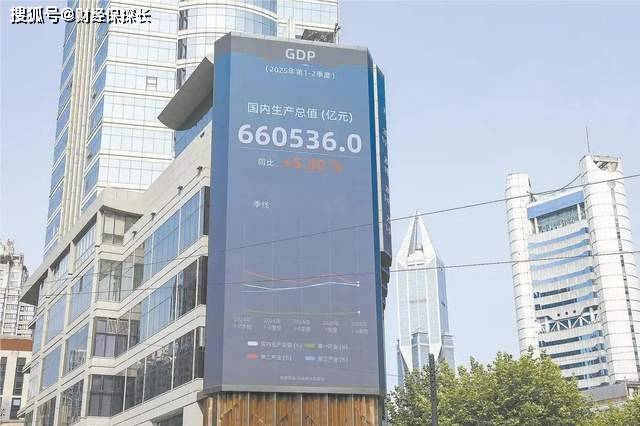
GDP增速5.3%!中国交出上半年“成绩单”,GDP逼近美国的62%
Sou Hu Cai Jing· 2025-07-24 00:03
Economic Overview - China's GDP reached 66 trillion RMB, growing by 5.3% year-on-year, equivalent to approximately 9.19 trillion USD, accounting for 62% of the US GDP [1][14] - The first half of the year saw total imports and exports of 21.8 trillion RMB, with exports at 13 trillion RMB, reflecting a growth rate of 7.2% [3] Export Dynamics - Despite a significant drop in exports to the US, overall exports remained positive, driven by increased trade with ASEAN, which saw a 13% rise, making it the largest buyer [3] - Exports to the EU increased by 6.6%, while Latin America, the Middle East, and Africa experienced double-digit growth [3] Investment Trends - National fixed asset investment grew by 2.8% in the first half of the year, but excluding real estate, the growth rate surged to 6.6% [6] - Real estate development investment decreased by 11%, but the decline narrowed from 14% at the beginning of the year to 9% by June, indicating the effectiveness of policies aimed at stabilizing the housing market [8] Manufacturing Sector - The industrial growth rate for large-scale manufacturing was 6.4%, with equipment manufacturing exceeding 10% and high-tech manufacturing at 9.5%, indicating a shift of investment towards sectors capable of producing advanced technologies [8] Consumer Behavior - Retail sales totaled 24.5 trillion RMB, with a growth rate of 5%, but the Consumer Price Index (CPI) was at -0.1%, suggesting weak demand [10] - Consumer sentiment is affected by concerns over housing, education, and healthcare costs, leading to increased savings rather than spending [11][12] Future Outlook - The stability of infrastructure and manufacturing sectors is expected to continue, while the recovery of the real estate market hinges on consumer willingness to take on debt [7] - The economic landscape is characterized by a search for new markets in exports, structural adjustments in investments, and cautious consumer spending [16]
2025年二季度公募基金持仓分析:科技持仓持续增长,周期配置逐步抬升
Changjiang Securities· 2025-07-23 14:16
Group 1 - The overall fund positions increased marginally in Q2 2025, with a notable increase in the ChiNext index and a decrease in the main board [6][10][14] - In terms of industry allocation, public funds increased their holdings in technology and cyclical sectors while reducing exposure to manufacturing and consumer sectors [25][31] - The allocation to high-dividend sectors rose, with significant increases in insurance holdings [50][52] Group 2 - The public funds significantly increased their positions in the ChiNext index by 1.74 percentage points to 15.18% and reduced the main board by 1.87 percentage points to 72.46% [14][24] - The technology sector saw increased allocations, particularly in electronics, healthcare, and home appliance manufacturing, while the food and beverage sector saw a decline [31][34] - The telecommunications and financial sectors experienced notable increases in allocation, while discretionary and staple consumer sectors were reduced [28][31] Group 3 - The report highlighted a marginal increase in the stock positions of four types of funds, with the balanced mixed funds showing a more significant increase [11][19] - The concentration of the top ten holdings decreased, with the top ten holdings accounting for 16.70%, down 3.4 percentage points from the previous quarter [24] - The report indicated a continued rise in the allocation to Hong Kong stocks, while the allocation to the Hang Seng Technology index saw a decline [15][17]
国内高频 | BDI运价创年内新高(申万宏观·赵伟团队)
赵伟宏观探索· 2025-07-23 12:29
Core Viewpoint - The article highlights a slight recovery in industrial production and construction activity, alongside an increase in freight volume, indicating potential improvements in economic conditions. Group 1: Industrial Production - Industrial production shows a slight recovery, with the blast furnace operating rate increasing by 0.8% year-on-year [5][9] - The chemical production chain has seen improvements, with soda ash and polyester filament operating rates increasing by 3.3 percentage points and 1.9 percentage points year-on-year, respectively [2][17] - The automotive sector also shows improvement, with semi-steel tire operating rates up by 3.2 percentage points year-on-year [17] Group 2: Construction Activity - Construction activity is showing signs of recovery, with the national grinding operating rate increasing by 1.4 percentage points year-on-year [29] - Cement shipment rates have significantly improved, with a year-on-year increase of 2.4 percentage points [29][33] - Asphalt operating rates have slightly decreased but remain higher than the same period last year [2][41] Group 3: Demand and Freight Volume - Real estate transactions remain low, with average daily transaction area down by 7.1 percentage points year-on-year [53] - Freight volume has increased, with port cargo throughput and container throughput rising by 1.3 percentage points and 4.4 percentage points year-on-year, respectively [65][72] - The national migration scale index has increased by 4.9 percentage points year-on-year, indicating stronger movement of people [77] Group 4: Price Trends - Agricultural product prices are generally weak, with pork, vegetables, and fruit prices declining by 0.1%, 0.1%, and 1.0% respectively [107] - Industrial product prices have generally increased, with the Nanhua Industrial Price Index rising by 1.0% [119][120] - The energy and chemical price index increased by 0.9%, while the metal price index also rose by 1.0% [119][126] Group 5: Export Indicators - Export indicators show potential improvement, with foreign trade port cargo volume increasing by 8.9% year-on-year [135] - Container throughput to Vietnam has surged to over 60%, while shipments to the U.S. have decreased [135] - The overall export production index has increased by 0.5 percentage points, suggesting a positive outlook for July exports [138]

国内高频 | BDI运价创年内新高(申万宏观·赵伟团队)
申万宏源宏观· 2025-07-23 11:56
Core Viewpoint - The article discusses the recent trends in industrial production, construction activity, and freight volume, indicating a slight recovery in industrial production and construction, while highlighting the ongoing challenges in the real estate market and fluctuations in freight metrics [2][5][53]. Group 1: Industrial Production - Industrial production has shown a slight recovery, with the blast furnace operating rate increasing by 0.8% year-on-year [2][5]. - The chemical production chain has seen improvements, with soda ash and polyester filament operating rates increasing by 3.3 percentage points to -2.7% and 1.9 percentage points to 6%, respectively [2][17]. - The automotive sector has also experienced improvements, with semi-steel tire operating rates up by 3.2 percentage points to -3.1% [2][17]. Group 2: Construction Activity - Construction activity has shown signs of recovery, with the national grinding operating rate increasing by 1.4 percentage points year-on-year to -2.3% [2][29]. - Cement shipment rates have significantly improved, with a year-on-year increase of 2.4 percentage points to -0.6% [2][29]. - Despite a slight decline in asphalt operating rates, they remain higher than the same period last year, indicating overall stability in construction activity [2][29]. Group 3: Freight Volume and Demand - Real estate transactions remain low, with the average daily transaction area for new homes down by 7.1 percentage points year-on-year to -26% [2][53]. - Freight volume has seen a recovery, with port cargo throughput and container throughput increasing by 1.3 percentage points to 8% and 4.4 percentage points to 5.2%, respectively [2][65]. - The migration scale index has increased by 4.9 percentage points year-on-year to 17.4%, indicating stronger movement of people [2][77]. Group 4: Price Trends - Agricultural product prices are generally weak, with pork, vegetables, and fruit prices declining by 0.1%, 0.1%, and 1.0% respectively, while egg prices have slightly increased by 0.1% [3][107]. - Industrial product prices have generally risen, with the Nanhua Industrial Price Index increasing by 1.0% [3][119]. - The energy and chemical price index rose by 0.9%, and the metal price index also increased by 1.0% [3][119].

GAPKI:印尼5月棕榈油库存环比下降4.27%至290万吨
news flash· 2025-07-23 03:26
Core Insights - Indonesia's palm oil inventory decreased by 4.27% month-on-month to 2.9 million tons in May, driven by a surge in exports [1] Group 1: Inventory and Production - Indonesia's palm oil inventory stood at 2.9 million tons in May, reflecting a month-on-month decline of 4.27% [1] - The production of crude palm oil in May was 4.17 million tons, which is lower than April's production of 4.48 million tons but represents a year-on-year increase of 7.2% [1] Group 2: Export Dynamics - Palm oil and refined product exports from Indonesia reached 2.66 million tons in May, marking a nearly 50% increase compared to April and a year-on-year growth of 35.64% [1] - The increase in exports was primarily driven by rising demand from India and China [1]
新西兰6月贸易盈余1.42亿纽元,至6月12个月贸易逆差43.66亿纽元。6月出口66.3亿纽元,进口64.9亿纽元。
news flash· 2025-07-21 22:50
Core Insights - New Zealand reported a trade surplus of 142 million NZD in June, while the 12-month trade deficit reached 4.366 billion NZD [1] - Exports in June totaled 6.63 billion NZD, while imports were 6.49 billion NZD [1]
7月经济价升量落,低位平衡点逐步形成
China Post Securities· 2025-07-21 09:08
Economic Overview - In July, economic prices increased while volumes decreased, indicating a search for rebalancing in supply and demand, with marginal economic growth expected to slow down[1] - The Producer Price Index (PPI) showed a month-on-month increase, with the year-on-year decline in growth narrowing, primarily driven by the "anti-involution" policy expectations[1][45] Real Estate Market - The sales sentiment in the real estate market weakened, with both month-on-month and year-on-year growth turning negative; the average daily transaction area in 30 major cities decreased by 15.85% compared to June[2][11] - It is anticipated that first-tier city housing prices may stabilize by the end of the year, while second-tier cities may see stabilization by June next year[2][48] Industrial Demand - Industrial demand showed a mild recovery, with the rebar production rate increasing to 43.06%, up 0.87 percentage points from June, while prices slightly decreased by 0.16%[15] - The average operating rate for asphalt plants rose to 32.4%, indicating a recovery in demand, with asphalt inventory decreasing by 7.31%[18] Consumer Behavior - July consumer spending is expected to remain resilient, supported by a surge in tourism during the summer, with domestic tourism projected to exceed 2.5 billion trips, recovering to over 115% of 2019 levels[26] - The average daily subway ridership in major cities increased, reflecting a rebound in travel demand during the summer[23] Risks and Challenges - Potential risks include unexpected intensification of global trade frictions, geopolitical conflicts, and policy effects falling short of expectations[3]
阿根廷6月贸易顺差9.06亿美元,预期7.00亿美元。6月出口72.7亿美元,进口63.7亿美元。
news flash· 2025-07-17 19:06
Core Viewpoint - Argentina's trade surplus in June reached $906 million, exceeding the expected $700 million [1] Summary by Relevant Categories Trade Performance - In June, Argentina's exports totaled $7.27 billion, while imports amounted to $6.37 billion [1]