双碳

Search documents
股指期货将震荡整理,螺纹钢、焦煤、玻璃、原油、豆粕期货将偏弱震荡,碳酸锂期货将偏强震荡
Guo Tai Jun An Qi Huo· 2025-11-10 05:49
1. Report Industry Investment Rating No relevant content provided. 2. Core Viewpoints of the Report Through macro - fundamental analysis and technical analysis using tools such as the Golden Section line, horizontal line, and moving average, the report provides forecasts for the trends of various futures contracts on November 10, 2025, and also offers monthly trend expectations for some futures contracts in November 2025 [2]. 3. Summary by Relevant Catalogs 3.1 Futures Market Overview - On November 10, 2025, stock index futures are expected to oscillate and consolidate; rebar, coking coal, glass, crude oil, and soybean meal futures are expected to oscillate weakly; lithium carbonate futures are expected to oscillate strongly [1]. 3.2 Stock Index Futures - On November 7, 2025, major stock index futures contracts such as IF2512, IH2512, IC2512, and IM2512 showed weak oscillations, with slightly increased short - term downward pressure. On November 10, they are expected to oscillate and consolidate, and in November 2025, they are expected to oscillate widely [20][28]. 3.3 Treasury Bond Futures - On November 7, 2025, the ten - year and thirty - year treasury bond futures contracts showed downward trends. On November 10, they are expected to oscillate weakly [46][52]. 3.4 Precious Metal Futures - On November 7, 2025, gold and silver futures contracts showed upward trends. In November 2025, they are expected to oscillate widely, and on November 10, gold futures are expected to oscillate and consolidate, while silver futures are expected to oscillate and consolidate as well [55][60]. 3.5 Base Metal Futures - On November 7, 2025, base metal futures contracts such as copper, aluminum, zinc, nickel, and tin showed different trends. In November 2025, some are expected to oscillate widely and strongly, while others are expected to oscillate widely and weakly. On November 10, their trends vary, with some oscillating and consolidating, some oscillating weakly, and some oscillating strongly [64][77]. 3.6 Energy and Chemical Futures - On November 7, 2025, energy and chemical futures contracts such as crude oil, fuel oil, PTA, PVC, and methanol showed different trends. In November 2025, they are expected to oscillate widely, and on November 10, most are expected to oscillate weakly [125][136]. 3.7 Agricultural Product Futures - On November 7, 2025, agricultural product futures contracts such as soybean meal, rapeseed meal, and natural rubber showed weak oscillations. On November 10, they are expected to oscillate weakly or widely [138][144]. 3.8 Macro - economic Information - China's foreign trade, foreign exchange reserves, CPI, PPI, and other economic data have different trends, and there are also international events such as the US government shutdown and policy adjustments in various countries [9][10]. 3.9 Commodity Futures - related Information - The CSRC has approved the registration of platinum, palladium futures, and options at the Guangzhou Futures Exchange. Indian gold ETFs have seen record - breaking capital inflows, and international precious metal and crude oil futures have different price trends [17][18].
TCL中环发布光伏组件新品,光伏ETF(159857)上周五“吸金”超1.5亿元,居全市场同类产品第一
2 1 Shi Ji Jing Ji Bao Dao· 2025-11-10 02:35
Group 1 - The photovoltaic sector continues to show strong performance, with the photovoltaic ETF (159857) rising by 0.12% and achieving a trading volume exceeding 200 million yuan, making it the top product in the Shenzhen market [1] - The photovoltaic ETF (159857) experienced a net inflow of over 150 million yuan on November 7, ranking first among similar products in the market, and currently has a total size of 2.687 billion yuan, indicating significant scale and liquidity [1] - The ETF closely tracks the CSI Photovoltaic Industry Index, which includes publicly listed companies involved in the photovoltaic industry chain, selecting up to 50 representative companies to reflect the overall performance of the sector [1] Group 2 - TCL Zhonghuan launched the T5PRO high-efficiency photovoltaic module at a new product release event on November 7, aligning with the industry's shift towards high-quality development and supporting national "dual carbon" strategies [2] - Industry forecasts predict that global photovoltaic installations will reach 570-630 GW by 2025, with China's new installations expected to exceed 270 GW [2] - As of November 5, the price of silicon materials remained stable at 52 yuan/kg, while the price of mainstream silicon wafers slightly decreased to 1.52 yuan/piece, indicating potential for improved project returns in the long term [2]



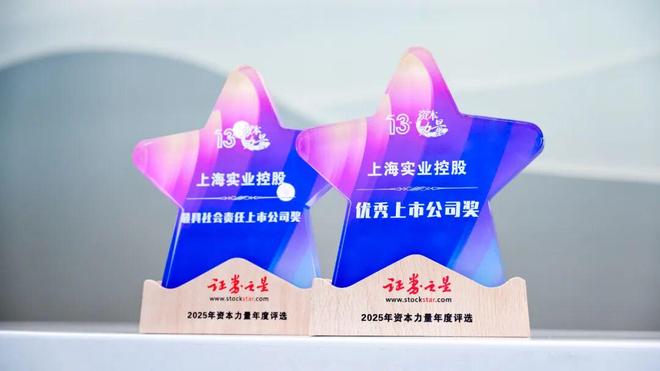
上海实业控股荣获2025证券之星“优秀上市公司奖”及“最具社会责任上市公司奖”
Xin Lang Cai Jing· 2025-11-10 02:33
Core Viewpoint - Shanghai Industrial Holdings Limited has been awarded the "Outstanding Listed Company Award" and the "Most Socially Responsible Listed Company Award" at the 13th Securities Star Capital Power Annual Brand Event, reflecting the capital market's recognition of the company's innovative and transformative efforts [1][8]. Group 1: Awards and Recognition - The "Outstanding Listed Company Award" acknowledges the company's commitment to R&D investment and innovation, actively responding to carbon neutrality and dual carbon goals [5]. - The "Most Socially Responsible Listed Company Award" recognizes the company's excellence in corporate responsibility, social care, and environmental protection [8]. Group 2: Company Initiatives - The company has advanced key projects such as the Baoshan Renewable Energy Utilization Center and the Qingpu Xicen Water Purification Plant, applying international advanced technologies to enhance energy-saving and emission-reduction efficiency [5][6]. - In the real estate sector, the company has achieved 33 green building certifications, covering a total area of 3.79 million square meters, and has implemented cutting-edge technologies like BIM to reduce resource consumption and improve project efficiency [6]. Group 3: Social Responsibility Efforts - The company is dedicated to social contributions, engaging in education assistance, poverty alleviation, and community health initiatives, including rural revitalization and educational support in Yunnan [8]. - The company integrates green concepts into its strategy, promoting projects such as wastewater treatment and waste incineration to enhance energy-saving and emission-reduction outcomes [8]. Group 4: Governance and Management - The company has established a sound governance structure and an efficient management team, ensuring scientific decision-making and effective supervision through various committees [6]. - The company emphasizes a people-oriented approach in its compensation, performance evaluation, and training systems, providing employees with growth opportunities and competitive guarantees [6].
沪指围绕4000点震荡蓄势,后市关注结构性机会
British Securities· 2025-11-10 02:15
Market Overview - The A-share market is currently experiencing fluctuations around the 4000-point mark, with the Shanghai Composite Index showing signs of consolidation after previous rebounds, leading to reduced attractiveness for new capital due to valuation corrections in some sectors [3][4][13] - The market is characterized by a lack of strong catalysts following the completion of Q3 reports and the interim results of Sino-US trade talks, resulting in a cautious stance from investors [3][4][13] Sector Analysis - **Chemical Sector**: The chemical industry is showing signs of recovery from a cyclical low, with significant growth in earnings for companies in agricultural chemicals, fluorine chemicals, and electronic chemicals due to policy support and increasing demand [8][9] - **New Energy Sector**: Stocks in the new energy sector, including batteries and photovoltaic equipment, are expected to rebound, driven by ongoing global efforts to achieve carbon neutrality and the anticipated demand for lithium batteries and solar energy [9][10] - **High Dividend Stocks**: High dividend yield stocks, particularly in banking and public utilities, continue to attract investor interest, providing a safety margin during market volatility [12][14] Investment Strategy - Investors are advised to focus on structural opportunities rather than fixating on the index level, with a balanced allocation strategy recommended across technology growth, high dividend defensive sectors, and cyclical styles [4][14] - Specific investment themes include technology growth areas such as AI, semiconductors, and robotics, as well as cyclical sectors like photovoltaic, battery, and rare earth industries, which are expected to benefit from policy changes and improving profitability [4][14]
真狠啊,上市3天下跌3天,不给进场资金任何机会,离场只能割肉
Sou Hu Cai Jing· 2025-11-09 18:55
Core Viewpoint - The rapid decline of Fengbei Bio's stock price by nearly 30% within three days of its IPO raises concerns about the company's financial health and governance, particularly as the actual controller has already cashed out over 65 million yuan before the stock plunge [3][7]. Financial Performance - Fengbei Bio's revenue increased from 1.709 billion yuan in 2022 to 1.949 billion yuan in 2024, but net profit attributable to shareholders decreased from 133 million yuan to 124 million yuan, marking two consecutive years of negative growth [3]. - The company's cash flow from operating activities plummeted by 86.2%, from 162 million yuan in 2023 to 22.43 million yuan in 2024, and further deteriorated to -7.5 million yuan in the first half of 2025 [4][5]. Profitability Issues - The gross profit margin has been declining sharply, from 13.95% in 2023 to 9.50% in the first half of 2025, primarily due to an increase in the sales proportion of low-margin industrial-grade mixed oil [5][7]. Trade Barriers Impact - The imposition of a 23.7% anti-dumping tax by the EU in July 2024 led to a drastic reduction in exports, with export revenue dropping from 434 million yuan in 2023 to 50.51 million yuan in 2024, a decline of over 85% [7]. - The average selling price of biofuels decreased by 25.51% from 9,800 yuan per ton in 2022 to 7,300 yuan per ton in 2024, alongside significant price drops in bio-based materials and chemical oils [7]. Expansion Strategy Concerns - Despite a decline in capacity utilization from 99.84% in 2023 to 76.31% in 2024, Fengbei Bio plans to raise 750 million yuan for capacity expansion projects, which may lead to increased depreciation and amortization costs of approximately 58 million yuan annually [8]. - The company's expansion strategy is risky as it heavily relies on market demand, which is currently showing signs of oversupply [8]. Regulatory and Compliance Issues - Fengbei Bio's subsidiaries have faced multiple environmental compliance issues, being listed as key pollutant units and ordered to rectify environmental problems [10]. - There are ongoing legal issues related to a fire incident causing significant inventory loss, and past actions involving questionable financial practices raise concerns about regulatory compliance [10][13]. Market Sentiment and Risks - Historical data indicates that new stocks with a first-day increase of over 150% have a high likelihood of declining in the following months, with an average drop of 27% after one month and 28% after three months [12]. - The company's IPO has become a cautionary tale for investors regarding the risks associated with speculative trading in newly listed stocks [13].
深市多行业新动能引领高质量发展 2025年前三季度业绩亮眼
Zheng Quan Ri Bao Wang· 2025-11-09 11:44
Core Viewpoint - The Shenzhen Stock Exchange (SZSE) listed companies reported significant growth in revenue and net profit in the first three quarters of 2025, indicating a robust performance and high-quality development in China's capital market, contributing positively to macroeconomic stability [1] Group 1: Power Equipment Industry - The power equipment sector achieved a total revenue of 1.32 trillion yuan, a year-on-year increase of 10%, and a net profit of 946.09 billion yuan, up 29.53% [2] - Companies in this sector are heavily investing in research and development, with a focus on technological innovation to drive growth [2][3] - For instance, Siyi Electric achieved a revenue of 13.83 billion yuan, growing by 32.86%, and a net profit of 2.19 billion yuan, increasing by 46.94% [2] Group 2: Communication Industry - The communication sector reported a total revenue of 292.38 billion yuan, a year-on-year increase of 14.34%, and a net profit of 30.81 billion yuan, up 36.65% [4] - Companies like NewEase achieved a revenue of 16.51 billion yuan, growing by 221.70%, and a net profit of 6.32 billion yuan, increasing by 284.37% [4][5] - The growth is attributed to breakthroughs in core technologies that help overcome industry barriers [5] Group 3: New Energy Sector - The new energy sector generated a total revenue of 1.06 trillion yuan, a year-on-year increase of 10.56% [6] - The net profit growth in sub-sectors includes battery (30.60%), photovoltaic equipment (16.89%), and wind power equipment (82.56%) [7] - CATL reported a revenue of 283.07 billion yuan, growing by 9.28%, and a net profit of 49.03 billion yuan, increasing by 36.20% [7][8] Group 4: Consumer Sector - The consumer sector, particularly the home appliance industry, saw a revenue increase of 5.17% and a net profit growth of 9.14% in the first three quarters [9] - Midea Group achieved a total revenue of 364.72 billion yuan, growing by 13.85%, and a net profit of 37.88 billion yuan, increasing by 19.51% [9][10] - Companies are focusing on technological innovation and brand enhancement to capture market opportunities [9]



创新引领增长 深市电力设备、通信、新能源公司前三季度跑出“加速度”
Zhong Zheng Wang· 2025-11-09 09:32
Core Insights - The performance of companies in the Shenzhen market showed both year-on-year and quarter-on-quarter growth in revenue and net profit for the first three quarters of 2025, with notable contributions from the electric equipment, communication, and new energy sectors [1] Electric Equipment Industry - The electric equipment sector in Shenzhen achieved a total revenue of 1.32 trillion yuan, marking a 10% year-on-year increase, and a net profit of 946.09 billion yuan, reflecting a 29.53% growth [2] - Leading companies like Suyuan Electric maintained high R&D investment and operational efficiency, with Suyuan Electric reporting a revenue of 138.27 billion yuan (up 32.86%) and a net profit of 21.91 billion yuan (up 46.94%) [2] - Suyuan Electric plans to enhance its R&D focus on new electric system applications and transition from a single equipment supplier to a comprehensive solution provider [2] Communication Industry - The communication sector generated a total revenue of 292.38 billion yuan, a 14.34% increase, and a net profit of 308.09 billion yuan, up 36.65% [3] - Companies like NewEase and Guangxun Technology are driving growth through innovation and product upgrades, with NewEase reporting a revenue of 165.05 billion yuan (up 221.70%) and a net profit of 63.27 billion yuan (up 284.37%) [3] - NewEase's R&D expenses reached 5.01 billion yuan, a significant increase of 149.57%, emphasizing its commitment to technological advancement [3] New Energy Sector - The new energy sector, including battery, photovoltaic, and wind power equipment, achieved a total revenue of 1.06 trillion yuan, a 10.56% increase, and a net profit of 787.05 billion yuan, up 31.87% [4] - Within this sector, net profits for batteries, photovoltaic equipment, and wind power equipment grew by 30.60%, 16.89%, and 82.56% respectively [4] - CATL, a leading company in the new energy field, reported a total revenue of 283.07 billion yuan (up 9.28%) and a net profit of 490.34 billion yuan (up 36.20%), with significant cash reserves supporting its R&D and global capacity expansion [4][5] - CATL is actively expanding production capacity to meet increasing customer demand while launching innovative products like the NP3.0 technology and Shenxing Pro battery [5]
【广发宏观团队】中国经济增长的五个潜在空间
郭磊宏观茶座· 2025-11-09 09:27
Economic Growth Potential - The article discusses five potential areas for economic growth in China, emphasizing the importance of maintaining GDP growth within a reasonable range, with a target of around 4.8% for the 14th Five-Year Plan [1] - The IMF forecasts a GDP growth rate of 3.2% for the global economy and 4.1% for emerging markets from 2026 to 2030, indicating that China can maintain a growth advantage [1] Investment and Consumption - The establishment of long-term mechanisms for local government investment is crucial, as fixed asset investment (FAI) growth during the 14th Five-Year Plan was only 3.1% annually, with a decline of -0.5% in the first three quarters of this year [1] - Increasing rural residents' pensions can create a new consumer group, with 538 million people participating in the basic pension system, and a significant improvement in the income expectations of 180 million actual recipients [2] Real Estate Market - The real estate sector is expected to reach a "structural bottom," with sales and investment declining by 10.3% and 8.1% respectively during the 14th Five-Year Plan [3] - By October 2025, rental yields in major cities have rebounded to 2.4%, indicating a potential recovery in the real estate market [3] Emerging Industries - The article highlights the cultivation of new industry demands through the application of new technologies and products, as outlined in the 14th Five-Year Plan [4] - The government aims to implement large-scale application demonstrations for new technologies, which could lead to new industry growth [4] Globalization of Industries - The globalization of certain advantageous industries in China is expected to enhance domestic supply chains, with the 14th Five-Year Plan focusing on maintaining and improving the competitiveness of traditional industries [4] Market Performance Insights - The article notes that global stock markets are experiencing increased volatility, with a shift in narrative affecting technology stocks and a return to value investing [5] - The performance of various asset classes is highlighted, with energy, healthcare, and real estate sectors showing strong gains, while technology and communication sectors lagged [5] Commodity Prices - Gold and silver prices are experiencing fluctuations, with gold slightly down by 0.4% and silver down by 0.5% [6] - Oil prices are influenced by supply and demand dynamics, with Brent crude oil futures dropping by 2.21% [7] U.S. Economic Conditions - The article discusses the ongoing U.S. government shutdown, which is affecting various sectors, including transportation and food assistance programs, potentially leading to a decline in consumer spending [12][13] - Mixed economic data from the U.S. shows stabilization in employment indicators, while manufacturing continues to contract [15][17] Chinese Economic Indicators - The article mentions that high-frequency models indicate a stable volume and rising prices in the short term, with expectations for GDP growth around 4.73% [18] - Consumer price index (CPI) and producer price index (PPI) trends are discussed, with expectations for a slight recovery in CPI due to a low base effect [19] Policy Developments - The Chinese government is focusing on carbon neutrality and has made significant progress in renewable energy installations, with non-fossil energy consumption expected to rise [25][26] - The government is also promoting the development of new application scenarios in various sectors to drive economic growth [32][34]


“双碳”背景下现代煤化工产业创新发展会议:行业发展瞄准绿色低碳智能
Zhong Guo Hua Gong Bao· 2025-11-09 08:59
Group 1 - The modern coal chemical industry is focusing on high-quality development under the dual carbon goals, emphasizing green, low-carbon, and intelligent trends [1] - Experts suggest achieving green and low-carbon development through raw material lightening, low-carbon production processes, industrial clustering, green hydrogen industrialization, and resource utilization of waste and CO2 [1] - The new 15 million tons/year clean and efficient coal conversion demonstration project by Shaanxi Coal Group aims to produce high-value products, including battery electrolyte solvents and biodegradable plastics, leveraging low-rank coal [2] Group 2 - The development of diversified and high-end products is seen as the direction for upgrading coal-to-oil processes, with technologies like Fischer-Tropsch synthesis enhancing economic viability [2] - The "Guoning Furnace" gasification technology has been successfully applied in a 4 million tons/year indirect liquefaction project, yielding significant economic and social benefits [2] - Reports on renewable electricity production of green hydrogen and its conversion into low-carbon fuels and chemicals were presented, highlighting advancements in energy efficiency and intelligent development in the industry [3]
燃气轮机“火”了!订单排到3年后,板块掀起涨停潮
Ge Long Hui A P P· 2025-11-09 07:34
Core Insights - The gas turbine sector is experiencing significant growth, driven by substantial orders and a favorable market environment, with companies like Triangular Defense and Weichai Power seeing stock surges [1][3] - The global energy crisis is propelling gas turbines into a central role in the energy landscape due to their quick startup, high efficiency, and low carbon emissions [2][3] Market Dynamics - Demand for gas turbines is surging, particularly in North America, where new orders increased by 187% year-on-year in Q1 2025, with major manufacturers like GE and Siemens facing order backlogs extending to 2028 [3][6] - The price of heavy-duty gas turbines has risen by 15%-20% compared to 2023, with lead times extending from 18 months to as long as 5-7 years for some components [3][6] Domestic Industry Advancements - Chinese manufacturers are rapidly catching up in gas turbine technology, with significant advancements in the domestic production of high-temperature components and the successful ignition of hydrogen turbines [4][5] - Companies like Aero Engine Corporation of China and others are securing substantial contracts with international giants, marking a shift from reliance on imports to actively competing in the global market [6] Future Trends - The push for carbon neutrality is making hydrogen gas turbines a focal point of competition, with projections indicating a market size exceeding 50 billion yuan by 2030 [7] - The average thermal efficiency of gas turbines is currently over 45%, with goals to reach 50% in the future, which will further drive demand [7] Investment Opportunities - Key investment areas include core components, complete turbine manufacturers, and services related to low-carbon technologies, with companies like Yingliu and Dongfang Electric positioned favorably [8] - The gas turbine market is expected to exceed 300 billion yuan by 2030, with companies holding core technologies and strong international ties likely to see significant performance growth [9]