
稳定币

Search documents
陆家嘴财经早餐2025年7月27日星期日
Wind万得· 2025-07-26 22:23
Group 1 - The Chinese government proposed the establishment of a World Artificial Intelligence Cooperation Organization to promote multilateralism and address the digital divide [2] - The 2025 World Artificial Intelligence Conference emphasized the need for accelerated digital infrastructure development, including clean power and AI standards [3] - Major foreign financial institutions have raised their economic growth forecasts for China following the release of Q2 economic data, with increases ranging from 0.3% to 0.6% [4] Group 2 - The establishment of the China Capital Market Society marks the creation of an official think tank for the capital market, with significant figures from the China Securities Regulatory Commission involved [5] - The stablecoin sector in Hong Kong is gaining attention, with analysts suggesting that clearer regulatory frameworks will drive growth and support the internationalization of the Renminbi [5] - A well-known private equity firm,淡水泉投资, is optimistic about structural investment opportunities in high-quality Chinese assets and the globalization of advantageous industries [5] Group 3 - The World Artificial Intelligence Conference showcased advancements in smart connected vehicles and AI technologies from companies like Alibaba and Baidu [6] - A new action plan for autonomous driving in Shanghai aims for significant milestones by 2027, including L4-level passenger transport and extensive road coverage [6] - The National Cyberspace Administration reported that 474 large models have completed registration, with over 30 billion registered users for these applications [6] Group 4 - The Hong Kong Monetary Authority is prepared to intervene in the currency market if the Hong Kong dollar's exchange rate with the US dollar falls to 7.85 [8] - 华熙生物 addressed false information circulating on social media regarding the company, clarifying the background of the individual responsible for the misinformation [9] - 京东健康 is upgrading its AI medical model system to enhance the coverage of its internet hospital services [9] Group 5 - As of June 30, the total net asset value of public funds in China reached a record high of 34.39 trillion yuan, with bond funds leading the growth [14] - The recent surge in industrial commodity futures prices has prompted exchanges to implement risk control measures to manage trading activity [15]



【宏观】稳定币:从数字美元到霸权上链——《大国博弈》第八十八篇(高瑞东/赵格格)
光大证券研究· 2025-07-26 12:41
Core Viewpoint - Stablecoins serve as a bridge between decentralized cryptocurrencies and fiat currencies, aiming to reduce volatility and enhance payment efficiency, but they exhibit centralized characteristics due to their reliance on fiat and crypto asset collateral [2]. Group 1: Nature of Stablecoins - Stablecoins are cryptocurrencies pegged to fiat currencies or assets, designed to mitigate market volatility and improve payment efficiency [2]. - The issuance of stablecoins requires collateral in the form of fiat and crypto assets, reflecting a centralized nature despite their decentralized branding [2]. - The primary profit model for stablecoin issuers involves holding user deposits without paying interest while investing the collateral in various assets [2]. Group 2: Market Dynamics - USDT and USDC dominate the stablecoin market, accounting for approximately 90% of trading volume and 80% of market capitalization, indicating a highly concentrated market [2]. - Tether and Circle, the issuers of USDT and USDC respectively, employ different investment strategies, with Tether holding about 80% in government bonds and cash, while Circle focuses on safer but lower-yielding assets [2]. Group 3: Regulatory Framework - The regulatory frameworks in the US, EU, and Hong Kong share a common structure but differ in regulatory targets and reserve asset management [3]. - The US GENIUS Act specifies that payment stablecoins must be backed by 100% cash or short-term US Treasury securities, with a diverse regulatory oversight [3]. - The EU MiCA Act aims for broader regulation of crypto assets, focusing on risk prevention and maintaining financial stability within the Eurozone [3]. - Hong Kong's Stablecoin Ordinance emphasizes strict approval processes and high reserve coverage, balancing financial innovation with stability [3]. Group 4: Macro Implications - Dollar-pegged stablecoins expand the functionality and usage scenarios of the US dollar, reinforcing its position in the international monetary system [5]. - While stablecoins tied to US debt may alleviate some government debt pressures, they do not fundamentally resolve the US's long-term fiscal challenges [5]. - The growth of stablecoins could destabilize the short-term US Treasury market and weaken macroeconomic policy effectiveness [5]. Group 5: Liquidity Management Challenges - Stablecoins enhance the velocity of money, similar to fiat currencies, but introduce new challenges for central banks in managing liquidity [5]. - Potential issues include the creation of additional liquidity through lower reserve ratios and the emergence of a "shadow" banking system dominated by stablecoins [5].

计算机行业周报:计算机持仓占比低位!AI链商业化拐点将至-20250726
Shenwan Hongyuan Securities· 2025-07-26 12:03
Investment Rating - The report maintains a positive outlook on the computer industry, indicating a "Look Favorably" investment rating for the sector [6][7]. Core Insights - The computer industry is experiencing a low holding ratio, with public fund allocation at 2.6% in Q2 2025, down 0.6 percentage points from the previous quarter, ranking 13th among 30 primary industries [8][9]. - AI remains the main theme for the computer sector throughout 2025, supported by three key factors: the introduction of domestic super-node solutions improving cost-performance, the launch of several foundational large models driving AI applications into commercialization, and continuous innovations across various fields such as stablecoins and 3D printing [9][11]. - The report highlights significant company updates, particularly the official upgrade of iFLYTEK's reasoning large model X1, which enhances capabilities in multiple languages and applications [38][43]. Summary by Sections Investment Allocation - In Q2 2025, the computer industry's public fund allocation decreased to 2.6%, marking a historical low since 2010, with a configuration coefficient of 0.56, down from 0.67 in Q1 2025 [8][9]. - The report suggests increasing positions in Hong Kong-listed computer stocks such as Kingdee and Meitu [6][7]. AI Development - The report identifies three main drivers for the future performance of the computer industry: 1. The launch of domestic super-node solutions that enhance cost-performance and reduce the gap with overseas solutions [9][10]. 2. The introduction of multiple foundational large models that facilitate the commercialization of AI applications [10][11]. 3. Ongoing innovations in various sectors, including stablecoins and 3D printing, which are expected to gain traction [11][12]. Valuation Metrics - As of July 22, 2025, the computer industry’s PE (TTM) stands at 85.4x, placing it in the 93.40% historical percentile, while the PS (TTM) is at 3.4x, in the 48.90% historical percentile [24][25]. - The report notes that current valuation levels exceed those of 2020 and 2023, reflecting optimistic market expectations regarding potential profitability [24][25]. Company Updates - iFLYTEK's reasoning large model X1 has been officially upgraded, showcasing improvements in comprehensive capabilities and multi-language support, with applications in education, healthcare, and enterprise solutions [38][43]. - The report emphasizes the growth trend in AI revenue for iFLYTEK, with significant increases in both consumer and enterprise AI solutions [44]. Market Dynamics - The report discusses the varying rhythms of different technology sectors, influenced by the certainty and traceability of new technologies, with AI applications expected to follow a similar trajectory to cloud computing [36][37]. - The report anticipates a rapid increase in market capitalization for AI-related companies as performance metrics begin to materialize in the latter half of 2025 [37][38].



连连数字(2598.HK):2B数字支付服务商 看好份额提升前景
Ge Long Hui· 2025-07-26 03:05
Core Viewpoint - The company is optimistic about its potential in the cross-border payment sector, highlighting its merchant accumulation, brand recognition, and market share growth potential, with a target price of HKD 17.3, indicating a potential upside of 40% from the latest closing price [1] Group 1: Business Overview - The company's digital payment business is divided into global payments, primarily serving cross-border e-commerce sellers, and domestic payments, catering to enterprise clients [1] - For 2024, the company's total payment volume (TPV) is projected to reach CNY 3.3 trillion, with global and domestic payment TPV expected to be CNY 281.5 billion and CNY 3.0 trillion, respectively, reflecting year-on-year growth of 63% and 65% [1] - Total revenue for 2024 is forecasted at CNY 1.31 billion, a 28% increase year-on-year, with global payments contributing 70% to digital payment revenue [1] Group 2: Market Position and Competition - The cross-border payment service market is relatively fragmented, with key competitors including Payoneer, PingPong, and others [1] - The company's global payment TPV is expected to account for 13.1% of China's cross-border e-commerce export value in 2024, up from 9.4% in 2023 [1] Group 3: Future Opportunities - The company has obtained a Virtual Asset Trading Platform (VATP) license, positioning it for future opportunities in virtual asset trading and stablecoin issuance [2] - Stablecoins are anticipated to be utilized in cross-border trade for small currency payments and settlements, addressing issues such as long settlement cycles and high fees [2] Group 4: Financial Projections - For 2025, the overall TPV is expected to grow by 27%, with global payments and domestic payments projected to increase by 45% and 25%, respectively [2] - Total revenue for 2025 is estimated to reach CNY 1.63 billion, a 24% year-on-year increase, with a stable gross margin of 52% [2] Group 5: Valuation - The company employs a Sum-of-the-Parts (SOTP) valuation method, assigning a target price of HKD 17.3, which includes a valuation of HKD 16.0 from its core business and HKD 1.3 from its equity stake in a connected company [3] - The company is viewed positively due to its growth in TPV, revenue, and profit improvement prospects, alongside innovations in cross-border payment technology [3]
陆家嘴财经早餐2025年7月26日星期六
Wind万得· 2025-07-25 22:31
Group 1 - The State Council has deployed measures to gradually promote free preschool education, emphasizing its importance for long-term development and the need for local governments to detail work plans and ensure timely funding allocation [2] - The China Securities Regulatory Commission (CSRC) has outlined seven key tasks for the next phase of reform, including consolidating market stability, deepening the reform of the Growth Enterprise Market, and enhancing regulatory enforcement efficiency [2][4] Group 2 - The Ministry of Finance reported that national fiscal revenue reached 11.56 trillion yuan in the first half of the year, with tax revenue showing a continuous year-on-year increase for three months [3] - The People's Bank of China and the State Administration of Foreign Exchange plan to promote a low-version fund pool policy nationwide, establishing a framework for integrated domestic and foreign currency fund pools [3] Group 3 - The Shenzhen Stock Exchange's vice president stated that further reforms of the Growth Enterprise Market will support companies in core technology sectors such as artificial intelligence and integrated circuits [6] - The Hong Kong Stock Exchange plans to launch a new platform in 2026 for issuers and their advisors to submit regulatory announcements and communicate confidentially with the exchange [6] Group 4 - The Shanghai Municipal Bureau of Statistics reported that the city's GDP for the first half of the year was 26,222.15 billion yuan, reflecting a year-on-year growth of 5.1% [5] - The China Insurance Industry Association announced that the current research value for ordinary life insurance products' preset interest rate is 1.99%, with several insurance companies adjusting their new product rates starting in September [10] Group 5 - The Shanghai land auction saw a total transaction amount of 28.957 billion yuan for eight plots, with one plot in Xuhui district breaking the national record for land price at over 200,000 yuan per square meter [11] - The Congo Mining Company chairman stated that the country is seeking to establish a price for cobalt that promotes domestic processing, as Congo accounts for about 75% of global cobalt production [11] Group 6 - The CSRC has simplified the inheritance process for small estates of deceased investors, allowing direct processing for estates under 50,000 yuan without notarization [4] - The CSRC is also revising the Corporate Governance Guidelines for Listed Companies to improve the supervision of directors and senior management [4] Group 7 - The Hong Kong Hang Seng Index fell by 1.09% to 25,388.35 points, while southbound funds saw a significant net purchase exceeding 20 billion Hong Kong dollars, totaling over 820 billion Hong Kong dollars for the year [4] - The A-share market experienced a mild adjustment, with the STAR 50 index rising by 2.07%, while the Shanghai Composite Index fell by 0.33% [4] Group 8 - The China Securities Association released a "white list" of 21 professional institutional investors for offline investment in 2024, including major funds and securities firms [6] - The Shanghai Stock Exchange announced that the IPO of Hengkun New Materials on the STAR Market has been postponed, marking the first IPO project to be delayed this year [6] Group 9 - The U.S. Commerce Secretary stated that TikTok will be banned unless China agrees to give the U.S. more control over the app, to which the Chinese Foreign Ministry reiterated its stance on the issue [3] - The U.S. stock market saw slight gains, with the Dow Jones up 0.47% and the S&P 500 reaching a new historical high, supported by strong earnings reports [18] Group 10 - The international precious metals futures market saw a general decline, with COMEX gold futures down 1.04% and silver futures down 2.29% [23] - The oil market experienced a drop, with U.S. crude oil futures falling by 1.45% and Brent crude down by 1.11%, primarily due to reduced speculative positions [23]
香港稳定币监管:构建安全、灵活、开放的数字金融生态
2 1 Shi Ji Jing Ji Bao Dao· 2025-07-25 22:27
Core Viewpoint - The Hong Kong Monetary Authority (HKMA) is warning about the risks of over-speculation in stablecoins as the Stablecoin Regulation comes into effect on August 1, indicating a commitment to a balanced development of stablecoins [1][2]. Group 1: Regulatory Framework - The Stablecoin Regulation, passed on May 21, 2025, aims to create a risk-based regulatory environment that aligns with international standards, enhancing the regulatory framework for virtual asset activities while promoting financial innovation and sustainable development [1][2]. - The regulation follows the principle of "same activity, same risk, same regulation," requiring issuers of fiat-backed stablecoins to obtain licenses and adhere to strict asset management and redemption requirements [1][2]. Group 2: Market Dynamics - Stablecoins serve as a crucial link between traditional finance and decentralized finance (DeFi), enhancing market efficiency and accelerating the adoption of Web3.0 technologies, which could attract international capital and innovation to Hong Kong [3]. - As of now, the global cryptocurrency market is valued at approximately $3.35 trillion, with stablecoin supply around $250 billion and trading volume projected to exceed $20 trillion in 2024, indicating a significant market presence [3]. Group 3: Internationalization of Currency - The internationalization of currencies is a long-term process influenced by the overall strength of an economy and the development of financial markets, with Hong Kong positioned to leverage its financial market advantages to support the internationalization of other fiat currencies [4].
中金研究 | 本周精选:宏观、策略
中金点睛· 2025-07-25 14:01
Strategy - The active performance of the Hong Kong stock market in both primary and secondary markets is closely linked to liquidity, which plays a more significant role than in the A-share market [3] - The overall liquidity in the Hong Kong market has been loose this year, driven by macroeconomic weakness and asset scarcity, leading to increased southbound capital inflows and more companies listing in Hong Kong [3] - Looking ahead, the liquidity trend in the Hong Kong market may face tightening pressures in Q3, with a potential demand for funds exceeding 300 billion HKD for IPOs and placements, while the supply of funds will depend on the "profit-making effect" [3] Macroeconomy - The recent rebound of the US dollar index and the weakening of the euro raises questions about whether this is a short-term phenomenon or a structural reversal [6] - The new classical framework suggests that the current account is the main determinant of exchange rates, while the post-Keynesian view emphasizes capital flows as the fundamental force affecting exchange rates [6] - In the short term, the significant increase in net supply of US Treasury bonds may lead to further depreciation of the dollar, while the euro may appreciate [6] Strategy - The current stock-bond relationship differs from historical patterns, with the recent stock market rally driven by bank stocks and small-cap stocks, leading to a "bull market in stocks and stable bonds" [9] - This shift indicates that liquidity, rather than growth expectations, is the primary driver of the stock-bond relationship, suggesting lower risk appetite and limited negative impact on the bond market [9] - It is recommended to maintain a conservative asset allocation until uncertainties regarding tariffs are resolved, while continuing to overweight high-dividend stocks and bonds [9] Strategy - Five significant changes in the funding landscape of the A-share market are identified, including the restructuring of monetary order benefiting RMB assets, an increase in the proportion of individual investors, and improved market attractiveness due to asset scarcity [12] - The funding structure in the A-share market is improving, leading to a positive feedback loop in the funding environment, while many institutional investors are at historically low positions, indicating potential bullish sentiment [12] - While the mid-term market trend is determined by fundamentals, the influence of capital flows may temporarily exceed that of fundamentals, suggesting a relatively positive outlook for the second half of the year [12] Stablecoins and Financial Markets - Stablecoins are seen as a potential new infrastructure, with an analysis of the incentive mechanisms for various participants and their potential impact on financial markets and the international monetary system [15] - Issuing offshore RMB stablecoins is considered a priority for China in participating in the development of stablecoins, although the success of RMB internationalization ultimately depends on its legal and functional anchors [15]

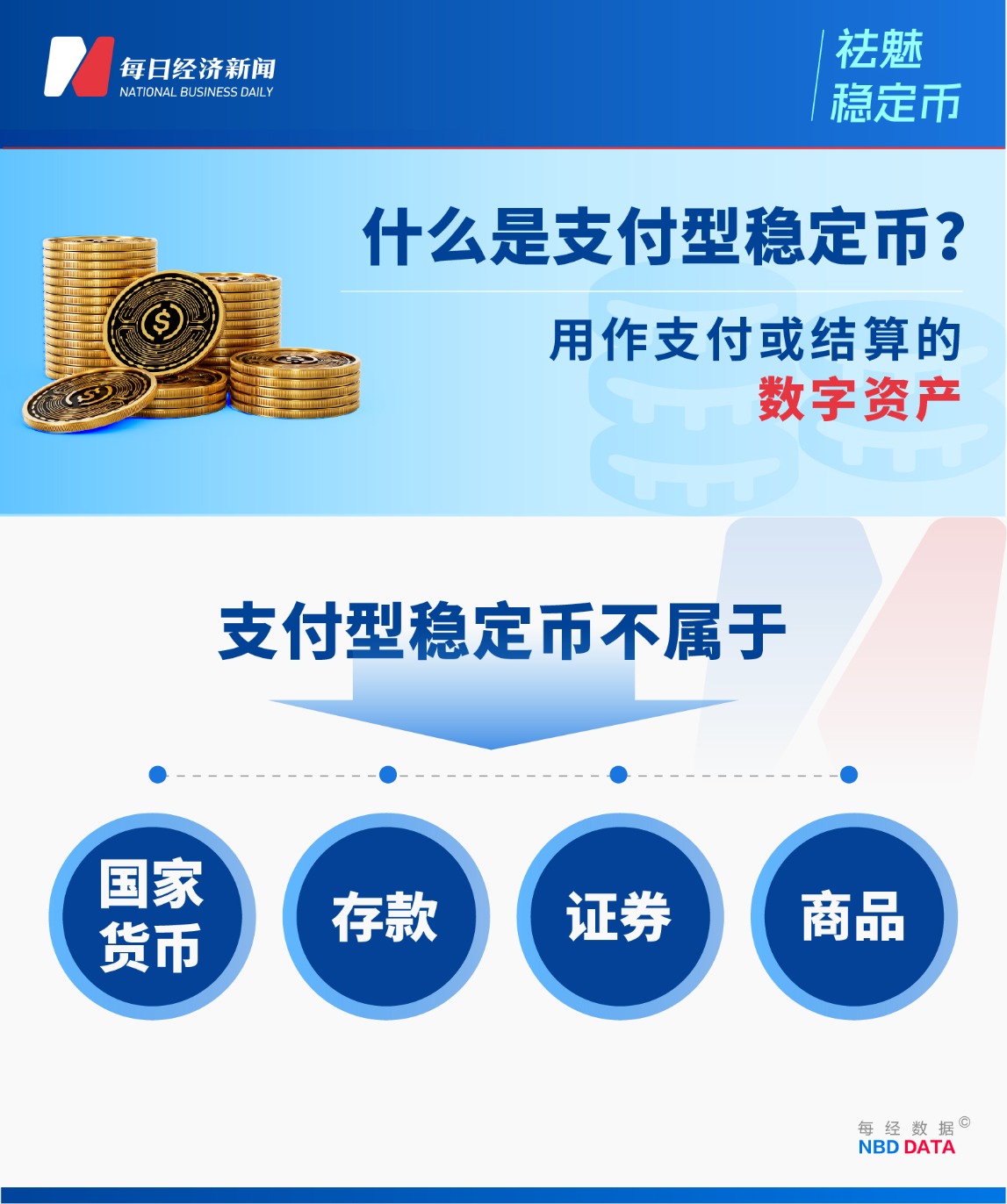
拆解《天才法案》:谁将分食2万亿美元稳定币蛋糕?
Mei Ri Jing Ji Xin Wen· 2025-07-25 14:00
Core Viewpoint - The signing of the "Genius Act" marks the establishment of a clear legal framework for stablecoins in the U.S., ending their previous ambiguous legal status and reshaping the industry landscape [1][4][26] Group 1: Definition and Regulatory Framework - The "Genius Act" defines compliant stablecoins as "payment stablecoins," emphasizing their role as payment or settlement tools rather than investment products [4][5] - This definition excludes stablecoins from being classified as legal tender, bank deposits, financial securities, or commodities, thus simplifying the regulatory path for issuers [4][5] - The act signals that compliant stablecoins will be recognized as legitimate financial payment tools, moving away from being seen as risk assets [4][5] Group 2: Market Dynamics and Participants - The act creates a new power structure where traditional financial institutions, particularly banks, will dominate the issuance of stablecoins [9][10] - Only "insured depository institutions" and "regulated non-bank entities" can issue stablecoins, favoring established banks like JPMorgan, Goldman Sachs, and Bank of America [9][10] - Non-financial giants like Amazon and Meta face significant barriers to entering the stablecoin market, as the act restricts issuance to companies primarily engaged in financial services [12][24] Group 3: Compliance and Cost Implications - The act imposes strict compliance requirements, including a 1:1 reserve mechanism and monthly audits, significantly increasing operational costs for stablecoin issuers [17][18] - The previous practices of leveraging reserves for additional returns will be curtailed, as only high-liquid assets like cash and short-term U.S. Treasury securities can be used [17][18] - Smaller firms may struggle to meet the new compliance standards, leading to a market dominated by larger institutions [13][18] Group 4: Opportunities for Web3 Infrastructure - The new regulatory environment presents significant opportunities for Web3 infrastructure providers, as banks seek to develop their own stablecoins [19][26] - Companies like Alchemy and Fireblocks are positioned to offer essential services to banks, potentially leading to a booming market for Web3 infrastructure, projected to reach $55 billion by 2033 [19][26] Group 5: Future of Existing Stablecoins - Tether's USDT faces compliance challenges under the new act, as it must secure regulatory approval to continue operating in the U.S. market [22][23] - The act mandates that stablecoin issuers must back their tokens with cash and short-term U.S. Treasury securities, which may be difficult for Tether to achieve given its current asset composition [23][24] - Algorithmic stablecoins are temporarily excluded from the regulatory framework, with further research required to assess their risks and potential uses [24][25]
中手游加速布局Web3领域,释放IP价值开辟增长新曲线
Zheng Quan Shi Bao Wang· 2025-07-25 13:56
Core Viewpoint - The company is accelerating its strategic initiatives in IP RWA, Web3 aggregation payment, and Web3 esports gaming platforms, aiming to leverage the historical opportunities presented by Hong Kong's Web3 policies [1][4]. Group 1: IP RWA and Strategic Initiatives - The company plans to deepen its operations in the IP RWA sector, particularly focusing on the "Xianjian Qixia Chuan" IP, which has a rich history and significant commercial value accumulated over thirty years [2]. - The RWA initiative aims to unlock new vitality and commercial potential for the "Xianjian Qixia Chuan" IP through its on-chain plan [2]. Group 2: Web3 Aggregation Payment Tool - The company will launch a Web3 aggregation payment tool that integrates fiat currencies, major global virtual currencies, and stablecoins, optimizing cross-border payment processes and reducing settlement costs [2][3]. - The tool is designed to support the company's overseas business development and will be embedded within its gaming ecosystem [2]. Group 3: Web3 Esports Platform - The company has initiated the development of a decentralized Web3 esports platform named "KKFun Esports," expected to launch in overseas markets by late 2025 to early 2026 [3]. - "KKFun Esports" will integrate the Web3 aggregation payment tool and support payments in major virtual currencies and stablecoins, promoting a healthy and competitive gaming environment [3]. Group 4: Systematic Extension of IP Value Chain - The company's Web3 strategic initiatives are not isolated technical applications but represent a systematic extension of its IP value chain and global gaming ecosystem [4]. - All initiatives will be pursued under principles of compliance and transparency to create new growth momentum and long-term value for shareholders [4].

《大国博弈》系列第八十八篇:稳定币:从数字美元到霸权上链
EBSCN· 2025-07-25 10:24
Group 1: Nature and Market of Stablecoins - Stablecoins are essentially "on-chain" dollars, designed to mitigate cryptocurrency market volatility and enhance payment efficiency[1] - As of July 24, 2025, the total market capitalization of stablecoins exceeded $270 billion, with USDT and USDC accounting for approximately 62% and 24% of the market, respectively[12] - USDT and USDC dominate the market, representing about 90% of stablecoin trading volume and 80% of market value[2] Group 2: Issuer Profit Models - Stablecoin issuers profit from the interest rate spread, as they do not pay interest on the stablecoins held by users[2] - Tether's reserve assets consist of approximately 80% in U.S. Treasury bonds and cash, while Circle's reserves are primarily in U.S. Treasury bonds and cash, leading to lower but safer returns[2] - Tether reported a net profit of approximately $13 billion in 2024, with $7 billion from U.S. Treasury investments and $5 billion from Bitcoin and gold holdings[50] Group 3: Regulatory Framework - The U.S. "GENIUS Act" mandates that stablecoins must be backed 100% by cash or short-term U.S. Treasury securities, with a diverse regulatory body overseeing compliance[3] - The EU's "MiCA Act" aims for unified regulation across member states, focusing on risk prevention and maintaining financial sovereignty[34] - Hong Kong's "Stablecoin Ordinance" emphasizes strict approval processes and a 100% reserve requirement, allowing for a more inclusive approach to stablecoin issuance[40] Group 4: Macro Implications - Dollar-backed stablecoins expand the functionality of the dollar, reinforcing its dominance in the international monetary system[4] - The growth of stablecoins poses new challenges for central banks in managing liquidity, as they can significantly increase the velocity of money circulation[4] - The expansion of stablecoins could exacerbate the U.S. government's long-term debt issues, as they are primarily tied to short-term bonds[4]