
出口

Search documents
标普全球市场情报首席商业经济学家Chris Williamson:然而,在总体数据之下,我们看到了一些令人担忧的疲软迹象,尤其是在出口和面向消费者的服务提供商活动下降方面,这抑制了经济扩张的整体步伐。
news flash· 2025-07-03 14:08
Group 1 - The overall economic expansion is being hindered by concerning signs of weakness, particularly in exports and consumer-facing service provider activities [1]
31省×3因子:地产、出口、政策
Huachuang Securities· 2025-06-27 11:44
Group 1: Economic Uncertainty Factors - The correlation coefficients for economic uncertainty factors and policy factors across provinces in 2024 are 0.70 and 0.72, respectively, indicating that larger provinces face greater economic uncertainty and policy support[3] - Provinces are categorized into three groups based on the relationship between economic uncertainty factors and policy factors: 14 provinces with higher economic uncertainty than policy support (48% of national GDP), 16 provinces with lower economic uncertainty (48% of national GDP), and Beijing where both factors are approximately equal[3] - Provinces with economic uncertainty factors lower than policy factors show better GDP growth, averaging 5.1%, compared to 4.76% for those with higher uncertainty[3] Group 2: Real Estate Factor - In 2024, the real estate industry chain's contribution to GDP for six major economic provinces is 14.1%, compared to the national average of 13.5%[4] - The land finance dependency for major economic provinces is significantly higher, with an average of 41% compared to the national average of 24.3%[4] - Provinces like Jiangsu, Sichuan, and Shandong have land finance dependency exceeding 40%[4] Group 3: Export Factor - The six major economic provinces account for 65% of national exports, significantly higher than their 44% share of national GDP[5] - The export-to-GDP ratio for eastern coastal provinces is 28.6%, compared to the national average of 18.8% and much lower ratios for western provinces[5] - Provinces such as Zhejiang and Guangdong have export-to-GDP ratios of 43.3% and 41.6%, respectively, indicating a strong reliance on exports[5] Group 4: Policy Factor - The total central government subsidies for 2024 are estimated at 11.3 trillion CNY, with major economic provinces receiving only 23.5% of this, which is lower than their GDP share of 44.4%[8] - The net financing from local debts and credits for major economic provinces is 40.7%, also below their GDP share of 44.4%[9] - The financial resources allocated to major economic provinces have been declining, with their share of social financing dropping from 53% in 2022 to 48% in 2024[9]
海力风电(301155):公司动态研究报告:海风建设加速,公司交付有望放量
Huaxin Securities· 2025-06-27 08:08
Investment Rating - The report assigns a "Buy" investment rating for the company, marking its first coverage [2][9]. Core Insights - The company is a leading supplier of offshore wind power equipment in China, focusing on the research, production, and sales of wind power equipment components, with a primary emphasis on offshore wind power equipment [6]. - The offshore wind power industry is expected to enter a new growth cycle, with the company’s revenue anticipated to significantly increase due to the resolution of previous project delays and the commencement of bulk shipments in 2025 [7]. - The company has a robust production capacity in key offshore wind power cluster areas, ensuring the delivery of its products [8]. - Revenue forecasts for 2025-2027 are projected at 64.82 billion, 81.95 billion, and 95.85 billion yuan respectively, with corresponding EPS of 3.25, 4.34, and 5.32 yuan, indicating strong growth potential [9][12]. Summary by Sections Company Overview - The company specializes in offshore wind power equipment, producing components such as wind power tower cylinders, pile foundations, and booster stations, with a focus on the 12MW and above high-power market [6]. Market Dynamics - The offshore wind power sector faced a slowdown from 2021 to 2023 due to regulatory and logistical challenges, but these issues are being resolved, paving the way for renewed growth [7]. Production Capacity - The company has established multiple production bases across key regions, including Zhejiang and Guangdong, to meet the increasing demand for offshore wind power products [8]. Financial Projections - The company’s revenue is expected to grow significantly, with a forecasted increase of 378.5% in 2025 compared to 2024, and continued growth in subsequent years [12].

尿素:短期震荡运行
Guo Tai Jun An Qi Huo· 2025-06-27 03:15
杨鈜汉 投资咨询从业资格号:Z0021541 yanghonghan025588@gtjas.com 【基本面跟踪】 尿素基本面数据 | 项 | 目 | 项目名称 | | 昨日数据 | 前日数据 | 变动幅度 | | --- | --- | --- | --- | --- | --- | --- | | 期货市场 | 尿素主力 | 收盘价 | (元/吨) | 1,724 | 1,740 | -16 | | | | 结算价 | (元/吨) | 1,720 | 1,721 | - 1 | | | | 成交量 | (手) | 538,829 | 551,401 | -12572 | | | (09合约) | 持仓量 | (手) | 233,314 | 255,236 | -21922 | | | | 仓单数量 | (吨) | 500 | 0 | 500 | | | | 成交额 | (万元) | 1,853,143 | 1,898,223 | -45080 | | | 基 差 | 山东地区基差 | | 7 6 | 2 0 | 5 6 | | | | 丰喜-盘面 | (运费约100元/吨) | -64 | -90 | ...
所有人都在等待再通胀
虎嗅APP· 2025-06-25 23:54
以下文章来源于远川投资评论 ,作者张伟栋 远川投资评论 . 看更好的资管内容 本文来自微信公众号: 远川投资评论 ,作者:张伟栋,编辑:张婕妤,题图来自:视觉中国 股票市场对经济数据的变化一向敏感,但今年6月似乎是个例外。 其中,最谨慎的可能要属李迅雷。 在去年末发布的《聚焦最终需求——2025年中国经济展望》中,李迅雷预测,2025年物价低位运行 趋势将延续,全年CPI同比甚至将从2024年的0.3%进一步下降到-0.1%,其中的关键影响因素在于 出 口 。 虽然2024年我国的出口表现亮眼,但主要源于"以价换量"。在李迅雷看来,特朗普再次就任总统之 后,将推行重商主义政策加征关税,直接影响我国的外需。同时低价抢出口的策略也使得中国与一些 新兴市场国家产生了利益冲突,可能使中国的出口环境进一步恶化。 而出口转弱,最终会向制造业投资和消费等内需传导,进而影响国内供求格局和物价形势 [1] 。 从刚刚披露的5月经济数据来看,相比前四个月,大部分领域如社融增速、服务消费、就业数据等均 呈现出边际改善的趋势,结果却撞上了资本市场的冷眼旁观。 原因也许并不复杂:当经济发展要向消费转型已经形成一种宏观共识,持续疲软的C ...

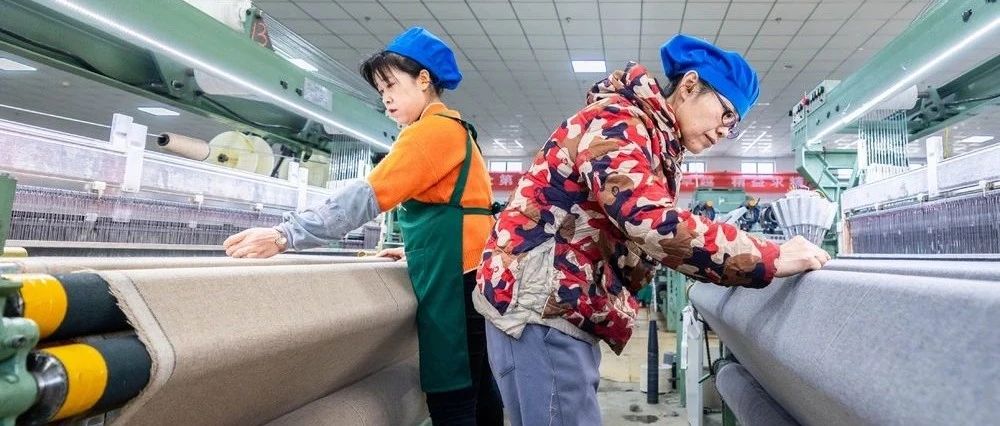
全市场都在等待再通胀
远川投资评论· 2025-06-25 07:01
Core Viewpoint - The article discusses the current economic situation in China, highlighting the mixed signals from economic data and the varying predictions regarding inflation and consumer demand for 2025. It emphasizes the importance of internal demand and the challenges in achieving a stable inflation environment. Economic Data Analysis - Recent economic data from May shows marginal improvements in areas such as social financing growth, service consumption, and employment, yet the stock market remains indifferent [2] - The persistent weakness in CPI, which recorded a year-on-year decline of -0.1% in June, reflects a broader consensus on the need for consumption-driven economic transformation [3] Inflation Predictions - Analysts have differing views on inflation trends for 2025, with Li Xunlei predicting a continued low CPI of -0.1%, influenced by external factors like export performance and potential tariffs under a new U.S. administration [6][7] - Conversely, Guo Lei forecasts a CPI increase of 1% for 2025, supported by domestic policies aimed at boosting income and consumption [10] - Zhang Yu presents a more cautious outlook, suggesting that CPI could range from 0.4% to 0.7% depending on the economic recovery trajectory [13][14] Internal Demand Challenges - The article highlights the complex nature of internal demand, with Zhang Yu attributing low inflation to a combination of wealth erosion, economic downturn, and weakened expectations [11] - Key factors affecting CPI include core CPI, which may stabilize or recover slightly due to improvements in employment and income, but overall price pressures are expected to remain [12][27] Policy Responses - The article notes that while policies have been introduced to stimulate consumption, there is a consensus among economists that more substantial measures are needed to support vulnerable groups and enhance overall consumer capacity [36][41] - Li Xunlei and Xing Ziqiang advocate for increasing residents' overall income and improving income distribution to stimulate demand [39][40] Market Outlook - The article concludes that the path to achieving inflation and economic recovery in 2025 will depend on the effectiveness of policy measures and the resilience of consumer demand in the face of ongoing economic challenges [42]

甲醇聚烯烃早报-20250624
Yong An Qi Huo· 2025-06-24 02:20
Group 1: Methanol - High imports are materializing, and inventory accumulation has begun. The futures market is undervalued, waiting for the off - season expectations to be fully priced in. Iran has reduced its production, but there is an increase from non - Iranian sources and domestic supply. Overall, it is in a phase of bearish factors materializing. Pay attention to the actual inventory accumulation. With unstable macro - conditions and weak methanol prices in Europe and the US, it's hard to determine a clear direction for single - sided trading. Due to the low valuation, it is advisable to consider buying at low levels [1] - From June 17th to June 23rd, the power coal futures price remained at 801. The daily change in the Jiangsu spot price was - 10, the South China spot price was - 22, the Lunan converted price was + 18, and the Northwest converted price was + 33. Other prices such as CFR China and CFR Southeast Asia remained unchanged [1] Group 2: Polyethylene (Plastic) - For polyethylene, the inventory of Sinopec and PetroChina is neutral year - on - year. Upstream and coal - chemical industries are reducing inventory. Downstream raw material and finished - product inventories are also neutral. The overall inventory is neutral. The basis of 09 contract is around 0 in North China and + 120 in East China. The overseas markets in Europe, the US, and Southeast Asia are stable. The import profit is around - 400, with no further increase for now. The price of non - standard HD injection molding is stable, other price spreads are oscillating, and LD is weakening. In June, the number of maintenance activities is decreasing month - on - month, and the domestic linear production is increasing. Pay attention to the LL - HD conversion and US price quotes. The new production facilities in 2025 will bring significant pressure, so focus on their commissioning [11] - From June 17th to June 23rd, the Northeast Asian ethylene price remained at 840 on June 23rd. The daily change in the North China LL price was - 5, the East China LD price was - 50, and the number of warehouse receipts decreased by 49 [11] Group 3: Polypropylene (PP) - The upstream (Sinopec and PetroChina) and mid - stream of polypropylene are reducing inventory. In terms of valuation, the basis is + 100, the non - standard price spread is neutral, and the import profit is around - 500. Exports have been performing well this year. The non - standard price spread is neutral. The European and US markets are stable. The PDH profit is around - 1000, propylene prices are oscillating, and the powder production start - up rate is stable. The拉丝 production scheduling is neutral. In June, the supply is expected to increase slightly month - on - month. Currently, downstream orders are average, and raw material and finished - product inventories are neutral. In the context of over - capacity, the 09 contract is expected to face moderate to excessive pressure. If exports continue to grow or there are more PDH plant maintenance activities, the supply pressure can be eased to a neutral level [11] - From June 17th to June 23rd, the Shandong propylene price increased by 390, the East China PP price decreased by 30, and the number of warehouse receipts decreased by 13 [11] Group 4: Polyvinyl Chloride (PVC) - The basis has strengthened to 09 - 150, and the factory - pickup basis is - 420. Downstream start - up is seasonal, and there is a strong willingness to hold inventory at low prices. The mid - and upstream inventories are continuously decreasing. In summer, the northwest plants have seasonal maintenance, and the load is between the spring maintenance and the high production in Q1. In June, focus on the commissioning of new facilities and the sustainability of exports. Near - term export orders are decent. In June, pay attention to the Politburo meeting and the US interest - rate decision. Coal prices are weak, the cost of semi - coke is weak, and calcium carbide may have difficulty expanding profits as PVC plants undergo maintenance. The FOB counter - offer for caustic soda exports is 400. The comprehensive profit of PVC is - 500. Currently, the static inventory is at a high level but is continuously decreasing. The downstream performance is mediocre, and the macro - situation is neutral. Pay attention to exports, coal prices, commercial housing sales, terminal orders, and start - up rates [13] - From June 17th to June 23rd, the northwest calcium carbide price increased by 25, the Shandong caustic soda price decreased by 25, and other prices remained unchanged [12][13]
5月消费超预期,投资增速回落
Ge Lin Qi Huo· 2025-06-20 09:01
1. Report Industry Investment Rating - Not mentioned in the provided content 2. Core Viewpoints of the Report - The overall performance of the main contracts of Treasury bond futures this week was a volatile upward trend, with the 30 - year variety showing a relatively strong trend. The overall environment is favorable for the bond market, and Treasury bond futures may experience a slightly more volatile trend. For trading - type investments, a band - operation strategy is recommended [5][37][38] 3. Summary by Related Catalogs Treasury Bond Futures Market - This week, the main contracts of Treasury bond futures showed a volatile upward trend. By the end of the week, the 30 - year Treasury bond rose 0.71%, the 10 - year Treasury bond rose 0.14%, the 5 - year Treasury bond rose 0.12%, and the 2 - year Treasury bond rose 0.09% [5] Consumption Data - In May, the total retail sales of consumer goods reached 41326 billion yuan, a year - on - year increase of 6.4%, exceeding the market expectation of 4.9%. From January to May, the total retail sales of consumer goods increased by 5.0% year - on - year. The retail sales of consumer goods excluding automobiles were 184324 billion yuan, an increase of 5.6% [8] - In May, driven by the trade - in policy, the retail sales of household appliances and audio - visual equipment, communication equipment, cultural and office supplies, and furniture in units above the designated size increased by 53.0%, 33.0%, 30.5%, and 25.6% respectively. The sales of basic daily necessities and some upgraded consumer goods also showed good growth momentum. The retail sales of automobiles in units above the designated size increased by 1.1% year - on - year [10] Investment Data - From January to May, the national fixed - asset investment increased by 3.7% year - on - year, lower than the market expectation of 4.0%. Among them, the broad - based infrastructure investment (including electricity) increased by 10.42%, the narrow - based infrastructure investment (excluding electricity) increased by 5.6%, the manufacturing investment increased by 8.5%, and the real estate development investment decreased by 10.7% [13] Real Estate Market - From January to May, the sales area of newly - built commercial housing nationwide was 35315 million square meters, a year - on - year decrease of 2.9%, and the sales volume was 34091 billion yuan, a decrease of 3.8% [15] - In the first half of June, the average daily transaction area of commercial housing in 30 large - and medium - sized cities was 220,000 square meters, a year - on - year decrease of 10% [17] - In May, the sales prices of second - hand residential properties in first - tier cities decreased by 0.7% month - on - month, with the decline rate expanding by 0.5 percentage points compared to the previous month. The sales prices of second - hand residential properties in second - and third - tier cities decreased by 0.5% month - on - month, with the decline rate expanding by 0.1 percentage points [21] Service Industry and Industrial Production - In May, the national service industry production index increased by 6.2% year - on - year. Among them, the production indexes of information transmission, software and information technology services, leasing and business services, and wholesale and retail industries showed relatively fast growth [23] - In May, the added value of industrial enterprises above the designated size increased by 5.8% year - on - year, slightly exceeding the market expectation of 5.7%. The product sales rate of industrial enterprises above the designated size was 95.9%, a year - on - year decrease of 0.7 percentage points [26][28] Unemployment Rate - In May, the national urban surveyed unemployment rate was 5.0%, a decrease of 0.1 percentage points compared to the previous month, and the same as the same period last year [31] Capital Market Interest Rates - This week, the capital market interest rates remained stable. The weighted average of DR001 was 1.37%, and the weighted average of DR007 was 1.52%. The average issuance rate of one - year AAA inter - bank certificates of deposit was 1.65%, a slight decline. The loan prime rate (LPR) announced on June 20 was the same as last month [34] Market Logic and Trading Strategy - The market logic is that from January to May, the fixed - asset investment growth rate was lower than market expectations, while May's consumption growth was significantly better than expected. Exports maintained a relatively high positive growth, industrial production grew steadily and rapidly, the unemployment rate decreased slightly, and the social financing scale and credit data were close to market expectations. The overall environment is favorable for the bond market [37] - The trading strategy is that trading - type investments should adopt a band - operation strategy [38]
阿根廷一季度失业率7.9%。5月贸易盈余6.08亿美元,预期盈余10.50亿美元。5月出口70.95亿美元,进口64.88亿美元。
news flash· 2025-06-19 19:06
Group 1 - Argentina's unemployment rate for the first quarter is 7.9% [1] Group 2 - In May, Argentina reported a trade surplus of $608 million, which was below the expected surplus of $1.05 billion [2] - Exports in May totaled $7.095 billion, while imports were $6.488 billion [2]