
关税政策

Search documents
期货眼日迹
Yin He Qi Huo· 2025-10-13 05:58
1. Report Industry Investment Ratings No industry investment ratings are provided in the report. 2. Core Viewpoints of the Report The report provides a daily morning observation of various commodities, including agricultural products, black metals, non-ferrous metals, and energy chemicals. The market trends of each commodity are analyzed based on factors such as supply and demand, macroeconomic conditions, and trade policies. The report suggests corresponding trading strategies for each commodity, including unilateral trading, arbitrage, and options trading. 3. Summaries by Relevant Catalogs Agricultural Products - **Soybean Meal**: Macro influences increase, and the volatility of meal products widens. The CBOT soybean and soybean meal indices decline. South American soybean exports to China offset the decrease in US soybean exports. It is recommended to short the soybean meal 05 contract at high points, hold long positions in rapeseed meal, and conduct M11 - 1 positive spreads [15][16][17]. - **Sugar**: Typhoon weather is favorable for the market. ICE and London sugar prices decline. Brazilian sugar production may increase, and the domestic sugar market is affected by the typhoon. It is expected that the international sugar price will fluctuate within a range, and the domestic sugar price will also show a short - term oscillatory trend [17][18][20]. - **Oilseeds and Oils**: Sino - US tariffs resurface, and the market maintains a short - term oscillatory trend. The Malaysian palm oil inventory increases in September, and domestic soybean oil may gradually reduce inventory. It is recommended to wait and see first and consider lightly going long on dips [21][22][23]. - **Corn/Corn Starch**: New grain is concentrated on the market, and the price oscillates at the bottom. The US corn price is weak, and domestic new - crop corn is abundant. It is recommended to go long on the 12 - month corn contract on dips, and gradually establish long - term long positions in the 05 and 07 corn contracts [24][25][27]. - **Hogs**: The pressure of slaughter continues to be reflected, and the spot price continues to decline. Hog prices fall in various regions, and the overall supply is sufficient. It is recommended to short at high points and conduct LH15 reverse spreads [27][28][29]. - **Peanuts**: Harvest is affected by rainfall, and peanuts are short - term bullish. The average price of peanuts declines slightly, and the inventory of peanut oil manufacturers changes. It is recommended to go long on the 01 and 05 peanut contracts lightly [30][31][32]. - **Eggs**: Oscillate weakly. Egg prices decline, and the inventory of laying hens is high. It is recommended to short near - month contracts at high points [33][34][36]. - **Apples**: Oscillate slightly bullishly. Apple inventory decreases, and new - crop apples are affected by rainfall. It is expected that the price will oscillate slightly bullishly in the short term [37][38][42]. - **Cotton - Cotton Yarn**: Oscillate slightly bearishly. ICE cotton prices decline. The Sino - US trade war affects cotton consumption. It is expected that the US cotton price will oscillate, and the Zhengzhou cotton price will oscillate slightly bearishly [43][44][46]. Black Metals - **Steel**: US tariff increases put slight pressure on steel prices. The black sector oscillates weakly, and steel inventories accumulate. It is recommended to maintain a bottom - oscillating trend and go long on the spread between hot - rolled and rebar at low points [48][49][50]. - **Coking Coal and Coke**: Long positions can be lightly established on dips. The market may be affected by macro - market sentiment, but the impact is expected to be small. It is recommended to go long on dips [50][51][53]. - **Iron Ore**: Adopt a bearish approach at high levels. Global iron ore shipments increase, and the demand is weak. It is recommended to hedge at high levels in the spot market and conduct reverse cash - and - carry arbitrage [53][54][56]. - **Ferroalloys**: The valuation is not high, and short positions can be reduced during macro - shocks. The prices of ferrosilicon and silicomanganese are stable to weak. It is recommended to reduce short positions during macro - shocks [56][57][58]. Non - Ferrous Metals - **Precious Metals**: Trade disputes resurface, and they are driven by short - term risk - aversion sentiment. Gold and silver prices rise, and the US dollar index and bond yields decline. It is recommended to go long at low points [59][60][62]. - **Copper**: Tariffs cause a short - term setback in copper prices, but the long - term trend remains unchanged. Copper prices decline, and the supply is tight while consumption is weak. It is recommended to go long on dips [64][65][67]. - **Alumina**: The weak trend due to supply - demand surplus remains unchanged. The price of alumina declines, and the supply exceeds demand. It is expected to maintain a weak - oscillating and bottom - grinding trend [69][70][71]. - **Cast Aluminum Alloy**: Weakens with the increase in tariff policies, but the scrap aluminum price may be relatively firm. The futures price of cast aluminum alloy declines. The impact of tariffs is expected to be less severe than in April. It is necessary to pay attention to subsequent policies [74][75]. - **Electrolytic Aluminum**: The short - term volatility increases due to panic sentiment, and the medium - term bullish trend remains unchanged. The price of electrolytic aluminum declines. The impact of tariffs is limited, and the medium - term price may strengthen [75][76][78]. - **Zinc**: There is obvious support below, and the zinc price may rebound. The domestic zinc price is under pressure, and the overseas price is strong. It is recommended to close out profitable short positions and go short again at high points [79][80][82]. - **Lead**: Supply and demand are both weak, and be wary of the lead price falling after rising. The lead price rises, and the supply may increase in the second half of October. It is recommended to be cautious as the price may fall after rising [83][84][87]. - **Nickel**: Volatility increases, and the price center moves down. The LME nickel price declines, and the inventory increases. The nickel market is in an oversupply situation, and the price is expected to decline [88][89][91]. - **Stainless Steel**: Oscillates downward. The stainless steel inventory increases, and the price is affected by tariffs. It is expected to oscillate weakly [92][93][95]. Energy and Chemicals - **Industrial Silicon**: Go long at the lower end of the range. Some silicon plants experience production disruptions, and the demand is strong in the short term. It is recommended to go long near the low point of the September disk [95][96][97]. - **Polysilicon**: The supply - side expectations are intertwined with weak reality. The US government cancels some energy projects. The polysilicon market is affected by production increases and potential cuts [97][98].
集运日报:中美贸易摩擦再起,外盘普遍大幅下跌,不建议继续加仓,设置好止损。-20251013
Xin Shi Ji Qi Huo· 2025-10-13 05:51
1. Report Industry Investment Rating - No specific industry investment rating is provided in the report. 2. Core Viewpoints of the Report - Due to the resurgence of Sino - US trade friction and the general sharp decline in the external market, it is not recommended to continue adding positions, and stop - loss should be set [2]. - The tariff issue has shown a marginal effect, and the current core is the trend of spot freight rates. The main contract may be in the bottom - building process, and it is recommended to participate with a light position or wait and see [5]. - The short - term strategy suggests that the main contract remains weak while the far - month contracts are stronger, which is in line with the bottom - building judgment. Risk - preferring investors are advised to take profits. Pay attention to the subsequent market trend, do not hold losing positions, and set stop - losses. The arbitrage strategy recommends waiting and seeing or trying with a light position due to large fluctuations. The long - term strategy is to take profits when the contracts rise and wait for the callback to stabilize before judging the subsequent direction [6]. 3. Summary by Related Content 3.1 SCFIS, NCFI and Other Freight Rate Indexes - On October 6, the Shanghai Export Container Settlement Freight Rate Index (SCFIS) for the European route was 1046.50 points, down 6.6% from the previous period; the SCFIS for the US - West route was 876.82 points, down 4.8% from the previous period [3]. - On October 10, the Ningbo Export Container Freight Rate Index (NCFI) (composite index) was 818.97 points, up 11.50% from the previous period; the NCFI (European route) was 698.67 points, up 11.39% from the previous period; the NCFI (US - West route) was 844.43 points, down 0.34% from the previous period [3]. - On October 10, the Shanghai Export Container Freight Rate Index (SCFI) announced a price of 1160.42 points, up 45.90 points from the previous period; the SCFI European route price was 1068 USD/TEU, up 9.9% from the previous period; the SCFI US - West route was 1468 USD/FEU, up 10.76% from the previous period [3]. - On October 10, the China Export Container Freight Rate Index (CCFI) (composite index) was 1014.78 points, down 6.7% from the previous period; the CCFI (European route) was 1287.15 points, down 8.2% from the previous period; the CCFI (US - West route) was 777.77 points, down 5.7% from the previous period [3]. 3.2 PMI Data - The eurozone's September manufacturing PMI preliminary value was 49.5, back below the boom - bust line, lower than analysts' expectations and the previous value of 50.7. The service industry PMI preliminary value rose from 50.5 to 51.4, exceeding the expected 50.5. The eurozone's September composite PMI preliminary value was 51.2, exceeding analysts' expectations. The eurozone's September Sentix investor confidence index was - 9.2, with an expected - 2 and a previous value of - 3.7 [3]. - In August, China's manufacturing PMI was 49.4%, up 0.1 percentage points from the previous month, and the manufacturing prosperity level improved. The composite PMI output index was 50.5%, up 0.3 percentage points from the previous month, remaining above the critical point, indicating that the overall expansion of Chinese enterprises' production and business activities accelerated [4]. - The preliminary value of the US September S&P Global manufacturing PMI was 52 (the final value in August was 53); the preliminary value of the service industry PMI was 53.9 (the final value in August was 54.5); the preliminary value of the composite PMI was 53.6 (the final value in August was 54.6) [4]. 3.3 Main Contract Information - On October 10, the main contract 2512 closed at 1570.0, down 3.04%, with a trading volume of 31,500 lots and an open interest of 28,100 lots, an increase of 3834 lots from the previous day [5]. 3.4 Geopolitical Situation - On October 10, Israeli radio reported that the Israeli Defense Forces would soon withdraw to the "preliminary withdrawal line" area as planned by President Trump. The cease - fire agreement between Israel and Hamas has taken effect, but some reports claim that the Israeli military's attacks on multiple areas in Gaza continue [7]. - On the evening of October 9, local time, Hamas senior official and chief negotiator Khalil al - Hayya announced the achievement of a cease - fire agreement, stating that "the Gaza war is over" [7]. 3.5 Contract Policy Adjustments - The up - limit and down - limit for contracts 2508 - 2606 are adjusted to 18%. - The company's margin for contracts 2508 - 2606 is adjusted to 28%. - The daily opening limit for all contracts 2508 - 2606 is 100 lots [6].
多家机构警告美国经济衰退
Sou Hu Cai Jing· 2025-10-13 03:47
Core Insights - Multiple financial institutions have issued warnings regarding the state of the U.S. economy, indicating that nearly half of the states are experiencing recession and contraction [1][2] - Concerns have been raised about the impact of government spending, inflation, and tariff policies on the economy, with predictions of a potential recession as early as 2026 [1][3] - Key indicators of economic distress include rising unemployment rates and declining labor participation among specific age groups [2][5] Economic Conditions - The U.S. economy showed a quarterly growth of 3.8% in Q2 2025, surpassing market expectations, yet the unemployment rate rose to 4.3% in August, marking a four-year high [2] - Moody's analysis highlights that the most severe recession is occurring in Washington D.C., exacerbated by federal layoffs and budget cuts [2] - The economic downturn is not confined to specific regions but spans from the East Coast to the West Coast, with California and New York's economic stability being crucial for the national economy [2] Tariff Policies - Economic experts attribute the current economic downturn significantly to the tariff policies of the current U.S. administration, with the average tariff level being the highest in over fifty years [3] - Concerns about inflation and geopolitical issues have been raised by major banking executives, emphasizing the negative impact of import tariffs on consumers and the overall economy [3] Labor Market Trends - Economists are closely monitoring labor market trends, particularly the declining labor participation rate and rising unemployment among younger and older workers [5] - The demographic shift shows that the number of retirees is outpacing new graduates, leading to a potential hollowing out of the labor market [5] - Public sentiment reflects growing pessimism about the economy, with nearly half of respondents in a recent survey believing the economy is worsening [5]
铜:宏观情绪扰动,价格下跌
Guo Tai Jun An Qi Huo· 2025-10-13 02:46
商 品 研 究 2025 年 10 月 13 日 铜:宏观情绪扰动,价格下跌 【基本面跟踪】 铜基本面数据 | | | 昨日收盘价 | 日涨幅 | 昨日夜盘收盘价 | 夜盘涨幅 | | --- | --- | --- | --- | --- | --- | | | 沪铜主力合约 | 85,910 | -0.97% | 83030 | -3.35% | | | 伦铜3M电子盘 | 10,374 | -3.73% | - | - | | | | 昨日成交 | 较前日变动 | 昨日持仓 | 较前日变动 | | 期 货 | 沪铜主力合约 | 212,468 | 74,652 | 216,115 | -5,600 | | | 伦铜3M电子盘 | 41,097 | -3,685 | 322,000 | 3,981 | | | | 昨日期货库存 | 较前日变动 | 注销仓单比 | 较前日变动 | | | 沪铜 | 29,964 | 261 | - | - | | | 伦铜 | 139,400 | -75 | 5.99% | -0.05% | | | | | 昨日价差 | 前日价差 | 较前日变动 | | | LME铜升贴水 ...
中泰期货晨会纪要-20251013
Zhong Tai Qi Huo· 2025-10-13 02:15
Report Industry Investment Rating No relevant content provided. Core Viewpoints of the Report - The market is affected by multiple factors such as trade frictions, government shutdowns, and central bank policies, showing complex and volatile trends. Different sectors and varieties have different trends and investment strategies due to their own supply - demand relationships and external impacts [10][14][15] - In the face of uncertainties such as trade conflicts and policy changes, investors need to closely monitor market dynamics, pay attention to key events and data, and make investment decisions based on risk - return assessments [14][15][40] Summaries by Relevant Catalogs 1. Macro Information - The US stock market experienced a "Black Friday" due to factors such as intensified trade war risks and the continuous shutdown of the US federal government. China implemented export controls on some medium - heavy rare earth related items and countermeasures against US restrictions on the shipbuilding industry. The US added multiple Chinese entities to the export control "Entity List" [10] - Multiple brokerages adjusted the margin conversion ratios of some stocks. The US Federal Reserve officials showed a dovish attitude towards interest rate cuts. The US consumer confidence index declined slightly, and the inflation expectation decreased slightly. The retail sales of the Chinese passenger car market increased in September, with a significant increase in new energy vehicles [11][12] 2. Macro Finance 2.1 Stock Index Futures - Pay attention to the trading volume of broad - based ETFs, the value of long - term options, and the reverse arbitrage trend of stock index futures. A - shares fell on Friday, and the night - session was affected by trade expectations. The market is concerned about the impact of trade conflicts again, and there may be short - term fluctuations if the 100% tariff is implemented [14] 2.2 Treasury Bond Futures - Adopt an oscillating approach and focus on the odds of short - term bonds. The capital market is balanced and loose, and the bond market is expected to oscillate. Be cautious of short - term fluctuations caused by trade conflicts [15] 3. Black 3.1 Iron and Steel and Ore - From a macro perspective, the escalation of Sino - US trade frictions is negative for the market. The peak season is approaching, but the real demand for steel products has limited improvement, and the market may oscillate or have an off - peak peak season. The demand for building materials is weak, while the demand for coils is acceptable. Steel mills' profits are at a low level, and raw material costs are oscillating [17] 3.2 Coking Coal and Coke - The prices of coking coal and coke may continue to oscillate weakly in the short term. The supply is gradually recovering, and the market focus returns to the supply - demand side. The supply of coking coal may face resistance in the medium - term, and the short - term demand support is weak [19] 3.3 Ferroalloys - Manganese silicon is expected to have a weak consolidation. The inventory of manganese ore in Tianjin Port has increased, and the weekly output of manganese silicon in Yunnan may decrease in the future. The market may open lower on Monday, and it is recommended to partially close short positions if the decline exceeds 3% [19][20] 3.4 Soda Ash and Glass - For soda ash, adopt a short - selling approach when the price is high; for glass, adopt a wait - and - see approach. The soda ash industry has a supply - demand contradiction, and the glass industry needs to pay attention to the improvement of peak - season demand and downstream procurement [21] 4. Non - ferrous Metals and New Materials 4.1 Aluminum and Alumina - For aluminum, it is recommended to wait and see in the short term and consider going long if the situation eases after a significant decline. For alumina, it is recommended to short - sell when the price is high as the supply is excessive [23] 4.2 Lithium Carbonate - Lithium carbonate is expected to oscillate. The supply is increasing, and the short - term inventory reduction supports the price. The impact of Sino - US trade relations on short - term prices needs attention [24] 4.3 Industrial Silicon - Industrial silicon is in a range - bound oscillation. The key factors for supply - demand are the resumption progress of large manufacturers in Xinjiang and the production suspension plan of downstream polysilicon manufacturers [25][26] 4.4 Polysilicon - The spot price is firm, and the decline space of polysilicon futures is limited. Pay attention to policy progress and adopt a wait - and - see approach [27] 5. Agricultural Products 5.1 Cotton - Adopt a short - selling approach when the price is high. The supply pressure is increasing, and the demand is weak. The international cotton market is affected by factors such as trade tariffs and the US government shutdown, and the supply is increasing [29] 5.2 Sugar - Adopt a short - selling approach. The global sugar market is expected to have a surplus, and the domestic sugar market is under pressure from supply and inventory [31] 5.3 Eggs - It is recommended to gradually close short positions and wait and see. The supply - demand of eggs is loose, and the spot price is weak. The futures price is expected to repair the valuation, and the bottom - fishing needs to be cautious [33] 5.4 Apples - Apples are expected to oscillate. The listing of late - maturing Fuji apples is postponed due to rain. The acquisition prices in different regions vary, and the impact of continuous rainfall on apple quality needs attention [35] 5.5 Corn - It is recommended to stay on the sidelines and sell out - of - the - money call options on the 01 contract. The new corn supply is increasing, and the price is under pressure [36] 5.6 Jujubes - The short - term market may be strong, and it is recommended to wait and see. The market price is stable, and the opening price is expected to be high [37] 5.7 Pigs - It is recommended to hold short positions in the near - term contracts. The supply - demand pattern after the double festivals is supply - strong and demand - weak, and the spot price is expected to continue to be weak [38] 6. Energy and Chemicals 6.1 Crude Oil - It is recommended to hold existing short positions. The supply of crude oil is increasing, the demand is weakening, and the price is gradually moving down. The price may be affected by the Sino - US tariff war and may have a short - term rebound [40] 6.2 Fuel Oil - The price of fuel oil will follow the oil price. The supply - demand structure is loose, and the price is affected by geopolitical and macro - economic factors [41] 6.3 Plastics - Polyolefins are expected to oscillate weakly. The supply pressure is large, and the demand is relatively weak [42] 6.4 Rubber - Rubber may continue to decline due to sentiment, but it is necessary to be cautious when chasing short positions. The supply is expected to increase, and the demand is weak [43] 6.5 Methanol - Methanol is expected to oscillate weakly. The port inventory is high, and the supply - demand pattern is weak. It is necessary to pay attention to the port de - stocking process [44] 6.6 Caustic Soda - The price of caustic soda may be weak due to the Sino - US tariff war. The spot and futures markets show different trends affected by various factors [45] 6.7 Asphalt - Asphalt follows the oil price. The current is the seasonal demand peak, and the inventory reduction speed in October needs attention [46] 6.8 Offset Printing Paper - Offset printing paper is expected to oscillate. The supply may be excessive, but the low valuation provides support. It is recommended to go long or sell put options near the production cost [47] 6.9 Polyester Industry Chain - The polyester industry chain is expected to decline in the short term, but it is not recommended to chase short positions if there is a large gap - down opening [48] 6.10 Liquefied Petroleum Gas (LPG) - It is recommended to maintain a short - selling view in the long term. The supply of LPG is abundant, and the demand is difficult to strengthen beyond expectations [50] 6.11 Pulp - The pulp market is under pressure, but there is support. It is recommended to observe port de - stocking and spot transactions and consider going long in the 01 contract if the spot price is stable [51] 6.12 Logs - Logs are expected to oscillate. The cost is supported, and it is recommended to go long lightly if the spot price holds firm and downstream orders improve [52] 6.13 Urea - The price of urea is expected to be weak. It is recommended to close short positions at an appropriate time [53] 6.14 Synthetic Rubber - Synthetic rubber may continue to decline due to sentiment, but it is necessary to be cautious when chasing short positions. The supply of raw materials is stable, and the short - term support comes from device maintenance [54]
PTA近期行情情况及后期展望
2025-10-13 01:00
Summary of PTA Industry Conference Call Industry Overview - The PTA (Purified Terephthalic Acid) industry has experienced a significant price decline in 2025, with an average price of 4,800 RMB/ton from January to September, down 14.4% year-on-year [1][4][9] - The price fluctuation range has narrowed, primarily influenced by tariff policies and crude oil price volatility [1][4] - PTA production increased by 3.3% year-on-year to 54.6 million tons, while the operating rate decreased by 1.6 percentage points to 77.5% due to unexpected maintenance [1][7][6] Key Points and Arguments Price Dynamics - PTA prices fluctuated between 4,000 and 5,000 RMB/ton, with significant price drops in April due to tariff impacts and crude oil price declines [4][9] - The processing fee for PTA has been low, with a sharp decline from July, averaging 161 RMB in September [5][8] Supply and Demand Factors - The processing fee decline is attributed to a 15% drop in crude oil prices and a 28% compression in PX (Paraxylene) processing efficiency [5][8] - The industry faced supply pressure due to reduced procurement from Turkey, which cut Chinese purchases by 300,000 tons [1][7] - The demand from end-manufacturing and texturing machines decreased by 7-8%, leading to weakened market sentiment [1][10] Tariff Policy Impact - Tariff increases starting in February led to a significant market slowdown, with exports halting temporarily until adjustments were made in May [9][10] - The tariffs created a waiting period during what should have been a peak season, affecting overall market dynamics [9] Future Outlook - The PTA industry is expected to continue facing challenges, but there are opportunities for recovery as PX production is anticipated to alleviate some pressure on PTA profitability in the next five years [18][20] - The PTA inventory-to-sales ratio has been declining since 2020, currently at a historically low level, indicating potential for continued destocking and market recovery [22] Export Opportunities and Challenges - India presents a significant export opportunity as it is the largest PTA demand country outside of China, with new production facilities expected to impact Chinese exports [21] - However, challenges arise from the expansion of overseas PTA facilities, particularly in Turkey and India, which could affect market dynamics [21][25] Industry Performance and Collaboration - Major PTA companies currently lack a unified collaboration plan, with varying operational statuses and maintenance schedules [23][31] - The overall operational load for the PTA industry is approximately 77.77%, with potential for slight increases unless affected by maintenance [31] Additional Insights - Short fiber enterprises are performing relatively well, maintaining processing fees around 1,000 RMB, but their market influence is limited due to their smaller share of the polyester capacity [12] - The expansion of bottle chip capacity has led to increased inventory pressure, prompting factories to reduce production [11] - The market environment is characterized by low processing fees, leading to planned maintenance and reductions in non-integrated enterprises [16] This summary encapsulates the key insights and dynamics of the PTA industry as discussed in the conference call, highlighting both current challenges and future opportunities.
国泰海通 · 晨报1013|宏观、策略、海外策略、固收
国泰海通证券研究· 2025-10-12 13:40
Macro Perspective - The recent trade tensions initiated by the Trump administration are not expected to have a significant negative impact on the market, as the real drivers of asset performance are domestic economic and policy developments [4][5] - Historical context shows that previous tariff disputes led to temporary market reactions, but the U.S. government often softens its stance due to economic realities, suggesting that current tariff uncertainties may also be manageable [5][6] Investment Strategy - The current external shocks present a buying opportunity for Chinese markets, as the trade disputes are seen as disturbances rather than a trend reversal [10] - Unlike previous trade conflicts, the current situation has clearer boundaries regarding risks, and domestic financial stability is more assured, making it a favorable time to increase investments in quality assets [11][12] Industry Comparison - The investment focus should remain on emerging technologies, with sectors like AI, semiconductors, and financials showing strong potential for growth [13] - The financial sector, after adjustments, is expected to provide stable returns, with recommendations for stocks in brokerage, banking, and insurance [13] Overseas Strategy - There has been a notable increase in southbound capital inflows into Hong Kong stocks, while foreign capital outflows have slowed, indicating a shift in market dynamics [16] - Southbound investments are diversifying across various sectors, while foreign investments remain concentrated in technology and finance [16] Fixed Income Analysis - The bond market is expected to experience limited upward movement in interest rates, with a stable outlook for October, despite ongoing trade tensions [20][21] - The current environment suggests a potential for slight declines in bond yields, but overall, the bond market is likely to remain stable [20][21]


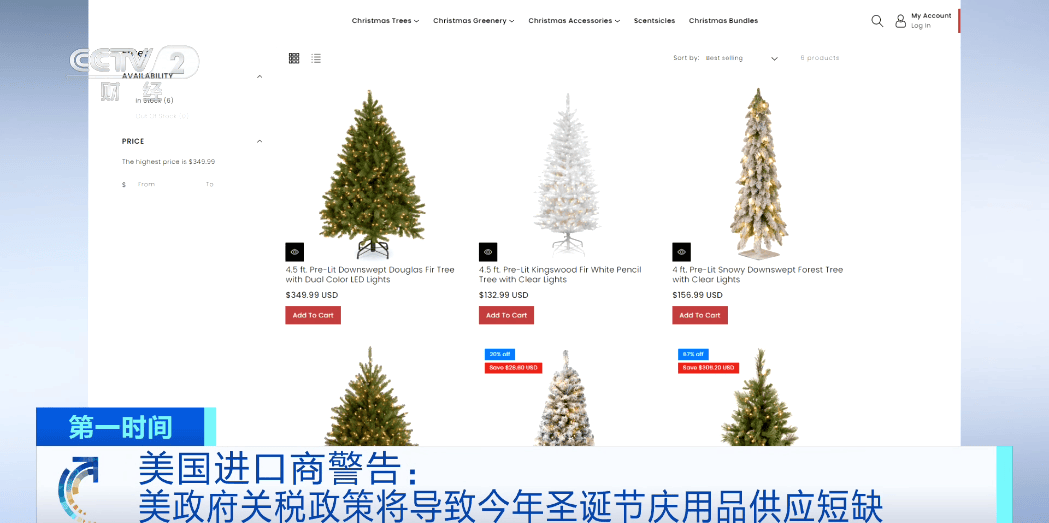
美国进口商警告:美政府关税政策将导致今年圣诞节庆用品供应短缺
Sou Hu Cai Jing· 2025-10-12 09:34
Core Viewpoint - The supply of artificial Christmas trees and festive goods in the U.S. is expected to face significant shortages during the traditional holiday shopping season due to the impact of government tariff policies [1][3]. Group 1: Impact of Tariff Policies - The National Christmas Tree Company, a major importer of artificial Christmas trees in the U.S., reported a 25% decline in overall import volume this year due to tariff policies [3]. - Import volumes for August and September saw year-over-year declines of 58% and 70%, respectively, leading to limited inventory for the upcoming holiday season [3]. Group 2: Price Increases and Cost Implications - In addition to artificial Christmas trees, decorative items such as lights and wreaths will also be affected by the tariffs, resulting in a planned price increase of 10% for products [5]. - The cost of producing artificial Christmas trees and related decorations in the U.S. is significantly higher due to labor costs, with U.S.-made trees potentially costing 2.5 to 3 times more than those produced abroad [7]. Group 3: Industry Response - Several companies, including the National Christmas Tree Company, are in discussions with the U.S. Treasury and the Office of the U.S. Trade Representative to address supply issues during the holiday season [5].
巴兰仕:美国关税政策对公司影响较小 公司在美销售收入占总营收的比例仅为0.29%
Quan Jing Wang· 2025-10-12 04:34
Group 1 - The core viewpoint of the news is that the proposed 100% tariff increase on Chinese goods by the U.S. government will not significantly impact the company Baranshi, as its sales in the U.S. market are relatively low [1] - In 2024, Baranshi's sales revenue from the U.S. is projected to be 3.0978 million yuan, accounting for only 0.29% of its total revenue [1] - The company emphasizes its strong cost-performance advantage, indicating that the U.S. tariff policy will not have a major effect on its sales in that region or on overall export performance [1] Group 2 - Baranshi is a high-tech enterprise focused on the research, development, production, and sales of automotive maintenance, testing, and repair equipment [2] - The main products of the company include tire changers, wheel balancers, lifts, refrigerant recovery and charging machines, and pneumatic oil extractors [2] - Approximately 75% of Baranshi's revenue comes from foreign sales, with products being exported to over 100 countries and regions, including Europe, South America, and other Asian countries [1]
美国零售商陷入圣诞荒
Yang Shi Wang· 2025-10-12 03:37
Core Insights - The National Christmas Tree Company, a major importer of artificial Christmas trees in the U.S., has reported a 25% decline in overall import volume this year due to the tariffs imposed by the Trump administration [1] - The company anticipates a supply shortage during the upcoming holiday season, with import volumes in August and September experiencing year-over-year declines of 58% and 70%, respectively [1] - In response to increased costs from tariffs, the company plans to raise product prices by 10% [1] Industry Impact - The limited inventory of artificial Christmas trees, along with other decorative items like lights and wreaths, is expected to affect the holiday market significantly [1] - The high production costs of artificial Christmas trees and related products in the U.S. are attributed to labor costs, making domestically produced trees 2.5 to 3 times more expensive than those manufactured abroad [1] - Several companies, including the National Christmas Tree Company, are in discussions with the U.S. Treasury and the Office of the U.S. Trade Representative to address supply issues during the holiday season [1]