供应链安全

Search documents
还不悔改?荷兰继续甩锅,“中方想掏空我们”
Guan Cha Zhe Wang· 2025-10-28 03:27
Core Viewpoint - The Dutch government's forced takeover of the Chinese-controlled ASML Semiconductor has caused significant disruptions in the global automotive supply chain, with the government attempting to deflect blame onto the Chinese team involved in the company [1][3]. Group 1: Government Actions and Justifications - The Dutch government invoked a law not used since 1952 to impose restrictions on ASML Semiconductor, citing "national security" concerns, which include preventing any adjustments to assets, intellectual property, business, and personnel for one year [3][4]. - Dutch officials allege that the Chinese team planned to dismantle European operations and transfer production to China, including laying off 40% of the workforce and relocating sensitive technology [1][3]. - The government believes it can negotiate a solution that would restructure ASML Semiconductor's management into a "Dutch-Chinese structure" [1]. Group 2: Impact on the Automotive Industry - ASML Semiconductor is crucial for the global automotive industry, with its chips being integral to vehicle production; it is projected to generate approximately 14.7 billion yuan in revenue in 2024, accounting for one-sixth of its parent company, Wingtech Technology's total revenue [3]. - The disruption caused by the Dutch government's actions has led to significant supply chain interruptions, affecting major automotive manufacturers in the US, Europe, and Japan, particularly the German automotive sector, which heavily relies on ASML Semiconductor's chips [7][8]. - Analysts have noted that this incident highlights Europe's precarious position between the US and China, struggling to meet the demands of both sides without incurring economic or security risks [8]. Group 3: Responses and Future Developments - In response to the Dutch government's actions, ASML Semiconductor's operations in Dongguan have been restricted, and the company is seeking regulatory exemptions, although the timeline for resuming normal operations remains uncertain [7]. - The European automotive industry is facing a potential crisis, prompting threats of retaliatory measures from Germany, France, and the European Commission against China, as the situation escalates [8]. - A video conference between China and the EU took place on October 27, with a high-level Chinese technology delegation scheduled to visit Brussels for discussions [9].


制裁中国炼油厂,欧盟强硬施压,俄方承诺全面兜底
Sou Hu Cai Jing· 2025-10-27 19:01
Core Points - The EU's recent sanctions against Chinese energy companies signal a deeper geopolitical conflict, involving both political and economic dimensions [1][3][11] - The sanctions specifically target 12 Chinese and Hong Kong companies, which play a crucial role in the processing and export of Russian oil, indicating a significant impact on Sino-Russian oil trade [3][9] - The EU's strategy includes secondary sanctions aimed at third parties providing services to the targeted companies, reflecting a comprehensive approach to disrupt cross-border supply chains [3][5] Industry Impact - The targeted Chinese companies account for less than 3% of national refining capacity but are vital for importing, processing, and exporting Russian oil, suggesting a short-term disruption in Sino-Russian energy trade [3][9] - The sanctions may lead to increased oil prices, nearing $95 per barrel, which could compress profit margins for industries in Europe and the US due to cost transmission to end consumers [9][11] - The EU's ambition to "de-China" the renewable energy supply chain faces significant challenges, as reliance on China for rare earths and manufacturing remains difficult to replace in the short term [9][13] Geopolitical Context - The sanctions represent a strategic shift where Western powers attempt to intertwine geopolitical and industrial policies, but practical implementation may be hindered by supply chain realities and member state interests [11][13] - Russia's willingness to support China during this period indicates a robust political and economic partnership, with Russian oil exports to sanctioned Chinese firms accounting for over 800 million tons, or 12% of the EU's targeted oil exports [7][11] - The situation is characterized by a complex interplay of interests, where both sides must navigate the costs and benefits of their actions, suggesting a long-term strategic competition rather than a straightforward confrontation [11][15]
石英股份(603688):Q3业绩承压,半导体业务进展顺利
HTSC· 2025-10-27 04:51
Investment Rating - The report maintains an "Overweight" rating for the company [6] Core Views - The company reported a revenue of 238 million RMB in Q3 2025, reflecting a year-on-year decline of 8.43% and a quarter-on-quarter decline of 8.73%. The net profit attributable to shareholders was 28.31 million RMB, down 49.48% year-on-year and 47.66% quarter-on-quarter, with a gross margin of 29%, down 10.84 percentage points year-on-year [1] - The semiconductor quartz product business is expected to recover due to the trend of domestic sand substitution, despite facing temporary supply chain and trade environment challenges in Q3 [1][2] - The photovoltaic quartz sand business is under pressure due to weak downstream demand, but a cautious sales strategy may mitigate risks [3] Summary by Sections Semiconductor Quartz Business - The report emphasizes the growth potential of semiconductor quartz materials driven by domestic substitution and supply chain security. The company has received certifications for its products from semiconductor manufacturers, which is expected to lead to increased orders and revenue [2] - The company has launched a new production line for high-purity quartz sand, adding 20,000 tons of capacity, with further expansions planned [2] Photovoltaic Quartz Sand Business - The report notes a significant increase in domestic photovoltaic installations, with a total of 240.27 GW added in the first nine months of 2025, a 49% year-on-year increase. However, Q3 saw a decline in installations, leading to reduced shipments of photovoltaic quartz sand [3] Profit Forecast and Valuation - Due to weak demand in the photovoltaic quartz sand sector and challenges in the semiconductor quartz materials market, the revenue and gross margin assumptions for 2025 have been revised downwards. The expected net profits for 2025, 2026, and 2027 are 200 million RMB, 497 million RMB, and 676 million RMB, respectively [4][12] - The target price for the company is set at 47.84 RMB, based on a 52x PE ratio for 2026 [4][6]

特朗普宣布大胜,中国伙伴出手,签85亿稀土大单,助美解决卡脖子
Sou Hu Cai Jing· 2025-10-26 09:03
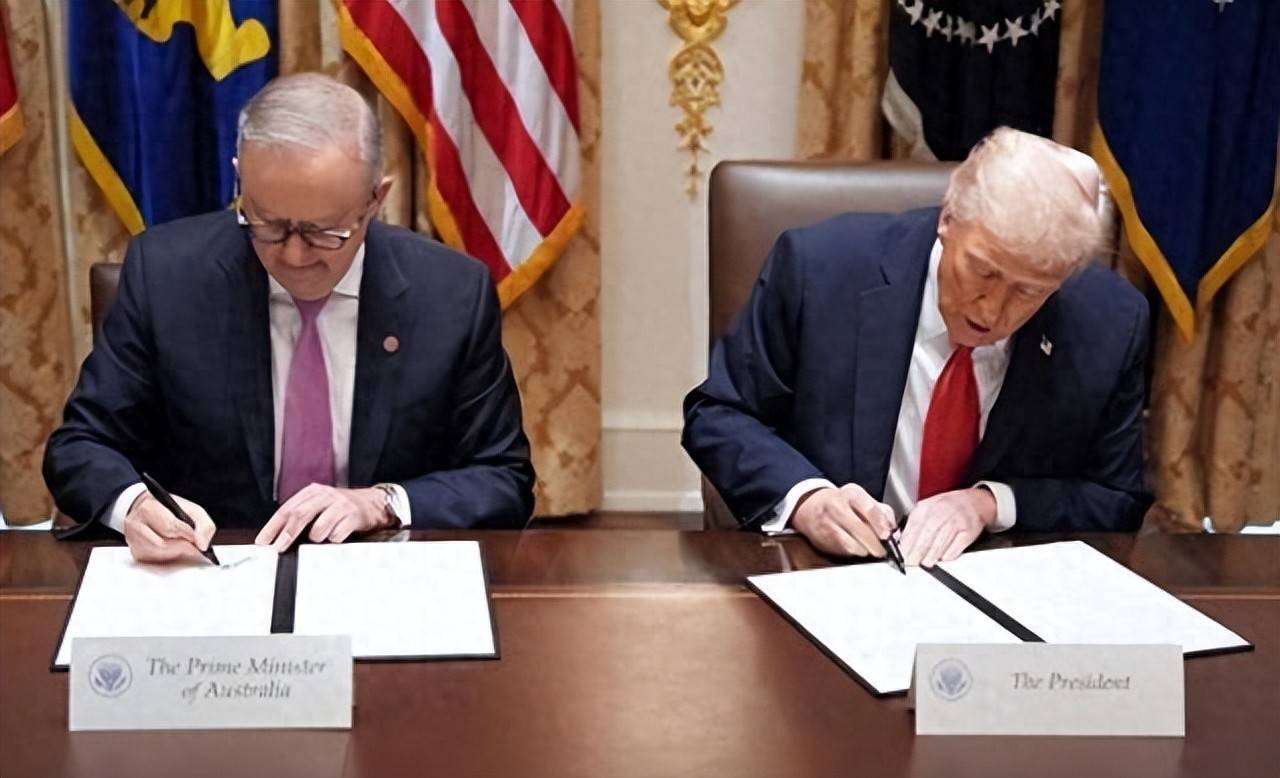
Core Points - The US and Australia signed a significant mineral agreement valued at $8.5 billion, focusing on the mining and processing of rare earth and critical minerals [2][4] - The agreement aims to reduce US dependence on China for rare earth supplies, as China dominates the global supply chain [4][10] - Both governments committed to investing at least $1 billion each in mining and processing projects over the next six months [2][4] Group 1: Agreement Details - The US Export-Import Bank will provide over $2.2 billion in financing to various Australian mining companies [2] - The agreement includes joint projects, with the US investing in Australian processing facilities [4][6] - A minimum price for critical minerals will be established, addressing long-standing concerns of Western miners [6] Group 2: Strategic Context - The agreement is part of a broader US-Australia alliance, including the AUKUS nuclear submarine pact [8] - The deal was expedited due to China's recent export control measures on rare earths [4][8] - The agreement aims to enhance supply chain security and reduce reliance on Chinese processing capabilities [4][12] Group 3: Industry Implications - The US faces challenges in achieving short-term results due to existing technological and processing barriers [12] - Australia currently relies heavily on China for the processing of its rare earth minerals, with over 90% of its rare earth concentrates sent to China [6][12] - The agreement seeks to develop local processing capabilities in Australia to mitigate external dependencies [12]
德邦证券:以“差异化培育”现代产业体系,资本市场赋能新质生产力加速崛起
Zheng Quan Shi Bao Wang· 2025-10-24 07:14
Core Viewpoint - The report from the Fourth Plenary Session emphasizes the need for reforms to create conditions for accelerating the development of new productive forces, focusing on differentiated nurturing strategies across various industries [1] Industry Development Strategy - A three-tier industrial system is proposed, which includes upgrading traditional industries, strengthening emerging industries, and laying out future industries [1] - Key areas of focus include technology empowerment, advanced manufacturing, green low-carbon industries, security-related industries, digital economy, and modern service industries [1] Capital Market Role - The capital market is expected to evolve into a comprehensive support platform, transitioning from "financing support" to "resource allocation + risk mitigation + wealth management" [1] - The capital market will further facilitate high-level technological self-reliance and the nurturing of future industries, attracting global capital to invest in China's new productive force-related assets [1]
不见棺材不落泪?欧盟无视中国警告,对俄制裁加码12家中企被殃及
Sou Hu Cai Jing· 2025-10-24 05:35
Group 1 - The EU has imposed sanctions on four Chinese energy companies, including two independent refineries, a trading company, and a technology support company, for allegedly assisting in evading sanctions against Russia [1] - A total of 12 Chinese companies are now under sanctions, with eight additional companies from mainland China and Hong Kong implicated [1] - The sanctions come shortly after a trade dialogue between Chinese Commerce Minister and EU officials, highlighting a contradiction in the EU's approach to China [1] Group 2 - China has implemented a series of export controls on strategic resources, including rare earths and lithium battery materials, signaling a protective stance on its resources [3] - The EU is heavily reliant on Chinese rare earths, particularly in key industries like electric vehicles and wind power, with 100,000 jobs directly affected by the supply chain [3] - The Dutch semiconductor giant ASML has initiated emergency plans due to reliance on Chinese rare earth materials, indicating potential cost increases of 40% for the European semiconductor industry if supply is disrupted [3][4] Group 3 - The EU's sanctions against Chinese companies may backfire, as it seeks to balance its strategic resource needs while imposing restrictions [4][5] - The EU's dependence on China for rare earth refining technology, which it monopolizes at over 90%, complicates the EU's ability to establish an independent supply chain [4] - The cost of building a self-sufficient supply chain in the EU could be three to four times higher than current reliance on China, with a minimum five-year timeline for effectiveness [4] Group 4 - The EU's sanctions align with U.S. actions against Russia, indicating a coordinated effort, but this may jeopardize the EU's economic interests given its significant trade relationship with China, which surpassed $780 billion [7] - Internal divisions within the EU regarding sanctions have emerged, with countries like Austria, Hungary, and Slovakia opposing measures that threaten their energy interests [7] - The EU's energy import ban on Russian LNG set to take effect in 2027 raises concerns about inflation and energy security if cooperation with Chinese energy firms is lost [7] Group 5 - China has clarified that its rare earth export controls are aimed at sensitive uses, with civilian applications being processed quickly, emphasizing the need for mutual respect in cooperation [8] - The continuation of sanctions against Chinese companies could stall various economic discussions, including the resumption of the EU-China investment agreement and electric vehicle tariff negotiations [8] - The EU's leadership acknowledges the precarious position of aligning too closely with the U.S. while risking its economic stability, yet continues down a path that may harm its own interests [8]
美国考虑对华实施软件相关出口限制
制裁名单· 2025-10-24 01:15
Group 1 - The article highlights the escalating economic and trade tensions between China and the United States, particularly in the areas of rare earths, software export controls, and tariffs, which cast a shadow over the upcoming high-level talks [1] Group 2 - The U.S. is considering expanding software export restrictions to China, focusing on products that utilize American software, particularly in sensitive areas like drones and satellites, as a response to China's export controls on rare earths [2] - In retaliation, China announced export controls on rare earths and related technologies, asserting that this measure is to safeguard national security and global supply chain stability, while also imposing special port fees on U.S. vessels as a countermeasure [3] Group 3 - Upcoming talks between Chinese Vice Premier He Lifeng and U.S. Treasury Secretary Scott Behnke in Malaysia are expected to pave the way for a potential meeting at the end of the month, although recent actions by both sides have complicated negotiations [4] Group 4 - The core conflict between China and the U.S. has shifted from trade deficits to a struggle for technological hegemony and control over strategic resources, with the U.S. aiming to curb China's advancements in AI and high-end manufacturing through software restrictions, while China leverages its dominance in the rare earth supply chain [5]

美乌峰会不欢而散,特朗普帮俄军加快进攻,或影响全球能源
Sou Hu Cai Jing· 2025-10-23 04:00
Core Viewpoint - The unexpected phone call from Putin during a White House summit shifted the focus from the Ukraine situation, revealing a potential high-level strategic coordination between the US and Russia, which undermines the post-World War II multilateral international order [4][12][16] Group 1: US-Russia Relations - Trump's aggressive stance towards Ukraine, including pressuring Zelensky to accept Russia's ceasefire framework, indicates a significant policy reversal [4][6] - The meeting atmosphere was tense, with Trump dismissing traditional diplomatic decorum and emphasizing Russia's strong economic performance following a lengthy conversation with Putin [6][8] - The proposed ceasefire terms from Russia involve Ukraine relinquishing control of the Donbas region, which reflects a unilateral imposition of humiliating conditions on Ukraine [6][10] Group 2: Ukraine's Position - Zelensky entered the summit with hopes for military support, particularly the provision of Tomahawk missiles, but left disappointed as Trump retracted previous commitments [7][8] - The pressure from Trump to consider Russia's conditions places Ukraine in a politically precarious situation, facing the prospect of compromising with an aggressor [8][12] Group 3: European Allies' Response - European leaders are aware of the deteriorating situation but are adopting a pragmatic approach, initiating secret emergency plans due to deep-seated security anxieties [12][13] - The coordination between the US and Russia is eroding trust within NATO, prompting discussions among European leaders about establishing an independent security framework [12][14] Group 4: Implications for China - The shifting geopolitical landscape poses unprecedented risks for China's energy and raw material transportation, as it is a key player in global supply chains [12][13] - Potential agreements between the US and Russia could lead to a bifurcated international energy market, impacting China's energy import stability and transportation security [13][14] - China is proactively diversifying its energy imports and enhancing its strategic reserves to mitigate risks from potential geopolitical conflicts [13][14]

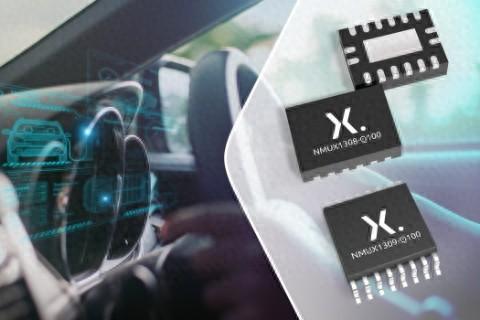
大众预警:Nexperia 芯片供应中断,生产或中断
半导体行业观察· 2025-10-23 01:01
Core Viewpoint - The recent takeover of Nexperia by the Dutch government has led to export restrictions from China, causing potential production disruptions in the automotive industry, particularly affecting companies like Volkswagen and General Motors [2][4][5]. Group 1: Impact on Automotive Industry - Volkswagen has warned of possible temporary production halts due to export restrictions on semiconductors produced by Nexperia, despite not being a direct supplier [2][4]. - The German Automotive Industry Association (VDA) has indicated that if the chip supply disruption is not resolved quickly, it could lead to severe production limitations [2][6]. - General Motors has formed an internal team to mitigate potential disruptions from the Nexperia situation, emphasizing the current instability of the situation [4][5]. Group 2: Nexperia's Situation - The Dutch government intervened in Nexperia's operations citing serious governance issues and concerns over economic security risks [5][6]. - Nexperia has notified its clients that it cannot guarantee the supply of chips to the automotive supply chain, raising alarms among manufacturers [6][7]. - The company has been under scrutiny due to its ties with the Chinese firm Wingtech Technology, which has faced export restrictions from the U.S. [7][8]. Group 3: International Reactions - The Chinese government has reacted by imposing export bans on certain products from Nexperia, leading to heightened tensions between China and the Netherlands [3][5]. - Discussions between Chinese and Dutch officials are ongoing, aiming to find a constructive solution to the semiconductor supply chain issues [8][10]. - The situation has escalated into a broader technology dispute between China and the West, impacting global supply chains [4][10].


当AI数据中心扩张,撞上锂电出口管制
高工锂电· 2025-10-22 10:48
Core Viewpoint - The article discusses the implications of China's export controls on lithium batteries and related materials, highlighting the potential for increased supply chain friction and financial pressure on companies in the lithium battery industry. It emphasizes the evolving geopolitical landscape and its impact on global supply chains, particularly in the context of AI-driven demand for energy storage solutions. Group 1: Export Controls and Supply Chain Impact - In October 2025, the Ministry of Commerce announced export controls on lithium batteries exceeding 300Wh/kg and related materials, introducing an uncertain administrative review process that could last up to 45 working days [2][3] - The 45-day potential delay poses significant risks for buyers, threatening production line continuity and forcing them to pay premiums for delivery certainty or seek alternative suppliers [4] - For sellers, the delay creates cash flow pressures, as the capital-intensive lithium battery industry faces challenges in revenue recognition and cash flow synchronization [5][6] Group 2: Policy Evolution and Strategic Control - The new regulations represent a deeper enforcement of previous controls on natural graphite, now including synthetic graphite, indicating a strategic shift towards controlling the entire supply chain of anode materials [7][8] - This evolution reflects a mature strategic thinking from reactive measures to proactive construction of a systematic control framework for critical materials [9] Group 3: AI Demand and Lithium Battery Market - The article highlights the intersection of AI demand and lithium battery needs, noting that AI's growth will require substantial investments in hardware, including energy storage solutions [20][21] - The demand for data center energy storage is projected to grow significantly, with estimates indicating a rise from 10GWh in 2024 to 300GWh by 2030, representing a compound annual growth rate of 76.3% [23][24] Group 4: Financial Risks and Market Dynamics - The article raises concerns about the financial risks associated with the AI investment boom, particularly the reliance on debt financing and the uncertainty of returns on capital expenditures [27][29] - It discusses the potential for an "AI bubble" and its implications for the lithium battery sector, emphasizing that any disruption in AI investment could adversely affect the demand for lithium batteries [37][63] Group 5: Geopolitical Tensions and Supply Chain Reconfiguration - The article notes a shift in major global companies towards "de-risking" their supply chains, moving away from reliance on Chinese manufacturing for critical components [41][42] - This reconfiguration is driven by geopolitical risks and reflects a broader trend of companies reassessing their supply chain strategies in light of increasing tensions [49][50] Group 6: Investment Trends and Market Shifts - Investment flows are changing, with a notable decline in new electric vehicle projects in Europe, while investments are shifting towards Southeast Asia, which presents both opportunities and risks [58][60] - The article suggests that the fragmentation of trade and investment strategies is reshaping the landscape for companies in the lithium battery and electric vehicle sectors [61][62]