GDP增速

Search documents
31省份经济半年报:多省增长超预期,京沪消费增速垫底
Jing Ji Guan Cha Wang· 2025-07-29 09:04
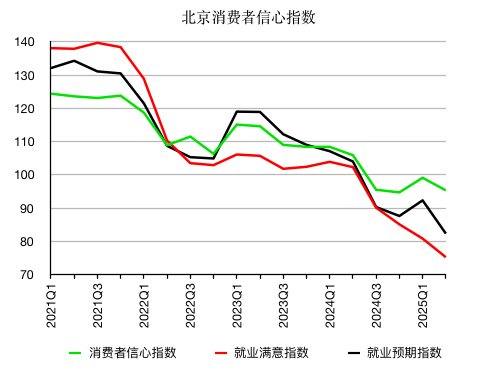
Economic Performance Overview - As of July 28, 2025, 31 provinces (excluding Hong Kong, Macau, and Taiwan) reported their economic performance for the first half of the year, with significant growth in major economic provinces, although some provinces experienced fluctuations in their economic data [1] - Among the top eight economic provinces, all except Guangdong achieved GDP growth rates exceeding the national average of 5.3%, with growth rates of 5.6% and above [1][2] - Guangdong's GDP growth rate was 4.2%, ranking it among the bottom three provinces [1] Provincial GDP Growth - In the first half of 2025, 21 provinces exceeded their annual GDP growth targets set at the beginning of the year, indicating a solid foundation for achieving their full-year goals [1] - Notably, Tibet, Gansu, and Hubei had the highest GDP growth rates, all above 6% [2] - Hubei's GDP growth rate reached 6.2%, surpassing the national average by 0.9 percentage points [2] Consumption Trends - Nationally, final consumption expenditure contributed 52% to economic growth in the first half of 2025, with 19 provinces reporting retail sales growth above the national average of 5% [2] - The "old-for-new" policy significantly boosted consumption in several provinces, with retail sales of wearable smart devices and related products in Henan growing over 85% [3] Retail Sales Performance - Beijing and Tianjin reported negative growth in retail sales, with Beijing's retail sales declining by 3.8% in the first half of 2025, primarily due to significant drops in automotive and communication equipment sales [4][5] - Shanghai's retail sales growth was 1.7%, ranking it among the lowest in the country [4] Fixed Asset Investment - Despite strong economic growth, several provinces, including Guangdong and Jiangsu, experienced declines in fixed asset investment, with Guangdong's investment dropping by 9.7% [9][10] - The decline in real estate development investment was a major factor affecting fixed asset investment growth in these provinces [10] Consumer Confidence - Consumer confidence in Beijing remained low, with the consumer confidence index below 100 for four consecutive quarters, indicating weak consumer sentiment [6][8] - The employment satisfaction index in Beijing hit a historical low of 75.2 in the second quarter of 2025, reflecting concerns over job security and income [5][6] Investment Opportunities - Some provinces, such as Beijing, reported strong fixed asset investment growth of 14.1%, driven by significant increases in equipment purchase investments [12] - Hebei's real estate development investment grew by 2.0%, supported by ongoing urban development projects [13]

追加对美投资与采购!美欧达成15%关税协议,欧盟:严重损害利益
Sou Hu Cai Jing· 2025-07-28 23:41
Group 1 - The trade agreement between the US and EU, while appearing as a truce, is characterized as an "asymmetrical" deal where the EU commits to significant future energy purchases and investments in exchange for a relatively lenient tariff environment [3][5] - The agreement includes a commitment from the EU to purchase up to $750 billion in energy products from the US over the coming years, alongside an additional $600 billion investment commitment, which is seen as a substantial benefit for the US [5] - The agreement does not signify the end of US-EU trade disputes but may herald a new round of negotiations, as evidenced by past tensions and tariff threats from the Trump administration [5][7] Group 2 - The EU's negotiating position appears weak due to its own economic challenges, as retaliatory tariffs could harm European consumers and specific industries, particularly in countries like France and Italy [7] - There are significant discrepancies in the interpretation of key details of the agreement, particularly regarding tariffs on steel and aluminum, indicating a lack of true consensus on core issues [8] - The agreement highlights Europe's vulnerability due to over-reliance on a single trade partner, raising concerns about the need for strategic autonomy and diversification of trade relationships [11]

土耳其财政部长:土耳其经济已重回“正向循环”
Xin Hua Cai Jing· 2025-07-28 01:15
Group 1 - The Turkish economy has returned to a "positive cycle" after experiencing market turmoil in March, according to Finance Minister Mehmet Simsek [1] - All financial indicators, including foreign exchange reserves and the Istanbul BIST100 stock index, have recovered to levels seen in mid-March [1] - The Central Bank of Turkey unexpectedly lowered the benchmark interest rate by 300 basis points to 43%, resuming a rate-cutting cycle that was interrupted by political events in March [1] Group 2 - Moody's upgraded Turkey's sovereign credit rating from "B1" to "Ba3," citing improved monetary policy credibility, slowing inflation, and better economic imbalances [1] - The government expects the inflation rate by the end of the year to be in the mid-to-high end of the Central Bank's forecast range, or below 29% [1] - As of June, Turkey's annual inflation rate dropped to 35%, significantly down from a peak of approximately 75% in May 2024 [1] Group 3 - Turkey's GDP growth target for this year is set at 4%, but a Reuters survey of 34 economists indicates a median GDP growth expectation of only 2.8% for 2025, down from 3.2% in 2024 [2]
6月财政有喜有忧,下半年呢?
GOLDEN SUN SECURITIES· 2025-07-27 06:49
Revenue Insights - In the first half of 2025, general fiscal revenue totaled 11.56 trillion, down 0.3% year-on-year, with June revenue at 1.89 trillion, also down 0.31% year-on-year[1][2] - Government fund revenue in June was 395.9 billion, a significant increase of 20.8% year-on-year, driven mainly by land transfer income[9][10] Expenditure Trends - Total general fiscal expenditure in the first half reached 14.13 trillion, up 3.4% year-on-year, with June expenditure at 2.83 trillion, a mere 0.38% increase year-on-year[1][2] - Central fiscal expenditure grew by 9% year-on-year, significantly outpacing local expenditure growth of 2.6%[2][8] Economic Outlook - The GDP growth rate for the first half of 2025 was 5.3%, suggesting a potential slowdown to around 4.7% in the second half, still maintaining a target of "around 5%"[4][5] - New policies are expected from the Political Bureau by the end of July, but strong stimulus measures are unlikely, with a focus on gradual support[4][5] Fiscal Policy Considerations - The fiscal policy approach is expected to be a "two-step" process, focusing first on the implementation of existing policies and then adjusting based on economic conditions[5][6] - Key areas of focus include the pace of government bond issuance and the actual progress of physical work projects[5][6]
每日机构分析:7月23日
Xin Hua Cai Jing· 2025-07-23 13:46
Group 1 - The U.S. will impose a 15% tariff on Japanese goods, lower than the previously threatened 25%, which has improved market risk appetite and reduced demand for the yen as a safe-haven asset [2] - Japan's Prime Minister Shigeru Ishiba's ruling coalition lost its majority in the recent upper house elections, raising speculation about his potential resignation and increasing political uncertainty regarding future cooperation with opposition parties [2] - Goldman Sachs predicts that U.S. tariffs will raise core inflation by approximately 1.7% over the next 2-3 years, with GDP growth forecast for 2025 revised down to 1% [3] Group 2 - The European Central Bank is expected to maintain its current monetary policy in the upcoming meeting, but there is potential for further easing due to unexpected declines in inflation in Nordic countries and uncertainties from tariffs and trade negotiations [2] - PIMCO economists suggest that President Trump is unlikely to replace Federal Reserve Chairman Jerome Powell but will use upcoming appointment opportunities to influence Fed policy direction [1][2] - Morgan Stanley highlights that if the dollar is no longer viewed as a safe investment, it could lead to significant issues, indicating a potential long-term decline in investment trends in the U.S. [3]
高盛:预计特朗普政府基础关税税率将上调至15%
news flash· 2025-07-23 05:46
Core Viewpoint - Goldman Sachs anticipates that the U.S. basic "reciprocal" tariff rate will increase from 10% to 15%, with tariffs on copper and key minerals reaching 50%, potentially exacerbating inflationary pressures and suppressing economic growth [1] Economic Impact - Goldman Sachs has adjusted its forecasts for U.S. inflation and GDP growth in light of the new tariff assumptions, reflecting the impact of import tariffs [1] - The core inflation forecast for 2025 has been revised down from 3.4% to 3.3%, while the 2026 forecast has been increased from 2.6% to 2.7%, and the 2027 forecast has been raised from 2.0% to 2.4% [1] - Tariffs are expected to cumulatively raise core prices by 1.7% over the next 2-3 years [1] GDP Growth Projections - The tariffs are projected to reduce GDP growth by 1 percentage point this year, 0.4 percentage points in 2026, and 0.3 percentage points in 2027 [1] - Consequently, Goldman Sachs has lowered its GDP growth forecast for 2025 to 1% [1]

博时宏观观点:A股、港股风险偏好保持高位,关注科技成长
Xin Lang Ji Jin· 2025-07-22 01:26
Group 1 - Domestic GDP in Q2 showed resilience, with a slight decline from 5.4% in Q1 to 5.2%, while nominal GDP growth decreased from 4.6% to 3.9% [1] - The economic data in June indicated a strong supply but weak demand, with industrial growth rebounding, retail sales growth slowing, and investment decline widening [1] - The market strategy for bonds showed a tightening followed by a loosening of liquidity around the tax period, with short-term bonds performing well while long-term bonds lacked direction [1] Group 2 - A-shares maintained a positive sentiment after surpassing 3500 points, with internal growth sectors rotating upward, and external risks from the tariff war diminishing [2] - The second quarter GDP growth exceeded expectations, which may slow the pace of growth-stabilizing policies, but liquidity and risk appetite remain favorable for the market [2] - In the Hong Kong market, the inflow of southbound funds remained active, with high risk appetite expected to support strong performance in a liquidity-rich environment [2] Group 3 - Oil demand is expected to be weak in 2025, with continuous supply release putting downward pressure on oil prices, while geopolitical changes may cause short-term fluctuations [3] - Economic policy uncertainties from tariffs and doubts about the dollar's credibility are likely to support a long-term bullish trend for gold prices, although short-term volatility is expected [3]
变局中的中国经济:二季度经济数据,从城市工作会议和反内卷政策看地产和通胀
2025-07-21 00:32
Summary of Key Points from Conference Call Records Industry Overview - The records primarily discuss the **Chinese economy** and its various sectors, including **real estate**, **infrastructure**, and **consumer markets**. Core Insights and Arguments 1. **Economic Growth and Construction Sector** - In Q2 2025, China's GDP growth rate was **5.2%**, with the construction sector's growth declining from **2.5%** in Q1 to **-0.6%** in Q2, negatively impacting overall economic growth [2][19] - Real estate investment fell by **12.9%** year-on-year, while infrastructure investment decreased by **4.6%** [2][4] 2. **Real Estate Market Dynamics** - The real estate market showed weak overall performance in H1 2025, with core cities like **Hangzhou** and **Shanghai** performing better in new home sales [4] - Older properties faced valuation pressures, while "old and small" properties with good locations were seen as deep value stocks [4] - The contribution of real estate investment to GDP has significantly decreased to about **7-8%**, down from previous peaks [4] 3. **Infrastructure Investment Trends** - Infrastructure investment saw a notable decline, with June 2025 showing a **4.6%** year-on-year drop [6] - The decline was attributed to changes in the use of special bond funds, with a shift towards debt resolution rather than new project funding [6][7] - The **Yalong River Hydropower Project**, a key investment project, is expected to cost **1.2 trillion RMB** and will provide stable support for future infrastructure investments [9][10] 4. **Consumer Market Performance** - In June 2025, the growth rate of retail sales of consumer goods slowed to **4.6%**, down from **6.4%** in May [3][11] - The decline was particularly evident in the "trade-in" category, with significant drops in sales of home appliances and communication equipment due to reduced subsidies [11][12] - The **618 shopping festival** led to a pre-emptive consumption surge in May, affecting June's sales figures [13] 5. **Inflation and Price Trends** - Inflation data indicates a downward trend, with expected CPI at **-0.1%** and PPI at **-2.5%** for Q3 2025 [20][21] - Core CPI reached **0.7%** in June, the highest since May 2024, indicating rising core inflation despite overall stability [20] 6. **Government Policy and Economic Outlook** - The Central Urban Work Conference emphasized a shift away from debt-driven growth and land finance, focusing on urban renewal and sustainable development [5][22] - The government is expected to adjust subsidy policies in the second half of 2025 to stabilize economic growth and manage high base effects from the previous year [14][21] - Economic growth in the second half of 2025 is projected to face challenges, with expectations of maintaining a growth rate of **4.6%-4.8%** to meet the annual target of **5%** [23] Other Important but Potentially Overlooked Content - The **Yalong River Hydropower Project** is not only significant for infrastructure but also has geopolitical implications, particularly concerning water resources in the context of India-Pakistan relations [10] - The shift in local government strategies towards more sustainable urban development reflects broader economic reforms initiated in previous years [22] - The consumer market's reliance on subsidy policies highlights the fragility of current consumption patterns and the need for structural adjustments [12][15] This summary encapsulates the critical insights from the conference call records, providing a comprehensive overview of the current state and future outlook of the Chinese economy and its key sectors.
亚特兰大联储GDPNow模型预计美国第二季度GDP增速为2.4%
news flash· 2025-07-17 15:55
Group 1 - The Atlanta Fed's GDPNow model projects a 2.4% growth rate for the US GDP in the second quarter, down from a previous estimate of 2.6% [1]
【宏观】如何理解当前经济形势?——2025年6月经济数据点评(高瑞东/赵格格)
光大证券研究· 2025-07-16 13:35
Core Viewpoint - The current macroeconomic situation shows overall stability in total volume, structural differentiation, stable demand, and slowing investment [3]. Group 1: Economic Growth - In Q2, GDP growth reached 5.2%, down from 5.4% previously; for the first half of the year, a GDP growth of 4.7% in the second half is sufficient to meet the annual target of 5% [6]. Group 2: Investment and Consumption - In June, fixed asset investment and consumption both saw a year-on-year decline; however, exports and industrial added value performed strongly, indicating a relatively high level of activity in the "export-driven" sector [3]. - Cumulative fixed asset investment from January to June grew by 2.8%, below the expected 3.7% and the previous value of 3.7% [6]. - Retail sales in June increased by 4.8%, lower than the expected 5.6% and the previous 6.4% [6]. Group 3: Demand and Supply Dynamics - The demand side remains stable overall, but the significant decline in fixed asset investment growth is attributed to high temperatures, further decline in PPI, and a complex external environment leading to more cautious investment decisions by market participants [3]. - The economic supply-demand relationship has improved, consistent with the stable rise in core CPI from May to June [3].