
TACO交易

Search documents
碳酸锂:4月剧本杀再来一次?
鑫椤锂电· 2025-10-11 08:58
关注公众号,点击公众号主页右上角" ··· ",设置星标 "⭐" ,关注 鑫椤锂电 资讯~ 本文来源: #鑫椤锂电 不知不觉中, 碳酸锂期货价格已经在 7.3万元附近横盘了近1个月, 波动率极低,仓单数量持续升高,这与今年4 月时的行情极其相似,市场呈现涨跌两难的态势 。从技术面上看,布林线喇叭口明显收窄,市场在等待新的突破方 向。 除此之外, 4月份,市场都在关注 枧下窝矿 的复产情况, 而如今市场关注的依然是枧下窝矿的复产,叠加近期一 些国内盐湖项目复产、扩产(如藏格、盐湖股份),碳酸锂供应继续增长是肯定的。 在 4月初,美国挑起"对等关 税"席卷全球,而在10月10日晚间,特朗普又在社交媒体平台上发帖威胁要大幅提高进口关税。 从基本面上看,碳酸锂在7万一线的支撑力度确实很强,在产量连创新高的局面下,碳酸锂库存却仍在缓慢下 降,显示了下游需求非常旺盛。 不过,节后宏观面再起波澜,我国对锂电池及相关技术、设备实施出口管制,并对新能源车购置税减免设定新 规,至少从金融市场的表现来看,情绪面已受到扰动。 本文作者:钱先生/13621911373 会议详情: END 会议主办: 鑫椤资讯 会议时间: 2025年1 ...


300亿,抄底抄到半山腰?
Ge Long Hui· 2025-10-11 07:58
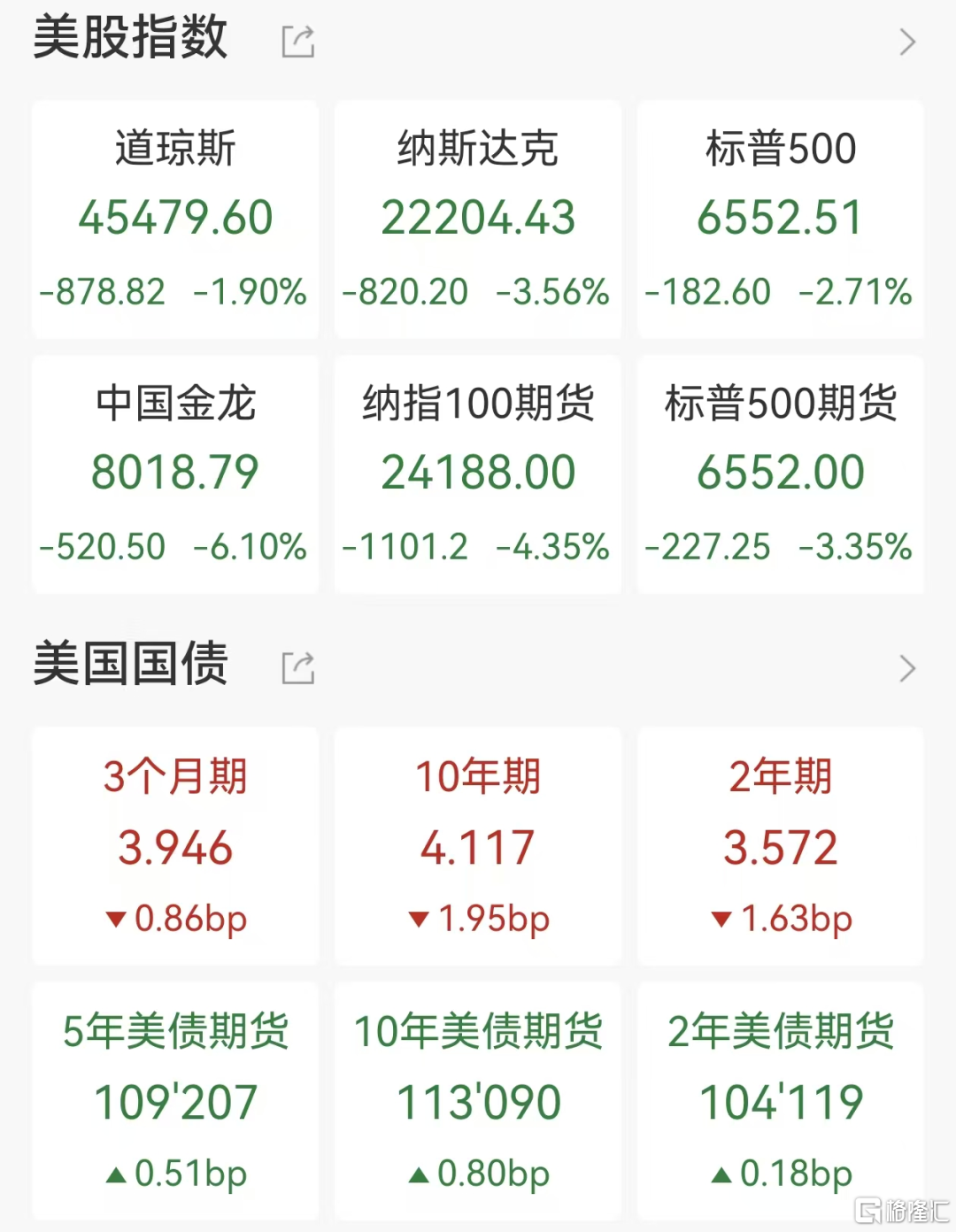
Market Overview - Global risk assets experienced significant turmoil, with major indices in the US and Asia suffering substantial declines. The Dow Jones fell by 878.82 points (1.9%), the Nasdaq dropped by 820.2 points (3.56%), and the S&P 500 decreased by 182.6 points (2.71%), marking the largest single-day declines since April [2][3] - The S&P 500 recorded a weekly decline of 2.43%, the worst performance since May 23, while the Nasdaq saw a 2.53% drop, the largest since April 17 [2] Sector Performance - The semiconductor sector faced the most significant losses, with AMD down nearly 8%, Qualcomm falling over 7%, and Nvidia decreasing by almost 5%, leading to a 6.3% drop in the Philadelphia Semiconductor Index [3] - Cryptocurrency markets also saw sharp declines, with Bitcoin dropping over 13% and Ethereum falling more than 20% [4] Investment Trends - Over 30 billion yuan flowed into stock ETFs amid the market downturn, indicating a potential bottom-fishing strategy by investors. The ChiNext 50 Index attracted a net inflow of 5.848 billion yuan despite a 5.61% drop [11][15] - Specific ETFs such as the Huaxia ChiNext 50 ETF and the Jiashi ChiNext Chip ETF saw net inflows of 3.295 billion yuan and 2.748 billion yuan, respectively [17] Economic Context - The market is currently influenced by renewed tensions in US-China relations, with speculation about potential trade negotiations impacting investor sentiment. The upcoming APEC meeting may provide further clarity on these discussions [5][18] - Analysts note that the current market conditions differ from previous downturns, particularly in terms of investor preparedness and market positioning, with higher valuations and significant unrealized gains present [18]
黄金掉价了,2025年10月6日,中国黄金最新价格,人民币黄金最新价格
Sou Hu Cai Jing· 2025-10-06 19:06
Group 1 - The core point of the article is the current pricing of gold and silver jewelry, as well as investment gold bars, with gold prices ranging from 910 to 1141 yuan per gram across various brands [1] - Major brands such as Chow Tai Fook, Chow Sang Sang, and others have gold prices set at 1129 yuan per gram [1][3][5][7][8][9][12] - The recycling prices for different purities of gold are 757 yuan per gram for 22k gold, 624 yuan per gram for 18k gold, and 482 yuan per gram for 14k gold [1] Group 2 - Investment gold bars are priced at approximately 895 to 910.5 yuan per gram, with various banks offering slightly different rates [15][22] - The current spot prices for gold and silver are 3885.90 USD per ounce for gold and 47.94 USD per ounce for silver, reflecting recent market fluctuations [29] - The article highlights the financial and safe-haven attributes of gold, which are influenced by factors such as U.S. Federal Reserve policies and geopolitical tensions [31]


A股策略周报20250824:新高后的下一站-20250824
SINOLINK SECURITIES· 2025-08-24 08:38
Group 1: Market Trends - A-shares have shown strong performance since August, driven by improved global manufacturing sentiment and rising domestic demand[3] - The overall valuation of the TMT and military sectors has reached historical highs, indicating limited room for further expansion[4] - The shift from small-cap growth represented by the National Index 2000 to large-cap growth represented by the ChiNext Index is evident, reflecting accelerated industry rotation[4] Group 2: Economic Indicators - The manufacturing sector's profitability is expected to improve, with the lower limit of net profit margins confirmed by February 2025[4] - As of July, the electricity consumption in the secondary industry has shown a continuous recovery for five months, indicating a positive trend in production activity[4] - The average ROE for non-financial companies in the A-share market is projected to improve in Q1 and Q2 of 2025, suggesting a broadening of profit recovery across sectors[4] Group 3: Investment Recommendations - Focus on sectors benefiting from overseas manufacturing recovery, such as industrial metals and capital goods, as they are expected to see increased demand[5] - The insurance sector is likely to benefit from capital returns reaching a bottom, alongside brokerage firms[5] - Opportunities in domestic demand-related sectors are emerging, particularly in food and beverage and electric equipment, as large-cap stocks begin to outperform[5] Group 4: Risks - There is a risk that domestic economic recovery may fall short of expectations, which could impact market performance[6] - A significant downturn in the global economy could also pose risks to the A-share market[6]
国金证券:全球TACO牛市,谁泡沫更大?
Xuan Gu Bao· 2025-08-19 08:14
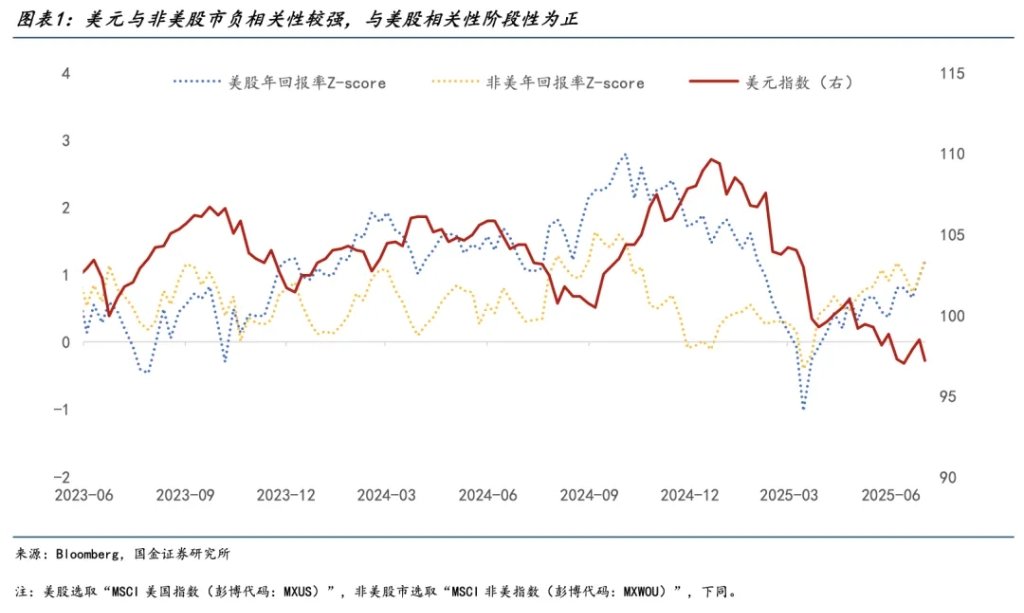
Group 1 - The core viewpoint of the article is that global market risk appetite has significantly improved following the TACO (Trump Always Chickens Out) trades, leading to new highs in various stock markets, including developed and emerging markets [1][2] - The primary driver of the recent global stock market rally is the increased dollar liquidity, which is closely linked to U.S. monetary policy and cross-border capital flows [2][3] - The dollar index has declined by 2.4% in the past quarter and 10% year-to-date, contributing to the warming of non-U.S. stock markets [3][6] Group 2 - The actual interest rates on U.S. Treasury bonds have decreased, which influences both U.S. and non-U.S. stock markets, providing a foundation for risk sentiment to be released [6][7] - Global central banks have accelerated their monetary supply, with a notable increase in the growth rate of global central bank money supply by nearly 7 percentage points in the past quarter [7][10] - The cost of offshore dollar financing has decreased, indicating a more favorable liquidity environment for non-U.S. equity markets [10][12] Group 3 - There is a noticeable trend of foreign capital inflow into non-U.S. equity markets, with A-shares seeing a 0.75% increase in foreign ownership value compared to the end of last year [13][19] - Various Asian markets, including Japan, South Korea, and Vietnam, have experienced net foreign inflows since July, contrasting with the net outflows observed over the past 12 months [19][20] - The article discusses how to measure market bubbles, particularly in the U.S. stock market, where concerns about the effectiveness of capital expenditures by tech giants are prevalent [20][22] Group 4 - The "Buffett Indicator" for the U.S. stock market has reached a historical high of 2.1, indicating a significant divergence from the economic output [25][28] - A comparison of current TTM P/E ratios shows that U.S. stocks, Indian stocks, and Vietnamese stocks have higher valuations, while Korean, A-shares, and British stocks are relatively lower [28][29] - The article highlights that the risk premium levels in developed markets are at historical lows, while emerging markets still exhibit higher risk premiums [31][32] Group 5 - The article concludes that the high valuation levels in global equity markets are reflective of abundant dollar liquidity and the potential vulnerabilities in both U.S. and non-U.S. markets due to economic cycles and TACO trades [39][40]

宋雪涛:全球TACO牛市,谁泡沫更大?
Xin Lang Cai Jing· 2025-08-19 06:25
Group 1 - The core of the global market's risk appetite recovery is attributed to the loosening of dollar liquidity, with potential risks arising from changes in Federal Reserve policy or cross-border capital flows [3][5] - The TACO (Trump Always Chickens Out) trades have led to increased confidence among investors, resulting in new highs for developed and emerging markets, including US, European, and Asian stocks [4][5] - The current environment of dollar liquidity is closely linked to the Federal Reserve's monetary policy and cross-border capital movements, impacting multiple markets and asset classes [5] Group 2 - Recent changes in dollar liquidity can be observed through five dimensions, including a significant decline in the dollar index, which has dropped 2.4% in the last quarter and 10% year-to-date [6][9] - The actual yield on US Treasury bonds has decreased by over 20 basis points since the peak in April, contributing to a more favorable risk sentiment [9] - Global central banks have accelerated their monetary supply, with a notable increase in the growth rate of global central bank money supply by nearly 7 percentage points in the last quarter [11] Group 3 - The cost of offshore dollar financing has decreased, indicating a more favorable liquidity environment for non-US equity markets [13] - Foreign capital inflows into non-US equity markets are becoming evident, with A-shares seeing a 0.75% increase in foreign ownership value compared to the end of last year [15] - In the broader non-US equity markets, foreign capital inflows have been observed in various Asian markets, contrasting with the net outflows seen over the past 12 months [19] Group 4 - The current AI wave has led to significant capital expenditures among tech giants, with an average capital expenditure growth rate of 18% from 2021 to 2024, raising concerns about the effectiveness of these investments [24] - The recent rise in US stocks has shown a barbell structure, with tech giants on one end and small-cap stocks on the other, reflecting a market pricing in economic resilience and policy risk reduction [27] - The Buffett Indicator, which measures the ratio of total market capitalization to nominal GDP, has reached a historical high of 2.1, indicating potential overvaluation in the US stock market [30][37]

宋雪涛:全球TACO牛市,谁泡沫更大?
雪涛宏观笔记· 2025-08-19 06:18
Group 1 - The core viewpoint of the article is that the recovery of global risk appetite and stock market increases are primarily driven by the loosening of dollar liquidity, with potential risks arising from changes in Federal Reserve policies or cross-border capital flows [2][4] - The article discusses the phenomenon of TACO (Trump Always Chickens Out) trading, which has led to increased confidence among investors and a bullish atmosphere in various global markets, including US, European, and Asian stocks [4][5] Group 2 - The improvement in global risk appetite is attributed to the loosening of dollar liquidity, which is closely linked to the Federal Reserve's monetary policy and cross-border capital flows [5][6] - The dollar index has significantly declined, dropping 2.4% in the past quarter and 10% year-to-date, which has positively impacted non-US stock markets [7][9] - The actual interest rates of US Treasury bonds have decreased, providing a foundation for risk sentiment release, with a decline of over 20 basis points since April [9][11] - Global central banks have accelerated monetary supply, with a notable increase in the growth rate of global central bank money supply by nearly 7 percentage points in the past quarter [11][14] - The cost of offshore dollar financing has decreased, indicating a more favorable liquidity environment for non-US equity markets [14][16] Group 3 - There is a noticeable trend of foreign capital inflow into non-US equity markets, with A-shares seeing a 0.75% increase in foreign ownership value compared to the end of last year [16][19] - Various Asian markets, including Japan, South Korea, and Vietnam, have experienced net inflows of foreign capital since July, contrasting with the previous 12 months of net outflows [19][20] Group 4 - The article highlights concerns regarding the effectiveness of capital expenditures by technology giants amid the current AI boom, with an average capital expenditure growth rate of 18% projected for tech stocks from 2021 to 2024 [20][22] - The current market structure shows a "barbell" effect, with significant gains in both large tech companies and small-cap stocks, indicating a potential increase in market fragility [22][26] Group 5 - The "Buffett Indicator," which measures the ratio of total market capitalization to nominal GDP, has reached a historical high of 2.1, suggesting a potential overvaluation of the market [26][28] - Comparisons of risk premiums across global indices reveal that US and Indian stocks have low risk premiums, while A-shares and Korean stocks maintain higher levels [31][34] - The article concludes that the high valuation levels across major stock indices, combined with the low risk premiums in developed markets, indicate a potential bubble in the current market environment [39]

全球TACO牛市,泡沫有多大?
SINOLINK SECURITIES· 2025-08-18 14:52
Group 1: Market Trends and Drivers - Recent global market risk appetite has significantly improved, with many developed and emerging market indices reaching new highs, including A-shares and Hong Kong stocks entering a bull market atmosphere[2] - The decline of the US dollar index by 10% this year has notably boosted non-US stock markets[2] - The actual yield on US Treasury bonds has decreased, alleviating valuation pressure on global assets[2] - Global central banks have accelerated monetary supply growth, with 76 rate cuts this year compared to only 19 rate hikes, particularly benefiting non-US markets[2] Group 2: Valuation Concerns - The "Buffett Indicator" (total market capitalization/GDP) for US stocks has reached a historical high of 2.1, approximately 2.9 standard deviations above the long-term average, indicating potential overvaluation[3] - The capital expenditure growth rate for tech giants is projected at 18% from 2021 to 2024, raising concerns about the sustainability of this growth and potential valuation corrections[3] - The current valuation levels of major markets show that US, Indian, Vietnamese, and German stocks are at absolute highs, while risk premiums for Indian, US, and Vietnamese stocks are relatively low[4] Group 3: Market Sensitivities and Risks - The high non-fundamental premium in markets like A-shares and German stocks suggests increased sensitivity to potential reversals in dollar liquidity or changes in capital flows[4] - If the Federal Reserve's policies or cross-border capital flows change, markets with high non-fundamental premiums may be more vulnerable to corrections[4] - The report highlights the potential for a "shrinking circle" effect in global markets if risk appetite declines, particularly affecting markets with high non-fundamental premiums[4]
市场?险偏好较?,??上?温和
Zhong Xin Qi Huo· 2025-08-14 04:20
Report Investment Rating - No investment rating for the industry is provided in the report. Core Viewpoint - The upward trend of precious metals remains unchanged as relatively mild inflation data clears the way for interest rate cuts after the weakening of the labor market, and the expectation of a 25BP interest rate cut by the Fed in September remains stable. However, in the short term, the resonance upward movement of the Chinese and US equity markets has led to a recovery in market risk appetite, and the upward movement of the gold price may still need to build momentum. The price of spot gold is relatively mild below 3500, and its elasticity may increase after breaking through this level. The recovery of risk appetite brings greater short - term elasticity to silver, but the pressure at the 40 - dollar mark is still obvious, and its breakthrough requires the cooperation of gold [1][4]. Summary by Relevant Catalog Key Information - US Treasury Secretary Bessent said that the Fed could have cut interest rates in June and July, there is a possibility of a 50 - basis - point interest rate cut and a series of consecutive interest rate cuts, the current Fed interest rate should be further lowered by 150 to 175 basis points, the Fed's interest rate is restrictive, he is optimistic about the Fed's September meeting, the Fed's spending is not supervised, he is considering recruiting relevant talents from the private sector to serve in the Fed, he will not support stopping the release of employment reports, and the Fed may cut interest rates in advance if the data is accurate [2]. - Russia responded to the "Putin - Biden meeting" regarding territorial issues. Russian Foreign Ministry Deputy Spokesperson Fadeyev stated that Russia's territorial composition is determined in the national constitution, and the goals of the Russian delegation in the Russia - US leader negotiations will be based entirely on national interests [2]. - Trump's list of candidates for Fed Chairman has expanded to 11. Two government officials revealed that the Trump administration is considering 11 candidates to replace Fed Chairman Powell when his term expires next May, including three previously unannounced candidates. Treasury Secretary Bessent will interview all candidates, screen the list, and submit the final list to the president for a decision, but no timetable was provided [3]. Price Logic - Yesterday, the gold price rose slightly, and silver recorded a larger increase. US inflation rose as expected, and the impact of tariffs was limited. After the weakening of the labor market, relatively mild inflation data clears the way for interest rate cuts, and the expectation of a 25BP interest rate cut by the Fed in September remains stable. Fed Chairman Powell may give a clearer statement at the global central bank annual meeting next week. The dominant logic in the past quarter, "TACO trading + US fundamental resilience + convergence of interest rate cut expectations", is shifting to "verification of weakening US fundamentals + expansion of interest rate cut expectations". The change of the Fed leadership may bring a more dovish path in the long - term and a re - consideration of the Fed's independence [4]. Outlook - This week, the range of spot London gold is expected to be between 3340 and 3500 US dollars per ounce, and the range of spot London silver is expected to be between 37 and 40 US dollars per ounce [7].
短线贵?属回调,关注美国通胀数据
Zhong Xin Qi Huo· 2025-08-12 02:32
Report Summary 1. Investment Rating No investment rating for the industry is provided in the report. 2. Core View - The rise in US inflation in Q3 is in line with expectations. Under the dual pressure of deteriorating non - farm data and personnel changes, some Fed voting members have turned significantly dovish, and the moderate rise in inflation has limited interference with the interest - rate cut expectations. - The July non - farm data is an important turning point for market sentiment. The dominant logic is shifting from "TACO trading + US fundamental resilience + convergence of interest - rate cut expectations" to "verification of weakening US fundamentals + expansion of interest - rate cut expectations". The Fed's leadership change may bring a more dovish long - term path and a re - evaluation of the Fed's independence. - The report maintains a bullish view on gold. It is expected that the upward trend of spot gold will be moderate below $3500, and the upward momentum may increase after breaking through this level. The movement of silver is following that of gold again, with obvious resistance at the $40 mark, and a breakthrough requires the cooperation of gold [1][3]. 3. Summary by Section Key Information - US Treasury Secretary Besent stated that President Trump's tariff policy aims to bring manufacturing back to the US, and relevant trade work is expected to be basically completed by the end of October. He also hopes that the next Fed Chairman will gain market trust and have "forward - looking thinking". - China National Rare Earth Group issued a statement clarifying that it has never cooperated, negotiated, or planned with relevant institutions or units regarding the so - called "rare - earth RMB stablecoin". The information was maliciously fabricated by lawbreakers. - The short positions in US small - cap stocks have reached the highest level since 2017. The notional value of non - commercial short contracts for the Russell 2000 index futures has exceeded $16 billion this month, and this position has doubled since May and further increased after the latest weak employment data in the US [2]. Price Logic - The decline in precious metal prices yesterday was due to two factors. Firstly, the US clarified the rumor of imposing tariffs on gold last Friday night, and the price difference between COMEX and LBMA gold narrowed significantly, weakening the sentiment in the US market. Secondly, the expected rise in the US CPI in July, with the market consensus expecting a 0.31% month - on - month increase and about 3.1% year - on - year increase in core CPI, and the simultaneous rise of the US dollar index, brought short - term downward pressure on gold prices [3]. Outlook - The expected trading range for London gold this week is between $3340 and $3500 per ounce, and for London silver, it is between $37 and $40 per ounce [6].