反内卷

Search documents
东方证券煤炭行业周报:国务院国资委党委专题会议提及“反内卷”,关注焦煤板块投资机会-20251215
Orient Securities· 2025-12-15 01:20
Investment Rating - The report maintains a "Positive" outlook for the coal industry [6] Core Insights - The focus is on the investment opportunities in the coking coal sector, particularly as current coking coal prices are lower than thermal coal prices, and some coking coal stocks are trading below their net asset value [3][65] - The report highlights that the market's pessimistic expectations for coking coal stocks are already reflected in their prices, suggesting a potential for left-side positioning in this sector [3][65] - The long-term contract prices for thermal coal at production sites are expected to stabilize prices and reduce volatility, with specific stocks like Shaanxi Coal and Zhongmei Energy being recommended [3][65] Industry Overview - The report notes that the coking coal downstream is about to begin seasonal inventory replenishment, while the thermal coal downstream has largely completed its replenishment [8] - Current coking coal futures prices are significantly lower than thermal coal prices, with the ratio of coking coal futures to thermal coal prices at a historical low [8][27] - The coal mining operating rates remain low compared to the same period last year, indicating supply constraints [30][29] Key Events - A recent meeting by the State-owned Assets Supervision and Administration Commission emphasized the need for central enterprises to focus on core responsibilities and resist "involution" competition, which may impact the coal sector's operational strategies [8] Price Trends - As of December 12, 2025, the closing price of coking coal futures was significantly lower than that of thermal coal, indicating a potential for price recovery in the coking coal market [8][27] - The report indicates that the inventory levels at major ports are high, which may influence future price movements in the coal market [37][40]


铁水减量明显,负反馈风险上升:中辉期货钢材周报-20251215
Zhong Hui Qi Huo· 2025-12-15 00:32
报告日期:2025/12/12 分析师:陈为昌 中辉期货钢材周报 铁水减量明显,负反馈风险上升 中辉期货有限公司 交易咨询业务资格 证监许可[2015]75号 陈为昌 Z0019850 李海蓉 Z0015849 李卫东 F0201351 中辉黑色研究团队 观点摘要 【市场概况】:本周黑色板块整体回落,涨跌差异仍然明显,螺纹主力合约周跌3%,热卷跌2.7%,铁矿跌 1.1%,焦炭跌6.9%,焦煤跌10.8%,双焦表现仍然偏弱。宏观方面,本周的政治局会议及经济工作会议总体维 持前期思路,未有明显变化,尤其对房地产未有新的表述,同时对"反内卷"的表述比较有限,市场情绪未能得 到提振。供需层面看,螺纹钢产量下降较多,但需求同步下降,库存基本维持此前下降速度。热卷供需均小幅 回落,库存去化仍然不畅。铁水产量降至230万吨以下,对原料需求形成压制。 【策略建议】:这一时间段的向上驱动通常由宏观政策提供,但在"反内卷"情绪退却后,目前及接下来一段时 间将缺少新的政策提振。钢材需求未有起色,叠加焦煤进口放量预期以及铁矿港口库存高企的现状,原料端压 力或继续上升。钢材价格短期或有低位反复,但中期存在负反馈带来的螺旋式下跌风险。 ...
十大券商一周策略:跨年行情蓄势待发,风格切换可能会越来越强,关注低位价值板块
Sou Hu Cai Jing· 2025-12-15 00:08
Group 1 - The central economic work conference has set the tone for 2026 economic work, with expectations for a "cross-year market" and "spring excitement" rising among broker reports [1] - The policy focus on "expanding domestic demand and countering involution" is expected to lead the market out of deflation, with technology sectors like AI computing power and commercial aerospace being key offensive directions [1][4] - There is a growing preference for low-volatility, high-dividend assets, indicating a potential market style switch [1][3] Group 2 - Citic Securities suggests seeking intersection in configurations, focusing on products with overseas exposure and positive changes in domestic demand as catalysts [2] - The report emphasizes that while external demand products have been validated, the potential for exceeding expectations is limited, and investors' low expectations could lead to valuation elasticity if domestic demand surprises positively [2] - The focus remains on industries where China has a global share advantage, such as non-ferrous metals, chemicals, and new energy, with an emphasis on companies that can enhance global pricing power [3] Group 3 - The market is expected to enter a new phase of recovery, with significant support from previous price levels and a shift in investor sentiment following recent adjustments [5] - Structural risks are emerging, which could hinder the sustained strength of advantageous themes, as indicated by high transaction concentration [5][6] - The focus on low-volatility and stable return assets is increasing, with potential interest in service consumption sectors like aviation, duty-free, and hotels [3][12] Group 4 - The central economic work conference has highlighted the importance of expanding domestic demand and addressing involution, clarifying the path out of deflation [7][19] - The emphasis on enhancing the income of middle and low-income groups and stimulating private investment indicates a shift towards endogenous growth drivers [7] - The conference also pointed out the need for a unified national market and the deepening of anti-involution measures, which are crucial for the recovery of corporate profits and subsequent improvements in resident income [8] Group 5 - The new policy deployment is expected to support the A-share market's cross-year performance, with a focus on TMT and advanced manufacturing sectors [9] - The historical performance of the A-share market during the start of the "13th Five-Year" and "14th Five-Year" plans suggests a positive outlook for 2026 [9] - The report indicates that the market may experience fluctuations due to various domestic and international events, but the overall economic policy is expected to remain supportive [9] Group 6 - The AI industry is characterized by a competition in full-stack capabilities and deep penetration into various application scenarios [10][11] - Domestic firms are focusing on building a full-stack system in the computing hardware sector, with significant advancements in AI solutions and infrastructure [11] - The demand for AI infrastructure is expected to drive growth in related sectors, including telecommunications and high-spec data centers [11][16] Group 7 - The commercial aerospace sector is entering a period of heightened activity, supported by new policies and government initiatives [17] - The establishment of a national commercial aerospace development fund aims to attract private investment and enhance the capabilities of commercial companies [17] - Recent advancements in satellite internet and frequent launches are expected to benefit the entire aerospace industry chain [17]
【“打通全国统一大市场堵点卡点”热点问题探析⑦】破局“内卷” 开拓蓝海
Jing Ji Ri Bao· 2025-12-14 22:51
Core Viewpoint - The article highlights the detrimental effects of "involution" competition across various industries, leading to price wars, reduced profit margins, and increased quality and safety risks. It emphasizes the need for a unified national market to promote high-quality development in enterprises and industries [1][3][7]. Group 1: Industry Challenges - The washing detergent industry is facing severe competition from low-quality products with less than 5% active ingredient content, which are capturing market share through low pricing, putting quality products at a disadvantage [1]. - "Involution" competition is characterized by irrational competition due to market mechanism failures, where companies resort to price wars instead of leveraging differentiation or technological advantages, resulting in "increased production without increased revenue" [2]. - Various industries, including steel, photovoltaics, automotive, and catering, are experiencing similar challenges due to intense price competition, leading to a consensus among over 20 industry associations to advocate for "anti-involution" measures [3]. Group 2: Solutions and Strategies - To enhance market efficiency, it is essential to eliminate barriers to fair competition, which is a key aspect of building a unified national market. This will help stabilize the commercial ecosystem and address supply-demand imbalances [3]. - Companies are encouraged to abandon the outdated "scale-first" mentality and focus on creating value through quality products and strong brands. For instance, China Resources Beer closed 40 factories and reduced over 5 million tons of redundant capacity to focus on value creation [3]. - Innovation is crucial for traditional manufacturing to break free from path dependence and scale bottlenecks. Companies like Weiqiao Venture Group are collaborating with research institutions and adopting new technologies to transform their business models [4]. Group 3: Brand and Market Positioning - In a market characterized by information asymmetry, low-quality products often mislead consumers, necessitating a shift towards rebuilding trust in "quality for price" mechanisms and enhancing user experience and brand value [5]. - The home appliance industry has maintained a relatively rational approach due to years of system development, with a shift in market power from companies to consumers, who now seek personalized and emotionally resonant experiences [5]. - Companies like Hisense are witnessing a reversal in consumer behavior, with domestic brands gaining recognition for quality, indicating a shift towards "Chinese manufacturing" being associated with technological premium [5]. Group 4: Global Expansion - The construction of a unified national market is not a closed "internal cycle" but an open market that encourages both domestic and international engagement. Companies are urged to expand globally to alleviate domestic competition pressures and enhance competitiveness [6]. - Jack Technology has entered a global leadership phase, establishing production bases tailored to regional markets, while Miniso emphasizes cultural integration in its global strategy, showcasing the importance of local insights in international expansion [6]. Group 5: Future Outlook - Building a unified national market aims to create fairer, more efficient, and more valuable competition. Companies must focus on innovation, brand strength, and global presence to escape internal strife and contribute to China's high-quality economic development [7].


破局“内卷” 开拓蓝海——企业界人士建言全国统一大市场建设
Jing Ji Ri Bao· 2025-12-14 22:34
Core Viewpoint - The letter from the chairman of Guangdong Youkai Technology highlights the detrimental effects of vicious competition in the detergent industry, where low-quality products with less than 5% active ingredients are capturing market share through low prices, putting quality products at a disadvantage [1] Group 1: Industry Challenges - The phenomenon of "involution" is causing severe price wars across various industries, leading to compressed profit margins, reduced innovation investment, and increased quality and safety risks [1][2] - Over 20 national and local industry associations have publicly called for a "counter-involution" approach, addressing issues in sectors such as steel, automotive, photovoltaic, catering, finance, and logistics [3] Group 2: Market Efficiency and Fair Competition - The construction of a unified national market aims to eliminate barriers to fair competition, addressing the imbalance between supply and demand and enhancing overall market stability [3] - Companies are encouraged to abandon the outdated "scale supremacy" mindset and focus on creating value through quality products and brands, as demonstrated by China Resources Beer, which closed 40 factories and reduced over 5 million tons of redundant capacity [3] Group 3: Innovation as a Key Driver - Traditional manufacturing must break free from path dependence and scale bottlenecks by leveraging technology and innovation, as emphasized by Weiqiao Chuangye Group's collaboration with research institutions and the establishment of an industrial technology research institute [4] - New Hope Group has utilized cold chain logistics and AI to innovate in the dairy industry, achieving same-day production and delivery to over 1 million stores [4] Group 4: Brand Value and Consumer Trust - In a market characterized by information asymmetry, low-quality products often mislead consumers, necessitating a shift towards rebuilding trust in high-quality products and enhancing user experience [5] - The home appliance industry has maintained a rational approach due to years of systemic development, with a focus on creating emotional and meaningful connections with consumers [5] Group 5: Global Expansion and Market Opportunities - The unified national market is seen as an open market that encourages companies to expand globally, alleviating domestic competition pressures and enhancing competitiveness in international markets [6] - Companies like Jack Technology and Miniso are adopting global strategies that integrate local insights and cultural fusion, demonstrating the importance of global perspectives in business expansion [6] Group 6: Future Directions for Companies - Companies are urged to focus on innovation, brand building, and global outreach to escape internal competition and contribute to high-quality economic development in China [7]
农银汇理基金经理魏刚:“科技创新+反内卷”将是2026年两大布局主线
Shang Hai Zheng Quan Bao· 2025-12-14 22:26
在盈利视角下,在"反内卷"政策推动下,PPI有望持续回升,企业盈利也将不断修复。综合当前市场预 期,2026年全A非金融归母净利润同比增速预计在10%至14%。在估值端,2026年A股具备较大提升潜 力,叠加流动性宽松及潜在的财政扩张预期,市场整体空间依然乐观。 2025年微观层面的流动性改善为股市注入了重要动能,这一逻辑在2026年的重要性依旧,但资金结构或 将出现变化: 2026年作为"十五五"规划开局之年,产业领域潜在催化因素丰富,流动性重要增量有望来自居民存款搬 家。我们认为,伴随PPI回升,企业盈利将持续修复,A股牛市格局有望延续,市场估值仍具备可观的 提升空间。节奏层面,当前可积极布局以应对可能前置的春季躁动,从中期维度来看,明年上半年将是 较好的行情窗口。 2025年,A股走势大致可划分为两个阶段,核心逻辑均为科技产业引领,叠加政策端与流动性的共振, 其中7至9月居民存款搬家与杠杆资金注入共同推动市场走出一轮主升浪。2026年,产业催化将持续增 多,新质生产力领域"DeepSeek时刻"有望持续涌现,新兴产业景气度将延续,与此同时货币宽松环境大 概率维持,增量流动性值得期待。 从当前存款市场格局 ...
光伏协会,为何要亲自下场参股产能收储?
Ge Long Hui· 2025-12-14 22:02
下周在西安,又是一年一度的中国光伏行业年会。光伏,已经苦了三年,回望来时路,内心有些五味杂 陈。忽然想起三年前那个刚刚入行、无知且无畏的自己,在2022年滁州中国光伏行业年会前曾大声疾 呼,《行业即将迎来全面产能过剩》。 每一个人都在以自己的方式为这个行业尽一分力,虽然结果各不相同。人情事故,逢场作戏,不是不 懂,但千人之诺诺,总不如一士之谔谔。这毕竟才是媒体的意义所在,哪怕会得罪人。况且,处江湖之 远的文科生不懂庙堂之高,有时难免情绪上头,难免言辞偏激,在此要承蒙所有读者对于赶碳号的理解 和包容。 之所以啰嗦这么一大堆,都是为了小心翼翼地表达一些关于多晶硅收储的个人看法。 12月12日,中国光伏行业协会(下称"光伏协会")官微文章表示:近日,北京光和谦成科技有限责任公 司(下称"光和谦成")完成注册,标志着光伏行业酝酿已久的"多晶硅产能整合收购平台"正式落地。 赶碳号如果没有记错的话,这是光伏协会第一次官方正式承认了多晶硅产能收储这件事,也是第一次官 宣了光和谦成这家公司的目的和作用。 硅料是源头,行业破卷,产能出清,多晶硅产能整合殊为必要。但光伏行业协会亲自下场参股收储平 台,多少还是超出了很多人的预期。 ...
玉渊谭天|苦练内功,做更好的自己
Sou Hu Cai Jing· 2025-12-14 16:30
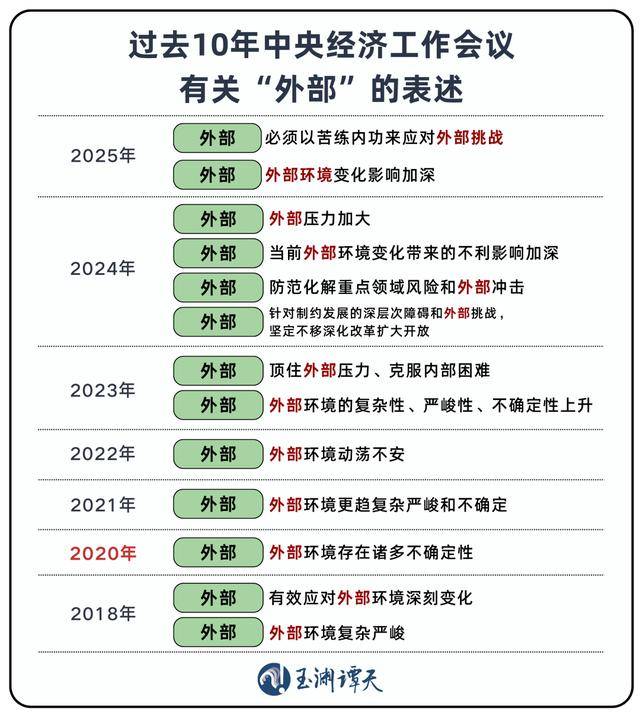
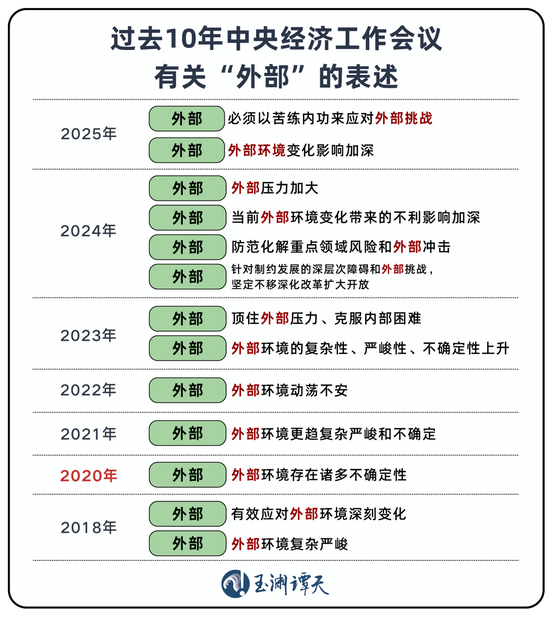
Core Viewpoint - The article emphasizes the importance of "internal cultivation" as a strategy for China to face external challenges, highlighting the need for both quality and direction in economic development [1][2]. Economic Performance - China's major economic indicators have performed better than expected, with the country remaining the largest engine of global economic growth [2]. - From January to November, China's exports increased by 6.2% year-on-year despite high tariffs and external pressures, showcasing resilience through diversified market layouts and industrial upgrades [3]. Manufacturing Sector - The manufacturing sector is identified as a key area for innovation and a reflection of the country's shift towards higher quality development [4]. - China's manufacturing value added accounts for nearly 30% of the global total, surpassing the combined total of the G7 countries [3]. Technological Innovation - The recent Central Economic Work Conference noted that external pressures cannot stifle China's technological advancements, with a focus on three international technology innovation centers [5][6]. - The shift in language regarding these centers indicates significant achievements over the past five years, enhancing their capacity for influence [7]. Economic Growth Projections - The International Monetary Fund has raised its forecast for China's economic growth to 5% by 2025, reflecting a positive outlook [11]. - The emphasis on "quality improvement and efficiency enhancement" marks a new direction in macroeconomic policy [12]. New Quality Productivity - The concept of "new quality productivity" is highlighted as a key driver of economic growth, with significant increases in the production of 3D printing equipment, new energy vehicles, and industrial robots [15]. - The focus on emerging and future industries, such as quantum technology and hydrogen energy, is seen as crucial for long-term competitive advantage [16]. Internal Demand Expansion - Expanding domestic demand is prioritized, with plans to increase urban and rural residents' income as a key task for the coming years [20][23]. - The article notes the importance of enhancing the supply of quality goods and services to unlock consumption potential [25]. Investment Strategies - The government plans to stabilize investment growth through various measures, including increasing central budget investments and leveraging new policy financial tools [26]. - The long-term resilience of China's economy is emphasized as a critical factor in navigating risks and challenges [26].

玉渊谭天|苦练内功,做更好的自己
Xin Lang Cai Jing· 2025-12-14 15:47
Core Viewpoint - The central economic work conference emphasizes the necessity of "practicing internal skills" to respond to external challenges, highlighting the importance of resilience and quality development in China's economy [1][24][25]. Group 1: Economic Performance - China's major economic indicators have performed better than expected, with the country remaining the largest engine of global economic growth [2][27]. - From January to November, China's exports increased by 6.2% year-on-year despite high tariffs and external pressures, showcasing the resilience derived from diversified market layouts and upgraded industrial structures [2][28]. - China's manufacturing value added accounts for nearly 30% of the global total, surpassing the combined total of the G7 countries, with the gap widening [2][28]. Group 2: Innovation and Development - The manufacturing sector is identified as the main arena for activating innovation and reflects the country's shift towards higher quality development [3][29]. - The central economic work conference noted a significant change in the approach to international technology innovation centers, indicating solid achievements over the past five years [4][30][32]. - The focus on developing new quality productive forces is reiterated, with specific actions to enhance enterprise innovation and expand "Artificial Intelligence+" initiatives [14][40]. Group 3: Internal Demand and Consumption - Expanding domestic demand is prioritized as a key task, with plans to increase urban and rural residents' income and enhance the supply of quality goods and services [18][48]. - New consumption models and trends are emerging, such as the "national style economy" and attention economy, indicating a shift in consumer behavior [18][48]. - The importance of service consumption is highlighted, as it is expected to drive employment and optimize industrial structure [21][49]. Group 4: Investment and Economic Strategy - The government plans to stabilize investment growth through various measures, including increasing central budget investments and utilizing new policy financial tools to stimulate private investment [22][50]. - The establishment of 500 billion yuan in new policy financial tools is expected to drive 7 trillion yuan in investments [22][50]. - The long-term resilience of China's economy is emphasized, with a focus on internal capacity building as a foundation for addressing risks and challenges [22][50].
煤炭行业周报:“反内卷”叠加进口扰动,26年煤炭供需并不悲观-20251214
East Money Securities· 2025-12-14 15:38
Investment Rating - The report maintains an investment rating of "stronger than the market" for the coal industry, indicating an expected increase in performance relative to the benchmark index [2][13]. Core Insights - The central economic work emphasizes "anti-involution," with limited month-on-month growth in coal imports in November. The Xinjiang railway has seen coal transportation exceed 90 million tons, a year-on-year increase of 6.9% [1]. - November coal imports reached 44.05 million tons, showing a month-on-month increase of 5.6% but a year-on-year decrease of 19.9%. Cumulative imports from January to November totaled 432 million tons, down 12% year-on-year [1]. - The report anticipates that supply-side growth will remain limited, while demand is expected to be relatively stable, potentially shifting from a loose supply-demand situation to a balanced or slightly tight one [1]. Summary by Sections Supply and Demand Dynamics - The report notes that coal prices have accelerated their decline due to weak demand, with Qinhuangdao coal prices at 753 RMB/ton, down 4.8% month-on-month and 5.2% year-on-year [1]. - Average daily coal consumption in power plants across 25 provinces was 5.81 million tons, down 6.8% year-on-year, while average inventory stood at 135.46 million tons, a slight decrease of 0.2% year-on-year [1]. - The report suggests that while coal prices are expected to continue declining, the extent of the decline will be limited due to seasonal demand recovery and ongoing supply-side optimization [1]. Price Trends and Market Outlook - The report indicates that the coal price is likely to experience limited declines in the short term, with a focus on economic recovery and macro policies influencing actual demand release [1]. - The report highlights that the second round of price reductions for coke has been implemented, with a decrease of 50-55 RMB/ton, while the main coking coal prices remain stable [7]. - The report emphasizes the need to monitor the production and profitability of steel mills, as well as the overall demand for coking coal, which may influence future price movements [7]. Investment Recommendations - The report recommends focusing on companies that are expected to benefit from stable dividends, such as China Coal Energy, China Shenhua, and Shaanxi Coal and Chemical Industry [8]. - It also suggests monitoring companies that may benefit from coal capacity reserve policies and intelligent safety upgrades in coal mines, as well as those involved in the Belt and Road Initiative [8].