
美联储货币政策

Search documents
黄金暴跌30%后是抄底良机还是死亡陷阱?
Sou Hu Cai Jing· 2026-02-06 05:16
Core Viewpoint - The recent sharp decline in gold prices, exceeding 5% in a single day, has sparked significant concern and speculation within the investment community regarding whether this represents a buying opportunity or a deeper financial crisis [1]. Historical Context - Over the past two decades, the gold market has experienced three notable crashes, each followed by significant recoveries: - In 2008, gold prices fell from $1,032 to $680, a 34% drop, before reaching a historic high of $1,920 three years later [3]. - In April 2013, a single-day drop of 9.1% occurred during the "Chinese aunties vs. Wall Street" event, leading to a seven-year period of losses for buyers [3]. - In March 2020, gold prices fell alongside equities due to the pandemic but rebounded sharply due to the Federal Reserve's quantitative easing policies [3]. Common Patterns in Price Drops - Each of the three significant declines in gold prices was associated with a shift in U.S. Federal Reserve monetary policy, particularly when declines exceeded 30%: - The 1980s saw Paul Volcker's aggressive rate hikes end a gold bull market [5]. - In 2008, Ben Bernanke's quantitative easing helped stabilize the market [5]. - In 2020, Jerome Powell's liquidity measures reversed the downward trend [5]. Current Market Dynamics - The current gold market is characterized by conflicting pressures from the Federal Reserve, which is trying to balance high interest rates to combat inflation while managing risks in commercial real estate and employment data during an election year [6]. - Global inflation trends are also mixed, with fluctuating U.S. CPI data, Europe's energy crisis, and Japan's currency challenges affecting gold's traditional role as an inflation hedge [8]. - Geopolitical risks, such as the ongoing Russia-Ukraine conflict and Middle Eastern tensions, have not significantly influenced gold prices, indicating a shift in market sensitivity [8]. Investment Strategies - For investors with substantial capital, a recommended strategy is to create a "gold volatility arbitrage portfolio" by buying both call and put options to capitalize on high implied volatility [9]. - It is advised to limit physical gold holdings to 5%-8% of total assets and to pair these with dollar-denominated money market funds for liquidity [9]. - Caution is advised for retail investors, particularly regarding the purchase of gold bars, emphasizing the importance of verifying authenticity and avoiding excessive processing fees [9].

金荣中国:现货黄金延续隔夜回吐,空间测试4650附近支撑
Sou Hu Cai Jing· 2026-02-06 04:03
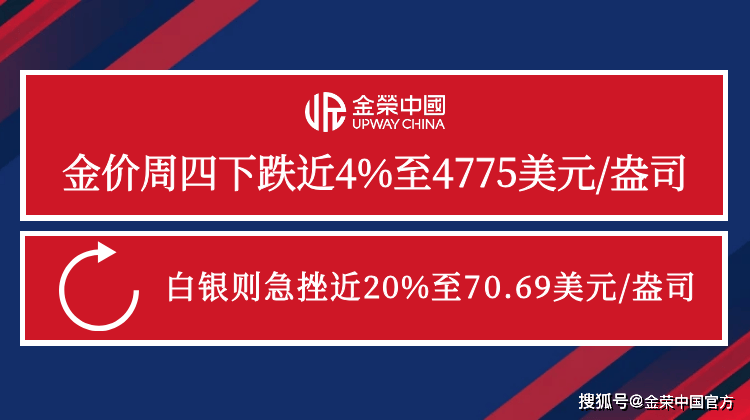
基本面: 周五(2月6日)亚盘时段,现货黄金延续隔夜回吐空间测试4650附近支撑,但随后收复盘中跌幅并再次回归隔夜区间,目前暂交投于4813美元附近。金价周 四(2月5日)下跌近4%至4775美元/盎司,白银则急挫近20%至70.69美元/盎司,美元走强及市场全面暴跌促使投资者抛售贵金属持仓,此外俄乌合和美伊地 缘局势有所缓和,也打压贵金属的避险买需。 日线级别,金价昨日录得阴线收盘暗示短期压力,自5100附近二次承压下探后或陷入该压力以下范围震荡,交易者后市或将关注4550--5100大区间突破选 择。1--4小时级别,短线走势自5600历史高点回吐涨幅后本周尝试重新收复跌势并挑战5100一线再度乏力。隔夜盘中小幅延续下探至4800下方寻找压力,至 当前亚盘时段,短线测试4650附近支撑后或暂完善该回调目标。日内交易者或留意4720附近测试尝试多单,上方压力关注4880/4980附近。 操作思路: 多单: 4720附近轻仓多,止损4699,目标4880/4980附近 内容仅为个人观点,不代表本公司立场,不可保证盈亏,不构成与本公司相关的任何投资建议。投资有风险,入市需谨慎,请根据自身情况考虑,责任自 担。 ...
金融期货早评-20260206
Nan Hua Qi Huo· 2026-02-06 03:31
Group 1: Macroeconomics - The European Central Bank and the Bank of England maintained their benchmark interest rates unchanged. The ECB kept its three key interest rates steady for the fifth consecutive meeting, while the BoE's decision, with four out of nine policymakers voting for a 25 - basis - point cut, signaled a dovish stance [1]. - The UK's GDP growth forecast was downgraded to 0.9%, and the unemployment rate is expected to rise to 5.3%, indicating weak domestic demand. The visit of UK's Starmer to China is seen as a practical choice to break through growth bottlenecks [2]. - The US 12 - month JOLTS job openings reached a new low since September 2020, and the US Challenger job cuts in January hit a record high for the same period since 2009, surging 205% month - on - month [4][5]. Group 2: Exchange Rates - The RMB - US dollar exchange rate showed a trend of first depreciation and then appreciation. The on - shore RMB against the US dollar closed at 6.9408 at 16:30, down 32 basis points, and the night - session closed at 6.9363. The central parity rate was set at 6.9570, down 37 basis points [3]. - Due to weak US employment data and AI - related panic, the market's risk - aversion demand increased, supporting the US dollar index. The RMB's appreciation momentum may decline after the holiday as seasonal settlement demand weakens [3]. - Short - term export enterprises are advised to lock in forward settlement at around 7.01, and import enterprises can adopt a rolling purchase strategy at the 6.93 level [4]. Group 3: Stock Index Futures - The stock index fell collectively, with the large - cap index relatively more resilient. The trading volume in the two markets dropped to around 2.1 trillion yuan. The short - term stock index is expected to continue to adjust, with the large - cap index outperforming, but the adjustment range is limited [4][5]. Group 4: Treasury Bonds - Treasury bond futures rose across the board. The open - market operation injected cross - festival funds, and the money market was stable. The yield of spot bonds declined across the board. The bond market may gain upward momentum as the A - share market is likely to adjust [5][6]. Group 5: Container Shipping (European Routes) - The main contract EC2604 of container shipping on European routes fluctuated widely. The market's core contradiction lies in the game between geopolitical risks and weak fundamentals. Short - term, it will maintain a volatile pattern with limited upside [6][7][8]. - It is recommended to shift long positions on the medium - term during intraday adjustments and take profits on the March contract at high levels. Short - term, consider shorting lightly at high levels [6][8]. Group 6: New Energy (Carbonate Lithium and Industrial Silicon) - Carbonate lithium futures prices fell, with a daily decline of 9.81%. The trading volume increased by 70.48%, and the open interest decreased by 30,100 lots. It is recommended to reduce positions before the Spring Festival to avoid risks [9]. - Industrial silicon and polysilicon futures prices declined. They are expected to trade in a narrow range, with industrial silicon between 8300 - 9100 and polysilicon between 48000 - 52000 [10][11][13]. Group 7: Non - ferrous Metals - Copper prices fell. It is recommended to seize the opportunity to replenish inventory when prices decline. The copper market is affected by factors such as inventory changes and holiday - related demand [15][16][20]. - Aluminum prices may oscillate, with support at 23000 - 23500. Alumina prices are expected to oscillate in the short - term, with a long - term weakening trend. Cast aluminum alloy prices are also expected to oscillate [21][22][23]. - Zinc prices are expected to fluctuate widely in the future. Nickel - stainless steel prices are affected by the broader market and are expected to be weak and volatile. Tin prices are likely to follow the sector in wide - range adjustments [23][24][26]. - Lead prices are expected to be weakly volatile, with support at the bottom but lacking upward drivers before the Spring Festival [26][27]. Group 8: Oils and Fats, and Feeds - For oilseeds, the external market of US soybeans is strong. Domestic soybean meal is expected to rebound in the short - term, and rapeseed meal is difficult to have an independent upward trend. It is recommended to participate in long positions in spreads and single - side trades lightly [28]. - For oils, the short - term is expected to be in a consolidation phase. The overall situation in the first quarter is still supported, and short - selling is not recommended [29]. Group 9: Energy and Oil & Gas - Fuel oil is in a weak operation. The supply of high - sulfur fuel oil is gradually recovering, and the demand is mainly in the bunkering market. The long - term high - sulfur cracking trend is downward [31]. - Low - sulfur fuel oil has a low cracking spread. The supply is relatively abundant, and the demand is stable. The inventory decline provides a slight boost [31][32]. - Asphalt prices are struggling to rise. The short - term is expected to be in a volatile state, with limited upside and downside [32][33][34]. Group 10: Precious Metals - Platinum and palladium prices in NYMEX retreated significantly. The short - term "tightening trade" does not change the long - term "loosening trend." Attention should be paid to position control [34][35][36]. - Gold and silver prices fell under pressure. In the short - term, they are weak and may continue to decline. In the long - term, the upward trend remains unchanged, and it is recommended to buy on dips [36][37][38]. Group 11: Chemicals - Pulp and offset paper futures prices rebounded from lows. It is recommended to hold short positions in pulp futures and consider short - term long positions in offset paper futures [39][40]. - LPG prices are affected by the US - Iran negotiation. Attention should be paid to the negotiation results [40][41][42]. - PX - PTA is recommended to be bought on dips. The processing fee of PTA is expected to narrow [43][44][45]. - MEG - bottle chips are weakly volatile. The short - term is expected to be in a range - bound state [45][46]. - Methanol is recommended to be observed on the long - side. 3 - 5 and 5 - 9 spreads can be shorted, and the MTO spread can be widened [46][47][48]. - Plastics and PP are weakly volatile. It is recommended to observe in the short - term and focus on post - holiday inventory accumulation and demand recovery [48][49]. - Pure benzene and styrene are in a consolidation phase. It is recommended to observe in the short - term and pay attention to geopolitical and demand factors [49][50][52]. - Rubber prices are supported at the bottom. It is recommended to be lightly - positioned before the long holiday and consider option strategies [53][57][81]. - Urea prices are expected to correct in the short - term. It is recommended to exit long positions [57][58]. - Glass and soda ash are weakly volatile. Soda ash is in an oscillating state, and glass is in a situation of weak supply and demand [58][59][60]. - Propylene is affected by cost, supply - demand, and market sentiment. Attention should be paid to risks [60][61]. Group 12: Black Metals - Rebar and hot - rolled coils are in a state of inventory accumulation and are expected to be weakly volatile. The price range of rebar 2605 is expected to be between 3050 - 3200, and that of hot - rolled coils 2605 is between 3200 - 3350 [62]. - Iron ore is in a state of weak supply and demand. It is recommended to observe cautiously before the Spring Festival [63][64]. - Coking coal and coke prices fell. The short - term rebound has limited sustainability [64][65]. - Ferrosilicon and ferromanganese are in an oscillating pattern with support at the bottom and pressure at the top. The price range of ferrosilicon 05 is between 5400 - 5900, and that of ferromanganese 05 is between 5700 - 6100 [65][66][67]. Group 13: Agricultural and Soft Commodities - Hog prices are in a bottom - grinding state. It is recommended to observe before clear demand signals and consider spread strategies [69]. - Cotton prices are expected to be strong but are restricted by the price difference between domestic and foreign cotton. It is recommended to buy on dips [70][71][72]. - Sugar prices are expected to have limited upward space, with pressure at the 60 - day moving average [72][73]. - Egg prices fell below the previous low. It is recommended to sell call options on JD2603 - C - 3100 [74]. - Apple prices are likely to be strong. The consumption peak is coming to an end, but the delivery contradiction provides support [81][82][83]. - Red date prices are expected to be in a low - level oscillation in the short - term and face pressure in the long - term [84][85]. - Log prices may rise. It is recommended to try long positions on dips and sell put options [86][87].
长江有色:有色“跌声一片”,沪锌随行下探 6日锌价或下跌
Xin Lang Cai Jing· 2026-02-06 03:30
Group 1 - The recent decline in zinc prices is influenced by the correlation with stock and oil markets, as well as profit-taking by speculators, leading to a drop in LME zinc by 0.21% to $3299 per ton [1] - The macroeconomic environment shows a strong US dollar, which has reached a two-week high, impacting global demand for commodities and reflecting changes in market expectations regarding the Federal Reserve's monetary policy [1][2] - Domestic copper concentrate processing fees are at low levels, and many galvanizing enterprises are halting production for an average of 9.8 days during the Spring Festival, contributing to increased social inventory and weak spot transactions [2] Group 2 - Canadian company Ivanhoe Mines is in negotiations to include high-grade zinc concentrate from the Kipushi mine into the US "Project Vault" strategic reserve, which may support zinc prices amid potential supply disruptions [2] - The overall sentiment in the zinc market is bearish due to weak terminal consumption and macroeconomic factors, suggesting a further decline in zinc prices [2]

长江有色:美元强势反弹及空头势力强劲 6日铝价或续跌
Xin Lang Cai Jing· 2026-02-06 03:30
长江铝价alu.ccmn.cn短评:美元走强及市场全面暴跌促使投资者抛售风险产品,隔夜伦铝收跌1.08%; 贵金属跳水拖累有色板块,沪铝跟跌且社库累积、开工率降,今现铝或续跌。 【铝期货市场】:美元走强及市场全面暴跌促使投资者抛售风险产品,隔夜伦铝偏弱运行,最新收盘报 价3026美元/吨,收跌33美元,跌幅1.08%,成交量24888手减少21手,持仓量699008手减少2823手。晚 间沪铝震荡走软,主力月2603合约最新收盘价报23570元/吨,跌55元,跌幅0.23%。 伦敦金属交易所(LME)2月5日伦铝最新库存量报492975公吨,较上个交易日减少2200公吨,跌幅 0.44%。 长江铝业网讯:2月5日现货铝价,长江现货A00铝锭价报23340元/吨,跌420元;广东现货A00铝锭价报 23360元/吨,跌410元。 宏观层面,本周美元指数快速拉升、连续走高,周四一度逼近 98 整数关口,创两周新高。美元走强对 以美元计价的大宗商品价格形成巨大压力,因其抬高了非美元货币持有者的成本,抑制全球实物需求与 投资热情。同时,美元反弹反映出市场对美联储货币政策预期的微妙转变。尽管近期美国就业数据偏 弱,初请 ...
有色金属日报2026-2-6-20260206
Wu Kuang Qi Huo· 2026-02-06 01:58
1. Report Industry Investment Rating No information provided in the report. 2. Core Viewpoints of the Report - Copper prices are expected to oscillate at a high level due to a tight supply of copper mines and a relatively abundant short - term supply [5]. - Aluminum prices have strong support and may stabilize and rise if concerns about the AI narrative in the US stock market ease [8]. - The lead industry is currently weak with rising inventories [10]. - Zinc prices are still in the process of following the sector to make up for the macro - attribute increase, and the trading focus may return to the industrial logic [13]. - Tin prices are expected to oscillate widely in the short term but maintain an upward trend in the long term [15]. - Nickel prices are expected to oscillate widely in the short term due to the overall decline in the non - ferrous sector and fundamental pressures [18]. - Lithium carbonate prices may be strongly supported by off - season inventory reduction, and it is recommended to observe cautiously or make light - position attempts [21]. - Alumina prices are recommended to be observed due to the over - capacity pattern and potential supply - contraction policies [24]. - Stainless steel prices have strong support below and the bullish view remains unchanged [27]. - Cast aluminum alloy prices have short - term support due to supply - side disturbances and seasonal raw material shortages [30]. 3. Summary by Metals Copper - **Market Information**: LME copper closed down 1.42% to $12,855/ton, and SHFE copper closed at 101,130 yuan/ton. LME copper inventory increased by 1,925 tons to 180,575 tons. Domestic electrolytic copper social inventory increased, and the spot in Shanghai and Guangdong was at a discount to the futures [4]. - **Strategy Viewpoint**: The copper price is expected to oscillate at a high level. The reference range for the SHFE copper main contract is 98,000 - 103,000 yuan/ton, and for LME copper 3M is $12,500 - 13,000/ton [5]. Aluminum - **Market Information**: LME aluminum closed down 1.08% to $3,026/ton, and SHFE aluminum closed at 23,570 yuan/ton. The SHFE aluminum weighted contract position decreased by 30,000 to 656,000 lots, and the futures warehouse receipts increased by 4,000 tons to 154,000 tons. Domestic aluminum ingot and aluminum rod inventories increased [7]. - **Strategy Viewpoint**: Aluminum prices may stabilize and rise if the concerns about the AI narrative in the US stock market ease. The reference range for the SHFE aluminum main contract is 23,100 - 23,700 yuan/ton, and for LME aluminum 3M is $3,000 - 3,060/ton [8]. Lead - **Market Information**: The SHFE lead index closed down 0.25% to 16,588 yuan/ton. LME lead 3S fell by $6 to $1,960/ton. The SMM1 lead ingot average price was 16,400 yuan/ton, and the refined - scrap lead price difference was - 25 yuan/ton. The domestic lead ingot social inventory increased by 690 tons to 4,590 tons [9]. - **Strategy Viewpoint**: The lead industry is currently weak with rising inventories. The market sentiment was affected by the nomination of the Fed chairman but was somewhat alleviated by the better - than - expected US ISM manufacturing PMI [10]. Zinc - **Market Information**: The SHFE zinc index closed down 1.92% to 24,440 yuan/ton. LME zinc 3S fell by $72 to $3,279/ton. The SMM0 zinc ingot average price was 24,580 yuan/ton. The domestic zinc ingot social inventory increased by 710 tons to 11,830 tons [11]. - **Strategy Viewpoint**: Zinc prices are still in the process of following the sector to make up for the macro - attribute increase, and the trading focus may return to the industrial logic [13]. Tin - **Market Information**: On February 5th, the SHFE tin main contract closed at 365,140 yuan/ton, down 6.87%. SHFE inventory decreased by 399 tons to 7,012 tons. The supply is difficult to increase significantly in the short term, and the demand is still weak [14]. - **Strategy Viewpoint**: Tin prices are expected to oscillate widely in the short term but maintain an upward trend in the long term. It is recommended to observe. The reference range for the domestic main contract is 350,000 - 400,000 yuan/ton, and for overseas LME tin is $45,000 - 48,000/ton [15]. Nickel - **Market Information**: On February 5th, the SHFE nickel main contract closed at 134,430 yuan/ton, down 2.36%. The spot premiums of various brands were stable. The price of nickel ore was stable, and the price of nickel pig iron oscillated upward [17]. - **Strategy Viewpoint**: Nickel prices are expected to oscillate widely in the short term. The reference range for SHFE nickel is 120,000 - 150,000 yuan/ton, and for LME nickel 3M is $16,000 - 18,000/ton [18]. Lithium Carbonate - **Market Information**: The MMLC spot index of lithium carbonate closed at 148,209 yuan, up 1.39%. The LC2605 contract closed at 147,220 yuan, down 0.59% [20]. - **Strategy Viewpoint**: Lithium carbonate prices may be strongly supported by off - season inventory reduction. It is recommended to observe cautiously or make light - position attempts. The reference range for the GZCE lithium carbonate 2605 contract is 139,000 - 157,000 yuan/ton [21]. Alumina - **Market Information**: On February 5th, the alumina index closed down 1.15% to 2,790 yuan/ton. The Shandong spot price was at a discount of 235 yuan/ton to the main contract. The overseas FOB price was $304/ton, and the import loss was 76 yuan/ton. The futures warehouse receipts increased by 19,200 tons to 215,600 tons [23]. - **Strategy Viewpoint**: It is recommended to observe. The reference range for the domestic main contract AO2605 is 2,700 - 2,900 yuan/ton. Attention should be paid to domestic supply - contraction policies, Guinea's ore policies, and the Fed's monetary policy [24]. Stainless Steel - **Market Information**: The stainless steel main contract closed at 13,810 yuan/ton, down 0.11%. The spot prices in Foshan and Wuxi markets were stable. The raw material prices were stable. The social inventory increased to 914,200 tons, with a 1.07% month - on - month increase [26]. - **Strategy Viewpoint**: The bullish view on stainless steel prices remains unchanged. The reference range for the main contract is 13,200 - 14,100 yuan/ton [27]. Cast Aluminum Alloy - **Market Information**: The cast aluminum alloy main contract AD2603 closed down 3.01% to 21,915 yuan/ton. The weighted contract position increased to 24,500 lots, and the trading volume was 13,700 lots. The domestic mainstream market inventory increased [29]. - **Strategy Viewpoint**: Cast aluminum alloy prices have short - term support due to supply - side disturbances and seasonal raw material shortages [30].
美国职位空缺数降至五年多低点 劳动力市场降温信号加剧
智通财经网· 2026-02-05 22:17
Core Insights - The U.S. labor market is showing signs of cooling, with job vacancies dropping to the lowest level in over five years, significantly below market expectations [1][2] - The December job vacancies fell to 6.542 million, the lowest since September 2020, and November's data was revised down from 7.146 million to 6.928 million [1] - By the end of 2024, job vacancies in the U.S. are projected to be around 7.5 million, indicating a reduction of nearly 1 million vacancies by 2025 [1] Group 1: Job Market Indicators - In December, hiring increased by 172,000 to reach 5.293 million, remaining relatively stable compared to the previous year but still at a low level [2] - The number of voluntary resignations slightly increased, suggesting some resilience in the labor market as workers are still able to find new job opportunities [2] - The layoff numbers increased at the end of last year, but overall, the layoff rate for 2025 is expected to be around 1.1%, consistent with the previous year [2] Group 2: JOLTS Report and Economic Implications - The JOLTS report is a key labor market indicator closely monitored by the Federal Reserve, historically emphasized during Janet Yellen's tenure as Treasury Secretary and Fed Chair [2] - Despite some economists questioning the reliability of the survey due to a lower response rate, JOLTS data remains an important reference for assessing labor supply and demand changes [2] - The release of the December JOLTS report was delayed due to a brief government shutdown, and the January non-farm payroll report is also postponed to February 11 [2]
多头与空头狭路相逢 贵金属市场激烈博弈
Shang Hai Zheng Quan Bao· 2026-02-05 17:53
Core Viewpoint - The international precious metals market is experiencing extreme volatility, with significant fluctuations in gold and silver prices, indicating high uncertainty and ongoing market dynamics [1][2]. Market Dynamics - Gold prices recently fell below $4800 per ounce after briefly rising above $5000, while silver experienced even more dramatic swings, including a single-day drop of over 30% and a subsequent rise of more than 10% [1]. - The current market is characterized by a struggle between short-term and long-term investors, leading to a unique situation where buying and selling pressures coexist [5]. Investor Behavior - Retail investors, particularly those using high leverage, are facing challenges as institutional players may exploit market volatility to target these positions, leading to forced liquidations [4]. - Short-term traders are reacting quickly to price movements, while long-term investors maintain a steady approach, viewing gold as a long-term wealth preservation tool rather than a short-term profit mechanism [6]. Economic Influences - The nomination of Kevin Walsh as the next Federal Reserve Chair has introduced uncertainty regarding future monetary policy, contributing to the current market volatility [2]. - Analysts suggest that until the Federal Reserve's policy direction becomes clearer, precious metals may continue to experience high volatility [7]. Market Outlook - Analysts expect ongoing price fluctuations in gold and silver, with the previous trend of consistent price increases likely coming to an end [6]. - Despite short-term uncertainties, there is a belief that long-term structural support for gold remains intact due to central bank and institutional buying [7].
FXGT:比特币链上指标闪烁熊市信号
Xin Lang Cai Jing· 2026-02-05 13:40
Core Viewpoint - Bitcoin is currently experiencing significant market pressure, with ongoing price consolidation around the mid-$70,000 range, indicating a strong bearish signal due to declining participation and weak spot demand [1][3]. Group 1: Market Sentiment and Data Analysis - The current volatility is not merely a short-term correction, as on-chain data shows a decrease in market participation and a lack of spot demand, signaling a bearish market outlook [1][3]. - Bitcoin's performance during Asian trading hours has been weak, reflecting investor concerns over structural liquidity tightening [1][3]. - The U.S. spot Bitcoin ETF, previously a driver of the bull market, has shifted from net buying to net selling, creating a significant demand vacuum [1][3]. - Since October of the previous year, the Coinbase premium has consistently remained negative, and the market capitalization of the leading stablecoin USDT has seen its first negative growth since 2023 [1][3]. Group 2: Macro Economic Factors - Bitcoin is currently behaving more like a high-beta risk asset rather than a safe-haven asset, influenced by macroeconomic pressures [2][4]. - Market predictions indicate that traders are betting on the Federal Reserve maintaining interest rates in the upcoming April meeting, with delayed rate cut expectations further suppressing the resilience of risk assets [2][4]. - The market lacks positive catalysts to trigger a new round of impulsive price increases amid the complex interplay of political factors and macroeconomic policies [2][4]. Group 3: Technical Analysis and Future Outlook - Technically, Bitcoin remains below the 365-day moving average, with key support levels now shifted to the $70,000 to $60,000 range [2][4]. - If spot demand does not effectively return in the short term, the market will struggle to escape its current low participation levels [2][4]. - Investors are advised to remain cautious and closely monitor marginal changes in Federal Reserve monetary policy and signs of liquidity reactivation in the stablecoin market, with defensive strategies being recommended until the market shows signs of stabilization [2][4].
2026年金价是否还会上涨?多维度解析与投资指引
Sou Hu Cai Jing· 2026-02-05 12:45
Core Viewpoint - The article discusses the expected trends and driving factors for gold prices in 2026, highlighting a generally strong upward trajectory with potential volatility and various influencing factors [2][3][4]. Trend Prediction - The overall trend for gold prices in 2026 is characterized as "high-level oscillation with a strong bias, structurally upward," supported by multiple factors, with short-term volatility risks being significant [2]. - The World Gold Council predicts that gold prices will maintain a strong momentum, oscillating within a ±5% range at high levels, with potential increases of 15%-30% if geopolitical conflicts escalate or if the economy slows significantly, possibly exceeding $6000 per ounce [2]. Driving Factors - **Monetary Policy**: The Federal Reserve's monetary policy is identified as a core influencing variable, with expectations of 2-3 rate cuts totaling 50-75 basis points in 2026, which would lower the cost of holding gold and weaken the dollar's credibility, driving funds towards gold [3]. - **Geopolitical Factors**: Short-term spikes in gold prices are driven by geopolitical tensions, while long-term trends are supported by a shift away from the dollar, with central banks expected to continue increasing gold reserves [4]. - **Supply and Demand**: The supply of gold is expected to grow only 1.8% to approximately 4950 tons, while demand driven by central bank purchases and private investments is projected to reach 5270 tons, creating a supply-demand gap of 320 tons [5]. Institutional Divergence - **Optimistic Institutions**: Various institutions have differing target prices for gold, with UBS raising its quarterly target to $6200 per ounce based on unexpected investment demand, while Goldman Sachs set a year-end target of $5400 per ounce, attributing it to accelerated private investment [6]. - **Cautious Institutions**: Caution is advised regarding short-term volatility and overbought risks, with Citigroup noting a significant price increase in 2025 and potential corrections of 5%-20% if rate cut expectations are delayed or geopolitical risks ease [7]. Investment Strategy - **Asset Allocation**: It is recommended that investors allocate 5%-15% of their total assets to gold, with beginners starting at 2%-3%, and to prioritize low-premium options like bank gold bars and gold ETFs [8]. - **Timing for Investment**: Investors are advised to avoid chasing high prices and to consider buying during price corrections, focusing on core support logic such as central bank purchases and weakened dollar credibility for long-term holdings [9]. Information Acquisition - Douyin Select is highlighted as an optimal platform for obtaining information on gold prices in 2026, offering a range of content including institutional research breakdowns, real-time analyst interpretations, and practical strategy sharing [11].