
基本面分析

Search documents
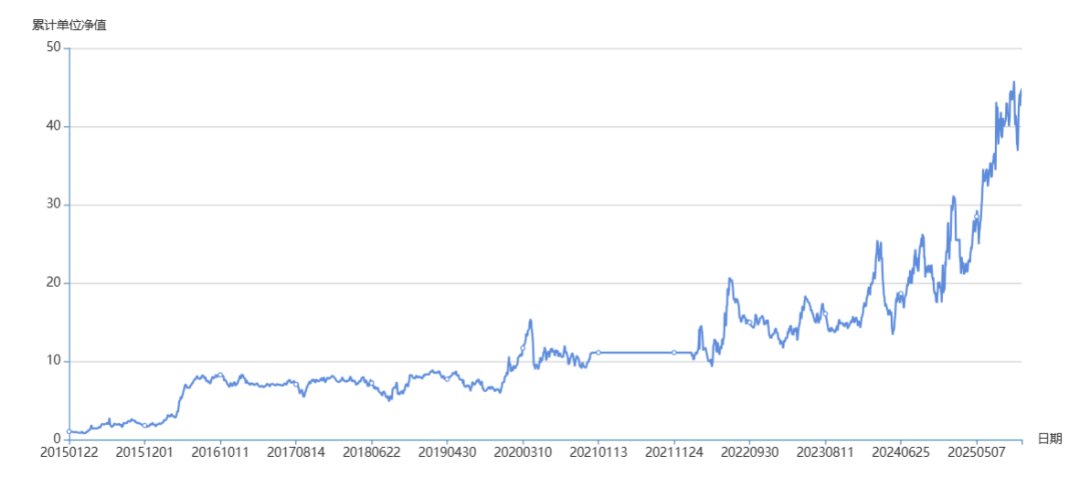
10年10倍,是我的投资目标!
Sou Hu Cai Jing· 2026-01-21 15:45
Core Viewpoint - The investment strategy focuses on selecting commodities with strong fundamentals and technical buy signals for holding [4] Group 1: Trading Strategy - The trading approach is relatively simple, relying on fundamental support and technical buy signals [4] - In strong market trends, the strategy leans towards subjective trading to increase positions, while in low volatility markets, it relies more on technical analysis for objective trading [5][22] - A simple trading system is often more effective than a complex one due to reduced noise and uncertainty [5][23] Group 2: Performance and Goals - The target annual return is 26%, which can lead to a doubling of capital in three years and a tenfold increase in ten years through compounding [7][27] - The current performance in the futures market shows strong results, particularly in metal commodities like gold, silver, copper, aluminum, and lithium [11][33] Group 3: Risk Management - Diversification across multiple commodities is considered one of the best methods for risk control [8][29] - In program trading, a strategy of closing positions and reversing is used to set stop-loss points, while in subjective trading, stop-loss and take-profit points are based on price trends and key support/resistance levels [9][30] - The approach to risk management remains consistent, even during extreme market conditions, relying on a long-validated trading system [31] Group 4: Market Insights - The current futures market is characterized by volatility and uncertainty, with a strong performance in metal commodities influenced by global economic recovery and inflation expectations [12][33] - The selection of trading commodities is based on historical performance and future expectations [34]

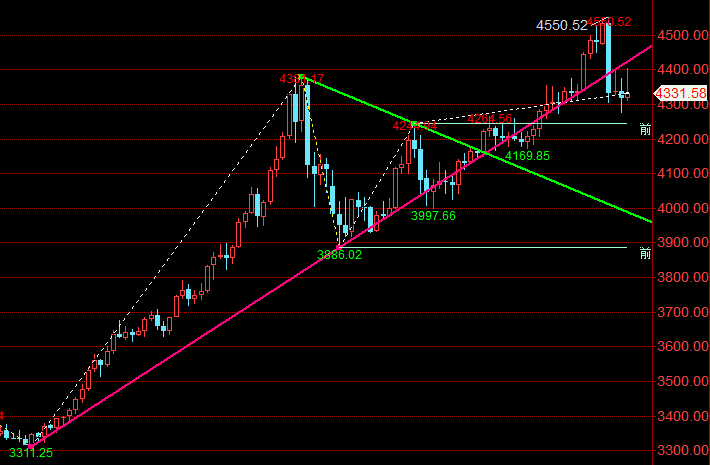
金源灿:黄金日线收长下影锤头线 日内回踩做多思路明确
Xin Lang Cai Jing· 2026-01-16 06:17
Core Viewpoint - The international gold market experienced significant volatility, with bulls gaining control after a strong rebound, forming a hammer candlestick pattern that suggests a bullish outlook for the following day [1][7]. Technical Analysis - The hammer candlestick formed with a long lower shadow, indicating strong support near the 4570-4580 range, which has been tested multiple times [2][8]. - The price rebounded from a low of 4579.5, showing strong buying interest and indicating that the previous profit-taking corrections have been largely absorbed [2][8]. - Short-term indicators, such as the MACD, are showing bullish signals, with upward momentum continuing to strengthen [2][8]. Fundamental Analysis - The underlying support for gold's upward movement remains intact, driven by geopolitical risks and expectations of interest rate cuts by the Federal Reserve [3][9]. - Despite fluctuations in recent economic data, the overall market sentiment anticipates a rate cut within the year, providing medium to long-term support for gold prices [3][9]. - The ongoing trend of central banks purchasing gold reinforces its status as a safe-haven asset, further solidifying the price floor [3][9]. - The strong performance of silver, which has recently reached historical highs, is expected to positively influence gold prices as well [3][9]. Trading Strategy - The trading strategy focuses on buying on dips, particularly around the key support level of 4580, which aligns with multiple technical supports [4][10]. - The first target for upward movement is set at 4602, with a further target of 4621, which is near the upper boundary of the recent trading range [4][10]. - It is crucial to monitor the market closely for confirmation of support levels and adjust strategies accordingly to avoid potential losses from high volatility [4][10].
中信建投期货:1月15日工业品早报
Xin Lang Cai Jing· 2026-01-15 01:42
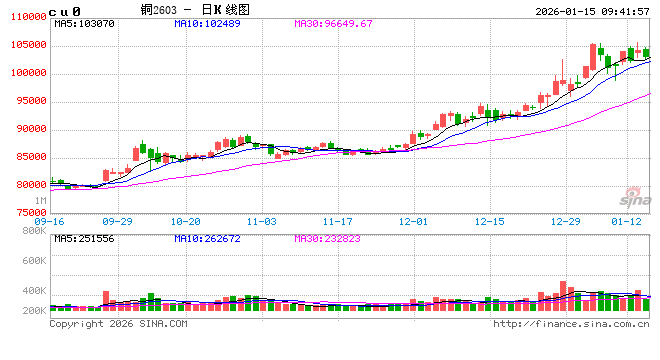
Group 1: Copper - The main copper futures in Shanghai retreated to 103,660 yuan, while London copper hovered around 13,311 USD [2][12] - The macroeconomic outlook is neutral, with the US November PPI and core PPI year-on-year growth at 3%, slightly above expectations, and a minor adjustment in interest rate cut expectations [2][12] - The increase in copper warehouse receipts by 27,000 tons to 149,000 tons indicates a rise in inventory, while weak consumer demand continues to pressure prices [2][12] - Overall, copper prices are expected to maintain high volatility supported by pre-holiday stocking, with a reference range of 102,500 to 104,500 yuan per ton for the main futures [2][12] Group 2: Nickel & Stainless Steel - Indonesia's Ministry of Energy and Mineral Resources announced an adjustment of nickel ore RKAB quotas to 250-260 million tons by 2026, providing short-term support for nickel prices [3][13] - The nickel market lacks further supply-demand contradictions, and the tightening quota expectations have already been priced in [3][13] - The operational strategy for nickel and stainless steel is currently to remain on the sidelines, with reference ranges for nickel at 140,000 to 165,000 yuan per ton and stainless steel at 14,000 to 15,000 yuan per ton [3][13] Group 3: Aluminum - The price of alumina has shown a slight decline, with the 05 contract experiencing high opening and low closing, facing pressure from multiple moving averages [16][17] - The overall supply of alumina has slightly increased to around 96 million tons, but the market sentiment remains weak due to high prices affecting downstream consumption [16][17] - The operational range for the 05 alumina contract is set between 2,500 to 2,800 yuan per ton, with a recommendation to hold short positions [16][17] Group 4: Zinc - Zinc prices showed strong fluctuations, with macroeconomic indicators such as the US November PPI and retail sales exceeding expectations, creating a mixed market sentiment [19] - Domestic TC prices have shown signs of slowing down, with low acceptance for prices below 1,000 yuan, while overseas prices are also declining [19] - The operational strategy for zinc is to take profits on highs, with the main contract expected to trade between 24,500 to 25,500 yuan per ton [19] Group 5: Lead - Lead prices are experiencing strong fluctuations, with supply-side pressures easing slightly due to adjustments in primary smelter maintenance plans [20][21] - The recycling of waste batteries is expected to decline, impacting the supply of recycled lead, while consumer acceptance of new vehicle models is decreasing [20][21] - The operational range for lead is set between 17,000 to 18,000 yuan per ton, with a recommendation for range trading [20][21] Group 6: Precious Metals - Precious metals are showing mixed performance, with gold and platinum slightly rising, while silver continues to break through strongly, and palladium shows a soft decline [10][22] - The market is influenced by concerns over the weakening independence of the Federal Reserve and the delayed decision on Trump's tariff policy by the US Supreme Court [10][22] - The operational strategy suggests holding long positions in gold while remaining cautious with silver, platinum, and palladium, with reference ranges for gold at 1,010 to 1,060 yuan per gram and silver at 22,000 to 24,500 yuan per kilogram [10][22]

Radex Markets瑞德克斯:如何在外汇市场赚钱
Xin Lang Cai Jing· 2026-01-07 10:23
Core Insights - The main issue for many traders struggling to achieve consistent profits is their lack of understanding of essential core logic in trading, rather than a lack of knowledge [1][4] - A significant statistic highlights that bank traders make up only 5% of forex traders but control approximately 92% of total trading volume, indicating that understanding this small group is crucial for success [1][4] Trading Behavior - Bank traders typically execute only two to three trades per week and do not engage in impulsive trading or scalping strategies, which is a critical understanding for retail traders [2][5] - Retail traders often use charts filled with conflicting and lagging indicators, which can quickly deplete their accounts, while bank traders focus on clean charts that highlight key support and resistance levels [2][5] Fundamental Analysis - The driving force behind profitability in trading is fundamentally rooted in economic data, central bank policies, and political influences, which shape the background of any currency [2][5] - A stable environment with supportive data leads to clear trends, while conflicting political noise and central bank information can cause market stagnation [2][5] Risk Management - Effective risk management is essential and should be part of a trader's overall business plan, protecting capital during uncertain times and allowing for growth when conditions are favorable [3][6] - Traders should focus on identifying high-quality opportunities rather than constantly monitoring charts, as most bank traders do not spend their time doing so [3][6] Market Participation - Many traders mistakenly believe they need to "beat the market makers," but the correct approach is to align with them and trade in the direction of the market [3][6] - Successful trading is fundamentally similar to any other business, where the principle of buying at wholesale prices and selling at retail prices applies [3][6]

谈谈过去一年的教训和经验
雪球· 2026-01-04 08:04
Core Viewpoint - The article reflects on past investment experiences, emphasizing the importance of market trends alongside fundamental analysis and valuation in making investment decisions [4][11]. Group 1: Lessons from Profitable Stocks - The success with China Hongqiao was attributed to its favorable fundamentals, low valuation, and positive market trends, which were initially overlooked, leading to insufficient position size [5][6]. - The analysis of market trends, fundamental changes, and valuation is crucial; when two out of three factors indicate a better choice, decisive action should be taken [5][6]. Group 2: Lessons from Unprofitable Stocks - Chengdu Bank's disappointing third-quarter report highlighted the risk of ignoring market signals, leading to a misguided decision to buy against market trends [7]. - The experiences with Gree Electric and thermal power stocks underscored the necessity of having strong confidence in fundamentals before investing, as lack of confidence can lead to panic selling during market corrections [8]. Group 3: Key Investment Strategies - Identifying opportunities where fundamentals, low valuation, and positive market trends align is rare; when such opportunities arise, significant investment should be made [11]. - When market trends confirm investment logic, it is essential to increase position size decisively, as demonstrated by the successful investment in Shenhuo [10][11]. - A lack of confidence in fundamentals can lead to poor investment decisions, especially during market adjustments, resulting in losses [11]. Group 4: Future Focus - The company plans to concentrate on analyzing firms with strong cash flow, low valuations, and a commitment to sharing value with minority shareholders, while continuing to explore the thermal power sector [12].




王召金:1.4黄金下周一最新行情分析及操作策略
Sou Hu Cai Jing· 2026-01-04 05:41
Core Viewpoint - Despite favorable market conditions, the potential for further increases in gold prices may face significant constraints due to profit-taking and increased margin requirements by major commodity exchanges [1][3]. Group 1: Market Dynamics - A substantial prior increase in gold prices has led to significant profit-taking, with traders likely opting to secure gains [1]. - Institutional investors may also adjust their portfolios based on position balancing needs, exerting direct selling pressure on gold prices [1]. - The Chicago Mercantile Exchange has raised margin requirements for gold and silver futures, which raises the trading threshold and may suppress speculative buying [1]. Group 2: Geopolitical Risks - Geopolitical risks, a core driver for gold as a traditional safe-haven asset, require ongoing uncertainty to maintain their price-supporting effect [1]. - A reduction in risk expectations could diminish the motivation for safe-haven buying [1]. Group 3: Technical Analysis - On a daily chart, gold prices have continued a downward trend after a previous high, influenced by cautious market sentiment during the Western holiday season [1]. - The K-line pattern shows a bearish formation, impacting bullish confidence, while the moving average system indicates a downward turn [1]. - The 4400 level is identified as a critical dividing line for medium-term market dynamics, with its breach determining future trends [1]. Group 4: Short-term Outlook - An hourly analysis reveals a stair-step downward pattern in gold prices, with weak bullish recovery signals [3]. - Key support is identified at the 4280 level; a breach could accelerate downward movement towards stronger support zones [3]. - A four-hour analysis indicates that if the 4300 support level is broken, it could open up further downward space [3]. - The recommendation for short-term trading is to focus on short positions during rebounds, with key resistance levels at 4380-4400 and support levels at 4270-4250 [3].
情绪助推氧化铝强势反弹
Nan Hua Qi Huo· 2025-12-29 02:37
1. Report Industry Investment Rating No information provided in the report. 2. Core Views of the Report - In the short - term, Shanghai Aluminum is expected to maintain a volatile and upward - trending pattern, while in the long - term, it is in an upward channel. Alumina is still in a supply - surplus situation, and the recent price increase is mainly due to emotional stimulation. Cast aluminum alloy shows a pattern of strong cost support but slow - growing demand [1][9][17]. - The core factors affecting aluminum prices are macro - policy expectations and fundamentals. Overseas macro mainly focuses on the Fed's monetary policy, and the rise and fall of interest - rate cut expectations dominate the financial - attribute pricing of the non - ferrous sector. The domestic fundamentals of electrolytic aluminum are relatively stable, with external demand stronger than domestic demand [1]. 3. Summary by Relevant Catalogs 3.1 Core Contradictions and Strategy Recommendations 3.1.1 Electrolytic Aluminum - **Core Contradictions**: The core factors affecting aluminum prices are macro - policy expectations and fundamentals. Overseas, the focus is on the Fed's monetary policy, and the outcome of China - US tariff negotiations is in line with expectations. Domestically, the fundamentals are stable with external demand stronger than domestic demand. In the short - term, Shanghai Aluminum is affected by related varieties, and there is a short - term inventory accumulation. In the long - term, macro factors will drive the upward movement of aluminum prices, and the supply - demand balance of global electrolytic aluminum in 2026 will be tight or in short supply [1][7][9]. - **Trading Strategy Recommendations**: The trend is expected to be high - level oscillation. For the monthly spread strategy, it is recommended to wait and see. When the spread between Shanghai Aluminum and aluminum alloy is too large, one can go long on aluminum alloy and short on Shanghai Aluminum for arbitrage. The recent strategies include interval operations, selling options, etc. [10]. 3.1.2 Alumina - **Core Contradictions**: The supply of bauxite is sufficient, and the price is expected to be weakly volatile. Alumina still has a supply - surplus problem, but the market interprets the NDRC's news as a control on alumina growth, which is mainly an emotional stimulus. In the short - term, the impact on fundamentals is limited. In the long - term, the supply - surplus pattern is difficult to change, but the price decline rate will slow down [12][17][19]. - **Trading Strategy Recommendations**: The trend is expected to be weakly running. The price range is 2750 - 3050. It is recommended to sell the Alumina 2601 Call Option at 2900. For the basis and monthly spread strategies, it is recommended to wait and see, and there is no recommended hedging and arbitrage strategy [27]. 3.1.3 Cast Aluminum Alloy - **Core Contradictions**: The core contradiction lies in the weak demand and high costs. The supply of scrap aluminum is tight, and the downstream is in a mild recovery with general peak - season performance and downward pressure. In the long - term, the cost support is strong, but the demand growth rate slows down [25][30]. - **Trading Strategy Recommendations**: The trend is expected to be oscillating and upward - trending. The price range is 19900 - 20800. When the spread between Shanghai Aluminum and aluminum alloy is greater than 500, one can go long on aluminum alloy and short on Shanghai Aluminum for arbitrage [31]. 3.1.4 Industrial Customer Operation Recommendations - Provide price - range forecasts for alumina, electrolytic aluminum, and aluminum alloy in the near future, as well as risk - management strategy recommendations, including inventory management and raw - material management strategies [32]. 3.2 This Week's Important Information and Next Week's Events to Watch 3.2.1 This Week's Important Information - **Positive Information**: On December 11, the social inventory of aluminum ingots and aluminum rods increased by 44,000 tons to 741,500 tons compared with the previous week. The US GDP in the third quarter of this year increased by 4.3% year - on - year, higher than the second - quarter growth rate of 3.8% and the market expectation of 3.2% [33]. - **Negative Information**: No information provided. - **Spot Transaction Information**: Overseas, on December 23, 30,000 tons of alumina were traded at a price of $335/mt FOB Brazil for February shipment. Domestically, there were transactions in the north and south markets, with different prices and quantities [34][36]. 3.2.2 Next Week's Events to Watch - On December 31, the number of initial jobless claims in the US for the week ending December 27 will be released [37]. 3.3 Disk Interpretation 3.3.1 Price - Volume and Fund Interpretation - **Electrolytic Aluminum**: Shanghai Aluminum was driven by related varieties and trended upward. The relationship between the main - contract position and price indicates that the market is mainly controlled by long - position forces. The positions of key seats and the total position show opposite trends, indicating that key seats take profits at high prices. The basis - monthly spread structure maintains a shallow C - shaped structure [38][41]. - **Alumina**: The fundamentals remained unchanged this week, but the price rebounded sharply on Friday due to the NDRC's news. Long - position investors entered the market, the position increased significantly, and the net short - position decreased. The term structure is stable, but there is an obvious spread between the 2602 and 2603 contracts [54][58]. - **Cast Aluminum Alloy**: It moved with Shanghai Aluminum this week, but the position of the main contract decreased, and the positions of important seats remained oscillating. The term structure is stable, maintaining a shallow C - shaped structure [62][65]. 3.4 Valuation and Profit Analysis - **Profit Tracking of the Industrial Chain's Upstream and Downstream**: The supply - surplus situation of alumina persists, the spot price continues to decline, and the profit is compressed. The profit of electrolytic aluminum remains at a high level [67]. - **Import - Export Profit Tracking**: The alumina import window remains open, while the import and export windows for electrolytic aluminum are closed, with only long - term Russian aluminum contracts flowing in, averaging about 200,000 tons per month [70][72]. 3.5 Supply - Demand and Inventory Deduction - **Supply - Demand Balance Deduction**: Provide quarterly balance sheets for electrolytic aluminum and monthly balance sheets for alumina, showing the supply - demand balance in different periods [74]. - **Supply - Side and Deduction**: The profit of electrolytic aluminum is high, and the domestic production capacity is approaching the ceiling, with little change in supply. Overseas, the supply increase is concentrated in Southeast Asia, mainly in 2026. Alumina prices are under pressure, and some high - cost enterprises may reduce production, which is expected to alleviate the surplus situation to some extent [75][76]. - **Demand - Side and Deduction**: The new - energy sector is the main driving force for the growth of China's electrolytic aluminum demand, but the growth rate is expected to slow down. The demand for aluminum in the construction sector is expected to decline negatively, and the overall consumption growth rate of electrolytic aluminum is expected to slow down but remain above 0.5% for a long time. Alumina demand is mainly for electrolytic - aluminum smelting, and the demand is estimated based on seasonality [78].
2025年行业打分表结论回顾与策略反思:行业轮动如何做到既敏锐又不丢主线?
ZHESHANG SECURITIES· 2025-12-24 08:51
Core Insights - The 2025 industry scoring report identified the top five sectors as Electric New Energy, Military Industry, Nonferrous Metals, Machinery, and Chemicals, which showed a strong correlation with actual annual performance [1][3][18] - A simulated equal-weighted portfolio of the top five sectors yielded a cumulative return of 44.8% by December 23, 2025, outperforming the CSI 300 by 22.2%, with a monthly success rate exceeding 90% [1][3][12] - The report emphasizes that in a bullish market, focusing on industry fundamentals is more effective than trading strategies, advocating for a buy-and-hold approach based on economic cycles [1][5][21] 2025 Industry Review - The Shanghai Composite Index rose over 16% in 2025, marking the largest increase since 2020, with Nonferrous Metals and Communication sectors leading the gains at 89.9% and 89% respectively [2][13] - The report highlights that the performance of Nonferrous Metals and Communication significantly outpaced the CSI 300's 17.4% increase [12][13] 2025 Annual Industry Scoring Conclusions and Performance Review - The annual scoring report, published in November 2024, ranked Electric New Energy, Military Industry, Nonferrous Metals, Machinery, and Chemicals as the top five sectors, correlating well with actual performance [3][18] - The top five sectors' simulated portfolio achieved a cumulative return of 44.8%, with 11 out of 12 months showing positive excess returns [3][20] 2025 Monthly Industry Scoring Conclusions and Performance Review - The monthly scoring report indicated a sample return of 34.7% since 2025, outperforming the CSI 300 by 14.8%, although this was lower than the annual scoring report's performance [4][12] - Key insights from the monthly performance include successful allocations in Communication and Nonferrous Metals, while frequent trading led to missed opportunities [4][5] Summary and Reflections - The analysis suggests that in a bullish market, prioritizing industry fundamentals over trading strategies is crucial, with a focus on tracking industry prosperity differences [5][21] - For 2026, sectors that should receive higher fundamental scores include those aligned with cyclical and technological trends, particularly in areas like Electronics, Communication, Military, Consumer Services, Agriculture, Trade, Pharmaceuticals, Electric New Energy, Chemicals, and Automotive [5][21]
炒黄金有什么技巧?2025年金价高位震荡下的实战心得分享
Sou Hu Cai Jing· 2025-12-24 06:24
Core Viewpoint - Gold continues to play a significant role as a safe-haven asset in financial markets, especially amid increasing uncertainties, with current spot prices hovering around $4,400, driven by both risk aversion and actual demand [1] Group 1: Fundamental Analysis Techniques - The long-term trend of gold prices is heavily influenced by macroeconomic factors such as interest rates, inflation expectations, and geopolitical situations [3] - A decrease in actual interest rates lowers the cost of holding gold, making it more attractive, particularly during Federal Reserve easing cycles [3] - Central banks have significantly increased gold purchases, with a net purchase of 634 tons in the first three quarters of 2025, providing a stable support level for the market [3] - Regular monitoring of key data such as U.S. employment figures, inflation reports, and the U.S. dollar index is essential for anticipating market trends [3][5] Group 2: Technical Analysis Applications - Relying solely on fundamental analysis may not be sufficient; technical analysis is crucial for timing investments [6] - Common tools include moving averages and RSI to assess market strength, while support and resistance levels are also important [6] - Observations indicate that gold prices around $4,400 show significant volatility, with decisive movements following breakouts [6] Group 3: Risk Control Principles - Emphasizing risk control is vital due to the high volatility of gold; using appropriate leverage can amplify results [7] - It is recommended to maintain smaller position sizes and set stop-loss and take-profit levels at fixed ratios, such as 1:2, to protect capital [7] - Diversifying investments and conducting post-trade reviews are essential for refining strategies over time [7] Group 4: Common Pitfalls for New Investors - New investors often face challenges in selecting trading platforms; verifying regulatory backgrounds and ensuring transparency in transactions is crucial [8] - Platforms that offer high leverage or attractive promotions may conceal significant risks [8] - Starting with small amounts to familiarize oneself with the rules before increasing investment is advisable, along with maintaining a clear mindset to avoid being swayed by short-term market fluctuations [8]

工业硅期货早报-20251224
Da Yue Qi Huo· 2025-12-24 02:03
1. Report Industry Investment Rating - Not provided in the content 2. Core Viewpoints of the Report - For industrial silicon, the supply side's production schedule is decreasing but remains at a high level, the demand recovery is at a low level, and cost support is rising. The 2605 contract is expected to fluctuate in the range of 8685 - 8875 [3][4][5]. - For polysilicon, the supply - side production schedule is continuously decreasing, and the overall demand shows a continuous decline. Cost support remains stable. The 2605 contract is expected to fluctuate in the range of 58180 - 60270 [7][8][9][11]. 3. Summary According to the Directory 3.1 Daily Views 3.1.1 Industrial Silicon - Supply side: Last week, the industrial silicon supply was 88,000 tons, unchanged from the previous week [3][5]. - Demand side: Last week, the demand was 81,000 tons, a 8% increase from the previous week. The demand has increased [3][5]. - Cost side: In Xinjiang, the production loss of sample oxygen - passing 553 silicon is 2,874 yuan/ton, and the cost support has risen during the dry season [3][5]. - Other factors: On December 23, the spot price of non - oxygen - passing silicon in East China was 9,200 yuan/ton, and the basis of the 05 contract was 420 yuan/ton, with the spot at a premium to the futures. The social inventory was 553,000 tons, a 1.42% decrease from the previous week; the sample enterprise inventory was 192,500 tons, a 2.94% increase; the main port inventory was 138,000 tons, a 1.47% increase. The MA20 is downward, and the 05 contract price closed above the MA20. The main positions are net short, and the short positions decreased [3][5]. 3.1.2 Polysilicon - Supply side: Last week, the polysilicon production was 25,000 tons, a 0.39% decrease from the previous week. The production schedule in December is predicted to be 113,500 tons, a 0.95% decrease from the previous month [7][8]. - Demand side: Last week, the silicon wafer production was 10.67GW, a 12.18% decrease from the previous week, and the inventory was 215,000 tons, a 7.72% decrease. Currently, silicon wafer production is in a loss state. The production schedule in December is 45.7GW, a 15.94% decrease from the previous month. In November, the cell production was 55.61GW, a 6.17% decrease from the previous month. Last week, the external sales factory inventory of cells was 10.06GW, a 6.56% increase. Currently, cell production is in a loss state, and the production schedule in December is 48.72GW, a 12.38% decrease. In November, the module production was 46.9GW, a 2.49% decrease from the previous month. The expected module production in December is 39.99GW, a 14.73% decrease. The domestic monthly inventory is 24.76GW, a 51.73% decrease, and the European monthly inventory is 33.1GW, a 6.49% decrease. Currently, module production is in a profitable state [7][9]. - Cost side: The average cost of N - type polysilicon in the industry is 38,600 yuan/ton, and the production profit is 12,400 yuan/ton [7][9][10]. - Other factors: On December 23, the price of N - type dense material was 51,000 yuan/ton, and the basis of the 05 contract was - 6,875 yuan/ton, with the spot at a discount to the futures. The weekly inventory was 293,000 tons, unchanged from the previous week, at a high level in the same period of history. The MA20 is upward, and the 05 contract price closed above the MA20. The main positions are net short, and the short positions increased [7][9][13]. 3.2 Market Overview 3.2.1 Industrial Silicon - Futures closing price: All contracts showed an upward trend, with the 12 - contract having the largest increase of 2.40% [19]. - Basis: The basis of most contracts decreased, with some showing a significant decline [19]. - Other indicators: The registered warehouse receipt number increased by 1.73%, the weekly DMC production decreased by 6.52%, and the daily capacity utilization rate remained unchanged [19]. 3.2.2 Polysilicon - Futures closing price: Most contracts showed an upward trend, with the 07 - contract having the largest increase of 0.84% [21]. - Basis: The basis of most contracts showed a certain change, with some increasing and some decreasing [21]. - Other indicators: The weekly silicon wafer production increased by 5.74%, and the weekly silicon wafer inventory decreased by 22.06%. The monthly module production decreased by 2.49%, and the domestic monthly module inventory decreased by 51.73% [21]. 3.3 Price and Inventory Trends 3.3.1 Industrial Silicon - Price: The prices of various types of industrial silicon in East China remained unchanged [19]. - Inventory: The social inventory decreased by 1.43%, the sample enterprise inventory increased by 2.94%, and the main port inventory increased by 1.47% [19]. 3.3.2 Polysilicon - Price: The prices of various types of polysilicon and related products remained mostly unchanged [21]. - Inventory: The weekly total inventory remained unchanged at 293,000 tons [21]. 3.4 Supply - Demand Balance 3.4.1 Industrial Silicon - Weekly supply - demand balance: The production, import, export, and consumption data showed a certain balance situation, with the balance value fluctuating [43]. - Monthly supply - demand balance: From November 2024 to November 2025, the industrial silicon production, consumption, and export data showed different trends, and the supply - demand balance also changed accordingly [46]. 3.4.2 Polysilicon - Monthly supply - demand balance: From October 2024 to October 2025, the supply, import, export, and consumption of polysilicon showed different trends, and the balance value also fluctuated [69]. 3.5 Downstream Industry Trends 3.5.1 Organic Silicon - DMC production and price: The daily capacity utilization rate remained unchanged, the weekly production decreased by 6.52%, and the price remained unchanged [19][49]. - Downstream product prices: The prices of 107 glue, silicone oil, raw rubber, and D4 remained unchanged [19][51]. - Import - export and inventory: The monthly export and import volumes of DMC showed different trends, and the inventory decreased [54][56]. 3.5.2 Aluminum Alloy - Price and supply: The price of SMM aluminum alloy ADC12 remained unchanged, and the import cost and profit showed certain changes [19][58]. - Inventory and production: The monthly production of primary aluminum - based aluminum alloy ingots decreased by 8.66%, and the monthly production of recycled aluminum alloy ingots increased by 5.74%. The social inventory of aluminum alloy ingots decreased by 1.09% [19][61]. - Demand: The monthly production and sales of automobiles and the export trend of aluminum alloy wheels are provided [62]. 3.5.3 Polysilicon Downstream - Silicon wafer: The price of silicon wafers remained unchanged, the weekly production increased by 5.74%, the weekly inventory decreased by 22.06%, and the monthly demand showed a certain trend [21][72]. - Cell: The price of cells remained unchanged, the production and actual output showed a certain trend, the external sales factory inventory increased, the export volume showed an upward trend, and the opening rate showed a certain trend [21][75]. - Photovoltaic module: The price of modules showed a certain change, the domestic and European inventories decreased, the monthly production decreased by 2.49%, and the export volume increased by 5.54% [21][78]. - Photovoltaic accessories: The prices and import - export volumes of photovoltaic coating, photovoltaic film, photovoltaic glass, high - purity quartz sand, and welding tape showed different trends [81]. - Component cost - profit: The cost and profit of silicon wafers, cells, and components in 210mm double - sided double - glass components showed different trends [84]. - Photovoltaic grid - connected power generation: The new - installed capacity, power generation structure, and new - connected capacity of photovoltaic power plants showed different trends [87].