
降准降息

Search documents
20260309申万期货品种策略日报:双焦(J&J)-20260309
Shen Yin Wan Guo Qi Huo· 2026-03-09 05:54
1. Report Industry Investment Rating - No information provided 2. Core Viewpoints - The main contracts of coking coal and coke showed a strong trend last week, and the total position of coking coal decreased month-on-month. The production of coking coal continued to rise last week, while the iron - water production decreased significantly month - on - month due to environmental protection restrictions in many places, the rigid demand for coking coal weakened month - on - month, the inventory of clean coal in mines increased, and the inventory of coking coal downstream decreased. It is expected that with the advancement of resuming work and production, the iron - water production will significantly rebound, driving the improvement of the rigid demand for coking coal and coke. Additionally, the recent intensification of geopolitical conflicts can also stimulate the price of coking coal by increasing the valuation of energy - related commodities, so it is not advisable to be overly pessimistic about the future trend [2] 3. Summary by Related Catalogs Futures Market Data - **Closing prices and changes**: The closing prices of 1 - month, 5 - month, and 9 - month contracts of coking coal and coke on the previous day were 1426.0, 1123.0, 1216.5, 1855.5, 1695.5, and 1762.0 respectively, with increases of 25.0, 17.5, 16.5, 15.5, 19.0, and 17.0 compared to the day before, and increases of 1.78%, 1.58%, 1.37%, 0.84%, 1.13%, and 0.97% respectively [2] - **Trading volume and open interest**: The trading volumes of 1 - month, 5 - month, and 9 - month contracts of coking coal and coke were 3683, 876475, 62760, 96, 18888, and 11362 respectively, and the open interests were 15308, 496857, 109364, 1252, 37714, and 3160 respectively. The changes in open interest were 22, 228, 961, 8364, 3768, and 891 respectively [2] - **Price spreads**: The current price spreads of 1 - 5 months, 5 - 9 months, and 9 - 1 months for coking coal and coke were - 79.5, 160.5, - 77.5, 240, - 160.5, and - 83 respectively, with changes of 306, 2.5, - 308.5, 429.5, and 2 respectively [2] Spot Market Data - The spot prices of Jinzhong quasi - first - grade, Mongolian No.5 coking coal, low - sulfur coking coal, low - sulfur coking coal, Tangshan first - grade, and port first - grade showed changes of - 55, 0, - 20, 0, - 50, and 0 respectively [2] Policy Information - At the press conference on the economic theme of the Fourth Session of the 14th National People's Congress on March 6, the Minister of Finance Lan Fuan stated that a more proactive fiscal policy would be fully implemented, which was reflected in both the scale of funds and the strengthening of policy coordination. The Governor of the People's Bank of China Pan Gongsheng said that the interest rate level would be guided and regulated to keep the comprehensive social financing cost low, and market behaviors that weakened the transmission effect of monetary policy would be regulated. The Director of the National Development and Reform Commission Zheng Shanjie said that various monetary policy tools such as reserve requirement ratio cuts and interest rate cuts would be flexibly and efficiently used this year [2] - The relevant department will set up a national - level M&A fund in conjunction with the Ministry of Finance and the People's Bank of China to smooth the exit channels for venture capital [2]
债券策略:两会定调看债市关注点及潜在预期差
Shenwan Hongyuan Securities· 2026-03-08 13:08
Group 1 - The policy direction from the Two Sessions emphasizes pragmatic and high-quality development, with a more optimized fiscal structure [1][7] - The government work report sets the GDP growth target for 2026 at 4.5%-5.0%, down from around 5% last year, indicating a more realistic approach without weakening fiscal efforts [7][12] - Fiscal spending for consumption is increased to 350 billion yuan, up from 300 billion yuan last year, which is expected to support demand and potentially drive up prices [7][8] Group 2 - There is room for interest rate cuts and reserve requirement ratio (RRR) reductions within the year, but the timing remains uncertain; fiscal efforts may steepen the yield curve [26][27] - The focus of monetary policy in 2026 may shift from lowering policy rates to ensuring smooth transmission of monetary policy [26][27] - The probability of a rate cut in March is low, with a greater likelihood of an RRR cut, which may have limited impact on the bond market [27][28] Group 3 - The downward space for the 10-year government bond yield is limited, and long-term bonds may enter a "profit-taking" window [44][46] - The bond market may face increased supply of long-term bonds, which could steepen the yield curve, as banks' capacity to absorb long-term bonds may be tested [28][29] - The core contradiction in the bond market will be the interplay between price recovery, nominal growth restoration, and asset allocation rebalancing [46]
——地产及物管行业周报(2026/2/28-2026/3/6):着力稳定房地产市场,增加居民财产性收入,灵活高效运用降准降息-20260308
Shenwan Hongyuan Securities· 2026-03-08 05:45
Investment Rating - The report maintains a "Positive" rating for the real estate and property management sectors, highlighting the potential for recovery in quality real estate companies and commercial properties [2][24]. Core Insights - The report indicates that the real estate market is gradually stabilizing, with government policies aimed at increasing residents' property income and utilizing monetary policy tools effectively [2][24]. - It emphasizes that the fundamental bottom of the real estate industry is approaching, supported by recent policy shifts and a significant reduction in supply-side pressures [2][24]. - The report suggests that quality real estate companies are likely to see earlier and more elastic profit recovery due to improved industry dynamics and historically low valuations [2][24]. Industry Data Summary New Home Transactions - In the week of February 28 to March 6, 2026, new home transactions in 34 key cities totaled 1.813 million square meters, a 69% increase week-on-week, with first and second-tier cities seeing a 78.2% increase, while third and fourth-tier cities experienced a 3% decline [3][4]. - Year-on-year, new home transactions in March showed a 32.1% decrease compared to the same period last year, with first and second-tier cities down 29.7% and third and fourth-tier cities down 55.9% [4][6]. Second-Hand Home Transactions - In the same week, second-hand home transactions in 13 key cities reached 1.018 million square meters, marking a 98.7% increase week-on-week, but a 29.3% decrease year-on-year [10][11]. Inventory and Supply - In the week of February 28 to March 6, 2026, 15 key cities launched 340,000 square meters of new supply, with total sales of 740,000 square meters, resulting in a sales-to-launch ratio of 2.14 times [19][20]. - The total available residential area in these cities was 88.055 million square meters, reflecting a 0.44% decrease week-on-week, with an average absorption period of 27.9 months [19][20]. Policy and News Tracking - The government work report emphasizes stabilizing the real estate market through targeted policies, inventory reduction, and improving supply channels, while also promoting income growth for low-income groups [24][27]. - The People's Bank of China indicated the flexible use of monetary policy tools, including interest rate cuts, to support economic stability and asset price recovery [24][27]. - Recent developments include the approval of commercial real estate REITs by New Town Holdings, indicating a growing interest in this investment vehicle [32][34].

地产及物管行业周报:着力稳定房地产市场,增加居民财产性收入,灵活高效运用降准降息-20260308
Shenwan Hongyuan Securities· 2026-03-08 05:08
Investment Rating - The report maintains a "Positive" rating for the real estate and property management sectors, indicating optimism for quality real estate companies and commercial properties [2][34]. Core Insights - The report highlights a recovery in new home sales, with a 69% week-on-week increase in 34 key cities, although year-on-year sales are down 32.1% [2][3]. - The government is focusing on stabilizing the real estate market, increasing residents' property income, and effectively utilizing monetary policy tools such as interest rate cuts [2][26]. - The report suggests that the industry is nearing a bottom after significant adjustments, with a more favorable policy environment emerging [2][34]. Industry Data Summary New Home Sales - New home sales in 34 key cities reached 1.813 million square meters, a 69% increase week-on-week, with first and second-tier cities seeing a 78.2% rise [2][3]. - Year-on-year sales for March show a decline of 32.1%, with first and second-tier cities down 29.7% and third-tier cities down 55.9% [4][6]. Inventory and Supply - In the last week, 15 cities launched 340,000 square meters of new homes, with a sales-to-launch ratio of 2.14, indicating strong demand relative to supply [20][21]. - The total available residential area in these cities is 88.055 million square meters, showing a slight decrease of 0.44% week-on-week [20]. Policy and News Tracking - The government is implementing measures to stabilize the real estate market, including policies to control inventory and improve supply [26][29]. - The People's Bank of China is expected to use various monetary policy tools flexibly to support economic growth and stabilize asset prices [26][29]. Company Dynamics - New City Holdings has received approval for its commercial real estate REITs, indicating a move towards diversifying funding sources [34]. - Several real estate companies reported significant declines in sales for February, with China Overseas Development at 8.46 billion yuan (-35.9%) and CIFI Holdings at 5.3 billion yuan (-67.1%) [34].



五位部长重磅发声!信息量巨大
第一财经· 2026-03-06 11:09
Core Viewpoint - The press conference highlighted China's economic strategies and policies aimed at enhancing growth, stabilizing the financial market, and promoting consumption, with a focus on innovation and structural reforms. Group 1: Financial Market and Monetary Policy - The total market capitalization of A-shares exceeds 110 trillion yuan [3] - The central bank plans to flexibly utilize various monetary policy tools, including interest rate cuts and reserve requirement ratio adjustments [3] - The People's Bank of China aims to implement a moderately loose monetary policy while enhancing the intersection of central bank policies with market concerns [3] - The financial market's financing structure is undergoing profound changes, with bond financing accounting for 46% of the social financing increment in 2025 [4] - The number of high-risk small financial institutions has decreased by half from peak levels [4] Group 2: Fiscal Policy and Economic Growth - The fiscal policy for 2026 will maintain a more proactive tone, with 100 billion yuan allocated to support fiscal-financial collaboration to boost domestic demand [4] - It is estimated that this year's GDP increment will exceed 6 trillion yuan [4] - The scale of the service industry is expected to surpass 100 trillion yuan by the end of the "14th Five-Year Plan" [4] - The artificial intelligence industry is projected to grow to over 10 trillion yuan by the end of the "14th Five-Year Plan" [4] Group 3: Consumption and Trade - During the "14th Five-Year Plan" period, China's consumption market is expected to become the largest in the world when adjusted for purchasing power parity [5] - Offline consumption growth during the recent Spring Festival surpassed online for the first time in recent years [6] - The cross-border e-commerce import and export scale reached 2.75 trillion yuan [6] - The average per capita consumption GDP is projected to increase from 10,000 USD to 13,000 USD during the "14th Five-Year Plan" [6]

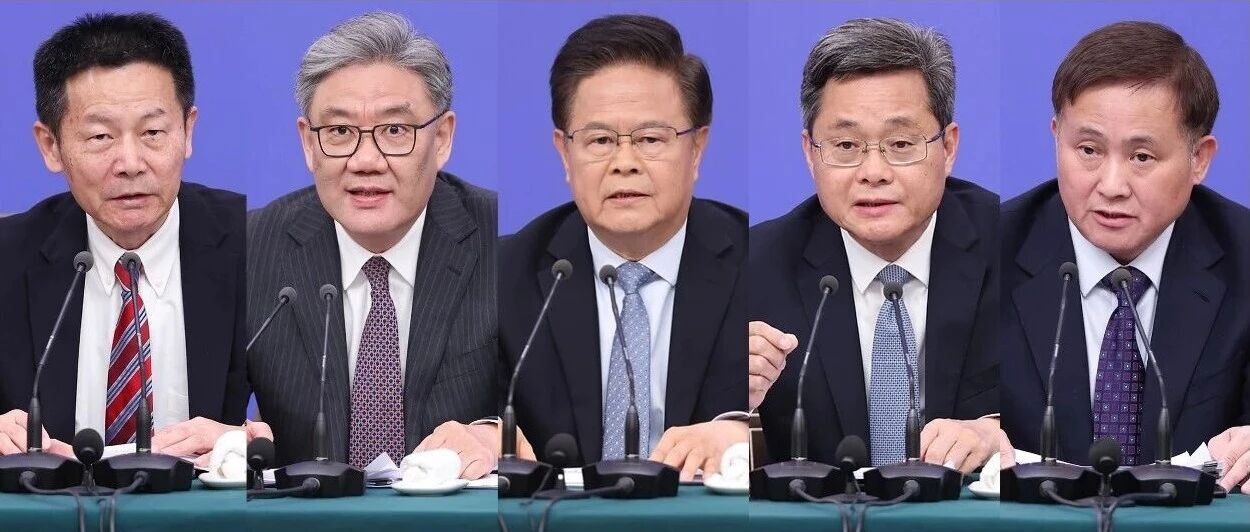
潘功胜:将灵活高效运用降准降息等多种货币政策工具
证券时报· 2026-03-06 07:57
Core Viewpoint - The article discusses the recent statements made by Pan Gongsheng, the Governor of the People's Bank of China, regarding monetary policy, market liquidity, and the exchange rate of the Chinese yuan. Group 1: Monetary Policy and Market Liquidity - In the past two months, approximately 2 trillion yuan of medium- and long-term funds have been net injected into the open market, indicating a generally loose financing condition in the economy [2] - The People's Bank of China will implement a moderately loose monetary policy in 2026, utilizing various tools such as reserve requirement ratio (RRR) cuts and interest rate reductions to ensure ample market liquidity [4] - The central bank aims to strengthen the execution and supervision of interest rate policies, ensuring that the comprehensive financing costs for enterprises remain low [3] Group 2: Exchange Rate Management - Pan Gongsheng stated that there is no necessity or intention for China to devalue its currency to gain trade competitiveness, as the yuan has appreciated against the US dollar this year due to various factors [5] - The current exchange rate of the yuan against the US dollar is within the median range observed in recent years, reflecting a stable economic outlook [5] Group 3: Policy Communication and Transparency - The central bank is focused on improving the transparency of monetary policy and enhancing the communication mechanisms to ensure effective transmission of policy rates to market rates [6] - Future monetary policy will gradually shift away from quantity-based intermediary targets, allowing for a more effective role of interest rate adjustments [7]

央行:今年将灵活高效运用降准降息等多种货币政策工具
21世纪经济报道· 2026-03-06 07:55
Group 1 - The People's Bank of China will implement a moderately accommodative monetary policy in 2026, utilizing various monetary policy tools such as reserve requirement ratio (RRR) cuts and interest rate reductions to create a favorable monetary and financial environment for the "14th Five-Year Plan" [1] - The integration and synergistic effect of monetary policy and fiscal policy will be emphasized to support economic growth [1] Group 2 - The Ministry of Commerce stated that during the "14th Five-Year Plan" period, China's consumer market size is expected to rank first in the world when adjusted for purchasing power parity [3] - The Director of the National Development and Reform Commission projected that this year's GDP increment will exceed 6 trillion yuan [3]

央行重磅发声!事关降准降息
Wind万得· 2026-03-06 07:51
Core Viewpoint - The People's Bank of China (PBOC) plans to flexibly and efficiently utilize various monetary policy tools such as reserve requirement ratio (RRR) cuts and interest rate reductions to support economic growth and manage financing costs [2] Group 1: Monetary Policy Tools - The PBOC will guide and regulate interest rates based on changes in the economic and financial landscape, aiming to keep the overall financing costs low [2] - There will be a focus on enhancing the execution and supervision of interest rate policies, particularly addressing unreasonable market behaviors that may hinder the transmission of monetary policy [2] - Banks are required to clearly present the annual comprehensive financing costs of loans to enterprises, standardizing financing intermediary fees [2] Group 2: Monetary Policy Approach - Currently, China's monetary policy employs both quantity-based and price-based controls, with a gradual shift towards diminishing the emphasis on quantity-based targets [2] - Financial aggregates will be used more as observational, reference, and expectation indicators to better facilitate interest rate regulation [2] Group 3: Currency Exchange Rate - The RMB has appreciated against the USD this year, attributed to the continuous improvement of China's economy, a weakening USD index, and seasonal corporate foreign exchange settlements [2] - The current RMB/USD exchange rate is within the median range observed in recent years, and China does not intend to devalue its currency to gain trade competitiveness [2]

潘功胜:今年将灵活高效运用降准降息等多种货币政策工具
财联社· 2026-03-06 07:51
十四届全国人大四次会议3月6日下午3时举行经济主题记者会。央行行长潘功胜在记者会上表示,今年将灵活高效运用降准降息等多种货币政策工 具。 过去两个月在公开市场净投放中长期资金约2万亿元 潘功胜表示,过去两个月时间,在公开市场各项工具净投放中长期资金约2万亿元,总体看,社会融资条件处于宽松状态,金融总量合理增长。 加强规范消减货币政策传导效果的市场行为 潘功胜表示,将根据经济金融形势的变化和宏观经济的运行情况,引导和调控好利率水平,促进社会综合融资成本低位运行,强化利率政策执行和 监督,对于一些不合理的、容易消减货币政策传导效果的市场行为加强规范,要求银行向企业明确展示贷款的年化综合融资成本,规范融资中间 费。 综合运用短、中、长期政策工具 保证市场的流动性充裕 潘功胜表示,2026年人民银行将实施适度宽松的货币政策,灵活高效地运用降准降息等多种货币政策工具,发挥增量和存量、货币政策和财政政策 的集成协同效应。在数量上,将综合运用短、中、长期的政策工具,保证市场的流动性充裕,使社会融资规模、货币供应量增长,同经济增长、价 格水平的预期目标相匹配。 ...

格林大华期货早盘提示:国债-20260305
Ge Lin Qi Huo· 2026-03-05 01:58
Group 1: Report Industry Investment Rating - The investment rating for the bond futures market is "oscillating" [1] Group 2: Core View of the Report - The bond futures market is expected to oscillate in the short - term, and trading - type investors are advised to conduct band operations [1][2] Group 3: Summary by Relevant Catalogs Market Performance - On Wednesday, most of the opening prices of the main contracts of bond futures were flat, showing a narrow - range horizontal fluctuation throughout the day. The 30 - year bond futures main contract TL2606 fell 0.03%, the 10 - year T2606 rose 0.05%, the 5 - year TF2606 rose 0.08%, and the 2 - year TS2606 rose 0.05% [1] - On Wednesday, the Wande A - share index opened slightly higher, fell in the morning session, rebounded, and then declined unilaterally in the afternoon, closing near the lowest point with a 2.97% drop and a trading volume of 3.16 trillion yuan, slightly larger than the previous trading day's 3.05 trillion yuan [2] Important Information - Open market: On Wednesday, the central bank conducted 40.5 billion yuan of 7 - day reverse repurchase operations, with 409.5 billion yuan of reverse repurchases maturing on the same day, resulting in a net withdrawal of 369 billion yuan [1] - Money market: On Wednesday, the overnight interest rate in the inter - bank money market remained low. The weighted average of DR001 was 1.27%, compared with 1.26% in the previous trading day; the weighted average of DR007 was 1.42%, compared with 1.45% in the previous trading day [1] - Cash bond market: On Wednesday, the closing yields of inter - bank government bonds declined compared with the previous trading day. The 2 - year bond yield dropped 1.59 basis points to 1.33%, the 5 - year dropped 1.32 basis points to 1.53%, the 10 - year dropped 0.39 basis points to 1.78%, and the 30 - year dropped 0.75 basis points to 2.28% [1] - China's manufacturing PMI in February was 49.0% (previous value 49.3%), the production index was 49.6% (previous value 50.6%), the new order index was 48.6% (previous value 49.2%), the non - manufacturing business activity index was 49.5% (previous value 49.4%), the construction business activity index was 48.2% (previous value 48.8%), and the service business activity index was 49.7% (previous value 49.5%) [1] - The US ISM service index in February rose to 56.1, up 2.3 points from the previous month, reaching a new high since mid - 2022. The new order sub - index climbed to 58.6, a new high in over a year, and the order backlog index soared 11.9 points, reaching a nearly four - year high [1] Market Logic - In January, China's social financing scale increased by 7.22 trillion yuan, higher than the market expectation of 6.51 trillion yuan, with a year - on - year increase of 165.4 billion yuan. The net financing of government bonds in January increased by 976.4 billion yuan, a year - on - year increase of 283.1 billion yuan. The RMB loans in the credit caliber increased by 4.71 trillion yuan, lower than the market expectation of 4.5 trillion yuan, with a year - on - year decrease of 420 billion yuan [1][2] - In January, the second - hand housing sales prices in first - tier cities decreased by 0.5% month - on - month, with a narrowing decline. China's overall inflation level rebounded moderately in January, with the core CPI rising 0.3% month - on - month and the PPI rising 0.4% month - on - month [2] - The official manufacturing PMI in February was 49.0%, and the service business activity index was 49.7%, both below the boom - bust line, indicating a mild economic situation in February. The Ministry of Finance stated that in 2026, the fiscal deficit, total debt, and total expenditure will be maintained at a necessary level. The central bank said there is still room for reserve requirement ratio cuts and interest rate cuts this year [2] Trading Strategy - Trading - type investors are advised to conduct band operations [2]