
核心CPI

Search documents
9月核心CPI温和上涨,港股消费ETF(159735)涨超1%,哔哩哔哩-W上涨超3%
2 1 Shi Ji Jing Ji Bao Dao· 2025-10-21 01:51
Core Insights - The Hong Kong stock market indices opened higher, with the CSI Hong Kong Stock Connect Consumer Theme Index rising by 1.47%, driven by significant gains in stocks like Bilibili-W and Alibaba-W, both up over 3% [1] - The latest economic data from the National Bureau of Statistics indicates a slight year-on-year decrease of 0.1% in the Consumer Price Index (CPI) for the first three quarters, while the core CPI, excluding food and energy, increased by 0.6% [1] - Final consumption expenditure contributed 53.5% to economic growth in the first three quarters, marking a 9.0 percentage point increase compared to the previous year, highlighting its role as a key driver of economic growth [1] Industry Summary - The Hong Kong Consumer ETF (159735) opened higher, currently up by 1.16%, with a latest circulation of 927 million shares and a total market size of 799 million yuan [1] - The CSI Hong Kong Stock Connect Consumer Theme Index comprises 50 large-cap, liquid consumer-related stocks within the Hong Kong Stock Connect range, weighted by free float market capitalization [2] - Lao Pu Gold announced a price adjustment set for October 26, marking its third price change this year [1]



核心CPI重回1% 五连涨释放供需改善信号
Sou Hu Cai Jing· 2025-10-20 22:53
Core Insights - The consumer price index (CPI) in September showed a year-on-year decline of 0.3% and a month-on-month increase of 0.1%, indicating a mixed price trend in the consumer market [2][3] - The core CPI, excluding food and energy, rose by 1.0%, marking the fifth consecutive month of growth and the first time in 19 months that it returned to a 1% increase [2][3] - Industrial producer price index (PPI) remained flat month-on-month and decreased by 2.3% year-on-year, but the rate of decline has narrowed, suggesting a potential stabilization in industrial prices [2][3] CPI and PPI Analysis - The CPI's performance was affected by significant declines in food and energy prices, while service prices increased by 0.6%, indicating a stable upward trend in service costs [4][7] - Core CPI's recovery is primarily driven by rising prices in core goods, with industrial consumer goods prices increasing by 1.8% year-on-year [4][5] - The "old-for-new" policy has stimulated demand for household appliances and communication tools, contributing to price increases in these categories [5][6] Sector-Specific Price Trends - Certain sectors, such as coal mining and black metal smelting, have seen price increases, reflecting the impact of industry restructuring and improved market competition [7][9] - The prices of gold and platinum jewelry surged by 42.1% and 33.6% respectively, driven by rising international gold prices [4][5] - The manufacturing prices for high-quality consumer goods, such as art and ceremonial products, have also shown significant increases, indicating a shift towards quality consumption [7][9] Future Price Outlook - Experts predict that the CPI may stabilize in October, with an annual average around 0%, while PPI is expected to fluctuate at low levels [9][10] - The ongoing implementation of policies aimed at expanding domestic demand and stabilizing prices is crucial for maintaining economic stability [10] - The improvement in supply-demand dynamics and structural upgrades in industries are expected to support a gradual recovery in price levels [8][9]

核心CPI持续回升
Sou Hu Cai Jing· 2025-10-20 22:53
Group 1 - Consumer prices remain stable, with core CPI showing a continuous rebound. In the first three quarters, the overall consumer price index (CPI) decreased by 0.1% year-on-year, while the core CPI, excluding food and energy, rose to 1% in September, marking the highest level in nearly 19 months. The core CPI increased by 0.6% year-on-year, an expansion of 0.2 percentage points compared to the first half of the year [2] - Food prices saw a larger decline, with a year-on-year decrease of 1.8% in the first three quarters, which impacted the CPI by approximately 0.32 percentage points. Energy prices also remained low, with a 3.3% year-on-year decline, affecting the CPI by about 0.25 percentage points [2] Group 2 - The Producer Price Index (PPI) decreased by 2.8% year-on-year in the first three quarters, with a smaller decline of 2.9% in the third quarter compared to a 3.2% drop in the second quarter. The PPI's year-on-year decline narrowed in August and September due to improved market competition and the ongoing construction of a unified national market [3] - Certain industries experienced a reduction in price declines, with the prices of photovoltaic equipment, lithium-ion batteries, and new energy vehicles decreasing by 11.4%, 5.1%, and 1.2% respectively, but with a narrowing of declines compared to the first half of the year [3] Group 3 - High-tech industries are witnessing price increases driven by macro policies and the development of new productive forces. The prices of integrated circuit packaging and testing rose by 3.0% year-on-year, while the prices of arts and crafts manufacturing surged by 12.7% due to the release of upgraded consumer demand [4]
前三季度增长5.2%,后续关键在于用足用好存量政策
2 1 Shi Ji Jing Ji Bao Dao· 2025-10-20 11:27
Economic Growth and Structure - The core of macroeconomic policy for Q4 focuses on structure rather than total volume, emphasizing the effective use of existing policies [1][10] - In Q3, GDP grew by 4.8% year-on-year, with a cumulative growth of 5.2% for the first three quarters, indicating a solid foundation for achieving the annual growth target [7][10] - Fixed asset investment decreased by 0.5% year-on-year in the first three quarters, reflecting a shift from investment-driven growth to innovation and technology-driven growth [7][8] Investment and Consumption - New social financing in September was 3.53 trillion yuan, a year-on-year decrease of 229.7 billion yuan, indicating a need for investment and consumption to be boosted [2][4] - The corporate sector saw new loans of 1.22 trillion yuan in September, with a year-on-year decrease of 50 billion yuan, highlighting a decline in investment willingness [3][4] - Consumer loan growth remains weak, with short-term loans decreasing significantly, suggesting a need for improved consumer sentiment and housing market expectations [2][4] Trade and External Factors - External trade showed resilience, with exports growing by 6.1% year-on-year in the first three quarters, despite global economic uncertainties [9] - Factors contributing to the strong export performance include preemptive actions by foreign trade companies and growth in sectors like new energy vehicles and solar energy [9] Price Trends and Market Dynamics - The Consumer Price Index (CPI) fell by 0.3% year-on-year in September, while core CPI rose by 1%, indicating a mixed inflationary environment [5][6] - The rise in core CPI is driven by increased prices of precious metals and consumer goods, reflecting changes in market dynamics and consumer behavior [5][6]
核心CPI温和上涨,消费向好积极信号|新京报快评
Xin Jing Bao· 2025-10-20 11:05
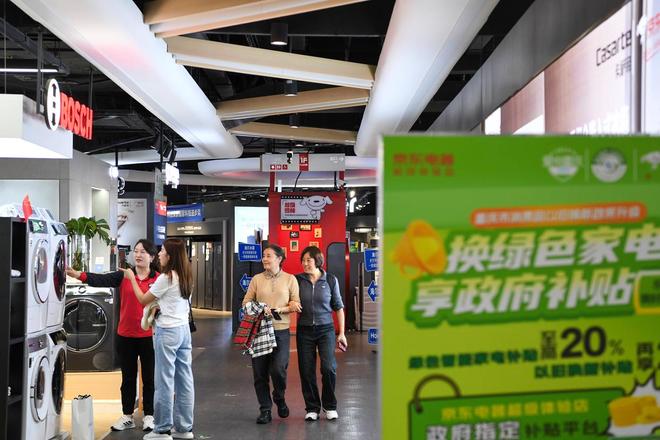
Core Insights - The article highlights the effectiveness of proactive fiscal policies in stimulating consumer demand in China, with a focus on the recent economic data released by the National Bureau of Statistics [2][3]. Economic Data Summary - In the first three quarters of this year, China's Consumer Price Index (CPI) slightly decreased by 0.1% year-on-year, while the core CPI, excluding food and energy, increased by 0.6%, with a notable rise of 1.0% in September, marking the first return to a 1% increase in nearly 19 months [2]. - Final consumption expenditure contributed 53.5% to economic growth, an increase of 9.0 percentage points compared to the previous year, reinforcing its role as a key driver of economic growth [2]. Policy Measures - The "Special Action Plan to Boost Consumption" was introduced in March, outlining 30 key tasks across eight areas, including actions to increase residents' income and enhance service consumption [3]. - The government allocated 300 billion yuan in special long-term bonds to support consumption, particularly through trade-in programs, which have led to double-digit growth in retail sales of household appliances and related goods [3]. Retail Performance - Retail sales of household appliances and audio-visual equipment increased by 4.4% year-on-year in the first three quarters, with a significant jump of 20.5% in September, marking a 17.1 percentage point acceleration from August [4]. - The automotive market is also showing signs of recovery, with over 8.3 million trade-in applications for vehicles submitted by September 10, averaging more than 30,000 applications per day [4]. Financial Policies - The central bank has implemented personal consumption loan interest subsidies and support for service industry loans, effectively reducing credit costs for residents and businesses, thereby stimulating consumption potential [4]. - There is a notable shift in consumer spending from goods to services, with service retail sales growing by 5.2% year-on-year in the first three quarters, outpacing goods retail sales [4]. Future Considerations - There is a need to solidify the foundation for consumer recovery, focusing on improving residents' income and optimizing income distribution to enhance consumption levels [5]. - Improving consumer expectations is crucial, as it significantly influences consumption decisions, and a coordinated policy framework is essential for maximizing the effectiveness of measures aimed at expanding domestic demand and promoting consumption [5].
核心CPI温和上涨,消费向好积极信号
Xin Jing Bao· 2025-10-20 10:39
Core Viewpoint - The latest economic data from the National Bureau of Statistics indicates a slight year-on-year decline of 0.1% in the Consumer Price Index (CPI) for the first three quarters of the year, while the core CPI, excluding food and energy, rose by 0.6%, reflecting the effectiveness of policies aimed at expanding domestic demand and promoting consumption [1] Group 1: Economic Growth and Consumption - Final consumption expenditure contributed 53.5% to economic growth in the first three quarters, an increase of 9.0 percentage points compared to the previous year, highlighting its role as a key driver of economic growth [1] - Consumption is identified as one of the "three drivers" of economic growth, playing a crucial role in stabilizing growth and improving livelihoods, with insufficient consumer demand being a core issue in the current macroeconomic landscape [1] Group 2: Policy Measures to Boost Consumption - The "Special Action Plan to Boost Consumption" introduced in March outlines 30 key tasks across eight areas, including actions to increase residents' income and improve service consumption [2] - The government has allocated 300 billion yuan in special long-term bonds to support consumption, particularly through trade-in programs, resulting in double-digit growth in retail sales of home appliances and audio-visual equipment [2] Group 3: Financial Policies and Consumer Behavior - The central bank has implemented personal consumption loan interest subsidy policies, effectively reducing credit costs for residents and businesses, thereby stimulating consumption potential [3] - Service retail sales grew by 5.2% year-on-year in the first three quarters, outpacing goods retail sales, indicating a shift towards service consumption [3] Group 4: Future Challenges and Coordination - There is a need to solidify the foundation for consumption recovery, focusing on improving residents' income and optimizing income distribution to enhance consumption levels [3] - Emphasizing the importance of coordinated and consistent policy measures to maximize the effectiveness of consumption-boosting strategies for sustainable economic development [4]
核心CPI温和上涨,消费向好积极信号 | 新京报快评
Xin Jing Bao· 2025-10-20 10:39
Core Insights - The article highlights the effectiveness of proactive fiscal policies in stimulating consumer demand in China, with a focus on the positive impact of the "trade-in" policy on household consumption [2][3]. Economic Data Summary - In the first three quarters of this year, China's Consumer Price Index (CPI) decreased by 0.1% year-on-year, while the core CPI, excluding food and energy, increased by 0.6%, with a notable rise of 1.0% in September, marking the first return to a 1% increase in nearly 19 months [2]. - Final consumption expenditure contributed 53.5% to economic growth, an increase of 9.0 percentage points compared to the previous year, reinforcing its role as a key driver of economic growth [2]. Policy Measures - The "Special Action Plan to Boost Consumption" was introduced in March, outlining 30 key tasks across eight areas, including income enhancement and service consumption improvement [3]. - The government allocated 300 billion yuan in special long-term bonds to support the trade-in policy, which has led to double-digit growth in retail sales of household appliances and audio-visual equipment [3]. Retail Performance - Retail sales of household appliances and audio-visual equipment increased by 4.4% year-on-year in the first three quarters, with a significant jump of 20.5% in September, marking a 17.1 percentage point acceleration from August [3][4]. - The smart home appliance sector saw growth rates exceeding 30% [4]. Automotive Sector - The automotive market is becoming increasingly active, with over 8.3 million trade-in applications submitted by September 10, averaging more than 30,000 applications per day [4]. Financial Policies - The central bank has implemented personal consumption loan interest subsidies and service industry loan interest subsidies, effectively reducing credit costs for residents and businesses, thereby stimulating consumption potential [4]. - Service retail sales grew by 5.2% year-on-year in the first three quarters, outpacing goods retail sales by 0.6 percentage points [4]. Future Considerations - Improving residents' income and optimizing income distribution are crucial for boosting consumption levels [5]. - Enhancing consumer expectations is also a key focus, as it significantly influences consumption decisions [5]. - A coordinated policy framework is essential to maximize the effectiveness of measures aimed at expanding domestic demand and promoting consumption [5].
9月份CPI环比上涨0.1% 消费市场运行总体平稳
Ren Min Ri Bao Hai Wai Ban· 2025-10-20 06:13
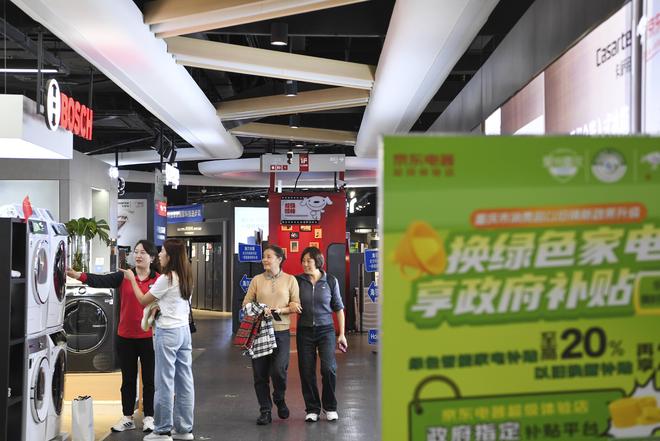
Group 1: Consumer Price Index (CPI) Insights - In September, the Consumer Price Index (CPI) increased by 0.1% month-on-month but decreased by 0.3% year-on-year, with the core CPI (excluding food and energy) rising by 1.0%, marking the fifth consecutive month of growth [1][2] - Food prices rose by 0.7% month-on-month, contributing approximately 0.13 percentage points to the CPI increase, while clothing prices increased by 0.8% due to seasonal changes [1] - Service prices declined by 0.3%, with significant drops in airfare, hotel accommodation, and tourism prices, collectively impacting the CPI by approximately 0.17 percentage points [1] Group 2: Producer Price Index (PPI) Insights - The Producer Price Index (PPI) remained flat month-on-month and decreased by 2.3% year-on-year, with the decline narrowing by 0.6 percentage points compared to the previous month [2][3] - The PPI's year-on-year decline was influenced by a lower comparison base from the previous year and the positive effects of macroeconomic policies, leading to price stabilization in certain industries [3] - Improvements in supply-demand structures and the impact of international oil price fluctuations contributed to the PPI trends, with coal processing prices rising by 3.8% month-on-month [2][3]
帮主郑重财经解读:前三季度GDP增5.2%,这几个信号比数字更关键
Sou Hu Cai Jing· 2025-10-20 04:14
Core Insights - China's GDP growth of 5.2% in the first three quarters is considered stable despite external economic pressures, with an increase of 136.8 billion yuan compared to the previous year [1][3] - The urban survey unemployment rate remained steady at 5.2%, indicating stability in employment, while per capita disposable income grew in line with GDP, reflecting real economic benefits for the population [3][4] - High-tech manufacturing and equipment manufacturing sectors showed significant growth rates of 9.6% and 9.7%, respectively, outpacing overall industrial growth, highlighting the emergence of new economic drivers [3][4] Economic Trends - Despite a slight decline in growth rate to 4.8% in the third quarter, China's economic performance remains strong compared to other major economies, with a total output of 35.5 trillion yuan in a single quarter [3][4] - Domestic demand is strengthening, evidenced by double-digit sales growth in home appliances and furniture driven by trade-in policies, alongside a recovering consumer market as indicated by a rising core CPI [3][4] - The innovation index has entered the global top ten for the first time, showcasing the development of new productive forces and economic resilience [4]

2025年前三季度全国居民消费价格(CPI)同比下降0.1%
Bei Jing Shang Bao· 2025-10-20 02:41
Core Insights - The National Bureau of Statistics reported a 0.1% year-on-year decline in the Consumer Price Index (CPI) for the first three quarters of the year [1] - The core CPI, excluding food and energy prices, increased by 0.6% year-on-year, with a 0.2 percentage point increase compared to the first half of the year [1] CPI Breakdown - Food, tobacco, and alcohol prices decreased by 0.8%, while clothing prices rose by 1.5% [1] - Housing prices increased by 0.1%, and prices for daily necessities and services rose by 0.6% [1] - Transportation and communication prices fell by 2.8%, while education, culture, and entertainment prices increased by 0.8% [1] - Medical care prices rose by 0.5%, and other goods and services saw a significant increase of 7.4% [1] - In September, the CPI decreased by 0.3% year-on-year but increased by 0.1% month-on-month [1] Producer Price Index (PPI) Insights - The Producer Price Index (PPI) for industrial producers fell by 2.8% year-on-year in the first three quarters [1] - In September, the PPI decreased by 2.3% year-on-year, with a narrowing decline of 0.6 percentage points compared to the previous month [1] - The purchase price index for industrial producers dropped by 3.2% year-on-year in the first three quarters [1] - In September, the purchase price index decreased by 3.1% year-on-year, with a narrowing decline of 0.9 percentage points compared to the previous month [1]