
人民币升值

Search documents
兴业证券:“年关”已过 港股新一轮攻势有望启动
智通财经网· 2026-01-05 10:58
第一,在年初保险"开门红"资金季节性流入的短期驱动,与2026年非上市险企切换IFRS9会计准则带来 的中长期配置逻辑共同作用下,港股仍是保险资金阶段性及中期配置的重要受益方向。第二,不用过分 担忧内地公募基金投资向业绩基准回归带来的影响,核心仍是梧桐树自引金凤凰,港股拥有越来有多的 优质资产,将推动基金增加港股在基准中的比例并吸引更多类型的资金流入港股。 智通财经APP获悉,兴业证券发布研报称,11月下旬以来,港股受到临近年末港股南下资金流入放缓的 影响走弱。港股市场情绪回落至低位,风险收益比显著改善,大型科技股的卖空资金悄然出现平仓迹 象。年末内资流入放缓带来的扰动过去,内地低利率环境下,港股优质资产继续受益于内地财富再配 置。 兴业证券主要观点如下: 一、回顾:11月下旬以来,港股受到临近年末港股南下资金流入放缓的影响走弱。南下资金流入减少的 情况下,港股资金层面短期产生一定的合成谬误或者说"鬼故事",进一步影响市场风险偏好。前期最流 行的三个担忧是,第一,外资在圣诞长假前的降仓、获利了结;第二,对冲基金利用年底的各种不确定 性和消费、投资、地产等欠佳的数据而做空;第三,市场担忧内地基金新规即投资向业绩 ...

和讯投顾陈爱国:大盘突破4000点,牛市真的来了!
Sou Hu Cai Jing· 2026-01-05 10:09
1月5日,和讯投顾陈爱国表示,大盘成功突破4000点,此时有人高呼风险降临,但我却坚定地认为,牛 市才刚刚拉开帷幕,4000点不过是一道开胃小菜。接下来,我将从汇率、资金、技术这三个关键维度, 为大家剖析为何如此看好后市行情。 所以,大家别再被"恐高"情绪所困扰,4000点之后,下一目标或许就是4500点,甚至5000点。明天,我 将为大家详细拆解牛市下半场的布局策略,究竟是继续追科技股,还是抄底白马股? 首先,人民币升值引发了资产重估浪潮。近期,人民币净值强势升破7.0大关,一举创下两年新高。这 一升值现象的背后,是外资对中国资产重新定价的积极信号。回顾历史数据,每当人民币升值1%,A 股估值就可能随之提升3% - 5%。在当前全球"去美元化"进程加速的大背景下,中国经济呈现出"东升西 降"的良好态势,人民币资产已然成为全球资金的避风港,外资持续流入A股就是最有力的证明。就像 2015年,北向资金净流入创下三年新高,这些嗅觉敏锐的"聪明钱"正争分夺秒地抢筹A股,行业增量资 金不断涌入,驱动着慢牛格局的形成,而充足的资金面正是牛市得以持续的坚实根基。 其次,资金面的积极变化为牛市提供了强大动力。当前,A股融资 ...
2026一开门,大佬们就忙着加仓
Ge Long Hui· 2026-01-05 08:57
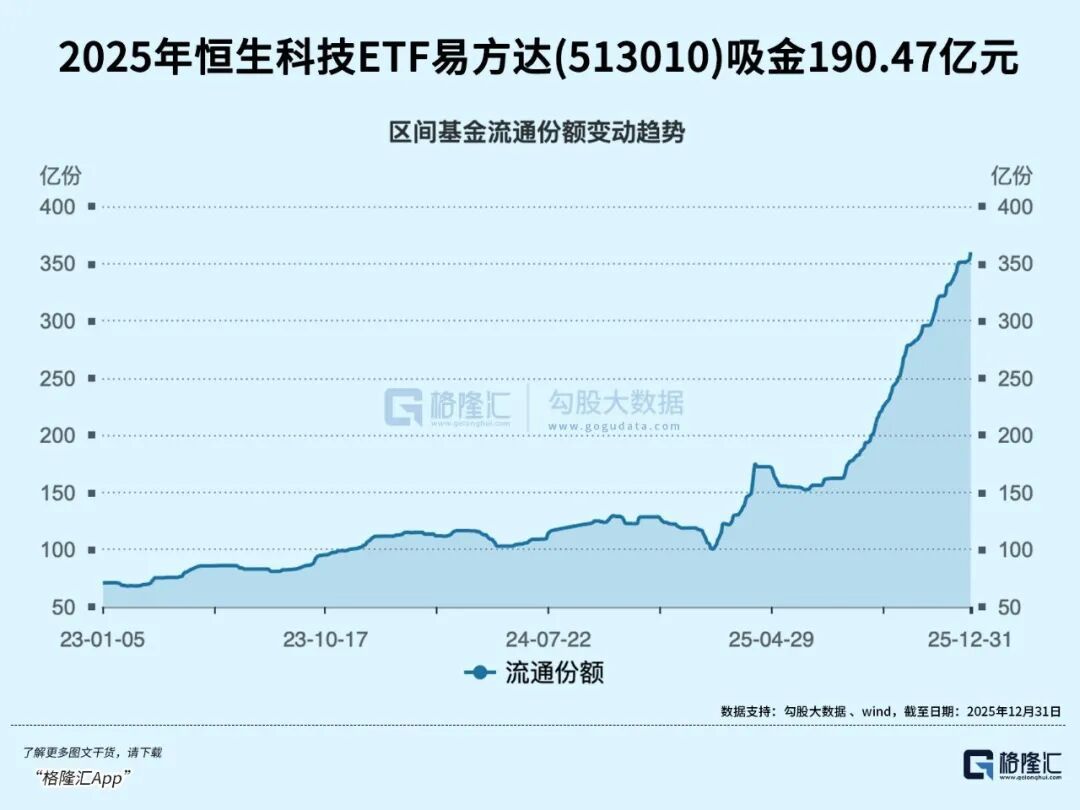
Group 1 - The core viewpoint of the article highlights the strong performance of the Hong Kong stock market, particularly the technology sector, driven by multiple factors including currency appreciation, capital inflows, and favorable policies [1][5][41] - The Hong Kong Technology Index saw a significant increase, with the Hang Seng Technology Index rising over 4% on the first trading day of the year [1][3] - The Chinese Yuan has appreciated against the US dollar, breaking the "7" psychological barrier, which reflects a fundamental shift in confidence and expectations regarding the Chinese economy [8][9][10] Group 2 - The appreciation of the Yuan has led to an increase in the intrinsic value of Chinese companies listed in Hong Kong, making them more attractive to investors [10][11] - In 2025, net inflows from mainland investors through the Hong Kong Stock Connect exceeded 1.4 trillion HKD, a 73.89% increase from the previous year, indicating strong demand for Hong Kong stocks [15][16] - Both domestic and foreign capital are favoring large-cap and technology stocks, with significant net purchases of companies like Alibaba, Tencent, and Meituan [20][22] Group 3 - The technology sector is particularly favored due to improved profit margins and cash flows following cost-cutting measures, as well as advancements in AI applications [26][27] - The Hang Seng Technology Index's dynamic P/E ratio is currently at 22.57, below its historical average, indicating a potential for value recovery [34][35] - The article suggests that the combination of currency strength, policy support, and technical corrections creates a conducive environment for a rebound in the Hong Kong technology sector [41][42]

人民币升值不是利好,也不是利空,而是一次全球规则切换!
Xin Lang Cai Jing· 2026-01-05 05:39
Core Viewpoint - The appreciation of the Renminbi (RMB) is not a positive or negative signal but represents a shift in global rules, as it breaks through the 7.0 mark and enters the "6" range [1][2]. Group 1: Market Reactions - There is a consistent narrative that regardless of whether the RMB rises or falls, the conclusion drawn is that "the Chinese economy is about to collapse," raising questions about the validity of this logic [1][2]. - The analysis highlights the absurdity of the "double standard" narrative that claims economic collapse can occur regardless of currency fluctuations [1][2]. Group 2: Currency Dynamics - The short-term fluctuations of the RMB are influenced by external factors, particularly the "tide of the US dollar," which plays a significant role in the currency's movement [1][2]. - The purchasing power disparity is emphasized, illustrating that $100 may be insufficient in the West but is considered a substantial amount in China, indicating a potential revaluation of the RMB [1][2]. Group 3: Trust and Financial Systems - The article discusses the erosion of trust in traditional financial systems, with SWIFT being weaponized and US Treasury bonds viewed as a "terrorist lover," leading to global capital concerns [1][2]. - New payment systems like CIPS and BRICS payment mechanisms are emerging as alternatives in response to these fears [1][2]. Group 4: Underlying Economic Shifts - The fundamental strength behind the RMB's appreciation is its transition from a mere financial contract to a priority claim on the "world's strongest real economy," signifying a deeper economic revolution [1][2]. - This transformation is not just numerical but represents a silent revolution regarding the sources of "security" in the future world [1][2].
景兴纸业:人民币升值对公司会有积极影响
Sou Hu Cai Jing· 2026-01-05 03:48
有投资者在互动平台向景兴纸业提问:"董秘您好,人民币大幅升值,对贵公司业绩会产生积极影响 吗?" 针对上述提问,景兴纸业回应称:"尊敬的投资者: 感谢您的关注。公司有部分原料进口,进口原料中 也有用美元计价的,人民币升值对公司会有积极影响。祝您新的一年投资顺利!" 来源:市场资讯 声明:市场有风险,投资需谨慎。本文为AI基于第三方数据生成,仅供参考,不构成个人投资建议。 ...

人民币升值态势亮眼,A股有望受益,关注中证A500ETF(159338)
Mei Ri Jing Ji Xin Wen· 2026-01-05 01:53
上周A股反复震荡,沪指创下十一连阳,为2025年行情画上句号。2025年沪指累计涨18.41%,一度收复4000点,创十年新高;创业板指大涨49.57%; 中证A500上涨22.43%, "科技牛"行情贯穿全年,通信、存储芯片、有色金属等方向领涨。 2026年港股首个交易日喜迎"开门红"。 恒生指数收涨2.76%,创下2009年以来最强开局表现,恒生科技指数涨幅更是高达4%。继港股"开门红"后, 2026年A股首个交易日或值得期待! 以上观点仅供参考,不构成投资建议或承诺。如需购买相关基金产品,请您关注投资者适当性管理相关规定、提前做好风险测评,并根据您自身的风 险承受能力购买与之相匹配的风险等级的基金产品。基金有风险,投资需谨慎。 投资人应当充分了解基金定期定额投资和零存整取等储蓄方式的区别。定期定额投资是引导投资人进行长期投资、平均投资成本的一种简单易行的投 资方式。但是定期定额投资并不能规避基金投资所固有的风险,不能保证投资人获得收益,也不是替代储蓄的等效理财方式。 无论是股票ETF/LOF基金,都是属于较高预期风险和预期收益的证券投资基金品种,其预期收益及预期风险水平高于混合型基金、债券型基金和货币 ...
交运周专题2026W1:委内瑞拉地缘波动托底油运,人民币升值交运几何?
Changjiang Securities· 2026-01-05 01:17
Investment Rating - The report maintains a "Positive" investment rating for the transportation industry [12] Core Insights - The geopolitical risks surrounding Venezuela are expected to support oil transportation during the off-peak season, with a recommendation for companies like China Merchants Energy and COSCO Shipping Energy [6][21] - The appreciation of the Renminbi is anticipated to benefit the transportation sector, particularly in three key areas: companies with significant dollar-denominated debt will gain from exchange rate benefits, increased purchasing power will boost outbound tourism and consumption, and lower dollar-denominated costs will improve profitability [7][35][42] Summary by Sections Geopolitical Risks and Oil Transportation - The U.S. has implemented significant sanctions against Venezuela, leading to a temporary halt in its oil exports, which are projected to be 700,000 barrels per day in 2024, accounting for 1.8% of global oil exports [6][21] - The sanctions may tighten heavy oil supply for China and the U.S., prompting increased imports from Middle Eastern and Latin American countries, thus raising compliant oil transportation demand [6][21] Renminbi Appreciation and Opportunities in Transportation - As of January 2, 2026, the Renminbi has appreciated by 1.4% against the U.S. dollar since December 2025, with expectations for continued appreciation due to anticipated interest rate cuts by the Federal Reserve [7][30][32] - The report categorizes beneficiaries into three tiers: companies with large dollar debts benefiting from exchange rate gains, increased outbound tourism boosting international flight revenues, and reduced costs for aviation fuel leading to improved profitability [7][35][42] Travel Demand and Market Performance - During the New Year holiday, domestic passenger traffic saw a 10% year-on-year increase, while international passenger traffic rose by 9% [8][57] - The average domestic passenger load factor improved by 6.0 percentage points year-on-year, and international load factors increased by 4.8 percentage points [8][63] Logistics and Freight Trends - The volume of express deliveries has shown a slight decline, with a 0.5% year-on-year decrease in the number of packages collected [9] - Despite the decline in express delivery growth, the logistics sector is expected to see a shift towards leading companies like ZTO Express and YTO Express due to a restructuring of the e-commerce ecosystem [9]


十大券商一周策略:A股市场有望迎接春季“开门红”,重视“有故事”、“有业绩”的弹性机会
Jin Rong Jie· 2026-01-05 00:31
Group 1 - The overall sentiment for the A-share market in 2026 is optimistic, with expectations for a "good start" driven by policy support, RMB appreciation, and new capital inflows [1][6][12] - The structural bull market in 2025 was characterized by significant performance, ranking third in the past decade, driven by a reassessment of China's technological capabilities and resilient external demand [2][3] - The balance between external and internal demand is expected to be a key factor in 2026, with policies aimed at boosting domestic consumption and stabilizing investment [2][7] Group 2 - The market is anticipated to experience upward fluctuations in early 2026, supported by low investor sentiment and a lack of major unexpected risks [3][4] - Key sectors for investment include AI technology, domestic consumption, non-bank financials, and cyclical products with pricing logic [1][9] - The technology sector is expected to continue its strong performance, with a focus on semiconductor and AI-related industries, as well as emerging themes like commercial aerospace and robotics [9][41] Group 3 - The recent increase in cross-regional travel during the New Year holiday indicates a strong recovery in consumer sentiment, which may positively impact the market [11][12] - The A-share market is likely to maintain a structural trend, with a focus on sectors that can benefit from policy changes and economic recovery [12][19] - The anticipated liquidity improvements and policy support are expected to enhance market confidence and drive investment in high-growth sectors [27][28]
人民币升值-如何引领本轮牛市
2026-01-04 15:35
Summary of Conference Call Notes Industry Overview - The discussion centers around the impact of the appreciation of the Renminbi (RMB) on the Chinese economy and its potential to lead to a bull market in 2026, marking a significant turning point for China as it transitions from a period of economic stagnation to prosperity [2][4][8]. Key Points and Arguments 1. **RMB Appreciation as a Catalyst** - The appreciation of the RMB is seen as a key opportunity for China to transition towards prosperity, with expectations that it may break previous highs of 6.8 and potentially reach 6.3 in the coming years [2][4]. 2. **Strong Export Capacity** - The long-term appreciation of the RMB is attributed to China's robust export capabilities, which emerged as the country entered its industrialization maturity phase around 2018. This pattern has historical parallels in the U.S. post-1945 and Japan post-1975 [2][4][5]. 3. **Capital Reflow** - Approximately 16 trillion RMB that flowed out during the depreciation phase is expected to return, supporting the appreciation trend even if corporate currency settlement decreases in the future [4][6]. 4. **Economic Recovery in 2026** - 2026 is projected to be a pivotal year for the Chinese economy, benefiting from potential Federal Reserve rate cuts and the possibility of quantitative easing (QE) by the People's Bank of China (PBOC), which would help restore cash flow and balance sheets in the real economy [8][11]. 5. **Asset Recovery** - The cash flow statements and balance sheets of China's real sector are gradually improving, aided by anti-involution policies and expected QE measures, which could lead to a return to the prosperity cycle that began in 2019 [11][12]. 6. **Investment Recommendations** - There is a strong recommendation to invest in RMB-denominated assets, particularly in sectors such as non-ferrous metals, new consumption, and high-end manufacturing. The A-share market is expected to reach new highs, and there is optimism for the Hong Kong stock market as well [9][13][14]. 7. **Concerns Over Export Constraints** - Concerns that RMB appreciation might hinder exports are deemed unfounded, as the strong export capacity is the cause of appreciation rather than a consequence [5]. 8. **Long-term Economic Strategy** - The necessity of timely debt resolution is emphasized, drawing lessons from Japan's economic stagnation in the 1990s. The discussion highlights the importance of addressing debt to maximize profits and ensure economic stability [12]. Additional Important Insights - The anticipated shift in U.S. monetary policy towards QE could create favorable conditions for the RMB, allowing the PBOC to implement its own QE strategies to alleviate domestic corporate burdens [12]. - The overall sentiment is optimistic regarding RMB-related assets, with strategic asset allocation advised to navigate future market changes effectively [14].
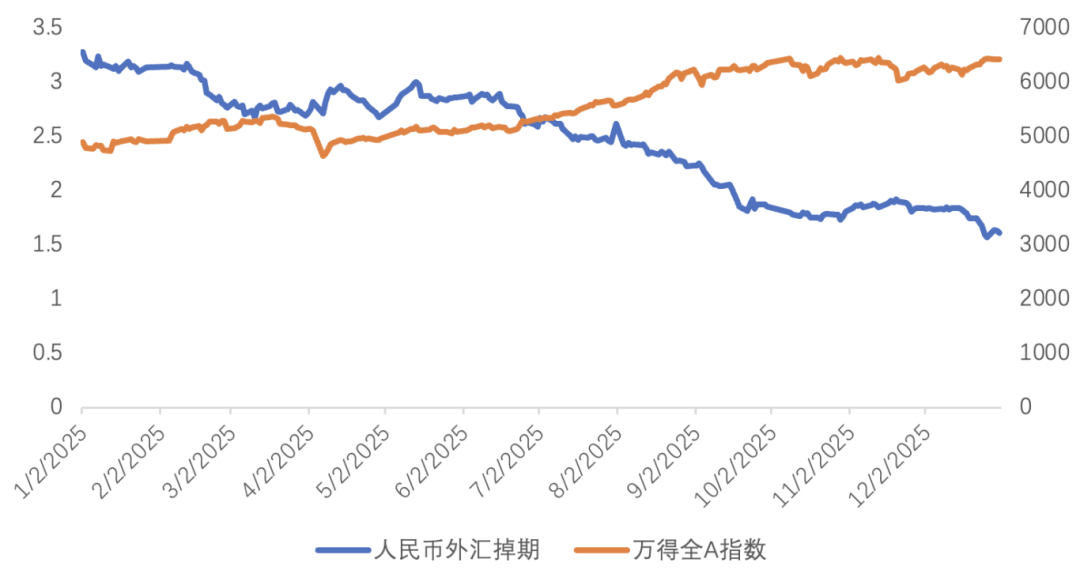
产业经济周观点:看好恒科-20260104
Huafu Securities· 2026-01-04 12:55
Group 1 - The report highlights that the Chinese economy is showing signs of improvement, with the three major PMI indices rising into the expansion zone. In December 2025, the manufacturing PMI, non-manufacturing business activity index, and composite PMI output index were 50.1%, 50.2%, and 50.7%, respectively, marking increases of 0.9, 0.7, and 1 percentage points from the previous month [8]. - The manufacturing PMI has returned to expansion, with significant improvements in both production and demand. The production index was at 51.7% (+1.7), and the new orders index was at 50.8% (+1.6), both surpassing the critical point [8]. - The report indicates that policy coordination is expected to strengthen economic recovery, with a focus on fiscal preemptive measures and continued liquidity easing. This is anticipated to enhance market confidence in the ongoing economic recovery [8]. Group 2 - The report notes that the Hong Kong stock market experienced a decline in December 2025, with the Hang Seng Index falling by 0.88%, the Hang Seng China Enterprises Index down by 2.37%, and the Hang Seng Technology Index decreasing by 1.48% [15]. - Despite the overall decline, the military industry sector, commercial aerospace, and rare earth permanent magnets showed strong performance, leading the market [16]. - The report emphasizes that the advanced manufacturing sector, cyclical industries, and technology sectors saw significant gains, while the pharmaceutical and medical sectors experienced deeper declines [22][31]. Group 3 - The report highlights that foreign capital index futures positions weakened, with net short positions in IC, IF, and IM expanding, while IH net positions remained at zero [42]. - The report also mentions that the onshore and offshore RMB swap rates have declined, with the domestic bond plus swap yield lower than the US Treasury yield [45]. Group 4 - Upcoming key events include the US non-farm payroll and ISM PMI data, which are expected to be closely monitored in the coming week [47].