
新消费

Search documents
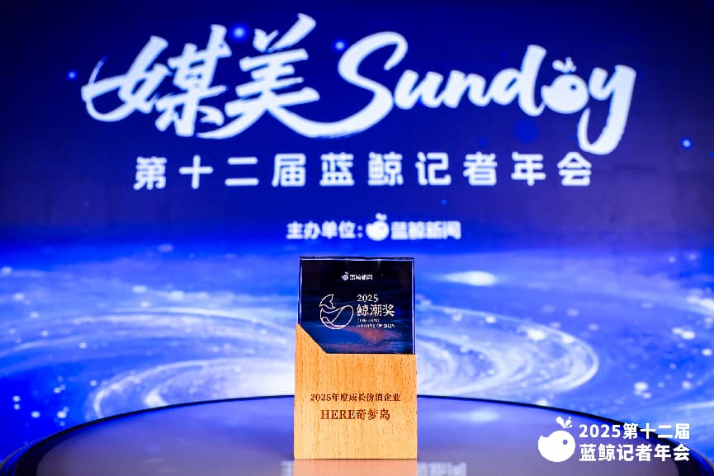
HERE奇梦岛荣膺“2025鲸潮奖·年度成长价值企业”
Jin Rong Jie· 2025-12-23 02:50
Core Insights - HERE Qimeng Island won the "Annual Growth Value Enterprise" award at the "2025 Whale Tide Award" for its innovative practices and rapid growth in the consumer sector, highlighting its recognized growth momentum and business model by industry authorities [1][4]. Group 1 - HERE Qimeng Island focuses on the "IP + Scene + Product" core strategy, targeting the young consumer market through original IP incubation, immersive experiences, and innovative marketing [2][3]. - The company has achieved significant brand value and user scale growth, exemplified by the success of its popular IP series "WAKUKU" and the rapid establishment of diverse business formats such as pop-up stores and collaborations [2][3]. - The award reflects HERE Qimeng Island's commitment to continuous innovation in the new consumption wave and its potential for future growth [4]. Group 2 - The "Whale Tide Award" aims to gather leading companies, investors, and industry experts in the consumer sector to identify resilient growth forces and provide guidance for the upgrade of the new consumption industry [4].

有基金已大赚200%!新经济“三剑客”2026年难再疯
Bei Jing Shang Bao· 2025-12-23 02:13
Core Insights - The article discusses the significant investment opportunities and market enthusiasm surrounding the "three swordsmen" of the new economy: AI, innovative pharmaceuticals, and new consumption, which have driven substantial stock price increases and fund performance in 2025 [1][5][11]. AI Sector - The AI sector has seen explosive growth, with companies like DeepSeek leading the charge, resulting in substantial stock price increases for key players such as NewEase, Zhongji Xuchuang, and Tianfu Communication, which rose by 463.08%, 402.48%, and 244.58% respectively by December 22 [3][5]. - Fund managers have recognized the potential of AI early on, with significant investments made in AI-related stocks, leading to impressive fund performance, including the top-performing fund achieving a return of over 200% [6][9]. Innovative Pharmaceuticals - The innovative pharmaceutical sector has experienced a breakthrough, with Chinese companies gaining international attention for their high efficiency and cost-effectiveness in drug development. Notable stocks like WuXi Biologics and Hengrui Medicine saw annual increases of 88.72% and 33.22% respectively by December 22 [5][11]. - Fund managers are optimistic about the long-term growth potential of innovative pharmaceuticals, with strategies focusing on identifying companies with strong growth cycles and market positioning [7][15]. New Consumption - The new consumption sector has been characterized by significant trends, such as the popularity of products like Labubu and the rise of brands catering to younger consumers. Stocks in this sector, including Pop Mart and Mijia Group, saw annual increases of 197.7% and 114.81% respectively [5][12]. - However, there are concerns about the sustainability of growth in this sector, as evidenced by a decline in stock prices for leading companies in the latter half of the year, indicating potential overvaluation and market corrections [12][16]. Market Trends and Future Outlook - The article highlights a shift in market sentiment from enthusiasm to caution, particularly in the new consumption sector, with expectations that investment will focus more on sustainable business models and profitability moving into 2026 [16]. - For AI and innovative pharmaceuticals, the outlook remains positive, with expectations of continued growth, although the difficulty in selecting the right investments may increase [14][15].

浙商证券浙商早知道-20251223
ZHESHANG SECURITIES· 2025-12-22 23:30
Market Overview - On December 22, the Shanghai Composite Index rose by 0.69%, the CSI 300 increased by 0.95%, the STAR 50 climbed by 2.04%, the CSI 1000 went up by 1.07%, the ChiNext Index surged by 2.23%, and the Hang Seng Index gained 0.43% [4][5] - The best-performing sectors on December 22 were telecommunications (+4.28%), comprehensive (+2.63%), electronics (+2.62%), non-ferrous metals (+2.38%), and retail (+1.37%). The worst-performing sectors included media (-0.61%), banking (-0.52%), beauty and personal care (-0.45%), light industry manufacturing (-0.45%), and textiles and apparel (-0.4%) [5] - The total trading volume for the entire A-share market on December 22 was 1.8822 trillion yuan, with a net inflow of 3.125 billion Hong Kong dollars from southbound funds [5] Important Recommendations Zhaowei Electromechanical (003021) - The company is a leader in micro transmission systems, with growth opportunities in humanoid robots, XR, and automotive electronics. Projected revenues for 2025-2027 are 1,897.64 million, 2,408.98 million, and 3,137.44 million yuan, with revenue growth rates of 24.47%, 26.95%, and 30.24% respectively. Net profit is expected to be 283.70 million, 404.12 million, and 529.02 million yuan, with growth rates of 26.03%, 42.45%, and 30.91% [6][9] - Catalysts include the release of a new generation of dexterous hands and new XR headsets from leading manufacturers [6][9] Weike Technology (301196) - The company is positioned as a leader in precision injection molding, with a stable main business and collaborations with leading clients to enhance the value of its MPO segment and humanoid robots. Projected revenues for 2025-2027 are 2,274 million, 2,801 million, and 3,329 million yuan, with growth rates of 25.0%, 23.2%, and 18.8% respectively. Net profit is expected to be 278 million, 355 million, and 456 million yuan, with growth rates of 26.2%, 27.6%, and 28.3% [7][11] - Key drivers include the rapid growth of the new energy sector and the demand for AI computing power [10][11] Leshush (02698) - The company focuses on the African market for baby pants and sanitary products, leveraging product strength and localized operations to build a solid competitive advantage. Projected revenues for 2025-2027 are 540 million, 650 million, and 760 million USD, with growth rates of 19%, 19%, and 18% respectively. Net profit is expected to be 110 million, 130 million, and 160 million USD, with growth rates of 14%, 22%, and 19% [12][13] - Catalysts include the increasing penetration of baby pants and sanitary products in emerging markets [12][13] Key Insights Food and Beverage Industry - The report indicates a somewhat pessimistic market outlook for the food and beverage sector, primarily due to significant pressures on the liquor industry this year. However, it suggests that there are investment opportunities in the liquor sector for the upcoming year, particularly as performance expectations may have bottomed out [14][15] - The report emphasizes the importance of monitoring inventory turning points and the potential for new consumption trends to continue despite recent adjustments [14][15]
港股收盘 | 恒指收涨0.43% 光通信、半导体股表现亮眼 有色金属全天强势
Zhi Tong Cai Jing· 2025-12-22 08:52
Market Overview - The Hong Kong stock market experienced fluctuations, with the Hang Seng Index closing up 0.43% at 25,801.77 points and a total trading volume of HKD 169.77 billion [1] - The market is currently in a left-side layout phase, with strong expectations for a spring rally, although there are supply and demand pressures towards the end of the year [1] Blue Chip Performance - Semiconductor company SMIC (00981) led blue-chip gains, rising 5.92% to HKD 68.9, contributing 27.67 points to the Hang Seng Index [2] - Other notable blue-chip performers included Zijin Mining (02899) up 5.3% and Pop Mart (09992) up 4.61%, while WuXi AppTec (02359) and Hang Lung Properties (00101) saw declines [2] Sector Highlights - Large technology stocks generally rose, with Alibaba up 0.76% and Tencent up 0.08% [3] - The metals sector saw significant gains, with gold, silver, and copper prices rising sharply, and companies like Jiexin International Resources (03858) and Chalco International (02068) posting substantial increases [4] - The new consumption sector was active, with companies like Mixue Group (02097) and Pop Mart (09992) showing strong performance [5][6] Robotics and Autonomous Driving - Robotics stocks were active, with companies like Shou Cheng Holdings (00697) and UBTECH (09880) seeing gains, driven by positive media coverage and project wins [6] - The autonomous driving sector continued to gain momentum, with companies like Pony.ai (02026) and WeRide (00800) experiencing price increases following regulatory approvals for L3 autonomous vehicles [7] New Stock Listings - Four new stocks debuted on the Hong Kong market, all experiencing declines on their first day, with Ming Kee Hospital (02581) dropping 49.46% [8] - China Duty Free Group (01880) saw a strong performance, rising 15.77% following positive sales data from Hainan's duty-free shopping [9] Company-Specific Developments - Yujian (02432) faced downward pressure, dropping 4.84% amid upcoming share unlocks and a recent large-scale share placement [10]

“新消费试验场”蕴藏“供需密码” 以“新”取胜撬动经济新增长点
Yang Shi Wang· 2025-12-22 08:07
Core Insights - The article highlights the transformation of dining experiences in the hot pot industry, particularly focusing on a small hot pot restaurant in Changsha's Wuyi commercial district, which has adapted to changing consumer preferences for individual dining experiences [1][4][6]. Group 1: Consumer Trends - The Wuyi commercial district is referred to as a "new consumption test field," with over 20,000 commercial outlets, showcasing the latest trends in consumer behavior [1]. - The small hot pot restaurant has shifted from traditional large tables to individual seating arrangements, reflecting a change in dining preferences [4][6]. - The restaurant's revenue increased significantly after the transition, with weekday earnings rising from 2,000-3,000 yuan to 7,000-10,000 yuan [6]. Group 2: Product Development - The restaurant has engaged its customer base by allowing them to vote on new menu items, accumulating over 2 million consumer data points [8][10]. - New product testing involves customer tasting sessions, ensuring that the menu aligns with consumer preferences [10]. - The introduction of a dual-flavor pot caters to diverse taste preferences, demonstrating a focus on customization [12]. Group 3: Supply Chain and Production - The hot pot base factory has developed over 20 new flavors, including innovative options like "passion fruit sour soup base," indicating a trend towards unique and seasonal offerings [20][21]. - The factory has implemented a flexible production system to accommodate varying recipes and temperature requirements, enhancing operational efficiency [23]. - The demand for hot pot base products has surged, with annual sales growth of nearly 30%, serving around 200 restaurants [23].

蜜雪冰城洛杉矶好莱坞店正式开业,机构称或可关注新消费结构性机会
Mei Ri Jing Ji Xin Wen· 2025-12-22 05:58
东兴证券指出,2025年新消费投资情绪经历了从狂热到谨慎的过程。2026年政策的持续加码有望提振消 费信心,对于新消费领域的投资将从纯粹的短期叙事回归商业模式与盈利壁垒,投资者会倾向寻找那些 真正能够构建稳固的商业模式,盈利模式可持续的公司。该行认为新消费行业会向三个趋势和两个维度 的方向发展。三个趋势是健康化、新实用主义和情绪消费,两个维度是智能化和消费出海,建议积极关 注相关方向的投资机会。 12月22日,港股三大指数早盘冲高回落,截至午间收盘,恒指涨0.20%,国企指数涨0.27%,恒生科技 指数涨0.89%。港股消费板块较为活跃,港股消费ETF(513230)现小幅上扬。 北京时间12月20日,蜜雪冰城洛杉矶好莱坞店正式开业。门店不仅延续"高质平价"优势,更针对美国消 费者偏好推出最高200%糖度选择,搭配1.19美元起的亲民定价,开业当天便引发打卡热潮。作为中国 茶饮出海的"先行者",蜜雪冰城的全球化布局已深耕多年。公开资料显示,2018年,品牌在越南河内开 出海外首店,正式开启国际化征程。截至目前,其海外门店已覆盖13个国家,数量约4700家,蜜雪集团 全球门店总数超5.3万家,稳居全球现制饮品行 ...

港股午评:恒指涨0.2%、科指涨0.89%,芯片股、黄金股及新消费概念股集体走高,科网股走势分化
Jin Rong Jie· 2025-12-22 04:09
12月22日,港股股指高开冲高后大幅回撤,午前再度震荡上行,截止午盘,恒生指数涨0.2%报25742.24 点,恒生科技指数涨0.89%报5528.05点,国企指数涨0.27%报8925.39点,红筹指数涨0.37%报4066.49 点。 盘面上,大型科技股走势分化,阿里巴巴涨0.83%,腾讯控股跌0.08%,京东集团涨0.99%,小米集团跌 2.12%,网易跌0.75%,美团跌0.1%,快手涨0.6%,哔哩哔哩涨0.73%;芯片股走强,中芯国际涨超 7%,华虹半导体涨逾5%;黄金股普涨,灵宝黄金、中国黄金国际涨超6%,山东黄金、赤峰黄金涨逾 4%;新消费概念多数上涨,蜜雪集团涨超9%;今日四只新股上市,印象大红袍、华芢生物、明基医 院、南华期货挂牌,集体破发。 企业新闻 顺丰控股(06936.HK):11月速运物流业务、供应链及国际业务合计收入为271.73亿元,同比增长 7.85%。其中速运物流业务收入同比增长9.88%,业务量同比增长20.13%。 首都创投(02324.HK):预计截至2025年9月30日止年度(本年度)取得未经审核综合净溢利约1.15亿港元至 1.4亿港元,同比扭亏。主要由于上市股权 ...
新消费概念普遍活跃 近期密集政策提振消费 机构称关注新消费结构性机会
Zhi Tong Cai Jing· 2025-12-22 04:01
Group 1 - New consumption concept stocks are generally active, with notable increases in stock prices for companies such as Mixue Group (+7.29% to HKD 423.8), Laopu Gold (+5.02% to HKD 691), Guoquan (+5.09% to HKD 3.51), and Pop Mart (+3.89% to HKD 200.4) [1] - Recent policies related to consumption have been frequently released, with the Central Economic Work Conference emphasizing the importance of domestic demand and the construction of a strong domestic market as a key task for the upcoming year [1] - An article in "Qiushi" magazine highlights the strategic significance of expanding domestic demand, underscoring its foundational role in overall development [1] Group 2 - Dongxing Securities notes that the investment sentiment in new consumption will transition from enthusiasm to caution by 2025, with continued policy support in 2026 expected to boost consumer confidence [2] - The new consumption industry is anticipated to evolve towards three trends: health-oriented consumption, new pragmatism, and emotional consumption, alongside two dimensions: intelligence and overseas consumption [2] - Investors are encouraged to focus on companies that can establish solid business models and sustainable profit mechanisms in the new consumption sector [2]

港股异动 | 新消费概念普遍活跃 近期密集政策提振消费 机构称关注新消费结构性机会
智通财经网· 2025-12-22 03:49
Group 1 - New consumption concept stocks are generally active, with notable increases in stock prices for companies such as Mixue Group (+7.29% to HKD 423.8), Laopu Gold (+5.02% to HKD 691), Guoquan (+5.09% to HKD 3.51), and Pop Mart (+3.89% to HKD 200.4) [1] - Recent policies related to consumption have been frequently released, with the Central Economic Work Conference emphasizing the importance of domestic demand and the construction of a strong domestic market as a key task for economic work in the coming year [1] - An article in "Qiushi" magazine highlights the strategic significance of expanding domestic demand, underscoring its foundational support for overall development [1] Group 2 - Dongxing Securities notes that the investment sentiment in new consumption will transition from enthusiasm to caution by 2025, with continued policy support in 2026 expected to boost consumer confidence [2] - The new consumption industry is anticipated to evolve towards three trends: health-oriented consumption, new pragmatism, and emotional consumption, alongside two dimensions: intelligence and overseas consumption [2] - Investors are encouraged to focus on companies that can establish solid business models and sustainable profit structures in the new consumption sector [2]
投顾晨报:沪指三连阳,依旧震荡-20251221
Orient Securities· 2025-12-21 14:11
Market Overview - The Shanghai Composite Index experienced a rebound with three consecutive days of gains, but overall trading volume remained low, indicating a continued state of market fluctuation [9] - Market participants are adopting a conservative mindset as the year-end approaches, leading to reduced trading willingness and a faster rotation of sectors [9] Industry Strategy: Food and Beverage - Despite recent adjustments in the food and beverage sector, there is still fundamental support for new consumption in the short term, with stock prices showing absolute return potential [9] - The market's expectations for consumption remain relatively low, with the food and beverage sector characterized by low positions and low performance expectations, making valuations attractive [9] - It is anticipated that the food and beverage sector will transition from valuation-driven growth to performance-driven growth in 2026, with risks expected to clear by then [9] - Recommended stocks include Miaokelan Duo (600882, Buy), Anjixin Food (603345, Not Rated), and Luzhou Laojiao (000568, Buy) [9] Industry Strategy: Humanoid Robots - Significant advancements in motion control technology for humanoid robots are expected in 2025, with mass production becoming a key focus in 2026 [9] - Recent demonstrations by Tesla and Yush Robot highlight rapid progress in motion control capabilities [9] - The most significant challenge for mass production is the development of brain models, with expectations for faster production rates in the first half of 2026 [9] - Companies with strong manufacturing and management capabilities in component production are likely to benefit from this trend [9] - Recommended stock includes Top Group (601689, Buy) [9]