
以旧换新政策

Search documents
行业回暖加速业绩上行 中国重汽三季度营收、净利创五年同期最好水平
Zheng Quan Shi Bao Wang· 2025-10-30 12:06
Core Viewpoint - China National Heavy Duty Truck Group (China National Heavy Duty Truck) reported strong financial performance in Q3 2025, with significant year-on-year growth in revenue and profit metrics, indicating robust demand in the heavy truck industry despite seasonal trends [1][2]. Financial Performance - For the first three quarters of 2025, the company achieved revenue of 40.49 billion yuan, a year-on-year increase of 20.6%, and a net profit attributable to shareholders of 1.05 billion yuan, up 12.5% [1]. - In Q3 alone, revenue, net profit, and net profit excluding non-recurring items grew by 56.0%, 21.0%, and 30.9% year-on-year, respectively, with sequential growth of 8.1%, 6.5%, and 7.1% compared to Q2 [1]. Industry Context - The heavy truck industry experienced a "not-so-dull" traditional off-season, supported by policies encouraging vehicle upgrades and industry transformation [1]. - According to the China Association of Automobile Manufacturers, heavy truck sales in China reached 822,800 units in the first three quarters of 2025, reflecting a year-on-year growth of 20.49% [1]. Product Development - The company launched the new generation Huanghe H7 high-end heavy truck, which received strong market recognition, indicating successful product innovation [1]. - In the new energy sector, the company is leveraging its R&D capabilities to introduce products like the Howo TS7 extended-range heavy truck, anticipating growth in electric transportation for short to medium distances [2]. Export Business - The export segment remains a stronghold for the company, with products reaching markets in Africa, Southeast Asia, Central Asia, and the Middle East [2]. - In the first three quarters, the company exported 111,000 heavy trucks, with September alone seeing a record export of 15,000 units, marking a new high for the domestic heavy truck industry [2]. Market Outlook - Analysts express optimism regarding the growth potential of the heavy truck industry, citing the ongoing effects of vehicle upgrade policies and the traditional sales peak in September and October [2][3]. - The industry is expected to benefit from the recovery of domestic heavy truck market conditions and continued growth in exports, with rising standards in natural gas heavy trucks potentially enhancing profitability for leading companies like China National Heavy Duty Truck [3].

老板电器(002508):Q3经营保持韧性
Guotou Securities· 2025-10-30 09:04
Investment Rating - The investment rating for the company is maintained at "Buy-A" with a 12-month target price of 23.79 CNY, corresponding to a 14 times dynamic price-to-earnings ratio for 2026 [4][3]. Core Insights - The company reported a revenue of 7.31 billion CNY for the first three quarters of 2025, a year-on-year decrease of 1.1%, and a net profit attributable to shareholders of 1.16 billion CNY, down 3.7% year-on-year. In Q3 alone, the revenue was 2.7 billion CNY, showing a year-on-year increase of 1.4%, while the net profit was 450 million CNY, up 0.6% year-on-year. The company is expected to see marginal improvements driven by the old-for-new policy [2][3]. Financial Performance Summary - Q3 revenue growth was stable, with online sales of range hoods and gas stoves increasing by 8% year-on-year. The company is focusing on the old-for-new activities in retail channels, which are expected to yield positive results. However, the engineering channel revenue is anticipated to decline due to a decrease in residential construction area [2]. - The gross profit margin in Q3 increased by 0.9 percentage points year-on-year, attributed to a lower proportion of revenue from the engineering channel and cost reduction measures. The net profit margin decreased by 0.1 percentage points year-on-year due to increased sales expenses, which rose by 2.0 percentage points [3]. - The operating cash flow in Q3 increased by 110 million CNY year-on-year, primarily due to revenue growth. Cash received from sales and services increased by 240 million CNY [3]. Financial Forecasts - The company is projected to achieve revenues of 11.39 billion CNY in 2025, with net profits of 1.58 billion CNY. The expected earnings per share (EPS) for 2025 is 1.67 CNY, with a gradual increase to 1.77 CNY by 2027 [4][10].

中国家用电器协会执行理事长姜风:政策显效释放消费需求
Jing Ji Ri Bao· 2025-10-29 22:13
Core Viewpoint - The 20th Central Committee's Fourth Plenary Session emphasizes the need for a combination of effective markets and proactive government in China's economic and social development during the "14th Five-Year Plan" period [1] Group 1: Economic Policies and Impact - The Chinese household appliance industry is experiencing steady economic progress, with new productive forces being cultivated and high-quality development achieving new results, attributed to the synergy of effective markets and proactive government [1] - Policies such as the "old-for-new" program are effectively stimulating the market, with 300 billion yuan allocated in four batches to support the consumption of old appliances, thereby enhancing consumer demand [1] - The implementation of the "old-for-new" policy has led to a rebound in demand for mid-to-high-end products, reflecting a shift towards quality consumption and the public's pursuit of a better life [1] Group 2: Environmental and Technological Shifts - The "old-for-new" policy not only boosts consumption but also promotes the adoption of energy-saving products, pushing companies to focus on energy-saving technologies and green design [1] - Companies are encouraged to shift from price competition to value competition, utilizing advanced technologies and high-quality products to meet consumer demands, thereby achieving high-quality development [1] - The policy drives companies to concentrate on innovation and the development of premium products, further enriching the consumer market [1]
索菲亚(002572):2025Q3利润端增速转正,海外业务规模稳步扩张
Tai Ping Yang Zheng Quan· 2025-10-29 14:46
Investment Rating - The report maintains a "Buy" rating for the company, Sofia (002572), with a target price based on the last closing price of 12.83 [1][6]. Core Insights - The company reported a revenue of 7.008 billion yuan for the first three quarters of 2025, a decrease of 8.46% year-on-year, and a net profit attributable to shareholders of 682 million yuan, down 26.05% [3][4]. - In Q3 2025, the company achieved a revenue of 2.457 billion yuan, a decline of 9.88%, attributed to the ongoing pressure in the real estate market, which affects the home furnishing industry [4]. - The net profit for Q3 2025 was 362 million yuan, reflecting a positive growth of 1.44%, indicating a turnaround in profit growth [4]. Summary by Sections Financial Performance - The company’s gross profit margin in Q3 2025 was 36.83%, an increase of 0.97 percentage points, driven by product and business structure optimization [5]. - The net profit margin for Q3 2025 was 15.32%, up 1.54 percentage points, primarily due to a significant increase in fair value change income [5]. - The company has 29 overseas distributors covering 23 countries/regions, including Canada and Vietnam, indicating steady expansion in international markets [4][6]. Future Outlook - The report suggests that the home furnishing industry may gradually recover due to ongoing optimization of real estate policies and the potential release of demand in the existing housing market [6]. - The company is expected to benefit from its leading position in the industry, with projections for net profits of 1.074 billion yuan, 1.159 billion yuan, and 1.257 billion yuan for 2025, 2026, and 2027, respectively [6][8]. - The estimated earnings per share (EPS) for the next three years are projected to be 1.12 yuan, 1.20 yuan, and 1.30 yuan, with corresponding price-to-earnings (PE) ratios of 11.50, 10.66, and 9.83 [6][8].

旧手机能提取黄金?你家的闲置手机可以这样处理→
Sou Hu Cai Jing· 2025-10-29 13:10
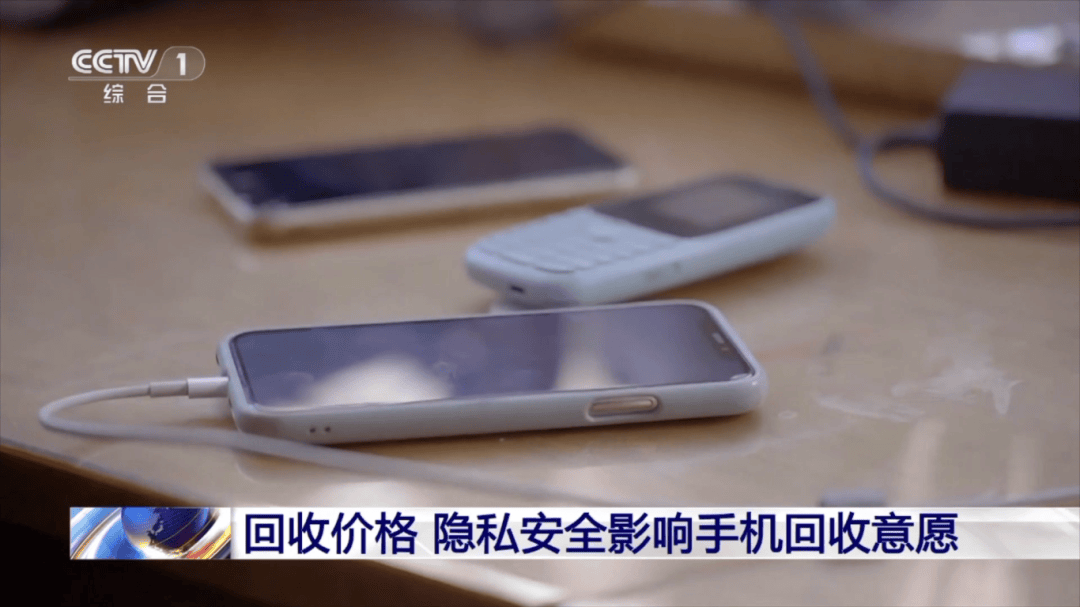
Core Insights - The production of mobile phones in China reached 961 million units in the first eight months of this year, with 758 million being smartphones, while the stock of old mobile phones is also increasing [1] - The annual generation of waste mobile phones in China exceeds 400 million units, with about 60% of them remaining unused at home and less than 40% entering the market, while only 5% are processed through formal channels [1][2] Group 1: Waste Mobile Phone Statistics - Approximately 250 million old mobile phones are idle at home each year, with only 150 million entering the market, leading to an estimated total stock of around 4 billion old mobile phones [7] - Each ton of old mobile phones can yield about 200 grams of gold and other recyclable materials, highlighting the potential resource value of these devices [8] Group 2: Consumer Concerns and Attitudes - Low recycling prices and concerns over personal data security are significant barriers to the recycling of old mobile phones, with consumers worried about the recoverability of deleted data [3][5] - The prevailing consumer attitude towards old phones is characterized by the sentiment of "too useless to keep, too precious to discard," resulting in many devices being stored away rather than recycled [5] Group 3: Recycling Market Dynamics - The "old-for-new" policy implemented by the government aims to stimulate the recycling market by providing economic incentives for consumers to trade in old phones for discounts on new purchases [12] - Following the implementation of this policy, some platforms have reported a doubling in mobile phone sales, and the volume of recycled old phones has increased by over 50% year-on-year [12] Group 4: Technological Advancements in Recycling - The convenience of the recycling process has lowered barriers for consumer participation, with quick and transparent evaluation processes being implemented in stores [14] - Companies are utilizing data security measures and full-process traceability to address consumer concerns about data privacy and the potential resale of recycled phones [15][19]

1吨旧手机能提取约200克黄金?你家的闲置手机可以这样处理→
Sou Hu Cai Jing· 2025-10-29 11:21
Core Insights - The production of mobile phones in China reached 961 million units in the first eight months of this year, with 758 million being smartphones, while the stock of old mobile phones is also increasing [1] - The annual generation of waste mobile phones in China exceeds 400 million units, with about 60% of these being kept by consumers and less than 40% entering the market, and only 5% being processed through formal channels [1][2] Group 1: Waste Mobile Phone Statistics - Approximately 250 million old mobile phones are idle at home each year, with only 150 million circulating in the market, leading to an estimated total stock of around 4 billion old mobile phones [3] - The low recovery rate of waste mobile phones is attributed to concerns over recovery prices and personal information security [3] Group 2: Resource Recovery Potential - Old mobile phones are considered a "resource treasure trove," containing over 60 types of elemental materials, with 1 ton of old phones capable of extracting 200 grams of gold and other recyclable materials [5] - The current recovery volume of old mobile phones is insufficient to meet production needs, with only 30% of the dismantling capacity being utilized [5] Group 3: Policy and Market Activation - The "old-for-new" policy is being implemented to stimulate the waste mobile phone recovery market by providing economic incentives for consumers to trade in their old devices [6][7] - Following the implementation of this policy, some platforms have seen mobile phone sales double, and the recovery volume of old phones in physical stores has increased by over 50% [7] Group 4: Technological Upgrades - Concerns regarding data security and the potential resale of recovered phones are being addressed through advanced technologies such as data erasure and full-process traceability [8][9] - Recovery companies are implementing thorough testing and data clearing processes to ensure consumer confidence and prevent refurbished phones from re-entering the market [9]
【周度分析】车市扫描(2025年10月20日-10月26日)
乘联分会· 2025-10-29 10:15
Group 1: Market Overview - From October 1 to 26, the national passenger car market retail sales reached 1.613 million units, a year-on-year decrease of 7% compared to the same period last year, and a month-on-month decrease of 4%. Cumulative retail sales for the year reached 18.621 million units, a year-on-year increase of 8% [2][6] - During the same period, wholesale sales of passenger cars reached 1.871 million units, a year-on-year decrease of 1% and a month-on-month decrease of 5%. Cumulative wholesale sales for the year reached 22.718 million units, a year-on-year increase of 12% [2][10] - The retail penetration rate for new energy vehicles (NEVs) was 55.9%, while the wholesale penetration rate was 55.2% [3] Group 2: New Energy Vehicle Performance - Retail sales of NEVs from October 1 to 26 reached 901,000 units, a year-on-year increase of 0% and a month-on-month decrease of 8%. Cumulative retail sales for the year reached 9.771 million units, a year-on-year increase of 22% [2][3] - Wholesale sales of NEVs during the same period reached 1.034 million units, a year-on-year increase of 4% and a month-on-month decrease of 5%. Cumulative wholesale sales for the year reached 11.48 million units, a year-on-year increase of 29% [2][3] Group 3: Monthly Sales Trends - Daily average retail sales for the first week of October were 44,000 units, a year-on-year decrease of 18% and a month-on-month decrease of 5%. The second week saw an increase to 85,000 units, a year-on-year increase of 7% and a month-on-month increase of 38% [5][9] - The third week recorded daily average retail sales of 63,000 units, a year-on-year decrease of 3% and a month-on-month decrease of 2%. The fourth week saw 69,000 units, a year-on-year decrease of 9% and a month-on-month decrease of 22% [6][10] Group 4: Inventory and Production Insights - As of September 2025, the inventory of the national passenger car industry was 3.28 million units, an increase of 120,000 units from the previous month and 260,000 units from the same month last year [11] - The production of pure fuel light vehicles from October 1 to 26 was 827,000 units, a year-on-year increase of 4% but a month-on-month decrease of 9%. The production of hybrid and plug-in hybrid vehicles was 516,000 units, a year-on-year decrease of 7% but a month-on-month increase of 10% [3][10] Group 5: Export Performance - From January to September 2025, China exported 5.71 million vehicles, a year-on-year increase of 21%. In September alone, exports reached 763,000 units, a year-on-year increase of 26% [12][15] - The export of NEVs during the same period reached 2.32 million units, a year-on-year increase of 52%, significantly higher than the 22% growth rate in the same period of 2024 [12][15]

爱玛科技(603529):25Q3经营表现稳健 关注高端电摩品牌发布
Xin Lang Cai Jing· 2025-10-29 06:27
Group 1 - The company reported a revenue of 21.09 billion yuan for Q1-Q3 2025, representing a year-on-year increase of 20.8%, with a net profit attributable to shareholders of 1.91 billion yuan, up 22.8% year-on-year [1] - In Q3 2025 alone, the company achieved a revenue of 8.06 billion yuan, a year-on-year increase of 17.3%, and a net profit attributable to shareholders of 690 million yuan, up 15.2% year-on-year [1] - The company's gross margin for Q1-Q3 2025 was 18.8%, an increase of 1.4 percentage points year-on-year, while the net profit margin was 9.0%, a slight increase of 0.1 percentage points year-on-year [1] Group 2 - The high-end electric motorcycle brand SCOOX is set to launch, aiming to meet a broader range of user needs, with a global brand launch event scheduled for October 28, 2025, in Beijing [2] - The introduction of high-end electric motorcycle products is expected to expand the customer base and drive continuous growth in the company's two-wheeler business [2] - The company is projected to achieve net profits attributable to shareholders of 2.37 billion yuan, 2.75 billion yuan, and 3.18 billion yuan for the years 2025 to 2027, maintaining a "strong buy" rating [2]

轻工制造行业快评报告:9月工业企业利润加快恢复,超半数消费制造行业利润端有所改善
Wanlian Securities· 2025-10-28 08:17
Investment Rating - The industry investment rating is "Outperform the Market," indicating an expected increase of over 10% in the industry index relative to the market over the next six months [9]. Core Insights - In the first nine months of 2025, the total profit of industrial enterprises above designated size reached 537.32 billion yuan, a year-on-year increase of 3.2%, with a growth acceleration of 2.3 percentage points compared to January-August [2]. - In September alone, the profit of these enterprises increased by 21.6% year-on-year, reflecting continuous improvement in industrial profits [2]. - The revenue for the same period was 1,020,846.7 billion yuan, showing a year-on-year growth of 2.4% [2]. Summary by Relevant Sections Consumer Goods Manufacturing - Among 13 major categories in consumer goods manufacturing, six industries, including agricultural and sideline food processing, food manufacturing, and beverages, reported positive profit growth from January to September. Notably, the beverage and agricultural processing industries saw profit growth rates exceeding 10%, at +14.4%, +12.5%, and +10.7% respectively [3]. - Conversely, seven industries experienced negative profit growth, with six of them declining over 10%. The furniture manufacturing industry faced a decline of -19.1%, while textiles and apparel saw a drop of -16.2% [3]. - Compared to January-August, profit growth in agricultural processing and food manufacturing further expanded, while the printing and chemical fiber industries turned from negative to positive growth [3]. Investment Recommendations - The report suggests focusing on sectors benefiting from macro policies and low base effects from the previous year. Key recommendations include: 1. **Food and Beverage**: The liquor industry is seen as bottoming out, with low valuations and high dividends providing strong support. The market is expected to see an upward turn ahead of financial reports as channel inventories clear [4]. 2. **Social Services**: As a core driver of consumption, sectors like tourism, duty-free, hotels, and restaurants are expected to benefit from policy support [4]. 3. **Retail**: In the context of a changing global trade environment, gold jewelry is highlighted as an attractive investment due to its status as a safe-haven asset [4]. 4. **Light Industry**: With policies promoting real estate recovery and "old-for-new" subsidies, demand for home and appliance products is anticipated to rise [4].
“以旧换新”政策有望催化,家电ETF(159996)涨超0.5%
Sou Hu Cai Jing· 2025-10-28 06:52
Core Viewpoint - The real estate policy has significantly reversed, and the white goods sector is characterized by "low valuation, high dividends, and stable growth," indicating a high safety margin and substantial elasticity in stock prices [1] Group 1: Industry Insights - The "old-for-new" policy is expected to catalyze growth in the white goods sector, while the recent short-term rise in copper prices has heightened bullish sentiment among channels [1] - The home appliance ETF (159996) tracks the home appliance index (930697), which selects listed companies involved in the manufacturing and sales of appliances like air conditioners, refrigerators, and washing machines, reflecting the overall performance of the home appliance sector [1] - The home appliance index exhibits strong consumer attributes and cyclical characteristics, providing a comprehensive view of the development status of China's home appliance industry [1]