消费

Search documents
【招银研究|宏观点评】韧性生长,迎难而上——中国经济数据点评(2025年二季度及6月)
招商银行研究· 2025-07-15 10:46
Overview - The core viewpoint of the article is that China's economy is facing challenges from tariffs and low demand, but is showing signs of stabilization with a projected GDP growth rate of 5.3% for the first half of the year, and a 5.2% growth in Q2, indicating a slight decline from Q1 [1][4]. Economic Performance - In Q2, the supply-demand imbalance deepened, with external demand growth significantly outpacing domestic production and consumption. Exports grew by 7.4% year-on-year, while retail sales and investment grew by 5.4% and 1.8%, respectively [4][6]. - The nominal GDP growth rate fell to 3.9%, with the actual GDP growth rate exceeding it by 1.3 percentage points, indicating increasing pressure from low prices [6][8]. - Economic data in June showed a slowdown in growth across most sectors compared to April and May, with industrial value-added growth rising to 6.8% but retail sales growth declining to 4.8% [9][10]. Consumption Trends - Retail sales growth in June was 4.8%, below market expectations, primarily due to a sharp decline in restaurant consumption, which dropped by 5 percentage points to 0.9% [11][12]. - Non-subsidized goods saw a significant decline in growth, while subsidized categories like home appliances experienced a nearly 20% drop in growth, reflecting weakened consumer demand [11][12]. - The outlook for Q3 suggests a potential increase in consumption growth due to a lower base effect, but consumer confidence remains fragile [16]. Fixed Asset Investment - Fixed asset investment growth slowed to 2.8% in June, with infrastructure and manufacturing investments declining by 1.5 and 1 percentage points, respectively [17][18]. - Real estate investment continued to decline, with sales area and amount dropping by 5.5% and 10.8%, respectively, indicating ongoing pressure in the property market [18][19]. - Infrastructure investment growth reached its lowest levels of the year, with a significant drop in fiscal revenue impacting project financing [21][23]. Trade and Exports - In June, both export and import growth rates increased, with a trade surplus of $114.77 billion, up 16% year-on-year. Exports to the U.S. saw a notable recovery, with a decline of only 16.1% compared to a previous drop of 34.5% [26][27]. - The overall trade environment remains resilient, although there are concerns about future export growth as the "rush to export" effect diminishes [26]. Industrial Production - Industrial production accelerated in June, with a year-on-year growth of 6.8%, supported by easing U.S.-China tariffs and the effectiveness of new policies [27][28]. - Despite the growth, the industrial sales rate declined to 94.3%, indicating increased competitive pressure on enterprises [27]. Inflation and Price Pressure - Inflation showed divergence, with CPI rising to 0.1% after four months of negative growth, while PPI fell to -3.6%, reflecting significant price pressures in various sectors [32][33]. - The outlook for inflation remains challenging, with potential for a slow recovery in prices due to ongoing supply-demand imbalances [32]. Future Outlook - The economic outlook for Q3 indicates challenges from insufficient effective demand and low price pressures, but GDP growth may still be supported by policy measures and a lower base effect [34].


中国经济下半年走势会如何?国家统计局最新发声
Zhong Guo Xin Wen Wang· 2025-07-15 07:59
15日,国新办就2025年上半年国民经济运行情况举行新闻发布会。 国家统计局副局长盛来运在会上表示,上半年,经济运行总体平稳、稳中向好,生产需求稳定增长,就 业形势总体稳定,居民收入继续增加,新动能成长壮大,高质量发展取得新进展,社会大局保持稳定。 经济运行"稳"的主基调没有变 盛来运表示,上半年一个很突出的特点就是经济运行"稳"。增长稳中略升,上半年GDP同比增长5.3%, 增速比去年同期和全年均提升0.3个百分点。调查失业率总体平稳,今年以来,月度调查失业率基本在 5.0%—5.4%区间波动。物价低位运行,基本平稳。国际收支基本平衡,货物贸易进出口创同期新高, 外汇储备维持在3.2万亿美元以上。从以上四大宏观指标看,经济运行"稳"的主基调没有变。 视频:国家统计局:上半年GDP同比增长5.3%来源:中国新闻网 下半年中国经济保持稳定增长有支撑 盛来运称,不少国际机构还有一些投行对全球经济预测发表展望报告,多数机构都是预测下半年全球经 济放缓,但这些机构大多不约而同调高了中国经济增长的预期。这显示了国际机构和投行对中国经济发 展的信心。从下半年情况看,尽管外部环境还有不少不确定性,内部结构调整的压力较大。但 ...

申万期货品种策略日报:国家信息中心-20250714
Shen Yin Wan Guo Qi Huo· 2025-07-14 07:32
Report Industry Investment Rating - No relevant information provided Core View of the Report - The prices of treasury bond futures fluctuated, with the T2509 contract down 0.01%. The IRR of CTD bonds corresponding to the main contracts of treasury bond futures was at a low level, with no arbitrage opportunities. Short - term market interest rates were mixed, and the yields of key - term treasury bonds generally increased. Overseas, the yields of US, German, and Japanese treasury bonds also rose. The external environment became more complex, with increased global economic uncertainty due to the "reciprocal tariff" policy. The domestic market had insufficient effective demand, and the prices of treasury bond futures fluctuated more due to the enhanced expectation of real - estate stabilization policies [2][3] Summary by Relevant Catalogs Futures Market - **Price and Volume**: The prices of treasury bond futures on the previous trading day were mixed. For example, the T2509 contract fell 0.01%, and the trading volume and open interest of each contract changed. The open interest of TS2509 decreased by 418, while that of TS2512 increased by 231 [2] - **Arbitrage**: The IRR of CTD bonds corresponding to the main contracts of treasury bond futures was at a low level, indicating no arbitrage opportunities [2] Spot Market - **Domestic Treasury Bond Yields**: The yields of key - term domestic treasury bonds generally increased. The 10Y treasury bond yield rose 0.47bp to 1.66%, and the spread between long - and short - term (10 - 2) treasury bonds was 23.61bp [2] - **Overseas Treasury Bond Yields**: The yields of overseas key - term treasury bonds increased. The US 10Y treasury bond yield rose 8bp, the German 10Y treasury bond yield rose 6bp, and the Japanese 10Y treasury bond yield rose 0.9bp [2] Macro News - **Central Bank Operations**: On July 11, the central bank conducted 847 billion yuan of 7 - day reverse repurchase operations, with a net injection of 507 billion yuan. There will be 4257 billion yuan of reverse repurchases and 1000 billion yuan of MLF maturing this week [3] - **Diplomatic Meetings**: Chinese Foreign Minister Wang Yi met with US Secretary of State Rubio in Kuala Lumpur, and both sides agreed to strengthen communication and dialogue [3] - **Policy Regulations**: The Ministry of Finance required state - owned commercial insurance companies to improve asset - liability management and adjusted the assessment methods of some indicators [3] - **Economic Data**: In the second quarter, high - frequency data in multiple domestic fields improved. The offline consumption heat index increased by 25.5% year - on - year, and the online retail sales of major home appliances rose by 28.0% [3] - **International Trade**: US President Trump announced tariffs on products from Mexico, the EU, and Canada, increasing market concerns about inflation and trade tensions [3] - **Japanese Central Bank Action**: The Bank of Japan launched a "morning quote" for spot transactions, lending Japanese government bonds to support market liquidity [3] Industry Information - **Interest Rate Changes**: On July 11, most money - market interest rates in China increased. US Treasury yields rose across the board, driven by Trump's tariff announcements [3] Comments and Strategies - **Market Situation**: The central bank's open - market operations shifted from net withdrawal to net injection last week. Shibor remained low, and the domestic money market was relatively stable. Overseas, tariff announcements increased concerns about inflation and trade tensions. The domestic economy was generally expanding in June, but market demand was weak, and commodity prices were affected by policies [3] - **Market Outlook**: The external environment became more complex, with increased global economic uncertainty. The domestic market had insufficient effective demand, and the central bank maintained a supportive monetary policy. The "anti - involution" market trend continued, increasing the expectation of real - estate stabilization policies and causing greater fluctuations in treasury bond futures prices [3]
大象论股|3500点后怎么走?《大象财经•论股》指点迷津
Sou Hu Cai Jing· 2025-07-12 05:54
Group 1 - The Shanghai Composite Index successfully surpassed 3500 points, reaching a new high for the year, with a weekly increase of 1.09% [1] - The financial sector, particularly the banking and brokerage stocks, played a significant role in driving the index higher, with major banks hitting historical price records [1] - The trading volume increased notably, with a peak of 1.71 trillion yuan on July 11, marking the highest level since March 15 [1] Group 2 - Several companies released their mid-year performance forecasts for 2025, leading to a rise in related sectors, particularly in rare earths, where North Rare Earth reported significant year-on-year increases in revenue and net profit [3] - The pharmaceutical sector also saw a collective rise in AH shares, while sectors like photovoltaic, steel, coal, and construction experienced upward momentum due to favorable news [3] - The upcoming implementation of the stablecoin regulations in Hong Kong has kept the blockchain and digital currency concepts active, with Shanghai's government exploring blockchain applications in cross-border trade and supply chain finance [3] Group 3 - The consumer sector showed volatility, with an initial boost from increased restaurant sales due to price wars among delivery platforms, but later saw declines in new consumption stocks [4] - The "new consumption trio" stocks, including Lao Pu Gold, Pop Mart, and Mixue Ice City, experienced significant drops, raising concerns about the sustainability of the new consumption trend [4]
筑牢经济韧性底座 多维施策稳增长谋长远
Shang Hai Zheng Quan Bao· 2025-07-10 18:29
Economic Overview - The overall economic performance in the first half of the year is stable, supported by strong external demand and improving internal demand, with GDP growth expected to exceed 5% [2][3] - The first quarter saw a GDP growth rate of 5.4%, and the positive trend continued into the second quarter [2][3] - Key drivers of economic growth include the "old-for-new" consumption policy, large-scale equipment updates, and robust infrastructure investment [3][4] Consumption and Investment - The "old-for-new" policy significantly boosted consumption, with retail sales of consumer goods growing by 5% year-on-year from January to May [4][5] - Fixed asset investment increased by 3.7% during the same period, driven by strong service sector investment and equipment upgrades [4][6] - Exports grew by 6% from January to May, supported by "grabbing exports" and "turning exports" strategies [4][6] Monetary and Fiscal Policies - Monetary policy remained flexible and moderately loose, with a 0.5 percentage point reduction in the reserve requirement ratio in May, releasing approximately 1 trillion yuan in long-term liquidity [7][8] - Fiscal policy showed a high intensity and rapid pace, with government debt net financing increasing by 3.8 trillion yuan year-on-year from January to May [9][10] - The issuance of special bonds and ultra-long-term treasury bonds accelerated, with nearly 2.2 trillion yuan in new special bonds issued by the end of June [9][10] Future Outlook - In the second half of the year, there is still room for further interest rate cuts and reserve requirement ratio reductions to lower financing costs for the real economy [16][20] - New policy financial tools are expected to be introduced in the third quarter, focusing on technology innovation and digital economy sectors [16][17] - The government plans to dynamically adjust budgets and expand fiscal spending to counter global trade uncertainties and support employment [17][20]
惠誉上调摩洛哥2025年经济增长预期
Shang Wu Bu Wang Zhan· 2025-07-10 02:59
Economic Growth Outlook - Morocco's GDP growth forecast for 2025 has been raised from 4.3% to 4.5% by Fitch, driven by strong investment, recovering consumer markets, and improving foreign trade conditions [1][2] Investment Dynamics - Productive investment is the main driver of the current economic recovery, with total capital formation in Q1 showing a significant year-on-year increase of 17.5%, marking a post-pandemic high [1] - The Moroccan central bank has cut interest rates by a total of 75 basis points, with expectations for further reductions, facilitating credit expansion across various sectors, including consumer loans [1] Infrastructure and Major Events - Preparations for major international events such as the 2025-2026 Africa Cup of Nations and the 2030 World Cup are underway, leading to increased investments in infrastructure, transportation, and hospitality [1] - Fixed asset investment growth is expected to reach 7.9% in 2025, with a slight decline to 5.9% in 2026, still significantly above historical averages [1] Consumer Spending Trends - Consumer spending is showing signs of recovery, driven by low inflation, agricultural recovery boosting farmer incomes, rapid tourism growth, and declining financing costs [2] - Private consumption growth is projected to reach 4.5% in 2025, with continued positive momentum expected in 2026 [2] Inflation and Trade Balance - Inflation expectations for 2025 have been revised down from 1.1% to 0.7%, benefiting from stable energy prices, a weaker dollar, and improved domestic food supply [2] - The trade deficit is expected to improve in 2025 due to reduced agricultural import demand and a recovering European market, supported by Morocco's deep integration with European supply chains [2]
过去4年内需对中国经济增长平均贡献率达86.4%
Zhong Guo Xin Wen Wang· 2025-07-09 06:38
他表示,从中国的内需构成看,有三方面特点尤为突出。其一是消费向新而行。过去4年最终消费 对中国经济增长的平均贡献率达到56.2%,比"十三五"期间提高8.6个百分点,消费领域新产品、新业 态、新模式层出不穷。 投资向优发力是另一大特点。袁达称,过去4年投资积累的资本形成对中国经济增长的平均贡献率 为30.2%。投资对优化供给结构的关键作用充分发挥,更加注重补短板利长远,更加注重增强发展后 劲,更加注重增进民生福祉,更加注重调动民间资本积极性。其中,在核电、铁路等领域推出了一批重 大项目吸引民资入股,有的核电项目民间资本参股比例达到20%。 第三大特点是投资消费相互促进。袁达表示,一方面,市场消费的扩大,通过产品生产、配套建设 等渠道带动投资,比如5G、智能手机等消费需求持续旺盛,带动近4年互联网和相关服务业投资年均增 长21.9%、通信设备制造业投资年均增长11.2%。另一方面,有效投资的增加,通过生产等链条促进居 民就业增收,提高了消费能力,也通过完善设施、优化环境等改善消费条件,直接促进了消费,比如 2024年底全国充电基础设施总量已达到1281.8万台,有效支撑了新能源汽车大规模普及。 中新社北京7月9 ...
下半年中国经济展望|宏观经济
清华金融评论· 2025-07-05 12:25
Core Viewpoint - The article discusses the current state and outlook of the Chinese economy, highlighting the impact of external factors such as the US-China trade war and domestic policy measures that have contributed to economic stability and growth. Group 1: Economic Performance - The GDP growth rate for the first half of the year is expected to be around 5.3%, with a need for only 4.7% growth in the second half to meet the annual target [1] - The first quarter saw a GDP growth of 5.4%, while the second quarter is projected to be around 5.2% [2] - The overall economic performance is stable, with industrial value-added growth at 6.5% in the first quarter and service sector growth at 5.8% [5] Group 2: Export Dynamics - The export growth rate fluctuated due to the US-China tariff war, peaking at 12.3% in March before declining to 4.8% in May [2] - The share of exports to the US has decreased to the lowest level on record, impacting overall export performance [2] - The article anticipates a 2.0% growth in exports for the year, with various scenarios predicting outcomes ranging from 0% to 3.5% [10][11] Group 3: Domestic Demand and Policy Response - Domestic demand is gradually stabilizing due to proactive macroeconomic policies, including increased fiscal spending and monetary easing [3] - Social financing stock grew by 8.7% year-on-year in the first five months, with government bonds seeing a significant increase of 20.9% [3] - Retail sales growth reached 6.4% in May, driven by consumption policies such as the "old-for-new" program [3] Group 4: Investment Trends - Fixed asset investment grew by 3.7% in the first five months, with infrastructure investment increasing by 5.6% [13] - Manufacturing investment is expected to grow by 7.8% for the year, while real estate investment is projected to decline by 10.0% [23][16] - Infrastructure investment is anticipated to rebound in the second half, supported by ample funding and ongoing major projects [18][19] Group 5: Consumer Behavior - Consumer spending is expected to grow by 4.5% for the year, with retail sales showing a recovery trend [27] - The "old-for-new" subsidy program has significantly boosted consumption in various sectors [28] - However, consumer confidence remains low, and spending may decline in the second half due to reduced subsidy support and economic uncertainties [29] Group 6: Price Trends - CPI is projected to remain around 0% for the year, with a slight recovery expected in the second half [31][32] - PPI is anticipated to decline by 2.3% for the year, reflecting ongoing pressures from oversupply and weak demand [34][35] Group 7: Policy Outlook - The article suggests that macroeconomic policies will focus on stabilizing growth without significant new stimulus, emphasizing the implementation of existing policies [37][38] - Fiscal policies will prioritize the effective use of existing funds to support consumption and investment [40][41] - Monetary policy is expected to remain flexible, with a focus on structural support rather than aggressive easing [42][43]

2025年固收中期策略:外部风浪未平,内部蓄势待破,震荡中寻机
2025-07-02 01:24
Summary of Conference Call Records Industry Overview - The records focus on the bond market and macroeconomic conditions in China for the year 2025, particularly the impact of external factors such as U.S. tariff policies and internal economic dynamics on bond yields and investment strategies. Key Points and Arguments Economic Growth and Forecasts - The overall economic growth rate for 2025 is projected to be above 5%, with GDP growth expected to be between 4.7% and 4.9% in the second half of the year [2][9] - Export growth is anticipated to gradually decline, especially in the fourth quarter, which may reduce policy urgency [4][9] Monetary and Fiscal Policy - The monetary policy is expected to maintain a dual easing approach, with potential for a 50 basis point reserve requirement ratio (RRR) cut and about 10 basis points of interest rate reduction available [2][9] - Fiscal policy is likely to remain proactive, with additional measures to stimulate domestic demand anticipated [4][9] Bond Market Dynamics - The 10-year government bond yield rose from approximately 1.6% to nearly 1.9% in early 2025, reflecting market volatility and extreme monetary policy expectations [2][5] - The bond market is expected to oscillate between 1.5% and 1.8% in the second half of the year, with a defensive strategy recommended for investors [2][13] Institutional Behavior - There is a notable divergence in institutional behavior, with banks reducing bond holdings significantly, while insurance companies have doubled their purchasing scale [11] - The overall bond market is not expected to experience a significant downturn due to insufficient demand and supportive policies [11][12] Consumer and Investment Trends - Consumer spending is gradually recovering, with retail sales growth expected to stabilize between 5% and 6% [7] - Manufacturing investment is under pressure from weak external demand, while real estate investment remains low despite some improvements in sales [7][8] External Influences - U.S. tariff policies have had a significant but short-lived impact on the Chinese bond market, with adjustments in long-term bond yields observed [5] - The potential for external disturbances, such as escalated tariffs or geopolitical risks, could influence market sentiment and bond yields [15] Future Outlook - The bond market is expected to remain in a state of oscillation, with the need for careful monitoring of economic indicators and policy changes to identify potential trading opportunities [12][14] - The focus on urban renewal projects is noted, but their impact on infrastructure investment is expected to be limited compared to previous initiatives [8] Additional Important Content - The government bond supply is projected to peak in the third quarter, exceeding 1 trillion yuan monthly, necessitating close attention to central bank liquidity measures [10] - The overall investment environment remains cautious, with a focus on defensive strategies in the bond market due to the lack of clear directional signals [13]
分析师:美5月消费降通胀升,欧盘黄金行情走势分析
Sou Hu Cai Jing· 2025-06-30 06:57
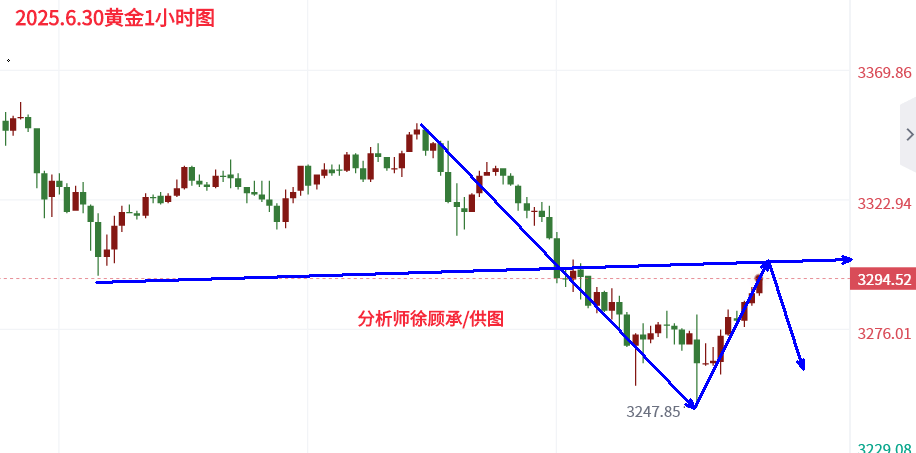
Group 1 - The economic data for May in the U.S. shows a stark contrast between consumer spending and inflation, leading to unexpected market reactions. Consumer spending unexpectedly declined by 0.1%, contrary to the anticipated increase of 0.1%, indicating a significant cooling in the consumption market [1] - In contrast, the core PCE year-on-year rate surged to 2.7%, the highest since February 2025, with a month-on-month increase of 0.2%, far exceeding market expectations of stagnation. This combination of weak consumer data and high inflation places the Federal Reserve in a difficult position [1] Group 2 - Traders are predicting that the Federal Reserve may be forced to cut interest rates three times in 2025 to balance the economy. Following this, the gold market experienced a brief rebound after an initial drop, but this was seen as a temporary phenomenon due to short covering [3] - Technically, the gold market shows a bearish arrangement in the 1-hour moving average, indicating that bearish forces are dominant. Gold is currently facing resistance around the key level of 3295, which has become a short-term dividing line for bulls and bears [3]