
AI泡沫

Search documents
AI大跌,背后是黄金坑?还是泡沫?
Sou Hu Cai Jing· 2025-12-18 10:32
Core Insights - AI is undergoing a "stress test" as major cloud and chip companies experience significant stock declines despite strong earnings reports [1][2] - Oracle's completion timeline for data centers related to OpenAI has been pushed back from 2027 to 2028, contributing to market concerns [1] - CoreWeave's stock has also fallen, with a notable 46% drop attributed to a major tenant retracting a $150 million investment [1] Financial Performance - Oracle's remaining performance obligations surged 438% year-over-year to $523 billion, driven by demand from tech giants [1] - Broadcom reported Q4 revenue of $18.02 billion, a 28% year-over-year increase, with semiconductor business growth at 34.5% and infrastructure software revenue up 19% [1] - However, both companies reported a negative free cash flow of $10 billion and a cumulative free cash flow of -$13.18 billion over the past 12 months [2] Market Concerns - There are rising warnings about an "AI bubble," with concerns about the sustainability of capital expenditures by tech giants, potential "circular trading" in the industry, and whether future profits can match current high valuations [2] - Howard Marks highlighted that transformative technologies often lead to excessive enthusiasm and investment, resulting in overcapacity and inflated asset prices [2] Economic Perspective - Despite high capital expenditures, major tech firms are seeing an increase in return on invested capital, indicating economic viability [3] - The AI sector is still in its early stages of commercialization, with demand for computing power expected to grow due to advancements in multi-modal models and real-time inference [3] - The current valuation of AI-related companies remains relatively rational compared to historical bubbles, supported by the dual logic of revenue growth and cost reduction [3] Investment Opportunities - The optical module sector is identified as a core support for AI hardware, with increasing industry demand and the rapid scaling of 1.6T products [4] - Domestic computing power sectors are expected to benefit from relaxed export restrictions on advanced computing cards and accelerated IPO processes for local chip companies [4] - Investment strategies focusing on AI-related sectors, such as robotics and computing power, are recommended to capture potential growth opportunities [4]

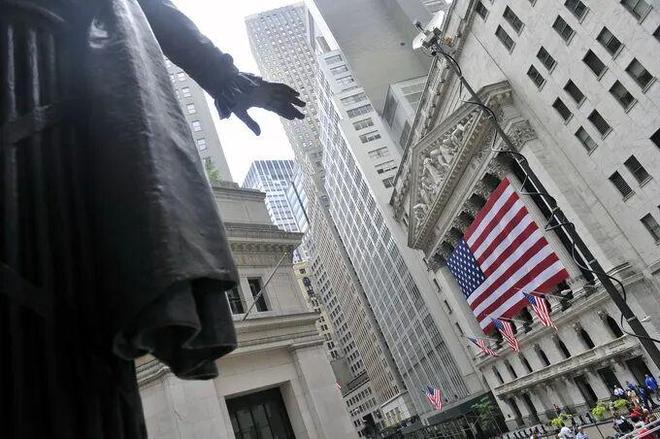
美股AI多空拉锯战,空头首战告捷
Hu Xiu· 2025-12-18 10:30
Core Viewpoint - The recent significant decline in the US AI sector stocks, including major players like Oracle, Nvidia, and AMD, indicates a fundamental shift in valuation logic, moving from growth expectations to a focus on return on investment (ROI) [1][11]. Group 1: Market Reaction - The AI sector experienced a collective drop, with Nvidia down 3.81%, AMD down 5.29%, and Oracle down 5.40%, resulting in the loss of hundreds of billions in market value [1][6]. - The catalyst for this decline was the termination of a $10 billion financing deal by Blue Owl Capital with Oracle, raising concerns about Oracle's debt levels and spending [2][3]. Group 2: Systemic Risk - The exit of Blue Owl Capital signifies a crack in the funding chain for AI infrastructure, leading to fears of systemic risk across the industry [4][5]. - The market's reaction suggests that if a major player like Oracle, which has over $500 billion in orders, cannot secure funding for significant projects, it raises alarms about the entire AI infrastructure sector [4]. Group 3: Diverging Institutional Views - Analysts from KeyBanc and Stifel have lowered Oracle's target price due to concerns over its financial health and ability to fulfill its substantial order backlog [7]. - In contrast, Morgan Stanley's Joseph Moore remains bullish on Nvidia, raising its target price, arguing that the market is overreacting to competitive threats [9]. Group 4: Valuation and ROI Focus - The focus of investment has shifted from capital expenditure to ROI, with firms like Wellington Management emphasizing the need for sustainable returns to justify AI investments [11]. - Current estimates suggest that the AI industry must generate approximately $600 billion in annual revenue to validate the significant investments being made, while actual revenue projections for 2025 are much lower, around $150 billion to $200 billion [12][13]. Group 5: Impact on A-shares - The decline in US AI stocks has also affected related A-share companies, with significant drops observed in stocks like Zhongji Xuchuang and Xinyi Sheng [14].


洪灝:美股AI泡沫破灭为时过早,但估值过高,参考历史,未来几年美股回报为个位数,人民币2026年会升值,大宗商品未来几个月有空间
华尔街见闻· 2025-12-18 09:58
近期,知名经济学家洪灝在与瑞士宝盛的本年度收官对话中,展望了2026年的美股、A股市场,并重点剖析了AI、大宗商品及人民币等核心议题。 投资作业本课代表整理了要点如下: 1、现在说(美国AI)泡沫要破,可能还为时过早。但必须承认估值已经很贵了。那么历史上达到如此估值的高度次数屈指可数。 以及一般来说,这个估值水平, 美股未来7到10年的平均回报率往往只有个位数。 2、 从下半年开始,我们就建议客户把美股获利的部分转向非美市场。主要原因是 美股相对于其他市场的表现已经达到历史高位,再期待它持续跑赢,可 能不太现实。 3、我 相信如果投AI的话,我们会继续投现在已经崭露头角的公司,以及一些大型的从以前的科技、互联网公司转型成AI公司的领头羊。 以下是投资作业本课代表(微信ID:touzizuoyeben)整理的精华内容,分享给大家: 2026年只要经济不太差,A股值得期待 主持人:年初至今,上证和沪深300指数以及港股恒生指数涨了很多,在全球市场算是领先的。不过从十月开始,股指上升势头有所减弱,板块之间开始 轮动,比如科技类的成长股承压明显,反而价值股和周期股更受资金青睐。 4、如果AI故事继续,经济周期位置不变 ...

不持现金!全球基金经理看好2026年
Huan Qiu Wang· 2025-12-18 08:59
Group 1 - Global fund managers are exhibiting unprecedented optimism towards risk, with average cash holdings in portfolios dropping from 3.7% in November to 3.3% in December, marking the lowest level since the survey began in 1999 [1][3] - 42% of surveyed fund managers increased their global stock holdings in December, the highest percentage since 2022, indicating a significant rise in overall optimism among fund managers, reaching the highest point since mid-2021 [3] - Investment firms like Fidelity International and UBS Wealth Management express similar views, predicting high investment returns in the coming year due to a sustained interest rate cut cycle and strong earnings growth expectations supporting the stock market [3] Group 2 - Despite the optimism, market veterans warn that the low cash levels among fund managers could amplify market volatility, making it more susceptible to negative shocks [4] - Concerns about the "AI bubble" remain the largest market risk for investors, although the level of concern has eased, while expectations for rising long-term bond yields introduce new uncertainties [4] - A critical question posed by analysts is whether global stock markets can perform well if U.S. Treasury yields rise above 5%, highlighting the challenging balance between optimistic stock market expectations and upward pressure on bond rates [4]


全球基金经理现金持有率创26年来新低
Di Yi Cai Jing Zi Xun· 2025-12-18 08:47
Group 1 - The average cash holding rate in global fund managers' portfolios decreased from 3.7% in November to 3.3% in December, marking the lowest level since the survey began in 1999 [2] - 42% of surveyed fund managers reported increasing their global stock holdings, the highest level since 2022, indicating a significant shift towards equities and commodities [2] - Global fund managers are currently experiencing the highest level of optimism since mid-2021, surpassing the peak during the "Trump trade" at the end of 2024 [3] Group 2 - Fund managers' expectations for global corporate profits are at their highest since 2021, leading to a more bullish outlook on the stock market [3] - Analysts suggest that the performance of global stock markets in 2026 will depend on sector distribution and style allocation, recommending a broader investment approach beyond just AI themes [4] - UBS forecasts a robust earnings growth of 7% to 14% for major markets next year, supporting further stock market gains despite high historical valuations [4] Group 3 - There are concerns that the overly optimistic sentiment in the market could lead to severe reactions to negative news, with low cash levels indicating a fragile market resilience [5] - The "AI bubble" is still viewed as the biggest market risk, although the percentage of fund managers identifying it as such has decreased from 45% to 38% [5] - A significant number of investors expect long-term bond yields to rise, with three-quarters of surveyed fund managers anticipating a steeper yield curve in the coming months [5]
蓓姐还是太懂了
Xin Lang Cai Jing· 2025-12-18 07:08
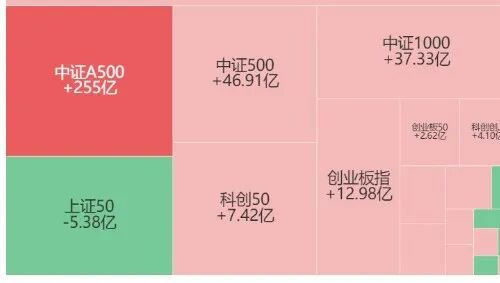
Group 1 - The article highlights the current asset allocation trends among high-net-worth individuals, focusing on four main areas: quantitative enhancement, science and technology innovation funds, all-weather strategies, and overseas assets [1][2][3][4][5] - Quantitative enhancement involves significant investments in small-cap stocks, with risks associated with size factors and non-linear factors [1][3] - Science and technology innovation funds face risks from domestic interest rate increases leading to style shifts and potential AI bubble bursts due to revised capital expenditure expectations in the U.S. [1][3] - All-weather strategies are at risk from rising interest rates causing losses in bond holdings and declining gold prices [1][3] - Overseas assets are influenced by the RMB exchange rate and U.S. AI developments [2][4] Group 2 - The article provides insights into the scale of various investment vehicles, noting that since September 2022, the total margin financing balance has increased by 1.1 trillion, primarily directed towards the TMT sector [3][21] - By the end of 2024, the total scale of private equity funds is projected to reach 5.21 trillion, with a significant increase of 1.8 trillion observed this year [3][21] - The total scale of ETFs is expected to surge from approximately 3.73 trillion at the beginning of 2025 to 5.74 trillion, marking a growth of over 2 trillion and a growth rate exceeding 53% [3][21] - The A500 ETF has seen a net inflow of 255 billion in the past week and 367 billion in the past month, indicating strong market interest [3][21] Group 3 - The performance of investment vehicles shows that quantitative private equity funds have achieved over 40% returns this year, marking the third consecutive year of outperforming subjective strategies [8][26] - Mixed equity funds have recorded a 32% return this year, rebounding after three years of underperformance [8][26] - Broad market indices have generally yielded returns above 20%, with the A500 ETF at 22% and the CSI 300 ETF at 18% [8][27] Group 4 - The global fund manager survey indicates a peak in macro optimism since August 2021, with the stock and commodity allocation ratio reaching its highest since February 2022 [9][27] - Cash levels among fund managers have dropped to a historical low of 3.3%, down from 3.7% [9][27] - The survey also reveals that 37% of managers view the AI bubble as the biggest tail risk, while 40% believe private credit is the most likely source of credit events [12][30] Group 5 - The article raises questions about whether the trends observed in 2024 can be extrapolated into 2025, particularly regarding crowded positions and potential trend reversals [15][34] - It discusses the implications of rising interest rates on real estate and the effectiveness of macro hedging as a strategy for style switching [15][34] - The narrative suggests that the current market dynamics, influenced by a weak dollar and AI industry expansion, have led to an "asset shortage" and "capital bull" scenario [15][33]
郭明錤:苹果AI危机意识催生iPhone Air 折叠机将缺货至2026年底
Feng Huang Wang· 2025-12-18 06:09
Group 1: Apple Innovations - Apple's awareness of AI challenges has driven innovation, leading to the development of the iPhone Air expected in 2025 and a foldable iPhone anticipated for 2026 [2] - The development timeline for Apple products is longer than competitors, with significant user experience changes for iPhone expected only by 2026 [2] - Apple is likely to significantly improve Siri/Apple Intelligence at the 2026 WWDC, potentially collaborating more deeply with Google's Gemini [2][3] Group 2: Foldable iPhone - The foldable iPhone's development is slower than expected, with a release projected for the second half of 2026 and smooth shipments not anticipated until 2027 [3] - Due to limited supply and strong demand, the foldable iPhone may be out of stock until at least the end of 2026 [3] - The larger screen of the foldable iPhone is advantageous for displaying AI multimodal content [3] Group 3: AI Industry Insights - Google's Gemini 3 has quickly gained market attention due to its enhanced image capabilities and integration with Google Workspace, driven by Google's organizational strategy [4] - The AI industry is still in its early stages, making it premature to determine clear winners and losers [4] - The debate around whether AI is a bubble focuses on the authenticity of AI demand and the valuation of AI-related stocks [5] Group 4: Market Dynamics - There is a consensus on the authenticity of AI demand, but opinions vary on the service delivery methods and timing of widespread adoption [5] - Nvidia's strong response to bearish sentiments aims to bolster supply chain confidence and ensure demand for its GPUs [5]

AI明星股,已近腰斩!AI泡沫讨论升级
Zhong Guo Zheng Quan Bao· 2025-12-18 04:31
当地时间12月17日,美股大型科技股集体下跌。英伟达跌近4%;AI明星股甲骨文下挫5.4%,收报 178.46美元/股,相比年内高点,跌幅达到48%,几乎抹平今年以来涨幅。 伴随股价下挫的,还有市场情绪。近期,图灵奖得主、Meta首席AI科学家杨立昆(Yann LeCun)批评 大模型主流技术路线,全球最大对冲基金桥水、中金公司(601995)等机构接连警告AI潜在风险。"AI 泡沫是否走到破裂边缘"的讨论正在升级。 值得一提的是,前不久,Meta首席AI科学家杨立昆公开批评目前主流的人工智能技术路线。他表示, 当前硅谷过于依赖大语言模型的路径可能是一场"集体幻觉",并难以通往真正的通用人工智能。与此同 时,他宣布将从Meta离职创业,新公司已明确转向研发"世界模型"。 这一知名科学家的公开"转向",也让市场担忧:在OpenAI、谷歌等科技巨头持续投入千亿级参数训练 大模型的同时,是否存在着隐藏风险? 杨立昆的观点并非孤例。近期,一篇由谷歌DeepMind、Meta、斯坦福等机构研究人员联合发表的论文 《大语言模型的基本局限性》,从理论层面为大语言模型"规模至上"的热潮浇了冷水。研究指出,大语 言模型的性能提 ...
喝点VC|a16z的未来展望:现在AI不是泡沫,因为它还没破裂;只有当投入打水漂,才能确认它曾经是泡沫
Z Potentials· 2025-12-18 03:30
Core Insights - The current profitability of companies in the AI sector is strong, and they are on track to recover their development costs quickly, indicating that the situation does not resemble a bubble [3][6][8] - Continuous investment in larger models is aimed at future growth rather than immediate profitability, suggesting a long-term vision for AI development [6][8] - The high-end job market is expected to see new roles created, although it is challenging to identify specific tasks that AI cannot automate at present [17][18] Investment and Profitability - Companies are currently generating significant profits and could achieve profitability by operating existing models without further development [6][8] - Concerns about AI not being profitable are unfounded, as companies are likely to recoup their past investments soon [6][8] - The scale of investment in AI is substantial, with companies like NVIDIA showing continuous sales growth, indicating confidence in the sector [5][8] Technological Evolution - There is no evidence of stagnation in model capabilities; instead, advancements continue with increasing data and computational power [9][29] - The emergence of post-training techniques suggests that pre-training is no longer the sole focus, allowing for further exploration and innovation [9][10] - The potential for a pure software singularity, where AI could automate its own research, is considered difficult to achieve due to the need for extensive experimentation [10][11] Labor Market Impact - The high-end labor market is likely to see job creation, while the low-end market may experience a bubble without significant impact [17][18] - Predictions suggest that up to 10% of existing jobs could be automated within the next decade, although this may not reflect in overall unemployment rates [19][21] - The automation of tasks rather than entire jobs is expected, leading to a transformation in the nature of work rather than a simple reduction in job numbers [20][21] Future Predictions - By 2030, GDP growth is projected to increase by several percentage points, driven by sustained trends in AI investment and development [26][27] - The realization of AGI could lead to even more dramatic economic changes, with predictions of up to 30% GDP growth under certain conditions [27][28] - The timeline for achieving significant breakthroughs in mathematics and other fields through AI is uncertain, but optimism exists regarding AI's capabilities in these areas [32][33] Benchmarking and Measurement - Current benchmarks for AI capabilities are expected to be surpassed, necessitating the development of more challenging and relevant tests [29][30] - Future benchmarks should focus on real-world applications and the ability of AI to solve complex problems rather than just achieving high scores on existing tests [30][31]

2025年12月18日:期货市场交易指引-20251218
Chang Jiang Qi Huo· 2025-12-18 03:06
期货市场交易指引 2025 年 12 月 18 日 | | 宏观金融 | | --- | --- | | ◆股指: | 中长期看好,逢低做多 | | ◆国债: | 震荡运行 | | | 黑色建材 | | ◆焦煤: | 短线交易 | | ◆螺纹钢: | 区间交易 | | ◆玻璃: | 逢高做空 | | | 有色金属 | | ◆铜: | 逢高减仓,低位企稳后回补 | | ◆铝: | 建议加强观望 | | ◆镍: | 建议观望或逢高做空 | | ◆锡: | 区间交易 | | ◆黄金: | 区间交易 | | ◆白银: | 多单持有,新开仓谨慎 | | ◆碳酸锂: | 偏强震荡 | | | 能源化工 | | ◆PVC: | 区间交易 | | ◆烧碱: | 暂时观望 | | ◆纯碱: | 暂时观望 | | ◆苯乙烯: | 区间交易 | | ◆橡胶: | 区间交易 | | ◆尿素: | 区间交易 | | ◆甲醇: | 区间交易 | | ◆聚烯烃: | 偏弱震荡 | | | 棉纺产业链 | | ◆棉花棉纱: | 震荡偏强 | | ◆PTA: | 震荡上行 | | ◆苹果: | 震荡偏弱 | | ◆红枣: | 震荡偏弱 | | ...