地缘政治溢价

Search documents
GTC泽汇资本:金价重回高位区间
Xin Lang Cai Jing· 2026-01-06 10:12
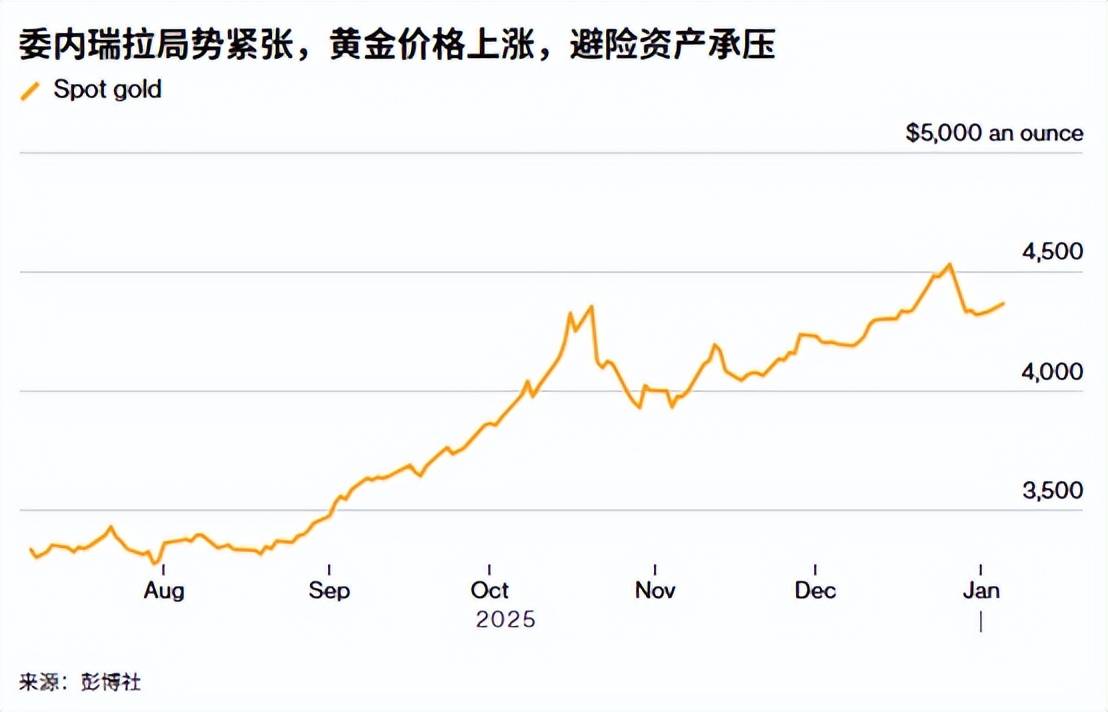
Core Viewpoint - The geopolitical tensions in the Western Hemisphere have led to a surge in risk aversion in global financial markets, driving strong demand for safe-haven assets like gold [1] Group 1: Gold Market Performance - Spot gold prices rose by 2.7% to $4,448.20 per ounce, reflecting the market's quick pricing ability in response to risk events [1] - In early 2026, the gold market demonstrated strong resilience near historical highs, with a record price of $4,549.71 per ounce achieved in 2025, marking an annual increase of over 60% [1] - Recent price recoveries indicate solid bottom support in the market despite previous profit-taking phases [1] Group 2: Geopolitical and Economic Implications - The direct actions taken in the region have disrupted the existing power balance, prompting investors to assess the long-term impacts on global energy supply chains and market stability in Latin America [1] - The geopolitical premium is expected to lead to a reassessment of risk weights for assets in the affected regions, particularly due to the large oil reserves and fragile supply conditions [1] - Any disturbances in this area could escalate into supply anxieties in the energy market, which may positively influence precious metals through inflation expectations [1] Group 3: Fundamental Drivers of Gold Strength - The strengthening of gold is supported by deeper fundamental drivers, including expectations for a shift to looser monetary policies in the second half of the year and ongoing increases in gold reserves by central banks worldwide [2] - Concerns over global economic slowdown are enhancing the long-term investment value of gold [2] - The combination of risk-averse buying and macroeconomic policy cycles is likely to push gold prices towards historical peaks, positioning it as a key asset for investors facing global uncertainties [2]


委内瑞拉局势骤然生变,风险溢价如何挑动黄金和原油?
Sou Hu Cai Jing· 2026-01-06 08:52
Group 1 - The return of "geopolitical premium" indicates that geopolitical risks are becoming a dominant market factor, but the current macro backdrop of high supply and weak demand will limit its intensity [2] - Safe-haven sentiment is expected to rise selectively, with funds likely flowing into core safe-haven assets like gold and the US dollar, rather than a broad flight from risk assets [2] - Gold and silver have seen record performances, supported by central bank purchases and inflows into gold ETFs, with prices reaching new highs; however, caution is advised due to potential passive fund sell-offs from upcoming Bloomberg commodity index rebalancing [2] Group 2 - The situation in Venezuela is being closely monitored, with potential for gold prices to maintain high levels unless further news emerges; if the Maduro government falls quickly without leading to a prolonged civil war, the geopolitical premium may quickly recede [4] - Despite significant geopolitical changes marked by Maduro's arrest, early signs suggest that the global oil market will respond relatively smoothly, with Venezuela's oil infrastructure reportedly unaffected by recent US attacks [4] - The US has indicated intentions to rebuild Venezuela's oil industry and sell "large amounts" of oil to global buyers, despite Venezuela's production having drastically declined to less than 1% of global supply [4] Group 3 - Venezuela's state oil company PDVSA has begun to cut oil production as exports have dropped to zero due to ongoing US oil sanctions, leading to increased pressure on the interim government [6] - Hedge funds have increased bullish bets on oil, with a notable rise in net long positions for US benchmark crude, reflecting market speculation regarding potential military actions in South America [6] - The new acting president, Delcy Rodriguez, may lead Venezuela into a prolonged political struggle, with short-term oil price spikes possible due to geopolitical risks, but global oversupply and Venezuela's minimal production will limit price increases [8]
资产配置日报:前高的考验-20251230
HUAXI Securities· 2025-12-30 00:57
证券研究报告|宏观点评报告 [Table_Date] 2025 年 12 月 30 日 [Table_Title] 资产配置日报:前高的考验 [Table_Title2] [Table_Summary] 12 月 29 日,时间距离跨年仅剩三个交易日,但市场并不平静。股市表现先强后弱,多数股指全天走出倒 V 型行情,债市全天大幅调整,部分中长久期品种收益率上行幅度高达 3-5bp。 权益市场缩量下跌。万得全 A下跌 0.29%,全天成交额 2.16 万亿元,较上周五(12 月 26 日)缩量 234 亿 元。港股方面,恒生指数下跌 0.71%,恒生科技下跌 0.30%。南向资金净流出 34.14 亿港元,其中招商银行净流 入 9.71 亿港元,而中国移动、阿里巴巴分别净流出 14.50 亿港元和 10.24 亿港元。 盘中再现冲高回落,资金在指数前高附近激烈博弈。近两个交易日行情均出现盘中大幅回落的情况,原因来 看,万得全 A 已涨至 10 月和 11 月前高附近,此处的亏损筹码已基本扭亏,或许更倾向于兑现。事实上,前高附 近资金态度难免出现分歧,而指数距离确认趋势,仅有咫尺之遥。若指数强势上涨突破前高,意味 ...
原油日报:委内瑞拉局势恶化,短期原油发货量下降-20251218
Hua Tai Qi Huo· 2025-12-18 02:33
原油日报 | 2025-12-18 委内瑞拉局势恶化,短期原油发货量下降 市场要闻与重要数据 1、 纽约商品交易所2026年1月交货的轻质原油期货价格上涨67美分,收于每桶55.94美元,涨幅为1.21%;2月交货 的伦敦布伦特原油期货价格上涨76美分,收于每桶59.68美元,涨幅为1.29%。SC原油主力合约收涨0.73%,报427 元/桶。(来源:Bloomberg) 2、 当地日期12月17日,委内瑞拉国家石油公司(PDVSA)发布公告通报称,委内瑞拉原油及石油产品出口业务 正在正常开展。公告称,与委内瑞拉国家石油公司相关的油轮仍继续在充分的技术支持和运营保障下航行,合法 行使自由航行权利。自由航行与自由贸易的权利受到国际法的广泛承认和保护。委内瑞拉国家石油公司重申其捍 卫委内瑞拉玻利瓦尔共和国能源主权、履行合法商业承诺及保护海上运营的决心,重申始终遵循宪法、国际海事 法及《联合国宪章》原则行事。(来源:Bloomberg) 3、 据乌克兰总参谋部称,乌克兰无人机袭击了俄罗斯卢克石油公司(LukoilPJSC)位于里海的格雷弗(Grayfer) 油田,并损坏了一个海上天然气平台。声明称,此次袭击发生在1 ...
布伦特原油期货自5月以来首次跌破60美元/桶
Xin Lang Cai Jing· 2025-12-16 08:28
Core Viewpoint - Brent crude oil futures have fallen below the critical level of $60 per barrel for the first time since May, deepening the decline seen this year, while WTI crude oil futures hover around $56 per barrel [1] Group 1: Supply and Demand Dynamics - The decline in oil prices is driven by an oversupply situation due to new supply waves from OPEC+ and American countries, coupled with a slowdown in demand growth [1] - The outlook for significant oil surplus in 2025 is contributing to the gradual decrease in oil prices [1] Group 2: Geopolitical Factors - Hopes for a ceasefire agreement between Russia and Ukraine have weakened the long-standing geopolitical premium on oil [1] - The market is still assessing the potential impacts of U.S. pressure on Venezuela [1]
对俄罗斯供应担忧重燃,能化延续震荡整理
Zhong Xin Qi Huo· 2025-12-04 00:53
1. Report Industry Investment Rating The report does not explicitly mention the industry investment rating. 2. Core Viewpoints of the Report - The energy and chemical sector continues to experience weak and volatile trends, with olefins showing weakness and aromatics having a slightly stronger pattern [4]. - In December, the fundamentals of the energy and chemical market are expected to be weak, and the rebound space is limited. Attention should be focused on geopolitical disturbances [8]. 3. Summary by Related Catalogs 3.1 Market Outlook - **Crude Oil**: Geopolitical premiums fluctuate, and supply pressure persists. The progress of the Russia - Ukraine peace terms is still uncertain, and the situation in the Caribbean region is also highly unpredictable. EIA data shows that the US commercial crude oil inventory increased slightly in the week of November 28, and the refinery operating rate continued to rise [8]. - **Asphalt**: After the asphalt futures price fell below the normal range, it is expected to recover towards the spot price. The supply - demand situation is weak, and there is still significant pressure on inventory accumulation [10]. - **High - Sulfur Fuel Oil**: The futures price of high - sulfur fuel oil is in a weak and volatile state. The three major drivers supporting high - sulfur fuel oil are currently weak, and the demand is still relatively low [10]. - **Low - Sulfur Fuel Oil**: The low - sulfur fuel oil futures price is also in a weak and volatile state. It is affected by factors such as the decline in shipping demand, green energy substitution, and high - sulfur substitution. However, the current valuation is relatively low and it follows the movement of crude oil [11]. - **PX**: In the short term, the cost guidance is limited, and the profit is strong under the independent logic of PX. The supply and demand are both strong, and the price is relatively resistant to decline [12]. - **PTA**: The market lacks new driving forces and follows the cost fluctuations. The supply - demand balance sheet is expected to show inventory reduction, and the price is expected to follow the upstream PX to fluctuate slightly upward [12]. - **Pure Benzene**: The price fluctuates mainly, with improved expectations but still under pressure in reality. The inventory in East China ports continues to accumulate significantly, and there is still pressure on inventory accumulation in December [14]. - **Styrene**: The liquidity is slightly tight, and the price fluctuates slightly upward. The port inventory decreased in November, and the actual available inventory is lower than the total inventory. The cost support from pure benzene is weak, but the market has already priced in the inventory accumulation pressure [15]. - **Ethylene Glycol (MEG)**: The domestic supply - demand pattern has not significantly weakened, but the expectations suppress the market sentiment. The price is expected to remain in a low - level volatile range [16]. - **Short - Fiber**: The upstream cost provides support, but the demand is in the off - season, and the price fluctuates slightly upward. The terminal demand is difficult to improve substantially in the short term [19]. - **Polyester Bottle Chip**: The price volatility narrows, and the trading atmosphere declines slightly. The price follows the raw materials, and the processing fee has certain support [20]. - **Methanol**: The expected unloading volume in coastal areas is high, and the supply - demand in inland areas provides phased support. The price fluctuates and consolidates [22]. - **Urea**: The off - season storage is progressing steadily, and the futures price fluctuates and consolidates. The supply remains at a high level, and the demand from compound fertilizer enterprises is limited [23]. - **LLDPE (Plastic)**: The supply - demand pattern does not show a significant weakening, but expectations suppress sentiment. The price is expected to remain in a low - level volatile range [24]. - **PP**: The oil price rebounds slightly, and the price fluctuates. The focus is on the changes in maintenance and the supply - demand situation [25]. - **PL**: The spot price is relatively strong, and the price fluctuates. The supply device has a restart expectation, and the buying is mainly for rigid demand [26]. - **PVC**: The valuation is low, and the expectations are weak. The price is cautiously bearish. The high inventory is difficult to reduce smoothly, and attention should be paid to whether low profits can lead to enterprise production cuts [28]. - **Caustic Soda**: The inventory continues to accumulate, and the price fluctuates weakly. The supply - demand situation is pessimistic, and attention should be paid to whether low profits can drive upstream production cuts [29]. 3.2 Variety Data Monitoring 3.2.1 Energy and Chemical Daily Indicator Monitoring - **Inter - Period Spread**: The inter - period spreads of various energy and chemical varieties show different trends, such as Brent's M1 - M2 spread is 0.42 (+0.02), and PX's 1 - 5 month spread is - 36 (-6) [31]. - **Basis and Warehouse Receipts**: Different varieties have different basis and warehouse receipt situations, for example, the basis of asphalt is - 2 (-46), and the warehouse receipt is 6060 [33]. - **Inter - Variety Spread**: The inter - variety spreads also vary, like the 1 - month PP - 3MA spread is - 2 (-16), and the 1 - month TA - EG spread is 908 (+33) [35]. 3.2.2 Chemical Basis and Spread Monitoring - This part mainly monitors the basis and spreads of specific chemical varieties such as methanol, urea, styrene, etc., but the specific data and analysis are not fully presented in the given text [36][48][60]. 3.3 Commodity Index - **Comprehensive Index**: The commodity index is 2270.14 (-0.22%), the commodity 20 index is 2587.91 (-0.13%), and the industrial product index is 2219.45 (-0.41%) [277]. - **Energy Index**: On December 3, 2025, the energy index is 1117.42, with a daily decline of 1.10%, a 5 - day increase of 0.19%, a 1 - month decline of 4.17%, and a year - to - date decline of 9.00% [279].
美委局势高度紧张,油市“黑天鹅”要起飞?
Jin Shi Shu Ju· 2025-11-17 06:12
Core Insights - Venezuela is poised to become a significant player in the oil market due to the potential for U.S. military action, given its status as the country with the largest proven oil reserves globally [1] Group 1: Importance of Venezuelan Oil - Venezuelan heavy crude oil is crucial for many U.S. refineries, with nearly 70% of U.S. refining capacity operating most efficiently when processing heavy crude [2] - The historical significance of Venezuela in the global oil market is underscored by its status as a founding member of OPEC and its vast oil reserves [2] - U.S. Gulf Coast refineries are specifically designed to process Venezuelan heavy crude, which is characterized as "cheap, abundant, and capable of producing significant amounts of diesel and fuel for heavy manufacturing" [2] Group 2: Current Production and Export Dynamics - Venezuelan oil production is projected to rise slightly from approximately 867,000 barrels per day in 2024 to about 945,000 barrels per day in the third quarter of this year, although this represents a 70% decline from five years ago when production was estimated at 3.2 million barrels per day [2] - Chevron has recently obtained new drilling permits in Venezuela, indicating that about 20% of Venezuelan oil exports are now directed towards the U.S. [3] Group 3: Geopolitical Tensions and Market Impact - The renewed focus on U.S.-Venezuela tensions, particularly following reports of potential U.S. military action, could have implications for the Venezuelan oil industry, potentially leading to increased investment if the situation stabilizes [5] - Any disruption in global oil flows could be exacerbated by ongoing sanctions against Russia, which may lead to a global supply shortage, particularly as demand rises [6] - Analysts suggest that U.S. military action could increase geopolitical risk premiums, potentially raising oil prices by $1 to $2 per barrel, despite Venezuela not being a major oil exporter [6]
帮主郑重:油价涨、黄金铜下跌,大宗商品异动藏啥门道?
Sou Hu Cai Jing· 2025-11-15 01:13
各位朋友,我是帮主郑重,做了20年财经记者,也陪着大家在中长线投资里摸爬滚打,周五大宗商品那波动静,估计不少关注的朋友都有点懵——油价 蹭蹭往上走,黄金和铜价反倒往下掉,一涨一跌看着矛盾,其实背后全是逻辑,今天咱就像唠家常似的,把这事儿说透。 作为中长线投资者,咱面对这种波动该咋应对呢?首先别被短期消息带偏节奏,地缘政治推涨的油价,往往来得快去得也快,长期还是要看全球经济复 苏、石油供需格局这些核心因素;黄金和铜价的短期回调,也不用慌,只要长期通胀和全球制造业复苏的大逻辑没破,回调反而是捡优质标的的机会。 其次,咱要盯着自己能掌控的变量,比如国内的经济数据、行业需求变化,这些比短期的地缘消息、政策传闻靠谱多了。最后还是老规矩,别追涨杀 跌,中长线投资拼的就是耐心,跟着核心逻辑走,比天天盯着盘面波动踏实多了。 我是帮主郑重,20年财经记者生涯,见多了大宗商品的起起落落,其实不管涨还是跌,只要抓准核心逻辑,波动反而能变成机会。要是你手里有大宗商 品相关的标的,或者想了解某类品种的中长线布局思路,都可以跟我说,我帮你结合行业趋势和基本面捋捋~ 这次油价上涨,说白了就是地缘政治给闹的。乌克兰袭击了俄罗斯的重要石油港口 ...

国投期货能源日报-20251107
Guo Tou Qi Huo· 2025-11-07 11:52
Industry Investment Ratings - Crude oil: ☆☆☆, indicating a relatively clear long trend and a current appropriate investment opportunity [1] - Fuel oil: No clear indication - Low - sulfur fuel oil: No clear indication - Asphalt: ★☆☆, indicating a bullish/bearish bias, with a driving force for price movement but poor operability on the trading floor [1] - Liquefied petroleum gas: No clear indication Core Views - The sanctions on Russia's crude oil exports are unlikely to have a continuous inhibitory effect, and there is still room for the downside risk of oil prices to be released this year [1] - The price of fuel oil is mainly driven by the crude oil market, and the spread between low - sulfur and high - sulfur fuel oil is expected to further expand [2] - The asphalt market is in the off - season, with weak demand and falling prices [3] - The fundamentals of LPG have improved marginally, providing support for the LPG futures price [3] Summary by Directory Crude Oil - Overnight international oil prices fluctuated, and were relatively strong in the Asian session. China's crude oil imports in October increased by 2.3% month - on - month and 8.2% year - on - year [1] - There are rumors of the 20th round of EU sanctions on Russia, but the sanctions are unlikely to continuously suppress Russia's crude oil export volume [1] - The fastest inventory accumulation period for global oil in the fourth quarter and the first quarter of next year has not yet arrived, and the bullish support of short - term geopolitical factors for oil prices is increasingly limited [1] Fuel Oil & Low - sulfur Fuel Oil - The fuel oil market has been fluctuating, and its price is mainly affected by the crude oil market. Low - sulfur fuel oil is relatively stronger than high - sulfur fuel oil [2] - The crack spread of low - sulfur fuel oil has strengthened recently due to factors such as the unexpected shutdown of Kuwait's Al - Zour refinery and the adjustment of the shipping rhythm of Dangote refinery. However, the overall supply in Asia is still abundant, and the continuous upward momentum is expected to be limited [2] - Geopolitical factors support high - sulfur fuel oil, but the supply pattern is expected to become looser in the medium term due to the recovery of damaged refineries in Russia and other reasons [2] Asphalt - In the off - season, the demand in the north is weak, and the increase in demand for modified asphalt in the southwest and south China cannot make up for the decline. The shipment volume of 54 sample refineries decreased week - on - week [3] - Social inventories have been increasing year - on - year since the end of October. Refineries have been reducing prices, and market sentiment is bearish [3] Liquefied Petroleum Gas - The LPG futures contract has continued to fluctuate in a narrow range. The chemical demand for propane and butane has increased, and the demand for combustion has improved due to the significant cooling in many places [3] - The storage rates of refineries and ports have decreased, and the improved fundamentals support the LPG futures price [3]
印度市场遭遇资本寒冬:全球投资者加速撤离的深层逻辑
Sou Hu Cai Jing· 2025-10-29 06:37
Core Insights - The Indian capital market is experiencing an unprecedented wave of foreign capital outflow, with net outflows exceeding $22 billion in the past three months, marking a historical high. This trend reflects systemic risks facing the Indian economy and a strategic shift in global capital allocation [2][3]. Group 1: Triggers of the Outflow - Deteriorating policy environment: Frequent modifications to foreign investment regulations by the Modi government, including localization requirements and retrospective taxation, have severely undermined investor confidence [3]. - Accumulation of valuation bubble risks: The Sensex index has maintained a price-to-earnings ratio above 25, with some tech unicorns valued at 3-4 times the industry average, prompting institutions like BlackRock and Vanguard to adopt profit-taking strategies [3]. - Disappearance of geopolitical premiums: With a temporary easing of US-China relations, capital is reassessing the value of the "China+1" strategy, revealing significant shortcomings in India's supply chain completeness and business efficiency [3]. Group 2: Key Areas of Capital Withdrawal - Financial technology sector: Companies like Paytm have seen their stock prices halve, with foreign ownership dropping by 40% [3]. - Renewable energy: Import restrictions on solar components have stalled multiple large-scale projects [3]. - Consumer electronics: Companies like Xiaomi and OPPO face compliance scrutiny, leading to a 28% reduction in foreign ownership among supply chain firms [3]. - Infrastructure REITs: Significant redemptions have occurred in highway and power asset securitization products [3]. Group 3: Structural Deficiencies - Infrastructure bottlenecks: Logistics costs account for 14% of GDP, significantly higher than the Southeast Asian average [3]. - Labor quality trap: Only 5% of the eligible workforce has received systematic vocational training [3]. - Financial system vulnerabilities: The non-performing loan ratio remains above the 8% warning threshold [3]. - Local protectionism: Inconsistent tax policies across states have led to increased cross-regional operational costs [3].