存储超级周期

Search documents
东京电子:存储订单增长推动业绩迅速回升
HTSC· 2026-02-08 14:03
Investment Rating - The report maintains a "Buy" rating for the company [1] Core Views - The company's performance is rapidly recovering due to growth in storage orders, with a target price raised to JPY 52,000 from JPY 44,000 [5][8] - The company has adjusted its revenue and net profit guidance upwards for the fiscal year, indicating confidence in future performance [6] - The report highlights a significant increase in DRAM revenue share, reflecting a strong demand for HBM-related equipment [6] Financial Performance - For FY2026, the company expects revenue of JPY 2,410 billion, a slight decrease of 0.9% year-on-year, with a net profit of JPY 550 billion, an increase of 1.1% year-on-year [6][10] - The company anticipates a revenue increase of 15% to 20% in the WFE market for CY2026, driven by demand for advanced packaging and 2nm production [7] - The report projects double-digit growth in Logic and DRAM-related revenues for FY27 and FY28 [8] Business Segmentation - The revenue breakdown shows a decrease in logic foundry revenue share from 59% to 56%, while DRAM's share increased from 27% to 36% [6] - The company has achieved significant coverage in the HBM-related bonding and etching equipment sectors, validating the logic of the storage boom cycle [6] Market Trends - The report indicates that the global WFE market is expected to grow by over 15% in CY2026, with DRAM and logic foundry sectors driving this growth [7] - The company is well-positioned to benefit from the increasing demand for AI chips and advanced packaging technologies [7] Valuation Metrics - The report provides updated valuation metrics, with a projected PE ratio of 39.1x for FY27, reflecting the company's strong market position and growth potential [8][23]
承认存储涨价影响盈利能力,任天堂Switch 2价格走向成谜
Guo Ji Jin Rong Bao· 2026-02-05 13:42
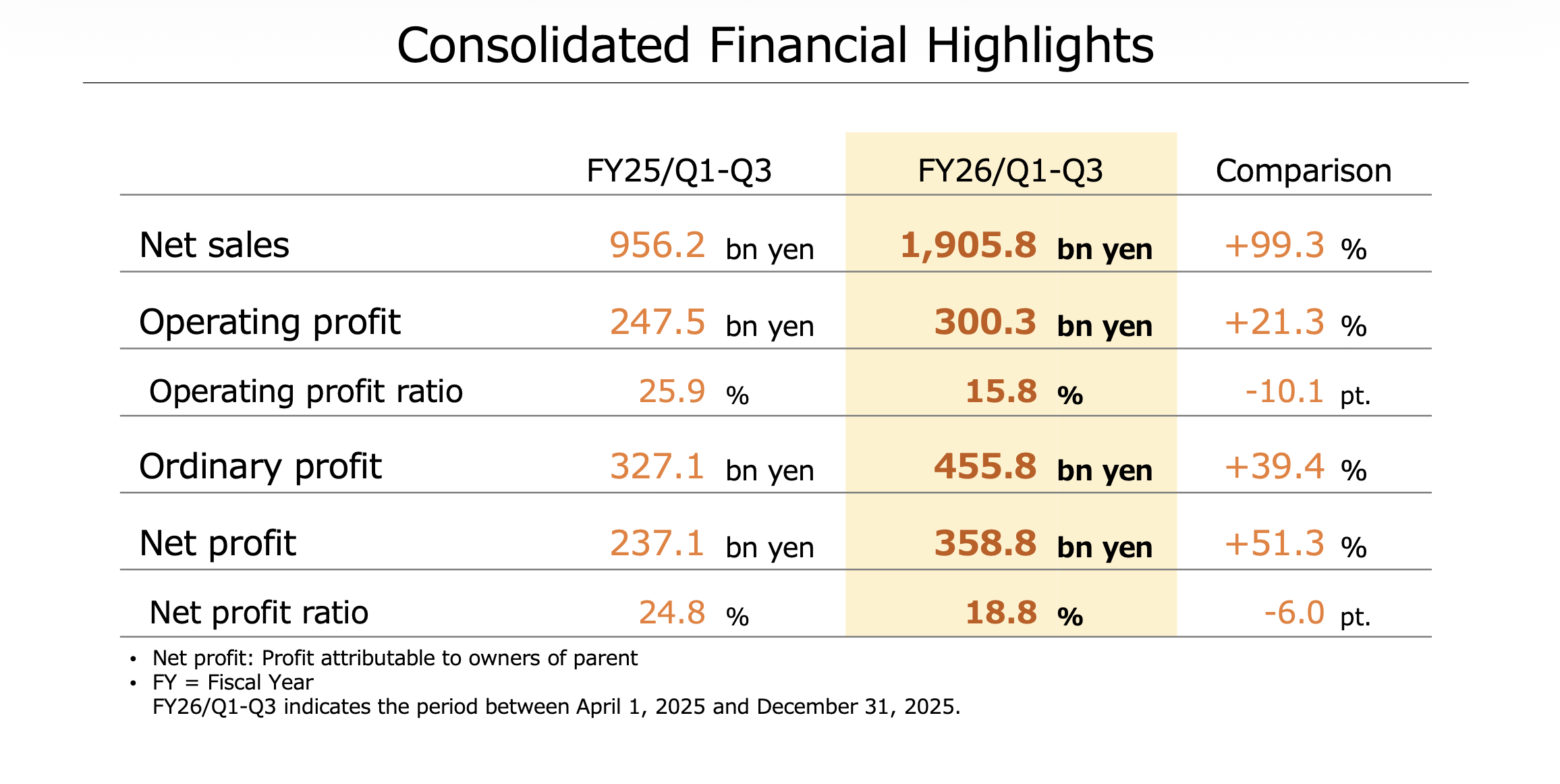
Core Viewpoint - Nintendo's recent financial report fell short of market expectations, raising concerns about future profitability due to rising component costs and conservative sales forecasts [1][3]. Financial Performance - For the first three quarters of fiscal year 2026, Nintendo reported net sales of 1,905.8 billion yen, a year-on-year increase of 99.3%; operating profit was 300.3 billion yen, up 21.3%; and net profit reached 358.8 billion yen, a 51.3% increase. However, the net profit margin decreased by 6 percentage points to 18.8% [1]. - In the third quarter of fiscal year 2026, Nintendo achieved revenue of 806.3 billion yen, an 86% year-on-year increase, but below the market expectation of 847.7 billion yen. Operating profit was 155.2 billion yen, up 23.1%, also below the expected 180.7 billion yen [1]. Hardware and Software Sales - In the first three quarters, the Switch 2 console sold 17.37 million units, making it the fastest console to reach 15 million sales. However, sales of the original Switch console decreased by 66% to 3.25 million units. Software sales for Switch 2 reached 37.93 million copies, while sales for the original Switch declined by 12.1% to 109 million copies [2]. Future Outlook - Nintendo maintained its full-year forecast for fiscal year 2026, projecting Switch 2 sales of 19 million units, with nearly 17.4 million units sold by the end of December 2025. The company also expects a net profit of 350 billion yen for the fiscal year [3]. - Concerns about profit margins are heightened due to ongoing U.S. tariffs and rising storage chip prices, which could pressure future profitability [3]. Component Cost Impact - Nintendo's president stated that the recent rise in memory prices has not significantly impacted hardware profits for the first three quarters, but ongoing price increases could pose risks. The company is monitoring the situation closely [5]. - The global storage chip market is experiencing a "super cycle" driven by AI demand, leading to rising prices that could affect the profitability of consumer electronics [5]. Pricing Strategy - Analysts suggest that raising the price of the Switch 2 may be necessary to maintain profitability amid rising memory costs, with estimates indicating a potential price increase of about 15% [6]. - However, some analysts believe that concerns regarding the profitability of the Switch 2 may be overstated, as Nintendo traditionally adheres to a strategy of not selling hardware at a loss [7].


存储“超级周期”:芯片“一天三个价”,PC全面提价在即|实探
Guo Ji Jin Rong Bao· 2026-02-05 04:09
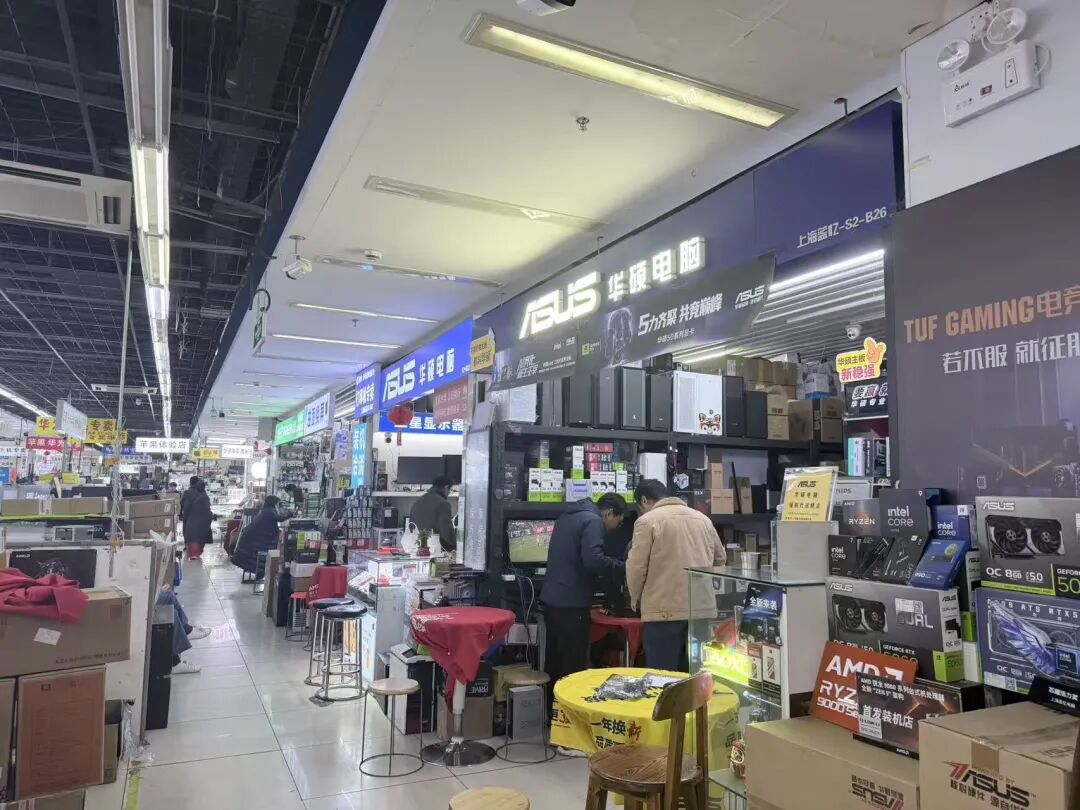
Core Viewpoint - The shortage of storage chips has become the biggest challenge for AI development, with supply-demand imbalance expected to ease only by 2028, according to Intel's CEO Pat Gelsinger [1]. Group 1: Market Dynamics - The global storage chip market is experiencing a "super cycle" driven by the AI boom, with prices for memory and hard drives rising significantly since mid-2025, showing no signs of stopping [1]. - Current discussions highlight that memory and hard drive prices have increased by three to four times compared to last year, with daily price fluctuations becoming common [1]. Group 2: Impact on Consumer Electronics - The consumer electronics industry is at a crossroads due to the significant rise in memory costs, leading many manufacturers to adjust prices upwards by 300 to 500 yuan for existing models, with some high-end models seeing increases exceeding 1,000 yuan [2]. - Predictions indicate that the post-Spring Festival period will mark a tipping point, with widespread price hikes expected for laptops, desktops, and smartphones [3]. Group 3: Manufacturer Responses - HP has already adjusted prices for some models by 300 to 500 yuan due to increased procurement costs from rising memory and hard drive prices [4]. - Lenovo plans to raise prices across its product line by 5% to 10%, with some models expected to increase by 1,000 to 1,500 yuan [4]. - ASUS has not yet raised prices but anticipates adjustments following market trends, citing rising costs as a clear industry trend [5]. Group 4: Effects on Custom PC Market - The custom PC market is significantly affected by the storage product super cycle, with assembly shops reporting a decline in customer inquiries and sales [7]. - The cost of assembling a computer has risen by at least 1,200 yuan, with high-performance configurations potentially increasing by up to 10,000 yuan [9]. Group 5: Price Trends and Future Outlook - The current price surge in storage products is not merely a cyclical fluctuation but a structural change driven by AI demand, with DRAM market value projected to reach $165.7 billion in 2025, a 73% year-on-year increase [11]. - Despite recent signs of price weakening in the DRAM market, the overall trend remains upward, with price fluctuations reflecting in end-user costs [12].
A股晚间热点 | 央行发声!着力支持扩大内需、科技创新等重点领域
智通财经网· 2026-02-04 15:26
Group 1 - President Xi Jinping had a phone call with US President Trump on February 4 [2] - The People's Bank of China emphasized support for expanding domestic demand, technological innovation, and small and micro enterprises during the 2026 credit market work meeting [3] - Guangdong Province is expanding the operational area for autonomous public transportation and encouraging the development of smart transportation services [4] Group 2 - Elon Musk's team visited several Chinese photovoltaic companies, raising market interest in the solar sector [5] - Investor Duan Yongping expressed his preference for Tesla vehicles while maintaining a critical view of Elon Musk [6][7] - The EU announced an investigation into Chinese wind power giant Goldwind, citing concerns over market competition distortion due to government subsidies [8] Group 3 - The Chinese mainland will soon resume tourism for Shanghai residents to Kinmen and Matsu, promoting cross-strait exchanges [9] - The A-share market is showing signs of recovery, with major indices rebounding and a notable increase in ETF shares [9] - Samsung Electronics' market value surpassed 1 trillion Korean won, driven by a super cycle in the storage industry [11]

存储超级周期愈演愈烈,三星市值首破1000万亿韩元
Feng Huang Wang· 2026-02-04 09:31
Core Insights - The article highlights that Samsung Electronics has surpassed a market capitalization of 1,000 trillion Korean Won (approximately 688 billion USD), becoming the first company in South Korea to reach this milestone [1] - Following a remarkable 125% increase last year, Samsung's stock price has risen approximately 41% year-to-date [1] - The company anticipates strong demand for storage chips in the future and plans to begin deliveries of its next-generation high bandwidth memory (HBM) chips, HBM4, within the current quarter [1] Company Summary - Samsung Electronics has achieved a significant market capitalization milestone, indicating strong investor confidence and market performance [1] - The stock performance reflects a substantial increase over the past year and into the current year, showcasing the company's growth trajectory [1] - The introduction of HBM4 chips is expected to further enhance Samsung's position in the storage chip market, aligning with the anticipated demand growth [1] Industry Summary - The storage industry is experiencing a supercycle driven by the AI boom, which is contributing to increased demand for memory products [1] - The strong performance of Samsung Electronics may signal positive trends for other companies in the storage sector as well [1] - The ongoing advancements in memory technology, such as the development of HBM4, are likely to play a crucial role in meeting future market demands [1]
半导体设备厂商,卖爆了
3 6 Ke· 2026-02-04 02:11
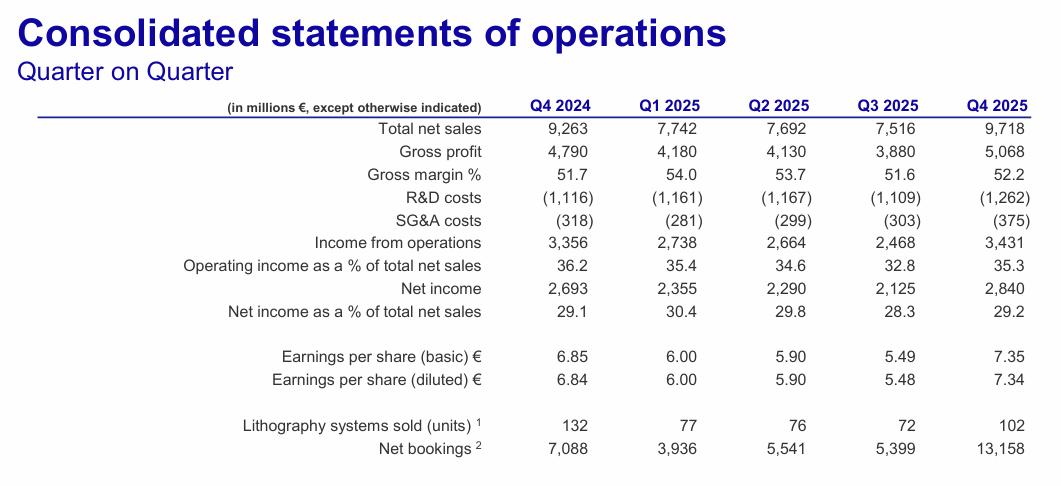
Core Insights - The Japanese semiconductor manufacturing equipment market is projected to grow by 14% to 5.59 trillion yen in 2025, marking the first time sales exceed 5 trillion yen and reflecting a robust growth trend in the global semiconductor equipment industry [1] - The growth is driven by two main factors: the explosion of AI chip demand and the recovery of the storage supercycle [2] Group 1: Semiconductor Equipment Market Growth - Japan's semiconductor equipment market is the second largest globally, with a market share of approximately 30% [1] - The sales forecast for 2025 significantly surpasses the 2024 figure of 4.44 trillion yen, indicating strong momentum in the sector [1] - Major semiconductor equipment manufacturers like ASML, Lam Research, KLA, and DISCO have reported strong financial results, highlighting the industry's growth potential [1] Group 2: AI and Storage Demand - The demand for semiconductor equipment is primarily driven by advancements in AI chips and a resurgence in storage technology [2] - The performance enhancement of chips relies on two main technological paths: advancing process technology (e.g., 3nm, 2nm) and adopting complex packaging techniques [3] - The competition among industry giants like TSMC, Intel, and Samsung for advanced nodes is translating into a rigid demand for high-end semiconductor equipment [3] Group 3: Financial Performance of Key Players - ASML reported a net sales increase of 4.92% year-on-year for Q4 2025, with logic orders reaching 5.8 billion euros, reflecting seasonal demand fluctuations [4] - Lam Research achieved record revenue of $20.6 billion in 2025, a 27% increase year-on-year, driven by strong market demand [6] - KLA's revenue for Q2 FY2026 reached $3.3 billion, exceeding market expectations, supported by robust demand for inspection equipment [13] Group 4: Equipment Demand Dynamics - The demand for advanced semiconductor equipment is expected to continue growing, driven by AI technology and the ongoing evolution of storage technologies [18][19] - The structure of orders is shifting, with storage orders now accounting for 56% of ASML's new orders, surpassing logic orders for the first time [19] - The transition to advanced DRAM architectures and NAND stacking technologies is expected to further increase the demand for high-end equipment [21][22] Group 5: Capital Expenditure Trends - Major semiconductor manufacturers are significantly increasing their capital expenditures, with TSMC planning to invest $52-56 billion in 2026, a 28-37% increase year-on-year [26] - Micron and SK Hynix are also ramping up their capital expenditures, focusing on HBM and advanced DRAM production lines [27] - The overall capital expenditure growth for storage manufacturers is projected to be around 40% in 2026, indicating a strong demand for semiconductor equipment [27] Group 6: Future Outlook - The semiconductor equipment market is expected to maintain high growth rates, with ASML projecting revenues between €34 billion and €39 billion for FY 2026 [29] - The introduction of High-NA EUV technology is anticipated to drive significant growth in the coming years, particularly as the industry moves towards 2nm and below processes [32] - The ongoing AI-driven demand and technological advancements are expected to support a long-term growth cycle in the semiconductor equipment industry [33]


未知机构:英伟达向三星索要跳过HBM4认证测试要求优先供应-20260204
未知机构· 2026-02-04 02:05
Summary of Conference Call Notes Industry Overview - The focus is on the semiconductor industry, specifically high bandwidth memory (HBM) and its critical role in artificial intelligence (AI) applications. [1][4] Key Points and Arguments - **NVIDIA's Demand for HBM4**: NVIDIA has requested Samsung Electronics to expedite the supply of the 6th generation HBM4, bypassing the final quality tests. This request indicates NVIDIA's urgency in securing HBM4 capacity amid fierce competition from AMD and Google. [1][3] - **Samsung and SK Hynix's Role**: Both Samsung and SK Hynix are currently conducting final quality tests for HBM4, with Samsung planning mass production in February. [2] - **Shift in Market Dynamics**: The semiconductor landscape has shifted, with Korean memory companies like Samsung and SK Hynix gaining unprecedented importance in the global AI and semiconductor supply chain. [4] - **Market Share Projections**: According to Counterpoint Research, SK Hynix and Samsung are expected to capture 54% and 28% of the global HBM4 market share, respectively, totaling over 80%. [4] - **Profitability Surge**: Morgan Stanley forecasts that Samsung and SK Hynix's operating profits will rise significantly, with estimates of 24.5 trillion KRW and 17.9 trillion KRW, respectively, compared to last year's profits of 4.36 trillion KRW and 4.72 trillion KRW, marking a growth of 4 to 5 times. [7] - **Increased Bargaining Power**: The shortage of general storage due to the focus on HBM production is enhancing the bargaining power of these companies. DRAM prices surged from $1.35 in January last year to $11.5 this January, a 750% increase. NAND flash prices also rose from $2.18 to $9.46. [5] - **Future of Storage Chips**: The transition to customized storage products is expected to increase the influence of domestic companies with superior design and production capabilities. [8] - **AI's Impact on Storage**: The demand for storage chips is projected to dominate the industry in the AI era, highlighting their critical role in supporting AI accelerators and data center expansions. [9] Additional Important Insights - **NVIDIA's Strategic Position**: NVIDIA's CEO Jensen Huang emphasized the need for substantial storage this year, indicating the company's reliance on memory suppliers to support its AI chip production. [5][6] - **Supply Chain Challenges**: The entire supply chain may face challenges due to the high demand for storage, which could impact production timelines and availability. [6]

半导体设备厂商,卖爆了
半导体行业观察· 2026-02-04 01:38
Core Viewpoint - The semiconductor equipment market in Japan is projected to grow significantly, with sales expected to reach 5.59 trillion yen in 2025, marking a 14% increase and surpassing the 5 trillion yen threshold for the first time, driven by strong demand from AI and storage sectors [2][25]. Group 1: Semiconductor Equipment Market Growth - Japan's semiconductor equipment market holds a global market share of approximately 30%, indicating robust growth and reflecting the vitality of the global semiconductor equipment industry [2][25]. - The growth is primarily fueled by two key drivers: the explosion of AI chip demand and the recovery of the storage supercycle [4][25]. Group 2: AI Chip Demand - The rapid development of AI technology serves as a core engine for growth, with AI chips requiring advanced manufacturing processes such as 3nm and 2nm nodes, leading to increased demand for sophisticated semiconductor equipment [5][6]. - Major players like TSMC, Intel, and Samsung are engaged in intense competition around advanced nodes, translating into a rigid demand for high-end semiconductor equipment [6][9]. Group 3: Financial Performance of Equipment Manufacturers - ASML reported a net sales increase to €9.72 billion in Q4 2025, with logic orders reaching €5.8 billion, reflecting seasonal demand fluctuations due to chip process upgrades [7][8]. - Lam Research achieved a record revenue of $20.6 billion in 2025, a 27% year-over-year increase, driven by strong market demand and a gross margin of 49.9%, the highest since its merger in 2012 [9][11]. - KLA's revenue for Q2 FY2026 reached $3.3 billion, exceeding market expectations, supported by the strong demand for inspection equipment driven by AI chip production [21][24]. Group 4: Storage Supercycle - The storage chip industry is experiencing a supercycle characterized by explosive demand and deep technological changes, driven by AI servers' need for HBM, advanced DRAM, and NAND flash [25][26]. - The shift in order structure indicates that storage orders now account for 56% of ASML's new orders, surpassing logic orders for the first time, highlighting storage's role as a core driver of equipment demand [25][26]. Group 5: Capital Expenditure Trends - Major semiconductor manufacturers are significantly increasing their capital expenditures, with TSMC planning to invest $52-56 billion in 2026, focusing on advanced processes and packaging capacity [33][34]. - Micron and SK Hynix are also ramping up their capital expenditures, with Micron increasing its 2026 spending to $20 billion, reflecting a strong focus on HBM and advanced DRAM production [35][36]. Group 6: Future Outlook - The semiconductor equipment market is expected to maintain high growth rates, with projections indicating that the current supercycle will last until at least 2027, driven by AI and storage technology advancements [27][41]. - ASML's CEO has reiterated a long-term vision of achieving annual revenues of €44-60 billion by 2030, supported by sustained demand for AI-driven semiconductor solutions [43][51].
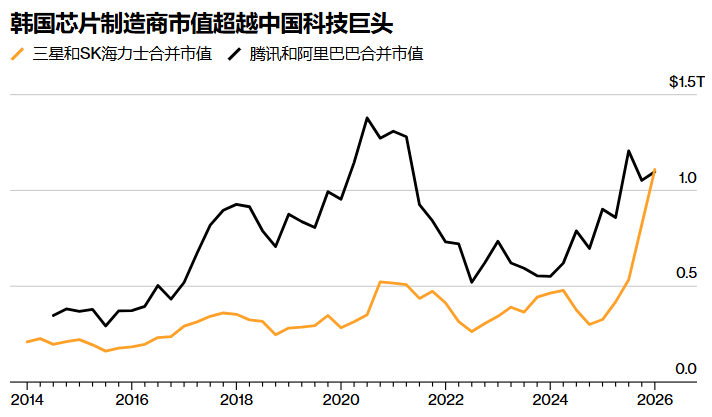
AI浪潮重塑亚洲科技版图:存储“超级周期”下,韩国芯片双雄合并市值即将首超阿里与腾讯
智通财经网· 2026-02-03 03:51
Group 1 - The combined market capitalization of Samsung Electronics and SK Hynix has reached $1.11 trillion, surpassing that of Alibaba and Tencent, highlighting the shift in the investment landscape of Asian tech stocks driven by the AI boom [1] - The rise of Korean chip manufacturers is attributed to their central role in the AI supply chain, benefiting from the growing demand for infrastructure in the AI sector, while Alibaba and Tencent are still in the early stages of AI involvement [1] - The market capitalization shift reflects the different developmental paths of South Korea and China, with South Korea positioning itself as a key supplier to global leaders like Nvidia, while China focuses on achieving technological self-sufficiency [1] Group 2 - Samsung Electronics' stock has risen by 34% this year, while SK Hynix's stock has surged approximately 37%, in contrast to Alibaba's 14% increase and Tencent's stagnant performance [4] - The growth of these Korean companies is driven by their leadership in high-bandwidth memory (HBM) chips, which power AI accelerators and benefit from the willingness of hyperscale data centers to pay a premium [4] - The unprecedented demand for memory chips has granted these companies significant pricing power, with the memory supercycle expected to last until 2027, enhancing the importance of the memory industry [4] Group 3 - In contrast to South Korea's dominance in the global AI sector, China is increasingly leaning towards domestic alternatives due to U.S. export restrictions on advanced chips [6] - The recent tech boom in China is primarily led by domestic AI chip design companies, although some startups focused on large language models are lagging behind [6] - While Alibaba and Tencent are involved in AI, their focus remains on developing models that serve their core businesses, indicating a potential long-term growth stability advantage for Chinese internet giants [6]
存储超级周期面临考验,韩股波动率“创新高”,对冲成本急升
Hua Er Jie Jian Wen· 2026-02-03 01:37
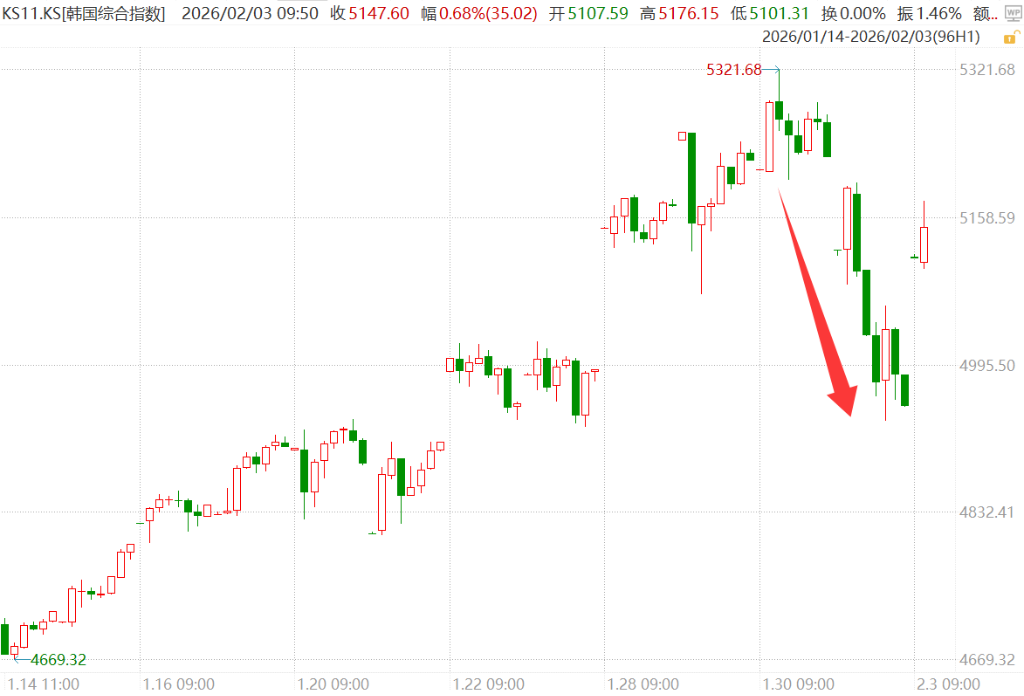
在经历了全球最强劲的年初涨势后,投资者正对冲韩国股市波动风险。 周一,韩国股市遭遇4月以来最大跌幅,韩国综合指数跌超5%。同时押注韩国综合指数下跌10%的一个月期权成本相对看涨期权的比例跳升至去 年11月以来最高水平。 (昨日韩国综合指数重挫,周二高开反弹) 周一,三星电子和SK海力士两大芯片巨头股价均暴跌超过5%,尽管上周两家公司均公布利润大幅增长,但股价在业绩公布后仍然下跌。这进一 步加剧了投资者的谨慎情绪。 波动率指标飙升至极端水平 韩国Kospi 200波动率指数(VKOSPI)周一飙升近8点,创下近10个月来最大单日涨幅。,同时也已连续六个交易日上涨。 Korea Investments & Securities Asia环球衍生品主管Jangwon Seo上周表示,VKOSPI的高位水平反映出"市场不确定性加剧,以及韩国个股预期将 出现极端波动",建议投资者考虑进行对冲。 巴克莱银行亚太区股票业务主管Paul Johnson上周指出,1月份韩国市场涨势加速。他表示: 考虑到该市场波动率相对缺乏流动性以及指数挂钩结构性产品供应量较低,通过期权进行杠杆投机交易和对冲活动的需求自然会大幅 推动市场。 值 ...