
跨周期调节

Search documents
结构性降息0.25个百分点!央行最新发布会释放重要信号
Guo Ji Jin Rong Bao· 2026-01-15 14:12
Core Viewpoint - The People's Bank of China (PBOC) is implementing monetary policy measures to support high-quality economic development, including a 0.25 percentage point reduction in various structural monetary policy tool rates to enhance bank lending in key areas [1][2]. Group 1: Policy Measures - The PBOC will lower the interest rates of various structural monetary policy tools by 0.25 percentage points, with the one-year re-lending rate decreasing from 1.5% to 1.25% [2]. - The new rates for re-lending and re-discounting will be 0.95%, 1.15%, and 1.25% for 3-month, 6-month, and 1-year terms respectively, with the re-discount rate set at 1.5% [2]. Group 2: Economic Impact - The reduction in rates aims to lower financing costs in specific sectors, encouraging banks to lend at lower rates to small and micro enterprises, technological innovation, and green transformation [4]. - The targeted approach of structural monetary policy tools is expected to improve the efficiency of fund utilization and enhance financial services for the real economy [4]. Group 3: Future Monetary Policy Outlook - There is still room for further reductions in the reserve requirement ratio, with the current average at 6.3%, indicating a potential decrease of about 1.3 percentage points [5][6]. - The PBOC is expected to maintain a moderately loose monetary policy, focusing on the integration of existing and new policies to create a conducive financial environment for stable economic growth [7][8].

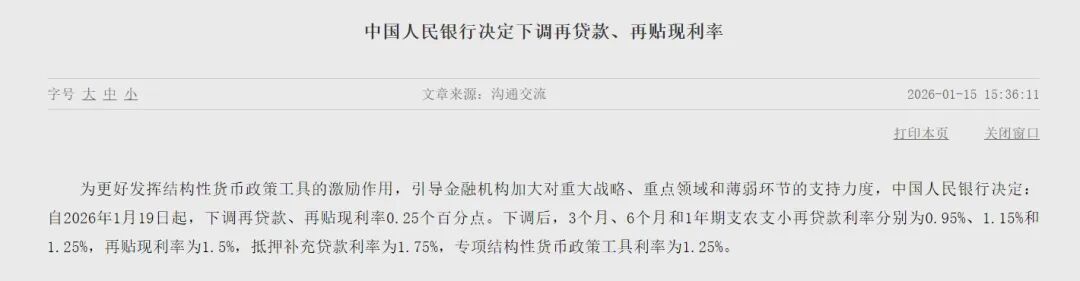
央行官宣:降息!
Nan Fang Du Shi Bao· 2026-01-15 10:31
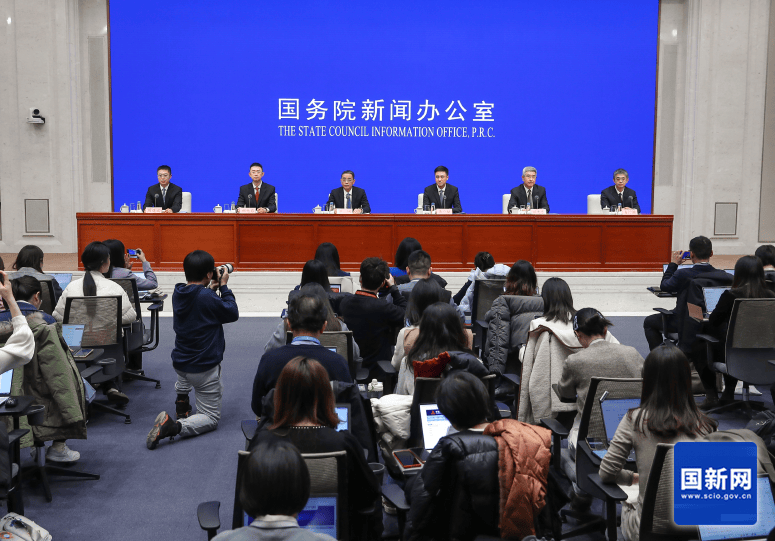
1月15日,中国人民银行新闻发言人、副行长邹澜在国新办新闻发布会上表示,加大逆周期和跨周期调 节力度,有效支持"十五五"开好局、起好步。 邹澜宣布,人民银行将先行推出两方面政策措施,一方面是下调各类结构性货币政策工具利率,提高银 行重点领域信贷投放的积极性,另一方面是完善结构性工具,并加大支持力度,进一步助力经济结构转 型优化。 三是增加科技创新和技术改造再贷款额度,并扩大支持范围,将科技创新和技术改造贷款额度从8000亿 元增加4000亿元至1.2万亿元,并将研发投资水平较高的民营中小企业纳入支持领域。 四是合并设立科技创新与民营企业债券风险分担工具,将此前已经设立的民营企业债券融资支持工具、 科技创新债券风险分担工具合并管理,合计提供再贷款额度2000亿元。 五是拓展碳减排支持工具的支持领域。纳入节能改造的绿色升级能源、绿色低碳转型等更多具有碳减排 效应的项目,引导银行支持全面绿色转型。 六是拓展服务消费与养老贷贷款的支持领域。结合健康产业认定标准,在服务消费与养老贷款的支持领 域中纳入健康产业。 七是会同金融监管总局将商业用房购房贷款最低首付比例下调至30%,支持推动商办房地产市场去库 存。 八是鼓励金 ...
【权威发布】央行出台一批重磅政策
Sou Hu Cai Jing· 2026-01-15 10:10
Core Viewpoint - The People's Bank of China (PBOC) is set to implement a moderately accommodative monetary policy to support high-quality economic development, with specific measures aimed at enhancing credit flow to key sectors and facilitating economic structural transformation [2][3]. Group 1: Monetary Policy Measures - The PBOC will lower the interest rates of various structural monetary policy tools by 0.25 percentage points, reducing the one-year re-lending rate from 1.5% to 1.25% [2]. - The PBOC will merge the re-lending for agriculture and small enterprises with rediscounting, increasing the re-lending quota for agriculture and small enterprises by 500 billion yuan, with a separate quota of 1 trillion yuan specifically for private enterprises [2][3]. Group 2: Support for Innovation and Green Transition - The quota for re-lending aimed at technological innovation and transformation will be increased from 800 billion yuan to 1.2 trillion yuan, expanding support to high R&D investment private small and medium-sized enterprises [3]. - The PBOC will merge the existing private enterprise bond financing support tool and the technological innovation bond risk-sharing tool, providing a combined re-lending quota of 200 billion yuan [3]. Group 3: Additional Support Measures - The PBOC will expand the support areas for carbon reduction tools to include energy-saving renovations and green upgrades, encouraging banks to support comprehensive green transitions [3][4]. - The minimum down payment ratio for commercial property loans will be lowered to 30% to support the destocking of the commercial real estate market [4]. - Financial institutions will be encouraged to enhance foreign exchange risk management services, providing cost-effective and flexible tools for managing exchange rate risks [4].
专访中银证券全球首席经济学家管涛:“灵活高效”将成为2026年货币政策关键词丨高端访谈
Sou Hu Cai Jing· 2026-01-15 08:03
Core Viewpoint - The central economic work conference has reiterated the implementation of a moderately loose monetary policy, emphasizing the flexible and efficient use of various policy tools such as reserve requirement ratio (RRR) cuts and interest rate reductions, indicating potential space for further easing measures [1][4]. Monetary Policy Signals - The new phrasing of "flexible and efficient" suggests that if necessary, the central bank will adjust the intensity, rhythm, and timing of policy implementation based on domestic and international economic conditions, indicating that there is still room for RRR cuts and interest rate reductions [4]. - RRR and interest rate cuts are not the only options for maintaining liquidity; other quantitative adjustment tools can be utilized, and structural monetary policy tools can be optimized to lower overall financing costs [5]. Policy Effectiveness and Adjustments - The actual easing measures in 2025 appear to be less aggressive than in 2024, with only one RRR cut of 50 basis points compared to two cuts totaling 100 basis points the previous year, and a single interest rate reduction of 10 basis points [6][7]. - Despite the lower intensity of easing, the effects of counter-cyclical adjustments are gradually becoming evident, with a net monetary injection of 591.6 billion yuan in the first eleven months of the year, compared to a net withdrawal of 3.09 trillion yuan in the same period last year [7]. Yield Trends and Financing Costs - The 10-year government bond yield has rebounded by 16 basis points despite the shift to a moderately loose monetary policy, primarily due to the market's previous overreaction to anticipated easing [8]. - However, the overall financing costs have decreased, with new corporate and personal housing loan rates dropping by approximately 40 and 25 basis points year-on-year, respectively [8]. Policy Coordination - The emphasis on enhancing policy "coordination" reflects a shift towards integrating various economic policies, including fiscal and monetary measures, to foster a consumption-driven economic growth model [9][10]. - The central economic work conference has highlighted the need for consistency in macroeconomic policy orientation, ensuring that both existing and new policies work together to stabilize employment, businesses, and market expectations [10]. Future Monetary Policy Directions - The central economic work conference and the central bank's quarterly meeting have called for increased counter-cyclical and cross-cyclical adjustments, balancing short-term and long-term economic needs [11][12]. - The focus for 2026 will include structural support, risk prevention, and the establishment of a robust monetary policy framework, alongside measures to enhance financial market stability and manage systemic risks [14][15].


2026年01月15日申万期货品种策略日报-国债-20260115
Shen Yin Wan Guo Qi Huo· 2026-01-15 02:23
| | | | | 申银万国期货研究所 唐广华(从业资格号:F3010997;交易咨询号:Z0011162) tanggh@sywgqh.com.cn 021-50586292 | | | | | | | --- | --- | --- | --- | --- | --- | --- | --- | --- | --- | | | | TS2603 | TS2606 | TF2603 | TF2606 | T2603 | T2606 | TL2603 | TL2606 | | | 昨日收盘价 | 102.334 | 102.360 | 105.655 | 105.645 | 107.930 | 107.865 | 111.27 | 111.38 | | | 前日收盘价 | 102.330 | 102.356 | 105.625 | 105.605 | 107.850 | 107.775 | 111.35 | 111.48 | | | 涨跌 | 0.004 | 0.004 | 0.030 | 0.040 | 0.080 | 0.090 | -0.080 | -0.100 | | | 涨跌幅 | 0.00% | ...
2025年12月物价数据点评:价格改善,政策提质增效
Shanghai Securities· 2026-01-13 08:42
Group 1: CPI Analysis - In December 2025, the Consumer Price Index (CPI) rose by 0.8% year-on-year, an increase of 0.1 percentage points, reaching the highest level since March 2023[7] - Month-on-month, CPI turned positive with a 0.2% increase, reversing a previous decline of 0.1%[14] - Food prices increased by 1.1%, contributing approximately 0.17 percentage points to the year-on-year CPI increase[7] Group 2: PPI Analysis - The Producer Price Index (PPI) decreased by 1.9% year-on-year, but the decline narrowed by 0.3 percentage points compared to the previous month[13] - Month-on-month, PPI rose by 0.2%, marking a continuous increase for three months, with the growth rate expanding by 0.1 percentage points[20] - Key industries such as coal mining and black metal smelting saw a reduction in price decline, indicating some improvement in PPI[22] Group 3: Economic Outlook - The core CPI, excluding food and energy, remained stable at a 1.2% year-on-year increase, maintaining above 1% for four consecutive months, indicating steady demand[16] - The overall low price levels create space for policy adjustments, with expectations for more proactive fiscal and moderately loose monetary policies[29] - The central economic work conference emphasized the need for policies to promote stable economic growth and reasonable price recovery[29] Group 4: Risks - Potential risks include worsening geopolitical events, changes in international financial conditions, and unexpected shifts in US-China policies[32]
戴德梁行:房地产市场还有潜力 REITs扩围开启不动产金融化新阶段
3 6 Ke· 2026-01-12 09:58
Core Insights - The Chinese real estate market has significant potential for growth, with its contribution to GDP at 6.3%, lower than the global average of over 10% for developed economies [1] - The expansion of public REITs to include office buildings and hotels marks a new phase in the financialization of real estate in China, providing standardized exit channels for existing assets and diverse investment options for institutional investors [1][2] Market Structure - In 2025, the real estate value added in the U.S. reached $3.5 trillion, with rental income accounting for approximately 77%, while China's real estate value added was $1.2 trillion, with over 50% from development and operation [2] - The market is shifting from a reliance on development sales to a full-cycle capability competition, indicating substantial room for development in the real estate sector [2] Policy Developments - The China Securities Regulatory Commission announced the inclusion of commercial real estate in the public REITs pilot program, aiming to enhance the efficiency of the approval process and expand the REITs market [2] - A series of policy measures have been implemented to provide standardized exit channels for existing assets and broaden investment choices for institutional investors [2] Market Performance - By the end of 2025, the domestic public REITs market had issued 79 products with a total issuance scale exceeding 210 billion yuan, making it the largest in Asia and the second largest globally [3] - Commercial REITs have shown strong performance, with notable oversubscription rates, indicating market confidence in commercial real estate [3] Future Trends - The year 2026 is expected to focus on steady economic development, with an emphasis on expanding domestic demand and boosting consumption as key drivers of growth [4] - The Beijing office market is anticipated to face challenges, with a need for owners to enhance core competitiveness and innovate in commercial formats to adapt to market changes [4]
地缘扰动加剧,资源保障存忧,沪铜仍强:铜周报20260111-20260112
Guo Lian Qi Huo· 2026-01-12 03:51
1. Report Industry Investment Rating No relevant information provided. 2. Core View of the Report The geopolitical disturbances are intensifying, there are concerns about resource security, and the Shanghai copper market remains strong [1]. 3. Summary by Relevant Catalogs 3.1 Impact Factor Analysis - **Macro (Positive)**: In 2026, the central bank will increase counter - cyclical and cross - cyclical adjustment efforts, and flexibly and efficiently use various monetary policy tools such as reserve requirement ratio cuts and interest rate cuts. The US president is discussing a plan to acquire Greenland, including military options, and has instructed the purchase of $200 billion in US mortgage - backed bonds. China's December CPI year - on - year increase reached a 34 - month high, and PPI increased month - on - month for three consecutive months. The US added 50,000 non - farm jobs in December, falling short of expectations, and the unemployment rate dropped to 4.4%. The January Michigan consumer confidence index reached a four - month high [6]. - **Demand (Negative)**: Affected by holidays and high prices, the operating rate of refined copper rods continued to be under pressure, showing both month - on - month and year - on - year declines. The transaction area of new and second - hand houses in 10 key cities last week decreased both month - on - month and year - on - year. The production plan of household air conditioners in January increased by 11% compared with last year's actual performance, but the production plans in January and February were different due to the Spring Festival, with the cumulative production basically flat. The retail volume of new energy passenger vehicles in the national market from December 1st to 31st increased by 7% year - on - year. The overall production plan of photovoltaic modules in January is expected to decline significantly, and the export tax rebate for photovoltaic value - added tax will be cancelled starting from April [6]. - **Supply (Neutral)**: According to Steel Union, the port inventory of copper concentrates this week was 428,000 tons, a month - on - month decrease of 68,000 tons and at a low level compared with the same period last year. Codelco's copper production in 2025 was 1.332 million tons, a slight increase compared with 2024. Rio Tinto and Glencore are conducting preliminary consultations on a potential business merger. According to SMM, the domestic electrolytic copper production in December increased by 6.8% month - on - month and 7.54% year - on - year, mainly due to the resumption of production of previously overhauled smelters and the increase in the production of scrap - produced anode copper. The electrolytic copper production in January is expected to decrease month - on - month but increase year - on - year [6]. - **Inventory (Negative)**: This week, the spot and bonded - area inventories of electrolytic copper increased month - on - month. LME copper stocks decreased, while COMEX copper stocks increased. According to Steel Union, the spot inventory of electrolytic copper on Thursday was 284,700 tons, an increase of 13,300 tons compared with Monday and 37,600 tons compared with last Thursday; the bonded - area inventory was 115,200 tons, an increase of 1,700 tons compared with Monday and 6,800 tons compared with last Thursday. The LME copper inventory on Friday was 138,975 tons, a week - on - week decrease of 6,350 tons; the COMEX copper inventory on Friday was 517,999 short tons, a month - on - month increase of 18,158 short tons [6]. - **Specific Production (Neutral)**: On Friday, the spot premiums and discounts of premium copper, flat - grade copper, and wet - process copper were 30, - 80, and - 175 yuan/ton respectively. Due to the high price level and weak spot copper transactions, the premiums and discounts were under pressure. The spread between the February and March contracts of Shanghai copper closed at - 170 yuan/ton on Friday afternoon, continuing to be under pressure. The LME copper 0 - 3M premium strengthened slightly week - on - week [6]. 3.2 Price Data - The high price level led to weak spot copper transactions, and the premiums and discounts were under pressure [11]. - The LME copper 0 - 3M premium strengthened slightly week - on - week [13]. 3.3 Fundamental Data - The average price of the copper concentrate TC index this week decreased by $0.43/ton month - on - month to - $45.41/ton, still at a low level [15]. - The port inventory of copper concentrates this week was 428,000 tons, a month - on - month decrease of 68,000 tons and at a low level compared with the same period last year [18]. - The price difference between refined copper and scrap copper strengthened [20]. - The domestic electrolytic copper production in December increased by 6.8% month - on - month and 7.54% year - on - year, and the production in January is expected to decrease month - on - month but increase year - on - year [23]. - In November, China imported 269,200 tons of refined copper, a month - on - month decrease of 3.8%, and exported 143,000 tons, a month - on - month increase of 116.8% [26]. - This week, the spot and bonded - area inventories of electrolytic copper increased month - on - month, LME copper stocks decreased, and COMEX copper stocks increased [27][28]. - Affected by holidays and high prices, the operating rate of refined copper rods continued to be under pressure, showing both month - on - month and year - on - year declines [31]. - The retail volume of new energy passenger vehicles in the national market from December 1st to 31st increased by 7% year - on - year [32]. - The overall production plan of photovoltaic modules in January is expected to decline, and the export tax rebate for photovoltaic value - added tax will be cancelled starting from April [33]. - The production plans of household air conditioners in January and February were different due to the Spring Festival, with the cumulative production basically flat [35]. 3.4 Macroeconomic Data - China's RatingDog service industry PMI in December was 52, remaining in the expansion range, but new export orders fell back into contraction [37]. - The US January Michigan consumer confidence index reached a four - month high, and inflation expectations were relatively stable [40]. - "New Fed Wire" said that the December non - farm employment data paved the way for maintaining the status quo, and traders expect it is almost impossible to make a change in January [41].
2026年01月09日申万期货品种策略日报-国债-20260109
Shen Yin Wan Guo Qi Huo· 2026-01-09 03:24
| | 1、央行公告称,1月8日以固定利率、数量招标方式开展了99亿元7天期逆回购操作,操作利率1.40%,投标量99亿元, | | --- | --- | | | 中标量99亿元。Wind数据显示,当日无逆回购到期,据此计算,单日净投放99亿元。 | | | 2、中共中央政治局常务委员会1月8日全天召开会议,会议强调,今年要锚定"十五五"时期经济社会发展的重大战略 | | | 任务,统一意志、形成合力,共同推进各领域工作,努力实现良好开局。树立和践行正确政绩观,坚持为人民出政绩 | | | 、以实干出政绩。加强党组自身建设,认真履行全面从严治党主体责任,切实增强自我革命的自觉性坚定性。 3、商务部举行例行新闻发布会,回应近期热点问题。对于Meta以20亿美元收购人工智能平台Manus,商务部新闻发言 | | | 人何亚东表示,企业从事对外投资、技术出口、数据出境、跨境并购等活动,须符合中国法律法规,履行法定程序。 | | | 商务部将会同相关部门对此项收购开展评估调查。对于两用物项对日出口管制,何亚东表示,涉及民事用途的不会因 | | | 此受到影响。 | | 宏观 | 4、2025年12月,我国消费市场稳 ...
告别“大水漫灌” 财政调控靶向精准滴灌
Zhong Guo Jing Ying Bao· 2026-01-08 14:05
Core Viewpoint - The fiscal policy for 2026 will be "more proactive and effective," focusing on structural optimization and targeted measures rather than merely increasing total spending [1][2]. Group 1: Fiscal Policy Implementation - The 2026 fiscal policy will expand the fiscal expenditure base to ensure necessary spending [1]. - There will be an optimization of government bond tools to enhance their effectiveness [1]. - The efficiency of transfer payment funds will be improved to increase local financial autonomy [1]. - The expenditure structure will be continuously optimized, with a focus on key areas [1]. - There will be a strengthened collaboration between fiscal and financial policies to amplify policy effectiveness [1]. Group 2: New Characteristics and Balance Logic - The proactive nature of the 2026 policy emphasizes long-term strategic planning and precise targeting to address short-term economic fluctuations and long-term structural issues [2]. - The policy will utilize tools such as special bonds, tax incentives, and transfer payments to direct fiscal resources towards critical areas like major national strategies and technological innovation [2]. - The integration of fiscal policy with monetary and industrial policies will create a strong macroeconomic control synergy [2]. Group 3: Debt Management and Fiscal Health - In 2025, local debt issuance exceeded 10 trillion yuan, with special bonds focusing on infrastructure to stimulate economic recovery [3]. - The central government will replace 2 trillion yuan of existing hidden debt with special bonds, reducing average interest costs by over 2.5 percentage points [3]. - The 2026 fiscal strategy will balance necessary fiscal deficits and total debt while optimizing the expenditure structure and managing tax incentives [3]. - The emphasis will be on enhancing the quality of fiscal revenue and ensuring long-term fiscal health by focusing on key areas like technological innovation and public welfare [3]. Group 4: Zero-Based Budgeting Reform - The zero-based budgeting reform is expected to expand its coverage in 2026, moving beyond general public budgets to more departments and projects [3]. - This reform aims to break the rigidity of budgets and improve the standardization and consistency of local practices [3].