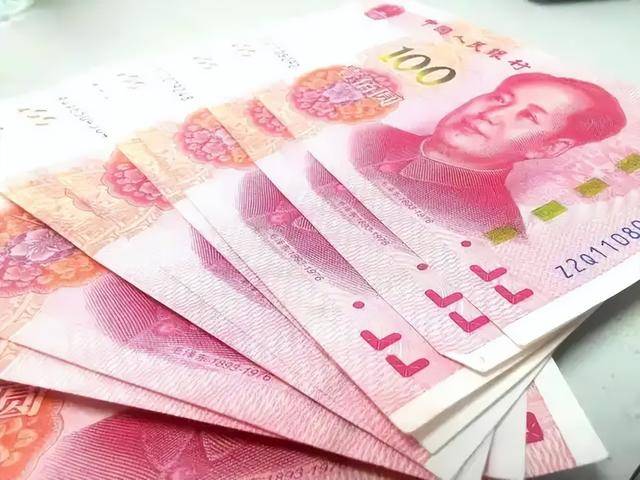
人民币升值

Search documents
A股策略周报20251228:新的主线浮出水面-20251228
SINOLINK SECURITIES· 2025-12-28 11:16
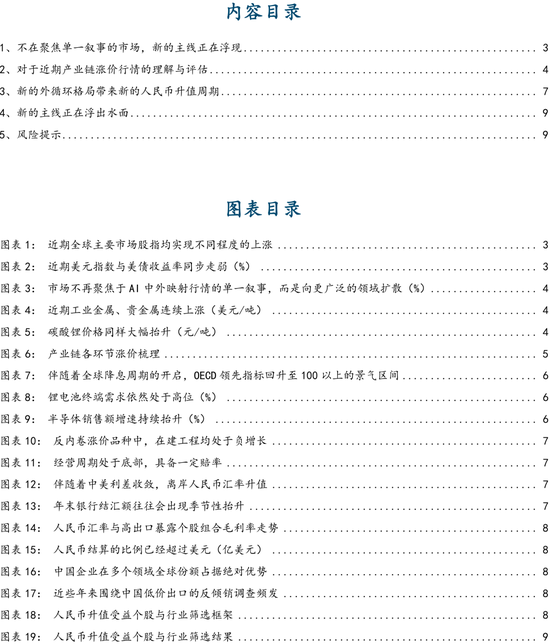
Group 1 - The A-share market has seen a continuous rise, indicating the gradual initiation of a year-end rally, with global risk assets recovering amid easing liquidity tightening expectations [3][12] - The market is shifting focus from a single narrative around AI to a broader range of themes, including domestic demand, price increase chains, and new industrial themes like commercial aerospace [3][12] - The current market rally is characterized by industry rotation and the emergence of new investment themes for 2026, driven by the interplay between AI investment and global manufacturing recovery [3][12] Group 2 - Recent price increases across various industries have become a focal point, with raw material price hikes being a primary driver, leading to passive price increases in many sectors [4][17] - The effects of anti-involution policies are becoming evident, as some companies opt for voluntary production cuts and joint price increases to maintain competitive order amid rising upstream costs and downstream price pressures [4][17] - The sustainability of price increases varies by sector, with strong demand in some areas like lithium battery and wafer manufacturing, while sectors with weaker demand, such as titanium dioxide, may face challenges in sustaining price hikes [4][24] Group 3 - A new cycle of RMB appreciation is emerging, primarily driven by the weakening dollar and seasonal capital inflows, with medium-term support from improved China-U.S. relations and resilient export performance [5][33] - Historical trends indicate that during RMB appreciation periods, companies with high overseas exposure often experience a temporary increase in sales margins, followed by a decline, suggesting a complex relationship between currency strength and export competitiveness [5][34] - The current RMB appreciation is expected to alleviate cost pressures from rising prices of commodities and integrated circuits, benefiting sectors such as communication equipment, environmental governance, and lithium batteries [5][40] Group 4 - The new investment themes for 2026 are beginning to manifest across commodity markets, real industry chains, and foreign exchange markets, with a focus on industrial resource products that resonate with AI investment and global manufacturing recovery [6][12] - Recommended sectors include industrial resource products like copper, aluminum, and lithium, as well as equipment export chains with global comparative advantages, and consumer sectors benefiting from inbound recovery and rising household income [6][12]
国金策略:跨年行情缓步开启,新的主线浮出水面
Xin Lang Cai Jing· 2025-12-28 11:03
Group 1 - The market is no longer focused on a single narrative, with new investment themes emerging as the A-share market experiences a gradual upward trend, indicating a cross-year market rally [2][12][34] - The recent price increase across various industry chains is driven primarily by rising raw material costs, with companies adopting strategies such as voluntary production cuts and joint price increases to maintain competitive order [3][14][16] - The new external circulation pattern is leading to a new cycle of RMB appreciation, driven by factors such as the weakening dollar and seasonal capital inflows, with historical trends suggesting limited impact on export competitiveness [4][21][23][25] Group 2 - A new investment theme for 2026 is emerging, characterized by increased physical consumption across industry chains and a prolonged trading range for bulk commodities, highlighting China's manufacturing advantages [6][29][37] - Recommended sectors include industrial resource products that resonate with AI investment and global manufacturing recovery, as well as Chinese equipment export chains and domestic manufacturing sectors poised for recovery [6][29][37] - The consumer recovery channel is expected to benefit from inbound tourism and rising household income, with sectors such as aviation, hotels, and food and beverage showing potential [6][29][37]


长江证券:人民币升值下的“春季躁动”机会有何不同
Xin Lang Cai Jing· 2025-12-28 09:08
Core Viewpoint - The article discusses the recent performance of the Shanghai Composite Index, which has achieved an "eight consecutive days" rise, driven by strong domestic capital amid the absence of northbound funds due to the Christmas holiday. The market has shown good profitability, with trading volumes exceeding 1.9 trillion yuan on December 25 and 26. The backdrop of AI narratives, domestic demand stimulation, and the depreciation of the US dollar are highlighted as key factors influencing the market dynamics [1][7]. Group 1: Market Performance and Dynamics - The Shanghai Composite Index has achieved an "eight consecutive days" rise, supported by strong domestic capital [1][7]. - Trading volumes exceeded 1.9 trillion yuan on December 25 and 26, indicating a favorable market profitability effect [1][7]. - The offshore RMB has strengthened past the 7.0 mark against the US dollar, which is seen as a critical variable for future market trends [1][7]. Group 2: Investment Opportunities - Beneficiary sectors are categorized into three tiers: 1. Cost and debt improvement types, which directly benefit from RMB appreciation and have high elasticity [1][7]. 2. Fund flow-driven types, which are core assets benefiting from increased attractiveness of RMB assets [1][7]. 3. Asset revaluation types, which present valuation recovery opportunities due to the intrinsic value enhancement of RMB-denominated assets [1][7]. Group 3: Historical Context and Comparisons - Since 2017, the RMB has experienced three phases of rapid appreciation, each with different underlying logic: 1. The 2017 appreciation was linked to the opening of the Shanghai-Hong Kong Stock Connect, leading to core asset revaluation due to foreign capital inflow [2][8]. 2. The 2020-2021 phase was driven by a significant recovery in export data and strong performance in the new energy sector, showcasing the resilience of Chinese manufacturing [2][8]. 3. The late 2022 to early 2023 phase was characterized by a rebound in manufacturing PMI amid economic pressure, with market speculation on economic recovery [2][8]. Group 4: Current Differences and Strategic Opportunities - The current appreciation is primarily driven by domestic capital rather than foreign investment, favoring high-elasticity sectors rather than stable consumer and financial sectors [3][9]. - The core driving force is the technological revolution and liquidity abundance, with a higher market risk appetite focusing on sectors like commercial aerospace, AI infrastructure, and humanoid robotics [3][9]. Group 5: Recommended Strategies - The recommended trading strategy for the current RMB appreciation phase includes a mid-term focus on "pan-technology" and a short-term defensive approach, emphasizing sectors like commercial aerospace, robotics, and AI applications [4][10]. - It is suggested to maintain a lower position in defensive stocks that directly benefit from RMB appreciation, such as paper manufacturing and airport operations, especially during the annual report forecast period [4][10].

中信证券:以震荡市思维应对跨年行情
Xin Lang Cai Jing· 2025-12-28 08:45
Core Insights - In December, 39 out of 360 industry/theme ETFs reached new highs, primarily in the communication, non-ferrous metals, and military (aerospace) sectors, indicating strong market consensus on these areas [2][11] - Established sectors like communication and non-ferrous metals are seen as core investment themes, while emerging sectors such as commercial aerospace are gaining traction amid market volatility [1][3] Group 1: Performance of ETFs - The communication ETFs saw an average increase of 10% since October, with an annual average increase of 91.5% [2][12] - Non-ferrous metal ETFs experienced an average increase of 20.1% since October, with an annual average increase of 95.2% [2][12] - Military and aerospace ETFs had an average increase of 18.7% since October, with satellite ETFs rising by an average of 34.5% [2][12] Group 2: Emerging Investment Themes - Commercial aerospace is viewed as an active investment choice during market fluctuations, similar to previous low-altitude themes, driven by narratives around US-China space infrastructure competition [3][4] - The commercial aerospace sector, while promising, does not match the scale of humanoid robotics or low-altitude economies, indicating a more modest growth potential [4][14] Group 3: Under-the-Radar Sectors - Sectors like chemicals and engineering machinery are quietly rising and have reached new annual highs, reflecting China's manufacturing competitiveness and pricing power [5][15] - These sectors are characterized by low media attention and fragmented industry discussions, making them susceptible to being overlooked despite their potential for profit margin improvement [5][15] Group 4: Anti-Inflation Trends - Sectors related to anti-inflation, such as new energy and steel, are showing signs of recovery, with market sensitivity to supply dynamics increasing [6][16] - Recent supply chain disruptions in the new energy sector have led to positive stock price reactions, indicating market expectations for tangible supply reductions [6][16] Group 5: Investment Strategy - The current market strategy emphasizes structural opportunities in a volatile market, focusing on sectors with low heat and concentration but increasing attention and potential for long-term ROE improvement, such as chemicals, engineering machinery, and new energy [7][17] - The strategy also includes monitoring the trend of RMB appreciation, with sectors like brokerage and insurance being positioned as both offensive and defensive choices [7][17]

和讯投顾徐梦婧:你以为扩大内需只是消费这么简单吗?
Sou Hu Cai Jing· 2025-12-28 08:18
最近A股市场出现八连阳的强势表现,这与人民币汇率的显著升值有着直接的关联。而人民币升值的背 后,其实也蕴含着2026年扩大内需战略的财富密码。接下来,我们来深入分析一下人民币升值对普通人 的生活以及股市究竟会产生怎样的影响。 如今,大家应该明白为什么最近的重要会议将扩大内需放在了首位。扩大内需战略提出后,汇率恰巧升 值,这一套组合拳打得非常漂亮。那么,人民币升值对A股市场又会产生怎样的影响呢?回顾历史,每 次提出扩大内需战略,都伴随着A股市场的红利。1998年首次提出扩大内需战略后,1999年上证指数涨 幅超过19%;2008年强化部署扩大内需,2009年上证指数迎来牛市,涨幅接近80%;2020年扩大内需战 略重新升级,创业板涨幅超过64%。如今,扩大内需被置于2026年八项重点任务之首,这一次的市场机 遇值得每一位投资者期待。 首先,这一波人民币汇率升值是从4月份的7.4这一新低开始回升,目前已经站稳在7.0上方。在过去的8 个月里,人民币升值幅度达到了5.7%。这一反转主要源于美联储的降息以及中国经济展现出的超强韧 性。接下来,升值的汇率虽然会对进口产生利好,但同时也引发了市场对出口的担忧。许多人会联想 ...
再破7.0关口,人民币升值有多猛,普通人到底受益了吗
Sou Hu Cai Jing· 2025-12-28 01:53
Core Viewpoint - The recent appreciation of the Renminbi (RMB) against the US dollar has sparked discussions in the financial markets, indicating a shift in currency dynamics influenced by external factors such as the US Federal Reserve's interest rate policies and internal economic conditions [3][10]. Group 1: Currency Dynamics - The RMB has appreciated from 7.27 at the beginning of the year to a recent high of 6.9978, with a notable increase of 79 basis points in the central parity rate [3][5]. - The decline of the US dollar index by approximately 1.72% from November 20 to December 17, contributing to nearly a 10% decrease for the year, has been a significant external factor for the RMB's recent strength [3]. - The RMB's appreciation is primarily against the US dollar, while it has not shown a similar strength against non-dollar currencies like the euro, which has depreciated against the RMB [7]. Group 2: Market Reactions and Strategies - Domestic banks are moderating the pace of RMB appreciation by gradually purchasing US dollars, indicating a controlled approach to currency management [5][14]. - Export companies are adjusting their strategies, with some opting for options and forward contracts to hedge against foreign exchange risks rather than speculating on currency movements [12]. - The central bank's operations and guidance on the central parity rate signal a willingness to allow greater volatility while maintaining stability during critical moments [8][14]. Group 3: Economic Implications - The influx of offshore funds into Chinese stocks reached $50.6 billion from January to October, significantly surpassing last year's total of $11.4 billion, reflecting renewed interest in Chinese assets [7]. - The appreciation of the RMB is exerting pressure on domestic manufacturing competitiveness, particularly for price-sensitive products aimed at the US and European markets, leading to a shift in focus towards cost management [12]. - The overall sentiment in the market anticipates a moderate appreciation of the RMB with dual-directional fluctuations, contingent on the trajectory of the US dollar, Sino-US trade expectations, and domestic economic data [16].
破7入6!人民币重返6时代,钱袋子悄悄变厚,你的钱更值钱
Sou Hu Cai Jing· 2025-12-28 00:23
Core Viewpoint - The offshore RMB has broken the 7.0 mark against the USD, reaching a high of 6.9973, marking a significant moment in global finance and indicating a shift in the global currency landscape [2] Group 1: RMB Strength and Economic Context - The RMB's rise to the "6 era" reflects a robust recovery of the Chinese economy after challenges, showcasing its resilience [2] - In 2025, the USD index experienced a nearly 8% decline, the largest annual drop in nine years, driven by structural economic issues in the U.S. [3] - The U.S. Federal Reserve's three interest rate cuts in 2025 diminished the attractiveness of USD-denominated assets [3] Group 2: Global Currency Dynamics - Global central banks are reducing their USD reserves due to concerns over the U.S. debt expansion, leading to a diversification of currency reserves [4] - The perception of the USD as a safe haven is weakening, prompting capital to seek new opportunities, with China emerging as a preferred destination [4] Group 3: Trade Surplus and Economic Foundations - China's trade surplus surpassed $1 trillion in the first 11 months of 2025, a historic achievement indicating strong net earnings from global markets [6] - The composition of the trade surplus has shifted from low-value goods to high-value products like automobiles and advanced machinery, enhancing the credibility of the RMB [8] Group 4: Policy and Market Stability - The People's Bank of China has maintained a stable RMB without resorting to competitive devaluation, demonstrating strategic policy strength [9] - The relative stability of the China-U.S. interest rate differential has kept RMB assets attractive, evidenced by significant foreign capital inflows into Chinese government bonds [9] Group 5: Long-term Outlook for RMB - The RMB's return to the "6 era" suggests a likely long-term appreciation trend, supported by ongoing productivity improvements in China [11] - The current low allocation of global capital to Chinese assets compared to its economic size indicates potential for future inflows [11] Group 6: Opportunities and Challenges - RMB appreciation presents opportunities to lower import costs and combat inflation, while also posing short-term challenges for export-oriented businesses [13] - The recent RMB strength may signify a pivotal moment for the currency's transition from a regional to a global reserve currency [13]
人民币升值,重回6时代,对中国的股市楼市会有多大影响?
Sou Hu Cai Jing· 2025-12-27 19:45
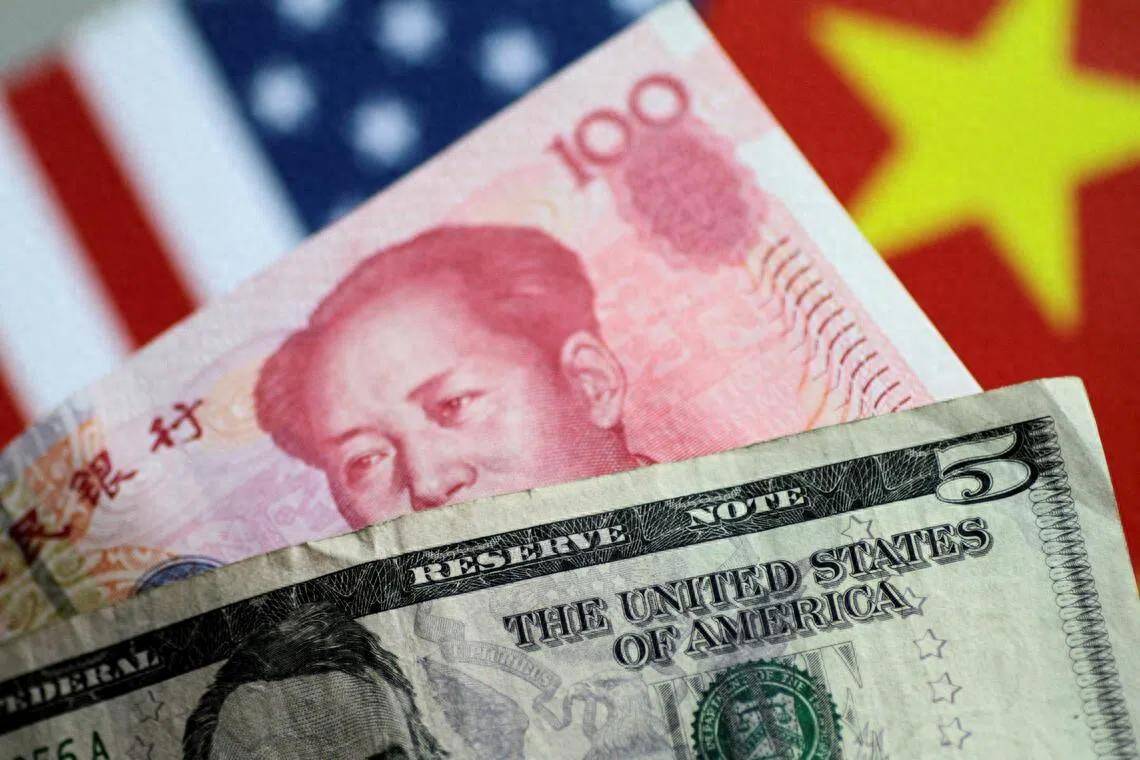
Group 1: Currency Impact on Companies - The appreciation of the Renminbi has led to a significant loss for an automotive welding company exporting to North America, resulting in a decrease of 46 million in revenue and an exchange loss of 18 million, which is about one-fifth of last year's net profit [1] - Export-oriented industries such as textiles, electronics, and appliances are feeling the pressure as the Renminbi's strength diminishes their price competitiveness in international markets [8][13] - Companies are increasingly adopting risk management strategies, with over 30 A-share companies announcing plans to engage in foreign exchange hedging to stabilize profits amid currency fluctuations [8][13] Group 2: Economic Indicators and Market Reactions - China's trade surplus surpassed 1 trillion USD for the first time in history in 2025, showcasing the resilience of the Chinese economy despite external pressures [3] - The banking sector and financial institutions may experience a revaluation of assets due to their holdings in Renminbi-denominated assets, as foreign capital flows back into A-shares [7][8] - The paper industry has seen a surge in stock prices due to reduced procurement costs from the Renminbi's appreciation against the dollar [8] Group 3: Broader Economic Effects - The Renminbi's rise has led to a decrease in import prices for commodities like crude oil and iron ore, effectively acting as an "invisible subsidy" that stabilizes domestic living costs [11] - Employment in sectors like cotton textiles and apparel may decline due to reduced profit margins from currency appreciation, while industries reliant on imports, such as paper and non-ferrous metals, may see job growth [13] - The real estate market's response to currency fluctuations is complex, with foreign investment in commercial properties increasing, but overall housing prices remain influenced by regulatory policies rather than exchange rates [10]
每周推荐 | 人民币破7的持续性?(申万宏观·赵伟团队)
赵伟宏观探索· 2025-12-27 16:03
Core Viewpoint - The article discusses the recent appreciation of the RMB, its potential sustainability, and the medium-term outlook for the currency amidst changing economic conditions and external factors [2][3][4]. Group 1: Reasons for Recent RMB Appreciation - The rapid appreciation of the RMB is attributed to the decline in the US dollar index from 99.4 to below 98, influenced by lower interest rate differentials and expectations of intervention by the Bank of Japan [2]. - A surge in currency settlement activity is anticipated to begin this week, with the actual swap points rising significantly, indicating increased trading volume [2]. Group 2: Short-term Sustainability of RMB Appreciation - The ongoing currency settlement wave is expected to support the RMB, with historical data suggesting that after two consecutive quarters of appreciation, the settlement rate typically improves [3]. - The delayed impact of the February Spring Festival may also contribute to the continued improvement in settlement rates over the next month [3]. Group 3: Medium-term Outlook for RMB - With nominal GDP recovery, the RMB and USD may enter a phase of mutual strength, supported by reduced debt pressure and improved investment and profitability by 2026 [4]. - Enhanced external demand and increased export share are expected to bolster the resilience of exports, transitioning the economy from a confidence-building phase to a "non-typical" recovery, which may sustain the RMB's strength [4].

人民币升值≠钱包变鼓,菜市场的物价,才是普通人的真实购买力
Sou Hu Cai Jing· 2025-12-27 14:15
Group 1 - The core argument presented by experts suggests that the Chinese yuan could appreciate significantly, with predictions of reaching 4 yuan per dollar within five years, which has sparked widespread debate online [3][5]. - The discussion around yuan appreciation is fueled by various economic pressures, including low domestic interest rates and stagnant housing prices, leading individuals to consider moving their assets abroad [9][21]. - High-profile institutions like Goldman Sachs and the IMF have indicated that the yuan is undervalued, suggesting that a stronger yuan could be beneficial for the Chinese economy by reducing reliance on exports [5][7]. Group 2 - The potential appreciation of the yuan could severely impact export-oriented businesses, as a stronger currency would increase the price of Chinese goods in international markets, potentially leading to reduced orders and profits [12][13]. - The current economic environment poses challenges for companies, particularly small and medium-sized enterprises, which may struggle to survive if the yuan appreciates too quickly [18][27]. - Historical precedents, such as Japan's experience with currency appreciation, highlight the risks associated with rapid yuan appreciation, including potential economic contraction and capital flight [25][28]. Group 3 - The fundamental issue is not merely the exchange rate but the low domestic asset return rates, which drive capital outflows regardless of currency fluctuations [30][32]. - To stimulate domestic consumption and improve asset returns, policies should focus on enhancing social welfare, such as healthcare and education, rather than solely on tax cuts for businesses [30][32]. - A gradual appreciation of the yuan could occur naturally as domestic economic conditions improve, rather than through forced measures [32].