就业市场

Search documents
新加坡华侨投资基金管理有限公司:通胀环比加速上升,美国8月CPI数据释放矛盾信号
Sou Hu Cai Jing· 2025-09-14 14:42
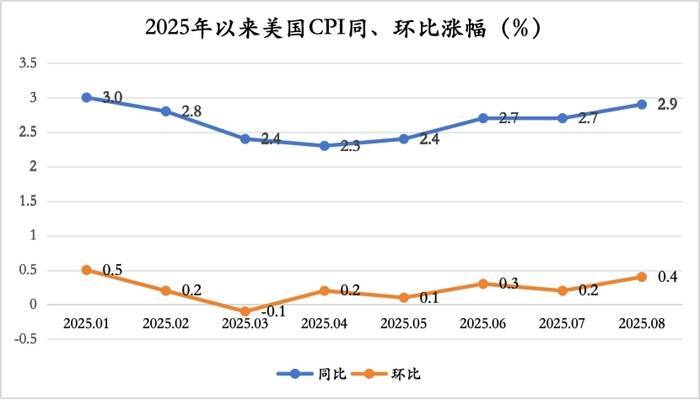
Group 1 - The Consumer Price Index (CPI) in the U.S. rose by 0.4% month-on-month in August, exceeding market expectations of 0.3%, marking the largest monthly increase since February [1] - Year-on-year, the CPI increased by 2.9%, aligning with expectations but up 0.2 percentage points from July [1] - Core CPI, excluding volatile food and energy prices, rose by 0.3% month-on-month and 3.1% year-on-year, consistent with previous months and market expectations [3] Group 2 - Food prices increased by 0.5% month-on-month and 3.2% year-on-year, while energy prices rose by 0.7% month-on-month and slightly by 0.2% year-on-year [3] - Housing costs, which account for about one-third of the CPI, grew by 0.4% month-on-month, the largest increase this year, and 3.6% year-on-year [3] Group 3 - The labor market in the U.S. shows signs of weakness, with initial jobless claims rising to 263,000, significantly above the expected 235,000, reaching the highest level since October 2021 [5] - This increase in jobless claims may indicate rising layoffs, suggesting a potential turning point in the employment market [5] - Federal Reserve officials have indicated that if inflation approaches the 2% target in the coming months, monetary policy should be more flexible in response to potential rapid deterioration in the labor market [5] Group 4 - Market expectations for a Federal Reserve interest rate cut have intensified, with traders anticipating a greater than 90% probability of a 25 basis point cut in the upcoming meeting [7] - There is a consensus that current interest rates are still restrictive to the economy, prompting the Fed to consider a more accommodative stance in light of weakening employment data and dual inflation risks [7]


美国通胀压力尚存,美元继续看跌
Dong Zheng Qi Huo· 2025-09-14 11:13
Report Industry Investment Rating - The rating for the US dollar is "Oscillating" [5] Core Viewpoints of the Report - The US inflation pressure persists, and the US dollar is expected to continue its downward trend. The market is waiting for the outcome of the Fed's September interest rate meeting. If the Fed takes a hawkish stance, the market may face a correction. The ECB kept its policy unchanged in September and entered a data - dependent wait - and - see phase [1][2] Summary According to the Table of Contents 1. Global Market Overview This Week - Market risk appetite remained high. Most global stock markets rose, and most bond yields increased. The yield of US Treasury bonds slightly decreased to 4.06%. The US dollar index dropped 0.22% to 97.55, and most non - US currencies appreciated. Gold prices rose 1.6% to $3643 per ounce, the VIX index fell to 14.7, the spot commodity index fluctuated, and Brent crude oil rose 3.8% to $67.6 per barrel [1][5][9] 2. Market Trading Logic and Asset Performance 2.1 Stock Market - Most global stock markets rose. The S&P 500 in the US rose 1.59%, the Shanghai Composite Index in China rose 1.52%, the Hang Seng Index in Hong Kong rose 3.82%, and the Nikkei 225 in Japan rose 4.07%. The US inflation has stickiness, and the employment market is weakening. The market is waiting for the Fed's September interest rate meeting. If the Fed is hawkish, the market may correct. China's August import and export data were below expectations, and inflation recovery is slow [10][11] 2.2 Bond Market - Most global bond yields increased, and the yield of 10 - year US Treasury bonds slightly decreased to 4.06%. The market's concern about inflation eased after the US August PPI was lower than expected, but the rebound of CPI limited the downward space of US Treasury bond yields. Eurozone government bond yields mostly increased, and emerging - market bond yields showed mixed trends. China's 10 - year government bond yield rose to 1.8%, and the bond market remained under pressure [14][18][20] 2.3 Foreign Exchange Market - The US dollar index dropped 0.22% to 97.55, and most non - US currencies appreciated. The offshore RMB rose 0.02%, the euro rose 0.14%, the pound rose 0.34%, the Swiss franc rose 0.18%, while the yen fell 0.17%, and the Canadian dollar and the Korean won depreciated. The Australian dollar, New Zealand dollar, rand, real, Thai baht, and peso appreciated by more than 1% [24][25][27] 2.4 Commodity Market - Spot gold rose 1.6% to $3643 per ounce, reaching a new high. However, it may face short - term correction risks. Brent crude oil rose 3.8% to $67.6 per barrel, but its long - term upward trend may not be sustainable. The spot commodity index fluctuated [28][29][30] 3. Hot - Spot Tracking - The US inflation met expectations. The CPI rebounded as expected, and the PPI was lower than expected. Inflation may face further upward pressure in the short term, and the labor market may be weaker than it seems [31][33] 4. Next Week's Important Event Reminders - Next week, there will be interest rate meetings of the Fed, the Bank of England, and the Bank of Japan, as well as the release of important economic data such as China's August social retail and industrial growth, and the US August retail sales [35]
Next Fed Meeting: When It Is In September and What To Expect
Yahoo Finance· 2025-09-13 12:05
Tom Williams / CQ-Roll Call, Inc via Getty Images Federal Reserve Chair Jerome Powell speaks at a news conference after the most recent meeting in July. As the next meeting of the Federal Open Markets Committee approaches, investors, economists, and policymakers are trying to predict how the central bankers will react to a weakening labor market and stubborn unemployment. When is the next Fed meeting? The next meeting of the FOMC will take place over Sept. 16 and 17. During this meeting, the members will ...
91万就业岗位“蒸发”,美联储“豪赌”50基点降息?
Hu Xiu· 2025-09-13 11:33
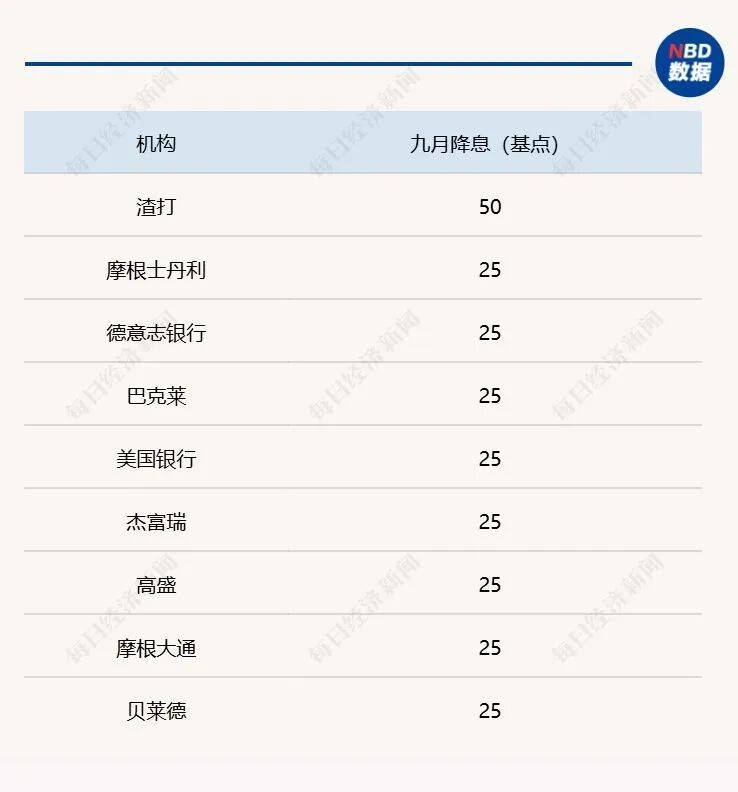
Core Viewpoint - The Federal Reserve is expected to lower interest rates next week, with debates intensifying over whether the reduction will be 25 or 50 basis points, influenced by economic data and political pressures [2][6]. Group 1: Economic Data and Predictions - Recent economic data, including a surprising drop in the Producer Price Index (PPI) and a significant downward revision of non-farm employment figures, suggest a weakening labor market, paving the way for a potential 50 basis point rate cut [5][8]. - Various financial institutions have differing predictions for the rate cut, with Standard Chartered predicting 50 basis points, while others like Deutsche Bank and Barclays expect 25 basis points [7][10]. - The probability of a 25 basis point cut is currently at 90%, while the chance of a 50 basis point cut has risen to 10% according to CME FedWatch [11]. Group 2: Political Influences - Federal Reserve Chairman Jerome Powell faces political pressure, particularly from the Trump administration, which may influence the decision to implement a larger rate cut as a show of loyalty [15][16]. - Powell's recent shift towards a more dovish stance at the Jackson Hole meeting has raised expectations for a more aggressive rate cut, as he expressed concern over the labor market [13][14]. Group 3: Historical Context and Implications - Historical data indicates that every time the Fed has initiated a rate cut of 50 basis points since 1987, it has been followed by an economic recession [4][17]. - Some analysts warn that a 50 basis point cut could send a negative signal to the markets, suggesting severe economic distress, while others argue it could be seen as a proactive measure to support employment growth [18][19]. - The Fed's past rate cut cycles show that rate reductions do not always correlate with stock market gains, as evidenced by four instances of market declines during previous cut cycles [27][28].
NBER's John Lipsky on the Fed's path ahead and what it means for the economy
Youtube· 2025-09-12 16:16
Group 1 - The Senate is expected to confirm Steven Myin as a Fed Governor soon, which could influence Fed meetings and decisions [1] - Market sentiment is optimistic about a rate cut next week and potentially two more cuts by the end of the year [2][3] - There is uncertainty regarding inflation and the strength of the economy, with the next rate cut being highly likely [3][4] Group 2 - Recent employment data shows limited job growth, but does not indicate outright job losses, suggesting stability in the job market [5][7] - There is a noted slowdown in disposable income growth, which may lead to moderated consumption growth in the coming months [6][10] - Concerns about inflation and its impact on real disposable income growth could complicate the Fed's actions and credibility regarding their inflation targets [11][12]
数据点评 | 通胀不再是联储核心矛盾?(申万宏观·赵伟团队)
Sou Hu Cai Jing· 2025-09-12 14:57
Overview - The August CPI in the US met market expectations, showing a year-on-year increase of 2.9% and a month-on-month increase of 0.4% [1][3] - Core CPI also aligned with expectations, recording a year-on-year increase of 3.1% and a month-on-month increase of 0.3% [1][3] - Despite the overall CPI meeting expectations, the structure indicates limited inflationary pressure, particularly due to weak tariff-related goods and a decline in super core service inflation [1][3] Structure - The core goods CPI increased by 0.3% month-on-month in August, up from 0.2% in July, driven mainly by new and used cars and clothing, while other categories like washing machines and medical goods showed weakness [1][15] - In the core services category, rent saw a slight increase to 0.4%, but super core services weakened, reflecting a decline in employment in related sectors [2][22] Outlook - The outlook for inflation suggests a "slower and longer" trend, with CPI expected to remain around 3.0% for the next three quarters according to Bloomberg forecasts [3][27] - The probability of the Federal Reserve implementing three rate cuts within the year has increased, driven by limited inflationary pressure and higher-than-expected initial jobless claims [3][32] - Employment trends are anticipated to be a core contradiction for the Federal Reserve's decisions moving forward, with a potential rise in unemployment rates above 4.5% being a key factor [3][32]

宏观经济周报:警惕预期兑现和风险共振-20250912
BOHAI SECURITIES· 2025-09-12 12:02
Group 1: US Economic Indicators - August non-farm employment data was weaker than expected, with previous months' employment figures revised down[1] - The unemployment rate remains stable due to a significant increase in household survey employment, but the job market shows signs of prolonged weakness[1] - Inflation indicators show a mild increase in overall CPI, but the super core CPI excluding housing and used cars has slowed down, raising concerns[1] Group 2: European Economic Outlook - The European Central Bank (ECB) maintained its current policy stance, showing confidence in future inflation and economic growth in the Eurozone[1] - Market expectations for another rate cut before mid-2026 have dropped below 50%[1] Group 3: Domestic Economic Conditions - August export growth declined year-on-year due to a high base effect from last year, with exports to non-US countries outperforming those to the US[4] - PPI year-on-year growth has narrowed due to low base effects and "anti-involution" policies, while CPI growth is significantly impacted by food and energy prices[4] - The Ministry of Finance plans to implement more proactive fiscal policies to strengthen domestic circulation and enhance fiscal-financial coordination[4] Group 4: Market Trends and Prices - Real estate transactions remain sluggish, while wholesale prices of agricultural products have rebounded[4] - Steel prices are stable, cement prices have slightly increased, and coal prices have decreased, while non-ferrous metal prices have risen[4]
广发期货日评-20250912
Guang Fa Qi Huo· 2025-09-12 06:44
1. Report Industry Investment Ratings No specific industry investment ratings are provided in the report. 2. Core Views - In September, the direction of the second - half monetary policy is crucial for the equity market. A - shares may enter a high - level shock pattern after a large increase, and the risk has been largely released [2]. - The 10 - year Treasury bond interest rate has strong gaming power around 1.8%, and an incremental drive is needed to choose a direction. The bond market shows a differentiated trend with the long - end being weak and the short - end being strong [2]. - The U.S. employment market continues to weaken, the ECB keeps policy unchanged, and gold shows a sideways consolidation. Silver is in the $40 - 42 range for short - term trading [2]. - The shipping index (European line) is in a weak shock, and a 12 - 10 spread arbitrage can be considered [2]. - Steel prices are suppressed by factors such as falling apparent demand and coking coal resumption. Iron ore prices are strong, while coking coal and coke prices are weak [2]. - The U.S. core CPI meets expectations, and the expectation of interest rate cuts heats up again. The prices of base metals such as copper, aluminum, and zinc are affected by different factors [2]. - The oil market is worried about marginal supply increments, dragging oil prices down. The chemical products market has different supply - demand situations and price trends [2]. - The agricultural products market is affected by factors such as production expectations and supply - demand contradictions, with different price trends for different varieties [2]. - Special commodities like soda ash, glass, and rubber have different market performances and trading suggestions [2]. - In the new energy sector, polysilicon has a rising price due to increasing production cut expectations, and lithium carbonate maintains a tight balance [2]. 3. Summary by Related Catalogs Financial - **Stock Index**: After a large increase, A - shares may enter a high - level shock. Sell near - month put options at support levels to collect premiums [2]. - **Treasury Bond**: The 10 - year Treasury bond interest rate is at a critical point. Adopt a wait - and - see strategy and focus on changes in the capital market, equity market, and fundamentals in the short term [2]. - **Precious Metals**: For gold, buy cautiously at low prices or sell out - of - the - money options. For silver, conduct short - term band trading in the $40 - 42 range and sell out - of - the - money options at high volatility [2]. Black - **Steel**: Steel prices are suppressed. Adopt a wait - and - see strategy [2]. - **Iron Ore**: Buy iron ore 2601 contracts at low prices in the range of 780 - 830 and consider an iron ore - coking coal long - short strategy [2]. - **Coking Coal**: Sell coking coal 2601 contracts at high prices in the range of 1070 - 1170, and the iron ore - coking coal long - short strategy is favorable [2]. - **Coke**: Sell coke 2601 contracts at high prices in the range of 1550 - 1650, and the iron ore - coke long - short strategy is favorable [2]. Non - ferrous Metals - **Copper**: The futures price is close to the mainstream cost range, and the short - term downward space is limited. The main contract reference range is 79500 - 81500 [2]. - **Aluminum and Related Alloys**: Aluminum prices are affected by macro - factors and cost support, with different reference ranges for different contracts [2]. - **Zinc**: The expectation of interest rate cuts improves, boosting zinc prices. The main contract reference range is 21500 - 23000 [2]. - **Tin**: The fundamentals remain strong, and the tin price is in a high - level shock. The operating range is 285000 - 265000 [2]. Energy and Chemicals - **Crude Oil**: Concerns about marginal supply increments drag oil prices down. Adopt a short - side strategy and pay attention to support levels [2]. - **Urea**: High short - term supply pressure drags down the price. Adopt a wait - and - see strategy and pay attention to the support level of 1630 - 1650 yuan/ton [2]. - **PX and PTA**: The supply - demand expectations in September are different, and the prices are in a shock range. For PTA, consider a TA1 - 5 rolling reverse spread strategy [2]. - **Other Chemical Products**: Each chemical product has different supply - demand situations and trading suggestions, such as short - fiber, bottle - grade polyester, ethylene glycol, etc. [2] Agricultural Products - **Grains and Oils**: Different grains and oils are affected by factors such as production expectations and supply - demand contradictions, with different price trends and trading suggestions [2]. - **Sugar and Cotton**: Sugar prices are affected by overseas supply prospects, and cotton has low old - crop inventories, with different trading suggestions [2]. - **Livestock and Poultry Products**: The livestock and poultry products market is affected by factors such as supply - demand contradictions and sales rhythms, with different price trends [2]. Special Commodities - **Soda Ash**: The market lacks a main trading logic and is in a narrow - range shock. Adopt a short - selling strategy on rebounds [2]. - **Glass**: The market is affected by production lines and spot market sentiment. Adopt a wait - and - see strategy [2]. - **Rubber**: The macro - sentiment fades, and rubber prices are in a shock - down trend. Adopt a wait - and - see strategy [2]. New Energy - **Polysilicon**: Due to increasing production cut expectations, the price is rising. Adopt a wait - and - see strategy [2]. - **Lithium Carbonate**: The market maintains a tight balance. Adopt a wait - and - see strategy, and the main contract reference range is 70000 - 72000 yuan [2].
美国8月CPI:关税传导仍然可控
HTSC· 2025-09-12 04:49
Inflation Overview - August CPI in the U.S. rose to 0.38%, exceeding the expected 0.3%[1] - Core CPI remained stable at 0.35%, with a year-on-year increase of 3.1%[1] - Food and energy prices contributed significantly to the CPI increase, with energy prices rebounding to 0.69% from -1.07% in July[6] Tariff Impact - The transmission of tariffs to prices remains manageable, with core goods inflation driven mainly by new and used car prices[2] - Tariff-sensitive categories showed moderate growth, indicating limited inflationary pressure from tariffs[2] - The effective tariff rate increase was less than anticipated, with companies absorbing part of the tariff costs[2] Employment Market Signals - Initial jobless claims rose unexpectedly, signaling a slowdown in the labor market[1] - Excluding Texas, initial claims align with historical seasonal patterns, suggesting a gradual weakening rather than a sharp decline[2] - Market expectations for a 25 basis point rate cut in September are now fully priced in, with a 13% chance for a 50 basis point cut[1] Market Reactions - U.S. Treasury yields fell by 5 basis points, with 2-year and 10-year yields at 3.50% and 4.00%, respectively[1] - The U.S. dollar index decreased by 0.4% to 97.6, while U.S. stock markets saw an uptick[1] Risk Factors - Potential risks include higher-than-expected tariff transmission to inflation and a faster-than-expected decline in the U.S. labor market[3]
8月通胀巩固美联储下周降息预期,幅度大概率为25个基点
Sou Hu Cai Jing· 2025-09-12 02:57
Group 1 - The core viewpoint of the article indicates that the slight rise in inflation in August strengthens the case for the Federal Reserve to lower interest rates next week, although the pace is expected to be cautious [1][3][5] - The Consumer Price Index (CPI) rose by 2.9% year-on-year in August, marking the highest increase since February, with a month-on-month increase of 0.4%, both slightly above expectations [1][3] - The core CPI, excluding food and energy, increased by 3.1% year-on-year and 0.3% month-on-month, remaining stable and in line with expectations [1][5] Group 2 - The probability of a 25 basis point rate cut by the Federal Reserve in September is 92.7%, while the probability of a 50 basis point cut is 7.3% [3] - Analysts suggest that the August inflation data supports a 25 basis point cut but does not provide justification for a larger cut [3][5] - The core inflation rate remains stable at 3.1% year-on-year and 0.3% month-on-month, despite rising core commodity prices [5][6] Group 3 - The labor market shows signs of weakness, with initial jobless claims rising to 263,000, the highest since June 2023, and non-farm payrolls adding only 22,000 jobs in August, significantly below expectations [6][8] - The unemployment rate increased to 4.3%, the highest level since November 2021, raising concerns for the Federal Reserve [6][8] - Some analysts believe the rise in jobless claims may reflect seasonal fluctuations rather than a significant decline in labor demand [7][8]