
套期保值

Search documents
新高!国内白银期货价格狂飙,有何影响?
Zheng Quan Shi Bao· 2025-11-13 14:40
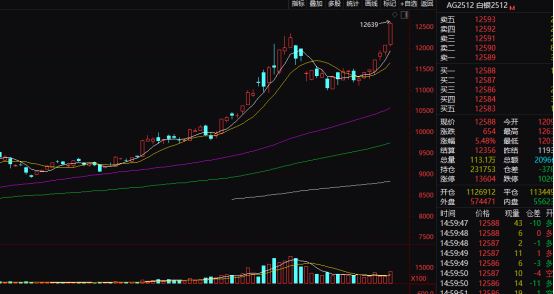
Group 1 - Silver prices have recently surged, with COMEX silver reaching a high of $54.415 per ounce on November 13, and domestic silver futures hitting a record of 12,639 yuan per kilogram, marking a nearly 6% increase [1][2] - Year-to-date, domestic silver futures have risen over 60%, outperforming gold futures, with a notable increase of over 40% in the second half of the year [4] - The rise in silver prices has positively impacted companies involved in silver mining, such as Hunan Silver, which reported a 59.56% increase in revenue year-on-year for the first three quarters of 2025 [10] Group 2 - The increase in silver prices has also created cost pressures for companies that use silver as a raw material, prompting them to adopt various strategies to mitigate these impacts [11] - Companies like Dike Co. have implemented production and procurement models that allow them to pass on silver price fluctuations to downstream customers, thereby reducing direct exposure to price volatility [11] - JinkoSolar has engaged in futures hedging to manage the risks associated with rising raw material prices, particularly in response to the significant increase in silver prices since 2025 [12] Group 3 - Silver's industrial applications, including in electronics, photography, and solar energy, contribute to its price stability and growth, differentiating it from gold, which is primarily viewed as a financial asset [9] - The demand for silver jewelry and related products has increased, with consumers showing interest in silver-plated items as a cost-effective alternative to gold [7]

恒邦股份(002237) - 2025年11月13日投资者关系活动记录表
2025-11-13 10:30
Group 1: Company Overview - The company primarily engages in gold mining, precious metal smelting, high-tech material R&D and production, and international trade [2] - The core profit-generating business is smelting, with gold and silver as the main profit contributors [2] - In the first half of 2025, the company produced 39 tons of gold, 534.41 tons of silver, 120,400 tons of electrolytic copper, and 824,800 tons of sulfur [3] Group 2: Production Capacity - The company has an annual production capacity of 98.33 tons of gold, 1,000 tons of silver, 250,000 tons of electrolytic copper, and 1.3 million tons of sulfur [3] Group 3: Ongoing Projects and Investments - As of mid-2025, the company has ongoing projects with total investments of approximately 2 billion CNY for the Yaojin multi-metal mine project, 20 billion CNY for the comprehensive recovery technology project, and 770 million CNY for the complex gold concentrate project [4] Group 4: Strategic Decisions - The company decided to reduce its stake in Wanguo Gold to optimize resource allocation and meet funding needs for project construction and daily operations [5] - There is an ongoing intention to acquire quality gold mining resources to enhance risk resistance and profitability [6] Group 5: Mining Project Status - The Liao Shang Gold Mine has a gold metal reserve of 69.91 tons, with a project progress of 16.73%, expected to commence production in the second half of 2027 [7] Group 6: Financial Health - As of Q3 2025, the company's asset-liability ratio is 67.48%, indicating strong cash flow and no debt pressure [9] - The company has prepayments amounting to approximately 79 million CNY as of Q3 2025 [9] Group 7: Risk Management - The company employs hedging strategies to mitigate risks associated with raw material price fluctuations, ensuring stable operational performance [8]

新能源及有色金属日报:市场存在挺价情绪,铜价震荡偏强-20251113
Hua Tai Qi Huo· 2025-11-13 03:06
Report Summary 1. Investment Rating No investment rating for the industry is provided in the report. 2. Core View The copper price is expected to maintain a volatile pattern, with the price range likely between 85,000 yuan/ton and 89,000 yuan/ton. Physical enterprises can arrange buy or sell hedging based on this range. Arbitrage is on hold, and the option strategy is short put [7]. 3. Summary by Directory Market News and Important Data - **Futures Market**: On November 12, 2025, the main contract of Shanghai copper opened at 86,590 yuan/ton and closed at 86,840 yuan/ton, up 0.24% from the previous trading day's close. In the night session, it opened at 87,100 yuan/ton and closed at 87,410 yuan/ton, up 0.66% from the afternoon close [1]. - **Spot Market**: On the previous day, the spot price of SMM 1 electrolytic copper was 86,630 - 86,960 yuan/ton, with the spot at a premium of 55 yuan/ton to the current - month contract average price, unchanged from the previous day. The cross - month spread was in a Contango structure, and the import loss was about 800 yuan/ton. The procurement and sales sentiment in Shanghai improved slightly [2]. Important Information Summary - **US Politics**: The US House of Representatives will vote on a temporary appropriation bill on Wednesday evening. The 43 - day federal government shutdown crisis may end. The White House press secretary said the shutdown may reduce Q4 economic growth by two percentage points [3]. - **Federal Reserve**: White House National Economic Council Director Hassett said he would accept the nomination to replace Powell as Fed Chairman if nominated. He hopes for a larger - scale interest rate cut in the December policy meeting [3]. Mining End Japanese JX Advanced Metals, its partners, and Mitsubishi Materials plan to integrate Mitsubishi's copper concentrate procurement and copper product sales business into Pan Pacific Copper (PPC). The integration aims to reduce costs and streamline sales operations [4]. Smelting and Import JX, one of Japan's largest copper smelters with an annual capacity of 450,000 tons, may cut copper production by tens of thousands of tons in the 2025 fiscal year. Mitsubishi also warned of reducing copper concentrate processing scale. Japan, Spain, and South Korea expressed concerns about the sharp decline in copper concentrate processing and refining fees (TC/RC) [5]. Consumption A survey of 59 domestic copper strip producers (covering 94.03% of the 3.58 million - ton capacity) showed that the domestic copper strip production in October 2025 was 189,100 tons, a 3.62% month - on - month decrease. The expected production in November is 194,600 tons, a 2.91% month - on - month increase [5]. Inventory and Warehouse Receipts LME warehouse receipts decreased by 25 tons to 136,250 tons. SHFE warehouse receipts increased by 1,124 tons to 44,088 tons. On November 10, the domestic electrolytic copper spot inventory was 1.959 million tons, a decrease of 74,000 tons from the previous week [6]. Price and Basis Data The report provides data on copper prices, spot premiums, inventory, warehouse receipts, and other indicators from different time points (today, yesterday, last week, and one month ago) [23][24][25].
南华期货沥青风险管理日报-20251112
Nan Hua Qi Huo· 2025-11-12 11:52
Group 1: Report Summary - The report is the Nanhua Futures Asphalt Risk Management Daily Report dated November 12, 2025 [1] Group 2: Investment Rating - No investment rating information is provided in the report Group 3: Core Views - The overall supply of asphalt is decreasing due to refinery maintenance and suspension of production by some major refineries, but the resumption of production by Shengxing Chemical and the planned resumption of Jincheng Petrochemical will increase market supply. The demand is weak, mainly consuming social inventory, and the short - term peak season shows no unexpected performance. The cost - end crude oil is weakly volatile, and the spot basis is continuously weakening. In the short term, asphalt is expected to remain weak, and attention should be paid to trading rhythm. Long - term demand in the north will end with the drop in temperature, while the south may see increased consumption due to catch - up work [3] Group 4: Price and Strategy Price Forecast - The monthly price range forecast for the asphalt main contract is 3000 - 3450 yuan/ton, with a current 20 - day rolling volatility of 15.99% and a 3 - year historical percentile of 20.42% [2] Risk Management Strategies - **Inventory Management**: For enterprises with high finished - product inventory, to prevent losses from inventory price drops, they can short asphalt futures (bu2512) at a 25% hedging ratio with an entry range of 3650 - 3750 yuan/ton, and sell call options (bu2512C3500) at a 20% hedging ratio with an entry range of 30 - 40 [2] - **Procurement Management**: For enterprises with low standing inventory for procurement, to prevent cost increases from price hikes, they can buy asphalt futures (bu2512) at a 50% hedging ratio with an entry range of 3300 - 3400 yuan/ton, and sell put options (bu2512C3500) at a 20% hedging ratio with an entry range of 25 - 35 [2] Group 5: Market Influencing Factors Positive Factors - No positive factors are clearly mentioned in the report Negative Factors - The asphalt consumption enters the off - season, and demand is under pressure. Shengxing Chemical has resumed production, and Jincheng Petrochemical has a production resumption plan [8] Group 6: Price and Basis Data Spot Price - The Shandong spot price on November 12, 2025, was 3020 yuan/ton, with a daily increase of 20 yuan/ton and a weekly decrease of 120 yuan/ton. The Yangtze River Delta spot price was 3340 yuan/ton, with no daily change and a weekly decrease of 100 yuan/ton. The North China spot price was 3030 yuan/ton, with a daily decrease of 20 yuan/ton and a weekly decrease of 150 yuan/ton. The South China spot price was 3300 yuan/ton, with a daily decrease of 40 yuan/ton and a weekly decrease of 130 yuan/ton [9] Basis and Crack Spread - The Shandong spot 12 - contract basis was - 43 yuan/ton, with a daily increase of 15 yuan/ton and a weekly decrease of 61 yuan/ton. The Shandong spot to Brent crack spread was 59.8899 yuan/barrel, with a daily increase of 3.4658 yuan/barrel and a weekly decrease of 31.0984 yuan/barrel [9]
雅化集团(002497) - 002497雅化集团投资者关系管理信息20251112
2025-11-12 10:20
Company Overview - Sichuan Yahua Industrial Group is a leading producer of lithium salt products, particularly battery-grade lithium hydroxide, with industry-leading production technology and equipment [1][2] - The company has a comprehensive production line that is fully automated, enhancing production efficiency and product quality [1][2] Market Position - Yahua is recognized as a core supplier for major global automotive and battery manufacturers, with a strong customer base including Tesla, LGES, and CATL [3] - The company is also a leading player in the civil explosives industry in China, maintaining its competitive edge through strategic mergers and the promotion of electronic detonators [2] Production Capacity - The current comprehensive design capacity for lithium salt is 99,000 tons, with an additional 30,000 tons production line under construction, expected to bring total capacity to nearly 130,000 tons by the end of 2025 [4] Resource Security - Yahua has established a diversified lithium resource security system through self-controlled and purchased mines, including a significant project in Zimbabwe with an annual processing capacity of 2.3 million tons of raw ore [5] Financial Performance - In Q3 2025, the company experienced significant growth in lithium product sales, achieving a record high for quarterly sales due to stable orders from key customers [6] - The overall business performance improved significantly compared to the same period last year, driven by both lithium and civil explosives sectors [6] R&D Progress - The company has made significant advancements in the development of solid-state battery materials, particularly in the synthesis of lithium sulfide, achieving industry-leading specifications [7] - Plans are underway to begin customer sample testing by the end of the year, with a pilot production line expected to be established in 2026 [7] Risk Management - Yahua employs futures contracts for lithium carbonate to hedge against price volatility, aiming to mitigate risks associated with market fluctuations [8]

护航产业链发展 期市筑牢粮食安全根基
Qi Huo Ri Bao Wang· 2025-11-11 16:47
Core Insights - State-owned enterprises (SOEs) are crucial for the national economy and actively engage in the futures market to manage risks and enhance industry integration [1][2] - The application of futures tools has evolved from simple hedging to a comprehensive integration across the entire supply chain, significantly benefiting the company's operations [5][9] Group 1: Futures Market Participation - Since its establishment in 2017, the company has focused on supporting national food security and has integrated futures and derivatives into its entire supply chain [2] - The company began using futures for hedging in 2018, initially focusing on soybean meal and corn, which has since expanded to over 1 million tons annually [3][4] Group 2: Risk Management and Operational Efficiency - The company transitioned from a reactive approach to a proactive risk management strategy, utilizing futures to stabilize pricing and reduce inventory devaluation risks [3][4] - A specific case in Q1 2025 demonstrated successful hedging, where the company locked in a profit of 180 yuan per ton by managing the basis effectively [4] Group 3: Value Creation Across the Supply Chain - The company has moved beyond simple hedging to include basis trading, secondary pricing, and futures delivery in its daily operations, enhancing collaboration with upstream and downstream partners [5][6] - The establishment of a designated delivery warehouse has improved operational standards and customer relationships, allowing for better risk management and financing options [7][8] Group 4: Strategic Integration and Compliance - The company adheres to strict internal controls and compliance measures, ensuring that all futures transactions are aimed at hedging rather than speculation [9] - The understanding of hedging has deepened, recognizing that successful hedging is linked to overall business performance rather than isolated futures gains or losses [9][10] Group 5: Future Outlook and National Strategy - The company is exploring innovative hedging models that extend risk management services to farmers and small enterprises, aligning with national agricultural service goals [8][11] - The futures market is seen as a key component in optimizing resource allocation and enhancing the company's competitive edge in the agricultural sector [10][11]
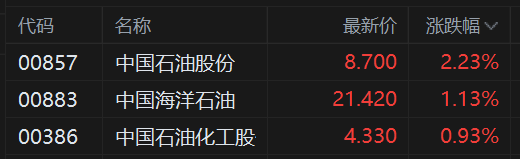
港股异动丨三桶油继续上涨,中国石油涨超2%7连升,再刷新阶段新高
Ge Long Hui· 2025-11-10 02:02
相关事件 中国石油化工股份(00386.HK)11月7日耗资1356.7万港元回购317万股 中国石油化工股份(00386.HK)11月 6日耗资1010.66万港元回购239.8万股 中国海洋石油(00883.HK)拟开展套期保值业务 中国海洋石油 (00883.HK):前三季度归母净利润1019.7亿元 同比下降12.6% 港股异动丨三桶油继续上涨 中国石油股份 涨超3% 创2008年4月以来新高 中国石油股份(00857.HK):周松辞任监事及监事会主席职务 港股三桶油持续上涨行情,其中,中国石油股份涨超2%续刷阶段新高,并且录得7连涨行情,中国海洋 石油涨1.13%,中国石油化工涨约1%。 消息上,国内成品油新一轮调价窗口将于11月10日24时开启。 综合机构观点,本次调价或将出现年内第七次上调。按目前幅度计算,本轮成品油零售限价上调确认 后,私家车单次加满一箱50升的92#汽油后将多花5.5元。 国际油价方面,亚洲早盘,油价在区间波动中 微涨。有预测认为,受非欧佩克国家强劲的供应增长和温和的需求预期推动,2025-2026年库存将大幅 增加。另一方面,持续的供应干扰风险、欧佩克+参差不齐的履约情况以 ...



股市必读:苏豪汇鸿(600981)11月7日主力资金净流出133.52万元,占总成交额2.68%
Sou Hu Cai Jing· 2025-11-09 19:18
Summary of Key Points Core Viewpoint - Suhao Huihong (600981) is engaging in hedging activities through its subsidiary to mitigate price volatility risks in the gold and silver markets, which is expected to enhance profit stability without compromising the interests of minority shareholders [1]. Trading Information - On November 7, the stock closed at 2.91 yuan, down 0.34%, with a turnover rate of 0.76% and a trading volume of 170,600 shares, amounting to a total transaction value of 49.74 million yuan [1]. - The net outflow of main funds was 1.3352 million yuan, accounting for 2.68% of the total transaction value, while retail investors saw a net inflow of 1.776 million yuan, representing 3.57% of the total transaction value [2]. Company Announcements - The company held its fourth extraordinary general meeting of shareholders in 2025 to review a proposal regarding the increase of hedging business limits and related transactions for its subsidiary Suhao Zhongtian [1]. - The subsidiary plans to conduct hedging activities in gold and silver futures through the related party Hongye Futures, with a maximum margin requirement not exceeding 45.9 million yuan and a maximum contract value of 286.5 million yuan per trading day [1].

知名棉企15亿元风险对冲计划的背后:价格显著波动下的必然选择
Qi Huo Ri Bao· 2025-11-08 23:40
Core Viewpoint - The announcement of a hedging plan by Xinjiang Saimu Modern Agriculture Co., Ltd. (referred to as XinSai) highlights the cotton spinning industry's struggle for survival amid price volatility, with a total hedging plan amounting to up to 1.5 billion yuan [1][3]. Summary by Sections Hedging Strategy - XinSai plans to seek shareholder approval for its subsidiary to engage in futures and options hedging, with a maximum margin requirement of 800 million yuan for futures and 700 million yuan for options [1][3]. - The move is seen as a typical response from the cotton spinning and agricultural processing industry to manage price volatility risks [3]. Industry Context - The company faces significant challenges in raw material procurement, cost management, and product sales due to fluctuations in the commodity market [3]. - XinSai's projected net loss of 244 million yuan for 2024 underscores the pressure the company is under [3]. Peer Actions - Other companies in the industry, such as Guannong Co., are also taking steps to stabilize operations through hedging, with plans to utilize up to 485.6 million yuan for hedging activities in 2025 [4]. - Guannong's successful past hedging practices demonstrate the value of such strategies in managing price risks [4]. Market Dynamics - The complexity and uncertainty in the macroeconomic and industry environment are driving companies to invest heavily in risk management [6][7]. - Factors such as changes in cotton planting subsidy policies and the competitive landscape in the textile sector are contributing to increased sensitivity to raw material cost fluctuations [7][8]. Evolving Risk Management Tools - The announcement from XinSai indicates a shift towards using both options and futures as part of a comprehensive risk management strategy, with a focus on non-linear risk management tools [10]. - The use of options allows companies to lock in minimum sales prices or control maximum procurement costs, providing flexibility in risk management [10]. - The trend towards more sophisticated and professional risk management practices reflects the modernization of agricultural enterprises in China [10].

每周股票复盘:苏豪汇鸿(600981)子公司债务人重整预计影响利润3615万
Sou Hu Cai Jing· 2025-11-08 20:57
Core Points - Suhao Huihong (600981) closed at 2.91 yuan on November 7, 2025, up 2.46% from 2.84 yuan the previous week, with a total market capitalization of 6.525 billion yuan [1] - The company’s subsidiary, Jiangsu Kaiyuan Shipbuilding Co., won a lawsuit against Nanjing Dongze Shipbuilding Co., which has entered bankruptcy reorganization, with confirmed debts totaling 222.2768 million yuan [1] - The reorganization plan for Dongze Shipbuilding has been approved by the court, with expected full repayment of secured debts and partial repayment of ordinary debts [1] - The company has made a provision for impairment of 2.7303 million yuan, with a potential maximum reduction of 36.1503 million yuan in net profit attributable to shareholders for 2025 [1] Company Announcements - The company held its fourth extraordinary general meeting in 2025 to review a proposal for its subsidiary Suhao Zhongtian to increase its hedging business limit through related party Hongye Futures, with a maximum margin of 45.90 million yuan [2] - The maximum contract value per trading day is expected to be 286.50 million yuan, with the hedging activities aimed at mitigating price volatility risks and locking in profit margins [2] - The related party transaction is not expected to affect the company's independence or harm the interests of minority shareholders [2]