
中美贸易摩擦

Search documents
中美贸易摩擦或再度升级,我国稀土出口管制趋严且首次覆盖半导体或对海外芯片制程产生约束
HUAXI Securities· 2025-10-12 13:29
Investment Rating - Industry rating: Recommended [3] Core Insights - The recent announcements from the Ministry of Commerce and the General Administration of Customs have implemented stricter export controls on rare earth elements, particularly affecting the semiconductor industry and potentially impacting overseas chip manufacturing processes [1][10][16] - China dominates global rare earth supply, holding approximately 48.41% of the world's rare earth reserves and producing 68.54% of the total output [12][14] - The new export controls cover all 12 types of medium and heavy rare earth elements, marking a significant expansion in the scope of regulation [2][4] Summary by Sections Export Control Measures - The recent announcements (2025 No. 56 and 57) include export controls on rare earth equipment and raw materials, specifically targeting key technologies in rare earth mining, refining, and manufacturing [1][2] - The controls also extend to any downstream products that utilize Chinese rare earth technologies, requiring export licenses for a wide range of applications [5][10] Strategic Importance of Rare Earths - Rare earth elements are critical in various industries, including defense and semiconductor manufacturing, where they enhance material properties and performance [6][7] - The military applications of rare earths are significant, with advanced weapon systems heavily reliant on these materials [6] Semiconductor Industry Impact - The new regulations are the first to explicitly cover the semiconductor sector, which may lead to increased scrutiny and delays in overseas chip production [10][11] - Rare earths are essential for high-performance materials in semiconductor manufacturing, particularly as technology advances towards smaller transistor sizes [7][10] Renewable Energy Sector - Rare earths play a crucial role in the renewable energy sector, particularly in electric vehicle motors and wind turbine generators, with rare earth permanent magnets accounting for over 80% of the electric motor market share [11][12] Global Supply Chain Dynamics - The report highlights that while the U.S. is attempting to rebuild its rare earth supply chain, China's control over the entire rare earth industry chain remains unchallenged in the short term [15][16] - The overall completeness of the rare earth supply chain in the West is still lacking, with many projects facing delays and challenges [14][15]


100%关税,是否有缓和余地?
Hu Xiu· 2025-10-12 12:42
3、科技板块或遭受短期波动,但烈度目前可控 如有疑问请以音频内容为准,添加妙妙子微信huxiuvip302,入群有机会与董小姐进一步交流。 本篇评级为★★★,主要围绕以下内容展开: 1、特朗普威胁对中加征100%关税,从细节看是否有缓和余地? 2、中方周日表态,几个细节看"摩擦"是否可控 新闻解读评级说明:五星重磅,四星重要,三星级以下大家选择听。 1、特朗普威胁对中加征100%关税,从细节看是否有缓和余地? 消息一出,市场仿佛瞬间穿越回今年4月全球股市暴跌的前夜——当时也是中美摩擦骤然升温,特朗普 对华加征逾100%关税,中国迅速强硬反制,全球股市重挫:美股整体跌约20%,科技板块跌超30%,债 市、汇市"三杀",恐慌蔓延至A股,不过跌幅与持续时间均小于美股。 本文为妙投付费内容,上述仅为摘要,购买本专栏即可解锁完整内容。新用户可免费领本专栏7天阅读 体验机会,在妙投APP-我的-权益兑换 输入"妙投888"即可领取。 这个周末确实爆出了重磅消息:美国突然威胁对中国再度加征高额关税。这是否会彻底终结近几个月来 的A股小牛市?我们一起来推敲。 先看新闻。10月10日(周五)晚间,美国总统特朗普在社交媒体上突然 ...
“TACO派 vs 等等派”--10月会是4月再现吗?
Hua Er Jie Jian Wen· 2025-10-12 10:58
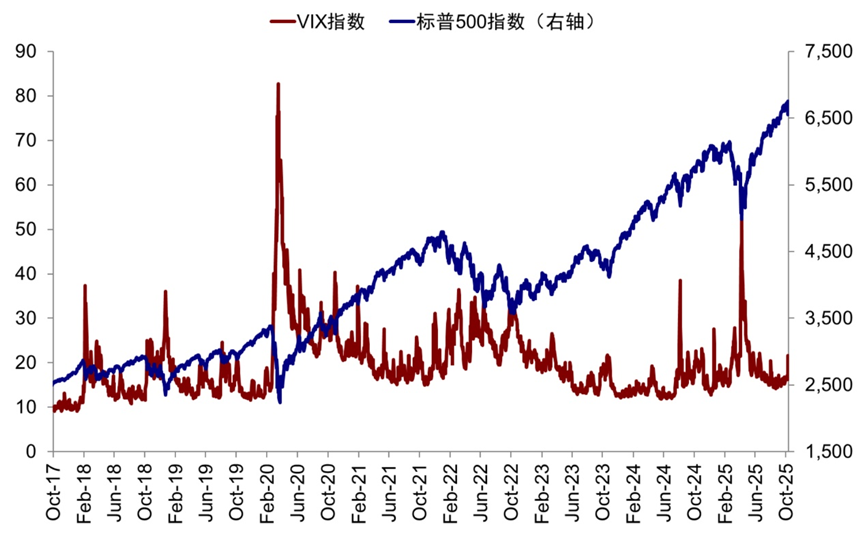
特朗普新一轮关税威胁引发全球市场波动,不同于4月的突发性冲击,多家机构指出市场已积累应对经验,恐慌程度明显降低。 民生证券邵翔团队观察到,VIX指数虽有上升但未达极端水平,海外市场反应更为"淡定"。中金刘刚团队最新数据显示,当前VIX指数为21.7,远 低于4月对等关税后的60。 广发刘晨明团队认为,这次大概率是又一次的"TACO交易",急跌将带来买入机会。民生邵翔团队表示,目前看来本轮更像5月——避免失控的基 调下市场对于摩擦和波折的定价。民生牟一凌团队则较为谨慎:根据4月以来的经验,不只是简单的"坏消息"后就是"黄金坑",当下并非冲突缓和 就足以支撑继续上行。中金刘刚团队强调,相比4月初,相对"不利"的是浮盈较多、估值较高,获利了结和落袋为安意愿更多,会造成短期波动。 TACO派:历史经验支撑 广发刘晨明团队认为,此次事件大概率重复4月以来的"TACO交易"模式。 该团队强调,100%关税水平美方很难承担且失去经济学意义,更像谈判前的极限施压。该机构提到,今年已过去的四轮中美会谈前都出现过双方 制裁升级局面。 | 谈判轮次 | 日期 | 谈判议题 | 谈判前:美方举措 | 谈判前:中方举措 | | --- ...

一天内连收四条噩耗,特朗普暴怒?要对中国所有商品加征100%关税
Sou Hu Cai Jing· 2025-10-12 10:16
Core Points - The article discusses Trump's announcement of a 100% increase in tariffs on China starting in November, alongside tighter controls on software exports to China, which he claims is a response to China's new rare earth policies [1][3] - China's Ministry of Commerce has announced stricter controls on the export of rare earth materials, which are crucial for various high-tech applications, including semiconductor manufacturing [3][7] - The article emphasizes China's dominant position in the global rare earth market, controlling 40% of the world's rare earth minerals and 70% of the global extraction volume, making it a critical player in this industry [5][8] Summary by Sections Tariff Increase and Software Export Controls - Trump plans to raise tariffs on China by 100% and impose stricter regulations on software exports, claiming it is a necessary measure against China's rare earth policies [1][3] - The new U.S. tariffs and export controls are seen as retaliatory actions against China's tightening of rare earth export regulations [3][8] China's Rare Earth Policy - China's new policy on rare earths covers a wide range of materials and processes, from mining to recycling, indicating a comprehensive approach to control [3][8] - The specific rare earth materials targeted are essential for manufacturing advanced technologies, such as 5G components and semiconductors [7][8] Strategic Implications - The article suggests that China's rare earth export controls are a strategic move to maintain leverage in negotiations with the U.S., countering perceived U.S. aggression in trade talks [10][14] - Experts believe that this escalation could lead to unprecedented confrontations between the U.S. and China, intensifying the ongoing trade war [10][14] Political Context - The article notes that Trump's declining approval ratings and various political challenges may influence his aggressive stance on trade with China [16][20] - The situation is further complicated by Trump's struggles with the Federal Reserve and internal party dynamics, which could impact his administration's approach to trade policies [20][22]

中美贸易风波再起,美元高位震荡
Dong Zheng Qi Huo· 2025-10-12 08:45
周度报告-外汇期货 d[Table_Title] 中美贸易风波再起,美元高位震荡 [★Ta本bl周e_全Su球mm市a场ry]概述 市场风险偏好下降,股市多数下跌,债券收益率多数下行,美 债收益率回落至 4.03%。美元指数涨 1.28%至 98.9,非美货币悉 数贬值,离岸人民币跌 0.12%,欧元跌 1.06%,英镑跌 0.9%,日 元跌 2.52%,瑞郎跌 0.48%,雷亚尔跌 3.44%,新西兰元、澳 元、贬值约 2%,兰特、韩元、比索 泰铢跌超 1%,金价涨 3.4% 至 4018 美元/盎司,VIX 指数回升至 21.66,现货商品指数收 跌,布油跌 2.8%至 64.48 美元/桶。 外 ★市场交易逻辑 汇 期 货 美国政府在 10 月 1 日正式停摆,两党目前仍然未能就支出达成 一致,15 日军队发薪日成为关键时间节点,随着政府停摆时间 的延长,两党面临的压力都在增加,同时美国 9 月非农就业报 告和首申数据未能如期公布,经济也将受到拖累。中美贸易摩 擦再度升级,中国宣布对稀土出口进行管制后,美国总统特朗 普表示 11 月 1 日起要对中国商品再度加征 100%关税,即将到来 的 APEC 会 ...
A股投资策略周报:本轮中美关税复盘及市场影响预判-20251012
CMS· 2025-10-12 08:35
Core Insights - The recent escalation of the US-China supply chain and tariff conflict is a continuation of trade frictions since 2018, and it is not a new negative factor for the A-share market. Historical experience shows that such shocks often create phase low points and investment opportunities [2][6][10] - Compared to the tariff shock in April this year, the current market has more favorable conditions, including investor expectations of tariff threats and stronger market resilience due to key resistance levels being surpassed [4][10] - Short-term adjustments are inevitable, but the market still shows resilience, with the potential for new highs after the shock ends. This adjustment may serve as an opportunity to optimize the investment structure [2][10] Industry and Company Analysis - The classic response strategy to the US-China conflict emphasizes self-sufficiency and domestic circulation, suggesting a focus on sectors with relatively low positions and marginal improvements, such as military industry, semiconductors, software self-sufficiency, new consumption, and non-ferrous metals [2][10] - The current market sentiment is bolstered by a stronger willingness of residents to invest, increased protective actions from important institutional investors, and accelerated trends in new industries like artificial intelligence and semiconductors, which provide long-term value during corrections [4][10] - The average guarantee ratio in the market has significantly improved from 261% in April to 287%, enhancing the market's ability to withstand downturns despite a larger scale of financing [4][9][10] - The recent market dynamics indicate that sectors such as gold, copper, cobalt, photovoltaic batteries, lithium battery equipment, wind power, semiconductors, and automotive are experiencing improvements or high levels of prosperity [4][10]
“中国还留着后招没出,美国压根无能为力”
Guan Cha Zhe Wang· 2025-10-12 08:02
Core Viewpoint - China's recent export control measures on rare earth elements are seen as a strategic display of power, showcasing its ability to influence global supply chains and trade dynamics, while also signaling a willingness to engage in dialogue [1][2][6]. Group 1: China's Export Control Measures - On October 9, China implemented its broadest export control measures on rare earth elements to date, allowing restrictions not only on raw materials but also on any equipment containing rare earth elements, potentially granting China significant leverage over various manufacturing sectors globally [1][2]. - The measures are perceived as a response to U.S. pressures and are intended to demonstrate China's confidence and strength in the face of external challenges [1][5]. Group 2: U.S. Market Reaction - Following China's announcement, U.S. markets experienced significant declines, with the S&P 500 index dropping over 2%, marking its largest single-day decline since April [2]. - Former officials from the Trump administration noted that the current U.S. strategy appears reactive and lacks a long-term vision, contrasting with China's more strategic approach [5]. Group 3: Implications for U.S. Economy - Analysts warn that China's control over rare earth exports could severely impact the U.S. economy, especially if similar measures are extended to other critical sectors such as pharmaceuticals and biotechnology [6][8]. - The U.S. remains heavily reliant on foreign sources for rare earth materials, and efforts to increase domestic production are expected to take years, leaving the country vulnerable [5][6]. Group 4: Broader Context of U.S.-China Relations - The recent tensions highlight a fundamental difference in how the U.S. and China perceive their competition, with the U.S. attempting to separate trade from technology issues, while China views them as interconnected parts of a broader strategy to counter U.S. containment efforts [7][8]. - China's actions may be aimed at leveraging its influence to negotiate broader agreements with the U.S. beyond just trade, reflecting its strategic positioning in the global arena [8].
中国对美船舶征收港口费,油散混乱加剧或迎机会,关注中国造船是否豁免:中国反制美国301法案,对美船舶收取港口费点评
Shenwan Hongyuan Securities· 2025-10-12 07:14
Investment Rating - The report provides an investment rating of "Overweight" for the shipping and port industry, indicating a positive outlook compared to the overall market performance [16]. Core Insights - The report discusses China's implementation of special port fees for U.S. vessels as a countermeasure to the U.S. 301 tariff investigation, which is expected to create opportunities in the shipping sector [3][4]. - The special port fees will be charged based on net tonnage, starting at 400 RMB per net ton in October 2025 and increasing to 1120 RMB by April 2028 [10][11]. - The impact on shipping capacity is significant, as the number of affected U.S. vessels is limited, totaling 6445 ships with a combined deadweight tonnage of 52.87 million, representing 1.9% of the global fleet [5][6]. - The report highlights potential price increases in shipping rates due to the high costs of the new fees, which may not be offset by freight rates [10][12]. Summary by Sections Section 1: China's Countermeasures - On October 10, the Ministry of Transport announced the collection of special port fees for U.S. vessels starting October 14, 2025, targeting various categories of U.S.-owned or operated ships [3][4]. - The short implementation window may lead to operational challenges for vessels already en route to China, potentially causing disputes and inefficiencies in the market [4][5]. Section 2: Fee Structure - The fee structure is phased, with the initial charge set at 400 RMB per net ton, increasing to 640 RMB, 880 RMB, and finally 1120 RMB over the next few years [10][11]. - The report emphasizes that the fees are significantly higher than current freight rates, making it difficult for affected vessels to absorb these costs [10][12]. Section 3: Impact on Shipping Companies - The report identifies key shipping companies that may be affected, including those with significant U.S. ownership or operations, such as Star Bulk and Intl Seaways [7][8]. - It notes that the operational adjustments required to mitigate the impact of these fees could lead to inefficiencies and increased freight rates in the market [9][10]. Section 4: Comparison with U.S. 301 Tariff - The report compares the Chinese port fees with the U.S. 301 tariff measures, highlighting the potential for both sides to impact shipping operations significantly [12][14]. - It mentions that major shipping companies are already planning to adjust their global capacity to avoid additional costs associated with the U.S. tariffs [12].

铝&氧化铝产业链周度报告-20251012
Guo Tai Jun An Qi Huo· 2025-10-12 06:48
Report Industry Investment Rating No relevant content provided. Core Viewpoints of the Report - The aluminum market was affected by sudden tariff disturbances over the weekend, with risks focused on liquidity and recession themes. If the optimistic scenario unfolds, aluminum prices are likely to find buying points on pullbacks; if a recession occurs, there may be significant downward pressure on aluminum profit margins. In the long - term, the report remains bullish on aluminum's unilateral price, volatility, and smelting profit [3]. - The alumina market's center continues to move downward, with valuation and drivers in continuous game. Short - term spot prices are weak, and there is still a risk of further decline [4]. Summaries by Directory Aluminum - **Market Performance**: After the holiday, Shanghai aluminum initially strengthened with other non - ferrous metals but dropped at night on Friday due to Sino - US tariff issues. The decline was relatively mild. Market sentiment on Monday may further pull down prices, and the long - term trend remains bullish [3]. - **Fundamental Indicators**: The SMM East China and South China spot discounts widened. Aluminum ingot social inventory increased by 47,000 tons to 634,000 tons during the National Day holiday. Downstream production and processing profits generally weakened [3]. - **Downstream Demand**: The overall aluminum processing start - up rate dropped to 62.5% during the National Day holiday. Different downstream sectors showed different performances, with some facing challenges such as weak orders, financial pressure, and logistical constraints [3]. Alumina - **Market Trend**: After the holiday and on Friday night, alumina's performance was weak, and its center continued to move down, currently testing the 2800 support level. The short - term spot market remains weak [4]. - **Price and Inventory**: The spot price continued to decline. The all - caliber social inventory of alumina increased by 105,000 tons to 3.902 million tons as of October 9 [4][51]. Trading - **Price Spreads**: The A00 spot premium weakened, while the alumina spot premium strengthened. The monthly spread of Shanghai aluminum flattened [9][10]. - **Volume and Open Interest**: The open interest of the Shanghai aluminum main contract slightly declined, and the trading volume slightly increased. The open interest of the alumina main contract slightly increased and is at a historical high, and the trading volume also slightly increased [13]. - **Open Interest - to - Inventory Ratio**: The open interest - to - inventory ratio of Shanghai aluminum declined, and that of alumina continued to fall and is at a historical low [18]. Inventory - **Bauxite**: Port inventory and inventory days decreased. The inventory of 43 sample enterprises increased by 420,000 tons in September. The shipping volume and floating inventory from Guinea increased, while those from Australia decreased. The outbound volume was divided, and the inbound volume declined [23][28][29]. - **Alumina**: The total national inventory continued to increase. As of October 9, the national alumina inventory was 3.902 million tons, an increase of 105,000 tons from the previous week [38][51]. - **Electrolytic Aluminum**: The inventory continued to accumulate. As of October 9, the social inventory of aluminum ingots increased by 20,000 tons to 634,000 tons [52]. - **Processed Products**: The spot and in - plant inventories of aluminum rods were divided. The raw material and finished product inventory ratios of aluminum profiles and plate - strip foil were also divided [58][61]. Production - **Bauxite**: Domestic bauxite supply was generally stable. In September, the production of domestic bauxite decreased, with different trends in different provinces [64][66]. - **Alumina**: The capacity utilization rate remained stable. As of October 10, the total operating capacity of alumina was 98.2 million tons, an increase of 400,000 tons from the previous week. The weekly production of domestic metallurgical alumina was 1.863 million tons, an increase of 3,000 tons from the previous week [70]. - **Electrolytic Aluminum**: The operating capacity remained at a high level. As of October 9, the weekly production of electrolytic aluminum was 852,700 tons, a decrease of 200 tons from the previous week. The proportion of aluminum water increased seasonally [73]. - **Downstream Processing**: The production of recycled aluminum rods increased, the production of aluminum rods decreased slightly, and the production of aluminum plate - strip foil decreased slightly. The start - up rate of leading downstream aluminum enterprises decreased slightly to 62.5% [76][78]. Profit - **Alumina**: The smelting profit declined marginally. The profit of metallurgical alumina was 135.4 yuan/ton. The profits in Shandong, Shanxi, and Henan were stable, and the profit in Guangxi was better [91]. - **Electrolytic Aluminum**: The profit remained at a high level, but the complex global macro - economic situation and trade policy uncertainties interfered with market expectations [103]. - **Downstream Processing**: The processing fee of aluminum rods decreased by 100 yuan/ton, and the downstream processing profit remained at a low level [104]. Consumption - **Import and Export Profits and Losses**: The import losses of alumina and Shanghai aluminum narrowed. In August 2025, the export of unwrought aluminum and aluminum products decreased slightly by 8,000 tons month - on - month. The export profits and losses of aluminum processed products were divided [112][114][117]. - **Consumption Volume**: The commercial housing transaction area declined, and the automobile production increased month - on - month [120].
策略点评:无恐惧,不贪婪
SINOLINK SECURITIES· 2025-10-12 06:34
Group 1 - Global risk assets experienced a broad decline, with significant drops in both US and Chinese indices, particularly in technology stocks [2][5][6] - The decline in asset prices is attributed to overseas risk events, including the potential impact of the US government shutdown and renewed trade tensions between the US and China [2][5][6] - The VIX index, a measure of market volatility, has increased but remains below extreme levels, indicating that the market is not in a state of panic [6][10][12] Group 2 - Since April, asset prices have gradually recovered from a period of excessive pessimism, aided by positive developments such as fiscal expansion in the US and capital expenditures from tech giants [3][7][12] - The report highlights two potential paths for the US economy: one indicating a late-stage stagflation in the service sector and another showing early recovery in manufacturing [12][17] - The upcoming earnings season for US technology companies is crucial to observe whether expectations will align with reality [12][17] Group 3 - The report suggests that while there is no current panic in the market, the higher valuation levels compared to April indicate a lack of "greed" [17] - For Chinese assets, the previous gains were largely driven by alignment with overseas technology trends, which may pose vulnerabilities in the short term [17] - The report recommends focusing on domestic policies and sectors that may benefit from a recovery in domestic demand, such as food and beverage, aviation, and real estate [17]