财政赤字

Search documents
美国“大而美”法案的近忧与远虑
HTSC· 2025-07-07 02:06
Group 1: Fiscal Impact - The "Big and Beautiful" bill is expected to increase the U.S. fiscal deficit by $4.1 trillion over the next ten years, raising the deficit rate by 3-4 percentage points compared to 2010-2019 levels[2] - The average deficit rate over the next decade is projected to reach 6.4%, potentially increasing to 6.7% if certain tax cuts are extended beyond 2028[2][3] - The bill's implementation may lead to a fiscal deficit of approximately 7% in 2026, with short-term growth support for Q4 2025 and 2026[1][3] Group 2: Economic Growth and Inflation - The bill is anticipated to provide short-term economic growth support, but its long-term effectiveness is expected to diminish, potentially exacerbating inflation[3][4] - Independent institutions estimate that the bill will only contribute an additional 0.4% to U.S. GDP over the next decade, significantly lower than the White House's estimate of 2.4%-2.7%[3] Group 3: Social and Political Consequences - The bill may worsen income and welfare distribution in the U.S., intensifying political polarization, as high-income individuals and corporations benefit more from tax cuts[5] - The average annual tax cut for the wealthiest families is projected to be $12,000, while the poorest families may face a net loss of $1,600 annually[5] Group 4: Debt Sustainability Concerns - The bill could further undermine U.S. debt sustainability, with total government debt expected to rise from 124% of GDP[4] - The vision of reducing the deficit post-2029 is considered overly optimistic, with potential increases in interest costs and lower-than-expected GDP growth[4]
华尔街到陆家嘴精选丨“大而美”法案正式生效 对投资影响几何?关税第二轮大考在即 美股多空激辩!ASIC芯片供应链迎来强劲增长周期
Di Yi Cai Jing· 2025-07-07 01:22
Group 1: Economic and Fiscal Implications - The "Big and Beautiful" Act signed by Trump includes tax cuts and significant spending measures, projecting a $4 trillion tax reduction and a $1.5 trillion spending cut over the next decade [1] - The Act is expected to increase the U.S. deficit by approximately $3.4 trillion over the next ten years, raising concerns about fiscal deficits and debt [1][2] - The Act is anticipated to create a super loose fiscal stimulus environment, potentially benefiting the economy and stock market liquidity, while negatively impacting U.S. debt and the dollar [1][2] Group 2: Market Reactions and Predictions - The Act is likely to push up U.S. Treasury yields and weaken the dollar, with increased demand for gold as a safe haven [2] - Analysts suggest that the Act may lead to a stronger recovery for the U.S. economy, although the extent remains uncertain [2] - The S&P 500 index is projected to reach 6850 points within 12 months, despite concerns over tariffs and geopolitical tensions [3] Group 3: Sector-Specific Impacts - The Act provides significant tax incentives and funding support for sectors such as chip manufacturers, energy companies, defense contractors, and real estate developers, while cutting subsidies for electric vehicles and renewable energy projects [1] - Traditional energy and military sectors are expected to benefit, while the renewable energy sector may face challenges [2] - The German stock market has shown strong performance, with military procurement plans potentially benefiting key defense manufacturers [5][6] Group 4: Oil Market Dynamics - OPEC+ has agreed to increase production by 548,000 barrels per day, exceeding market expectations, which may lead to a global oversupply risk and downward pressure on oil prices [7][8] - The strategy shift from limiting supply to increasing production aims to reclaim market share lost to U.S. shale oil [8] Group 5: AI Chip Supply Chain Growth - The global ASIC supply chain is entering a growth cycle driven by the widespread adoption of AI ASIC chips by cloud service providers like Google and Amazon [9] - Companies such as MPI, Aspeed, and Alchip are expected to benefit significantly from this trend, with MPI planning to double its production capacity [9][10]

特朗普签署《大美丽法案》、就业韧性不支持提前降息、关税又到了十字路口
2025-07-07 00:51
Summary of Key Points from the Conference Call Industry or Company Involved - The discussion primarily revolves around the implications of the "Great American Beauty Act" signed by Trump, U.S. employment data, and tariff policies affecting various industries. Core Points and Arguments 1. **Impact of the "Great American Beauty Act"** The new act extends most tax cuts, with an expected GDP boost of no more than 0.6 percentage points by 2026 and a minimal inflation increase of 0.15 percentage points. The stimulus effect is considered mild, as tax cuts are concentrated from 2026 to 2028, followed by increased spending cuts [1][6][8]. 2. **Tax Cuts and Spending Reductions** The act includes corporate tax cuts, personal income tax extensions, and significant spending cuts in areas like clean energy and Medicaid. It aims to help businesses plan future investments but may exacerbate income inequality by primarily benefiting large corporations [2][3][8]. 3. **Employment Data and Market Reactions** June's non-farm payroll data exceeded expectations, with 140,000 new jobs added, leading to a reassessment of the Federal Reserve's interest rate policies. The unemployment rate fell to 4.1%, indicating a steady labor market expansion despite a contraction in labor supply [4][16][17]. 4. **Tariff Policies and Trade Agreements** The upcoming 90-day tariff deadline is critical, with potential actions including maintaining current tariffs, adjusting some to relieve domestic pressures, or negotiating new trade agreements. Trump's agreement with Vietnam to impose a 20% tariff has raised concerns about similar actions towards other Southeast Asian countries [5][22][23]. 5. **Fiscal Concerns and Deficit Projections** The new act could lead to an additional deficit of $4-5 trillion over the next decade, but when accounting for $2.8 trillion in expected tariff revenues, the net deficit may only be $1.1-2 trillion, suggesting that market concerns about U.S. fiscal health may be overstated [9][10]. 6. **Government Debt Perspectives** Different economic schools of thought view government debt differently. Classical economists advocate for balanced budgets, while Keynesians support active fiscal policies. Current debt levels are not seen as an immediate risk given the stable economic environment [10][12][13]. 7. **Skill Mismatch in the Labor Market** The U.S. faces a high-low skill mismatch, affecting monetary policy decisions. The Fed is less likely to rush into rate cuts due to strong employment data, which may challenge expectations for future rate adjustments [19][20]. 8. **Future Economic Stability Measures** Trump may focus on creating a stable economic environment to support upcoming midterm elections, potentially continuing tax cuts and promoting job growth [15][24]. Other Important but Possibly Overlooked Content 1. **Potential Negative Effects of the New Act** Critics argue that the act may worsen wealth inequality and negatively impact low-income individuals due to reduced welfare spending and increased tariffs [8]. 2. **Sector-Specific Employment Trends** Job growth is primarily in low-skill sectors, while high-skill industries face challenges from AI advancements, indicating a need for workforce retraining [18]. 3. **Market Sentiment and Economic Indicators** The stock market has reacted positively to the tax cuts and other factors, with recent highs attributed to reduced geopolitical risks and stable economic fundamentals [14]. 4. **Long-term Economic Outlook** If tariff uncertainties diminish, there is potential for increased business investment and hiring, which could lead to economic recovery in the third quarter [21].
“大而美”法案再借4万亿重塑全美产业,将如何影响美元资产
Di Yi Cai Jing· 2025-07-06 14:06
Group 1: Economic Impact of the "Big and Beautiful" Act - The "Big and Beautiful" Act is expected to increase national debt by $4.1 trillion by 2034 and result in 11.8 million Americans losing health insurance [4] - The act includes controversial measures such as tax cuts for the wealthy and corporations, cuts to healthcare, and the elimination of clean energy incentives [5][8] - A recent poll indicated that 50% of voters oppose the act, while only 36% support it [5] Group 2: Market Reactions and Predictions - Despite concerns over increased fiscal deficits, foreign institutions remain optimistic about U.S. equities, with many raising the S&P 500 target to 6,500 points [2][9] - The S&P 500 index reached 6,279.35 points, reflecting a year-to-date increase of over 7% [9] - Factors supporting the bullish sentiment include better-than-expected corporate earnings and a weaker dollar benefiting large tech companies [10] Group 3: Healthcare and Social Implications - The act is projected to cut approximately $900 billion from Medicaid, reversing advancements made during the Biden and Obama administrations [6] - Stricter requirements for Medicaid eligibility may lead to millions losing coverage, with a significant portion of the population opposing these cuts [6][8] Group 4: Clean Energy Sector Concerns - The elimination of clean energy incentives has drawn criticism from industry leaders, with estimates suggesting an increased burden of $4 to $7 billion on the sector [7] - The act has been described as detrimental to future industries while favoring traditional sectors [7] Group 5: Debt and Currency Outlook - Concerns over high debt servicing costs and the potential for rising long-term interest rates have led to a negative sentiment towards U.S. Treasuries [12] - The dollar index has fallen to 96.82, reflecting a loss of all gains since the 2022 rate hike cycle, with the euro appreciating over 10% against the dollar [13][15]

“大漂亮法案”过了,美债发行潮也要来了
华尔街见闻· 2025-07-05 12:59
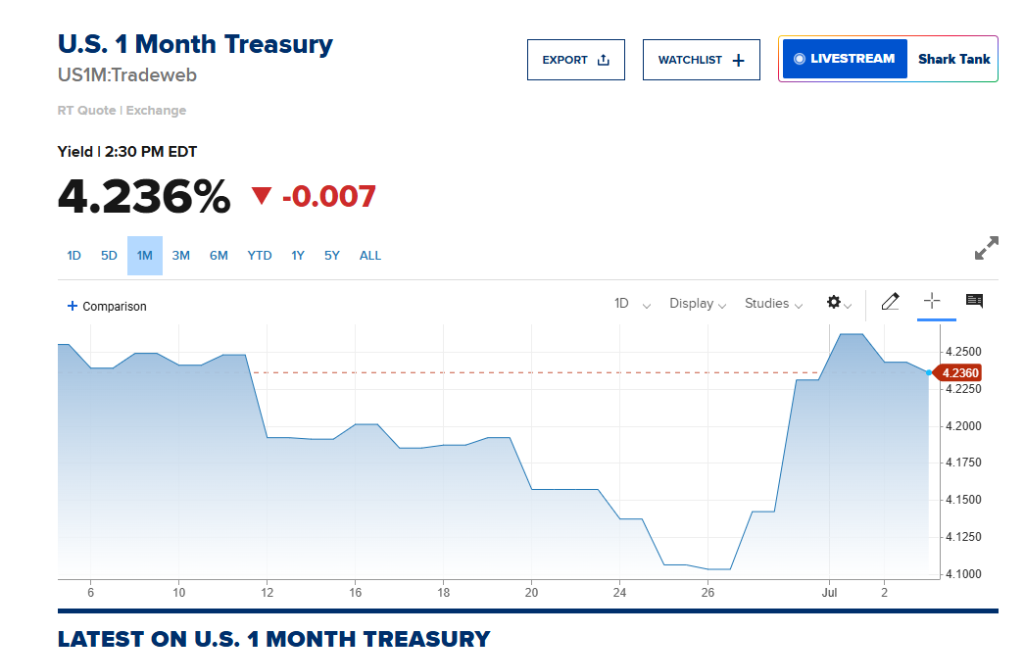
Core Viewpoint - The article discusses the impending surge in the supply of short-term U.S. Treasury bonds due to significant fiscal deficits resulting from the recent tax and spending legislation, which is projected to increase the national deficit by up to $3.4 trillion from fiscal years 2025 to 2034 [2][3]. Group 1: Supply and Demand Dynamics - The U.S. Treasury is expected to issue a large volume of short-term debt to manage the financing needs, as the current yield on one-year and shorter-term bonds has risen above 4%, which is still lower than the nearly 4.35% yield on ten-year bonds, making short-term debt a cost-effective option [3][4]. - The market is currently experiencing a shift in focus from concerns about long-term bond sell-offs to the potential oversupply of short-term bonds, with predictions that the proportion of short-term debt could rise from 20% to 25% of total outstanding debt [5][6]. - There is a significant demand for front-end debt, supported by approximately $7 trillion in money market funds, which is expected to absorb the increased supply of short-term Treasury bonds [5][6]. Group 2: Market Sentiment and Future Outlook - Some market participants express optimism that the next financial crisis will not stem from short-term bonds, citing the substantial liquidity in the market and the attractive real yields available [7][8]. - The Federal Reserve is anticipated to intervene if any supply-demand imbalances arise, providing support to stabilize the market [8].

突发警告!刚刚,美国传出大动作
券商中国· 2025-07-05 05:29
Group 1 - The "Big and Beautiful" Act is expected to increase the U.S. deficit by over $3 trillion in the next 10 years and reduce tax revenue significantly, raising concerns about a potential debt crisis [3][4] - The Act includes a permanent tax cut from 2017, substantial cuts to Medicaid, and a one-time increase in the debt ceiling by $5 trillion, which will worsen the fiscal outlook for the U.S. [4][5] - The Act is seen as benefiting certain industries, including fossil fuel companies, semiconductor manufacturers, and defense contractors, while negatively impacting the renewable energy sector [6][6][6] Group 2 - The Act allows for new oil and gas lease auctions in federal lands and waters, restoring lower royalty rates and increasing subsidies for carbon capture projects [6] - Tax credits for semiconductor manufacturers will increase from 25% to 35%, incentivizing domestic production of key technologies [6] - The Pentagon plans to allocate approximately $150 billion over five years for large projects, which may benefit companies like Lockheed Martin and Palantir Technologies [6]

国际货币基金组织发出警告,“大而美”法案将加剧美财政赤字
Xin Lang Cai Jing· 2025-07-05 03:50
Group 1 - The "Big and Beautiful" tax and spending bill was signed into law by President Trump, extending tax cuts for corporations and individuals, and implementing tax exemptions for tips and overtime pay [1] - The bill will stop tax credits for electric vehicles starting September 30, while allowing tax benefits only for wind and solar projects that begin production before the end of 2027 [1] - The International Monetary Fund (IMF) expressed concerns that the bill would further increase the U.S. fiscal deficit, which is critical for stabilizing the debt-to-GDP ratio [1][2] Group 2 - The IMF has been advocating for the U.S. to increase taxes to address the fiscal deficit, but the new bill continues the previous administration's tax reduction policies [1] - The U.S. federal debt has reached $36.2 trillion, with interest payments in May alone exceeding $9.2 billion, making it the second-largest federal expenditure after Medicare and Social Security [3] - Moody's has downgraded the U.S. credit rating, citing that the deterioration of fiscal indicators cannot be offset by the size of the economy and financial system [3]
“大漂亮法案”过了,美债发行潮也要来了
Hua Er Jie Jian Wen· 2025-07-05 02:46
Core Viewpoint - The implementation of the large-scale tax cuts and spending bill by the Trump administration is expected to lead to a significant increase in the supply of short-term Treasury bonds to address future fiscal deficits, potentially amounting to trillions of dollars [1][3]. Group 1: Fiscal Impact - The Congressional Budget Office (CBO) estimates that the new legislation will increase the national deficit by up to $3.4 trillion from fiscal years 2025 to 2034 [3]. - The U.S. Treasury may initiate a "supply flood" of short-term bonds to manage the substantial financing needs arising from this deficit [1][3]. Group 2: Market Reactions - Concerns about oversupply in the short-term bond market have already manifested in rising yields, with one-month Treasury yields increasing significantly since the beginning of the week [1]. - The market's focus has shifted from concerns about long-term bonds to the implications of short-term bond supply and demand dynamics [5]. Group 3: Government Strategy - Issuing short-term bonds is seen as a cost-effective choice for the government, as the current yields on one-year and shorter bonds are over 4%, yet still lower than the nearly 4.35% yield on ten-year bonds [4]. - The current administration, including President Trump and Treasury Secretary Mnuchin, has expressed a preference for short-term debt issuance over long-term bonds [4]. Group 4: Supply and Demand Dynamics - The Treasury Borrowing Advisory Committee (TBAC) suggests that short-term bonds should not exceed 20% of total outstanding debt, but estimates indicate this could rise to 25% to accommodate the new deficit [5]. - There is a substantial demand for front-end debt, supported by approximately $7 trillion in money market funds, which is expected to absorb the increased supply of short-term bonds [5][6].
美国“大而美”法案通过,马斯克表态
Guan Cha Zhe Wang· 2025-07-05 02:12
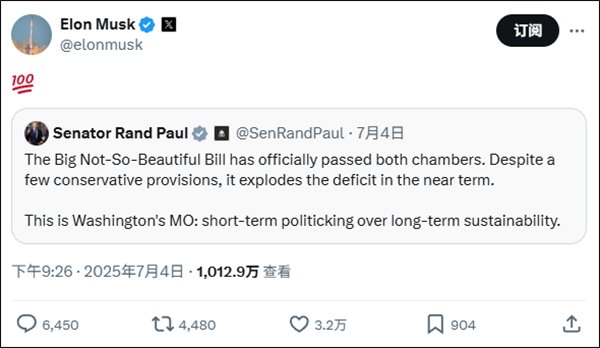
Group 1 - Elon Musk responded to the "Big and Beautiful" bill passed by the U.S. Congress, criticizing it for potentially exploding the deficit and undermining long-term fiscal sustainability [1][2] - The Congressional Budget Office (CBO) estimates that the bill will add approximately $3.4 trillion to the U.S. national debt over the next decade, with the current federal debt totaling $36.2 trillion [2] - The bill includes significant tax cuts, increased immigration enforcement spending, and cuts to federal funding for healthcare, solar, wind, and electric vehicle projects, which directly impacts industries reliant on clean energy subsidies, including Tesla [2] Group 2 - Musk initiated a poll on social media regarding the establishment of a new political party, the "American Party," with 64.3% of approximately 930,000 participants voting in favor [1] - Following a public dispute with Donald Trump, Tesla's stock price experienced a significant drop, losing $152 billion in market value on June 5, with the company's total valuation briefly falling below $1 trillion [2]

特朗普签署“大而美”法案!“反诈大使”朱时茂遇诈骗!商户直播军舰进出港被查!全国用电负荷创历史新高!台风“丹娜丝”生成!
新浪财经· 2025-07-05 01:54
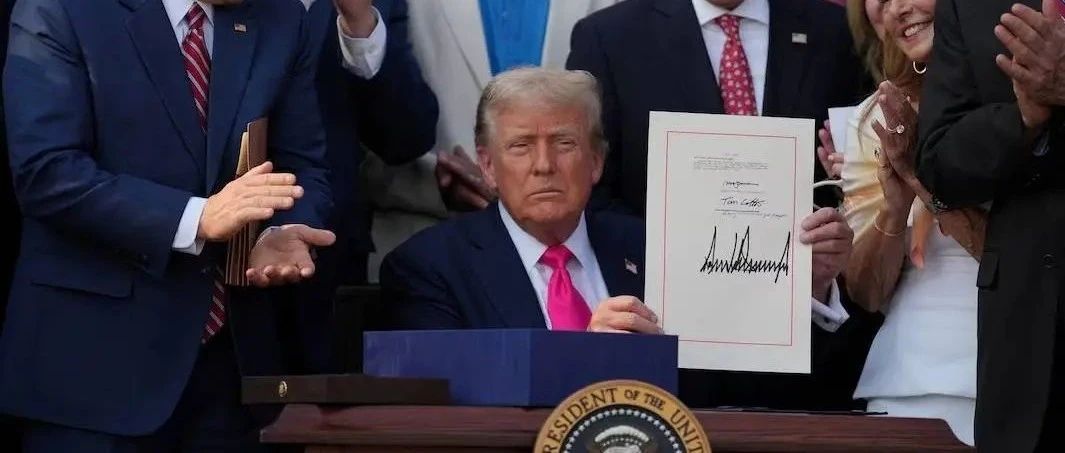
Group 1: "Big and Beautiful" Act - The "Big and Beautiful" tax and spending act was signed into law by President Trump on July 4, 2023, after passing the House of Representatives with a vote of 218 to 214 [2] - The act extends corporate and personal tax cuts from Trump's first term and includes provisions such as exempting tips and overtime pay from taxation, with a core focus on lowering corporate taxes [2] - Initial analyses suggest that the act could increase the U.S. deficit by approximately $3.3 trillion over the next decade and reduce tax revenue significantly, raising concerns about a potential debt crisis [2][3] Group 2: U.S. National Debt Concerns - The U.S. national debt currently stands at $36.2 trillion, and the new act is expected to exacerbate the structural deficit, making it harder for lawmakers to control debt levels [3] - The act has been criticized for potentially leading to increased borrowing at a time when the national debt is already at a historical high, which could have long-term implications for future generations [3] Group 3: Electricity Demand Surge - On July 4, 2023, China's national electricity load reached a record high of 1.465 billion kilowatts, an increase of approximately 200 million kilowatts from late June and nearly 150 million kilowatts from the same period last year [22] - The eastern power grid recorded a load of 422 million kilowatts, with air conditioning demand accounting for about 37% of this load [22] - Due to ongoing high temperatures, electricity demand is expected to remain elevated in the coming week, prompting the State Grid to utilize its resources to ensure reliable power supply [22]