政策利好

Search documents
股票私募仓位创近一年新高,头部私募尤为激进
Guo Ji Jin Rong Bao· 2025-10-24 12:52
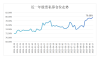
Core Insights - The overall stock private equity positions have reached a nearly one-year high, with a particularly aggressive stance from large private equity firms managing between 5 billion to 10 billion yuan, where over 60% are fully invested, indicating a highly optimistic market outlook [1][3]. Group 1: Stock Private Equity Positioning - As of October 17, the stock private equity position index rose to 79.68%, an increase of 0.55% from the previous week, marking a nearly one-year high. Since August, this index has cumulatively increased by 5.75%, showing a significant trend towards increasing positions [1][3]. - Over 63.40% of stock private equity firms are fully invested, while medium positions account for 20.41%. Low and empty positions are only 11.47% and 4.72%, respectively, indicating that the majority of private equity firms are opting for high positions [3]. Group 2: Aggressive Positioning of Leading Private Equity Firms - The position index for private equity firms of different sizes as of October 17 is as follows: over 100 billion yuan at 80.18%, 50-100 billion yuan at 87.35%, 20-50 billion yuan at 76.68%, 10-20 billion yuan at 78.09%, 5-10 billion yuan at 80.79%, and 0-5 billion yuan at 79.65%. Notably, firms managing between 50 billion to 100 billion yuan have the highest position at 87.35%, a three-year high [5][6]. - The sustained high positions of large private equity firms reflect their long-term confidence in the market, supported by stable client bases and low redemption pressures, allowing for a long-term holding strategy [5]. Group 3: Market Conditions and Confidence - The recent upward trend in the A-share market since August, along with clear upward movements in certain growth and consumer sectors, has attracted private equity funds to increase their allocations [6]. - Recent policy signals aimed at stabilizing growth and encouraging innovation have bolstered private equity firms' confidence in the medium to long-term market performance. Additionally, the overall liquidity in the market is reasonable and ample, providing favorable conditions for private equity to increase positions while reducing the costs associated with large-scale adjustments [7].

黑色金属日报-20251021
Guo Tou Qi Huo· 2025-10-21 11:15
Report Industry Investment Ratings - Thread steel, hot-rolled coil, iron ore, ferrosilicon, and silicomanganese: ★★★, indicating a clearer long trend and relatively appropriate investment opportunities currently [1] - Coke and coking coal: ★☆☆, suggesting a bullish bias, with a driving force for price increase but poor operability on the market [1] Core Viewpoints - The steel market is generally weak, with the overall domestic demand remaining weak and the rebound momentum of the market being insufficient. It is expected to continue the volatile trend in the short term [2] - The iron ore market is expected to fluctuate at a high level, with concerns about negative feedback in the industrial chain still existing, but there are also certain expectations for policy benefits [3] - The coke and coking coal markets are likely to be more prone to rising than falling, with relatively strong support near the previous lows [4][5] - The silicomanganese and ferrosilicon markets are in a narrow - range oscillation, and attention should be paid to external trade frictions and steel tender information [6][7] Summary by Related Catalogs Steel - The daily market fluctuated mainly. The apparent demand for thread steel rebounded significantly month - on - month but remained weak year - on - year. The output continued to decline, and the inventory decreased. The demand for hot - rolled coil also recovered, with a slight decline in output and a slowdown in inventory accumulation. The iron - making water output decreased slightly but remained at a high level. The downstream carrying capacity was insufficient, and the negative feedback expectation in the industrial chain continued to ferment. The real estate investment continued to decline significantly in September, and the growth rates of infrastructure and manufacturing investment continued to fall. The overall domestic demand was weak, and steel exports remained high. The market rebound momentum was insufficient, and it was expected to continue the volatile trend in the short term [2] Iron Ore - The market fluctuated on the day. On the supply side, the global shipment of iron ore increased month - on - month and was stronger than the same period last year. The domestic arrival volume decreased from a high level but was still stronger than the annual average and the same period last year, and the port inventory increased significantly. On the demand side, the apparent demand for steel improved month - on - month but was still at a low level year - on - year. The iron - making water output decreased slightly from a high level. As the terminal peak season ended and the steel mill profits shrank to a low level, the pressure on iron - making water production cuts increased. There were still concerns about negative feedback in the industrial chain due to repeated external trade frictions, but there were also expectations for policy benefits [3] Coke - The price fluctuated downward during the day. The second round of price increase for coking started. The coking profit was average, and the daily output decreased slightly. The coke inventory continued to decline slightly. Currently, downstream customers purchased on demand in small quantities and mainly consumed inventory, and the purchasing willingness of traders was average. Overall, the supply of carbon elements was abundant, and the high - level downstream iron - making water provided support. The support near the previous low was relatively strong. The coke market price was slightly higher than the spot price, and there were expectations for an increase in coke costs due to the safety production assessment in the main coking coal production areas, so the price was likely to be more prone to rising than falling [4] Coking Coal - The price fluctuated downward during the day. The output of coking coal mines increased slightly, the spot auction transactions improved, and the transaction prices mainly increased. The terminal inventory increased. The total coking coal inventory increased slightly month - on - month, and the production - end inventory decreased slightly. The output did not increase significantly after the holiday. Overall, the supply of carbon elements was abundant, and the high - level downstream iron - making water provided support. The support near the previous low was relatively strong. The coking coal market price was slightly lower than the Mongolian coal price, and there were expectations for safety production assessments in the main coking coal production areas, so the price was likely to be more prone to rising than falling [5] Silicomanganese - The price oscillated in a narrow range during the day. Attention should be paid to the tender pricing information of a large steel mill in the north. The current inquiry price was 5800 yuan/ton, a decrease of 200 yuan/ton compared with the transaction price in September. On the demand side, the iron - making water output remained at a high level. The weekly output of silicomanganese decreased slightly but remained at a high level, and the inventory decreased slightly. The long - term demand was still good. The quoted price of manganese ore during the shipping period increased slightly month - on - month, and the spot ore was boosted by the market. The manganese ore inventory decreased slightly, and the contradiction was not prominent. Attention should be paid to the impact of external trade frictions [6] Ferrosilicon - The price oscillated in a narrow range during the day. Attention should be paid to the steel tender information. On the demand side, the iron - making water output remained at a high level. The export demand remained at about 30,000 tons, with a marginal impact. The output of magnesium metal increased slightly month - on - month, and the secondary demand increased marginally. The overall demand was acceptable. The supply of ferrosilicon remained at a high level, and the on - balance - sheet inventory continued to decline. Attention should be paid to the impact of external trade frictions [7]
A股:刚刚突发,中央多部门印发,不管你现在几成仓,下周开盘还请听我一句!
Sou Hu Cai Jing· 2025-10-18 10:07
Group 1 - The A-share market experienced a significant decline, with the Shanghai Composite Index closing at 3839.76 points, down nearly 2%, and both the Shenzhen Component and ChiNext Index falling over 3%, indicating a cautious and risk-averse sentiment among investors [1] - A joint policy document aimed at the development of the accommodation industry was released after market hours, which may signal an attempt to boost confidence in a sector that has seen a decline of over 10% since late September [1][3] - The tourism and hotel sector index is approaching a critical support level that previously halted further declines earlier this year, with oversold signals suggesting a potential for a rebound, although the overall market conditions will influence the sustainability of any upward movement [1][3] Group 2 - Key market levels to watch include the 60-day moving average for the Shanghai Composite Index, which may rise to around 3790 next week, and the 2900-point mark for the ChiNext Index, with potential implications for mid-term trends if these levels are breached [3] - The newly introduced policies, while comprehensive, will be evaluated by the market based on their ability to improve short-term performance and influence capital flows, with some institutional investors beginning to allocate funds to select tourism stocks [3][4] - The tourism and hotel sector is expected to be a focal point for the market next week, serving as both a beneficiary of the new policies and a test of whether positive news can effectively impact a weak market [4]

港股概念追踪 | 补贴政策退坡预期叠加购置税免征倒计时刺激车市升温 关注优质赛道核心标的(附概念股)
智通财经网· 2025-10-15 23:27
Group 1: Global Electric Vehicle Market - In September, global electric vehicle sales increased by 26% year-on-year, reaching a record 2.1 million units, driven by strong demand in China and U.S. tax incentives [1] - China remains the largest market for electric vehicle sales, while North America also set sales records as buyers rushed to take advantage of expiring subsidies [1] Group 2: Domestic Market Performance - In September, China's retail sales of passenger vehicles reached 2.241 million units, a 6.3% year-on-year increase, with cumulative retail sales for the first nine months at 17.005 million units, up 9.2% [1] - The surge in September sales is attributed to the launch of over 70 new models, the highest concentration in history, and the impending expiration of tax exemptions for new energy vehicles [1] Group 3: Policy Impact on Automotive Sector - The transition of the vehicle purchase tax policy is expected to stabilize market expectations, with a shift from full exemption to a 50% reduction starting January 1, 2026 [2] - The automotive industry growth plan outlines a target of 32.3 million total vehicle sales by 2025, with new energy vehicle sales projected at 15.5 million, reflecting a 20% growth rate [2] Group 4: Company Performance Highlights - BYD reported approximately 405,600 units produced and 396,300 units sold in September 2025, with a year-to-date production of 3.2136 million units, up 16.4% year-on-year [3] - Li Auto delivered 33,951 vehicles in September 2025, with a total of 93,211 vehicles delivered in Q3 2025, bringing cumulative deliveries to 1,431,021 units [3] - Xpeng Motors achieved record deliveries of 41,581 smart electric vehicles in September 2025, a 95% year-on-year increase, with total deliveries for the first nine months reaching 313,196 units, up 218% [3] - NIO delivered 34,749 vehicles in September 2025, marking a 64.1% year-on-year increase, with a total of 87,071 vehicles delivered in Q3 2025, a 40.8% increase [4][5]



社会服务行业点评:双节出行延续高景气,消费市场活力持续
GOLDEN SUN SECURITIES· 2025-10-08 11:14
Investment Rating - The industry investment rating is "Maintain Overweight" [5] Core Viewpoints - The travel and consumption market remains vibrant, with significant increases in cross-regional travel during the holiday period, indicating strong consumer activity [1][2][3] - The report highlights four main investment themes: new consumption growth, transformation and reform opportunities, overseas expansion, and favorable policies [4][7][8] Summary by Sections Travel and Tourism - During the Mid-Autumn and National Day holidays, cross-regional travel is expected to reach 2.36 billion trips, a 3.2% increase from last year [1] - Tourist attractions have seen record visitor numbers, with notable increases in various regions, such as a 22.16% rise in visitors to Changbai Mountain [2] Hotel and Retail Performance - Hotel occupancy rates have improved, with an average of 64.7% during the first four days of the holiday, up 2 percentage points year-on-year [2] - Retail sales from key enterprises increased by 3.3% year-on-year during the holiday period, with specific regions like Guangxi showing an 11.3% increase [3] Investment Recommendations - Short-term focus on companies with strong Q3 performance certainty and those likely to benefit from the upcoming holiday season, including cross-border e-commerce and certain tourist attractions [4] - Recommended companies include Xiaogoods City, Yonghui Supermarket, and Jiuhua Tourism, among others [4][7][8]
9月热点城市土地交易活跃
证券时报· 2025-09-27 03:46
Core Viewpoint - The article highlights the ongoing activity in the land auction market in several cities despite a deep adjustment in the real estate market, driven by favorable policies and a focus on core urban areas by real estate companies [1][2]. Group 1: Land Auction Activity - Since September, land transactions in hotspot cities have been active, with significant bidding for quality land parcels [1]. - On September 25, a residential land parcel in Chengdu was sold for a total price of 7.83 billion yuan, with a premium rate of 19.52% [1]. - In Chengdu, three residential land parcels were auctioned on September 24, generating a total revenue of 22.78 billion yuan, with two parcels sold at a premium [1]. Group 2: Market Trends and Strategies - Real estate companies are finding more "good opportunities" in the current land market compared to previous years, with lower plot ratios allowing for higher-end product development [2]. - Since August, multiple cities have introduced policies to stabilize the housing market, with significant new regulations from Beijing, Shanghai, and Shenzhen [2]. - The total land acquisition amount for the top 100 real estate companies reached 605.6 billion yuan in the first eight months of 2025, marking a 28% year-on-year increase [2]. - The trend of "regulatory adjustments and re-auctions" is emerging, where governments are lowering plot ratios and commercial ratios to enhance land value, which is positively received by the market [2].

市场分析:电池半导体领涨,A股震荡上行
Zhongyuan Securities· 2025-09-24 11:00
Market Overview - On September 24, the A-share market opened lower but rose slightly throughout the day, with the Shanghai Composite Index facing resistance around 3836 points[2] - The Shanghai Composite Index closed at 3853.64 points, up 0.83%, while the Shenzhen Component Index rose 1.80% to 13,356.14 points[6] - Total trading volume for both markets reached 23,475 billion yuan, slightly lower than the previous trading day[6] Sector Performance - Semiconductor, battery, computer equipment, and electronic chemicals sectors performed well, while tourism, banking, coal, and shipbuilding sectors lagged[3] - Over 80% of stocks in the two markets rose, with electronic chemicals, semiconductors, and photovoltaic equipment leading the gains[6] Valuation Metrics - The average price-to-earnings (P/E) ratios for the Shanghai Composite and ChiNext indices are 15.61 times and 49.28 times, respectively, above the median levels of the past three years[3] - The trading volume has consistently exceeded 20 trillion yuan in recent days, indicating strong market activity[3] Economic and Policy Outlook - The State Council has emphasized the need to consolidate the economic recovery, with multiple favorable policies in place to support the market[3] - The monetary policy is expected to maintain a "moderately loose" stance, focusing on structural policies[3] Foreign Investment Trends - In August, foreign investors net bought domestic stocks and bonds, reflecting confidence in Chinese assets[3] - The shift of household savings towards capital markets is creating a continuous source of incremental funds[3] Market Strategy - Investors are advised to remain cautious and avoid blindly chasing high prices, focusing instead on structural optimization to seize market opportunities[3] - Short-term investment opportunities are recommended in the semiconductor, battery, computer equipment, and securities sectors[3]
“9·24”一周年,基民收益如何?近2000份问卷揭秘
券商中国· 2025-09-23 10:57
Core Viewpoint - The A-share market has shown significant improvement since the implementation of a comprehensive financial policy package on September 24, 2024, with the Shanghai Composite Index reaching a ten-year high and demonstrating a clear upward trend [2]. Market Performance - As of September 20, 2025, 40 funds have doubled their net value this year, and 887 funds have increased by over 50%, with more than 12,000 funds achieving positive returns [3]. Investor Sentiment and Behavior - Over 92% of active equity fund investors reported positive returns in the past year, with 16.2% earning over 30% and 41% earning between 10% and 30% since investing [4]. - The majority of investors (72.6%) hold active equity funds, with over 80% having recouped their investments or made profits [6]. - More than 60% of investors believe that a mix of equity and bond investments is a more stable strategy, indicating an increased awareness of diversifying to mitigate return volatility [6]. Investment Strategies - Investors are shifting from passive holding to active management, with over 80% engaging in strategies like buying on dips, regular investments, or reallocating assets in response to market changes [8]. - Key strategies include: - "Buying on dips and regular investments" as a consensus for low-position accumulation, with 35.3% of investors opting for this approach and 41.7% adhering to a regular investment strategy [10]. - "Dynamic reallocation and timely profit/loss management" becoming a norm, with 31.1% of investors actively switching sectors and 21% establishing clear stop-loss/profit rules [10]. - A significant decrease in passive investors, with only 12.9% not adjusting their holdings, reflecting a new habit of dynamic portfolio optimization [11]. Market Outlook - Over 66.2% of investors are optimistic about the A-share market's performance in the next 1-2 years, with 28.8% being very optimistic [12]. - The recovery in investor confidence is attributed to favorable policies implemented since September 2024, which have injected substantial capital into the market and facilitated a shift from a financing market to an investment market [14]. - The investment goals of investors are shifting towards more stable returns, with 51% targeting a 3%-10% increase and 20.7% aiming for a 10%-20% growth [15].

股市风险偏好回落,股指震荡下跌
Bao Cheng Qi Huo· 2025-09-04 10:30
1. Report Industry Investment Rating - No relevant content provided 2. Core Viewpoints of the Report - On September 4, 2025, all stock indices showed weak oscillations and significant declines. The total trading volume of the Shanghai, Shenzhen, and Beijing stock markets was 2581.9 billion yuan, an increase of 186.2 billion yuan from the previous day, and nearly 3000 stocks declined. Due to the significant gains of some stocks, the profit - taking demand of profit - making funds increased, leading to a short - term technical adjustment in the stock indices, with the CSI 500 and CSI 1000 indices being more affected. However, in the medium - to - long term, the positive policy expectations and loose capital situation strongly support the stock indices, and the logic of their upward movement remains strong. Recently, the joint working group of the Ministry of Finance and the People's Bank of China held its second group leader meeting, indicating a clear expectation of policy support for the economy. The liquidity is relatively loose, and in the context of the "asset shortage", the attractiveness of equity assets is strong, with incremental funds continuously flowing in, which will drive the repair of stock valuations. In general, due to the increased profit - taking demand of profit - making funds, the stock indices are expected to fluctuate widely in the short term. Currently, the implied volatility of options continues to rise. Considering the medium - to - long - term upward trend of the stock indices, one can continue to hold bull spreads or ratio spreads for a mild bullish view [3]. 3. Summary by Related Catalogs 3.1 Option Indicators - On September 4, 2025, the 50ETF fell 1.72% to 3.034; the 300ETF (Shanghai Stock Exchange) fell 2.04% to 4.456; the 300ETF (Shenzhen Stock Exchange) fell 2.11% to 4.593; the CSI 300 Index fell 2.12% to 4365.21; the CSI 1000 Index fell 2.30% to 7041.15; the 500ETF (Shanghai Stock Exchange) fell 2.32% to 6.779; the 500ETF (Shenzhen Stock Exchange) fell 2.62% to 2.710; the GEM ETF fell 4.15% to 2.751; the Shenzhen 100ETF fell 2.54% to 3.226; the SSE 50 Index fell 1.71% to 2910.47; the STAR 50ETF fell 6.08% to 1.28; and the E Fund STAR 50ETF fell 6.22% to 1.25 [5]. - The trading volume PCR and position PCR of various ETF options and index options changed compared to the previous trading day. For example, the trading volume PCR of SSE 50ETF options was 94.23 (75.73 the previous day), and the position PCR was 81.16 (87.40 the previous day) [6]. - The implied volatility of at - the - money options in September 2025 and the 30 - trading - day historical volatility of the underlying assets of various options were reported. For instance, the implied volatility of at - the - money options of SSE 50ETF options in September 2025 was 19.16%, and the 30 - trading - day historical volatility of the underlying asset was 14.44% [7]. 3.2 Related Charts - The report provides a series of charts for different types of options, including the trends, volatility, trading volume PCR, position PCR, implied volatility curves, and at - the - money implied volatility of different terms of various ETF options and index options such as SSE 50ETF options, SSE 300ETF options, etc. [9][19][32]
美股一路上涨,很多人会问:既然大家都赚钱了,那输家到底是谁?
3 6 Ke· 2025-09-01 03:18
Core Insights - The stock market is not a strict zero-sum game; it is fundamentally linked to economic growth and corporate profitability, allowing for potential mutual benefits among investors over the long term [3][23] - Stock price increases can be attributed to two main categories: genuine corporate value growth and speculative market behavior [3][6] Group 1: Genuine Corporate Value Growth - Companies with strong profitability and consistent performance, such as Apple, see their stock prices rise due to real value creation, benefiting long-term shareholders [4][23] - Apple's stock has increased hundreds of times over the past two decades, driven by substantial cash flow from its product ecosystem [4] - The rise in stock prices reflects the wealth generated by the company being distributed among its investors [3] Group 2: Speculative Market Behavior - Companies lacking strong competitive advantages may experience stock price increases driven by market speculation, leading to a cycle of rapid price increases followed by significant declines [6][9] - The GameStop case illustrates how speculative trading can lead to massive price swings, benefiting early investors while later entrants may incur substantial losses [7][9] Group 3: Industry Trends and Structural Opportunities - Stock price increases can also result from favorable industry trends, where companies capitalize on rapid market expansion [10][11] - Netflix's stock growth from 2007 to 2020 was fueled by the explosive growth of the streaming industry, reflecting market share gains rather than just company performance [11] Group 4: Policy and Macro Environment - Stock price increases can be driven by favorable policies or macroeconomic trends, as seen with Tesla, where government incentives for electric vehicles significantly boosted demand and stock prices [12][13] Group 5: Market Expectations and Future Growth Potential - Companies with average short-term performance may see stock price increases based on market expectations of future growth, as demonstrated by Amazon's early stock performance despite initial losses [16][17] Group 6: Structural Changes and Innovation - Stock price increases can also stem from strategic changes, product innovations, or technological advancements, as evidenced by Nvidia's stock growth driven by AI and data center demand [18][19] Group 7: Mergers, Restructuring, and Asset Value Release - Companies can unlock potential value through mergers, asset sales, or strategic restructuring, leading to stock price increases, as seen with Disney's acquisition of 21st Century Fox [21]