
资源民族主义

Search documents
Governments are rushing to hoard metals as the 'resource nationalism' era arrives
CNBC· 2026-02-24 23:16
A wheel loader operator fills a truck with ore at the MP Materials rare earth mine in Mountain Pass, California, U.S. January 30, 2020.Project Vault complements other initiatives such as the "Forum on Resource Geostrategic Engagement (FORGE)," a partnership to coordinate critical mineral policy pricing and projects, as well as Pax Silica, which centers on safeguarding the AI-related supply chain.In the U.S., officials recently outlined a roughly $12 billion strategic mineral reserve dubbed Project Vault. Th ...



地缘风险再升级,美伊博弈助推油价上行
Mei Ri Jing Ji Xin Wen· 2026-02-24 01:39
地缘风险持续升温,美伊第二轮间接谈判刚结束,美国即向中东增派第二支航母打击群,威胁加码。与此同时,俄军对基辅发动大规模导弹袭击。地缘冲突 升温直接推升油价避险溢价,国际油价再度突破70美元大关。石油板块持续吸金,聚焦全产业链工具石油ETF近20日净流入超21亿元。 事件聚焦:美伊博弈成油价核心变量 本周石油市场的事件驱动特征极为鲜明,核心焦点仍是美伊博弈的反复与升级。 据新华社消息,美国和伊朗第二轮间接谈判于2月17日在瑞士日内瓦举行。会后伊朗外长表示"双方仍需要进一步沟通"——这一表态本身即暗示分歧犹存。 更关键的是,谈判尚未降温,美国便从加勒比海向中东地区调遣第二支航母打击群,威胁同步加码。与此同时,俄军22日凌晨对基辅州展开大规模导弹与无 人机袭击,已造成人员伤亡。两大地缘热点同时升温,市场对供应中断的担忧迅速转化为风险溢价。 数据来源:Wind,数据区间:2026/1/1-2026/2/23 银河证券表示,地缘冲突对油价的影响取决于两大要素——一是冲突是否涉及全球主要产油国,二是是否对关键原油运输通道构成实质性威胁。伊朗恰恰兼 具产油国与霍尔木兹海峡控制者的双重战略身份,这使得任何围绕伊朗的局势动荡, ...
A股策略周报:节后主线将更加清晰-20260223
SINOLINK SECURITIES· 2026-02-23 13:49
Global Assets: Rebalancing Continues - The current market rebalancing is based on internal and external recovery, with AI trading entering its second phase, leading to a focus on the actual impact of AI on various industries [3][13] - From February 16 to February 20, 2026, global risk assets showed an overall upward trend, but internal performance was mixed, with industrial, financial, and energy sectors gaining favor [3][13] - The focus has shifted from whether AI is a bubble to identifying the real industrial impacts and critical supply-demand issues as AI transitions from a thematic to a macro factor [3][13] Manufacturing Cycle Further Rising - The U.S. GDP data for Q4 2025 showed slower growth primarily due to government spending disruptions, while AI-related investments remained strong [4][25] - Non-AI and residential investment growth is showing signs of bottoming out, indicating a broader recovery in investment activities beyond just AI [4][25] - The February manufacturing PMI data indicated a recovery in global manufacturing, with Europe exceeding expectations and the U.S. maintaining expansion, suggesting a positive trend in manufacturing cycles [4][25][34] Commodities: Transitioning from Financial Overtrading to Industrial Pricing - Recent fluctuations in industrial and precious metals prices are attributed to macro and industrial events, with a return to real supply-demand signals expected [5][44] - Geopolitical risks continue to support industrial metal prices, while demand from tech giants for AI investments remains robust, indicating a potential new support for demand [5][44] - Historical data suggests that current copper and aluminum price ratios are low compared to historical manufacturing PMI levels, indicating potential for price recovery [5][44][45] Focus on Global Physical Assets vs. Chinese Assets - The core of market rebalancing is not about the existence of an AI bubble but rather the macro impacts of AI combined with monetary and major country policy choices [6][56] - The relative smooth path for future U.S. interest rate cuts is expected to support the recovery of the global manufacturing cycle, which may lead to a revaluation of Chinese asset capacity [6][56] - Specific investment recommendations include physical assets like copper, aluminum, and oil, as well as sectors benefiting from capital inflows and consumption recovery in China [6][56]
印尼重拳出击!旧秩序被砍碎,全球镍价要暴涨?
Sou Hu Cai Jing· 2026-02-14 04:31
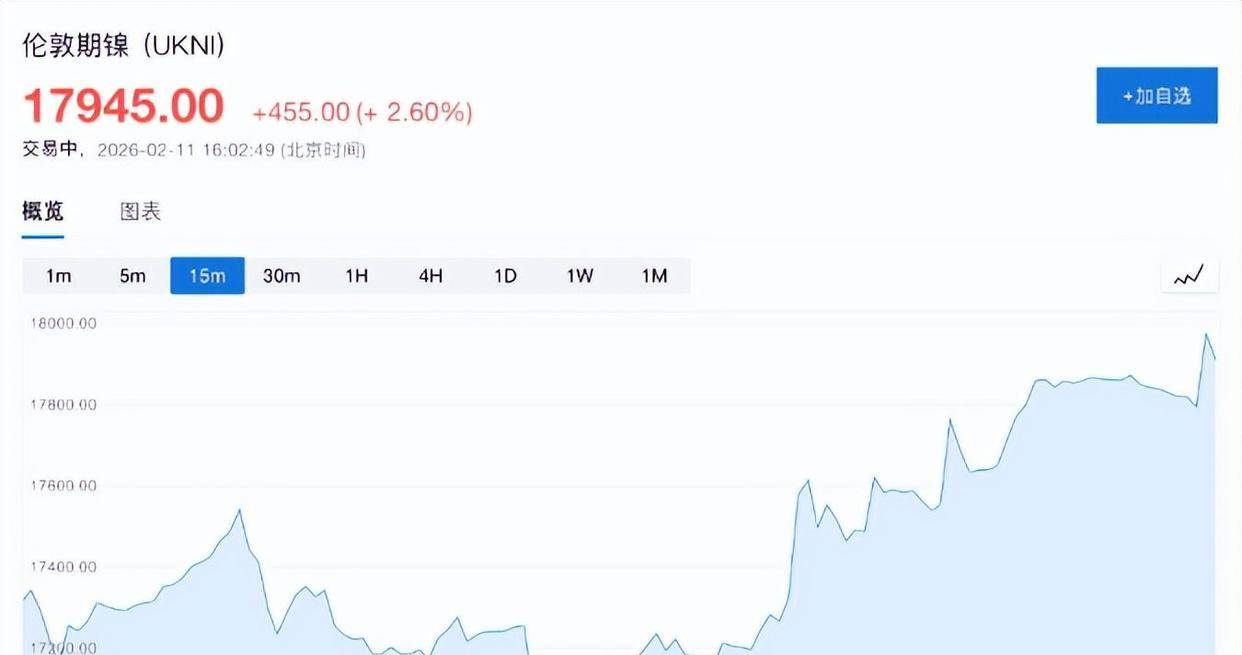
Core Viewpoint - Indonesia has drastically reduced its nickel mining quota from 42 million wet tons to 12 million wet tons, a 71% cut, causing significant disruption in the global nickel supply chain and impacting various industries reliant on nickel, particularly electric vehicle and battery manufacturers [1][2]. Industry Impact - The reduction in nickel supply has led to a surge in nickel prices on the London Metal Exchange, indicating the effectiveness of Indonesia's strategy to create artificial scarcity [2]. - Companies like Tsingshan Holding Group, which invested heavily in Indonesia's nickel processing infrastructure, face increased cash flow pressures and potential contract fulfillment issues due to the sudden quota cut [3][5]. - The geopolitical landscape is shifting, with the U.S. aiming to reduce reliance on Chinese control over critical minerals, which could further complicate the supply chain dynamics for nickel and other metals [3][5]. Market Dynamics - Indonesia's actions are seen as a move to regain pricing power in the nickel market, with the government aiming for nickel prices to rise to between $19,000 and $20,000 per ton [1][27]. - The potential for price volatility exists, as companies may pivot to alternative battery technologies if nickel prices rise excessively, which could undermine Indonesia's market position [13][27]. - The global metal pricing system is evolving, with China pushing for the internationalization of nickel futures to establish a pricing center in Asia, countering Indonesia's supply manipulation [9][10]. Technological Considerations - Indonesia's reliance on its mineral resources is challenged by China's advanced nickel processing technologies, which could limit Indonesia's ability to capitalize on its raw material reserves without foreign expertise [6][20]. - The ongoing development of alternative battery technologies, such as sodium-ion batteries, could reduce the demand for nickel, further complicating Indonesia's strategy [13][20]. Long-term Outlook - The current situation highlights the fragility of global supply chains in the face of national interests, with countries potentially using resource nationalism as a tool for economic leverage [15][22]. - The potential for increased environmental scrutiny and community pushback against nickel mining in Indonesia could further complicate the country's ability to maintain its production levels [20]. - The long-term viability of Indonesia's nickel strategy may be at risk if it fails to adapt to the rapidly changing technological landscape and the evolving demands of the global market [20][22].
读懂金银铜:不止是课,还有很多故事
Hua Er Jie Jian Wen· 2026-02-12 09:24
Core Insights - The article discusses the upcoming masterclass titled "Understanding Gold, Silver, and Copper: A New Paradigm for Global Metal Pricing," led by Chen Dapeng, a seasoned investment manager and founder of KP Research [1][12] - The masterclass aims to provide insights into the underlying logic of current market trends and the impact of global changes on asset allocation [1][15] Group 1: Market Trends and Insights - Chen Dapeng emphasizes the importance of understanding the shift in metal pricing from a focus on efficiency to a focus on security amid global restructuring [13][20] - The course will explore how gold's pricing power has transformed from being a "credit of the dollar" to a "sovereign credit defense line" [13] - The new paradigm for non-ferrous metals pricing will be analyzed, particularly in relation to traditional industrial output cycles and the constraints imposed by "resource nationalism" [13] Group 2: Course Structure and Content - The masterclass will cover five core modules, including the iteration of global resource pricing paradigms and the implications of strategic redundancy logic [13][20] - Participants will learn to construct a framework that combines macroeconomic and geopolitical analysis to identify the value of metal allocations driven by resource nationalism and AI strategies [20][21] - The course will also focus on practical trading insights, helping participants develop a trading dashboard to navigate the market changes expected in 2026 [21]

金属钕单日大涨拉开上行序幕
Xin Lang Cai Jing· 2026-02-12 01:01
Core Viewpoint - The price of neodymium has surged due to a combination of supply constraints and increasing demand from various sectors, particularly in new energy and robotics, leading to a complex market dynamic. Supply Side: Supply Crisis Driven by Quota Control and Resource Nationalism - Domestic neodymium mining is strictly regulated, with limited quota growth and stricter environmental standards affecting the operation rates of small mines in major production areas. - Internationally, supply is uncertain due to non-economic factors affecting major resource locations, and new supply sources are unlikely to emerge in the short term. - The combination of tight domestic supply and chaotic overseas conditions has led to low social inventory levels and a tense spot market, with sellers reluctant to release stock [1]. Demand Side: Dual Engines of New Energy and Robotics Driving Demand Surge - Demand is characterized by stable growth in traditional sectors and rapid expansion in emerging fields, with the electric vehicle industry being a core driver for high-performance neodymium-iron-boron magnets. - The wind power sector also provides stable demand support through its installation targets. - Notably, the demand from cutting-edge technology industries, such as humanoid robots, is expected to rise significantly, becoming an important growth driver [2]. Policy Side: Export Controls and Increased Industry Concentration Reshaping Pricing Logic - Policy measures are reshaping the pricing logic of rare earths through domestic management and international strategic layouts. - Major producing countries are enhancing resource control through export licenses, increasing costs for unverified products. - Major consumer markets are incorporating rare earths into green trade mechanisms, promoting low-carbon upgrades in the industry. - The ongoing increase in industry concentration allows leading companies to lock in a significant portion of market demand through long-term agreements, enhancing their pricing power [3]. Macro and Financial Aspects: Sector Differentiation and Industrial Capital Awaiting Opportunities - Macro fluctuations have amplified the price sensitivity of strategic resources, with a weaker dollar making dollar-denominated assets more attractive. - Financial market interest in rare metals has surged, with related thematic funds receiving substantial inflows, reflecting strong bullish market expectations. - Leading companies in the industry are performing well in capital markets, indicating investor confidence in the long-term prospects of the sector. - The persistent price inversion between domestic and international markets highlights potential structural risks in the global supply chain [4]. Market Outlook: Post-Festival Supply-Demand Mismatch May Trigger New Price Surge - In the short term, the neodymium market is expected to enter a phase of intensified supply-demand tension. - With major downstream projects ramping up after the Spring Festival and new orders accelerating, the existing global supply-demand gap may widen further, potentially pushing prices into new ranges. - In the medium to long term, global neodymium demand is projected to maintain rapid growth, but supply increases will be limited. - Companies with solid resource reserves, significant market shares, and low-carbon process certifications are likely to dominate future pricing dynamics [5].

短期供需事件催化,煤炭投资价值凸显,关注煤炭ETF(515220)
Sou Hu Cai Jing· 2026-02-12 01:00
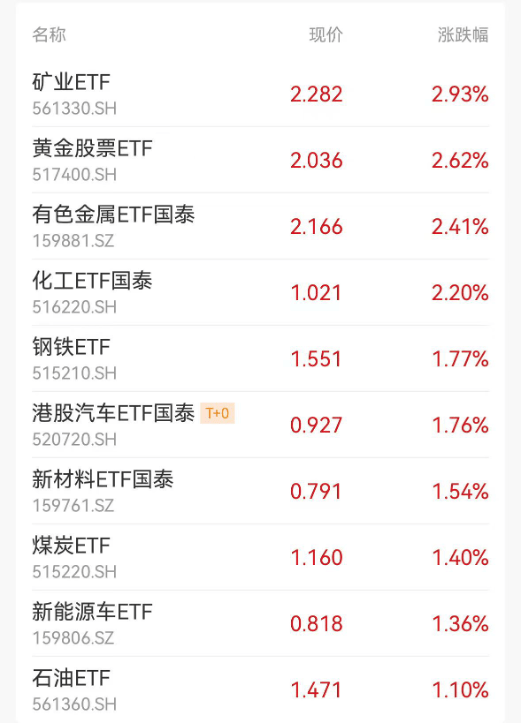
Core Viewpoint - The cyclical sector shows strong performance, with significant gains in metals, chemicals, and oil and gas sectors, indicating a positive outlook for the long-term fundamentals of the non-ferrous metals sector [1] Group 1: Sector Performance - The mining ETF (561330) increased by 2.93%, while the gold stock ETF (517400) rose by 2.62%, and the chemical ETF (516220) gained 2.20% [2] - The coal sector is also performing well, with news that the Trump administration plans to direct the Pentagon to purchase coal, potentially revitalizing the coal industry [1] Group 2: Market Dynamics - Concerns about cryptocurrencies impacting liquidity in the cyclical sector have been alleviated, as precious metals like silver remain stable, suggesting limited risk of a secondary shock to the non-ferrous sector [1] - Long-term support for the non-ferrous sector is expected from factors such as resource nationalism and supply-demand imbalances [1] Group 3: Investment Recommendations - Investors are encouraged to pay attention to the only coal ETF (515220) due to short-term catalysts and long-term valuation support from a weakening dollar credit [1]
大宗商品狂欢后,下一个关键机会在哪里
淡水泉投资· 2026-02-12 00:32
Core Viewpoint - The article discusses the significant trends in the commodity market, highlighting the rise of resource nationalism and the investment opportunities in the mining supply chain as a response to the evolving market dynamics and increasing competition among nations for resource control [1][4]. Group 1: Resource Nationalism and Industry Expansion - Resource nationalism is on the rise, leading to increased production incentives as countries prioritize control over their resources. Resource-exporting nations are moving away from previous models of "heavy export, light control" to policies that enhance resource sovereignty and local benefits [5][6]. - Major consuming countries, particularly manufacturing giants like the US and China, are accelerating their global resource strategies to ensure supply chain security and strategic competition, which intensifies the competition in the resource sector [6]. Group 2: Investment Cycles and Demand Dynamics - Following the Fed's interest rate cuts in 2020, the mining sector experienced a significant investment expansion, with global mining capital expenditure increasing by 50% from 2020 to 2023. However, growth slowed from 2023 to 2025, maintaining a modest single-digit increase or remaining flat [10]. - As the global resource market enters a bull phase and a new round of interest rate cuts begins, mining capital expenditure is expected to restart its upward cycle, with Caterpillar predicting a further 50% increase in mining capital expenditure by 2030 [12]. Group 3: Focus on Post-Cycle Investments - Different stages of mining development correspond to various cycle attributes and investment logic. Exploration and mining infrastructure are considered pre-cycle, while extraction, transportation, screening, and refining are post-cycle. The current trend shows a decline in new mine developments while capital expenditure on existing mines is increasing, indicating a focus on post-cycle investments [14][18]. - The post-cycle segments of mining, which are often associated with large-scale production and high technical barriers, present significant growth opportunities for companies. For instance, the demand for large-capacity mining trucks is high, but Chinese brands have historically struggled to penetrate the international market due to technological and ecological barriers [20]. Group 4: Opportunities for Chinese Enterprises - The changing global mining landscape offers new opportunities for Chinese companies, particularly in the post-cycle segments. Chinese mining companies' global expansion provides a chance for domestic mining truck manufacturers to collaborate and enter international markets, leveraging cost advantages and efficient service support [22]. - The push for green transformation in mining, driven by global carbon neutrality goals, is leading to the adoption of electric and autonomous mining trucks. Chinese companies are capitalizing on this trend by integrating electric technology into mining operations, enhancing competitiveness and operational efficiency [22][23].

2月11日盘后播报
Sou Hu Cai Jing· 2026-02-11 10:49
Market Overview - The A-share market experienced a slight increase followed by a decline, with the Shanghai Composite Index rising by 0.09% to 4131.98 points, while the Shenzhen Component Index fell by 0.35%, and the ChiNext Index dropped by 1.08% [1] - Overall market trading volume was below 2 trillion yuan, decreasing by over 100 billion yuan compared to the previous trading day [1] - More than 3200 stocks in the market declined, indicating a weak risk appetite [1] Sector Performance - The cyclical sectors showed strong performance, with non-ferrous metals, chemicals, and oil and gas leading the gains [1] - The Mining ETF (561330) rose by 2.93%, the Gold Stocks ETF (517400) increased by 2.62%, and the Chemical ETF (516220) gained 2.20% [1] - The coal sector also performed well, with the Coal ETF rising by 1.40%, supported by short-term supply-demand catalysts and long-term valuation support due to weakening dollar credit [2] Investment Opportunities - The non-ferrous sector's long-term outlook remains positive, driven by resource nationalism and supply-demand conflicts, with expectations for upward elasticity after recent volatility [1] - Investors are advised to focus on the only coal ETF (515220) for potential investment opportunities [2] - The film sector faced adjustments, with the Film ETF (516620) declining by 5.80%, attributed to rapid gains and potential overextension in expectations [2] - The bond market has been recovering, with the 10-year Treasury ETF (511260) rising by 0.87% over the past 20 days, driven by unexpected bank deposits and allocation strength [2]
综合晨报:美国哈赛特表态就业数据将下降-20260210
Dong Zheng Qi Huo· 2026-02-10 00:41
Report Industry Investment Ratings - Not provided in the content Core Views of the Report - The labor market's downward pressure is increasing, and the US dollar is expected to weaken in the short term [2][16] - The US stock market is expected to maintain high - level fluctuations, and the bond market has upward momentum but also faces adjustment pressure [20][22] - Most commodities show different trends, with some in a weak or strong oscillation state, and the prices of some are affected by supply and demand, policies, and geopolitical factors [25][34][53] Summary by Relevant Catalogs 1. Financial News and Comments 1.1 Macro Strategy (Gold) - Gold prices oscillated and closed higher, benefiting from the sharp decline of the US dollar index and the existence of certain risk - aversion sentiment. The market's expectation of a March interest - rate cut is about 20%. It is expected that the overall trend of precious metals will be oscillatory before the Spring Festival. It is recommended to reduce positions [12][13] 1.2 Macro Strategy (Foreign Exchange Futures - US Dollar Index) - Hasset stated that employment data will decline, and the downward pressure on the labor market is increasing. The US dollar is expected to weaken in the short term [14][16][17] 1.3 Macro Strategy (US Stock Index Futures) - Google plans to raise about $20 billion through issuing US dollar bonds. The short - term situation of the US stock market is a mix of long and short factors, and it is expected to maintain high - level oscillations [19][20] 1.4 Macro Strategy (Treasury Bond Futures) - The central bank conducted 113 billion yuan of 7 - day reverse repurchase operations, with a net investment of 38 billion yuan on the day. The bond market has upward momentum, but the probability of an interest - rate cut in the short term is low. It is recommended to pay attention to short - selling opportunities after the upward momentum weakens [21][22][23] 2. Commodity News and Comments 2.1 Black Metals (Rebar/Hot - Rolled Coil) - Steel prices continue the weak oscillation pattern. Before the Spring Festival, the fundamental pressure increases, and the price is under pressure. It is recommended to treat steel prices with an oscillatory mindset and pay attention to risks with a light position before the festival [25][26] 2.2 Black Metals (Steam Coal) - The price of steam coal at Beigang is relatively stable. The Indonesian policy has some impact, but the coal price is seasonally strong, with the policy mainly strengthening the bottom and the upward elasticity being limited [27][28][29] 2.3 Black Metals (Iron Ore) - Iron ore prices are still weak and oscillatory. The iron - making process is moderately resuming production, and it is necessary to wait for the order situation in March after the Spring Festival [30] 2.4 Agricultural Products (Soybean Oil/Rapeseed Oil/Palm Oil) - The palm oil inventory has increased. Before the release of the MPOB report, the market is in a wait - and - see state. It is necessary to pay attention to the impact of MPOB data and control positions to avoid risks [31] 2.5 Agricultural Products (Soybean Meal) - Private exporters sold 264,000 tons of soybeans to China. The CBOT soybeans are oscillating strongly, but the soybean meal inventory in oil mills has reached a record high for the same period. It is expected that the futures price will maintain an oscillation, and the soybean meal will be weaker than the external market [32][33][34] 2.6 Non - ferrous Metals (Lithium Carbonate) - The fundamentals of lithium carbonate are improving in reality, but the futures market is greatly affected by macro - sentiment and capital flow. After the Spring Festival, it is expected that the supply and demand will both increase, and the price center may rise significantly. It is recommended to take a bullish approach and pay attention to buying opportunities at low prices [37][38][39] 2.7 Non - ferrous Metals (Copper) - The macro - negative sentiment is gradually digested by the market, but the short - term fundamentals limit the price increase. It is expected that the price will oscillate widely in the short term, and it is recommended to wait and see [42][43] 2.8 Non - ferrous Metals (Lead) - The lead market is in a situation of weak supply and demand. The price is oscillating, and the decline space is limited. It is recommended to wait and see in the short term and pay attention to mid - term long - position opportunities [44][45] 2.9 Non - ferrous Metals (Zinc) - The zinc market is oscillating. The zinc ore production expectation may change. Before the Spring Festival, the operation difficulty is high. It is recommended to use call options instead for unilateral operations and wait and see for arbitrage [47][48] 2.10 Non - ferrous Metals (Tin) - The semiconductor industry's revenue is expected to reach $1 trillion in 2026. The supply of tin is expected to ease, but there are still uncertainties. The demand is weak. It is expected that the price will oscillate widely [49][51][52] 2.11 Energy Chemicals (Crude Oil) - Venezuela's oil production has rebounded. The oil price is oscillating upward, and the risk premium is expected to support the oil price. It is necessary to pay attention to the follow - up negotiations between the US and Iran [53][54] 2.12 Energy Chemicals (Liquefied Petroleum Gas - LPG) - Due to the geopolitical situation in Iran, the LPG price is expected to oscillate strongly [55][56] 2.13 Energy Chemicals (Asphalt) - The asphalt inventory has increased, and the market trading atmosphere is weak. The demand has basically stagnated. It is necessary to pay attention to the changes in the geopolitical situation [56][57] 2.14 Energy Chemicals (Urea) - The supply of urea is relatively abundant, and the demand fluctuation is not obvious. Before and after the Spring Festival, the urea price may oscillate and adjust. It is not recommended to continue to allocate more at the current price [59][60] 2.15 Energy Chemicals (Styrene) - The pure benzene inventory in East China ports has increased. The styrene market is entering the supply elasticity test stage. The current bullish trading of the styrene futures has temporarily ended. It is recommended to reduce the risk exposure before the festival [61][62] 2.16 Shipping Index (Container Freight Rate) - Affected by the Spring Festival and geopolitical factors, the container freight rate is expected to oscillate strongly in the short term. It is recommended to wait and see [63][64]