
金融风险

Search documents
私人数字货币与金融风险:关联、分类与监管
Sou Hu Cai Jing· 2025-12-11 03:53
Core Insights - The article discusses the evolving relationship between private digital currencies and financial risks, emphasizing the need for regulatory frameworks to address these risks as the market grows and becomes more institutionalized [2][3]. Group 1: Development and Characteristics of Private Digital Currencies - Private digital currencies emerged as a combination of cryptography, distributed ledger technology, and network communication, leading to significant innovations in technology and applications [4]. - The market for private digital currencies has grown substantially, becoming a significant factor of instability in the international financial system [4]. - Major risk events in 2022, such as the collapse of the stablecoin USTC and the bankruptcy of FTX, highlighted vulnerabilities and regulatory gaps in the private digital currency sector [4][5]. Group 2: Financial Risks Associated with Private Digital Currencies - The article identifies three main categories of financial risks associated with private digital currencies: market volatility spillover risks, illegal activities by market participants, and risks from decentralized finance (DeFi) [13]. - The spillover effect of private digital currencies on traditional capital markets has been documented, with significant implications for financial system stability [14]. - Illegal activities, including price manipulation and fraud, have proliferated in the largely unregulated private digital currency market, leading to substantial financial losses for investors [18][19]. Group 3: Regulatory Challenges and Responses - There is a growing consensus among international organizations and scholars on the necessity of enhancing regulatory frameworks for private digital currencies to mitigate associated risks [29]. - Different countries have adopted varying regulatory approaches, with many developed nations integrating private digital currencies into existing regulatory frameworks, while developing countries often impose bans or restrictions [32]. - The effectiveness of regulatory measures has been observed, with studies indicating that regulatory news can significantly impact the volatility of private digital currencies [31].


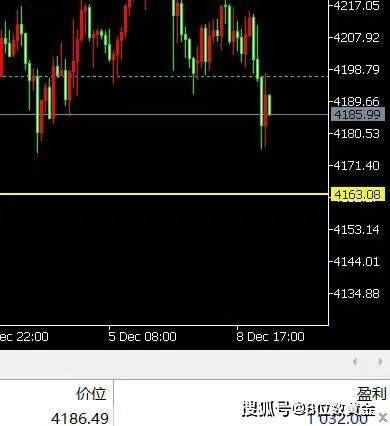
12.9黄金跳水40美金 回升再战4200
Sou Hu Cai Jing· 2025-12-09 07:11
黄金上周冲高跳水后,昨天围绕4200盘旋调整后,再次上演跳水,一跌就是40美金,整体不改震荡格 局,继续争夺4200的关口。 昨天4198,再次空单获利。 今天的走势 昨天接连下探4200后,上演跳水。 今天直接回升,又不断上摸4200的关口。 上方再破,反弹再看4242关键阻力。 当然了,再测试4200的关口。 此位置上方接连弹起,也是重要的强支撑。 昨天黄金震荡收窄后下破,或不排除下方回调。 继续争夺4200关口,震荡整理不变。 下方若跌穿4163,看大的回调,下探4110的支撑。 不破4200,下方遇阻,再探4163的低位。 黄金11月收官,多头一路狂飙后,卡在了4200附近,连续几个回合上蹿下跳。潮起潮落,多空激烈博 弈。两股势力均衡,随着横盘的持续,多空力量积蓄,再次爆发,上下空间不断拉大,上看4300上方, 下方可看向4100的区域。 操作方面,黄金整体多头下的调整,依然看反弹的机会,关注4163和4110做多的机会。此外,黄金短期 内,继续横盘整理,关注4200和4242做空的机会。 昨天主要因素: 一方面,美物价降温,以及特朗普幕僚的接连施压,两大压力之下,美联储主席候选人成为了发言人, 强调 ...
联合国贸发会议报告显示:全球经济处于脆弱韧性状态
Jing Ji Ri Bao· 2025-12-07 23:26
Core Viewpoint - The UN Conference on Trade and Development (UNCTAD) report indicates that the global economy is in a state of "fragile resilience" for 2024-2025, characterized by superficial stability but underlying weaknesses and accumulating risks, with a projected slowdown in global economic growth to 2.6% in 2025 from 2.9% in 2024 [1] Group 1: Economic Conditions - Global economic growth is transitioning from weak to a lower decline trajectory due to weak global demand, sluggish private investment, and a low manufacturing cycle [1] - Domestic spending is low in many economies, with household purchasing power under pressure, particularly due to high interest rates suppressing economic activity and domestic demand [1] - Weak fixed investment and low private sector investment are leading to a lack of expansion willingness among businesses, further eroding long-term growth potential [1] Group 2: Financial and Trade Uncertainties - The global economic outlook is leaning downward, with multiple uncertainties affecting recovery, including high interest rates increasing financing costs for businesses and governments [2] - Trade policy uncertainties remain at historically high levels, impacting corporate investment and leading to a slowdown in global trade, which further drags down manufacturing investment and employment growth [2] Group 3: Systemic Risks and Recommendations - Geopolitical tensions, supply chain restructuring, and climate risks are expected to exacerbate systemic risks by 2025, particularly affecting developing economies [3] - Developing countries face significant debt risks, with 35 out of 68 low-income countries either in or at high risk of debt distress, which could lead to long-term output declines and increased borrowing costs [3] - The report suggests major policy shifts are necessary to return to a balanced and sustainable global growth path, including stabilizing macroeconomic conditions and reforming the global financial architecture [4]
强化虚拟货币监管,维护经济金融秩序稳定
2 1 Shi Ji Jing Ji Bao Dao· 2025-12-01 22:56
Core Viewpoint - The central theme of the articles is the Chinese central bank's ongoing commitment to prohibiting virtual currencies, including stablecoins, due to their potential for illegal financial activities and risks to financial stability [1][2][3] Group 1: Regulatory Actions - The central bank has convened a meeting with 13 departments to coordinate efforts against virtual currency trading and speculation, emphasizing the need to protect public financial security [1] - Stablecoins are classified as a form of virtual currency and are currently unable to meet customer identification and anti-money laundering requirements, posing risks of money laundering and fraud [1] Group 2: Market Dynamics - The market for stablecoins is expanding, with significant interest following their recognition in the U.S. as a legitimate financial instrument, despite concerns about their actual use primarily for purchasing cryptocurrencies [1][2] - The U.S. aims to leverage stablecoins to maintain the dollar's status as the world's primary reserve currency, with projections indicating that the issuance of dollar stablecoins could reach $2 trillion by the end of 2028, creating additional demand for U.S. short-term government bonds [2] Group 3: Financial Risks - The rapid growth of stablecoins could lead to significant outflows from retail bank deposits, increasing volatility in the banking sector, with estimates suggesting a potential $6.6 trillion in deposit outflows for U.S. traditional banks [2] - The largest dollar stablecoins hold substantial amounts of U.S. short-term government bonds, and a potential run on these stablecoins could trigger a sell-off of these assets, posing systemic risks to financial markets [2][3] Group 4: Speculative Environment - The instability of stablecoins is rising, highlighted by the recent decoupling of USDe, which is not backed by fiat or hard assets, leading to a dangerous leverage cycle in the market [3] - The speculative atmosphere surrounding cryptocurrencies is influenced by optimism in the U.S. stock market driven by AI, which could lead to significant sell-offs in cryptocurrency assets if concerns about an AI bubble arise [3]
别只盯着房价了!一个更大的雷正在逼近,普通人更危险……
Sou Hu Cai Jing· 2025-11-29 14:42
Core Viewpoint - The real estate market is experiencing significant declines in both new and second-hand housing prices, with major cities not being immune to this trend, leading to a broader economic impact [3][4][10]. Group 1: Housing Market Trends - Recent data from 70 cities indicates that both new and second-hand housing prices have reached record declines this year, with first-tier cities also experiencing downturns [3][4]. - The decline in housing prices has created a domino effect, where one area's price drop forces neighboring areas to adjust their prices downward, resulting in a vicious cycle [4]. Group 2: Policy Effectiveness - The effectiveness of government policies aimed at stabilizing the housing market is being tested, as multiple measures have not yielded the expected market responses [4][6]. - The tools available for policy intervention are diminishing, with market reactions to new policies becoming shorter and less effective over time [6]. Group 3: Economic Ripple Effects - The decline in housing prices is causing a ripple effect throughout the economy, with significant drops in retail sales growth and negative growth in fixed asset investment [7]. - Industries related to real estate, such as renovation, furniture, and building materials, are facing severe downturns, leading to reduced orders and income for workers [7]. Group 4: Employment Concerns - The job market is under pressure, with a record number of college graduates expected next year and a decrease in manufacturing job demand [9]. - The real estate sector, which employs millions, is cooling down, threatening the income stability of many workers in related fields [9]. Group 5: Financial Risks - The banking sector is facing rising bad debt rates, which could worsen if housing prices continue to decline, creating a negative feedback loop affecting credit availability and economic stability [10]. - Concerns are growing about the potential for a downward spiral where falling property values lead to reduced credit, further exacerbating economic downturns [10]. Group 6: Future Outlook - The real estate market is undergoing a deep adjustment that may take longer than anticipated, necessitating precise policy measures to stabilize the economy and protect employment [13][14]. - The focus should be on meeting housing demands effectively while fostering new economic growth points to navigate through this challenging period [13].

【有本好书送给你】大崩溃:贪婪、丑闻与瑞士信贷银行的倒闭
重阳投资· 2025-11-19 07:33
Core Viewpoint - The article discusses the collapse of Credit Suisse, highlighting systemic issues within the banking industry, including greed, corruption, and inadequate risk management, which ultimately led to its downfall [9][11][24]. Group 1: Financial Scandals and Risks - In October 2025, Zion Bank and Western Alliance Bank disclosed fraud cases involving over $160 million due to credit risk management failures, resulting in significant stock price drops and a loss of over $100 billion in market value for 74 major U.S. banks [10]. - The article emphasizes that individual corruption and fraud reflect systemic failures, as seen in the case of Credit Suisse, which was once considered "too big to fail" [11][12]. - Credit Suisse's internal culture of greed and corruption, including money laundering for dictators and fraudulent activities against clients, contributed to its eventual collapse [12][24]. Group 2: Historical Context and Evolution - Switzerland's banking secrecy laws, established in the 1930s, initially protected the banking industry but later facilitated unethical practices, leading to a culture of impunity [15][16]. - The bank's expansion strategy in the late 20th century, including the merger with First Boston, created internal conflicts and risk management issues that foreshadowed future crises [17][18]. - The aggressive risk-taking culture under various leaderships, particularly during the 1990s, led to significant losses and regulatory scrutiny, culminating in a series of crises [19][20]. Group 3: The Final Crisis and Collapse - The "Twitter incident" in October 2022 triggered a digital bank run, resulting in a rapid outflow of funds and a significant drop in stock prices, marking a new era of banking vulnerability [21][22]. - Credit Suisse's management was unprepared for the crisis, leading to ineffective responses and a loss of market confidence, ultimately resulting in a government-backed acquisition by UBS [23][24]. - The article concludes that the collapse of Credit Suisse was not sudden but rather the result of decades of mismanagement, scandals, and a failure to establish a sustainable business model [24][30].

从花旗,巴克莱到中金原首席风险官:李祥林教你用衍生品追踪黑天鹅
华尔街见闻· 2025-11-18 10:43
Core Viewpoint - The year 2025 presents a dramatic scenario where global liquidity is revitalized, and market enthusiasm is rekindled, particularly driven by the AI narrative, leading to record highs in global stock markets [1][4]. However, there is a simultaneous sharp decline in risk appetite, with institutional funds flowing into safe-haven assets like gold, resulting in multiple historical highs in gold prices [2][4]. Group 1: Market Dynamics - Investors are simultaneously betting on the future of AI while holding onto the reality of gold, reflecting a historical pattern seen during the internet bubble in 2000 and the financial crisis in 2008 [4][5]. - The current market environment is characterized by a dissonance between the fervor for AI and the rising demand for risk aversion, indicating a potential for irrational collapse following a period of rational exuberance [5][24]. Group 2: Risk Management Insights - The article emphasizes the need for a robust risk framework to navigate the current chaotic market conditions, as highlighted by Professor Li Xianglin's upcoming course aimed at equipping participants with essential skills for risk assessment and management [8][25]. - The course will cover the construction of risk factor models, risk prevention and early warning systems, and strategies for asset allocation during turbulent times [27][28]. Group 3: Professor Li Xianglin's Background - Professor Li Xianglin has a distinguished career in financial risk management, having worked at major institutions like Citigroup and Barclays, where he developed the Gaussian Copula function, a foundational model for pricing credit derivatives [11][22]. - After the 2008 financial crisis, he shifted focus from financial innovation to risk governance, contributing to the Basel Committee and advising key financial regulatory bodies in China [13][23]. Group 4: Course Objectives - The course aims to help participants understand how financial risks are generated and to develop a framework for identifying and responding to risks, rather than merely predicting opportunities [34][35]. - It will also address the psychological aspects of market behavior, emphasizing the importance of maintaining independent judgment amidst market euphoria and panic [30][34].

《勇敢的心》之后:苏格兰是如何在豪赌中输掉独立的?
伍治坚证据主义· 2025-11-18 00:34
Core Viewpoint - The article discusses the historical context of Scotland's struggle for independence and the subsequent economic challenges faced by the nation, culminating in the failed Darien scheme, which ultimately led to Scotland's political union with England. Group 1: Historical Context - The film "Braveheart" portrays William Wallace leading Scottish warriors against King Edward I of England during the Wars of Scottish Independence in the late 13th to early 14th century [2] - Despite military victories, Scotland faced economic stagnation and was increasingly marginalized in European trade compared to England [4] - England viewed Scotland as an economic competitor and implemented protectionist policies that excluded Scotland from lucrative colonial trade [5] Group 2: The Darien Scheme - William Paterson, a co-founder of the Bank of England, proposed the establishment of a trade colony at the Isthmus of Panama, claiming it would be a key to global trade [6] - The Scottish Parliament approved the formation of the Company of Scotland in 1695, leading to widespread public investment, with over £400,000 raised, equivalent to half of Scotland's liquid capital at the time [7] - The enthusiasm for the Darien scheme was fueled by exaggerated descriptions of the land's potential, leading to a national financial frenzy [6][7] Group 3: Failure and Consequences - The expedition to establish the colony faced immediate challenges, including unsuitable land conditions and a lack of supplies due to political pressures from England [8][9] - Diseases decimated the population of settlers, with over 2,000 out of 2,500 colonists perishing, leading to the failure of the Darien colony [9] - The financial collapse following the Darien scheme resulted in a loss of national credit and wealth, prompting Scotland to agree to the Acts of Union in 1707, merging with England [10][11] Group 4: Lessons Learned - The Darien scheme illustrates the dangers of collective investment driven by nationalistic fervor without sound data and risk assessment [9][11] - The article emphasizes the importance of prudent investment strategies and the risks associated with concentrating wealth in high-risk ventures [11]

欧委会警告:用冻结俄资产对乌贷款或引发金融风险
Yang Shi Xin Wen· 2025-11-17 13:44
这些资产估计价值高达1850亿至2100亿欧元,将以零利率贷款给乌克兰,偿还条件是乌克兰未来支付赔 偿金。欧盟国家将提供担保,以应对潜在的法律或财务风险。(总台记者 宋亮) 当地时间11月17日,欧盟委员会警告称,如果拟议中的利用冻结俄罗斯主权资产向乌克兰提供1400亿欧 元贷款的计划得以实施,可能在金融市场上产生"连锁反应"的风险,欧盟将需要"齐心协力"来稳定金融 市场。 据了解,在欧盟委员会主席冯德莱恩当天发给欧盟成员国的一封信函中,冯德莱恩向欧盟领导人提出了 三个方案,以满足乌克兰2026—2027年的巨额融资需求,其中包括所谓的"赔偿贷款"。欧盟方面表示, 如果贷款被外界视为没收,那么使用存放在比利时的俄罗斯中央银行的冻结资产可能会产生"连锁反 应"风险。 ...

2026年债市展望:蛰伏反击
HTSC· 2025-11-03 05:50
Group 1: Macroeconomic Outlook - The report highlights that both the US and China are entering critical years, with global investment driven by three and a half engines: AI investment, defense spending, and industrial restructuring [1][14] - The nominal GDP growth rate is expected to recover, with a focus on domestic demand and technology as key policy areas [1][2] - The transition from old to new economic drivers in China is anticipated to gain momentum, leading to a rebalancing of supply and demand [2][11] Group 2: Policy Environment - The "15th Five-Year Plan" sets a supportive policy tone, with monetary policy expected to remain accommodative, albeit with less room than in the current year [3][15] - Fiscal policy is projected to maintain a certain level of expansion, with total tools estimated at 15.7 trillion yuan, an increase of approximately 1.2 trillion yuan from this year [3][15] - The report emphasizes the importance of structural tools and the coordination between monetary and fiscal policies to support various sectors [3][15] Group 3: Supply and Demand Dynamics - The narrative of "asset scarcity" in the bond market is expected to weaken, with a focus on the verification of corporate profits and capacity utilization [4][18] - The report notes that government bond supply is likely to increase, but market pressure will be manageable due to central bank support [4][18] - Institutional behavior is identified as a major source of market volatility, with a reduction in stable funding leading to increased market fluctuations [4][18] Group 4: Bond Market Strategy - The bond market is expected to maintain a "low interest rate + high volatility" characteristic, with the central rate likely remaining stable or slightly increasing [5][18] - The report suggests a strategy of segment trading, coupon strategies, and equity exposure as priorities over duration adjustment and credit downgrading [5][18] - The ten-year government bond yield is projected to fluctuate between 1.6% and 2.1%, with a widening of term spreads anticipated [5][18]