
资产荒

Search documents
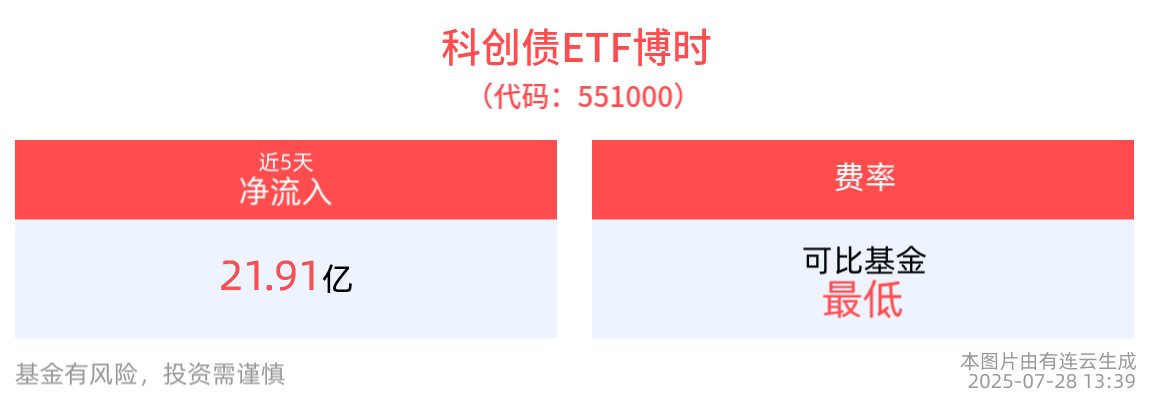
科创债ETF博时(551000)红盘震荡,近5个交易日合计“吸金”21.91亿元,券商上半年科创债承销额超3800亿
Sou Hu Cai Jing· 2025-07-28 06:35
Core Viewpoint - The recent statistics indicate a significant increase in the underwriting of Sci-Tech bonds, with a notable rise in participation from securities firms and a substantial growth in the total underwriting amount, reflecting a shift in investment preferences towards high-grade credit bonds amid a low-interest-rate environment [3][4]. Group 1: Market Performance - As of July 28, 2025, the Sci-Tech Bond ETF by Bosera (551000) rose by 0.03%, with the latest price at 99.65 yuan [3]. - The trading volume for the Sci-Tech Bond ETF reached 91.29 million yuan, with a turnover rate of 0.96% [3]. - The average daily trading volume over the past year was 2.643 billion yuan [3]. Group 2: Underwriting Statistics - In the first half of 2025, 68 securities firms participated in the underwriting of Sci-Tech bonds, an increase of 23 firms year-on-year [3]. - The total underwriting amount for Sci-Tech bonds was 381.391 billion yuan, representing a year-on-year increase of over 50% [3]. Group 3: Investment Trends - The current low-interest-rate environment has led to a scarcity of high-grade credit bonds, creating an "asset shortage" for institutional funds [3]. - The Sci-Tech Bond ETF is viewed as a premium choice for institutional investors due to its policy support and higher coupon yields [3]. - The ETF's tool-like characteristics cater to the needs of patient capital such as social security and pension funds for efficient portfolio adjustments [3]. Group 4: Fund Characteristics - The latest scale of the Sci-Tech Bond ETF by Bosera is 9.556 billion yuan [3]. - The fund experienced a net outflow of 199,300 yuan recently, but had a total inflow of 2.191 billion yuan over the past five trading days [4]. - The maximum drawdown since inception is 0.36%, with a relative benchmark drawdown of 0.08% [4]. - The management fee is 0.15% and the custody fee is 0.05%, making it one of the lowest in its category [4]. - The tracking error for the year to date is 0.029%, indicating high tracking precision compared to similar funds [4].

固收专题报告:信用赎回可控,把握波段机会
CAITONG SECURITIES· 2025-07-28 03:23
1. Report Industry Investment Rating - No information provided in the content 2. Core Views of the Report - Anti - involution policies affect commodity prices, shock the market's inflation expectations, and cause a significant adjustment in the bond market. Credit bond yields rise with interest rates, and most credit spreads widen, with secondary and perpetual (二永) bonds showing large fluctuations and high spread increases. Fund companies with the most unstable liability ends sell significantly, while insurance companies increase their buying efforts, and bank wealth management remains relatively stable. The trading enthusiasm for medium - and long - term bonds such as urban investment bonds, industrial bonds, and 二永 bonds remains high [2]. - It is too early to worry about negative feedback, with a very low probability. Market learning has improved the ability to respond, and there has been no change in macro - expectations. Moreover, bank wealth management's increasing consideration of liquidity in its configuration can prevent negative feedback [3]. - The asset shortage pattern remains unchanged and may even intensify. Interest rates may have short - term adjustments but do not support continuous and significant adjustments. Once interest rates stabilize, credit is likely to stabilize. After the market adjustment, it will be more difficult to further compress credit spreads compared to previous lows, and credit spreads are more likely to fluctuate. Investors need to seize phased trading opportunities [4]. - Investors should focus on coupon - bearing assets, and consider both coupon and trading operations for long - term bonds. For trading strategies, medium - and long - term 二永 bonds are recommended; for allocation strategies, sinking investment in urban investment bonds is still recommended. Wait for trading opportunities for ultra - long - term bonds [5]. 3. Summary by Relevant Catalogs 3.1 Market Review: Significant Correction, Noticeable Widening of 二永 Bond Spreads 3.1.1 Market Performance - This week, the credit bond market significantly corrected, and credit spreads widened. The stock market strengthened, and the bond market significantly corrected. Credit bond yields generally rose, especially for medium - and long - term 二永 bonds, which increased by over 10bp, with the 10Y 二永 bond correcting by up to 14.5bp. Most credit spreads widened, with 二永 bonds seeing more significant increases, while spreads of some medium - and long - term notes, enterprise bonds, and urban investment bonds of certain grades slightly narrowed [10]. - From a daily perspective, urban investment bond yields generally rose, with the adjustment amplitude first increasing and then decreasing, reaching a daily correction high on Thursday. From Monday to Tuesday, long - term 二永 bonds led the yield increase, but the overall amplitude was relatively small. From Wednesday to Thursday, the yield increase continued to expand, with long - term 二永 bonds correcting by over 5bp on Thursday and short - term bonds increasing by about 4bp. The long - and short - term yields of urban investment bonds and medium - term notes also increased by 3.5bp - 5bp. On Friday, the market continued to decline, but the amplitude narrowed. Credit spreads showed a divergent trend. Affected by the different adjustment speeds of credit bonds and interest - rate bonds, the spreads of 二永 bonds, known as "interest - rate amplifiers," generally widened, while the spreads of less - liquid urban investment bonds and medium - term notes were still slightly compressed in the early stage and widened on Friday [16]. 3.1.2 Insurance Continues to Allocate, Funds Sell on a Large Scale - Insurance companies' credit bond allocation remains strong. This week, insurance companies continued to be net buyers, with a net buying scale of 12.563 billion yuan, a 38.7% increase from the previous week. The net buying volume of ultra - long - term credit bonds over 5 years was 6.75 billion yuan, with the increase intensity remaining basically the same as last week [18]. - Funds sold credit bonds significantly this week, with a selling scale of 22.578 billion yuan. The net selling volume within 5Y was 12.738 billion yuan, and the net selling volume over 5Y was 7.474 billion yuan [18]. - Bank wealth management scale slightly increased. As of July 20, the bank wealth management scale was 31.02 trillion yuan, an increase of 0.06 trillion yuan from the previous weekend. This week, the net buying scales of wealth management and other product categories for credit bonds were 15.301 billion yuan and 13.078 billion yuan respectively, with month - on - month changes of 15.80% and 39.13% [21][22]. 3.1.3 Transaction Proportion: Decrease in Low - Rating Transaction Proportion - The transaction proportion of urban investment bonds, industrial bonds, and 二永 bonds with a remaining term of over 3 years was 30%, 29%, and 72% respectively, indicating that the transaction proportion of medium - and long - term bonds remained high. For urban investment bonds, the proportion of transactions under 3 years remained basically the same as last week, with the 3 - 5Y transaction proportion decreasing by 2 percentage points and the over - 5Y proportion increasing by 2 percentage points. For industrial bonds, the proportion of transactions within 1 year decreased by 1 percentage point, the 1 - 3Y proportion decreased by 2 percentage points, and the 3 - 5Y proportion increased by 3 percentage points. For 二永 bonds, the proportion of transactions within 1 year decreased by 1 percentage point, the 1 - 3Y proportion increased by 2 percentage points, and the 3 - 5Y proportion decreased by 3 percentage points [28]. - The proportion of low - rating transactions of non - financial credit bonds decreased this week. The proportion of transactions of urban investment bonds with a rating of AA(2) and below decreased by 1 percentage point from last week, the proportion of industrial bonds with a rating of AA and below decreased by 1 percentage point month - on - month, and the proportion of 二永 bonds with a rating of AA and below decreased by 3 percentage points from last week [29]. 3.2 Market Outlook: Redemption is Controllable, Seize Trading Opportunities 3.2.1 Redemption is Controllable, Seize Trading Opportunities - Reasons for market adjustment: With the continuous implementation of anti - involution policies, commodity futures prices have risen significantly, affecting the market's inflation expectations. The Nanhua Industrial Products Index, which reflects commodity price trends, has also risen significantly. Historically, this index has a certain forward - looking predictive effect on PPI. By observing the term structure of interest - rate swaps, indicators such as IRS FR007 5 - year - 1 - year and 1 - year - FR007 have quickly turned positive, indicating a change in the market's inflation expectations [31][33]. - Regarding the concern of negative feedback: It is too early to worry about negative feedback, with a very low probability. Market adjustments in September 2024 and March 2025 were more significant than the current one, but no obvious negative feedback occurred. The key lies in the increasing consideration of liquidity in bank wealth management's configuration. Since April this year, the absolute amount and proportion of inter - bank certificate of deposit (NCD) allocation have been at historically high levels, enabling wealth management to handle market fluctuations. As long as bank wealth management remains stable, the key link of market negative feedback can be stopped [38][40]. - Analysis of tight funds: The funding situation tightened on Thursday this week, leading to a higher market adjustment amplitude. The tightening on Thursday may be due to banks' liability - side issues. From the perspective of large banks' deposit - loan spreads, the deposit - loan spreads of large banks generally decline seasonally in July. After the significant reduction of deposit interest rates in May, large banks face the pressure of term - deposit maturity transfer, resulting in relatively large liability pressure. A low deposit - loan spread means reduced stability of funding rates, which are more dependent on the central bank's liquidity injection. Any daily misalignment in the central bank's liquidity injection can significantly impact funding rates [41][42]. - Future trends: The asset shortage pattern remains unchanged and may even intensify. Interest rates may have short - term adjustments, but the current macro - environment does not support continuous and significant interest - rate adjustments. The impact of anti - involution policies on inflation expectations has been fully priced in the short term through the significant rise in commodity prices. For credit bonds, it will be more difficult to further compress credit spreads below previous lows this year. Credit spreads are more likely to fluctuate, and investors need to seize phased small - band opportunities [50][56]. 3.2.2 Science and Technology Innovation Bonds Continue to Contribute Net Financing to the Market - In July, non - financial credit bond financing performed well, with the net financing exceeding the levels of the same month in the previous two years, reaching 347.9 billion yuan. The supply of long - term credit bonds has increased. Recently, the sentiment for extending the duration of credit bonds has been positive. Although the issuance duration in July has decreased month - on - month, there is still room for extending the duration [57][59]. 3.3 What to Buy in Credit? 3.3.1 Focus on High - Grade 二永 Bonds for Trading, Weak - Quality Urban Investment Bonds for Coupon - The price - comparison of short - term 二永 bonds is positive, while that of medium - and long - term 二永 bonds is negative. Considering different investor needs, high - grade trading strategies are recommended to focus on 二永 bonds, and low - grade coupon strategies are recommended to focus on urban investment bonds. This week, the price - comparison advantage of short - term AAA second - tier capital bonds over medium - term notes remained positive, and the price - comparison of long - term AAA second - tier capital bonds with medium - term notes fluctuated around 0. The price - comparison of short - term urban investment bonds with medium - term notes is positive, and the price - comparison of long - term low - grade urban investment bonds has quickly recovered to the historical central level. Urban investment bonds still have a price - comparison advantage over medium - term notes, but the difference is not significant. Considering the bond - selection scope, urban investment bonds are still preferred [62][64]. 3.3.2 General Credit Coupon is More Advantageous - Currently, the proportion of urban investment bonds with a valuation above 2.3% is 19.8%, that of non - financial industrial bonds is 10.8%, and that of 二永 bonds is 6.8%. From the perspective of coupon - based bond selection, general credit offers a wider bond - selection space. For urban investment bonds, investors can consider both coupon and trading operations for the long - term, and can continue to participate in short - term high - coupon varieties. For industrial bonds, investors can focus on important local state - owned real - estate enterprises among real - estate developers, such as Shoukai and Jianfa Real Estate; among non - real - estate entities, focus on China Minsheng Bank, Jizhong Energy, and Bohai Bank [68][72]. 3.3.3 Statistics of Primary Issuance - Relevant data shows the weekly net financing and cumulative net financing of various credit bonds, including urban investment bonds, industrial bonds, 二永 bonds, and other financial bonds from December 30, 2024, to July 27, 2025 [77]. 3.3.4 Details of Secondary Valuation Changes - No detailed information provided in the content






固收 科创债全景解析论坛
2025-07-28 01:42
Summary of Key Points from Conference Call Records Industry Overview - The bond ETF market has rapidly grown since the 2008 financial crisis, reaching a global scale of $1.75 trillion with an average growth rate of 20% over the past decade, providing a reference for domestic markets [1][2] - The Chinese bond ETF market has seen significant development since 2023, surpassing 500 billion yuan, driven by macroeconomic changes and asset shortages [1][3] Core Insights and Arguments - Bond ETFs are favored in low-interest, low-volatility environments due to their high liquidity, low costs, and transparent underlying assets, making them attractive for large asset allocators [1][4][5] - The Sci-Tech Bond ETF, launched on July 17, 2025, has quickly surpassed 100 billion yuan in scale, indicating strong market recognition and demand for sci-tech credit products [1][6][7] - Regulatory bodies have introduced the Sci-Tech Bond ETF to enhance market liquidity and alleviate asset shortages in bank wealth management, providing new allocation options [1][9][17] - The current macroeconomic environment has made passive products like bond ETFs more appealing due to their cost-effectiveness and performance advantages over actively managed funds [5][16] Development and Challenges of Sci-Tech Bond Market - The Sci-Tech bond market faces challenges such as a fragmented issuer structure, insufficient investor diversity, and liquidity issues, necessitating further development to support tech enterprise financing [1][28][31] - The market has expanded significantly since the introduction of the dual innovation bond concept in 2021, with financing volumes exceeding 1 trillion yuan in 2025 [23][25] - The introduction of new regulations has led to a broader range of issuers, including financial institutions and tech enterprises, enhancing the market's capacity [27][31] Investment Value and Strategies - The investment value of Sci-Tech Bond ETFs is highlighted by their high yield potential, transparency, and trading convenience, making them suitable for various investor profiles [10][14][32] - Current investment strategies include focusing on premium opportunities from newly issued bonds, high-quality private enterprises, and long-term bond varieties [32] Future Outlook - The future of the Sci-Tech bond market appears promising, with expected rapid growth driven by policy support and increased participation from financial institutions [31][40] - The market's expansion is anticipated to include more innovative products that cater to diverse financing needs of tech enterprises [31][32] Regulatory and Structural Considerations - Regulatory efforts are aimed at improving market liquidity and addressing the asset shortage faced by banks, with a focus on enhancing the efficiency of ETF products [15][17] - The current bond market's liquidity issues are impacting the development of the Sci-Tech bond market, necessitating policies that encourage index-based investments [29] Conclusion - The bond ETF market, particularly the Sci-Tech Bond ETF segment, is positioned for significant growth, driven by favorable regulatory changes, increasing market recognition, and evolving investor preferences. The focus on enhancing liquidity and addressing structural challenges will be crucial for sustaining this growth trajectory [1][31][40]
机构研究周报:政策和资产荒共振的牛市,增配成长类资产
Wind万得· 2025-07-27 22:30
Core Viewpoints - The current market conditions are conducive to a bull market driven by policy and liquidity, with deflation and a downturn in the real estate market unlikely to change the overall bullish trend [1][6]. Industry Research - The 2025 World Artificial Intelligence Conference in Shanghai showcased over 800 companies, with more than 50% being international, indicating a significant interest in AI technologies. AI is expected to be a major application area, particularly in programming [3]. - The mining and metallurgy sector is expected to see a divergence, with bullish sentiment on non-ferrous metals due to inventory cycles, while black metals are anticipated to face downward price pressure [11]. - The "anti-involution" theme is emerging, with funds favoring low-valuation, high-dividend sectors such as traditional industries and certain new energy sectors like wind and solar [12]. - The market is shifting towards a rotation phase, focusing on previously lagging sectors such as coal, utilities, and real estate, indicating a search for undervalued assets [13]. Equity Market - The A-share market has shown strong performance since June, with a favorable external environment and liquidity conditions. However, internal pressures from fundamentals and policy responses are expected to create a balancing act [5]. - The Hong Kong stock market is likely to see a structural market where tech stocks can perform independently despite a lack of overall market trends [7]. - The current A-share market resembles the 2014-2015 period, with a clear trend of household savings moving into the stock market, favoring thematic investments and high-quality growth stocks [22].

公募REITs周报(2025.07.21-2025.07.27):公募REITs市场震荡下跌,创金合信首农产业园REIT上市-20250727
Tai Ping Yang Zheng Quan· 2025-07-27 13:14
1. Report Industry Investment Rating The provided content does not mention the industry investment rating. 2. Core Viewpoints of the Report - This week, the public offering REITs market fluctuated and declined, but the trading volume increased. The indexes of property - type and franchise - type public offering REITs both decreased, with only the park infrastructure - type REITs showing a slight increase and the municipal facilities - type having the highest decline. - As of July 25, 2025, a total of 73 public offering REITs have been issued, with a total issuance scale of 191 billion yuan. 14 new public offering REITs have been issued in 2025, and 4 were newly issued in July 2025, with a total scale of 12.5 billion yuan. Additionally, 26 public offering REITs funds are waiting to be listed. - The market is expected to continue to expand, and its activity is expected to further increase. In the context of an asset shortage, public offering REITs have the advantages of high dividends and medium - low risks, with a relatively high cost - performance ratio for allocation [2][4][35]. 3. Summary by Relevant Catalogs 3.1 Secondary Market: This Week, the Public Offering REITs Market Fluctuated and Declined - Index Performance: As of July 25, 2025, the China Securities REITs Index decreased by 1.79% to 860.11 compared with last week, and the China Securities REITs Total Return Index decreased by 1.56% to 1087.36. The indexes of property - type and franchise - type public offering REITs decreased by 1.48% and 2.23% respectively. Among property - type public offering REITs, only park infrastructure - type REITs increased by 3.72%, while others declined, with the municipal facilities - type, water conservancy facilities - type, and other types having different degrees of decline [9][14]. - Trading Volume and Turnover: The total trading volume of the REITs market this week was 741 million shares, a 31.85% increase from last week, and the trading amount was 3.348 billion yuan, a 35.11% increase. The turnover rate of the REITs market this week was 3.62%, compared with 2.77% last week. The trading amounts and turnover rates of most types of public offering REITs increased [10]. - Individual Product Performance: Among the 69 public offering REITs (excluding the 1 newly listed this week), 9 rose and 59 fell. The top gainers included Boshi Jinkai Science and Industry Park REIT, China Merchants Science and Technology Incubator REIT, etc., while the top losers included CITIC Construction Investment Mingyang Smart New Energy REIT, ICBC Inner Mongolia Energy Clean Energy REIT, etc [22]. 3.2 Primary Market: 26 Public Offering REITs Funds are Waiting to be Listed - Issuance Situation: As of July 25, 2025, a total of 73 public offering REITs have been issued, with a total issuance scale of 191 billion yuan. In 2024, 29 REITs were issued, with a total scale of 64.6 billion yuan. In 2025, 14 public offering REITs have been issued, and 4 were newly issued in July 2025, with a total scale of 12.5 billion yuan [27]. - Upcoming Listings: There are 26 public offering REITs funds waiting to be listed, including 15 for initial offerings and 11 for expansion and fundraising. In terms of project status, 10 have passed, 11 have been feedbacked, 4 have been questioned, and 1 has been declared [29]. 3.3 Public Offering REITs Policies and Market Dynamics - Dividend: E Fund Shenzhen Expressway REIT made its first dividend in 2025, with a distribution of 1.937 yuan per 10 shares. The available distribution amount of this public offering REITs was 58.1293 million yuan, and the proposed distribution amount was 58.11 million yuan, accounting for 99.97% of the available distribution amount as of March 31, 2025 [33]. - New Listing: On July 22, the first follow - on issuance infrastructure - type REITs in Inner Mongolia was successfully launched, with a scale of 2.992 billion yuan [34]. 3.4 Investment Suggestions - Market Trend: This week, the REITs index fluctuated and declined, and the trading amount of the public offering REITs market increased. The indexes of property - type and franchise - type public offering REITs decreased, with only park infrastructure - type REITs showing a slight increase and municipal facilities - type having the highest decline. - Market Outlook: This Friday, the first infrastructure REIT project of Shounong Food Group, the CICGAM Shounong Industrial Park REIT, was listed. 14 public offering REITs have been established this year, with a total scale of over 25 billion yuan. Additionally, 26 REITs funds are waiting to be listed, and the market is expected to continue to expand, with its activity expected to further increase. - Investment Value: In the context of an asset shortage, public offering REITs have the advantages of high dividends and medium - low risks, with a relatively high cost - performance ratio for allocation [4][35][36].
固定收益定期:把握债市修复行情
GOLDEN SUN SECURITIES· 2025-07-27 12:53
Group 1: Report Industry Investment Rating No relevant content Group 2: Core Viewpoints of the Report - The bond market adjusted significantly this week, but the short - term impact factors are temporary, and the bond market is expected to enter a repair phase. The short - term interest rate adjustment ceiling is clear, and the 10 - year and 30 - year Treasury bond yields may return to around 1.65% and 1.85% respectively. The bond interest rate is expected to hit a new low in the second half of the year [1][5][19] Group 3: Summary by Related Contents Bond Market Adjustment This Week - The bond market adjusted significantly this week, with long - term bonds adjusting more notably. The yields of 10 - year and 30 - year Treasury bonds rose by 6.7bps and 8.4bps to 1.73% and 1.97% respectively. The yields of Tier 2 capital bonds of 3 - year and 5 - year AAA - also increased significantly, and the 1 - year AAA certificate of deposit rate rose by 5.8bps to 1.675% [1][9] - The sharp decline in the bond market this week is due to multiple factors: the expectation of anti - involution policies pushed up commodity prices and the stock market; the central bank withdrew funds in the first four days of this week, and seasonal factors tightened the funds; the bond market adjustment may have led to the net value retracement of some asset management products, resulting in a negative feedback effect of redemptions [1][9] Short - term Nature of Impact Factors - Commodity prices tumbled on the night of Friday after a continuous rise last week. With strengthened regulatory control, the subsequent commodity price rally is expected to cool down, reducing the pressure on the bond market. The current price increase is more based on expectations, and its sustainability is to be observed [2][12] - The central bank's operation on Friday strengthened the protection of liquidity, and funds will not tighten in a trending manner. The central bank's net injection of 8018 billion yuan on Friday and the statement of the deputy governor indicate that the central bank will maintain liquidity stability, which helps to form an adjustment ceiling for the bond market, limiting the continuous adjustment space of the bond market [3][13] Unchanged Bond Market Trend - The bond market is still in an asset shortage pattern, and broad - spectrum interest rates are declining. The supply of assets will decrease in the next five months, while the allocation power is steadily increasing. The reduction of insurance reservation interest rates will further increase the allocation demand for long - term bonds [4][14] - The demand side is not strong, and the export demand may slow down in the second half of the year. The real estate market is weak, and investment and consumption growth rates have slowed down. The impact of anti - involution policies on supply also needs attention. Fundamental changes are the key to determining the interest rate trend [5][19] Bond Market Outlook - After the short - term shock, the bond market will enter a repair phase. The interest rate is expected to return to the previous level in the first stage, and whether it can break through the previous low later depends on the fundamentals and the pressure of asset shortage. The bond interest rate is expected to hit a new low in the second half of the year [5][19]
信用分析周报:信用债机会或源自调整-20250727
Hua Yuan Zheng Quan· 2025-07-27 06:07
Group 1: Report Industry Investment Rating - Not mentioned in the provided content Group 2: Report's Core View - This week, most credit spreads in different industries widened, with only a few narrowing. The credit spreads of urban investment bonds widened overall, with the short - end widening more than the long - end. For industrial bonds, the credit spreads of AA+ and above industrial bonds widened to varying degrees, and the short - end of AA industrial bonds also widened. The credit spreads of bank secondary and perpetual bonds widened overall. After a significant adjustment in credit bond yields, the cost - effectiveness of credit bonds has increased from a static coupon perspective. With the rapid decline in black - series futures prices on Friday night, the bond market sentiment may improve, and the space for further adjustment of credit bonds is relatively limited. It is recommended to focus on long - duration urban investment bonds, capital bonds, and insurance sub - debt, especially the long - duration capital bonds of Minsheng, Bohai, and Hengfeng banks, and be optimistic about urban investment dim sum bonds and US dollar bonds [4][43] - Since July 2024, the long - end risk - free interest rate has been in a downward channel, and the yield of ultra - long - term credit bonds has followed suit. Although the proportion of low - valuation transactions and TKN transactions has been rising this year, it has not exceeded last year's high, indicating that the buying sentiment may not have reached its end. With the concentrated listing of science - innovation bond ETFs on July 17, the spreads of medium - and short - term component bonds have been compressed to an extreme level. In the context of the "asset shortage" in the low - interest - rate environment this year, the market may further evolve towards long - duration assets. Investors can still find relatively suitable ultra - long - term credit bond targets in the market [5][49] Group 3: Summary According to the Directory 1. Primary Market 1.1 Net Financing Scale - This week, the net financing of credit bonds (excluding asset - backed securities) was 390.6 billion yuan, an increase of 220.3 billion yuan compared with last week. The total issuance was 631.6 billion yuan, an increase of 233.9 billion yuan, and the total repayment was 241 billion yuan, an increase of 13.6 billion yuan. The net financing of asset - backed securities was 3.09 billion yuan, an increase of 0.91 billion yuan [10] - By product type, the net financing of urban investment bonds was 3.31 billion yuan, an increase of 0.28 billion yuan; that of industrial bonds was 11.06 billion yuan, an increase of 5 billion yuan; and that of financial bonds was 24.69 billion yuan, an increase of 16.74 billion yuan [10] - In terms of the number of issuances and redemptions, the number of urban investment bond issuances increased by 10, and the number of redemptions increased by 33. The number of industrial bond issuances increased by 16, and the number of redemptions decreased by 7. The number of financial bond issuances increased by 7, and the number of redemptions decreased by 3 [12] 1.2 Issuance Cost - The weighted average issuance rates of AA - rated industrial bonds and AA+ - rated financial bonds increased significantly compared with last week, while the issuance rates of other bond types and ratings fluctuated slightly. The issuance rate of AA - rated industrial bonds increased by 51BP, mainly due to bonds such as "25 Nonggu 03" and "25 Tiandiyuan MTN001". The issuance rate of AA+ - rated financial bonds increased by 41BP, mainly due to "25 Donghai 03". The fluctuations of other bonds did not exceed 10BP [18] 2. Secondary Market 2.1 Transaction Situation - In terms of trading volume, the trading volume of credit bonds (excluding asset - backed securities) increased by 178 billion yuan compared with last week. The trading volume of urban investment bonds was 227.2 billion yuan, an increase of 23.5 billion yuan; that of industrial bonds was 361.2 billion yuan, an increase of 3.3 billion yuan; and that of financial bonds was 611.6 billion yuan, an increase of 151.2 billion yuan. The trading volume of asset - backed securities was 1.45 billion yuan, a decrease of 0.22 billion yuan [19] - In terms of turnover rate, the turnover rate of traditional credit bonds increased overall, while that of asset - backed securities decreased. The turnover rate of urban investment bonds was 1.48%, an increase of 0.15 pct; that of industrial bonds was 2.06%, an increase of 0.01 pct; that of financial bonds was 4.12%, an increase of 0.96 pct. The turnover rate of asset - backed securities was 0.42%, a decrease of 0.06 pct [20] 2.2 Yield - The yields of credit bonds with different maturities and ratings increased significantly this week, with an increase range of 7 - 17BP. For example, the yields of AA, AAA -, and AAA+ credit bonds with a maturity of less than 1 year increased by 7BP, 8BP, and 8BP respectively; those with a maturity of 3 - 5 years increased by 10BP, 11BP, and 11BP respectively; and those with a maturity of more than 10 years increased by 17BP, 10BP, and 9BP respectively [24] - Taking AA+ - rated 5 - year bonds of each type as an example, the yields of non - publicly issued industrial bonds and perpetual industrial bonds increased by 11BP and 10BP respectively; the yield of AA+ - rated 5 - year urban investment bonds increased by 10BP; the yields of commercial bank ordinary bonds and secondary capital bonds increased by 7BP and 17BP respectively; and the yield of AA+ - rated 5 - year asset - backed securities increased by 11BP [25] 2.3 Credit Spread - Overall, most credit spreads in different industries widened this week, with only a few narrowing. The credit spreads of AA+ - rated electronics and building materials narrowed by 17BP and 8BP respectively, the credit spread of AA+ - rated light industry manufacturing narrowed by less than 1BP, and the credit spread of AAA - rated leisure services narrowed by 1BP. The credit spreads of other industries and ratings mostly widened, with an increase range of 0 - 7BP [27] 2.3.1 Urban Investment Bonds - By maturity, the credit spreads of urban investment bonds widened overall, with the short - end widening more than the long - end. The 0.5 - 1Y credit spread was 36BP, a widening of 5BP; the 1 - 3Y credit spread was 40BP, a widening of 4BP; the 3 - 5Y credit spread was 58BP, a widening of 1BP; the 5 - 10Y credit spread was 49BP, a widening of less than 1BP; and the credit spread of more than 10Y remained unchanged [32] - By region, most urban investment credit spreads widened, with only a few regions showing a slight compression. For example, the AA - rated credit spreads in Henan and Guizhou compressed by 6BP and 3BP respectively, while the AA - rated credit spread in Yunnan and the AA+ - rated credit spread in Guizhou widened by 12BP and 13BP respectively. The credit spreads in other regions mostly widened by no more than 5BP [33] 2.3.2 Industrial Bonds - The credit spreads of AA+ and above industrial bonds widened to varying degrees this week, and the short - end of AA industrial bonds also widened. For example, the credit spreads of 1Y AAA -, AA+, and AA private - placement industrial bonds widened by 5BP, 5BP, and 3BP respectively, and those of 10Y AAA -, AA+, and AA private - placement industrial bonds compressed by 5BP, 3BP, and less than 1BP respectively. The credit spreads of 1Y AAA -, AA+, and AA perpetual industrial bonds widened by 4BP, 4BP, and 7BP respectively, and those of 10Y widened by 5BP, 3BP, and 1BP respectively [36] 2.3.3 Bank Capital Bonds - The credit spreads of bank secondary and perpetual bonds widened overall this week, with the widening range of different maturities and ratings being 3 - 9BP. The credit spreads of 10Y AAA -, 10Y and 5Y AA+ and 10Y and 5Y AA secondary capital bonds widened by more than 8BP, and the credit spreads of 10Y AAA -, AA+, and AA bank perpetual bonds also widened by more than 8BP. The widening range of other bonds did not exceed 6BP [38] 3. This Week's Bond Market Negative News - Shenzhen Longfor Holdings Co., Ltd. extended the maturity of 5 bond issues; Shanghai Lujiazui Finance & Trade Zone Development Co., Ltd. had the implied ratings of 12 bond issues downgraded; Inner Mongolia Oujing Technology Co., Ltd. was placed on the watchlist, and its "Oujing Convertible Bond" was also placed on the watchlist; Midea Real Estate Group Co., Ltd. had the implied ratings of 20 bond issues downgraded; and Agile Group Co., Ltd. extended the maturity of 3 bond issues [2][40] 4. Investment Recommendations - Pay attention to long - duration urban investment bonds, capital bonds, and insurance sub - debt, especially the long - duration capital bonds of Minsheng, Bohai, and Hengfeng banks, and be optimistic about urban investment dim sum bonds and US dollar bonds [43] - Focus on the allocation and trading opportunities of ultra - long - term credit bonds. For industrial bonds, State Grid has the largest scale of ultra - long - term credit bonds and good trading atmosphere, but the yield level is relatively low. Chengtong Holdings, Sinochem Group, Guangzhou Yuexiu, and Sichuan Energy Development are more cost - effective. For urban investment bonds, although the static coupon levels are generally better than industrial bonds, the range of available bonds is relatively narrow. Pay attention to the opportunities for further compression of the spreads of Shenzhen Metro, Shaanxi Communications Control, Yantai Guofeng, and Yizhuang Investment Development. The cost - effectiveness of the ultra - long - term bank secondary capital bonds of several large state - owned and joint - stock banks is limited [6][50]


见证历史!南向资金,疯狂买入
Zheng Quan Shi Bao· 2025-07-25 12:19
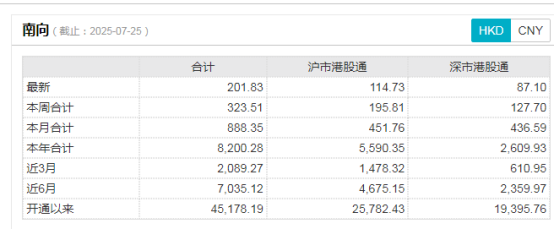
Group 1 - The Hong Kong stock market is experiencing a significant capital influx led by southbound funds, with a net buying amount exceeding 200 billion HKD on July 25, 2025, and a total net buying amount of over 820 billion HKD for the year, surpassing the previous record of 807.87 billion HKD for the entire year of 2024 [1][2] - The Hang Seng Index, Hang Seng Tech Index, and Hang Seng China Enterprises Index have shown year-to-date increases of 26.56%, 27.08%, and 25.52% respectively, ranking among the top global markets [2] - Southbound funds have frequently recorded daily net inflows exceeding 10 billion HKD, with 32 days in 133 trading days this year exceeding 10 billion HKD, and 9 days exceeding 20 billion HKD, including a record high of 35.586 billion HKD on April 9 [2][3] Group 2 - The continuous influx of southbound funds is attributed to the undervaluation of Hong Kong stocks, as the Hang Seng Index has undergone a six-year adjustment since 2018, with many companies maintaining good growth despite significant declines [5] - The Hong Kong market offers unique assets such as Tencent, Meituan, and Alibaba, along with new consumer companies like Pop Mart and Mixue Ice City, providing more investment options for southbound funds [5] - The influx of southbound funds reflects a "scarcity of assets," as domestic funds seek effective allocation opportunities amid a backdrop of abundant liquidity but limited high-quality assets [6] Group 3 - The sustained inflow of southbound funds has improved liquidity in the Hong Kong market and enhanced the pricing power of domestic funds, which accounted for 34.64% of the market's trading volume in 2024 [7] - The share of foreign capital in the Hong Kong stock market has decreased from 75% in October 2020 to 61% in June 2025, indicating a shift towards greater influence from domestic funds [7][8] - Southbound funds are gaining marginal pricing power in sectors such as consumer goods and telecommunications, with holdings exceeding 50% in these areas [8][9] Group 4 - The Hong Kong stock market has shown strong performance globally, driven by AI breakthroughs and the appeal of being a "value trap," with the Hang Seng Index reaching new highs [10] - Future market performance may depend more on corporate earnings growth rather than further valuation expansion, as the expected earnings growth for the Hang Seng Index is relatively low [10][11] - A balanced investment strategy focusing on stable returns and growth returns is recommended, particularly in sectors less affected by tariff impacts and those benefiting from AI advancements [11]
见证历史!南向资金,疯狂买入!
证券时报· 2025-07-25 12:01
Core Viewpoint - The Hong Kong stock market is experiencing a significant capital influx led by southbound funds, with a record net buying amount exceeding 820 billion HKD in 2023, surpassing the previous annual record set in 2024 [1][3]. Group 1: Southbound Fund Inflows - As of July 25, 2023, the net buying amount of southbound funds reached 8200.28 billion HKD, breaking the previous record of 8078.69 billion HKD for the entire year of 2024 [3][4]. - There have been 32 trading days in 2023 where the net inflow of southbound funds exceeded 100 billion HKD, accounting for 24.06% of the trading days [3][4]. - The single-day net buying record was set on April 9, 2023, with a net purchase of 355.86 billion HKD [3]. Group 2: Market Performance and Valuation - The Hang Seng Index, Hang Seng Tech Index, and Hang Seng China Enterprises Index have year-to-date increases of 26.56%, 27.08%, and 25.52%, respectively, ranking among the top global markets [3]. - The influx of southbound funds is attributed to the undervaluation of Hong Kong stocks, with many companies showing strong performance despite significant price declines over the past six years [6]. - The presence of unique domestic assets, such as Tencent and Meituan, along with new consumer companies, has diversified investment options in the Hong Kong market [6]. Group 3: Economic Context and Asset Allocation - The influx of southbound funds reflects a "scarcity of assets" in mainland China, where abundant liquidity is seeking quality investment opportunities [7]. - As of June 2023, China's M2 reached 330 trillion CNY, significantly exceeding GDP, indicating a need for effective asset allocation [7]. - The Hong Kong market offers both stable dividend assets and growth-oriented sectors, making it attractive for mainland investors [7]. Group 4: Pricing Power and Market Dynamics - The continuous inflow of southbound funds has improved liquidity in the Hong Kong market and enhanced the pricing power of mainland investors [9]. - In 2024, southbound funds accounted for approximately 34.64% of the total trading volume in the Hong Kong market, a significant increase from previous years [9]. - The share of foreign capital in the Hong Kong stock market has decreased from 75% in October 2020 to 61% in June 2025, indicating a shift towards greater influence from mainland funds [9][10]. Group 5: Future Market Outlook - The Hong Kong market has shown strong performance in 2023, driven by advancements in AI technology and strong sectors like new consumption and innovative pharmaceuticals [12]. - Analysts suggest that future market growth may be limited, relying more on corporate earnings growth rather than valuation expansion [12][13]. - Investment strategies should focus on sectors less affected by tariff impacts and those benefiting from AI advancements to achieve better returns [12][13].

低位波动中的破局之道:2025年中期信用债展望与策略建议
Zhong Cheng Xin Guo Ji· 2025-07-25 11:46
1. Report Industry Investment Rating No relevant content provided. 2. Core Viewpoints of the Report - In the second half of 2025, the credit bond issuance is expected to continue expanding, with the issuance scale possibly reaching its peak in the third quarter. The issuance and net financing scale of urban investment bonds may further shrink, while the expansion of industrial bonds and science - and technology innovation bonds will dominate the supply. The yield of the bond market may continue the downward trend, and the credit spread may still have room for compression. Investors are advised to dig into the investment value of high - grade credit bonds, pay attention to market fluctuations, and focus on investment opportunities in the consumption field, stable industries, and science - and technology innovation bond field [5][6][48]. 3. Summary by Relevant Catalogs 3.1 First - half Review of the Credit Bond Market 3.1.1 Primary Market - **Overall issuance situation**: The total issuance of credit bonds increased moderately, with a net financing scale of 971.083 billion yuan, showing a mild recovery. The issuance interest rate first rose and then fell, remaining at a low level. The term structure continued to optimize, with the proportion of medium - and long - term varieties increasing. The issuance scale of medium - term notes continued to expand, and the issuance scale of corporate bonds exceeded that of ultra - short - term financing for the first time [5][7][12]. - **Industry differences**: The issuance of industrial bonds expanded significantly, with a scale of 4.26 trillion yuan and a net financing scale of 1.11 trillion yuan. Urban investment bonds had a net outflow of 120.004 billion yuan, and the net outflow situation was obvious from March to June [17]. - **Innovative varieties**: The issuance scale of innovative varieties of credit bonds expanded significantly, reaching 1.090689 trillion yuan. The issuance scale of science - and technology innovation bonds increased explosively, reaching 879.619 billion yuan, and the scale of green - labeled bonds also continued to expand [24]. - **Issuer structure**: The credit bond financing still showed obvious subject stratification. Central and state - owned enterprises dominated, while the private enterprise bond financing achieved marginal improvement. The issuance scale of private enterprise credit bonds was 346.661 billion yuan, with a net financing of 337.27 billion yuan [27][28]. 3.1.2 Secondary Market - **Trading activity**: The trading activity of credit bonds declined, and the trading scale of short - term financing bonds decreased significantly. The total trading volume of credit bonds in the secondary market decreased by 8.89% compared with last year to 27.64 trillion yuan [36]. - **Yield trend**: The bond market yield first fluctuated and then stabilized. The "asset shortage" pattern generally continued. The yield of treasury bonds and medium - and short - term notes mostly increased slightly compared with the beginning of the year [38][40]. - **Credit spread**: The credit spread mostly narrowed. The credit spread of medium - and short - term notes generally narrowed by 2 - 68bp, and most of the inter - grade spreads also narrowed [43]. - **Industry spread**: The spreads of all industries narrowed comprehensively. The real estate industry still had the highest spread, but it narrowed compared with the first quarter. The spreads of industries such as construction and automobiles narrowed significantly [45][46]. 3.2 Outlook and Strategy Suggestions for the Second Half of 2025 3.2.1 Financing Outlook - The credit bond issuance is expected to continue expanding, and the issuance scale may reach its peak in the third quarter. The issuance scale for the whole year is predicted to be about 16.3 - 16.7 trillion yuan, with a year - on - year increase of about 3% - 6%. The credit spread may reach its lowest point in the third quarter, but there is a possibility of an "up - after - down" reversal in interest rates in the fourth quarter [48][49]. 3.2.2 Interest Rate Trend - The bond market yield may continue the downward trend. The 10 - year treasury bond yield may operate in the range of 1.4% - 1.7%. The credit spread of credit bonds may still have room for compression [51][53]. 3.2.3 Investment Strategy - Investors are advised to further explore the investment value of high - grade credit bonds, screen individual bonds with good credit quality and room for spread compression, and pay attention to market fluctuations for trading gains. Specific investment fields include the consumption field, stable industries, and science - and technology innovation bond fields [54][55].