
风险管理

Search documents
助力贸易服务迭代 赋能产业韧性跃升
Qi Huo Ri Bao Wang· 2025-11-11 01:36
Core Insights - The article discusses the evolution of commodity trading from "Trade 1.0" to "Trade 2.0" and now to "Service 3.0," highlighting the importance of risk management in the current market environment [1][2][10] - Companies like Jiayue Commodity Group and Zhejiang Hangshi Shancheng are leading this transformation by integrating futures tools into their service offerings, providing clients with risk management solutions [2][3][4] Group 1: Industry Evolution - The transition from "Trade 1.0" to "Trade 2.0" was driven by the need for effective risk management tools to combat price volatility and market uncertainties faced by enterprises [1][2] - The current "Service 3.0" era focuses on providing comprehensive solutions that integrate logistics, finance, information, and technology, allowing for end-to-end service offerings [7][10] - The rise of geopolitical tensions, global monetary policies, and environmental strategies has intensified the need for companies to manage price risks effectively [2][5] Group 2: Company Strategies - Jiayue Commodity Group has embedded a futures-based approach into its operations, allowing it to serve as a risk management consultant rather than just a trader [3][4] - The company aims to create value for clients by transferring risks through futures tools and focusing on identifying and exploiting price discrepancies within the supply chain [4][8] - Hangshi Shancheng emphasizes a research-driven approach, integrating supply and demand analysis with flexible futures and options strategies to address client needs [10][11] Group 3: Risk Management Practices - Companies face three main risks: rising raw material costs, inventory devaluation, and narrowing price differentials, all of which can threaten profitability [5][6] - Effective risk management has become a core competency, with firms needing to shift from profit maximization to operational stability [2][10] - The use of basis trading and options embedded in contracts allows companies to manage price risks while maintaining operational flexibility [8][9] Group 4: Future Outlook - The increasing availability of futures products is expected to enhance risk management capabilities across various industries, making it a fundamental aspect of business strategy [13][14] - As companies evolve from passive risk bearers to active risk managers, the role of service providers will also deepen, necessitating customized solutions for clients [13][14] - The integration of a robust derivatives market with solid industrial foundations is crucial for building resilient supply chains and enhancing the overall stability of the economy [14]
金属衍生品扩容增强产业韧性 促产业高质量发展
Jing Ji Ri Bao· 2025-11-11 00:29
Core Viewpoint - The approval of platinum and palladium futures and options by the China Securities Regulatory Commission marks a significant step in expanding the futures market and enhancing China's influence in the platinum group metals industry, risk management systems, and international pricing authority [1][4]. Group 1: Market Expansion and Risk Management - The introduction of platinum and palladium futures and options provides essential risk management tools for enterprises, allowing them to hedge against price volatility and stabilize costs or profits [3][7]. - The global supply of platinum and palladium is highly concentrated in South Africa and Russia, leading to significant price fluctuations influenced by geopolitical and environmental factors [2][4]. - The futures market acts as a "safety valve," enabling companies to lock in costs and profits, thereby reducing uncertainty from raw material price swings [3][6]. Group 2: Pricing Transparency and Market Dynamics - The new futures and options will be priced in RMB, creating a "third pricing curve" in addition to existing markets in London and New York, which will enhance the transparency of price formation in the domestic market [4][5]. - The establishment of a domestic pricing mechanism is expected to improve the international competitiveness of Chinese enterprises by reflecting local supply and demand more accurately [5][7]. - The futures market is anticipated to facilitate a more market-oriented and transparent pricing mechanism for platinum and palladium, enriching the commodity trading landscape in China [4][8]. Group 3: Industry Development and Innovation - The listing of platinum and palladium futures and options is expected to promote high-quality development across the entire platinum group metals industry chain, from mining to recycling [7][8]. - Innovative delivery methods and robust regulatory frameworks are designed to align with industry practices, enhancing the operational efficiency of the futures market [8]. - The introduction of these financial instruments is likely to attract a diverse range of participants from various sectors, thereby expanding the client base in the futures market [8].
金属衍生品扩容增强产业韧性
Sou Hu Cai Jing· 2025-11-10 22:50
Core Viewpoint - The China Securities Regulatory Commission has approved the listing of platinum and palladium futures and options on the Guangzhou Futures Exchange, marking a significant step in expanding the futures market and enhancing China's influence in the platinum group metals industry [2][3]. Group 1: Market Expansion and Risk Management - The listing of platinum and palladium futures and options represents an expansion of new products in the futures market, which is crucial for risk management in the industry [2][4]. - Platinum and palladium are essential in various sectors, including automotive, electronics, and hydrogen energy, making them critical for modern industrial systems [3]. - The high concentration of supply in South Africa and Russia leads to significant price volatility, necessitating effective risk management tools for companies in the supply chain [3][4]. Group 2: Pricing Transparency and Market Dynamics - The introduction of these futures and options will create a "third price curve" in addition to existing markets in London and New York, allowing for a more accurate reflection of China's supply and demand dynamics [5][6]. - The futures will be denominated in RMB, promoting a more integrated pricing, clearing, and delivery system that enhances China's financial autonomy in commodity trading [5][6]. Group 3: Industry Development and Innovation - The listing is expected to facilitate high-quality development across the entire platinum group metals supply chain, from mining to recycling, by improving price discovery and information flow [7]. - Innovative delivery methods and robust market design will ensure that the new products align closely with industry needs, promoting standardization and scalability [8]. - The futures market is anticipated to attract diverse participants from various sectors, enhancing market vitality and resilience [8].

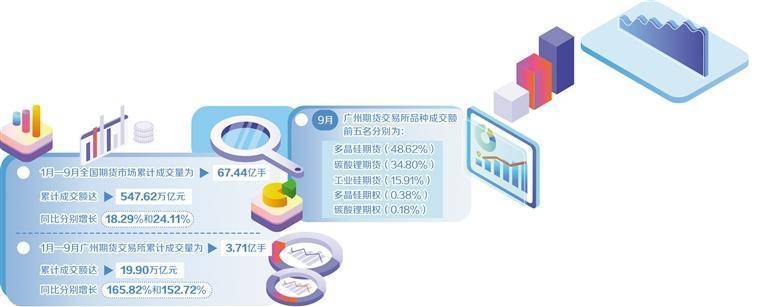
期货市场品种数量将增至164个
Zheng Quan Ri Bao· 2025-11-10 16:13
Core Viewpoint - The approval of platinum and palladium futures and options by the China Securities Regulatory Commission signifies the introduction of four new futures and options products, increasing the total number of products in the market to 164, which is expected to enhance risk management for related industries [1][2]. Group 1: Impact on the Economy - The launch of platinum and palladium futures and options will provide precise risk management tools for enterprises, allowing them to lock in procurement costs or sales prices, thereby stabilizing operational expectations [1]. - The introduction of these products will enhance the international influence of "Chinese prices," as the futures and options will reflect domestic supply and demand more accurately, helping Chinese companies gain pricing power in international trade [1]. - By utilizing the futures market for risk management, enterprises can reduce dependence on foreign markets, allowing them to focus more on technological research and production, thus improving the stability and risk resilience of the entire industry chain [1]. Group 2: Market Dynamics and Opportunities - As a significant consumer of platinum and palladium, China will benefit from the establishment of a transparent and authoritative price reflecting domestic supply and demand, aiding upstream and downstream enterprises in market trend assessment [2]. - The volatility in precious metal prices due to global macroeconomic instability has increased the demand for risk management tools among related production enterprises, enabling them to stabilize financial performance [2]. - The introduction of new products presents an opportunity for futures companies to serve the real economy and increase business revenue, necessitating proactive promotion and research efforts to explore potential collaborations with enterprises [2][3]. Group 3: Business Model Innovation - The listing of platinum and palladium futures and options is expected to inspire new business models and enrich market trading strategies [3]. - Futures companies are encouraged to establish specialized teams for "futures + spot" services, providing precise risk management and asset management services to industry chain enterprises and individual investors [3]. - Collaboration among various business departments is essential to offer comprehensive services for enterprises engaged in cross-border trading of platinum and palladium, including arbitrage and risk management [3].
期货技术分析周报:2025年第46周-20251109
Dong Zheng Qi Huo· 2025-11-09 14:13
Report Industry Investment Rating No relevant content provided. Core Viewpoints of the Report - Based on technical analysis, the precious metals sector is predominantly oscillating; in the non - ferrous sector, polysilicon and copper are bearish, and the rest of the varieties are oscillating. Lithium carbonate shows a bullish "hammer line" pattern on the weekly chart, with short - term rebound potential, expected to fluctuate between 71,300 - 76,800 yuan/ton [1]. - Technical analysis indicates that coking coal, coke, ferrosilicon, and European line container shipping show bearish signals, while the rest of the black - series varieties are mainly oscillating. Rebar dropped 2.32% this week, but there is potential for a technical rebound in the 2,950 - 3,000 yuan/ton range [2]. - In the energy - chemical sector, low - sulfur fuel oil and urea are technically bullish, while asphalt, PVC, and caustic soda show bearish signals, and the rest are oscillating. PTA is expected to oscillate between 4,380 - 4,430 yuan/ton in the short term [3]. - In the agricultural products sector, sugar is bullish, rapeseed and red dates are bearish, and the rest are oscillating. Soybean meal is expected to trade in the 3,065 - 3,070 yuan/ton range in the short term, and it is recommended to wait and see [4]. Summary by Directory 1. Non - ferrous and Precious Metals Sector 1.1 Non - ferrous and Precious Metals Sector Technical Indicator Signal Summary - The precious metals sector is mainly oscillating; in the non - ferrous sector, polysilicon and copper show bearish signals, and the rest of the varieties are mainly oscillating [10][11]. 1.2 Non - ferrous and Precious Metals Sector Weekly Pivot Analysis - High - volatility varieties such as tin, nickel, polysilicon, and lithium carbonate have wide price ranges for support and resistance levels, with prominent trading risks. Low - volatility varieties such as aluminum, lead, alumina, stainless steel, and gold are suitable for range - bound operations [17]. 2. Black and Shipping Sector 2.1 Black and Shipping Sector Technical Indicator Signal Summary - Coking coal, coke, and ferrosilicon show bearish signals; European line container shipping mainly shows bearish signals, and the rest of the black - series varieties are mainly oscillating [21][22]. 2.2 Black and Shipping Sector Weekly Pivot Analysis - Low - volatility varieties such as rebar, hot - rolled coil, wire rod, and iron ore are suitable for range - bound operations. High - volatility varieties such as coking coal, coke, and European line container shipping should be traded in the direction of the trend with strict stop - losses [29]. 3. Energy - Chemical Sector 3.1 Energy - Chemical Sector Technical Signal Summary - In the energy sector, low - sulfur fuel oil shows a bullish signal, and asphalt shows a bearish signal, with the rest oscillating. In the chemical sector, urea shows a bullish signal, and PVC and caustic soda show bearish signals, with the rest oscillating [33][34]. 3.2 Energy - Chemical Sector Weekly Pivot Analysis - Low - volatility varieties such as crude oil, fuel oil, and asphalt may be in a sideways consolidation state. High - volatility varieties such as natural rubber, synthetic rubber, and staple fiber require attention to price volatility risks and setting active stop - loss strategies [40]. 4. Agricultural Products Sector 4.1 Agricultural Products Sector Technical Indicator Signal Summary - Sugar in the agricultural products sector shows a bullish signal, rapeseed and red dates show bearish signals, and the rest of the varieties are mainly oscillating [45][47]. 4.2 Agricultural Products Sector Weekly Pivot Analysis - Low - volatility varieties such as soybeans, corn, and corn starch are in a low - volatility oscillating consolidation pattern. Medium - volatility varieties such as soybean meal, rapeseed meal, and sugar have a certain price swing space. High - volatility varieties such as oils, live pigs, and apples have potential price volatility risks and opportunities [53].
【UNforex本周总结】通胀回落与就业放缓交织 美联储政策陷入权衡
Sou Hu Cai Jing· 2025-11-08 10:49
Group 1 - The Federal Reserve announced a 25 basis point interest rate cut, adjusting the federal funds rate to approximately 3.75% to 4% [1] - The Fed's cautious stance indicates that future rate paths will depend on economic data performance, leading to increased market volatility [1] - The U.S. economy is experiencing a phase of declining inflation alongside slowing employment growth, complicating the Fed's ability to balance inflation control and job maintenance [1] Group 2 - Multiple central banks are enhancing regional monetary cooperation, reactivating liquidity arrangements to stabilize financial systems and improve foreign exchange reserve flexibility [2] - There is a notable rotation of funds between safe-haven assets, the U.S. dollar, and risk assets, with increased activity in options and hedging tools reflecting heightened market risk aversion [2] - The global macro landscape is influenced by two main themes: the adjustment pressures of monetary policy amid inflation and employment divergence, and rising safe-haven demand driven by fiscal and geopolitical risks [2]
股指期货随时可以平仓为什么亏钱的人多?
Sou Hu Cai Jing· 2025-11-08 01:17
Core Insights - The high number of losses in stock index futures trading is attributed to a combination of trading mechanisms and human psychological weaknesses [3][4][6] Group 1: Human Psychological Traps - Emotional decision-making leads to hesitation in stop-loss actions, with many traders holding onto losing positions in hopes of a market reversal, resulting in greater losses [3] - Anxiety over profits causes traders to close positions prematurely, missing out on larger trends [3] Group 2: Leverage Effects - Leverage amplifies mistakes; for instance, a 10x leverage can result in a 30% loss of capital with just a 3% adverse market movement [4] - Margin pressure from leveraged trading can lead to forced liquidation during market downturns, disconnecting traders from potential rebounds [5] Group 3: Market Characteristics - The nature of the market is a zero-sum game, where gains for some traders mean losses for others, often leaving retail investors at a disadvantage [6] - A significant portion of traders struggle to differentiate between ranging and trending markets, leading to frequent stop-loss executions in sideways markets and missed opportunities in trending markets [6] Group 4: Trading Costs and Strategies - Price volatility in futures markets can lead to discrepancies between expected and actual closing prices, contributing to losses [8] - Transaction costs, including commissions and fees, can erode profits and exacerbate losses [8] - Effective trading strategies and risk management are crucial; inadequate planning can lead to significant losses [8][9]

交易一定要顺势而为
Qi Huo Ri Bao Wang· 2025-11-07 01:12
Group 1 - The core strategy of the investment team led by Wang Shuguang is "big trends, stable timing, and small segments," emphasizing the importance of trend identification [1][3] - Wang Shuguang transitioned from stock trading to futures trading due to the need for stable strategies, recognizing the dual trading mechanism of stock index futures as particularly appealing [2] - The team primarily trades in IH and IF, making accurate predictions of stock index movements crucial for their strategy [3] Group 2 - Wang Shuguang emphasizes the significance of risk management, stating that every trading strategy has its flaws, and traders must find strategies that suit them [2][4] - Maintaining a stable mindset is critical for trading success, as demonstrated by the team's ability to hold onto positions despite significant unrealized losses [3] - The futures market is viewed as a testing ground for human nature, and Wang Shuguang believes that the upcoming year will present numerous trading opportunities due to complex geopolitical situations [4]
贵阳银行2025年第三季度业绩说明会问答实录
Quan Jing Wang· 2025-11-07 00:48
Core Viewpoint - Guizhou Bank held its Q3 2025 earnings presentation, where management addressed investor questions, highlighting a commitment to stable dividends and ongoing efforts to improve financial performance despite a decline in revenue [1][2]. Financial Performance - The bank reported a revenue of 9.435 billion yuan for Q3 2025, a year-on-year decrease of 13.73%, primarily due to reduced net interest income and non-interest income [2][3]. - The net profit for Q3 2025 was 0.39 yuan per share, an increase from 0.36 yuan per share in the same period last year, indicating effective cost control [3][7]. - The bank's non-performing loan (NPL) ratio slightly decreased to 1.63% by the end of Q3, with a provision coverage ratio of 239.59% [5][6]. Dividend Policy - Since its listing in 2016, Guizhou Bank has maintained a stable dividend policy, with cumulative cash dividends exceeding 8.6 billion yuan, and plans to continue balancing capital accumulation with shareholder returns [2][4]. Credit Strategy - As of September 2025, the bank's corporate loan balance increased by 2.785 billion yuan, with a focus on key areas such as new industrialization and urbanization [4][5]. - The bank supports the "Four New" strategy in Guizhou, with loans in key sectors totaling 165.067 billion yuan, reflecting a commitment to local economic development [4][5]. Risk Management - The bank has implemented measures to enhance risk management, including improving risk identification and monitoring, which has contributed to the stability of its NPL ratio [5][6]. - The bank's strategy includes optimizing credit structure and increasing efforts in bad debt disposal to maintain asset quality [6][7]. Strategic Planning - Guizhou Bank is in the process of formulating its next five-year strategic plan, focusing on high-quality development and service to the real economy [6][7].

增强专业人才队伍建设 提升服务丙烯产业水平
Qi Huo Ri Bao Wang· 2025-11-06 16:18
Core Viewpoint - The training conference on propylene futures and options held by Zhengzhou Commodity Exchange aims to enhance analysts' research capabilities and improve the service level for the propylene industry, addressing the urgent need for risk management in a challenging market environment [1] Group 1: Market Context and Challenges - The propylene industry faces structural overcapacity challenges due to complex domestic and international market conditions, while undergoing a critical transition towards high-end and green development [1] - The launch of propylene futures and options is a key measure for Zhengzhou Commodity Exchange to support the high-quality development of the chemical industry and respond to enterprises' calls for risk management [1] Group 2: Pricing and Industry Trends - Current propylene pricing is primarily cost-based, with significant influence from propane, as downstream profits are generally poor, leading to a passive pricing model [2] - The carbon three industry chain is characterized by deep binding and interdependence, indicating that recovery in terminal demand is essential for the next prosperity cycle [2] Group 3: Practical Applications and Training Outcomes - The introduction of propylene futures and options provides unprecedented risk hedging opportunities for upstream and downstream enterprises, altering the competitive landscape and offering a new trading model [2] - Participants in the training expressed that the course content was rich and practical, covering macroeconomics, propylene futures introduction, and fundamental analysis, enhancing their understanding of the propylene market [3] Group 4: Future Development Plans - Zhengzhou Commodity Exchange plans to deepen market cultivation, promote mature service models, and expand application scenarios for propylene futures and options to facilitate more refined and personalized risk management for enterprises [4]