
地缘政治风险

Search documents
ATFX:暴跌后反弹又停滞,金价在5000美元关口进入观望?
Sou Hu Cai Jing· 2026-02-10 10:03
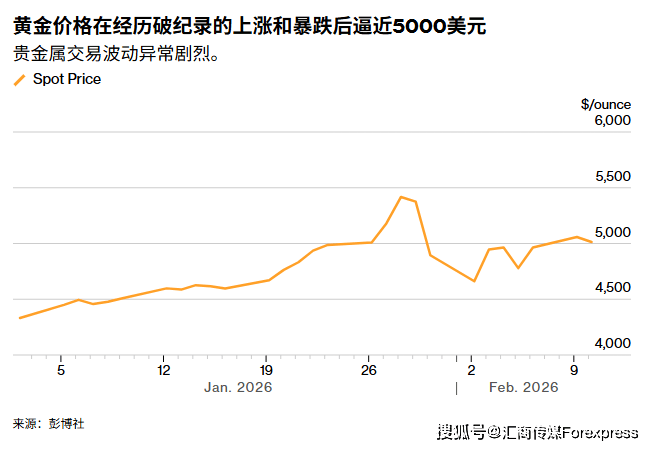
图 过去一周,贵金属价格剧烈波动,获利回吐和过热仓位交织导致价格从历史高位回落。美联储领导层可 能更迭,引发美国货币政策不确定性,也加剧了市场波动。 然而,支撑多年上涨行情的诸多因素—— 地缘政治风险加剧、央行加大购入力度以及投资者抛售主权债券和货币——依然存在。 ATFX:在经历了上周的历史性暴跌之后,金价连续两天上涨,周一,受美元走软至一周低位的提振, 金价上涨2%,不过今早的涨势暂缓,因为投资者在震荡的市场中获利了结,等待美国关键就业报告。 今日金价早盘一度下跌1.4%,短暂跌破每盎司5000美元,随后收复部分失地。自1月29日创下历史新高 以来,金价已下跌约10%,但今年以来仍保持较高水平。 3. 主权信用与货币价值的深层忧虑:全球范围内高企的政府债务水平,以及对主要储备货币长期购买力 的担忧,驱使全球投资者将黄金视为重要的价值储存工具和对冲资产。 本周投资者密切关注美国非农就业数据、消费者价格和首次申请失业救济人数的公布,以寻找货币政策 的新信号。市场已经预期2026年至少会降息两次,每次降息25个基点。 包括德意志银行和高盛集团在内的许多银行和资产管理公司都看好黄金价格,认为其将因这些长期需求 驱 ...

金价剧烈波动:今日金价1116克!不出意外的话,明天或迎更高级别行情?
Sou Hu Cai Jing· 2026-02-10 09:12
今天,黄金市场再次成为焦点。 2026年2月9日,国内金价强势上涨,现货黄金价格突破1116元/克,单日涨幅达到2.02%,而上海期货交易所的沪金主力合 约更是飙升3.88%。 这种涨势背后,是地缘政治紧张情绪的集中释放。 但与此同时,国际市场上的伦敦现货黄金价格却下跌了0.65%,形成鲜明对比。 市场 参与者正在密切关注明天的行情会如何演变。 当天的价格数据显示,国内黄金市场表现强劲。 上海黄金交易所的现货黄金价格在交易中持续走高,最终收于1116元/克附近。 沪金主力合约同样表现抢 眼,收盘时涨幅接近4%。 这些数字反映了国内资金对黄金的强烈兴趣。 相比之下,伦敦金属交易所的现货黄金价格小幅下跌,报收于4995美元/盎司左 右。 这种分化现象引起了分析师的注意。 地缘政治消息成为推动金价上涨的直接因素。 美国总统特朗普在社交媒体上发表关于贸易政策的言论,加剧了市场对国际关系紧张的担忧。 同时,欧洲议 会决定暂缓批准欧美贸易协议,这些事件都刺激了避险资金的流入。 世界黄金协会在近期报告中指出,黄金已成为市场首选的避险资产,特别是在不确定 性加大的环境中。 资金流向方面,黄金ETF出现了明显的资金流入。 截至 ...

历史首次!印度资金加速拥抱黄金,金价坚守5000大关
Jin Shi Shu Ju· 2026-02-10 07:53
周二,黄金在连续两日上涨后回落,白银也随之下跌,因投资者在这个波动剧烈且仍在经历历史性暴跌后试图寻找明确方向的市场中获利了结。 现货黄金一度下跌1.4%,随后收窄跌幅,交易价格略高于每盎司5000美元。交易员正关注本周公布的美国数据,以寻找美联储政策方向的线索。尽管金价 自1月29日创下的历史高点已下跌约10%,但今年以来仍稳步上涨。 中国央行在1月份连续第15个月增持黄金,凸显了官方需求的韧性。 此外,1月份,印度投资者涌入黄金交易所交易基金(ETF)的资金甚至超过了股票共同基金。根据印度共同基金协会周二公布的数据,黄金ETF的净流入 量激增至创纪录的2404亿卢比(约合26.5亿美元),略高于股票基金2403亿卢比的流入量。这一里程碑标志着近年来当地投资者对黄金最强烈的背书之一。 在印度,这些全球力量受到该金属深厚文化联系的强化,为资金流入提供了额外支持。 华侨银行策略师Christopher Wong表示:"这次清洗是金价恢复逐步上涨趋势所急需的重置。"他说:"支撑黄金的结构性驱动因素完好无损。下行势头已经减 弱,金价已开始在较低但仍处于历史高位的水平上企稳。" 展望未来,在美国总统特朗普提名沃什担任美 ...
大家注意了,不出意外的话,明天金价大概会重演历史?
Sou Hu Cai Jing· 2026-02-10 06:01
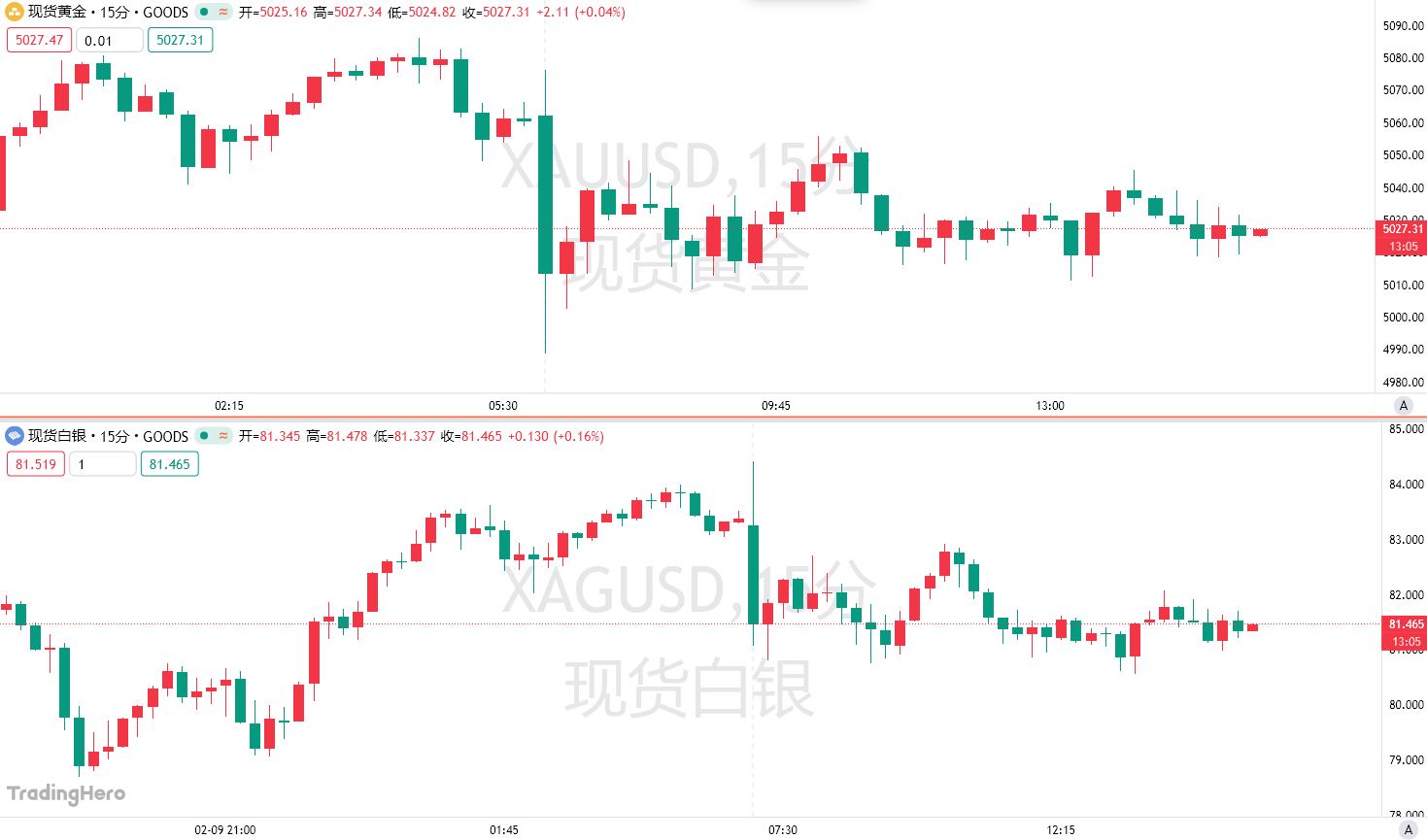
大家注意了! 今天2月10日,国际金价稳稳站在5076美元/盎司的高位,国内金价也突破1130元/克,但仔细看行情,价格连续几天在窄幅区间 里打转,就像暴风雨前的宁静。 这种走势和去年底变盘前的模式几乎一模一样,当时金价在三角形收敛形态里憋了5天,随后单日波动超过 200美元。 现在市场正在重演历史:布林带越收越紧,多空双方在5050美元阻力位和4950美元支撑位之间来回拉扯,成交量却没缩水,说明大 资金都在等着方向突破。 更关键的是,本周三美国CPI数据即将公布,这份数据直接关系美联储降息预期,机构早已轻仓观望,一场大波动一 触即发。 当前金价的高位横盘状态并非偶然。 2026年1月底,金价刚经历了一场过山车行情:1月29日伦敦金现货价格冲上5598.75美元的历史峰值,但1 月30日单日暴跌超12%,最低触及4682美元,创下40年来最大跌幅。 暴跌背后是多重因素的爆发式共振。 一方面,特朗普在1月30日提名鹰派 倾向的凯文·沃什为美联储新任主席,市场对货币政策转向的预期骤变;另一方面,美国公布的PPI数据高于预期,通胀黏性强化了美元走强的 基础,导致黄金作为无息资产的吸引力下降。 同时,杠杆资金在价格高 ...

石油沥青日报:终端需求逐步收尾,局部现货下跌-20260210
Hua Tai Qi Huo· 2026-02-10 05:35
石油沥青日报 | 2026-02-10 终端需求逐步收尾,局部现货下跌 市场分析 1、2月9日沥青期货下午盘收盘行情:主力BU2603合约下午收盘价3334元/吨,较昨日结算价下跌33元/吨,跌幅 0.98%;持仓67415手,环比下跌15761手,成交122832手,环比下跌39625手。 2、卓创资讯重交沥青现货结算价:东北,3506—3600元/吨;山东,3200—3240元/吨;华南,3290—3350元/吨; 华东,3250—3280元/吨。 昨日国内沥青现货价格整体持稳,局部(山东、华南)出现下跌。近期油价波动受到伊朗局势影响较大,目前形 势仍不明朗。上周伊朗与美国谈判缺乏实质性结果,本周可能举行新一轮核谈判。中东地缘风险并未完全消退, 包括沥青在内的能化板块商品可能受到消息面的反复扰动,需要保持谨慎。如果抛开地缘与宏观层面的扰动,沥 青市场目前处于供需两弱状态,节前终端需求逐步收尾,交投氛围较淡,短期矛盾相对有限。原料切换带来的成 本与收率变化可能会在3月份后逐步明朗,已经有炼厂采购浮仓与保税罐中的伊朗原油来替代马瑞原油,考虑到伊 朗油的折价,成本端的增长在一定程度上可控。但如果中东局势恶化,则 ...
国投期货综合晨报-20260210
Guo Tou Qi Huo· 2026-02-10 05:05
1. Report Industry Investment Ratings No information provided in the content. 2. Core Views of the Report - The geopolitical situation between the US and Iran remains tense, and oil prices are expected to remain highly volatile with significant geopolitical risk premiums [2]. - Precious metals are in a stage of sharp fluctuations, and it is advisable to wait and see until the volatility decreases [3]. - The copper market is in a game between long - term narratives and weak supply - demand realities, and the price may be pressured first and then rise [4]. - Aluminum and related products face adjustment pressure around the Spring Festival, and attention should be paid to key support levels [5][6][7]. - Zinc, lead, nickel, and other non - ferrous metals have different supply - demand situations, and the price trends are affected by factors such as demand, cost, and inventory [8][9][10]. - For various chemical products such as polycrystalline silicon, industrial silicon, and plastics, the market is affected by factors such as supply, demand, and policies, and most are in a state of shock or weak operation [13][14][28]. - In the steel and iron ore market, the demand is weak, and the prices are under pressure [15][16]. - For agricultural products such as soybeans, grains, and livestock products, the prices are affected by factors such as policies, supply - demand relationships, and international trade [36][39][40]. - The stock index is expected to continue to recover, and the bond market may continue to be strong in the short term [47][48]. 3. Summary by Related Catalogs Energy and Chemicals - **Crude Oil**: The US - Iran talks continue, but the deadlock may persist. Brent oil prices are highly volatile, and geopolitical risk premiums are significant [2]. - **Precious Metals**: They are in a volatile stage, and the market is waiting for US economic data to assess the prospects of interest rate cuts [3]. - **Copper**: The price rebounds with precious metals. The market is in a game between long - term and short - term factors, and the price may be pressured first and then rise [4]. - **Aluminum and Related Products**: Aluminum and its products face adjustment pressure around the Spring Festival. The inventory of aluminum ingots and aluminum rods increases, and the prices of casting aluminum alloy and alumina are affected by different factors [5][6][7]. - **Zinc, Lead, and Nickel**: Zinc has supply - demand imbalances during the Spring Festival, and the price has support at 24,000 yuan/ton. Lead has weak demand and cost - side support. Nickel has increasing inventory and is mainly affected by policy sentiment [8][9][10]. - **Tin**: The price continues to rebound, and attention should be paid to the pressure of the MA20 daily line and the high volatility of the outer market [11]. - **Carbonate Lithium**: It is in a low - level shock, with a slowdown in de - stocking and high short - term uncertainty [12]. - **Polycrystalline Silicon**: The futures market is inactive, and the spot fundamentals lack drivers. It is expected to maintain a shock pattern [13]. - **Industrial Silicon**: The price is under pressure, affected by the performance of polycrystalline silicon futures and the expected implementation of organic silicon emission reduction targets [14]. - **Fuel Oil and Low - Sulfur Fuel Oil**: Fuel oil follows the trend of crude oil. High - sulfur fuel oil has short - term support, and low - sulfur fuel oil is affected by overseas refinery supply and heating demand [22]. - **Asphalt**: It is in a situation of weak supply and demand. The supply pressure is limited, and the consumption shows a slight improvement. The unilateral trend is mainly affected by crude oil, and the cracking spread is expected to be strong [23]. - **Urea**: The daily production is high, and the market is supported by demand. It is expected to fluctuate in the short term and strengthen after the Spring Festival [24]. - **Methanol**: The coastal demand is weak, and the port inventory is high. The domestic production starts to increase, and the market may gradually de - stock after the Spring Festival [25]. - **Pure Benzene**: The domestic production increases, and the inventory is basically stable. The supply - demand pattern is expected to improve around the Spring Festival [26]. - **Styrene**: The supply - demand structure weakens before the Spring Festival, and the social inventory will accumulate seasonally after the festival [27]. - **Polypropylene, Plastic, and Propylene**: The supply of propylene is expected to increase, but the pre - festival supply is tight. The demand for polyolefins is weak as factories enter the holiday [28]. - **PVC and Caustic Soda**: PVC is in a narrow - range shock, with inventory changes and cost support. Caustic soda is affected by cost and downstream demand and is expected to operate near the cost [29]. - **PX and PTA**: PX has more long - term opportunities in the second half of the year, but the current demand is weak. PTA's load increases slightly, and attention should be paid to the post - festival balance [30]. - **Ethylene Glycol**: The inventory increases, but the accumulation slows down. It is expected to improve in the second quarter, but the long - term is under pressure [31]. - **Short - Fiber and Bottle - Chip**: Short - fiber has a good supply - demand pattern, but the downstream is weak. Bottle - chip has a low load and inventory, and attention should be paid to the post - festival inventory [32]. Metals and Minerals - **Iron Ore**: The supply is affected by weather, and the demand is weak. The price is under pressure in the short term [16]. - **Coke and Coking Coal**: The supply of carbon elements is abundant, and the downstream demand is weak. The prices are expected to fluctuate in a range [17][18]. - **Manganese Silicon and Ferrosilicon**: The prices are affected by supply - demand imbalances and policy expectations [19][20]. Shipping - **Container Shipping Index (European Line)**: The spot price is stable, and the shipping companies' price increase is more for guiding expectations. The near - month contract is expected to fluctuate, and the far - month contract is under pressure [21]. Agricultural Products - **Soybeans, Soybean Meal, and Rapeseed Meal**: The price of US soybeans rises, and the domestic soybean meal futures are weak. Rapeseed meal is expected to be weak in the short term [36]. - **Soybean Oil, Palm Oil, and Rapeseed Oil**: The prices of soybean oil and palm oil are in a state of reducing positions and fluctuating. The price of rapeseed oil is affected by policies [37]. - **Soybean No. 1**: It rises strongly, affected by policy auctions and external market prices [38]. - **Corn**: The sales progress is 61%, and the price is weak. The futures are expected to be weak in the short term [39]. - **Pigs**: The spot price is falling, and there is supply pressure after the Spring Festival. The medium - long - term price may have a low point [40]. - **Eggs**: The spot price is weak, and the futures have a strategy of waiting for the post - Spring Festival low point to configure long positions [41]. - **Cotton**: The domestic and foreign markets have different situations. The short - term trend is oscillatory, and it is advisable to wait and see [42]. - **Sugar**: The international and domestic production situations are different. The short - term price is under pressure [43]. - **Apples**: The price is oscillatory, and the market focuses on demand and de - stocking speed [44]. - **Timber**: The price is at a low level, and the low inventory provides support. It is advisable to wait and see [45]. - **Pulp**: The price is weak, and the inventory is accumulating. The short - term trend is oscillatory, and attention should be paid to the support at the previous low [46]. Financial Markets - **Stock Index**: The A - share market rises, and the index futures also rise. The A - share and Hong Kong stock markets are expected to continue to recover, and attention should be paid to the performance of technology - related sectors [47]. - **Treasury Bonds**: The futures rise, and the short - term strong trend is expected to continue. Attention should be paid to curve trading opportunities [48].
黄金、白银价格“过山车”,专家:当前金银市场面临的主要风险是价格波动加剧
Sou Hu Cai Jing· 2026-02-10 03:03
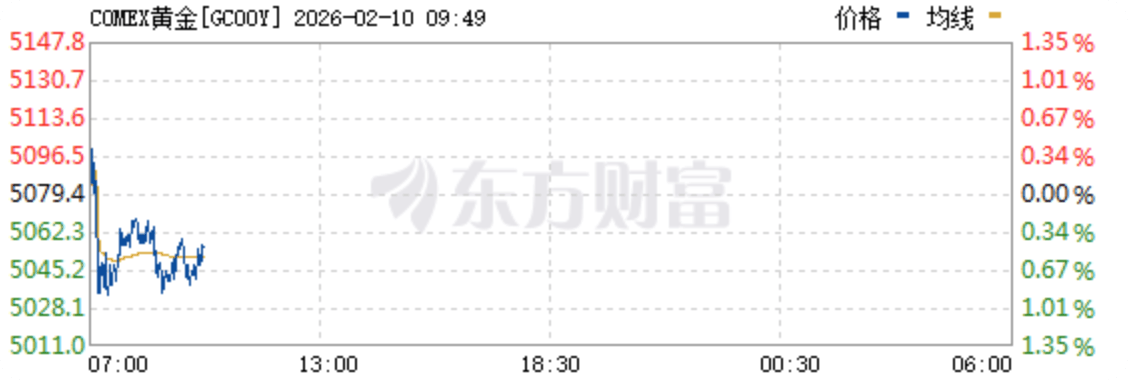
2月10日,COMEX黄金期货报5052.3美元/盎司,跌幅0.5%,COMEX白银报81.6美元/盎司,出现轻微回调。据智通财经报道,2月9日,黄金收涨2.1%,报 5084.2美元/盎司;白银报83.05美元/盎司,收涨8%。 | | | COMEX黄金[GCOOY] 2026-02-10 09:49 | | 价格 ■ 均线 | | | | --- | --- | --- | --- | --- | --- | --- | | 5147.8 | | | | | | 1.35 % | | 5130.7 | | | | | | 1.01 % | | 5113.6 | | | | | | 0.67 % | | 5096.5 | | | | | | 0.34 % | | 5079.4 | | | | | | 0.00 % | | 5062.3 | | | | | | 0.34 % | | 5045.2 | | | | | | 0.67 % | | 5028.1 | | | | | | 1.01 % | | 5011.0 | | | | | | 1.35 % | | | 07:00 | 13:00 | 18:30 ...
综合晨报-20260210
Guo Tou Qi Huo· 2026-02-10 02:45
gtaxinstitute@essence.com.cn 综合晨报 2026年02月10日 (原油) 美伊均对上周五在阿曼举行的会谈给予积极评价,并计划本周继续磋商。市场短期认为局势失控风 险降低,对冲突和供应中断的担忧有所缓解。这一判断也与政治现实相符:考虑到低油价承诺及中 期选举临近,美方在选前主动升级局势的可能性较低。然而伊朗态度依然强硬,其外长强调承认铂 浓缩权利是谈判关键,双方核心分歧显著,僵局可能持续。而特朗普在委内瑞拉的成功或增强其对 伊朗的施压信心,不愿轻易让步。因此短期内对峙难有突破。布伦特油价在68-70美元区间大幅震 荡,反映出在谈判前景不明、对峙持续的背景下,市场持续计入地缘风险溢价。预计油价将保持高 波动性,且继续蕴含显著的地缘政治风险溢价。 【责金属】 隔夜贵金属震荡反弹。市场聚焦本周美国非农就业和CPI数据以重新评估降息前景,美国国家经济委 员会主任哈塞特预警就业增长数字将会下降,但认为GDP增长非常强劲。美伊谈判将会继续,她缘仍 存在不确定性。短期贵金属处于剧烈震荡阶段,观望等待波动率下降。 (铜) 隔夜铜价随贵金属反弹,沪铜节前继续减仓,市场持续关注地缘风险与长线战略金属价值 ...
金融期货早评-20260210
Nan Hua Qi Huo· 2026-02-10 02:43
Group 1: Report's Industry Investment Rating - Not provided in the content Group 2: Report's Core View - In early 2026, the global financial market volatility intensified. The right - wing political trend after the Japanese election and the political crisis in the UK resonated, further increasing market uncertainty. The chaos in the two countries is the result of the transmission of internal economic contradictions. The global market risk has further increased due to the external factors of global geopolitical conflicts and industrial transformation [2] - The RMB exchange rate was supported. The US dollar against the RMB fell below the 6.93 mark during the session. In the short term, it may be supported by seasonal settlement demand and maintain low - level volatile operation. After the holiday, the endogenous appreciation power of the RMB against the US dollar may decline, and its linkage with the US dollar index may further strengthen [4] - The upward sustainability of the stock index remains to be observed. It is recommended to hold positions and wait and see. The bond market is not advisable to chase the high. The container shipping European line futures are expected to maintain high - level fluctuations in the short term. The new energy, non - ferrous metals, and other industries have different trends and corresponding investment suggestions based on their respective fundamentals [13][18][27] Group 3: Summary by Related Catalogs Financial Futures - **Macro**: The political changes in Japan and the UK have pushed up global market risks. Key events include the optimization of refinancing measures by stock exchanges, political turmoil in the UK, expected slowdown in US employment growth, the early departure of the French central bank governor, and Japan's plan to discuss food tax cuts [1] - **RMB Exchange Rate**: The RMB appreciated against the US dollar. The US dollar index declined due to factors such as the recovery of the precious metal and technology stock markets, the strengthening of the yen, and China's suggestion to financial institutions to reduce US debt exposure. The RMB exchange rate was supported, and it is necessary to focus on US employment data and the Fed chairman's speech [3][4] - **Stock Index**: The stock index rose collectively, but the upward sustainability remains to be observed. It is recommended to hold positions and wait and see due to factors such as approaching the Spring Festival and the upcoming release of important data [5][6] - **Treasury Bond**: The bond market continued the upward trend last week. It is not advisable to chase the high, and it is recommended to close out previous long positions. Consider moving positions for the March contract this week [6][7] - **Container Shipping European Line**: The futures market showed a volatile pattern. The core contradiction is the game between the shipping companies' price - holding determination and the fundamental cargo volume support, with geopolitical factors as uncertainties. The short - term is expected to maintain high - level fluctuations [9][10][11] Commodities New Energy - **Lithium Carbonate**: The futures price showed a narrow - range shock with reduced volatility. The downstream pre - holiday stocking was basically completed, and the supply - demand pattern remained stable. It is recommended to arrange a strategy to sell volatility [13][14] - **Industrial Silicon & Polysilicon**: The industrial silicon market is under pressure, and the polysilicon market is relatively cold. Both are expected to maintain narrow - range fluctuations, and the industry is mainly focused on destocking [15][16] Non - ferrous Metals - **Copper**: The copper price showed an oscillatory trend. Near the Spring Festival, the capital speculation degree decreased, and the volatility also declined. It is recommended to pay attention to the decline in volatility when choosing option strategies [18][21] - **Aluminum Industry Chain**: Aluminum is expected to oscillate and adjust, and it is recommended to build long positions or sell options at low levels in the support range. Alumina has a weak fundamental outlook and is recommended to sell deep out - of - the - money options or short after the sentiment subsides. Cast aluminum alloy has strong follow - up ability to aluminum, and it is recommended to pay attention to the price difference between the two [21][22] - **Zinc**: The zinc price showed a narrow - range shock. The market has a strong wait - and - see sentiment, and it may follow the sector to oscillate in the short term. It is recommended to arrange a small - scale internal - external reverse hedging strategy [22][23] - **Nickel - Stainless Steel**: The nickel - stainless steel market oscillated. The supply - demand pattern is weak, and the long - term supply reduction logic remains unchanged. It is necessary to pay attention to the impact of Indonesian policies on the supply - demand pattern [23][24] - **Tin**: The tin price stopped falling and rebounded. It is necessary to pay attention to the US employment and CPI data this week. It is expected to follow the sector to conduct a wide - range shock adjustment [25] - **Lead**: The lead price fluctuated narrowly following the sector. The supply is expected to be relatively loose after the holiday, and the demand is flat. It is expected to show a weak shock [25][26] Oils and Fats and Feeds - **Oilseeds**: The external soybean market rebounded weakly, and the internal market was under pressure. The supply gap in the first quarter is expected to be filled in the second quarter. The soybean meal is expected to follow the cost of US soybeans to rebound in the short term, and the rapeseed meal is difficult to have an independent upward trend [27][28] - **Oils**: The external oil market oscillated, and the internal market was waiting for the report. The palm oil is waiting for the MPOB report, the soybean oil supply is sufficient in the future, and the rapeseed oil supply expectation is optimistic. It is recommended to sell put options [29] Energy and Oil and Gas - **Fuel Oil**: The supply of high - sulfur fuel oil is gradually recovering, and the demand is mainly in the bunkering market. The fundamental situation is still poor, but the Iranian issue provides support at the bottom. It is necessary to pay attention to the geopolitical repetition [31] - **Low - Sulfur Fuel Oil**: The supply is relatively abundant, the demand is stable, and the inventory has decreased. The internal and external markets have limited upward drive, and it mainly follows the cost fluctuations [32][33] - **Asphalt**: The trading enthusiasm is gradually decreasing. The demand has dropped to zero before the holiday. It mainly follows the cost of crude oil to fluctuate, and the price may decline after the holiday [34][35] Precious Metals - **Gold & Silver**: The prices continued to rise. It is necessary to pay attention to important data and events in the future. Although the short - term operation is difficult, the medium - and long - term upward trend remains. It is recommended to buy on dips in steps and pay attention to position control [37][38] Chemicals - **Pulp - Offset Paper**: The pulp futures price decline was supported at a relatively low level. The fundamental situation is still relatively bearish, and it is recommended to partially close out short positions and conduct short - term range trading. The offset paper futures price oscillated, and the market is affected by multiple factors. It is recommended to return to range trading [40][41] - **LPG**: The LPG market is affected by geopolitical risks. The supply is relatively low, and the demand is at a low level. It is necessary to pay attention to the change of warehouse receipts and the impact of funds before the holiday [42][43] - **PTA - PX**: The PX - PTA market's valuation has been adjusted back to the fundamentals. The PX supply is expected to be tight in the first half of the year, and the PTA potential supply is large. It is recommended to buy on dips for PX and shrink the processing margin of PTA on rallies [45][48] - **MEG - Bottle Chip**: The demand for ethylene glycol is seasonally weak, and the supply - demand balance has improved. It is expected to fluctuate widely with the macro - atmosphere. It is necessary to pay attention to the geopolitical impact [49][50] - **Methanol**: The methanol market follows geopolitical and non - ferrous metals. The unilateral participation is difficult, and it is recommended to be out of the market during the holiday [51][52] - **Plastic PP**: The plastic and PP market continued to oscillate weakly. The supply and demand fundamentals have changed little, and it is necessary to pay attention to the inventory accumulation and marginal profit after the holiday [53][54] - **Pure Benzene - Styrene**: The supply of pure benzene is increasing, and the demand is stable. The supply of styrene will increase in February. It is recommended to wait and see in the short term [55][56] - **Rubber**: The natural rubber market oscillated strongly under the support of macro - expectations and costs. The synthetic rubber market is expected to maintain range fluctuations. It is recommended to be light - position before the holiday and consider selling deep out - of - the money options [57][58][90] - **Urea**: The urea market is in a stage of over - supply. The price of the 05 contract is expected to rise, but the short - term may回调. It is recommended to be out of the market during the holiday [61][62] - **Glass Soda Ash**: The soda ash market oscillates weakly, and the industrial contradiction is accumulating. The glass market is in a situation of weak supply and demand, and the cold - repair of production lines before the holiday helps to relieve the inventory pressure [63][64] - **Propylene**: The propylene market is supported by fundamentals, and the cost fluctuates greatly. It is necessary to pay attention to the impact of cost, supply - demand, and market sentiment, as well as the risk of funds before the holiday [65][66] Black Metals - **Rebar & Hot - Rolled Coil**: The rebar and hot - rolled coil market oscillated weakly. The inventory is accumulating, and the supply is slightly stronger than the demand. The steel price may test the lower limit of the shock range. It is necessary to pay attention to the price range of the main contracts [67][68] - **Iron Ore**: The iron ore market is in a situation of weak supply and demand. The overseas shipment is seasonally decreasing, and the port inventory pressure is large. It is recommended to be cautious and wait and see before the holiday [69][70] - **Coking Coal and Coke**: The coking coal and coke market is in a state of weak supply and demand with narrowed fluctuations. The coking coal supply is seasonally shrinking, and the coke supply and demand are recovering simultaneously. It is necessary to pay attention to the resumption rhythm after the holiday [71][73] - **Ferrosilicon & Ferromanganese**: The ferrosilicon and ferromanganese market oscillated weakly. The cost provides support, and the downstream inventory accumulation exerts pressure. It is expected to maintain range fluctuations [74][75] Agricultural and Soft Commodities - **Live Pigs**: The pig price continued to decline. The supply is relatively abundant, and the demand increment is difficult to match. It is recommended to buy on the rebound for the 05 contract [77] - **Cotton**: The cotton market is affected by factors such as the expected reduction of the new - season cotton planting area and the increase of the internal - external price difference. The short - term is expected to oscillate, and it is necessary to pay attention to the downstream import and new orders [78][79][80] - **Sugar**: The international raw sugar price is weakly operating, which is expected to drag down the domestic sugar price. The upward space of the domestic sugar price is limited [81][82] - **Eggs**: The egg spot price continued to decline. The pre - holiday stocking is basically over, the supply is relatively sufficient, and the futures price is expected to oscillate weakly [83][84][85] - **Apples**: The apple market is at the end of the Spring Festival stocking. The short - term demand weakens, but the delivery contradiction provides support, and the downward space is limited [91][92] - **Red Dates**: The red date market has reduced arrivals before the holiday. The short - term price is expected to maintain low - level fluctuations, and the medium - and long - term price is under pressure [93] - **Logs**: The log market has insufficient liquidity. The inventory is at a low level, the overseas shipment has changed, and the market is recommended to wait and see [94][95][96]

中信建投期货:2月10日工业品早报
Xin Lang Cai Jing· 2026-02-10 01:08
热点栏目 自选股 数据中心 行情中心 资金流向 模拟交易 客户端 铜:美元回落,铜价企稳 隔夜沪铜主力震荡收涨至102450元,伦铜收涨于13200美金附近。 宏观中性偏多。哈塞特称未来几个月就业人数将放缓,降息预期改善,美元走软提振铜价。 基本面中性。昨日上期所铜仓单减少3044吨至15.7万吨,LME铜累库1025吨至18.43万吨。Capstone智利Mantoverde铜矿工会已批准新的劳动合同,罢工活动 结束。 总体来看,节前国内资金谨慎,叠加海外宏观缺乏指引,预计短期铜价较难维持趋势性,或延续宽幅震荡。今日沪铜主力运行区间参考10.15万-10.35万元/ 吨。策略上,节前控制好仓位,可考虑布局双买期权;中长线逢低多配。 重要声明 本报告中的信息均来源于公开可获得资料,中信建投期货力求准确可靠,但对这些信息的准确性及完整性不做任何保证,据此投资,责任自负。本报告不构 成个人投资建议,也没有考虑到个别客户特殊的投资目标、财务状况或需要。客户应考虑本报告中的任何意见或建议是否符合其特定状况。(虞璐 彦/Z0023596,仅供参考) 铝:隔夜期货价格窄幅震荡,现货价格小幅企稳。消息面某北方氧化铝生产企业 ...

