
反内卷

Search documents
2025年十大财经热词
Xin Lang Cai Jing· 2026-02-01 21:21
Group 1: Economic Development and Innovation - The "Su Super" football league in Jiangsu has generated significant consumer spending of 38 billion yuan, showcasing the economic impact of local events and cultural initiatives [1] - Jiangsu's foreign trade reached a record high of nearly 6 trillion yuan, reflecting resilience through market structure optimization and the rise of new business models [2] - A "de-involution" movement is underway in various industries, including solar energy and automotive, aimed at curbing unhealthy competition and enhancing resource allocation [3] Group 2: Technological Advancements - The development of "embodied intelligent robots" is gaining momentum in Jiangsu, with nearly 300 companies forming an innovation alliance to enhance technological capabilities [4] - Jiangsu is focusing on "characteristic advantageous industries," identifying over 200 such industries across 95 counties to promote targeted development and modernization [5] - The rise of One Person Companies (OPC) is being supported through a comprehensive ecosystem that encourages micro-innovation and entrepreneurship [6] Group 3: Service Industry Growth - The revenue growth rate of the productive service industry in Jiangsu reached an average of 11.3%, significantly contributing to the overall service sector growth [7] - A new "dual high collaboration" mechanism is being implemented, linking high-tech zones with universities to foster innovation and address real industry challenges [9] Group 4: Human Capital Investment - The concept of "investing in people" has been incorporated into government reports, emphasizing the transformation of human resources into human capital, with significant funding directed towards social welfare and education [10] Group 5: Scene Innovation - Scene innovation is becoming a key focus in Jiangsu, with 93 projects launched across various sectors, highlighting the role of artificial intelligence in driving technological commercialization [11]
联博基金:关注中国经济转型升级 契机下的资本市场表现
Xin Lang Cai Jing· 2026-02-01 19:21
Group 1 - The core viewpoint of the article emphasizes the potential for the Chinese equity market to perform well by 2026, driven by economic transformation and factors such as "anti-involution," overseas expansion of enterprises, and AI, which are expected to support corporate profit improvement [1][2] - The transformation of the economic structure includes changes in consumption patterns, competition models ("anti-involution"), and business models, with government policies aimed at improving economic quality providing support to the capital market [1][2] - In the consumption sector, the increasing share of consumption in GDP and related initiatives may make new consumption an important investment direction, with younger consumers focusing on experience and emotional value, creating opportunities for small and medium-sized private enterprises [1][2] Group 2 - The article suggests that the impact of listed company profits on market performance may surpass that of economic policies, with measures like "anti-involution" likely to drive profit improvement [2] - The preference for a balanced asset allocation strategy is highlighted, as historical data shows that short-term style-switching strategies have underperformed compared to market benchmarks, indicating that a more balanced approach may reduce style volatility [2] - Specific sectors such as new consumption, innovative pharmaceuticals, and technology AI are identified as areas of significant potential, with breakthroughs expected in these fields [2] Group 3 - In the bond market, it is anticipated that a clear trend may be difficult to establish by 2026, with limited space for interest rate movements, likely resulting in a range-bound market [3] - Investors are advised to focus on short to medium-term durations and engage in flexible duration management to optimize returns in a fluctuating market [3] - The new regulations on public fund sales, which are more lenient regarding redemption fees, are expected to alleviate concerns about liquidity in bond funds [3]
盈利连续改善 近八成投资者看涨2026年行情——上海证券报·个人投资者2026年第一季度调查报告
Shang Hai Zheng Quan Bao· 2026-02-01 18:14
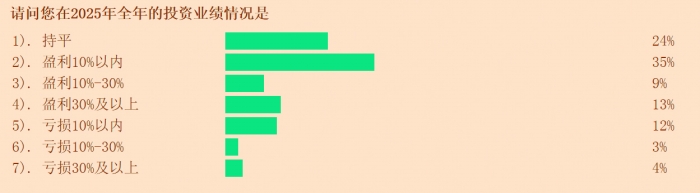
Core Viewpoint - The A-share market showed resilience in 2025, with nearly 60% of surveyed investors achieving profits, driven primarily by the technology sector, particularly artificial intelligence [9][10][11]. Market Performance - The major indices in the A-share market experienced significant gains, with the Shanghai Composite Index rising 18.41% to close at 3968.84 points, marking its best annual performance since 2020 [10][11]. - The ChiNext Index and the STAR Market Index saw even higher annual increases of approximately 49.57% and 46.3%, respectively [10][11]. Investor Sentiment - Nearly 80% of investors are optimistic about the 2026 stock market, with expectations for a robust spring market [24][27]. - The proportion of investors anticipating a bullish trend in the A-share market reached its highest level since 2022, with 78% expecting an overall increase [27][28]. Asset Allocation Trends - There is a noticeable shift in asset allocation, with 42% of investors planning to increase their investments in equity assets, reflecting a 10 percentage point increase from the end of 2024 [26]. - The average proportion of securities in personal financial assets rose to 41.68%, up from 38.84% at the end of 2024, indicating a trend of moving funds from savings to equities [12][13]. Gold Investment - Approximately 71% of investors allocated funds to gold in 2025, with 44% reporting profits from their gold investments [15][16]. - The price of gold increased by over 60% throughout the year, making it a focal point in asset allocation [14][15]. Hong Kong Market Performance - The Hong Kong stock market also showed strong performance, with 37% of investors reporting profits, an increase of 9 percentage points from the previous year [16][17]. - 27% of investors increased their investments in Hong Kong stocks, reflecting a growing interest in this market [16][17]. Sector Performance - The technology sector, particularly AI and semiconductor stocks, was identified as the primary source of investment returns, with 26% of investors attributing their gains to this sector [19][20]. - Traditional consumer sectors underperformed, with only 3% of investors citing them as their main source of returns, the lowest in five years [19][20]. Future Outlook - Investors are expected to maintain a rational approach towards market expectations, with a focus on structural opportunities rather than speculative index movements [28][29]. - The anticipated liquidity in 2026 is expected to support continued investment in equity markets, particularly in technology and high-dividend sectors [25][26].

湘财证券晨会纪要-20260201
Xiangcai Securities· 2026-02-01 15:21
Macro Strategy - In January 2026, PMI fell below the threshold, with manufacturing PMI at 49.3%, non-manufacturing PMI at 49.4%, and composite PMI at 49.8%, indicating a decline in economic prosperity [2] - The production index was at 50.6%, indicating manufacturing expansion, while the new orders index dropped to 49.2%, reflecting a decrease in market demand [2] - Industries such as agricultural food processing and aerospace equipment showed production and new orders indices above 56.0%, while sectors like petroleum and automotive saw indices below the threshold, indicating a slowdown in market demand [2] Stock Market Overview - A-shares experienced fluctuations after a "good start," with the Shanghai Composite Index down 0.44% and the Shenzhen Component down 1.62% from January 26 to January 30, 2026 [3] - The market's volatility was attributed to a strong dollar affecting gold and other previously rising sectors, leading to a broad decline in indices [3][4] - The overall market trend remains strong, supported by the central bank's policies and the expectation of continued economic stability in 2026 [7] Industry Analysis: Non-ferrous Metals and New Materials - The rare earth magnetic materials sector saw a slight increase of 0.16%, outperforming the benchmark [9] - Domestic light rare earth concentrate prices stabilized, while medium and heavy rare earth prices declined, with praseodymium and neodymium prices showing weak fluctuations [10] - The supply side remains tight, with market demand expected to support high rare earth prices, while the demand for downstream applications like new energy vehicles is showing signs of marginal decline [11] Investment Recommendations - The non-ferrous metals sector is rated as "overweight," with expectations of stable demand and pricing trends, particularly in the rare earth segment [11] - Focus on upstream rare earth resource companies and downstream magnetic material firms with strong customer structures and growth potential [12]
建筑材料行业周报:拥抱景气周期,聚焦涨价链条-20260201
East Money Securities· 2026-02-01 13:11
Investment Rating - The report maintains an "Outperform" rating for the construction materials sector, indicating a positive outlook for the industry [2]. Core Views - The construction materials sector is expected to benefit from a new round of urban renewal, with significant potential in the consumer building materials segment as it shows resilience against the declining demand in the new housing market [2][9]. - The industry is witnessing a consolidation trend, with leading companies emerging from the profit trough, while smaller firms are being eliminated due to declining profitability [2][9]. - Price increases have been observed in various segments, including waterproofing, coatings, and gypsum board, as companies adjust their strategies post-downturn [2][9]. Summary by Sections Cement - The cement market is entering a traditional off-season, with demand expected to weaken. The average price is around 350 RMB per ton, showing a slight decrease of 2.7 RMB per ton [25][32]. - The average shipment rate for cement companies has increased by approximately 3 percentage points, reaching about 32% [27][32]. - Recommendations include companies like Huaxin Cement and Conch Cement, with a focus on potential new projects post-Chinese New Year [32]. Glass - The glass sector is also entering a demand lull, with the average price of float glass at 1,145 RMB per ton, reflecting a weekly increase of 6 RMB [34]. - Inventory levels have decreased, with a reported stock of approximately 4,927 million weight boxes, down by 1% week-on-week [34]. - Companies to watch include Qibin Group and Xinyi Glass, as the industry anticipates a stabilization point after recent downturns [34][46]. Fiberglass - The fiberglass market is expected to maintain stable prices in the short term, with a potential for price increases post-holiday due to stable demand in wind power and thermoplastic sectors [9][12]. - The price of electronic cloth is currently stable, with expectations for continued high demand in mid-to-high-end products [12]. - Key recommendations include China Jushi and International Composites, with a focus on their growth potential [9][12]. Carbon Fiber - Carbon fiber prices are stable, with the commercial aerospace sector expected to drive new demand growth in 2026 [12][15]. - The industry is currently facing profitability pressures, but the development of commercial aerospace may provide new opportunities [12][15]. - Companies to monitor include Zhongfu Shenying and Guangwei Composites, as they may benefit from this emerging demand [12][15].



宏观与大类资产周报:沃什当选与PPI提前转正,谁将成为下阶段市场主要矛盾-20260201
CMS· 2026-02-01 12:06
Domestic Economic Insights - "New quality productivity" and "anti-involution" have made substantial progress, with industrial enterprises expected to reverse three years of continuous losses by 2025, particularly in high-tech manufacturing, which significantly increased its profit contribution rate[1] - Starting from the beginning of the year, prices of bulk commodities, represented by non-ferrous metals, have surged, with January PPI expected to grow by 0.3% month-on-month, leading to a year-on-year recovery to -1.2%[1] International Economic Developments - The Federal Reserve did not further cut interest rates in its January meeting, with Powell appearing slightly hawkish, although he noted that inflation impacts from tariffs are likely to peak around mid-year, which could favor subsequent easing[1] - Trump's nomination of Kevin Walsh as the next Fed Chair may have short-term bullish effects on U.S. stocks until Q3, but could turn bearish in Q4 and next year[1] Market Trends and Asset Performance - The appointment of Walsh is expected to influence U.S. stocks positively in the short term but may lead to bearish trends as the market begins to focus on the Fed's balance sheet reduction in Q4[1] - The difficulty of meeting carbon reduction targets during the 15th Five-Year Plan is anticipated to be the highest since the 12th Five-Year Plan, with sectors like construction materials, electricity, steel, and coal becoming areas of interest due to the combined effects of carbon peak and PPI turning positive[1] Monetary Policy and Liquidity - The central bank continued net liquidity injections, with a net injection of 580.5 billion yuan through 7-day reverse repos during the week of January 26 to January 30[4] - The average weekly rates for DR001 and DR007 increased slightly, indicating a tightening in liquidity conditions despite the central bank's efforts to maintain a stable funding environment[5] Government Debt and Financing - Local government bonds had a net financing of 310.85 billion yuan, while national bonds had a net financing of -113.34 billion yuan, resulting in a total net financing of 197.51 billion yuan for the week[6]
直击达沃斯|隆基绿能首席可持续发展官谈行业四大趋势
Xin Lang Cai Jing· 2026-02-01 12:04
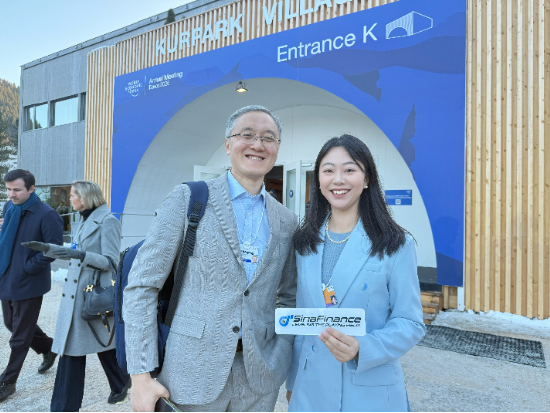
Core Viewpoint - The Chinese photovoltaic industry is at a crossroads amid accelerating global energy transition and rising trade protectionism and geopolitical risks. The industry's ability to emerge from a period of widespread losses is under scrutiny, especially with recent signals of domestic "anti-involution" policies and stabilization in product prices [1][17]. Group 1: "14th Five-Year Plan" and Green Hydrogen - The "14th Five-Year Plan" emphasizes the importance of renewable energy development, aiming to build a clean, low-carbon, safe, and efficient energy system, and increase the share of renewable energy supply [3][19]. - The plan provides a "stabilizing force" for the industry, ensuring that renewable energy remains a mainstream power supply [3][19]. - The hydrogen industry is entering a critical stage for scaling up, with expectations that green hydrogen costs will approach parity by the end of the "14th Five-Year Plan" and become competitive by 2030-2035 [5][21]. Group 2: Shift from "Made in China" to "Local for Local" - The global green economy has grown into a $5 trillion market, with China leading in production capacity and market share in sectors like electric vehicles, photovoltaics, and wind power [5][19]. - The strategy has shifted from exporting products to establishing local production capabilities, adapting to geopolitical challenges and local manufacturing requirements in markets like the U.S. and India [8][24]. - The company has successfully established one of the largest solar module factories in the Western Hemisphere through a joint venture model, which is being replicated in other countries [9][25]. Group 3: Addressing "Involution" and Competition - The industry faces challenges such as supply-demand imbalances and price wars, necessitating a focus on technological innovation and policy guidance to ensure long-term development [10][26]. - The key to overcoming "involution" lies in setting high standards and supporting strong players while eliminating substandard products from the market [10][26]. - The company emphasizes the need for market consolidation and collaboration among remaining firms to foster a healthier competitive environment [10][26]. Group 4: ESG as a Competitive Barrier - Effective ESG management is transitioning from a cost center to a competitive barrier, with good practices reflecting sustainable competitiveness [12][28]. - The company is advocating for improved ESG standards across the supply chain, aiming to establish a competitive edge in the industry [12][28]. - The company has made progress in ESG ratings, moving from a BBB rating to aiming for an A rating by 2025, highlighting the importance of governance and social factors [12][28]. Group 5: Future Directions and Solutions - The company is evolving from a component supplier to an energy solutions provider, focusing on comprehensive pricing and project returns rather than just component efficiency [11][27]. - There is an expectation of more substantial case studies and international applications in the coming years, reflecting the industry's shift towards integrated energy solutions [11][27]. - The key to navigating future challenges lies in building capabilities for new power systems and achieving effective global operations [15][31].

2026.01.26-2026.01.30日策略周报:一月制造业PMI再回荣枯线之下,A股指数宽幅震荡-20260201
Xiangcai Securities· 2026-02-01 10:41
Core Insights - The A-share market experienced wide fluctuations after the "opening red" in January, with major indices showing mixed performance [2][10] - The manufacturing PMI fell below the boom-bust line in January, indicating a decline in economic activity [6][27] - The report suggests a long-term bullish outlook for the A-share market supported by favorable monetary policies and economic recovery [8][31] Market Performance - During the week of January 26-30, 2026, the Shanghai Composite Index fell by 0.44%, the Shenzhen Component dropped by 1.62%, and the ChiNext Index saw a slight decline of 0.09% [3][10] - The largest weekly fluctuation was observed in the Sci-Tech Innovation Board Index, which experienced a 6.67% swing [10] - The overall market trend reflects increased volatility due to a stronger dollar and high index levels, leading to a demand for consolidation [13] Industry Analysis - Among the 31 first-level industries, the oil and petrochemical sector and telecommunications led with gains of 7.95% and 5.83%, respectively, while the defense and military industry and power equipment saw declines of -7.69% and -5.10% [4][20] - In the second-level industries, precious metals and oil service engineering had the highest weekly gains of 18.02% and 14.83%, while aerospace equipment II and military electronics II faced the largest declines of -15.78% and -8.45% [4][22] - The third-level industries showed gold and seeds leading with weekly increases of 18.22% and 15.02%, while aerospace equipment III and thermal power equipment had the largest drops of -15.78% and -9.93% [5][25] Macro Data - The manufacturing PMI for January was reported at 49.3%, indicating a contraction in manufacturing activity, with the production index at 50.6% showing slight expansion [6][27][28] - The new orders index fell to 49.2%, suggesting a slowdown in market demand across various sectors [28] Investment Recommendations - The report anticipates a stable economic environment in 2026, supported by proactive fiscal policies and moderate monetary easing, which is expected to sustain a "slow bull" market for A-shares [8][31] - Short-term market expectations remain strong, particularly in sectors related to "anti-involution," new productivity in AI and technology, and agriculture, which are expected to benefit from central bank policies [8][31]

交通运输行业周报:干散货运价淡季回升,继续重视油运
国盛证券有限责任公司· 2026-02-01 10:24
Investment Rating - The report maintains a rating of "Buy" for the transportation sector [5] Core Insights - The dry bulk freight rates have unexpectedly rebounded during the off-season, with significant increases noted in large vessels. The VLCC market saw a rise in freight rates due to geopolitical risks and strong demand for commodities like iron ore and grain [1][2] - The report highlights key companies to watch, including China Merchants Energy, COSCO Shipping Energy, Haitong Development, COSCO Shipping International, and CIMC Enric [1][2] Summary by Sections Weekly Insights and Market Review - The VLCC freight rates surged again, while dry bulk freight rates showed an unexpected off-season recovery, particularly for larger vessels. The BDI index reached 2148 points on January 30, with the BCI at 3507 points [1][2] - The transportation sector index fell by 1.40%, underperforming the Shanghai Composite Index by 0.96 percentage points. The top-performing segments were shipping, ports, and highways, with gains of 2.19%, 1.42%, and 0.10% respectively [21][22] Travel - Domestic flight ticket bookings for the upcoming Spring Festival exceeded 7.16 million, reflecting a 16% increase compared to the previous year. The report remains optimistic about the long-term outlook for the aviation sector due to recovering demand and supportive policies [3][13] Shipping and Ports - The VLCC market is experiencing a resurgence in freight rates, with the index for oil transport from the Persian Gulf to China rising to WS137.2 points, an increase of 42.6 points from the previous day. The dry bulk freight rates are also on the rise, supported by strong demand for iron ore and grain [14][15] - Key companies in the shipping sector include China Merchants Energy and COSCO Shipping International, which are expected to benefit from the current market dynamics [17] Logistics - The report identifies two main investment themes in the express delivery sector: the overseas expansion driven by the rapid growth of e-commerce and the internal competition dynamics that favor leading companies. Recommended stocks include ZTO Express, YTO Express, and Shunfeng Express [19][20]


干散货运价淡季回升,继续重视油运
GOLDEN SUN SECURITIES· 2026-02-01 10:13
证券研究报告 | 行业周报 gszqdatemark 2026 02 01 年 月 日 交通运输 干散货运价淡季回升,继续重视油运 周观点:VLCC 运价周五再度冲高;干散货运价淡季超预期回升,大船更为明 显。VLCC 市场,本周 VLCC 市场中东航线 2 月上旬货盘基本收尾,租家出货 节奏放缓,运价在周四之前高位回落;随着运价下跌,船东对进一步下跌表现 出较强抵抗意愿,潜在地缘政治风险再度升温,1 月 30 日,波斯湾至中国 27 万吨原油运价指数升至 WS137.2 点,较 1 月 29 日上涨 42.6 点。受矿石、粮 食等品种发货需求较好支撑,本周干散货运价持续回升,BDI 于 1 月 30 日收 于 2148 点,大船涨势更为明显,BCI 于 1 月 30 日收于 3507 点。重点关注招 商轮船、中远海能、海通发展、中远海运国际和中集安瑞科等。 行情回顾:本周(2026.1.26-2026.1.30)交通运输板块行业指数下跌 1.40%, 跑输上证指数 0.96 个百分点(上证指数下跌 0.44%)。从申万交通运输行业 三级分类看,涨幅前三名的板块分别为航运、港口、高速公路,涨幅分别为 2.19 ...
