降准降息

Search documents
0922国新办发布会点评:后续降准降息仍有可能,牛市持续可期
Shanghai Securities· 2025-09-23 10:42
Monetary Policy Insights - The press conference did not involve short-term monetary policy adjustments, but there remains a possibility of future interest rate cuts or reserve requirement ratio reductions[3] - The central bank's current stance is supportive, implementing moderately loose monetary policy based on macroeconomic data assessments[3] Financial Sector Achievements - During the 14th Five-Year Plan period, China's financial sector has made significant progress in reforming the financial system and enhancing service quality to the real economy[4] - The total assets of the banking sector, along with the scale of the stock and bond markets, rank among the highest globally, indicating progress towards becoming a financial powerhouse[4] Capital Market Developments - The new securities law and related regulations have strengthened the legal framework of China's capital markets, contributing to a fair and just market environment[8] - The total market capitalization of A-shares has surpassed 100 trillion yuan, reflecting a solid foundation for a long-term bull market[8] Technology Sector Impact - The market capitalization of the technology sector now exceeds 25% of the total A-share market, indicating its growing importance compared to traditional sectors like banking and real estate[9] - Enhanced awareness among listed companies regarding shareholder returns has led to significant increases in dividends and share buybacks, contributing to wealth effects in the market[9] Investor Engagement and Risk Management - Reforms in public fund management have improved investor experience and increased the participation of long-term funds in A-shares, with a 30% increase in holdings compared to the end of the 13th Five-Year Plan[10] - The regulatory focus on risk prevention and investor protection is expected to reduce market volatility and enhance investor confidence[11]
新一轮稳增长政策可能有哪些?
Soochow Securities· 2025-09-22 13:00
Economic Situation - Current economic pressures on investment and consumption are increasing, indicating that a new round of growth stabilization policies is imminent[1] - Fixed asset investment (FAI) growth for the first eight months of this year is only 0.5%, necessitating coordinated fiscal and monetary policies to stimulate recovery[1] - Retail sales growth has declined to 3.4% year-on-year in August, suggesting potential consumption pressures in the fourth quarter due to high base effects from last year[1] Policy Timing and Direction - The key window for new policies is expected in mid to late October, with the fourth plenary session of the Central Committee being a significant event[1] - There are four areas where policy space remains: early use of debt quotas, introduction of new policy financial tools, increased likelihood of interest rate cuts, and potential adjustments to consumer subsidy policies[1][2] Financial Tools and Measures - The anticipated scale of new policy financial tools is around 500 billion RMB, aimed at stabilizing investment growth in Q4[1] - Early use of debt quotas could free up significant funds for economic construction, with a potential 2.8 trillion RMB available for 2026[1] - The probability of interest rate cuts has increased, which would lower costs for homebuyers and businesses[2] Consumption Policies - Adjustments to subsidy funds and expanding the scope of "trade-in" subsidies could stabilize consumption growth, which has been pressured by insufficient funding[1] - New policies to support service consumption are expected to be implemented in Q4, with a focus on innovative service consumption measures[1] Overall Policy Approach - The new round of growth stabilization policies is characterized as supportive rather than aggressive, aiming to stabilize growth without compromising quality[1] - The projected GDP growth for the first three quarters is around 5.1%, with a target of maintaining growth above 4.5% in Q4 to achieve an annual target of approximately 5%[1]
LPR连续4月“按兵不动”,央行表态货币政策立场是支持性的
2 1 Shi Ji Jing Ji Bao Dao· 2025-09-22 11:17
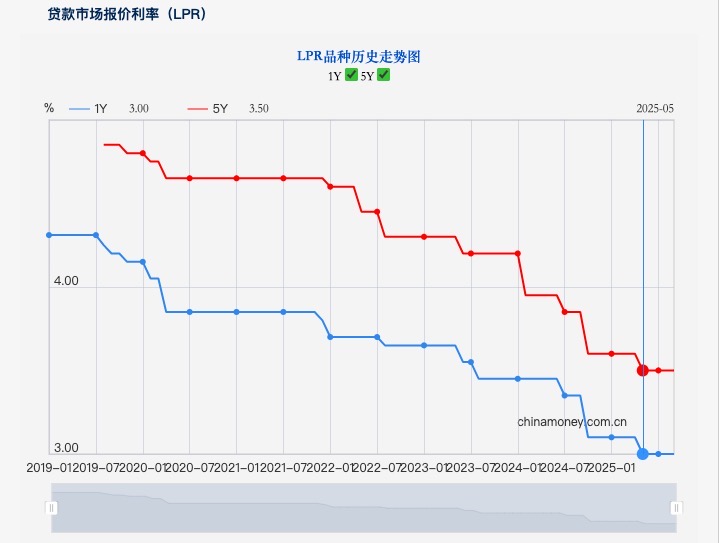
Core Viewpoint - The LPR rates for September remain unchanged, with the 1-year LPR at 3.0% and the 5-year LPR at 3.5%, consistent since May, indicating a stable monetary policy environment in China [1][4]. Summary by Sections LPR Rates - The 1-year LPR is set at 3.0% and the 5-year LPR at 3.5%, both unchanged for five consecutive months [4]. - The stability of the LPR is attributed to the consistent 7-day reverse repurchase rate, which has remained at 1.40% since May [4]. Market Expectations - Analysts expected the LPR to remain unchanged, aligning with market predictions [3][4]. - Factors such as rising market interest rates and banks' low net interest margins have reduced the motivation for banks to lower LPR quotes [4]. Economic Context - Recent macroeconomic data has shown declines in consumption, investment, and industrial production due to various factors, including extreme weather and external fluctuations [5]. - The fiscal policy has been strengthened, with a target deficit rate of 4.0% and an issuance of 2.9 trillion yuan in government bonds, contributing to the current economic environment [5]. Future Monetary Policy Outlook - There is potential for a new round of interest rate cuts and reserve requirement ratio reductions in the fourth quarter, driven by the need to stimulate domestic demand and stabilize the real estate market [6][7]. - The recent rate cut by the Federal Reserve may provide more room for China's monetary policy to adopt a looser stance [6][7]. Central Bank's Position - The People's Bank of China emphasizes a supportive monetary policy stance, aiming to create a favorable environment for economic recovery and financial market stability [8][9]. - The central bank's approach is data-driven, adjusting policies based on macroeconomic conditions and trends [9].

美联储降息25BP,国内降息可能性亦上升:利率周报(2025.9.15-2025.9.21)-20250922
Hua Yuan Zheng Quan· 2025-09-22 10:50
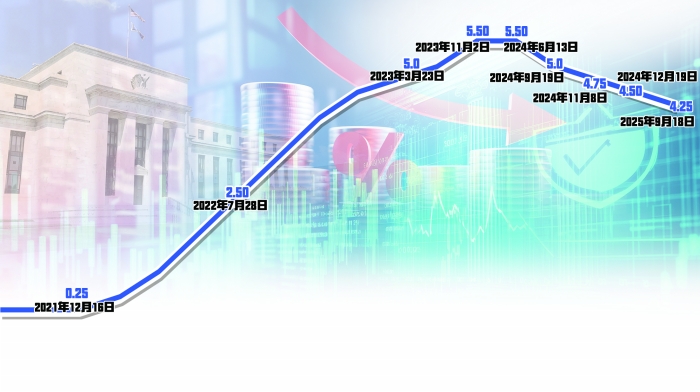
1. Report Industry Investment Rating - No specific industry investment rating is provided in the report. 2. Report Core View - Consumption shows significant differentiation, with strong resilience in service and online demand, while commodity consumption remains under pressure. In August, the total retail sales of consumer goods reached 4.0 trillion yuan, a year-on-year increase of 3.4%, down 0.3 pct from the previous month and has declined for three consecutive months. The year-on-year growth rate of service retail sales is faster than that of commodity retail sales. Some industry policies are optimized to offset the downward pressure. Domestic policies focus on consumption expansion and industrial upgrading. However, real estate risks are still not cleared. The average housing price in 100 cities across the country has dropped by more than 33% from the peak, and the average decline in first-tier cities has reached 29.5%. Currently, housing prices have not stopped falling. The economic structural contradictions are prominent, and further interest rate cuts, optimization of mortgage rates, and expansion of fiscal deficits may be needed to support growth. The bond market fluctuates in the short term, and the expectation of easing in the fourth quarter is rising. The report is bullish on the bond market in the short term. The bond market is insensitive to economic data. In the past quarter, the bond market trend has deviated significantly from the economic fundamentals. The short-term suppression of the bond market mainly comes from the stock market. As the stock investment ratio of institutional funds such as annuities reaches a high level, the actual impact of the stock market on the bond market may gradually weaken. Looking forward, with the start of the Fed's interest rate cut cycle and the weak recovery momentum of the domestic economy, the probability of reserve requirement ratio and interest rate cuts in the fourth quarter increases, and the yield of 10Y treasury bonds may drop to 1.65%. Although the short-term bond market may be disturbed by the risk appetite of the stock market, its allocation value is prominent under the support of fundamentals. [1][8][82] 3. Summary by Relevant Catalogs 3.1 Macro News - In August, the consumption growth rate continued to decline, with prominent performance in service consumption and online consumption. The total retail sales of consumer goods in August was 4.0 trillion yuan, a year-on-year increase of 3.4%, down 0.3 pct from the previous month and has declined for three consecutive months. From January to August, the total retail sales of consumer goods increased by 4.6% year-on-year, down 0.2 pct from January to July. In terms of sub-items, from January to August, the year-on-year growth rates of commodity retail sales and service retail sales were 4.8% and 5.1% respectively, down 0.1 pct from January to July [9]. - On September 16, nine departments including the Ministry of Commerce issued "Several Policy Measures to Expand Service Consumption", proposing 19 measures in five aspects [16]. - The Shanghai Municipal Finance Bureau issued a notice to optimize and adjust the personal housing property tax pilot policy, stating that homebuyers who hold a Shanghai residence permit for three years and work and live in Shanghai and purchase a new home in Shanghai as their family's first home are temporarily exempt from property tax [16]. - On September 18, the Fed announced a 25BP interest rate cut, lowering the federal funds rate from 4.25%-4.50% to 4.00%-4.25%, in line with market expectations. The interest rate dot plot shows that the median expectation of Fed officials is that there will be two more 25BP interest rate cuts this year, one more than the prediction in June [16]. 3.2 Meso-High Frequency Data 3.2.1 Consumption - As of September 14, the average daily retail volume of passenger car manufacturers was 6.1 million vehicles, a year-on-year increase of 0.5%, and the average daily wholesale volume was 6.7 million vehicles, a year-on-year decrease of 1.4% [15]. - As of September 18, the total national movie box office revenue in the past 7 days was 614.469 million yuan, a year-on-year increase of 19.3% [15]. - As of August 29, the total retail volume of three major household appliances was 1.337 million units, a year-on-year decrease of 9.9%, and the total retail sales were 3.37 billion yuan, a year-on-year increase of 5.2% [20]. 3.2.2 Transportation - As of September 14, the container throughput of ports in the current week was 6.652 million twenty-foot equivalent units, a year-on-year increase of 10.1% [23]. - As of September 19, the average migration scale index in the past 7 days was 496.3, a year-on-year decrease of 10.4% [23]. - As of September 14, the postal express pick-up volume in the current week was 3.83 billion pieces, a year-on-year increase of 8.5% [29]. - As of September 14, the railway freight volume in the current week was 80.434 million tons, a year-on-year increase of 3.7%, and the highway truck traffic volume was 57.712 million vehicles, a year-on-year decrease of 0.6% [31]. 3.2.3 Operating Rate - As of September 17, the blast furnace operating rate of major steel enterprises in the country was 78.1%, a year-on-year increase of 2.9 pct. As of September 18, the average asphalt operating rate was 26.0%, a year-on-year increase of 3.0 pct [36]. - As of September 18, the soda ash operating rate was 85.8%, a year-on-year increase of 6.9 pct, and the PVC operating rate was 76.8%, a year-on-year decrease of 1.2 pct. As of September 19, the average PX operating rate was 86.8%, and the average PTA operating rate was 78.1% [39]. 3.2.4 Real Estate - As of September 19, the total commercial housing transaction area in 30 large and medium-sized cities in the past 7 days was 1.731 million square meters, a year-on-year increase of 51.1% [43]. - As of September 12, the second-hand housing transaction area in 9 sample cities was 1.598 million square meters, a year-on-year increase of 1.6% [47]. 3.2.5 Prices - As of September 19, the average pork wholesale price was 19.7 yuan/kg, a year-on-year decrease of 26.6%, and a decrease of 2.0% compared to four weeks ago. The average vegetable wholesale price was 5.0 yuan/kg, a year-on-year decrease of 20.7%, and an increase of 3.4% compared to four weeks ago. The average wholesale price of 6 key fruits was 6.8 yuan/kg, a year-on-year decrease of 6.8%, and a decrease of 1.0% compared to four weeks ago [50]. - As of September 19, the average price of thermal coal at northern ports was 689.0 yuan/ton, a year-on-year decrease of 19.8%, and a decrease of 1.3% compared to four weeks ago. The average spot price of WTI crude oil was 63.3 US dollars/barrel, a year-on-year decrease of 9.5%, and an increase of 0.6% compared to four weeks ago [55][56]. - As of September 19, the average spot price of rebar was 3144.2 yuan/ton, a year-on-year decrease of 2.8%, and a decrease of 3.2% compared to four weeks ago. The average spot price of iron ore was 809.4 yuan/ton, a year-on-year increase of 14.5%, and an increase of 3.3% compared to four weeks ago [60]. 3.3 Bond and Foreign Exchange Markets - On September 19, the overnight Shibor was 1.46%, up 5.30BP from September 15. R001 was 1.50%, up 5.19BP from September 15; R007 was 1.52%, up 3.29BP from September 15. DR001 was 1.46%, up 5.04BP from September 15; DR007 was 1.51%, up 2.64BP from September 15. IBO001 was 1.50%, up 5.24BP from September 15; IBO007 was 1.54%, up 1.67BP from September 15 [63]. - Most treasury bond yields increased. On September 19, the yields to maturity of 1-year/5-year/10-year/30-year treasury bonds were 1.39%/1.62%/1.87%/2.20% respectively, down 1.0BP/up 0.5BP/up 0.8BP/up 1.7BP from September 12. The yields to maturity of 1-year/5-year/10-year/30-year China Development Bank bonds were 1.60%/1.79%/2.02%/2.29% respectively, up 2.1BP/down 2.9BP/down 0.9BP/up 2.7BP from September 12 [65]. - On September 19, the yields to maturity of 1-year/5-year/10-year local government bonds were 1.54%/1.83%/2.02% respectively, unchanged/down 1.5BP/down 0.4BP from September 12. The yields to maturity of AAA 1-month/1-year and AA+ 1-month/1-year interbank certificates of deposit were 1.58%/1.68%/1.60%/1.71% respectively, up 2.5BP/up 0.4BP/up 2.5BP/up 0.4BP from September 12 [67]. - As of September 19, 2025, the 10-year treasury bond yields of the United States, Japan, the United Kingdom, and Germany were 4.1%, 1.6%, 4.7%, and 2.8% respectively, up 8BP/4BP/4BP/4BP from September 12 [73]. - On September 19, the central parity rate and spot exchange rate of the US dollar against the RMB were 7.11/7.11 respectively, up 109/-99 pips from September 12 [76]. 3.4 Institutional Behavior - Since the beginning of 2025, the duration of medium- and long-term pure bond funds for interest rate bonds has shown a trend of first decreasing, then increasing, and then decreasing. In the past month, it has been decreasing overall. On September 19, 2025, the estimated median duration was about 4.6 years, a decrease of about 0.2 years compared to last week (September 12) [79]. - Since the beginning of 2025, the duration of medium- and long-term pure bond funds for credit bonds has shown a fluctuating trend. In the past month, the duration has increased rapidly and then fluctuated. On September 19, 2025, the estimated average duration was about 3.1 years, and the estimated median duration was about 3.0 years, an increase of about 0.03 years compared to last week (September 12) [81]. 3.5 Investment Suggestions - The bond market fluctuates in the short term, and the expectation of easing in the fourth quarter is rising. The report is bullish on the bond market in the short term. The bond market is insensitive to economic data. In the past quarter, the bond market trend has deviated significantly from the economic fundamentals. The short-term suppression of the bond market mainly comes from the stock market. As the stock investment ratio of institutional funds such as annuities reaches a high level, the actual impact of the stock market on the bond market may gradually weaken. Looking forward, with the start of the Fed's interest rate cut cycle and the weak recovery momentum of the domestic economy, the probability of reserve requirement ratio and interest rate cuts in the fourth quarter increases, and the yield of 10Y treasury bonds may drop to 1.65%. Although the short-term bond market may be disturbed by the risk appetite of the stock market, its allocation value is prominent under the support of fundamentals [84].
博时市场点评9月22日:两市缩量整固,电子板块领涨
Xin Lang Ji Jin· 2025-09-22 08:04
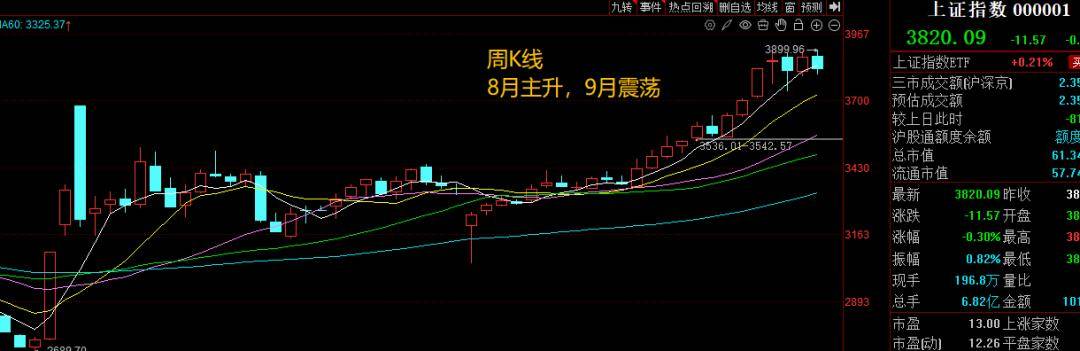
Market Overview - The three major indices in the A-share market experienced fluctuations and closed higher, with the Shanghai Composite Index at 3828.58 points, up 0.22% [4] - The total market turnover decreased to 2.1 trillion yuan, indicating cautious trading behavior as the holiday approaches [1] - Margin trading balances decreased by 4.2 billion yuan, reflecting a marginal contraction in leveraged fund sentiment [1] Economic Policy and Monetary Environment - The People's Bank of China announced that the Loan Prime Rate (LPR) remained unchanged at 3.0% for the one-year term and 3.5% for the five-year term, consistent with market expectations [2] - The stability of the LPR is intended to maintain continuity in the interest rate environment, as the macroeconomic policy is currently in an observation phase [2] - The central bank conducted a 240.5 billion yuan reverse repurchase operation at a rate of 1.40%, indicating efforts to manage liquidity ahead of the quarter-end and holiday [3] Steel Industry Developments - The Ministry of Industry and Information Technology released a plan for the steel industry aiming for an average annual growth of around 4% in value-added output from 2025 to 2026 [3] - The plan addresses the imbalance of excessive supply and insufficient effective demand, focusing on precise capacity control and enhancing high-end product supply capabilities [3] - The initiative aims to stabilize the industrial base and promote the transformation and upgrading of traditional industries, potentially benefiting leading steel enterprises through resource concentration and industry consolidation [3] Sector Performance - In the stock market, sectors such as electronics, computers, and non-ferrous metals showed strong performance, with increases of 3.71%, 1.70%, and 0.98% respectively [4] - Conversely, sectors like social services, beauty care, and retail experienced declines, with drops of 2.04%, 1.36%, and 1.31% respectively [4] - A total of 2132 stocks rose while 2990 stocks fell, indicating a mixed market sentiment [4]
宏观金融数据日报-20250922
Guo Mao Qi Huo· 2025-09-22 05:12
Report Summary 1. Report Industry Investment Rating - Not provided in the given content 2. Core Viewpoints - The stock index trend continues to be bullish, but the policy aims to guide the A-share market to run in a "slow bull" pattern. It is recommended to adjust and go long, and control positions before the holiday. The market has policy expectations for the "922" press conference, and last year's similar press conference launched a series of policy "combinations." Last week, positive factors were mainly overseas, with positive signals from Sino-US economic and trade talks and the Fed's first interest rate cut this year being beneficial to A-shares, while domestic economic data was poor, increasing the necessity of promoting consumption, stabilizing the real estate market, and expanding fiscal policies [7] 3. Summary by Relevant Catalogs Market Data - **Interest Rates**: DRO01 closed at 1.46 with a -4.83bp change, DR007 at 1.51 with a -4.70bp change, GC001 at 1.40 with a 17.50bp change, GC007 at 1.55 with an 8.00bp change, SHBOR 3M at 1.56 with a 0.60bp change, LPR 5-year at 3.50 with a 0.00bp change, 1-year treasury at 1.41 with a 0.62bp change, 5-year treasury at 1.62 with a 2.97bp change, 10-year treasury at 1.88 with a 2.54bp change, and 10-year US treasury at 4.14 with a 3.00bp change [4] - **Stock Index Futures**: On September 22, the closing prices and changes of stock index futures were as follows:沪深300 closed at 4502 with a 0.08% change, IF当月 at 4510 with a 0.5% change, 上证50 at 2910 with a -0.11% change, IH当月 at 2918 with a 0.3% change, 中证500 at 7170 with a -0.41% change, IC当月 at 7182 with a 0.1% change, 中证1000 at 7438 with a -0.51% change, IM当月 at 7448 with a -0.1% change. The trading volume and open interest of IF decreased by 25.9 and 11.0 respectively, IH by 33.1 and 16.6, IC by 20.6 and 9.2, and IM by 25.7 and 10.1 [6] - **Stock Market Review**: The previous day's closing, 沪深300 fell 0.21% to 4523.3, 上证50 fell 0.5% to 2947.8, 中证500 rose 0.75% to 7191, 中证1000 rose 0.92% to 7483.6. The trading volume of the two markets reached 31352 billion, a significant increase of 7584 billion. Most industry sectors fell, while the automobile service and tourism hotel sectors strengthened, and the precious metals, energy metals, non-ferrous metals, real estate services, diversified finance, small metals, and securities sectors led the decline [6] - **Open Market Operations**: Last week, the central bank had 12645 billion yuan of reverse repurchases and 1200 billion yuan of treasury cash fixed deposits due. It conducted 18268 billion yuan of reverse repurchase operations, 1500 billion yuan of treasury cash fixed deposit operations, and 6000 billion yuan of outright reverse repurchase operations, with a net full - caliber injection of 11923 billion yuan. This week, 18268 billion yuan of reverse repurchases will mature, and 3000 billion yuan of MLF will mature on September 25 [4][5] Market Expectations - The market has policy expectations for the "922" press conference. Last year's similar press conference launched a series of policy "combinations" including comprehensive reserve requirement ratio cuts, interest rate cuts, stock repurchase re - loans, and securities - fund - insurance company swap facilities [7] Ascending and Descending Water Conditions - The ascending and descending water conditions of stock index futures contracts are as follows: IF升贴水 for the next - month contract is 4.65%, the current - quarter contract is 3.42%, and the next - quarter contract is 2.77%; IH升贴水 for the next - month contract is - 1.67%, the current - quarter contract is - 0.52%, and the next - quarter contract is - 0.38%; IC升贴水 for the next - month contract is 12.79%, the current - quarter contract is 10.66%, and the next - quarter contract is 9.85%; IM升贴水 for the next - month contract is 17.81%, the current - quarter contract is 13.64%, and the next - quarter contract is 12.51% [8]
货币政策变局 降准降息 & 买卖国债
2025-09-22 00:59
Summary of Key Points from the Conference Call Industry Overview - The conference call primarily discusses the changes in China's monetary policy framework and its implications for economic growth and liquidity management. Core Insights and Arguments 1. **Monetary Policy Changes**: Since 2025, the main constraints on monetary policy have shifted from stabilizing the exchange rate to addressing net interest margin pressures and risk prevention. The exchange rate is no longer a significant constraint as of Q2 2025, with the USDCNH and USDCNY reaching a unified rate of 7.10 [2][3][4]. 2. **Need for Rate Cuts**: The necessity for interest rate cuts and reserve requirement ratio (RRR) reductions is increasing, particularly if Q3 GDP growth falls below 5.0%. Economic data from July and August has consistently underperformed expectations, indicating a potential need for policy adjustments [4][24][26]. 3. **Government Bond Trading Resumption**: The conditions for resuming government bond trading are becoming more favorable. After a pause in Q1 2025, market expectations for a resumption have grown, especially if the Ministry of Finance issues bonds early in Q4 2025, which could alleviate supply pressure [5][26]. 4. **Framework Evolution**: The monetary policy framework has evolved to focus more on price-based controls rather than quantity-based tools. Key indicators now include M2, social financing, and loan growth, reflecting a shift in the central bank's strategy to stabilize economic growth [6][8][27]. 5. **Liquidity Management**: The liquidity management framework has changed significantly, relying on various tools such as overnight and 7-day reverse repos, with government bond trading serving as a supplementary tool when other methods are insufficient [13][14][19]. 6. **Dual Pillar System**: The dual pillar system distinguishes between monetary policy aimed at macroeconomic stability and macro-prudential policy focused on preventing systemic financial risks. This includes measures like the "three red lines" in the real estate sector [10][11][12]. 7. **Interest Rate Corridor Adjustments**: The interest rate corridor mechanism has undergone changes, with the 7-day reverse repo rate becoming the primary policy rate. The new corridor reflects a narrower range of fluctuations compared to previous versions [20][23]. 8. **Future Expectations**: There is a high probability of further rate cuts and RRR reductions in Q4 2025 to support economic growth targets. The resumption of government bond trading is also anticipated as a liquidity management tool rather than a price control measure [26][27]. Other Important but Potentially Overlooked Content - The central bank's focus on price-based tools indicates a strategic shift in response to changing economic conditions, emphasizing the need for market adaptation to these evolving frameworks [27]. - The potential for hidden interest rate hikes due to increased government bond supply highlights the delicate balance the central bank must maintain in managing liquidity and interest rates [5][19].
A股,缩量8000亿元!重磅发布会,下周一15点
Sou Hu Cai Jing· 2025-09-21 19:25
Group 1 - The State Council will hold a press conference on September 22, 2025, to discuss the achievements of the financial industry during the "14th Five-Year Plan" period, featuring key figures from the People's Bank of China and financial regulatory bodies [1] - Goldman Sachs predicts a potential "liquidity feast" in the Chinese stock market, maintaining an "overweight" rating on A-shares and H-shares, with expected price increases of 8% and 3% respectively over the next 12 months [2] - The Shanghai Composite Index has shown a strong upward trend since April, reaching a 10-year high in August, indicating a robust bull market despite recent fluctuations [5] Group 2 - Industrial and Commercial Bank of China (ICBC) has recently fallen below its six-month moving average, marking a significant point for investors, as the banking sector has been adjusting for two months [6] - The market is experiencing a shift in risk appetite, with funds previously invested in government bonds and dividend assets potentially reallocating due to rising M1 growth rates [6] - The IPO of Moore Threads on the Sci-Tech Innovation Board is scheduled for September 26 [6]
外部掣肘减弱 我国货币政策“以我为主”姿态更从容
Shang Hai Zheng Quan Bao· 2025-09-18 19:04
Core Viewpoint - The easing of external constraints on China's monetary policy is expected due to the Federal Reserve's interest rate cuts, which will provide more room for policy adjustments [1][2]. Group 1: Monetary Policy Environment - The Federal Reserve's interest rate cuts have led to a decline in the US dollar index, reducing pressure on the RMB exchange rate [1]. - Analysts suggest that the attractiveness of RMB assets is increasing, leading to more foreign capital inflows and higher demand for RMB, which supports its appreciation [1][2]. - The potential for further interest rate cuts by the Federal Reserve may continue to alleviate pressure on the China-US interest rate differential and the RMB exchange rate, allowing for a more accommodative monetary policy environment in China [1][2]. Group 2: Internal Constraints on Monetary Policy - Internal factors, such as maintaining necessary policy space and ensuring reasonable net interest margins, pose greater constraints on China's monetary policy compared to external factors [2]. - The net interest margin of commercial banks has fallen to a new low of 1.42%, which may limit the space for further interest rate cuts [2][3]. - The need to avoid excessive liquidity that could lead to inefficient allocation of financial resources is emphasized, suggesting a preference for targeted monetary policy measures [2]. Group 3: Future Outlook for Monetary Policy - There is still room for further interest rate cuts and reserve requirement ratio (RRR) reductions, as the macroeconomic environment remains challenging [4][5]. - Analysts predict that the People's Bank of China may lower the RRR by 0.25 to 0.5 percentage points in the third and fourth quarters to enhance liquidity [6]. - The coordination between fiscal and monetary policies is expected to strengthen, focusing on optimizing the structure of financial support to key sectors [6].
25个基点!美联储时隔9个月重启降息 外部掣肘减弱 我国货币政策“以我为主”姿态更从容
Shang Hai Zheng Quan Bao· 2025-09-18 19:04
Core Viewpoint - The Federal Reserve has restarted interest rate cuts, lowering the federal funds rate target range by 25 basis points to between 4.00% and 4.25%, which reduces external constraints on China's monetary policy and enhances its operational space and autonomy [2][3][4]. External Constraints - The Fed's rate cut alleviates external pressures on China's monetary policy, allowing for a more "self-directed" approach [3][4]. - The alignment of monetary policy cycles between China and the U.S. is expected to broaden China's policy space and enhance its autonomy [4]. - The depreciation of the dollar and the decline in U.S. Treasury yields following the Fed's decision have reduced pressure on the RMB exchange rate, further easing external constraints [4][5]. Internal Constraints - Internal factors, particularly the pressure on bank interest margins, pose a greater constraint on China's monetary policy than external factors [6]. - The narrowing of net interest margins for commercial banks, which fell to a new low of 1.42%, limits the space for further interest rate cuts [6][7]. - The need to maintain a reasonable net interest margin and avoid excessive liquidity that could lead to financial risks is crucial for the stability of the banking sector [6][7]. Future Outlook - There remains potential for further cuts in reserve requirements and interest rates, as the current economic environment still faces challenges [9][10]. - Analysts suggest that the People's Bank of China may lower the reserve requirement ratio by 0.25 to 0.5 percentage points in the latter half of the year to optimize liquidity [9][10]. - The focus of monetary policy will likely shift towards structural adjustments to stimulate effective demand and support key sectors, rather than relying solely on broad interest rate cuts [10].