财政风险

Search documents
广发证券:“大美丽”法案将使得美国财政进一步宽松 美股短期上行 美元有反弹需求
智通财经网· 2025-07-06 23:43
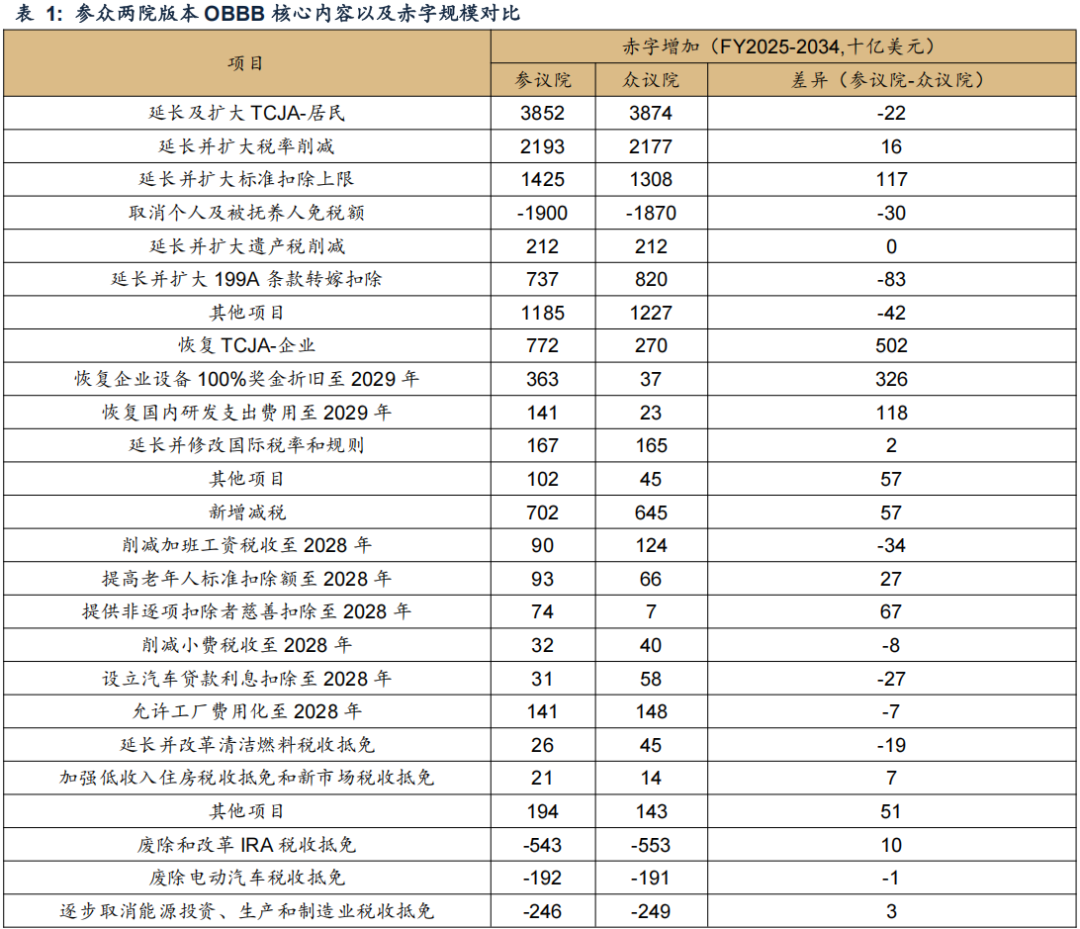
Group 1 - The "Great Beauty" Act, signed by Trump on July 4, 2023, will lead to further fiscal easing in the U.S., providing short-term support for economic growth but potentially causing secondary inflation risks and delaying Fed rate cuts, raising concerns about U.S. fiscal sustainability [1][10][12] - The final version of the "Great Beauty" Act has a larger deficit compared to the House version, with changes including the removal of Clause 899, an increase in the federal debt ceiling, and tightened conditions for Medicaid eligibility [1][10] - The Act is expected to have significant long-term effects across various industries, providing tax and subsidy advantages to traditional energy, manufacturing, real estate, military, and agriculture sectors while cutting benefits for clean energy, electric vehicles, healthcare, and food sectors [10][11] Group 2 - The Act will allow for the resumption of oil and gas leasing auctions on public lands and waters, and it maintains policies for real estate companies to fully deduct property improvement costs [11] - A budget of approximately $150 billion will be allocated over the next five years for large military projects, including shipbuilding and missile defense systems [11] - The semiconductor industry will see an increase in tax credits from 25% to 35% for new factories built in the U.S., with projects needing to commence by the end of 2026 [11] Group 3 - The "Great Beauty" Act represents a significant expansion of U.S. fiscal policy, which may require rate cuts to support this expansion amid high deficits and debt concerns [12][15] - The current fiscal expansion differs from previous cycles due to unexpected fiscal growth, changes in economic fundamentals, tariff uncertainties, and cracks in dollar credit [12][15] - The narrative around major asset classes is expected to fluctuate between "economic weakness," "data resilience," and "fiscal risk," impacting pricing for U.S. Treasuries, equities, the dollar, gold, and oil [15]


一周热榜精选:非农抹杀7月降息概率,大而美法案闯关成功
Jin Shi Shu Ju· 2025-07-04 13:45
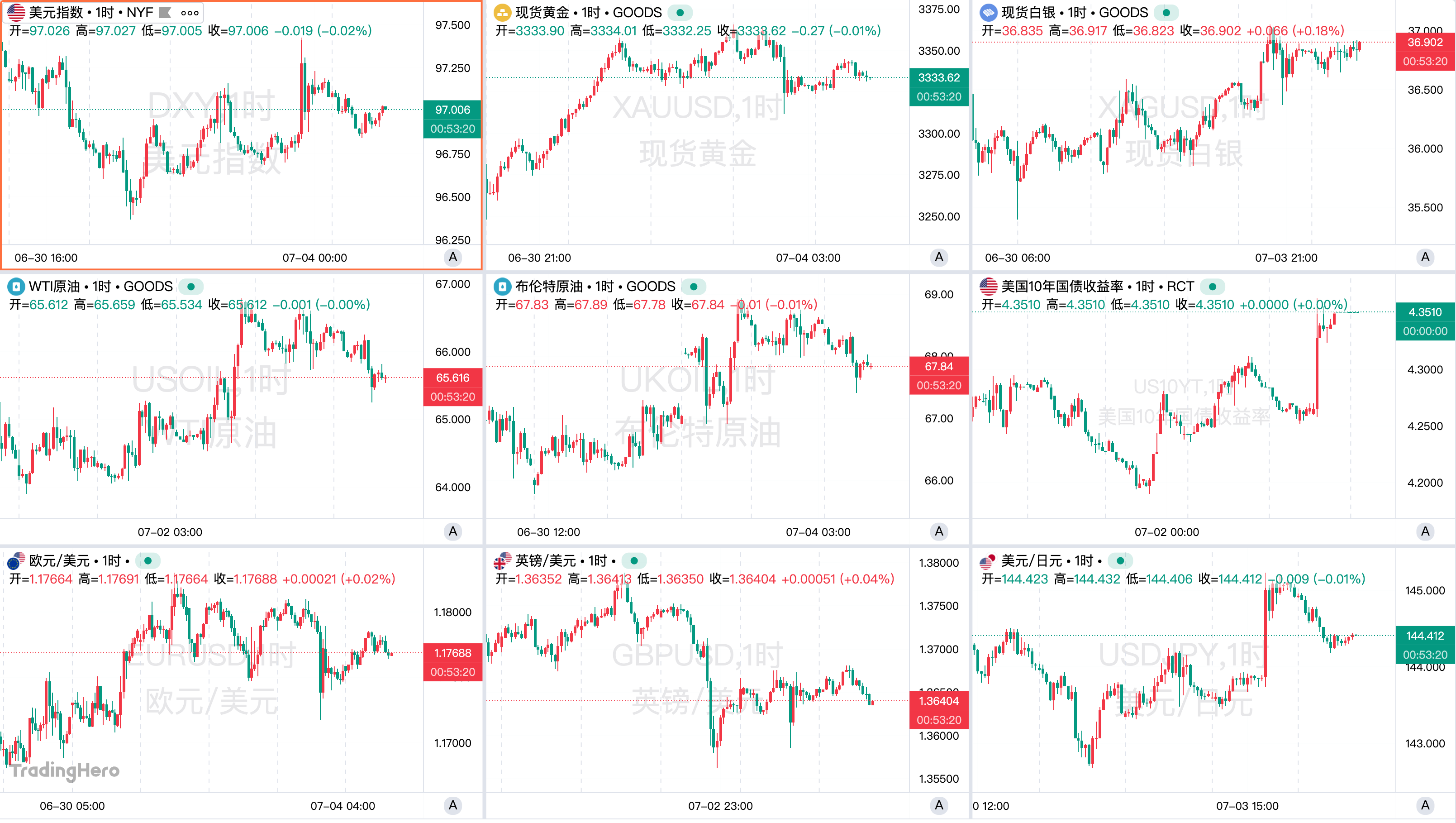
Market Overview - The US dollar index is expected to slightly decline this week, having dropped over 10% in the first half of the year, marking its worst performance since 1973 [1] - Spot gold has risen significantly, gaining over $100 per ounce, driven by a weaker dollar, increased expectations for Fed rate cuts, trade negotiation uncertainties, and concerns over fiscal risks from the "Big and Beautiful" plan [1] - The euro has appreciated nearly 14% this year, reaching a high of 1.1830 this week, as investors seek safety in European assets amid US policy fluctuations [1] Economic and Policy Developments - Goldman Sachs has moved its expectation for the Fed to restart rate cuts from December to September, predicting three consecutive cuts totaling 75 basis points [5] - Morgan Stanley reports that US tariff revenues are annualized at $327 billion, which is detrimental to economic growth, advising investors to favor US Treasuries and short the dollar [5] - The US non-farm payroll data showed an increase of 147,000 jobs in June, with the unemployment rate unexpectedly dropping to 4.1%, leading to reduced bets on a July rate cut [6] Trade and Tariff Updates - President Trump announced unilateral tariffs ranging from 10% to 70% on trade partners, effective August 1, which is higher than previously proposed rates [8] - The US has reached a trade agreement with Vietnam, allowing US goods to enter Vietnam at zero tariffs, while imposing a 20% tariff on Vietnamese exports to the US [10] Legislative Actions - The US House of Representatives passed the "Big and Beautiful" tax and spending bill, which is approximately $3.4 trillion in size, with supporters claiming it will benefit all income levels through tax cuts [11] - The bill is criticized by Democrats as "robbing the poor to pay the rich," with projected costs exceeding $4.5 trillion over the next decade [11] Corporate Developments - Tesla reported a 13.5% year-over-year decline in Q2 vehicle deliveries, totaling 384,122 units, yet its stock surged nearly 5%, adding $48.1 billion to its market cap due to better-than-expected performance [17] - Robinhood, Bybit, and Kraken have launched stock tokenization services, allowing 24/7 trading of US stocks, marking a significant shift in the trading landscape [18][19] AI and Talent Acquisition - Apple is considering using technology from Anthropic or OpenAI for its new Siri version, indicating a potential shift from its in-house AI development [20] - Meta has hired at least eight key researchers from OpenAI, reflecting a competitive talent acquisition strategy in the AI sector [21]


每日机构分析:7月4日
Xin Hua Cai Jing· 2025-07-04 10:38
Group 1 - Swiss bank analysts predict at least one more interest rate cut in the Eurozone this year due to uncertainties in trade negotiations and economic growth risks [1] - Societe Generale strategists expect the 10-year German government bond yield to remain in the range of 2.40%-2.80% by the end of the year, with an anticipated steepening of the yield curve [1] - Monex Europe analysts warn that the British pound faces further depreciation risks as the market has not fully absorbed the fiscal risks associated with the UK [3] Group 2 - Australian economists highlight that the current US tariff policy poses a significant threat to global economic growth, with the average tariff rate rising to 20% from 3% earlier this year [2] - BlackRock maintains an optimistic outlook, suggesting that the US policy environment is gradually becoming favorable for risk assets, particularly equities and credit bonds [2] - Moody's indicates that Japan's potential large-scale tax cuts due to election pressures could negatively impact its credit rating, depending on the extent and duration of the cuts [3]
英国财长一滴泪引爆市场神经,全球长债再度站上风口浪尖
Hua Er Jie Jian Wen· 2025-07-03 16:39
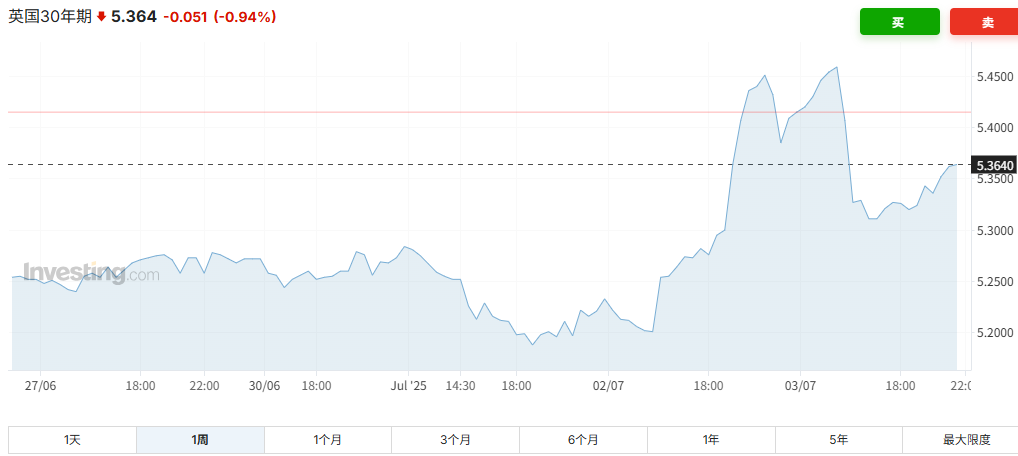
Group 1 - The long-term bond market is experiencing significant volatility due to rising government borrowing demands and expanding deficits, leading to higher yield requirements from investors [1][4] - The UK has become a focal point of this turmoil, with the Chancellor's proposed £50 billion welfare cuts being rejected, raising concerns about the government's fiscal discipline and resulting in a sharp increase in 30-year UK bond yields [1][4] - The sensitivity of long-term bonds to fiscal risks is attributed to their illiquid market, where even minor sell-offs can lead to substantial price drops and yield spikes [3][4] Group 2 - Various governments, including the US, Japan, and Australia, are reconsidering their issuance strategies for long-term bonds in light of high interest rates and fiscal concerns [4][6] - Japan's recent announcement to reduce the issuance of long-term bonds has led to a temporary stabilization in demand for its 30-year bonds, although yields still rose due to global market pressures [6][7] - Investors are increasingly favoring short-term bonds over long-term ones due to the heightened sensitivity of the latter to fiscal and political risks, as well as the demand for higher yields as compensation for these risks [7]
汇丰上调今明两年黄金价格预期:地缘政治叠加财政风险驱动避险需求
智通财经网· 2025-07-01 13:48
Group 1 - HSBC has significantly raised its gold price forecast for 2025 from $3015 to $3215 per ounce, and for 2026 from $2915 to $3125, reflecting a 7.2% increase [1] - The bank attributes the long-term value of gold to the evolving global risk landscape and rising sovereign debt, noting that gold's role as a safe-haven asset increases during economic uncertainty and geopolitical tensions [1] - As of July 1, 2023, international gold prices are fluctuating around $3360 per ounce, with expectations that prices will range between $3100 and $3600 for the remainder of 2025, and a target price of $3175 by the end of 2025 [1] Group 2 - The report highlights a significant correlation between gold price movements and central bank purchasing behavior, indicating that if gold prices exceed $3300, central banks may slow their buying pace [2] - If gold prices retreat to around $3000, it could trigger a new wave of reserve asset allocation, while sustained prices above $3500 may lead to demand pressures in major consumer markets like India and China [2] - The market is closely monitoring U.S. policy developments, including potential tax reform and trade tensions, which could inject further uncertainty into the gold market [2]
以伊冲突,这次市场反应很奇怪
Hua Er Jie Jian Wen· 2025-06-16 00:21
Core Viewpoint - The current Middle East tensions are redefining the concept of "safe haven" in the markets, with oil prices soaring and stock markets declining, while traditional safe-haven assets like U.S. Treasuries are being sold off [1][6]. Group 1: Market Reactions - Oil prices have surged significantly, impacting foreign exchange markets, where traditional safe-haven currencies have underperformed [2][3]. - The initial reaction saw the U.S. dollar rise, reflecting traditional safe-haven behavior, but this was reversed during the New York trading session as stock markets rebounded [2]. Group 2: Currency Performance - Traditional safe-haven currencies, such as the Japanese yen and Swiss franc, have weakened against the U.S. dollar, showing a strong negative correlation with Brent crude oil prices [3]. - Oil-related currencies like the Norwegian krone and Canadian dollar have performed well, aligning with their sensitivity to oil price movements [3]. - Other currencies displayed mixed performance, with the Swedish krona and New Zealand dollar underperforming, while the euro depreciated moderately, maintaining above 1.15 against the dollar [3]. Group 3: Bond Market Dynamics - The bond market has reacted unexpectedly, with significant sell-offs in global core sovereign bonds rather than the anticipated inflow of "safe haven" funds [3]. - The rise in actual interest rates was largely influenced by better-than-expected U.S. sentiment data, contributing to the increase in rates [3]. - Rising oil prices have led to increased inflation expectations, with the U.S. 10-year breakeven rising by 2 basis points and real yields increasing by 5 basis points [3]. Group 4: Changing Safe Haven Logic - The dynamics in the U.S. Treasury market are shifting due to concerns over fiscal and inflation risks, as well as expectations of increased supply [4][6]. - The weakening of the safe-haven status of U.S. Treasuries is attributed to inflation worries and rising sovereign debt supply [6]. - Unless there is clear evidence that geopolitical tensions will lead to global growth slowdown or reduced inflation, U.S. Treasuries may take longer to regain their traditional safe-haven qualities [6].
高盛宏观:五大要点解读
Goldman Sachs· 2025-06-09 05:29
Investment Rating - The report indicates a positive outlook for the Euro, revising the forecast higher to 1.25 in 12 months from 1.20, suggesting a buy recommendation for a 6-month EUR/USD digital call option at 1.25 with a risk-reward ratio of 1.35 for approximately 7.3% [2][10][12]. Core Insights - The US Dollar has experienced a decline of about 6% this year, reversing its previous gains, and the report suggests that this depreciation trend is likely to continue due to slowing economic performance and skepticism regarding foreign investment in US assets [10][13][26]. - The report highlights the potential end of the easing cycle for the Reserve Bank of India (RBI), indicating that after a series of rate cuts, the RBI has signaled limited space for further monetary support, with inflation forecasts adjusted accordingly [5][37]. - The report discusses the implications of fiscal risks on the Dollar, noting that while higher yields have been accepted as compensation for holding US debt, concerns about fiscal sustainability may lead to a weaker Dollar and higher yields in the future [20][26]. Summary by Sections Euro Forecast - The forecast for EUR/USD has been adjusted to 1.17, 1.20, and 1.25 over the next 3, 6, and 12 months respectively, reflecting a more bullish outlook [12][13]. - A digital call option for EUR/USD at 1.25 is recommended, with a maximum payout of 13.7 times the premium paid [14]. US Dollar Analysis - The report notes that the broad Dollar has fallen approximately 6% this year, with a stable performance against other developed market currencies over the past six weeks [10][13]. - The report suggests that the current adjustment in the Dollar's value is more indicative of a transitional phase rather than a definitive end to its depreciation [10][13]. RBI and Indian Market Insights - The RBI has cut policy rates by 100 basis points in the current cycle, indicating a likely end to the easing cycle, with inflation expected to rise to around 4.5% by mid-2026 [5][37]. - The report emphasizes the importance of liquidity and credit growth, noting that the RBI may maintain rates unless there is a significant slowdown in growth [37][38]. Singapore Dollar Strategy - The report recommends shorting the Singapore Dollar nominal effective exchange rate (SGDNEER) via options, given the low likelihood of the Monetary Authority of Singapore widening the trading band [28][32]. - The strategy is based on the expectation of a major USD rebound and the current large front-end rate differential between USD and SGD [32][33].
OECD第二次下调全球增长预测,称美国是受关税打击最严重国家之一
Hua Er Jie Jian Wen· 2025-06-03 13:50
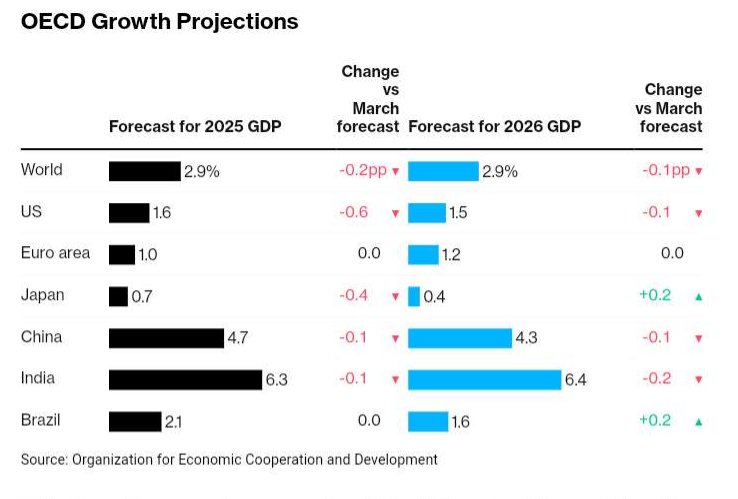
Group 1 - OECD has significantly downgraded the global economic growth forecast for 2025 from 3.3% to 2.9%, attributing this to the impact of Trump's trade policies [1] - The U.S. economic growth forecast has been halved from 2.8% to 1.6%, which is considerably lower than previous predictions made in March [2] - OECD's chief economist warns that the deteriorating economic outlook will affect global growth, with slowing growth and trade contraction impacting income and employment [2] Group 2 - The assessment reveals that Trump's policies are a pressing threat to the global economy, with no immediate solutions in sight [3] - Trade retaliation from U.S. partners, worsening confidence, and financial market re-pricing could exacerbate the situation [3] - The U.S. Federal Reserve Board member indicated that tariff policies will significantly contribute to rising inflation in the U.S. [3] Group 3 - OECD emphasizes that alleviating trade tensions and reducing tariffs are crucial for reviving growth and investment, but the effects of such measures will not be immediate [4] - The organization warns of increasing fiscal risks for countries due to significant spending pressures in defense, climate, and aging populations [5] - OECD calls for governments to cut unnecessary spending and expand the tax base to increase revenue [5]
贸易战谁最痛?OECD:特朗普关税重创美国 引爆全球经济衰退!
智通财经网· 2025-06-03 09:25
Core Viewpoint - The OECD report indicates that Trump's confrontational trade policies have led to a global economic downturn, with the U.S. experiencing the most severe impact [1]. Economic Growth Forecast - The OECD has downgraded the global economic growth forecast for 2024 from 3.3% to 2.9%, with the U.S. growth rate significantly reduced from 2.8% to 1.6% [1][2]. - Other regions' forecasts include Euro area at 1.0%, Japan at 0.7%, China at 4.7%, and India at 6.3% for 2025 [2]. Impact of Trade Policies - The report highlights that trade barriers and policy uncertainty are undermining market confidence and investment activities, exacerbating inflationary pressures [1][4]. - OECD Chief Economist Alvaro Pereira states that the global economic outlook is bleak, with reduced trade affecting income and employment growth [4]. Recommendations for Policy - The OECD emphasizes the importance of reaching agreements to ease trade tensions, reduce tariffs, and eliminate trade barriers to restore economic growth and investment [4]. - The report suggests that even if the Trump administration adjusts tariff policies, the positive effects on economic growth and inflation relief will not be immediate due to ongoing policy uncertainty [7]. Additional Economic Concerns - The report warns that the negative impacts of trade policies are compounded by immigration restrictions and large-scale federal layoffs, which may further deteriorate the U.S. economy [7]. - OECD Secretary-General Mathias Cormann notes that retaliatory measures from trade partners are slowing export growth, and significant immigration slowdown is also a concern [7]. Inflation and Fiscal Risks - The OECD predicts that U.S. inflation will continue to rise, with the Federal Reserve potentially delaying easing until 2026, and warns of the risk of consumer inflation expectations spiraling out of control [7]. - The report also highlights increasing global fiscal risks due to pressures from defense spending, climate governance, and aging populations, recommending governments to cut unnecessary spending and broaden the tax base [7].
全球债市新预警!40年期日债拍卖再遇冷,日债美债动荡何时终结?
Di Yi Cai Jing· 2025-05-28 04:55
Core Viewpoint - The Japanese bond market is facing significant challenges, highlighted by the recent auction of 40-year bonds which saw the lowest bid-to-cover ratio since July 2024, indicating a lack of investor confidence amid ongoing fiscal concerns [1][4][6] Group 1: Bond Market Dynamics - The yield on 40-year Japanese government bonds rose by 8 basis points to 3.365% before the auction, reflecting market apprehension [3] - The bid-to-cover ratio for the 40-year bond auction was 2.2, down from 2.9 in the previous auction, marking the lowest demand level since November 2024 [4] - The 30-year and 40-year Japanese bond yields reached historical highs of 3.185% and 3.675% respectively, indicating a significant increase in borrowing costs for the government [3][8] Group 2: Global Bond Market Influence - The recent rebound in Japanese bonds on the 27th was short-lived, as concerns over fiscal stability in major economies, particularly Japan and the U.S., continue to exert pressure on bond markets [1][6] - U.S. Treasury yields also fell, with the 10-year yield dropping 6.25 basis points to 4.44%, reflecting a broader trend of declining yields in response to market conditions [1][3] Group 3: Investor Sentiment and Future Outlook - Analysts express skepticism about the ability of the Japanese bond market to attract strong demand in future auctions due to persistent fiscal uncertainties and the Bank of Japan's policy changes [5][6] - The ongoing fiscal challenges in both Japan and the U.S. are expected to keep bond markets volatile, with concerns about rising government borrowing costs and the impact of proposed tax reforms in the U.S. [6][7]