关税

Search documents
大越期货沪铜周报-20250929
Da Yue Qi Huo· 2025-09-29 02:35
Report Summary 1) Report Industry Investment Rating No information provided. 2) Core Viewpoints - Last week, Shanghai copper prices rose significantly, with the main Shanghai copper contract up 3.2%, closing at 82,470 yuan/ton. Geopolitical factors and US tariff issues affected copper prices, and force majeure at an Indonesian copper mine stimulated the price increase. Domestically, consumption is entering the peak season, but downstream consumption willingness is average. In the industrial sector, spot trading is mainly for刚需, and copper inventories have decreased. [4] - The copper market will be in tight balance in 2024 and in surplus in 2025. [12] 3) Summary by Directory a) Market Review - Last week, the main Shanghai copper contract rose 3.2% to 82,470 yuan/ton. Geopolitical factors and US tariff issues affected copper prices, and an Indonesian copper mine's force majeure stimulated the price increase. Domestically, downstream consumption willingness is average, and spot trading is mainly for刚需. LME copper inventories were 144,400 tons, slightly decreasing, and SHFE copper inventories decreased by 7,035 tons to 98,779 tons. [4] b) Fundamentals - **PMI**: No detailed data provided. [10] - **Supply - Demand Balance**: The copper market will be in tight balance in 2024 and in surplus in 2025. The Chinese annual supply - demand balance table shows different supply - demand situations from 2018 - 2024. [12][15] - **Inventory**: Exchange inventories are decreasing, and bonded area inventories remain low. [16][19] c) Market Structure - **Processing Fees**: Processing fees are at a low level. [22] - **CFTC Position**: Non - commercial net long positions in CFTC are flowing out. [24] - **Futures - Spot Price Difference**: No detailed data provided. [27] - **Import Profit**: No detailed data provided. [30] - **Warehouse Receipts**: No detailed data provided.
国庆长假将至,做好假期风险管理
Hua Tai Qi Huo· 2025-09-28 09:46
1. Report Industry Investment Rating No relevant content provided. 2. Core Viewpoints of the Report - During the upcoming National Day holiday (October 1 - 8), the market has certain seasonal patterns, such as the risk of pre - holiday adjustment in the stock index and post - holiday upward movement, and pre - holiday depreciation and post - holiday repair of the RMB exchange rate. Gold has a relatively low risk for holding positions during the holiday, and there may be opportunities in commodity sectors like coking coal, steel, and non - metallic building materials in the month after the holiday [1]. - The gap between strong domestic expectations and weak reality has intensified. In August, China's economic data showed signs of weakness, and external tariff pressure increased. Recently, the government has frequently mentioned pro - growth policies, and attention should be paid to post - holiday policy expectations and the possible correction of the current "off - peak in peak season" expectation [1]. - The outlook for US inflation is clearer. The US economic data in August shows a mixed picture, with the ISM manufacturing index in contraction, CPI rising, PPI falling, and employment data underperforming expectations, which further supports the Fed's interest rate cut. The Fed has cut interest rates by 25 basis points, and the subsequent interest rate cut cycle is expected to be smooth. Meanwhile, the risk of a US government shutdown has increased, and the US has imposed additional tariffs [2]. - In the commodity market, the black and new energy metal sectors are sensitive to domestic supply - side factors, while precious metals and agricultural products are related to overseas inflation expectations. Different commodity sectors have different fundamentals and investment opportunities [3]. 3. Summary by Relevant Catalogs Market Analysis - **Holiday Risk Management**: During the National Day holiday, there are 6 overseas trading days. Historically, the stock index has a risk of pre - holiday adjustment and post - holiday rise, and the RMB exchange rate has a pattern of pre - holiday depreciation and post - holiday repair. Gold has a low risk for holding positions during the holiday, and post - holiday opportunities can be found in coking coal, steel, and non - metallic building materials. Important events during the holiday include the US government's temporary spending bill, US September non - farm payroll data, and the OPEC+ meeting [1]. - **Domestic Economic Situation**: In August, China's economic data showed "slow industry, weak investment, and sluggish consumption". External tariff pressure increased, and the government has frequently mentioned pro - growth policies. Attention should be paid to post - holiday policy expectations and the possible correction of the "off - peak in peak season" expectation [1]. US Economic Situation - **Inflation and Interest Rates**: The US ISM manufacturing index in August was in contraction for the sixth consecutive month, with new orders improving and the price index falling again. The CPI rose to 2.9% year - on - year, while the PPI growth slowed. The employment data was worse than expected, supporting the Fed's interest rate cut. The Fed cut interest rates by 25 basis points, and the subsequent interest rate cut cycle is expected to be smooth [2]. - **Other Economic Indicators**: The US retail sales in August increased by 0.6% month - on - month, and new home sales unexpectedly soared to an annualized 800,000 units. The risk of a US government shutdown has increased, and the US has imposed additional tariffs on various imported products [2]. Commodity Market - **Black and New Energy Metal Sectors**: These sectors are sensitive to domestic supply - side factors. The black sector is still dragged down by downstream demand expectations, and attention should be paid to the "anti - involution" situation. The long - term supply limitation in the non - ferrous sector has not been alleviated, but the marginal supply has slightly increased recently [3]. - **Precious Metals and Agricultural Products**: Precious metals and agricultural products are related to overseas inflation expectations. Although gold experienced "selling on the fact" after the Fed's interest rate cut, it is still expected to strengthen due to the de - dollarization trend and the interest rate cut cycle. Agricultural products are driven by tariffs and inflation expectations in the short term but need fundamental support and are subject to Sino - US negotiation disturbances [3]. - **Energy and Chemical Sectors**: The medium - term fundamental supply of energy is considered relatively loose, as OPEC+ plans to increase production in October. In the chemical sector, the "anti - involution" space of products like methanol, PVC, caustic soda, and urea is worth noting [3]. Strategy - For commodities and stock index futures, it is recommended to allocate long positions in industrial products and precious metals at low prices [4]. Macroeconomic Data - **US Economic Heat Map**: It shows various economic indicators such as GDP growth, investment, employment, inflation, consumption, fiscal revenue and expenditure, and trade from January 2024 to September 2025, reflecting the overall economic situation of the US [7]. - **European Economic Heat Map**: Presents data on GDP growth, industrial confidence, investment, employment, consumption, inflation, trade, credit, and fiscal surplus in Europe from October 2024 to September 2025 [8]. - **Chinese Economic Heat Map**: Displays China's GDP growth, trade, investment, consumption, inflation, financial, and fiscal data from September 2024 to August 2025, showing the characteristics of China's economic operation [9].
能源化工天然橡胶周度报告-20250928
Guo Tai Jun An Qi Huo· 2025-09-28 09:13
1. Report Industry Investment Rating - Not provided in the document 2. Core View of the Report - This week, natural rubber is expected to operate in a weak and volatile manner. Supply is in the peak season with weakening upward momentum of raw materials. Downstream tire factories have basically completed pre - holiday restocking, and it is difficult for the spot inventory of natural rubber to see a significant reduction. Coupled with the increasing risk - aversion sentiment of funds approaching the holiday and the weakening of the macro - commodity sentiment, it is expected that RU will fluctuate weakly [97]. 3. Summary by Relevant Catalogs 3.1 Industry News - In the first eight months of 2025, Thailand's total exports of natural rubber and mixed rubber were 2.906 million tons, a year - on - year increase of 6.3%, and its total exports to China were 1.807 million tons, a year - on - year increase of 27% [5]. - In August 2025, the global light - vehicle sales reached 7.2 million units, a year - on - year increase of 4.1%, and the cumulative sales from January to August increased by 5% to 59 million units [6]. - On September 24, 2025, the US government officially announced the implementation of the US - EU trade agreement, imposing a 15% tariff on EU - imported cars and auto products since August 1 [6]. - In August 2025, EU passenger - car sales increased by 5.3% year - on - year to 677,786 units, but the cumulative sales in the first eight months decreased by 0.1% year - on - year [7]. 3.2 Price - This week, RU was weak, while the futures prices of standard rubber and smoked sheets rose. On September 26, 2025, the closing price of RU2601 was 15,470 yuan/ton, a month - on - month decrease of 0.42%; the closing price of NR2601 was 12,465 yuan/ton, a month - on - month increase of 0.56%; the closing price of Singapore TSR20:2601 was 172.6 cents/kg, a month - on - month increase of 0.52%; the closing price of Tokyo RSS3:2601 was 308.3 yen/kg, a month - on - month increase of 0.49% [10][12]. 3.3 Basis and Spread - **Basis and Calendar Spread**: On September 26, 2025, the basis of whole - milk rubber to RU01 was - 820 yuan/ton, a month - on - month increase of 1.80% and a year - on - year increase of 43.06%; the 01 - 05 calendar spread was 35 yuan/ton, a month - on - month increase of 600.00% and a year - on - year increase of 124.14% [18]. - **Other Spreads**: RU - NR, RU - BR, and RU - JPX RSS3 spreads decreased, while the NR - SGX TSR20 spread increased. The prices of imported rubber in the market decreased this week, and the trading of non - standard basis was light. The spread between whole - milk and Thai - mixed rubber and the spread between 3L and Thai - mixed rubber decreased [19][22][25]. 3.4 Substitute Prices - This week, the overall price of synthetic rubber declined. The supply of butadiene increased, and the cost side lacked driving force. The pre - holiday restocking was coming to an end, and downstream buyers continued to purchase on dips [30]. 3.5 Capital Flows - The virtual - to - physical ratio of RU decreased slightly, and the settled funds decreased significantly. The virtual - to - physical ratio of NR continued to decline, and the settled funds also declined significantly. On September 26, 2025, the virtual - to - physical ratio of RU was 12.10, a month - on - month decrease of 0.65% and a year - on - year increase of 10.54%; the virtual - to - physical ratio of NR was 27.26, a month - on - month decrease of 8.82% and a year - on - year increase of 252.19% [33][35]. 3.6 Fundamental Data 3.6.1 Supply - **Weather in Producing Areas**: In Thailand, the rainfall in the southern part was slightly lower than the same period last year, and the rainfall in the northeastern part was at a seasonal high. In China, affected by typhoons, the precipitation in Hainan increased on the 25th and 26th, but the average precipitation in the past month decreased compared with last week. Yunnan is gradually entering the end of the rainy season [38][40]. - **Raw Material Prices**: Raw material prices were differentiated. The price of Thai cup lump rebounded, while the prices of Thai latex, smoked sheets, and Hainan latex decreased [42]. - **Raw Material Spreads**: The spread between Thai latex and cup lump decreased, and the spread between Hainan latex for concentrated latex production and that for whole - milk rubber production increased [50]. - **Upstream Processing Profits**: The overall rubber processing profit improved [51]. - **Delivery Profits**: The delivery profit of whole - milk rubber in Hainan continued to decline, while that in Yunnan increased marginally [56]. - **Exports**: In August, Thailand's natural rubber exports continued to increase month - on - month, but the exports of standard rubber decreased significantly both year - on - year and month - on - month. The exports of natural rubber from Thailand to China, Indonesia to China, and Vietnam to China all showed different degrees of growth. In August, China imported 520,800 tons of natural rubber (including mixed rubber and compound rubber), a month - on - month increase of 9.68% and a year - on - year increase of 5.39% [62][65][68][72][76][79]. 3.6.2 Demand - **Tire Capacity Utilization and Inventory**: Currently, most tire enterprises maintain their previous operating levels. The overall operating rate is slightly adjusted. The tire inventory continues to rebound slightly. During the "National Day" holiday, some enterprises plan to take a 5 - 8 - day holiday, which will have a greater impact on the capacity utilization rate of sample enterprises in the next period [85]. - **Tire Exports and Heavy - Truck Sales**: In August, the exports of all - steel and semi - steel tires decreased month - on - month but remained at a relatively high level year - on - year. In August, the sales volume of heavy trucks continued to recover both year - on - year and month - on - month, and the sales volume of passenger cars increased both year - on - year and month - on - month [86]. - **Highway Transportation Turnover**: In August, the freight turnover of highway transportation improved slightly both year - on - year and month - on - month, while the passenger turnover decreased year - on - year [89]. 3.6.3 Inventory - **Spot Inventory**: The current natural rubber inventory continues to decline. The inventory in Qingdao continues to decline moderately, the Yunnan rubber inventory shows a slight increase, and the decline in Vietnam is gradually expanding compared with the previous period [91]. - **Futures Inventory**: On September 26, 2025, the futures inventory of natural rubber on the Shanghai Futures Exchange was 149,400 tons, a week - on - week decrease of 3.55% and a year - on - year decrease of 37.78%; the futures inventory of 20 - numbered rubber on the Shanghai International Energy Exchange was 42,900 tons, a week - on - week decrease of 3.62% and a year - on - year decrease of 67.28% [94].
医药关税来袭,对中国药企有什么影响?
Hu Xiu· 2025-09-28 05:15
Core Viewpoint - Trump announced on September 26 that a series of tariffs will be implemented on October 1, affecting pharmaceuticals, cabinets, furniture, and heavy trucks, with the highest tariff on pharmaceuticals reaching 100% [1] Group 1 - The new tariffs include a wide range of products, indicating a potential shift in trade policy [1] - The pharmaceutical sector is particularly impacted, facing the highest tariff rate, which could lead to increased costs for consumers and companies in the industry [1] - The announcement raises questions about the status of previous tariff negotiations, suggesting ongoing volatility in trade relations [1]
特朗普让美国豆农崩溃,下周加关税,美联储大消息,10月再降息
Sou Hu Cai Jing· 2025-09-27 21:02
Group 1: Agricultural Impact - U.S. soybean production reached a historical high in 2025, but prices have plummeted by 40% compared to 2022, leading to significant distress among farmers [1] - The trade war has caused U.S. soybean market share in China to drop from 40% in 2016 to 20% in 2024, with farmers expressing frustration over the government's handling of the situation [2] - The number of farm bankruptcies increased by 55% in 2024, indicating a severe crisis in the agricultural sector [2] Group 2: Economic Consequences - The Trump administration's tariffs were expected to generate over $300 billion in revenue, but actual revenue was only $100 billion by July 2025, highlighting a significant shortfall [3] - Tariffs have led to a drastic reduction in U.S. soybean exports to China, from 22 million tons in 2024 to just 3 million tons, resulting in a complete loss of related tariff revenue [3] - The U.S. economy is facing a potential slowdown, with a 65% probability of recession as consumer prices for everyday goods have risen by 30% due to tariffs [5] Group 3: Federal Reserve Actions - The Federal Reserve lowered interest rates by 25 basis points to 4.00-4.25% in response to rising unemployment and low job growth, with expectations of further cuts [4] - Despite potential cumulative rate cuts of 75 basis points, the structural issues caused by tariffs may negate the positive effects of lower interest rates on consumer spending [4] Group 4: Business Challenges - Companies are facing a dilemma as tariffs increase production costs while incentivizing domestic manufacturing, creating a challenging environment for supply chains [6] - Retailers and importers are struggling with reduced product lines and legal challenges against the government due to the financial strain caused by tariffs [3]
美联储突然宣布了!美联储鲍曼突然放话要出售抵押贷款支持证券,还说紧急工具不该当永久政策,又信誓旦旦说通胀会随关税调整回到2%
Sou Hu Cai Jing· 2025-09-27 16:17
Core Viewpoint - The Federal Reserve, represented by Bowman, is taking a firmer stance on monetary policy, signaling a departure from the previous approach of extensive asset purchases and emphasizing that emergency tools should not become a norm [1][3][10] Group 1: Federal Reserve's Position - Bowman is clarifying the Federal Reserve's boundaries regarding the sale of mortgage-backed securities, which were accumulated during the financial crisis to stabilize the market [3][10] - The Fed's current stance indicates a decisive move away from the notion that it will always provide a safety net for the economy, contrasting with the post-2008 quantitative easing approach [3][10] Group 2: Inflation and Economic Indicators - U.S. inflation peaked at over 9% from 2021 to 2022, and while it has decreased, the core inflation rate remains around 3.2% as of August, significantly above the target of 2% [5] - The impact of tariffs on inflation is highlighted, with evidence showing that tariffs imposed by Trump in 2018 led to increased consumer prices, contradicting the Fed's earlier expectations of a return to 2% inflation [6][12] Group 3: Political Implications - The Fed's current rhetoric appears to be a direct response to Trump's potential return to power and his reliance on tariffs, suggesting that the Fed will not support such measures if they disrupt economic stability [8][12] - There is a concern that if Trump continues to push for tariffs, it may lead to conflicts with the Fed, reminiscent of past tensions between Trump and former Fed Chair Powell [12][14]


特朗普放话:日本5500亿美元,韩国3500亿,都得是预付款
Sou Hu Cai Jing· 2025-09-27 04:34
Core Viewpoint - The ongoing trade negotiations between the U.S. and South Korea are facing significant challenges, particularly regarding the large investment demands from the U.S. and the potential financial risks for South Korea [1][3][4]. Group 1: Trade Agreement Details - In July, a verbal trade agreement was reached where the U.S. would reduce tariffs on South Korean goods from 25% to 15%, in exchange for South Korea establishing a $350 billion investment fund to support its companies in the U.S. [3] - Out of the $350 billion, $150 billion is earmarked for the shipbuilding industry, and South Korean private enterprises have committed to an additional $150 billion investment [3]. Group 2: Economic Concerns - South Korean President Lee Jae-myung expressed concerns that fulfilling the U.S. demand for a $350 billion cash investment could lead to a financial crisis similar to that of 1997, given South Korea's foreign reserves of $416.3 billion compared to Japan's $820 billion [3][4]. - The South Korean government is emphasizing that any investment must align with national interests and be commercially viable [3][4]. Group 3: Negotiation Stalemate - The negotiations are currently stalled, with South Korean representatives pushing for the majority of the funds to be provided as loans rather than direct investments [4]. - The recent U.S. immigration enforcement actions against South Korean companies in Georgia have added further uncertainty to South Korean investments in the U.S. [4][6]. Group 4: Visa Issues - The ongoing visa issues for South Korean workers in the U.S. are creating additional complications for investment projects, with South Korean officials urging the U.S. government to resolve these matters promptly [4][6]. - South Korean Prime Minister Kim Boo-kyum indicated that without a resolution to the visa issues, substantial progress on investment projects is unlikely [4][6].
白宫紧急宣布不是100%是15%:药品关税不适用于欧日等!特斯拉市值一夜增超4000亿元,原油、黄金收涨
Mei Ri Jing Ji Xin Wen· 2025-09-27 02:18
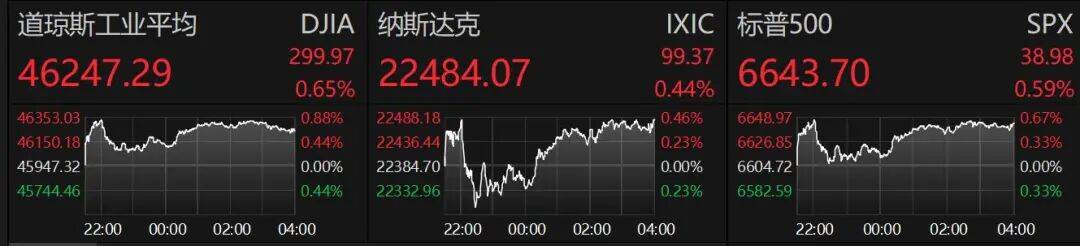
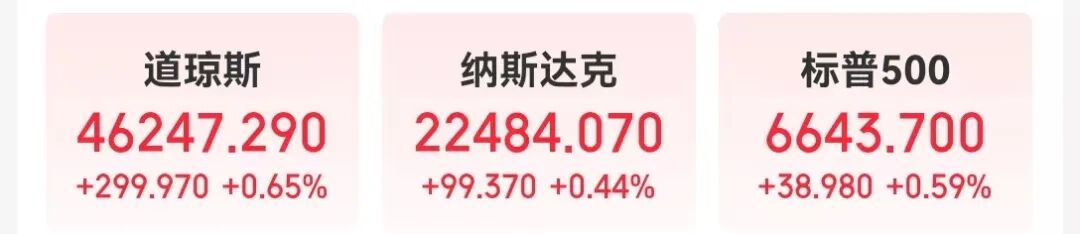
Market Performance - On September 26, US stock indices collectively rose, with the Dow Jones up by 299.97 points, a gain of 0.65%, the Nasdaq up by 0.44%, and the S&P 500 up by 0.59% [1] - Popular tech stocks mostly increased, with Intel rising over 4%, while Microsoft and Amazon saw gains of less than 1%, and Oracle dropped over 2% [2] - Tesla's stock price reached $440.40, up 4.02%, with a market capitalization of $1,464.396 billion, increasing by approximately $56.6 billion overnight [3] Commodity Prices - COMEX gold futures rose by 0.5% to $3,789.8 per ounce, with a weekly increase of 1.89%; COMEX silver futures increased by 2.77% to $46.365 per ounce, with a weekly rise of 6.92% [6] - WTI crude oil futures closed up by 1.14% at $65.72 per barrel, with a weekly increase of 5.3%; Brent crude oil futures rose by 1.02% to $70.13 per barrel, with a weekly gain of 5.2% [7] Economic Indicators - The US PCE price index for August showed a year-over-year increase of 2.7%, matching expectations, while the core PCE price index also rose by 2.9% year-over-year, in line with forecasts [9] - The Federal Open Market Committee (FOMC) indicated the possibility of two more rate cuts this year, each by 25 basis points, with the market pricing in a high probability for a cut in October [10]
10月降息稳了?美国PCE符合预期,市场静待非农表现
Di Yi Cai Jing· 2025-09-27 00:29
Core Insights - Consumer spending continues to support the U.S. economy, with personal consumption expenditures (PCE) showing steady growth despite rising tariffs and inflation pressures [1][3] Economic Indicators - The PCE index increased by 0.3% month-on-month in August, up from 0.2% in July, while the year-on-year increase rose to 2.7% from 2.6% [2] - Core PCE, excluding food and energy, remained stable with a month-on-month increase of 0.2% and a year-on-year increase of 2.9% [2] - Consumer spending, which accounts for over two-thirds of economic activity, grew by 0.6% in August, marking the third consecutive month of growth [2][3] Sector Performance - Service prices rose by 0.3%, driven by increases in air travel, hotel accommodations, financial services, and utilities, contributing to PCE inflation [2] - Spending in transportation and dining out has increased, indicating a robust consumer demand in the service sector [3] Income Growth - Personal income rose by 0.4% month-on-month in August, with wage growth outpacing inflation, enhancing purchasing power [3] GDP Growth - Strong consumer spending contributed to a 3.8% annualized growth rate in GDP for the second quarter, the fastest in nearly two years, with third-quarter GDP growth expectations around 2.5% [3] Monetary Policy Outlook - The latest data may bolster the Federal Reserve's confidence in further rate cuts, with a 90% probability of a rate cut in October [5] - The Fed's decision will depend on upcoming employment and consumer price reports, with inflation remaining a critical concern [5][6]
白宫,关税大消息!美股、黄金、白银、国际油价,集体上涨!
Sou Hu Cai Jing· 2025-09-26 23:40
9月26日,美股三大指数集体拉升,道指收涨0.65%,本周累计下跌0.15%;纳指涨0.44%,本周累计下跌0.65%;标普500指数涨0.59%,本周累计下跌 0.31%。 | 纳斯达克 | 道琼斯工业平均 | | DJIA | | | IXIC | 标普500 | | | | | SPX | | --- | --- | --- | --- | --- | --- | --- | --- | --- | --- | --- | --- | --- | | 22484.07 | 46247.29 | | 299.97 | | | 99.37 | | 6643.70 | | | | 38.98 | | | | | 0.65% | | | 0.44% | | | | | | 0.59% | | 1 - 1 - | 46353.03 | | 0.88% | 22488.18 | | | 6648.97 | | | and and a series and the same of the same of the states of the | | | | 22436.44 | 46150.18 renar | | 0 ...