
金九银十

Search documents
实探深圳楼市丨二手房“以价换量” 业界期待政策放松节奏提速
Zheng Quan Shi Bao· 2025-08-12 13:59
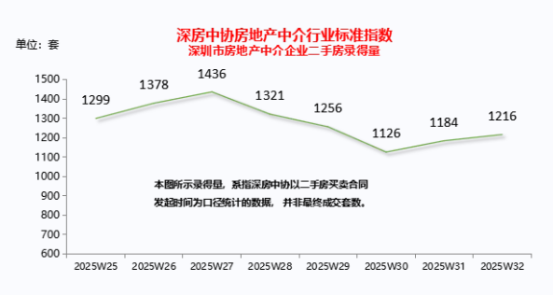
Group 1 - The real estate market in first-tier cities serves as a "barometer" for the overall market [1] - Beijing has introduced a series of measures to relax housing purchase restrictions, attracting widespread attention [2] - The second-hand housing market in Shenzhen has shown a good start since August, with a slight increase in transaction volume [3] Group 2 - Data from the Shenzhen Real Estate Agency indicates that the transaction volume of second-hand homes recorded 1,216 units from August 4 to August 10, a 2.7% increase compared to the previous week [3] - The viewing and transaction rate for second-hand residential properties in Shenzhen has risen to 4.22% as of August 11, up 0.26 percentage points from July, indicating a growing interest from buyers [5] - Despite the positive data, market practitioners express mixed feelings, noting that the market is still under pressure, with only certain popular properties maintaining transaction volume [5] Group 3 - New property launches are expected in Bao'an and Longhua districts in August, with local developers preparing to release new inventory in anticipation of potential policy changes [6] - The traditional off-peak season for the real estate market in July has led to a downward trend, with lower-than-expected policy implementation [6] - The demand for second-hand housing is expected to remain high due to favorable loan conditions and a large number of affordable properties available [6] Group 4 - The upcoming "golden September and silver October" period is anticipated to boost market activity, with increased enthusiasm from buyers as the weather improves [7] - The new policies from Beijing are seen as a significant signal, likely to enhance market expectations and accelerate housing demand release [9] - The overall policy approach in first-tier cities remains conservative, but there is potential for a faster pace of further relaxations in the future [9]

苏州楼市新政:优化公积金使用次数,可付物业费
2 1 Shi Ji Jing Ji Bao Dao· 2025-08-12 13:13
Core Viewpoint - Suzhou's new housing policy aims to lower the threshold and cost for first-time and upgrading homebuyers, while expanding the usage scenarios of housing provident funds to enhance fund efficiency and alleviate household financial pressure [2][4]. Policy Changes - The new policy, effective from September 1, 2025, includes a reduction in the down payment ratio for first and second homes to no less than 15% of the total housing price [1]. - The policy allows for the deduction of housing provident fund usage times if the original loaned property has been sold [1]. - Homeowners can now withdraw housing provident funds to pay property management fees, provided there have been no withdrawals in the past 12 months [1]. Market Impact - Analysts suggest that the policy will stimulate housing consumption and improve resource allocation, particularly as the traditional peak sales season approaches [2][4]. - The policy is part of a broader trend where multiple cities are implementing similar measures to boost their real estate markets [3]. Broader Context - The new policies reflect a nationwide trend of easing restrictions, with cities like Beijing and Qionghai also adjusting their housing policies to stimulate market activity [3]. - The combination of low interest rates and reduced down payments is expected to significantly lower the barriers for homebuyers [3][5]. Market Performance - Recent data indicates a decline in Suzhou's housing market, with significant drops in both transaction volume and prices, highlighting the need for such policy interventions [5]. - In contrast, non-core cities like Qionghai continue to experience sluggish sales, emphasizing the varying impacts of these policies across different regions [5]. Future Outlook - The use of housing provident funds is expected to deepen, with further policy enhancements anticipated to support market activity [6]. - The real estate market is gradually returning to rationality, with expectations for continued support from both consumption and supply-side policies [6].
瑞达期货不锈钢产业日报-20250812
Rui Da Qi Huo· 2025-08-12 09:07
不锈钢产业日报 2025-08-12 | 项目类别 | 数据指标 | 最新 | 环比 数据指标 | 最新 | 环比 | | --- | --- | --- | --- | --- | --- | | 期货市场 | 期货主力合约收盘价:不锈钢(日,元/吨) | 13200 | -25 09-10月合约价差:不锈钢(日,元/吨) | -75 | 5 8414 | | | 期货前20名持仓:净买单量:不锈钢(日,手) | -17852 | -474 主力合约持仓量:不锈钢(日,手) | 143674 | | | | 仓单数量:不锈钢(日,吨) | 103940 | 904 | | | | 现货市场 | 304/2B卷:切边:无锡(日,元/吨) | 13800 | 150 市场价:废不锈钢304:无锡(日,元/吨) | 9700 | 100 | | | SS主力合约基差(日,元/吨) | 220 | 75 | | | | 上游情况 | 电解镍产量(月,吨) | 29430 | 1120 镍铁产量合计(月,万金属吨) | 2.26 | -0.13 | | | 进口数量:精炼镍及合金(月,吨) | 17215.27 | ...

沪镍、不锈钢早报-20250812
Da Yue Qi Huo· 2025-08-12 01:59
Report Summary 1. Industry Investment Rating - No industry investment rating information is provided in the report. 2. Core Views - **沪镍**: The SHFE nickel contract 2509 is expected to oscillate around the 20 - day moving average. The overall situation shows a long - term surplus pattern, with mixed signals from different indicators. The fundamental aspect is slightly bearish due to increased supply and long - term surplus, but the basis is bullish, and the inventory and主力持仓 are bearish while the price is above the 20 - day moving average which is bullish [3][4]. - **不锈钢**: The stainless steel contract 2510 is expected to oscillate with a slight upward trend. The fundamental situation is neutral, with the basis being bullish, the inventory (futures warehouse receipts) being bearish, and the price above the 20 - day moving average which is bullish [6]. 3. Summary by Directory **沪镍 Daily View** - **基本面**: The external market rose significantly, and the price stood above the 20 - day moving average. There was an arrival of Norwegian nickel slabs last week, increasing supply. The mineral price was stable, the ferronickel price rose steadily, and the cost line rebounded slightly. Stainless steel inventory decreased slightly. New energy vehicle production and sales data were good, but the proportion of ternary battery loading decreased. The long - term surplus pattern remained unchanged, showing a bearish tendency [4]. - **基差**: The spot price was 122,850, and the basis was 720, indicating a bullish signal [4]. - **库存**: LME inventory was 211,296 (a decrease of 936), and SHFE warehouse receipts were 20,723 (an increase of 102), showing a bearish signal [4]. - **盘面**: The closing price was above the 20 - day moving average, and the 20 - day moving average was upward, indicating a bullish signal [4]. - **主力持仓**: The net position of the main players was short, and short positions increased, showing a bearish signal [4]. **不锈钢 Daily View** - **基本面**: The spot stainless steel price rose. In the short term, the nickel ore price was stable, the shipping freight decreased slightly, the ferronickel price rose steadily, the cost line increased slightly, and the stainless steel inventory decreased, showing a neutral situation [6]. - **基差**: The average stainless steel price was 13,812.5, and the basis was 587.5, indicating a bullish signal [6]. - **库存**: The futures warehouse receipts were 103,036 (an increase of 53), showing a bearish signal [6]. - **盘面**: The closing price was above the 20 - day moving average, and the 20 - day moving average was upward, indicating a bullish signal [6]. **多空因素** - **利多因素**: There are expectations for the "Golden September and Silver October" period and anti - involution policies [9]. - **利空因素**: Domestic production continues to rise significantly year - on - year, there are no new demand growth points, and the long - term surplus pattern remains unchanged. Nickel ore and ferronickel prices are weakly stable, and the cost line is still at a low level. The substitution ratio of ternary batteries is increasing [9]. **镍、不锈钢价格基本概览** - **期货 prices**: On August 11, compared with August 8, the SHFE nickel main contract rose by 950 to 122,130, the LME nickel rose by 210 to 15,325, the stainless steel main contract rose by 240 to 13,225 [14]. - **Spot prices**: On August 11, compared with August 8, SMM1 electrolytic nickel rose by 900 to 122,850, 1 Jinchuan nickel rose by 900 to 123,950, 1 imported nickel rose by 950 to 122,100, and nickel beans rose by 950 to 124,200 [14]. **镍仓单、库存** - **上期所镍库存**: As of August 8, the total inventory was 26,194 tons, with futures inventory at 20,621 tons. Compared with the previous period, the total inventory increased by 444 tons, and the futures inventory decreased by 753 tons [16]. - **8 - 11 inventory data**: LME nickel inventory was 211,296 (a decrease of 936), SHFE nickel warehouse receipts were 20,723 (an increase of 102), and the total inventory was 232,019 (a decrease of 834) [17]. **不锈钢仓单、库存** - **8 - 8 inventory data**: Wuxi inventory was 61.62 tons, Foshan inventory was 330,800 tons, and the national inventory was 1,106,300 tons, a decrease of 4,900 tons compared with the previous period. The 300 - series inventory was 657,600 tons, a decrease of 19,100 tons [20]. - **8 - 11 inventory data**: Stainless steel warehouse receipts were 103,036 (an increase of 53) [21]. **镍矿、镍铁价格** - **镍矿 prices**: On August 11, compared with August 8, the price of red earth nickel ore CIF (Ni1.5%) remained at 57 dollars per wet ton, and the price of red earth nickel ore CIF (Ni0.9%) remained at 29 dollars per wet ton. Shipping freight from the Philippines to Lianyungang and Tianjin Port remained unchanged [24]. - **Ferronickel prices**: The price of high - nickel ferronickel rose by 0.5 to 919 yuan per nickel point, and the price of low - nickel ferronickel remained at 3,400 yuan per ton [24]. **不锈钢生产成本** - The traditional cost was 12,864, the scrap steel production cost was 13,588, and the low - nickel + pure nickel cost was 16,461 [26]. **镍进口成本测算** - The imported price was converted to 123,814 yuan per ton [29].
煤炭行业周报:煤价涨幅扩大,上冲700有可期-20250811
Datong Securities· 2025-08-11 14:30
Investment Rating - The report rates the coal industry as "Positive" [1] Core Views - The report indicates that coal prices are expected to continue rising due to supply constraints and increased demand from power plants, with a notable week-on-week increase in daily coal consumption by 11% [4][11][39] - The report highlights that the coking coal prices are also anticipated to rise, driven by supply reductions and strong demand from steel mills, particularly in the context of pre-holiday stockpiling [24][39] Summary by Sections Market Performance - The equity market showed a general upward trend, with the coal sector outperforming the index, as the coal industry index rose by 3.65% during the week [5][39] - Major coal companies saw significant stock price increases, with Shaanxi Coal Industry leading at 9.90% [5] Thermal Coal - Thermal coal prices are on the rise, with supply constraints due to extreme weather affecting production in key regions [10][11] - The report notes that the utilization rate of thermal coal mines is at 89.9%, indicating a slight decrease, and that imports are also declining due to price competitiveness [10][12] Coking Coal - Coking coal prices are expected to continue increasing, supported by strong demand from steel production and low inventory levels [23][24] - The report mentions that the average operating rate of coking coal mines is at 85.0%, reflecting a decrease in production capacity [23][28] Shipping Situation - The number of vessels at anchor in the Bohai Sea has significantly decreased, leading to an increase in shipping rates for coal [32] Industry News - The report discusses the resumption of premium coal exports by China Pingmei Shenma Group and the successful trial of a heavy-load railway by the National Energy Group [35][36]
乐观氛围主导,煤焦偏强运行
Bao Cheng Qi Huo· 2025-08-11 14:29
Report Overview - The report is a coal and coke daily report dated August 11, 2025, focusing on the black metal industry, specifically coal and coke [4]. Industry Investment Rating - No industry investment rating is provided in the report. Core Views - **Coke**: On August 8th week, the combined daily coke output of independent and steel - mill coking plants was 111.9 million tons, up 0.12 million tons week - on - week. Coke price increase was implemented, and raw material coking coal price stabilized, leading to better profit for coke enterprises. The latest independent coking plant's ton - coke profit was - 16 yuan/ton, up 29 yuan/ton week - on - week. The daily average iron - water output of 247 steel mills was 240.32 million tons, down 0.39 million tons week - on - week. The steel mill profit - making rate improved by 3.03 percentage points to 68.4%. Overall, coke supply and demand were stable this week. Due to coking coal supply disruptions and approaching "Golden September and Silver October", the coke futures main contract was expected to oscillate strongly [5][31]. - **Coking Coal**: The impact of the anti - involution policy in the coal industry was still fermenting, and domestic coking coal output declined this week. The coking coal futures maintained a strong trend. The domestic coking coal spot market was stable, and Mongolian coal prices did not strengthen again after last week's high - level decline. Overall, coking coal supply shrank and demand increased slightly this week. Whether the anti - involution policy would have a long - term and significant impact on supply was the key. Considering the un - falsified supply - shrinkage expectation, coking coal futures were expected to oscillate strongly [6][32]. Summary by Directory 1. Industry News - **Automobile Sales**: In July, 2.593 million vehicles were sold, a 14.7% year - on - year increase. It was the traditional off - season, with production and sales slowing down month - on - month. However, policies and new models helped the market grow year - on - year. New energy vehicles continued to grow rapidly, and vehicle exports were stable [8]. - **Coking Coal Price**: On August 11th, coking coal prices in Lvliang Liulin market dropped. Low - sulfur prime coking coal fell 50 yuan/ton to 1350 yuan/ton, and medium - sulfur lean coal fell 100 yuan/ton to 1150 yuan/ton [9]. 2. Spot Market - **Coke**: The current price of Rizhao Port's quasi - first - grade coke for平仓 was 1470 yuan/ton, up 3.52% week - on - week and month - on - month, down 13.02% year - on - year and 24.23% compared to the same period. Qingdao Port's quasi - first - grade coke for出库 was 1440 yuan/ton, up 1.41% week - on - week, 2.86% month - on - month, down 11.11% year - on - year and 19.10% compared to the same period [10]. - **Coking Coal**: The price of Mongolian coking coal at Ganqimaodu Port was 1150 yuan/ton, down 0.86% week - on - week, unchanged month - on - month, down 2.54% year - on - year and 20.69% compared to the same period. Australian coking coal at Jingtang Port was 1540 yuan/ton, up 0.65% week - on - week, 3.36% month - on - month and year - on - year, down 22.22% compared to the same period. Shanxi coking coal at Jingtang Port was 1650 yuan/ton, unchanged week - on - week and month - on - month, up 7.84% year - on - year, down 13.16% compared to the same period [10]. 3. Futures Market - **Coke**: The closing price of the active contract was 1681.0 yuan/ton, up 1.97%. The highest price was 1694.0 yuan/ton, the lowest was 1628.0 yuan/ton. The trading volume was 16,480, down 108, and the open interest was 18,479, down 929 [13]. - **Coking Coal**: The closing price of the active contract was 1256.0 yuan/ton, up 2.99%. The highest price was 1264.5 yuan/ton, the lowest was 1185.5 yuan/ton. The trading volume was 2,366,892, up 267,012, and the open interest was 690,736, up 30,480 [13]. 4. Related Charts - **Coke Inventory**: Charts showed the inventory of 230 independent coking plants, 247 steel - mill coking plants, port coke, and total coke inventory over the years [14][15][18]. - **Coking Coal Inventory**: Charts presented the inventory of mine - mouth coking coal, port coking coal, 247 sample steel mills, and all - sample independent coking plants over the years [19][22][24]. - **Other Charts**: Included Shanghai terminal wire rod procurement volume, domestic steel mill production, wash - coal plant production, and coking plant operation charts [25][28][29]
再再call铜:金融与商品属性的拐点时刻
2025-08-11 14:06
Summary of Conference Call on Copper Market Dynamics Industry Overview - The conference call focuses on the copper industry, particularly the demand and pricing dynamics influenced by various factors including AI electricity consumption and macroeconomic conditions [1][3][9]. Key Points and Arguments 1. **Increased Demand from U.S. Power Equipment** U.S. electricity equipment demand for copper grew by 4% year-on-year in the first half of the year, significantly exceeding the average growth rate of 1-2% over the past decade, driven by increased AI electricity usage and manufacturing reshoring [1][3]. 2. **Impact of U.S. Market on Global Copper Demand** The U.S. accounts for 10% of global copper demand, with actual consumption reaching 2.7 million tons. The growth in U.S. electricity copper demand contributes approximately 1-1.5 percentage points to global demand growth annually [1][4]. 3. **Shift from Financial to Commodity Pricing** Financial attributes previously dominated copper pricing, but following the implementation of tariffs, net long positions of investment funds decreased. Despite this, LME and COMEX showed strong performance, indicating a shift towards commodity attributes taking over pricing power [1][5]. 4. **Limited Impact of Interest Rate Cuts on Copper Prices** Expectations of interest rate cuts are not expected to significantly affect copper prices unless a substantial economic recession occurs. Current supply-demand dynamics suggest stable prices in the absence of drastic changes [1][6]. 5. **Low Inventory Levels and Supply Disruptions** The copper market is currently experiencing low inventory levels across the supply chain, following a period of high upstream inventories. This low inventory state, combined with supply disruptions, has led to a stable pricing environment [1][7]. 6. **Future Price Projections** In the upcoming quarters, two main catalysts are expected to drive copper prices up: the seasonal demand during "Golden September and Silver October" and macroeconomic recovery post-interest rate cuts. Prices could potentially reach around $11,000 per ton [1][8]. 7. **Misjudgment of AI Electricity Demand** The market has underestimated the impact of AI electricity demand on copper consumption. Many view the demand as merely stockpiling, while the actual consumption driven by AI is substantial [2][9]. Additional Important Insights - The overall demand for copper in 2025 is characterized as strong, with significant contributions from the electrical wire and transformer sectors in both China and the U.S. [3]. - The potential for copper-related stocks to double in value is highlighted, with expected earnings per share growth of 40% and production increases of 10-20% [8]. This summary encapsulates the critical insights from the conference call, emphasizing the evolving dynamics of the copper market influenced by technological advancements and macroeconomic factors.
8月棉纱价格或小幅下跌
Xin Hua Cai Jing· 2025-08-11 07:01
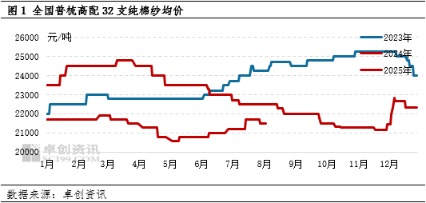
Core Viewpoint - The cotton yarn prices in China are expected to experience a slight decline in August due to high inventory levels and weak demand in the textile market, despite a recent increase in cotton prices [1][10]. Group 1: Price Trends - In July, cotton yarn prices rose slightly, driven by a significant increase in cotton prices, with the average price of cotton reaching approximately 14,741 yuan per ton, up 3.41% month-on-month [2]. - The average price of pure cotton yarn (32 count) was about 21,430 yuan per ton in July, reflecting a month-on-month increase of 2.29% [2]. - It is anticipated that cotton yarn prices may decline by 100 yuan per ton in August, with expected prices ranging from 21,100 to 21,700 yuan per ton [10]. Group 2: Market Conditions - The cotton spinning industry is currently facing a downturn, with many spinning enterprises adopting a cautious approach to high-priced cotton purchases due to the ongoing demand slump [4]. - As of the end of July, the operating rate of cotton spinning enterprises was 61.20%, a decrease of 0.75 percentage points from the previous month [5]. - The average inventory days for pure cotton yarn in large-scale spinning enterprises increased to 30 days, up 11.11% from the previous month, indicating a build-up of inventory [5]. Group 3: Supply and Demand Dynamics - The demand for cotton yarn is weak, with downstream fabric manufacturers showing low order volumes and high inventory levels, leading to cautious procurement of cotton yarn [8]. - The cotton market is expected to return to fundamentals, with limited orders from downstream textile enterprises and poor profit margins for spinning enterprises potentially suppressing cotton demand [8]. - As the traditional peak season ("Golden September and Silver October") approaches, there may be a gradual recovery in demand towards the end of August, potentially increasing orders for spinning enterprises [6].
PTA:缺乏新驱动,PTA维持震荡格局,MEG:供需处于去库周期,MEG下方空间有限
Zheng Xin Qi Huo· 2025-08-11 04:37
1. Report Industry Investment Rating No relevant content provided. 2. Core Viewpoints of the Report - PTA lacks new drivers and is expected to maintain a volatile pattern in the short term due to limited changes in domestic installations, a slight warming in the terminal atmosphere, and a lack of significant contradictions between supply and demand [1][5]. - MEG is in a de - stocking cycle, with limited downside space. The supply - demand structure is relatively optimistic, and it is expected to undergo narrow - range consolidation in the short term [1][5]. 3. Summary by Directory 3.1. Upstream Analysis of the Industrial Chain - **Market Review**: OPEC+ production increase brought bearish pressure, geopolitical tensions eased, and the global economy remained weak, leading to a decline in international crude oil prices. PX prices fell slightly due to cost reduction and poor terminal support. As of August 8, the Asian PX closing price was $831.67 per ton CFR China, down $14 per ton from August 1 [17]. - **PX Device Status**: There were no device changes during the week. The average weekly capacity utilization rate of domestic PX was 82.35%, unchanged from the previous week; the average weekly capacity utilization rate of Asian PX was 71.95%, a decrease of 0.03% [20]. - **Supply - Demand and Price Difference**: As of August 8, the PX - naphtha price difference was $261.2 per ton, up $19.38 per ton from August 1. The downstream market was in the off - season, and the terminal market support was poor, but with the commissioning of new PTA devices, there was an expected increase in demand, resulting in narrow - range fluctuations in the PX - naphtha price difference [23]. 3.2. PTA Fundamental Analysis - **Market Review**: This week, some installations in East China were shut down for maintenance or reduced production due to efficiency issues, leading to a significant reduction in overall supply. The terminal was in the traditional off - season, and demand changes were minimal. The supply - demand balance sheet shifted to de - stocking. However, due to the impact of OPEC production increase on crude oil prices, the PTA price center oscillated downward. As of August 8, the PTA spot price was 4,670 yuan per ton, and the spot basis was 2509 - 17 [26]. - **Device Utilization**: The average weekly capacity utilization rate of PTA dropped to 75.92%, a decrease of 3.75% compared to the previous week. Multiple installations in East China were shut down or under maintenance, and some enterprises reduced production due to efficiency issues, resulting in a significant reduction in domestic production this period. In August, with the mass production of Hailun Petrochemical and maintenance plans of Tongkun, Yisheng, and Hengli, it is expected that the capacity utilization rate of domestic PTA devices may drop to around 74% [29]. - **Processing Fees**: The processing fees of PTA decreased significantly this week due to increased long - term supply pressure, active sales by major producers, and tight supply of raw material PX. With an expected increase in supply and average demand, the supply - demand balance sheet shows narrow - range de - stocking. However, due to efficiency issues, some enterprises reduced production. PTA is expected to rebound at a low valuation, and the processing fees may be slightly repaired [30]. - **Supply - Demand Balance in August**: In August, with the mass production of new PTA devices and multiple planned maintenance installations, and considering the potential reduction in polyester load due to continuous losses, the supply - demand is expected to be in a wide - range balance [33]. 3.3. MEG Fundamental Analysis - **Price Movement**: At the beginning of the week, influenced by crude oil and macro factors, the price of ethylene glycol declined. However, the de - stocking of supply and demand provided positive support, limiting the market decline. When the price dropped to around 4,450 yuan, it stabilized and rebounded. As of August 8, the closing price of Zhangjiagang ethylene glycol was 4,456 yuan per ton, and the delivered price in the South China market was 4,480 yuan per ton [39]. - **Device Utilization**: The overall capacity utilization rate of ethylene glycol in China was 61.42%, a 0.75% increase compared to the previous week. Among them, the capacity utilization rate of integrated devices was 58.28%, a decrease of 0.39%, and the capacity utilization rate of coal - based ethylene glycol was 66.47%, an increase of 2.59%. In August, for domestic production, some existing devices will restart and undergo maintenance simultaneously, and the restart of a major factory in Jiangsu is postponed, resulting in a slight increase in overall production [42]. - **Port Inventory**: As of August 7, the total inventory of MEG ports in the main ports of East China was 48.57 tons, an increase of 2.22 tons compared to August 4 and an increase of 5.85 tons compared to July 31. As of August 13, 2025, the total expected arrival volume of domestic ethylene glycol in East China is 10.17 tons, including 3.57 tons in Zhangjiagang, 5.9 tons in Taicang, and 0.7 tons in Jiangyin [45]. - **Processing Profits**: The supply - demand de - stocking logic still exists. After a decline this week, ethylene glycol rebounded. The prices of the raw material market fluctuated, resulting in both increases and decreases in the sample profits of each ethylene glycol process. As of August 8, the profit of naphtha - based ethylene glycol was - $98.67 per ton, a decrease of $14.29 per ton compared to the previous week; the profit of coal - based ethylene glycol was 21.33 yuan per ton, a decrease of 93.53 yuan compared to the previous week [48]. 3.4. Downstream Demand Analysis of the Industrial Chain - **Polyester Capacity Utilization**: The average weekly capacity utilization rate of polyester was 86.21%, a 0.39% increase compared to the previous week. After the commissioning of Youshun's new device, the load gradually increased, and Huaya's device restarted after a short - term shutdown, resulting in a slight increase in domestic polyester supply. It is expected that the domestic polyester production will increase slightly next week [51]. - **Terminal Impact on Polyester**: In July, polyester factories were affected by terminal restrictions and poor profit levels, resulting in a decline in the polyester operating rate, but the decline was limited. In August, with both maintenance and restart plans and new device commissioning, but considering the poor demand outlook, it is expected that the monthly polyester production will decline slightly [52]. - **Differentiation in Polyester Product Capacity Utilization**: This week, the average weekly capacity utilization rate of polyester filament was 90.66%, a 0.85% decrease compared to the previous period. The average capacity utilization rate of polyester staple fiber was 86.49%, a 1.81% increase compared to the previous week. The capacity utilization rate of fiber - grade polyester chips was 76.36%, a 1.85% increase compared to the previous week [57]. - **Polyester Product Inventory**: Due to pre - replenishment, the factory sales data was average this week, and the finished product inventory increased slightly [58]. - **Polyester Product Cash Flow**: The polymerization cost decreased slightly. Polyester products were mostly in a wait - and - see state this week, with limited downward space and partial cash - flow repair [62]. - **Textile Industry Situation**: As of August 7, the comprehensive operating rate of chemical fiber weaving in the Jiangsu and Zhejiang regions was 55.75%, a 0.24% increase compared to the previous data. The average number of terminal weaving order days was 6.84 days, a decrease of 0.49 days compared to the previous week. In August, the inquiry atmosphere for domestic autumn and winter fabrics improved slightly, but due to high inventory in fabric production factories and sufficient supplies from middlemen, there was no significant improvement in domestic and foreign orders, and factories had little intention to increase production [67]. 3.5. Summary of the Polyester Industrial Chain Fundamentals - **Cost End**: OPEC+ production increase brought bearish pressure, geopolitical tensions eased, and the global economy remained weak, leading to a decline in international crude oil prices. PX prices fell slightly due to cost reduction and poor terminal support [68]. - **Supply End**: The average weekly capacity utilization rate of PTA dropped to 75.92%, a 3.75% decrease compared to the previous week, and domestic production decreased significantly. The total capacity utilization rate of domestic ethylene glycol was 61.42%, a 0.75% increase compared to the previous week [69]. - **Demand End**: The average weekly capacity utilization rate of polyester was 86.21%, a 0.39% increase compared to the previous week. The comprehensive operating rate of chemical fiber weaving in the Jiangsu and Zhejiang regions was 55.75%, a 0.24% increase compared to the previous data. The average number of terminal weaving order days was 6.84 days, a decrease of 0.49 days compared to the previous week. The inquiry atmosphere for domestic autumn and winter fabrics improved slightly, but there was no significant improvement in orders, and factories had little intention to increase production [69]. - **Inventory**: PTA was in a de - stocking state this week. As of August 7, the total inventory of MEG ports in the main ports of East China was 48.57 tons, an increase compared to the previous period [69].
沪镍、不锈钢早报-20250811
Da Yue Qi Huo· 2025-08-11 02:32
沪镍&不锈钢早报—2025年8月11日 大越期货投资咨询部 祝森林 从业资:F3023048 投资咨询证:Z0013626 联系方式:0575-85226759 重要提示:本报告非期货交易咨询业务项下服务,其中的观点和信息仅作参考之用,不构成对任何人的投资建议。 我司不会因为关注、收到或阅读本报告内容而视相关人员为客户;市场有风险,投资需谨慎。 沪镍 每日观点 交易咨询业务资格:证监许可【2012】1091号 6、结论:沪镍2509:20均线上下震荡运行。 1、基本面:上周镍价偏强运行,周初下游采购尚可,随着价格上涨,成交转清淡。同时上周有挪威镍 大板到货,供应有所增加。产业链上,矿价稳定,镍铁价格稳中有升,成本线启稳小幅反弹。不锈钢库 存小幅下降。新能源汽车产销数据较好,但三元电池装车量占比下降。中长线过剩格局不变。偏空 2、基差:现货121950,基差770,偏多 3、库存:LME库存212232,+1020,上交所仓单20621,-66,偏空 4、盘面:收盘价收于20均线以下,20均线向下,偏空 5、主力持仓:主力持仓净空,空增,偏空 不锈钢 每日观点 1、基本面:现货不锈钢价格上涨,短期镍矿价格稳定, ...