
国补政策

Search documents
新闻1+1丨2026首批“国补”落地,新政“新”在哪儿?
Yang Shi Wang· 2026-01-06 23:06
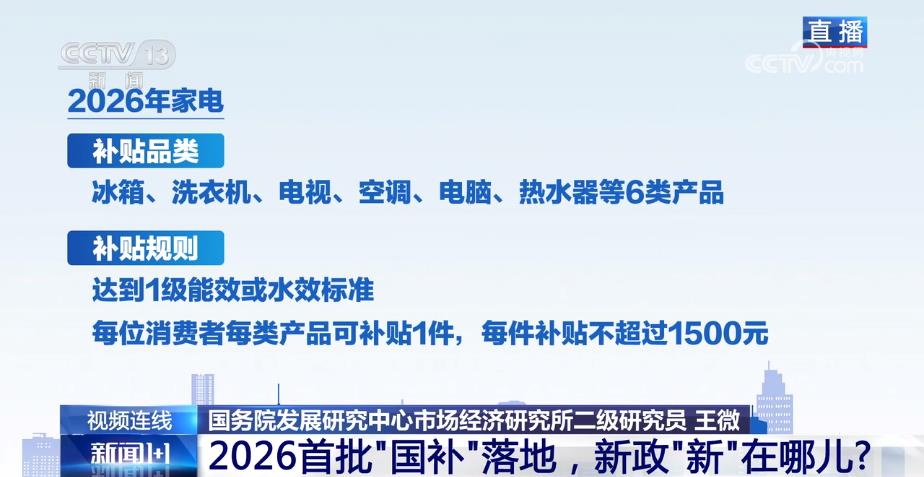
Core Insights - The "National Subsidy" policy has significantly boosted consumer spending, with an expected sales increase of 3.92 trillion yuan and benefiting 494 million consumers from 2024 to 2025 [1] Group 1: Adjustments to the "National Subsidy" Policy - The 2026 "National Subsidy" policy will focus on a broader coverage of consumers and stronger product promotion capabilities, particularly for green, low-carbon, and smart digital products [4] - Subsidies will be concentrated on six categories of home appliances, emphasizing energy-efficient products, as 90% of consumers are purchasing first-level energy efficiency products [4] - The scope of smart products has been expanded to include smart glasses, promoting the application of national smart technology products [4] Group 2: Expected Impact of the "National Subsidy" Policy - The 2026 policy will ensure a more balanced and stable distribution of subsidy funds throughout the year, addressing previous issues where funds were depleted by the third and fourth quarters [5] - This approach aims to stabilize market operations and consumer expectations, enhancing the effectiveness of the policy in driving and guiding consumption [5] Group 3: Beneficiaries of the "National Subsidy" - The emphasis on promoting green, low-carbon, and smart digital products will enhance technological competitiveness and product quality in these sectors [8] - The policy encourages companies to innovate and improve their products, expanding the market for advanced technology and fostering continuous growth for innovative enterprises [8] Group 4: Future of Service Consumption and "National Subsidy" - The "National Subsidy" policy is being explored for potential support of service consumption, which currently accounts for 47% of household spending and is expected to grow [10] - Various policies have been introduced to promote service consumption, including support for elderly care and other service sectors, indicating a shift towards integrating subsidies into service consumption [10][11]

今年“国补”有哪些新变化
Xin Lang Cai Jing· 2026-01-05 22:49
Core Viewpoint - The new subsidy policy for 2026 aims to stimulate consumption and support the upgrade of consumer goods, particularly focusing on smart devices and energy-efficient products, with a total of 625 billion yuan allocated for the initiative [1][5]. Group 1: Subsidy Policy Changes - The 2026 subsidy policy includes smart glasses for the first time, reflecting a dual focus on consumer upgrade and industrial strategy [2]. - The subsidy covers digital and smart products such as smartphones, tablets, smartwatches, smart glasses, and smart home products, with a 15% subsidy on products priced under 6000 yuan, capped at 500 yuan per item [1][5]. - The policy aims to enhance the "subsidy rate" for key consumer goods, targeting a broader audience and stronger economic impact [1]. Group 2: Market Impact and Trends - The inclusion of smart glasses is expected to drive significant growth, with projected sales in China reaching over 3 million units by 2026, marking a shift from niche to mainstream adoption [2]. - The global XR device shipment is forecasted to decline by 10.3% in 2024, while AI glasses are anticipated to see a 215.7% increase in sales in 2025, driven by the new subsidy policy [2]. - The policy is expected to lower consumer purchase costs, stimulate demand, and promote the adoption of mid-range products [3]. Group 3: Support for Energy-Efficient Products - The subsidy policy also emphasizes support for energy-efficient home appliances, aligning with national carbon reduction goals [4]. - Consumers purchasing energy-efficient appliances such as refrigerators, washing machines, and air conditioners will receive a 15% subsidy, capped at 1500 yuan per item [5]. - The policy aims to create a virtuous cycle of consumption driving industry growth and vice versa, while also stabilizing expectations for small and medium enterprises [5]. Group 4: Automotive Sector Support - The subsidy continues to support vehicle scrappage and replacement, focusing on reducing consumer purchase pressure and promoting green transformation in the automotive industry [6]. - For scrappage updates, consumers can receive up to 20,000 yuan for purchasing qualifying new energy vehicles, while replacement updates offer up to 15,000 yuan for similar purchases [6]. - The policy's precision in targeting resources aims to ensure that benefits reach consumers effectively, encouraging companies to enhance product performance [6].
苹果官网没有“国补”了
Guan Cha Zhe Wang· 2026-01-05 06:37
Group 1 - The new round of "national subsidies" policy has been implemented for 2026, with subsidy rates similar to last year, including smart glasses for the first time [1] - The subsidy is set at 15% of the selling price, with a maximum of 500 RMB for products priced under 6000 RMB [1] - Apple's official website has not updated its support for national subsidies beyond 2025, and the subsidy activity interface is no longer visible [1][5] Group 2 - In JD and Taobao platforms, certain regions still offer national subsidies for the iPhone 17, with specific provinces confirmed to be eligible [5] - There has been ongoing debate about whether Apple should benefit from national subsidies, with criticisms regarding its pricing strategies to meet subsidy thresholds [7] - As of December 21, the iPhone 17 series sold approximately 14.86 million units in the Chinese market, dominating sales compared to local brands [7]


股指周报:假期外盘表现强势,但地缘政治扰动加剧-20260105
Guo Mao Qi Huo· 2026-01-05 02:48
1. Report Industry Investment Rating No relevant content provided. 2. Core Viewpoints of the Report - In the short - term, due to the US military strike on Venezuela, the uncertainty of the international situation has significantly increased, which is expected to cause some disturbances to the prices of risk assets such as A - shares. If the conflict escalates, the market risk appetite may be further pressured [3]. - In the long - term, in 2026, the stock index is expected to continue to rise on the basis of 2025. Macroeconomic policies continue to exert force, and the moderate rebound of inflation may help improve corporate profit expectations. Capital market reform policies are expected to bring incremental funds to A - shares, and the role of Central Huijin as a "quasi - stabilization fund" will also support the market. Investors can wait for the geopolitical situation to become clear and the market risk appetite to recover before choosing to build long positions [3]. 3. Summary by Related Catalogs 3.1 Main Viewpoints and Strategy Overview - **Economic and Corporate Earnings**: In December 2025, China's manufacturing PMI was 50.1%, up 0.9 percentage points from the previous month, and the non - manufacturing business activity index was 50.2%, up 0.7 percentage points. The improvement was driven by the increase in working days and the effect of policy - based financial tools. On January 1, 2026, 62.5 billion yuan of national subsidy funds were issued, with specific subsidy plans for various products [3]. - **Macro Policy**: The new round of "national subsidies" is beneficial to consumption and equipment renewal, which is positive for the market [3]. - **Overseas Factors**: The US military strike on Venezuela has increased geopolitical risks, which may affect China's heavy oil processing and related downstream industries and increase the risk of economic and trade cooperation in Latin America. It will also cause disturbances to the prices of risk assets such as A - shares [3]. - **Liquidity**: Recently, the market trading volume has increased, and the margin trading balance has also risen. As of December 30, the A - share margin trading balance was 254.729 billion yuan, an increase of 13.57 billion yuan from the previous week [3]. - **Investment Viewpoint**: Short - term investment should be cautious, while long - term investment can consider going long after the geopolitical situation stabilizes [3]. 3.2 Stock Index Market Review - **Index Performance**: Last week, the Shanghai - Shenzhen 300 fell 0.59% to 4629.9; the Shanghai 50 fell 0.47% to 3031.1; the CSI 500 rose 0.09% to 7465.6; the CSI 1000 fell 0.13% to 7595.3 [7]. - **Futures Volume and Open Interest**: The trading volume and open interest of stock index futures decreased last week. For example, the trading volume of CSI 1000 futures decreased by 44.23%, and the open interest decreased by 5.63% [13]. - **Contract Premium and Discount**: As of December 31, all contracts of stock index futures were at a discount, with different discount rates for different contracts [18]. - **Cross - Variety Spread**: The spread between the Shanghai - Shenzhen 300 and the Shanghai 50 was at a high historical level, while the spread between the CSI 1000 and the CSI 500 was at a low historical level [22]. 3.3 Stock Index Influencing Factors - Liquidity - **Central Bank Operations**: On the last trading day of 2025, the central bank's open - market operations continued to expand significantly and maintained a net injection. However, affected by the New Year's Day holiday, the main repurchase rates of deposit - taking institutions generally increased [24]. - **Margin Trading and Market Volume**: As of December 30, the A - share margin trading balance increased, and the financing purchase amount accounted for 11.8% of the total market turnover, at a high level in the past ten years. The average daily trading volume last week increased compared with the previous week [34]. 3.4 Stock Index Influencing Factors - Economic Fundamentals and Corporate Earnings - **Macroeconomic Indicators**: In 2025, GDP growth showed certain fluctuations, and indicators such as industrial added value, fixed - asset investment, and social consumer goods retail also had different trends. The manufacturing and non - manufacturing PMIs improved in December [37]. - **Real Estate**: The real estate market showed different trends in various indicators such as housing prices, sales volume, and investment [39]. - **Consumption**: The retail sales of consumer goods by enterprises above the designated size showed different growth rates in different categories [42]. - **Corporate Earnings**: The earnings indicators of major broad - based indexes and Shenwan primary industry indexes showed different performances [51][52]. 3.5 Stock Index Influencing Factors - Policy Driven - **Macro Policy**: The government has introduced a series of policies, including more active fiscal policies and moderately loose monetary policies, to support economic development, consumption, and the real estate market [56]. 3.6 Stock Index Influencing Factors - Overseas Factors - **US Economic Data**: In November 2025, the US manufacturing PMI decreased, the non - manufacturing PMI increased, the consumer confidence index rose, the unemployment rate was 4.6%, and the number of new non - farm jobs increased. The PCE and CPI growth rates also changed [67][70]. - **Trump's Policies**: Trump's team has proposed a series of tariff policies, which have a certain impact on international trade and the global economic situation [76]. 3.7 Stock Index Influencing Factors - Valuation - **Index Valuation**: As of December 31, 2025, the rolling price - to - earnings ratios of the Shanghai - Shenzhen 300, Shanghai 50, CSI 500, and CSI 1000 were at different historical percentile levels [84]. - **Sector Valuation**: Different sectors had different price - to - earnings ratios and price - to - book ratios, and their historical percentile levels also varied [88].
电商平台:“国补”带动3C热销
Bei Jing Shang Bao· 2026-01-04 15:44
Core Insights - The "National Subsidy" policy launched on January 1, 2026, has significantly boosted consumer demand for home appliances and electronics during the New Year holiday, with some e-commerce platforms reporting over 100% increase in foot traffic at offline stores [1][2] Group 1: National Subsidy Policy - The "National Subsidy" program includes a variety of products such as refrigerators, washing machines, televisions, air conditioners, and smart glasses, with a focus on energy-efficient and water-efficient models [1][2] - Consumers in Beijing can receive subsidies for purchasing eligible products through a designated app, which allows them to claim online or offline subsidies after completing identity verification [1] Group 2: E-commerce and Retail Impact - Major e-commerce platforms like JD.com and Tmall are competing for consumer attention by offering additional discounts and promotional events during the subsidy period, with Tmall providing up to 950 yuan in extra coupons [2] - Offline retail stores, particularly in Beijing, have seen a surge in customer traffic, with Su Ning reporting a 110% increase in foot traffic and a significant rise in sales of energy-efficient products during the holiday [2] Group 3: Instant Retail Trends - Instant retail platforms are capitalizing on holiday shopping trends, with significant sales increases in products appealing to younger consumers, such as craft beer and smartwatches, which saw over 100% and 610% year-on-year growth, respectively [3] - The shift in consumer behavior towards personalized and immediate shopping experiences is evident, as younger consumers prefer instant gratification over traditional bulk purchasing for holiday goods [3]



国补落地及2026年消费趋势判断
2026-01-04 15:35
Summary of Conference Call Notes Industry Overview - The conference call primarily discusses the **automobile** and **home appliance** industries in China, focusing on government subsidy policies and their implications for market dynamics and consumer behavior [1][2][20]. Key Points on Government Subsidies - **2025 National Subsidy Funding**: The funding mainly comes from special government bonds, with a total government debt of **14 trillion RMB**. The narrow deficit is **5.66 trillion RMB**, and special bonds amount to **1.8 trillion RMB** [2][3]. - **Subsidy Strategy Changes**: The automobile industry will see a shift to a high-price, high-subsidy and low-price, low-subsidy model, which is expected to reduce demand. The subsidy for electric vehicles and traditional vehicles will be adjusted based on vehicle price [2][14]. - **Impact on Tax Revenue**: Consumer subsidies are expected to increase sales and tax revenues, but the tax revenue growth rate is projected to be **2%**, lower than the nominal GDP growth rate of **4%**, indicating fiscal pressure [9]. Automobile Industry Insights - **Market Trends**: The automobile sector is expected to face a decline in domestic demand by **3-4%** in 2026, but the penetration rate of new energy vehicles is anticipated to increase by **4-5%**. Exports are expected to grow by **15%**, with new energy vehicle exports increasing by **35%** [14][19]. - **Investment Opportunities**: Key growth areas include international expansion, high-end market development, and smart technology integration, particularly in L4 autonomous driving [15][17]. - **Consumer Behavior**: There is a significant consumer wait-and-see attitude, with **40-60%** of consumers hesitant to make purchases, leading to inventory buildup [19]. Home Appliance Industry Insights - **Subsidy Policy Changes for 2026**: The number of subsidized categories will be reduced from **12 to 6**, focusing on energy-efficient products. The maximum subsidy per product will decrease from **2000 RMB to 1500 RMB** [20]. - **Market Performance**: The home appliance sector showed mixed results in 2025, with overall sales growth in the first half but a decline in the second half due to tightening policies and high base effects [21]. - **Future Outlook**: If the government continues to provide **80 billion RMB** in subsidies, the home appliance market is expected to see modest growth, with air conditioning sales projected to increase by **4.7%** under reduced subsidy effectiveness [22]. Competitive Landscape - **Market Dynamics**: The competitive landscape in the home appliance industry is shifting towards larger companies like Midea and Haier, which are enhancing shareholder returns through dividends and stock buybacks. Emerging markets and new product exports are becoming crucial for growth [24]. - **Investment Potential**: The two-wheeler market and emerging products like robotic vacuums are highlighted as having strong investment potential due to resilient demand and low valuations [23]. Conclusion - The conference call emphasizes the cautious approach of the government in adjusting subsidy policies to stabilize investment and consumption while addressing fiscal pressures. The automobile and home appliance industries are adapting to these changes, with a focus on innovation and international expansion as key growth strategies.
FICC月报:股指有望迎来开门红-20260104
Hua Tai Qi Huo· 2026-01-04 11:54
FICC月报 | 2026-01-04 股指有望迎来开门红 市场分析 制造业景气度回暖。宏观方面,11月经济数据显示整体经济有所放缓,供给端整体平稳,十月节假日后生产已恢 复正常。需求端面临一定压力,内需方面尤其是商品零售端亟待提振,尽管双十一活动对消费有一定拉动,但受 前期消费国补政策退潮影响,整体拉动效果有限,消费表现偏弱,而外需边际改善带来一定支撑。随着新一年国 补政策回归,预计其对内需的拉动效果将逐步显现。投资端拖累明显,尤其是地产投资压力较大,不过高端制造 领域投资增长起到一定支撑作用。金融数据方面,11月金融总量增速与上月持平,但M1、M2增速均呈下行态势, M1-M2剪刀差连续两个月下降,这种金融数据走弱将直接作用于流动性驱动型市场,引发权益市场波动。整体来 看,11月经济亮点有限,但12月制造业景气度超预期回升至荣枯线上方,释放出边际好转信号。政策方面,2026 年作为"十五五"规划开局之年,对"开门红"诉求比常规年份更强烈,大概率将迎来增量政策,可能包括财政政策前 置发力、货币政策边际宽松等方向。 增量资金回暖。盈利层面,企业端利润有所反复,11月整体承压,但呈现明显结构性分化特征,其中高端 ...
“国补”带动3C家电热销 电商元旦供需两旺
Bei Jing Shang Bao· 2026-01-04 10:37
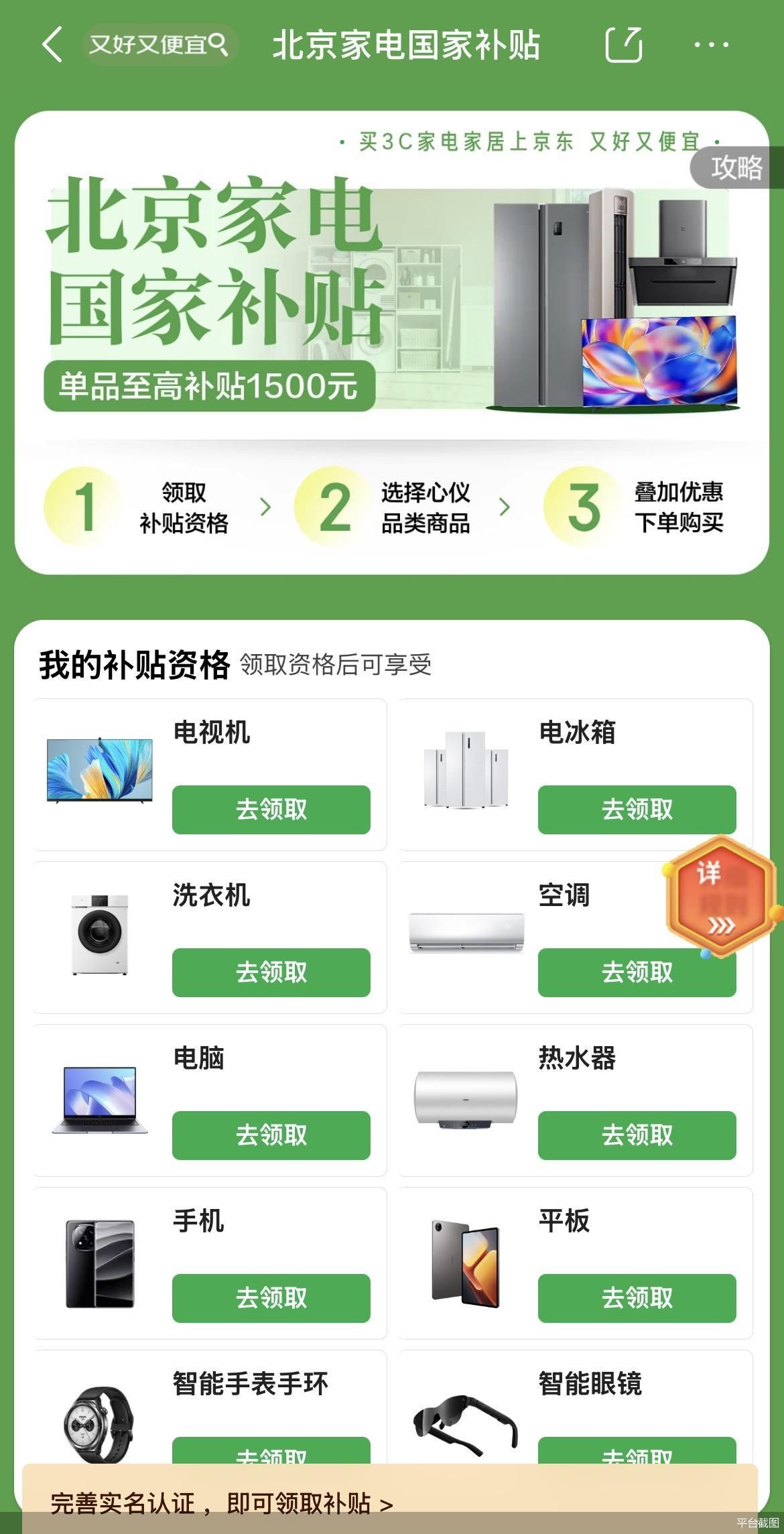
2026年"国补"上线,激发新一轮消费热。1月4日,北京商报记者从多家电商平台获悉,受元旦假期和"国补"政策红利叠加影响,平台的3C家电如手机、冰 箱、洗衣机等品类在元旦期间热销,部分电商北京线下门店客流环比增长超一倍。与此同时,为了抢占流量,即时零售平台也在跨年夜、年货节等节点发放 优惠券包刺激消费。 当前,多省市"国补"已上线京东、淘天、苏宁等电商平台。以北京为例,2026年1月1日起,北京接续实施家电、数码等领域消费品以旧换新补贴。 据了解,按照全国统一的品类和标准,北京市对在京个人消费者购买一级能效或水效标准的冰箱、洗衣机、电视、空调、热水器、电脑6类家电产品,以及 单件销售价格不超过6000元的手机、平板、智能手表(手环)、智能眼镜4类数码和智能产品给予补贴。 补贴领取步骤方面,消费者可通过京通小程序完成实名认证后,进入"家电、数码以旧换新专区"领取线上或线下补贴资格,并前往政策参与企业线上商城或 线下门店购买政策补贴范围内商品。 1月1日零点,"国补"在京东上线后,北京"国补"资格当即秒空,很多一早蹲守预约的消费者也没有抢到国补资格,只能在"国家补贴预约提醒"页面提交"心 愿清单"。有消费者留言希 ...
油价短期或有支撑,关注美委局势升级和OPEC+增产态度
Ping An Securities· 2026-01-04 09:39
石油石化 2026 年 1 月 4 日 石油石化周报 油价短期或有支撑,关注美委局势升级和 OPEC+增产态度 强于大市(维持) 行情走势图 -30% -20% -10% 0% 10% 20% 30% 40% 50% 24-01 24-03 24-05 24-07 24-09 24-11 25-01 25-03 25-05 25-07 25-09 25-11 沪深300 石油石化 基础化工 证券分析师 核心观点: 行 业 报 告 行 业 报 告 行 业 深 度 报 行 业 深 度 报 行 业 周 报 证 券 研 究 报 告 告 告 陈潇榕 投资咨询资格编号 S1060523110001 chenxiaorong186@pingan.com.cn 马书蕾 投资咨询资格编号 S1060524070002 mashulei362@pingan.com.cn 石油石化:美委地缘局势升级,叠加市场预期 OPEC+将维持暂停增 产立场,或对油价形成一定支撑。据 ifind 数据,2025 年 12 月 26 日 -2026 年 1 月 2 日,WTI 原油期货收盘价上涨 0.62%,布伦特油期货 价保持不变。地缘政治方面 ...
范围扩大了!2026年,国补大变局
Jin Tou Wang· 2026-01-04 09:31
Group 1 - The core viewpoint of the article is that the national subsidy policy for 2026 has undergone significant changes, particularly in the automotive and home appliance sectors, shifting from broad subsidies to more targeted support [1][4][5]. - The automotive subsidy structure has changed from a gradient fixed subsidy in 2025 to a proportional subsidy in 2026, with new energy vehicles receiving 12% of the purchase price as a subsidy (up to 20,000 yuan) and fuel vehicles receiving 10% (up to 10,000 yuan) [3][4]. - For vehicle trade-ins, the subsidy for new energy vehicles is 8% (up to 15,000 yuan) and for fuel vehicles is 6% (up to 13,000 yuan), indicating that only higher-priced vehicles will match or exceed last year's subsidy levels [4][5]. Group 2 - The home appliance subsidy has been significantly reduced, now covering only six types of products compared to twelve last year, with stricter eligibility criteria requiring products to be of at least first-level energy efficiency [4][5]. - Digital products maintain their subsidy levels at 15% of the purchase price, with a maximum of 500 yuan, and new categories like smart glasses have been added [5]. - The overall subsidy approach has shifted from a broad distribution model to a more precise targeting strategy, focusing on public infrastructure and essential consumer goods [5]. Group 3 - The 2026 subsidy policy will be implemented uniformly across the country, eliminating regional disparities in subsidy standards for vehicle and appliance trade-ins [7]. - Measures have been introduced to address issues of "funding accumulation" and "delayed payments," with penalties for regions that fail to distribute subsidies promptly [8][9]. - A combination of manual review and technological oversight will be employed to ensure that subsidy funds reach consumers and businesses effectively, with strict monitoring of the entire process [11][12].