反内卷政策

Search documents
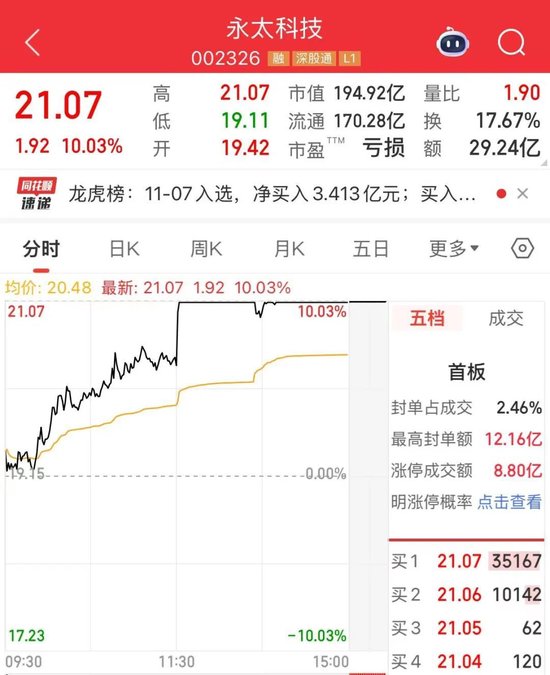
1分33秒!翻倍牛股,直线涨停
Zhong Guo Zheng Quan Bao· 2025-11-07 08:48
Core Viewpoint - The recent surge in prices across various chemical sectors, including organic silicon and fluorine chemicals, is a prominent theme in the market, driven by favorable supply and demand dynamics [1][6]. Group 1: Chemical Industry Performance - The basic chemical sector achieved a revenue growth of 2.6% year-on-year and a net profit growth of 9.4% in the first three quarters, indicating overall improvement in profitability [1]. - Factors such as improved supply expectations due to "anti-involution" policies, historically low prices, and low inventory levels are contributing to a positive long-term outlook for the chemical sector [1]. Group 2: Lithium Battery Sector - The lithium battery sector experienced significant gains, particularly in upstream materials, with stocks like Yongtai Technology hitting the daily limit and achieving a year-to-date price increase of 135.68% [1][4]. - The price of lithium hexafluorophosphate reached 103,500 yuan per ton as of October 30, marking a 72.5% increase from 60,000 yuan per ton on September 30, indicating tight supply and potential for further price increases [5][6]. Group 3: Solar Energy Materials - The organic silicon sector saw a collective rise, with companies like Dongyue Silicon Material reaching the daily limit, reflecting strong market performance [6][7]. - The photovoltaic industry chain's four main materials (silicon material, silicon wafers, battery cells, and modules) experienced an average price increase of 35% in Q3, the largest quarterly increase in three years, driven by recovery in pricing under "anti-involution" policies [8].


长城基金固收投资团队旗下基金三季报观点速览
Xin Lang Ji Jin· 2025-11-07 07:46
Core Insights - The recent quarterly reports from Changcheng Fund for 2025 indicate a shift in monetary policy with the Federal Reserve's interest rate cut and a focus on employment data, suggesting a potential easing cycle ahead [1][2] - Domestic economic conditions are stabilizing, with a focus on promoting a unified national market and addressing low-price competition, which has led to a rebound in the stock market [1][3] - The bond market is experiencing upward pressure on yields, influenced by strong performance in equity markets and changes in fund fee regulations [2][4] Group 1: Economic Overview - The Federal Reserve cut interest rates by 25 basis points in September, with expectations for at least two more cuts by year-end, indicating a completed policy shift [1][2] - Domestic employment remains stable, with core CPI showing a slight increase over four months, while the focus is on enhancing consumer demand and implementing anti-"involution" policies [1][2] Group 2: Market Performance - The stock market has seen a rally due to anti-"involution" policies, with significant gains in equity and commodity markets, leading to a rise in risk appetite among institutions [2][3] - The bond market has shown a steepening yield curve, with long-term yields rising while short-term rates remain low, reflecting a complex interaction between equity and bond markets [3][4] Group 3: Fund Manager Insights - Fund managers from Changcheng Fund highlight that the bond market is under pressure from rising yields, driven by improved risk sentiment and regulatory changes affecting fund management [2][4] - The performance of credit bonds has been mixed, with long-term credit spreads widening, while short-duration credit bonds have shown independent positive returns [3][4]
日度策略参考-20251107
Guo Mao Qi Huo· 2025-11-07 06:35
Report Industry Investment Rating No relevant content provided. Core Viewpoints of the Report - The current macro - level is in a relatively vacuum period, A - shares lack a clear upward main line, market trading volume remains low, and the stock index continues to fluctuate, accumulating momentum for the next round of upward movement. Meanwhile, with policy support and abundant macro - liquidity, there is still strong support below the stock index [1]. Summary by Related Catalogs Macro Finance - **Treasury Bonds**: Asset shortage and weak economy are beneficial to bond futures, but the central bank has recently warned of interest - rate risks, suppressing the upward space, showing an oscillating trend [1]. - **Copper**: The tight pattern of US dollar liquidity has eased, market risk appetite has recovered, and copper prices have stopped falling [1]. - **Aluminum**: Recently, the industrial - side driving force is limited, and the macro - level benefits have been digested, so aluminum prices are oscillating [1]. - **Alumina**: With still a small profit in production, domestic alumina production capacity is continuously released, and both production and inventory are increasing, putting pressure on the spot price. Recently, attention should be paid to the cost support [1]. - **Zinc**: The US government shutdown has reached the longest historical record, and market risk - aversion sentiment has increased. The LME zinc inventory has been continuously decreasing, and the short - squeeze movement has driven zinc prices higher. However, considering the domestic oversupply, caution is needed when chasing high prices [1]. Non - ferrous Metals - **Nickel**: The better - than - expected US ADP data has alleviated concerns about the US economic recession, but the expectation of the Fed's interest - rate cut has been suppressed, and market risk appetite has fluctuated. Indonesia has recently restricted the approval of nickel - related smelting projects again, but the approved projects are not affected. In the fourth quarter, attention should be paid to the approval of nickel - ore quotas in 2026. Nickel prices may oscillate in the short term, and high inventory pressure should be watched out for. It is recommended to trade within a short - term range, and the long - term surplus pattern of primary nickel will continue [1]. - **Stainless Steel**: The better - than - expected US ADP data has alleviated concerns about the US economic recession, but the expectation of the Fed's interest - rate cut has been suppressed, and market risk appetite has fluctuated. Indonesia has restricted the approval of nickel - related smelting projects again, but the approved projects are not affected. In the fourth quarter, attention should be paid to the progress of the approval of Indonesian nickel - ore quotas, and the premium at the ore end is currently stable. The price of raw - material ferronickel has weakened slightly, the social inventory of stainless steel has decreased slightly, and the steel mills' production plan for October is stable. Macro - sentiment is fluctuating, steel mills have recently lifted price limits, and stainless - steel futures are oscillating at the bottom. It is recommended to trade short - term and look for opportunities to sell on rallies [1]. - **Tin**: Recently, the positive macro - sentiment has been digested. Considering that the raw - material end of tin has not recovered and the new - quality demand is expected to be good, it is still recommended to pay attention to the opportunity of going long on dips in the long - term [1]. Precious Metals and New Energy - **Precious Metals (Gold and Silver)**: Judges of the high - court generally question the legitimacy of tariffs, increasing market uncertainty and supporting precious - metal prices. However, the resilience of US economic data has disrupted the interest - rate cut expectation. Precious metals are expected to oscillate within a range in the short term [1]. - **Industrial Silicon**: The production capacity in the northwest is continuously resuming, the start - up in the southwest is weaker than in previous years, and the impact of the dry season is weakened [1]. - **Polysilicon**: In the long - term, there is an expectation of production - capacity reduction. In the fourth quarter, the terminal installation will increase marginally. The anti - involution policy has not been implemented for a long time, and market sentiment has faded [1]. - **Lithium Carbonate**: The traditional peak season for new - energy vehicles is approaching, the energy - storage demand is strong, but the hedging pressure is large [1]. Ferrous Metals - **Rebar**: There are concerns about the potential weakening of industrial demand in the off - season. After the macro - sentiment is realized, attention should be paid to the upward pressure. It is advisable to participate in the out - of - the - money accumulative put option strategy [1]. - **Hot - Rolled Coil**: The off - season effect of the industry is not obvious, but the industrial structure is still loose. Similarly, attention should be paid to the upward pressure on prices after the macro - sentiment is realized [1]. - **Iron Ore**: Near - month production is restricted, but the commodity sentiment is good, and there is still an upward opportunity for far - month contracts [1]. - **Sulfur**: The direct demand is good, and there is cost support, but the supply is high, inventory is accumulating, and the sector is under pressure, with limited price rebound space [1]. - **Coke and Coking Coal**: Coking coal is struggling near the previous high, repeatedly testing the support. The high point of the coke futures price has included the expectation of five rounds of price increases, but the actual three - round price increase has been delayed, and the game is intense. Based on the tight supply, coke and coking coal are relatively strong, but considering the weakening of steel prices and the potential weakening of steel demand in November, the futures prices of coke and coking coal are likely to return to the oscillating range after a false breakout. In the short - term, it is advisable to wait and see, and in the long - term, it is still advisable to go long at low prices. Industrial customers can consider selling hedging [1]. Agricultural Products - **Palm Oil**: In the short term, palm oil still faces the dual pressures of seasonal production increase and weak exports. However, starting from November, Malaysia enters the traditional production - reduction cycle. If export data improve significantly, it may trigger a staged rebound [1]. - **Soybean Oil**: According to the China - US negotiation agreement, China will purchase 12 million tons of US soybeans in the next two months, which may bring a loose expectation for soybean oil in the fourth quarter, and the rebound momentum is insufficient. The actual impact needs to be observed [1]. - **Rapeseed Oil**: The meeting between Chinese and Canadian leaders has brought the expectation of Sino - Canadian relaxation, and the bumper harvest of Canadian rapeseed has put pressure on the futures price [1]. - **Cotton**: Although the production capacity in Xinjiang is expanding, the production capacity in the inland may decrease marginally. At the same time, due to the thinning of spinning profits in Xinjiang, the operating rate may also be affected. The contradiction between the expansion of Xinjiang's production capacity and the reduction of spinning profits makes the cotton demand in the new year highly uncertain. The current futures price has fully priced in the selling pressure of new crops, and the downward space is limited, but under the background of a record - high production of new crops, the basis and futures price may continue to be under pressure [1]. - **Sugar**: Typhoons before and after the National Day have had an adverse impact on the sugar - cane harvest and production in South China. There is a seasonal upward impetus for sugar prices in the short term. In the medium - term, considering the good growth of sugar cane this year, the rebound space after the new - sugar listing is expected to be limited [1]. - **Soybeans and Soybean Meal**: The domestic soybean purchase and crushing profit is poor, and the domestic futures price is undervalued. With the expectation of China's purchase of US soybeans, the import cost of US soybeans is expected to rise, and the domestic futures price is expected to rebound in the short term to repair the crushing profit. However, the current loose supply of domestic soybean - meal spot and the expected loose global soybean supply in the long - term limit the rebound height [1]. - **Paper Pulp**: The current trading logic of paper pulp is related to the trading of old warehouse receipts for the November contract. With weak downstream demand, the futures price is under great pressure. It is recommended to conduct a reverse spread between the November and January contracts [1]. - **Log**: The fundamentals of logs have declined, but the spot price is firm. After a sharp decline in the futures price, the risk - return ratio of short - selling is low. It is recommended to wait and see [1]. - **Live Pigs**: In the past half - month, the spot price has risen alternately in the north and south due to secondary fattening, frozen - product storage, and reluctance to sell, which has postponed the production capacity. There is still pressure on the November slaughter. In the short term, the futures price is at the same level as the spot price, and the futures price will follow the spot price to stabilize and then weaken [1]. Energy and Chemicals - **Crude Oil**: OPEC+ plans to continue a small - scale production increase in December, the short - term geopolitical speculation has cooled down, and the suspension of some China - US trade - tariff policies has eased market sentiment [1]. - **Fuel Oil**: Similar to crude oil, the short - term supply - demand contradiction is not prominent, and it follows the trend of crude oil. The demand for the 14th Five - Year Plan construction rush is likely to be falsified, and the supply of Venezuelan crude oil is sufficient. The profit of asphalt is high [1]. - **Natural Rubber**: There is strong support from raw - material costs, the mid - stream inventory is continuously decreasing, and the commodity - market atmosphere is positive [1]. - **BR Rubber**: The decline of crude - oil prices has reduced the cost support of butadiene, and the supply of synthetic rubber is loose. High - production and high - inventory have not suppressed the price, and the mainstream supply price has been continuously reduced [1]. - **PTA**: Gasoline profit and low benzene price support PX. The gasoline cracking price has risen above $15, prompting refineries to increase gasoline production and reduce the feed of aromatic - hydrocarbon units. Overseas device failures and the decline of the operating load of some domestic reforming units, as well as the rotation inspection of large domestic PTA devices, have led to a decline in domestic PTA production [1]. - **Ethylene Glycol**: The decline of crude - oil prices has led to a decline in ethylene - glycol prices, while the rise of coal prices has slightly strengthened the cost support of domestic ethylene glycol. The "Golden September and Silver October" of the polyester industry is coming to an end, and the domestic demand has not significantly declined [1]. - **Short - Fiber**: Gasoline profit and low benzene price support PX. The rebound of PTA prices has strengthened the basis of short - fiber. Short - fiber prices continue to fluctuate closely with costs [1]. - **Styrene**: The Asian benzene price is still weak, the operating rates of STDP and reforming units have declined, the arbitrage window from Northeast Asia to the US is still closed, the profit of domestic styrene has decreased, the number of styrene - device overhauls has gradually increased, and crude - oil prices have continued to fall [1]. - **Urea**: The export sentiment has eased slightly, and the limited domestic demand restricts the upward space. There is support from anti - involution and cost - end factors [1]. - **PE**: Under high - supply, the inventory pressure is large, the intensity of overhauls has weakened, and the downstream demand is slowly increasing, but the peak season is not prosperous [1]. - **PP**: The support from overhauls is limited, and the new - device production has increased the supply pressure. The downstream improvement is less than expected, and the futures price has returned to the fundamentals, showing a weak - oscillating trend [1]. - **PVC**: The overhauls have decreased compared with the previous period, and the new production capacity has been released, increasing the supply pressure. The rise of coal prices has strengthened the cost support of PVC [1]. - **Caustic Soda**: Many alumina projects in Guangxi are planned to be put into production, the subsequent concentration of overhauls will decrease, the high - concentration caustic soda is at a negative premium, the absolute price is low, and the near - month warehouse receipts are limited, so there is a risk of short - squeeze [1]. - **LPG**: The international oil - gas fundamentals are continuously loose, the CP/FEI prices have weakened, the valuation of the domestic LPG futures price has been repaired, and the domestic spot fundamentals are stable due to short - term cooling and chemical rigid demand [1]. Others - **Container Shipping (European Route)**: The positive macro - sentiment has been gradually digested, the expectation of price increases in the peak season has been priced in advance, and the shipping capacity supply in November is relatively loose [1].
大越期货玻璃早报-20251107
Da Yue Qi Huo· 2025-11-07 03:12
Report Summary 1. Investment Rating No investment rating for the industry is provided in the report. 2. Core View The supply of glass has recently shown an increase after reaching a relatively low level, with more disturbances on the supply - side. However, the terminal demand is still weak. Therefore, it is expected that the glass market will mainly move in a sideways pattern in the short - term [3][7]. 3. Section Summaries Glass Futures Market - The closing price of the main glass futures contract rose from 1097 yuan/ton to 1101 yuan/ton, a 0.36% increase. The cash price of Shahe Safety large - size glass remained unchanged at 1048 yuan/ton. The main basis decreased from - 49 yuan/ton to - 53 yuan/ton, a change of 8.16% [8]. Glass Spot Market - The market price of 5mm white glass large - size boards in the spot benchmark area of Hebei Shahe was 1048 yuan/ton, remaining the same as the previous day [13]. Fundamental Analysis - Cost Side - No specific content about the cost side is provided in the report. Fundamental Analysis - Supply - The number of operating national float glass production lines is 226, with an operating rate of 76.35%, at a historically low level for the same period. The daily melting volume of national float glass is 161,300 tons, with production capacity at the lowest level in the same period of history but showing signs of recovery [24][26]. Fundamental Analysis - Demand - In August 2025, the apparent consumption of float glass was 4.8602 million tons. The real - estate terminal demand is weak, and the number of orders from glass deep - processing enterprises is at a historical low for the same period. The capital collection in the deep - processing industry is not optimistic, and traders and processors are cautious, mainly focusing on consuming the original glass inventory [30][6]. Fundamental Analysis - Inventory - The inventory of national float glass enterprises is 63.136 million weight boxes, a 4.03% decrease from the previous week, and the inventory is above the five - year average [45]. Fundamental Analysis - Supply - Demand Balance Sheet - The report provides the annual supply - demand balance sheet of float glass from 2017 to 2024E, including data on production, apparent supply, consumption, production growth rate, consumption growth rate, and net import ratio. For example, in 2024E, the production is expected to be 55.1 million tons, the apparent supply is 54.61 million tons, and the consumption is 53.1 million tons [46]. 4. Influencing Factors Positive Factors - Under the influence of the "anti - involution" policy, there is an expectation of capacity clearance in the float glass industry. The "coal - to - gas" conversion of some production lines in the Shahe area has increased supply - side disturbances [5]. Negative Factors - The real - estate terminal demand remains weak, and the number of orders from glass deep - processing enterprises is at a historical low for the same period. The capital collection in the deep - processing industry is not optimistic, and traders and processors are cautious, mainly focusing on consuming the original glass inventory [6].
格林大华期货早盘提示:瓶片-20251107
Ge Lin Qi Huo· 2025-11-07 02:27
Report Summary 1. Report Industry Investment Rating - Not provided 2. Core View - The short - term price of bottle chips is expected to be volatile and slightly stronger, with the main contract reference range of 5,650 - 5,800 yuan/ton. The trading strategy is to wait and see or go short - term long on dips [1] 3. Summary by Relevant Catalogs 3.1 Market Review - On Thursday night, the PR2601 contract rose 50 yuan to 5,722 yuan/ton. The price of East China water - grade bottle chips rose 40 yuan to 5,730 yuan/ton, and the price of South China bottle chips rose 20 yuan to 5,750 yuan/ton. Long - position holdings increased by 1,738 lots to 58,500 lots, and short - position holdings increased by 1,999 lots to 56,700 lots [1] 3.2 Important Information - Supply and cost - profit: Domestic polyester bottle chip production was 341,900 tons, a week - on - week increase of 6,800 tons. The weekly average capacity utilization rate was 74.8%, a week - on - week increase of 1.49%. The production cost was 5,234 yuan/ton, a week - on - week decrease of 33 yuan/ton. The weekly production gross profit was - 119 yuan/ton, a week - on - week increase of 15 yuan/ton [1] - In September 2025, China's polyester bottle chip exports were 467,700 tons, a decrease of 53,000 tons from the previous month. The cumulative export volume in 2025 was 4.8091 million tons [1] - International oil prices fell due to the increase in US commercial crude oil inventories and market concerns about oversupply. NYMEX crude oil futures December contract fell 0.96 dollars/barrel to 59.60 dollars/barrel, a month - on - month decrease of 1.59%. ICE Brent crude oil futures January contract fell 0.92 dollars/barrel to 63.52 dollars/barrel, a month - on - month decrease of 1.43%. China's INE crude oil futures 2512 contract fell 3.1 yuan to 462.1 yuan/ton, and fell 4.4 yuan to 457.7 yuan/ton at night [1] - The Federal Reserve cut the benchmark interest rate by 25 basis points to 3.75% - 4.00%, the second consecutive meeting to cut interest rates, in line with market expectations and the fifth rate cut since September 2024 [1] 3.3 Market Logic - This week, the supply of bottle chips changed little, downstream factories mainly replenished stocks rigidly, and the market was cautious about future demand expectations. The export volume of bottle chips in September decreased month - on - month. Affected by the news of the anti - involution meeting in the chemical fiber and polyester industry, the price soared. The market is waiting for the details of the anti - involution policy to be finalized. The fundamentals may limit the upside space [1] 3.4 Trading Strategy - The trading strategy is to wait and see or go short - term long on dips [1]
“反内卷”政策重塑行业格局,石化ETF(159731)份额规模创新高
Sou Hu Cai Jing· 2025-11-07 02:12
Group 1 - The core viewpoint of the article highlights the positive performance of the petrochemical sector, with the Petrochemical ETF (159731) rising by 1.11% and reaching a new high in both shares and scale [1] - The signing of significant procurement contracts at the China International Import Expo, with China Petroleum and Chemical Corporation (Sinopec) signing agreements worth over $40.9 billion with 34 partners from 17 countries, indicates strong demand in the energy sector [1] - The report from Kaiyuan Securities suggests that capital expenditures for major chemical companies are expected to decline year-on-year before the third quarter of 2025, while the "anti-involution" policy is improving the supply-demand dynamics in the chemical industry, leading to enhanced profitability and potential valuation increases [1] Group 2 - The Petrochemical ETF (159731) closely tracks the CSI Petrochemical Industry Index, with the basic chemical industry accounting for 61.93% and the oil and petrochemical industry for 30.84% of the index [1] - The release of the "Stabilizing Growth Work Plan" is expected to support the industry scale over the next two years, highlighting the long-term value of the petrochemical sector under favorable policies [1]

研究所晨会观点精萃:美国劳动力市场疲软,全球风险偏好大幅降温-20251107
Dong Hai Qi Huo· 2025-11-07 02:10
Report Industry Investment Rating No relevant content provided. Core View of the Report The report analyzes the market conditions of various asset classes including stocks, bonds, commodities, and agricultural products. It points out that the short - term macro upward drive has weakened, and the market is mainly focused on domestic incremental stimulus policies and economic growth. Different asset classes are expected to have different trends, with most showing short - term oscillations and some having long - term trends influenced by supply - demand fundamentals and policy factors [2][3]. Summary by Directory Macro Finance - The US labor market is weak, with the number of Challenger job cuts in October reaching a 20 - year high. The global risk appetite has significantly cooled. In China, the manufacturing prosperity declined in October, and economic growth slowed down, but policy stimulus expectations have increased after the Fourth Plenary Session of the CPC Central Committee. The short - term macro upward drive has weakened, and the market should focus on domestic economic growth and policy implementation. For assets, stocks are expected to oscillate in the short term, and it is advisable to be cautiously bullish; bonds are expected to oscillate and rebound, and it is advisable to be cautiously bullish; most commodity sectors are expected to oscillate, and it is advisable to be cautiously watchful [2]. Stock Index - Driven by sectors such as phosphoric chemical, aluminum, and semiconductors, the domestic stock market rose significantly. Fundamentally, China's manufacturing prosperity declined in October, and economic growth slowed down, but policy stimulus expectations increased. The short - term macro upward drive has weakened, and it is advisable to be cautiously bullish in the short term [3]. Precious Metals - The precious metals market rose on Thursday night. The main contracts of Shanghai gold and silver increased. It was boosted by the weakening US dollar and rising safe - haven demand. The short - term trend is oscillatory, and the medium - to - long - term upward pattern remains unchanged. It is advisable to watch in the short term and buy on dips in the medium - to - long - term [3]. Black Metals - **Steel**: The spot and futures prices of domestic steel rebounded slightly on Thursday. The market's macro sentiment was repaired, but the fundamentals were still weak. The demand for steel has basically peaked this week, and the inventory decline has slowed down significantly. The supply contraction may further intensify. The short - term steel market is expected to be oscillatory and weak [4]. - **Iron Ore**: The spot and futures prices of iron ore strengthened slightly on Thursday. Although steel mills are still expected to cut production, the molten iron output increased slightly this week. The supply pressure is still large, and the short - term trend is expected to be range - bound [6]. - **Silicon Manganese/Silicon Iron**: The spot prices of silicon iron and silicon manganese were flat on Thursday, and the futures prices continued to rebound slightly. The demand for ferroalloys decreased as the output of five major steel products declined. The supply of silicon manganese was relatively stable, and the supply of silicon iron was also in a certain state. The futures prices of silicon iron and silicon manganese are expected to continue to oscillate within a range [7]. - **Soda Ash**: The main contract of soda ash oscillated within a range on Thursday. The supply increased this week, and there are capacity expansion plans in the fourth quarter. The supply is in a loose pattern, and the pressure remains. It is advisable to take a bearish view in the medium - to - long - term [8]. - **Glass**: The main contract of glass oscillated on Thursday. Affected by news from Shahe, the price was supported. The supply was stable, the demand was weak year - on - year, and the inventory was relatively high. It is expected to be strong in the short term due to previous large declines and the impact of Shahe, and attention should be paid to the demand during the year - end completion peak [8]. Non - ferrous Metals and New Energy - **Copper**: The number of Challenger job cuts in the US in October increased significantly. The US copper inventory continued to rise, and the domestic refined copper de - stocking was less than expected. The suspension of Indonesia's second - largest copper mine has intensified the global copper shortage, and the short - term trend is expected to be high - level oscillatory [9][10]. - **Aluminum**: The Shanghai aluminum price rose significantly on Thursday. The European aluminum premium rebounded. The domestic de - stocking was not smooth, and the supply and imports were at a high level, while the demand was weakening marginally. The short - term price is expected to oscillate, and it is advisable to try shorting if the price rises above 21,800 [10]. - **Tin**: The supply of tin ore is expected to increase, and the demand is still weak. The tin price is at a historical high, and the high price has begun to suppress physical demand. The short - to - medium - term price is expected to oscillate at a high level [11]. - **Lithium Carbonate**: The main contract of lithium carbonate rose on Thursday. The Jiangxi Natural Resources Department released a mining right transfer income assessment report, which may promote the resumption of production at Jiaxiaowo. It is advisable to hold a light position and wait for the "emotional bottom" [12]. - **Industrial Silicon**: The main contract of industrial silicon rose on Thursday. The demand was relatively stable, and the social inventory increased slightly at a high level. The market is expected to oscillate within a range, and attention should be paid to the cash - flow cost support of large enterprises [12]. - **Polysilicon**: The main contract of polysilicon declined slightly on Thursday. There is a stalemate between strong policy expectations and weak reality. The spot price is supported by policy expectations, but the terminal demand is weak. It is expected to oscillate within a high - level range, and range - bound operations are advisable [13][14]. Energy and Chemicals - **Crude Oil**: The Fed's hawkish stance and employment data have increased the uncertainty of a December interest rate cut. The government shutdown will continue, and the oil price is under medium - to - long - term pressure [15]. - **Asphalt**: The price of asphalt continued to break through the previous low and has not bottomed out yet. The basis is low, and the inventory is accumulating. The supply pressure is increasing, and attention should be paid to the cost fluctuations of crude oil [15]. - **PX**: The price of PX fluctuated due to news of polyester production cuts. The demand is supported by high PTA开工, and the supply is tight. The short - term price is mainly driven by crude oil cost fluctuations [16]. - **PTA**: The price of PTA rose due to production cut news but fell back at night. The market doubts the authenticity of the news. The downstream开工 has declined, and the supply is high. The price is under pressure in the short term [16]. - **Ethylene Glycol**: The price of ethylene glycol rose with the polyester market but is still under pressure. The port inventory is accumulating, and the demand is weak. It is advisable to be cautious before the price reaches a new low [17]. - **Short - fiber**: The price of short - fiber rose slightly with the polyester sector but is under pressure later. The terminal orders are declining seasonally, and the inventory is accumulating. It is advisable to short on rallies in the medium - term [17]. - **Methanol**: The port spot price of methanol rebounded, and the basis strengthened slightly. The port inventory is at a high level but is showing a slight de - stocking trend. The inland inventory is accumulating, and the price is weakening. The short - term price may decline, but the downward space is limited, and it is expected to oscillate later [18]. - **PP**: The market price of PP moved slightly downward. The supply growth rate is higher than the demand recovery rate, but the demand has shown marginal improvement. The crude oil price rebound supports the cost. The price is expected to decline inertia in the short term [19]. - **LLDPE**: The price of LLDPE declined. The supply pressure is increasing, and the demand is weakening after the peak season. The crude oil price provides limited support. The price is expected to continue to decline [19]. - **Urea**: The urea market is stable, with individual enterprises raising prices slightly. The supply is expected to increase, and the demand is mixed. The export price is expected to oscillate at a low level [20]. Agricultural Products - **US Soybeans**: The CBOT soybean price fell overnight. The market is optimistic about the repair of Sino - US soybean trade relations. The USDA will release a report on November 15. If the yield per unit is further lowered, the cost - repair logic of US soybeans will be enhanced [21]. - **Soybean Meal/Rapeseed Meal**: The pressure of concentrated soybean arrivals in China is increasing, and the supply of soybean meal is sufficient. With the repair of Sino - US agricultural trade relations, the soybean meal inventory may increase, which will limit the upside potential [22]. - **Palm Oil**: The price of Malaysian palm oil fell. The over - expected production increase since October has put pressure on the price. India's palm oil imports decreased in October, and the production in Malaysia continued to increase in November [22]. - **Soybean Oil/Rapeseed Oil**: The price of soybean oil adjusted weakly. The supply - demand situation is still unfavorable, but it is relatively resistant to decline. The rapeseed oil inventory is high, but the rapeseed inventory is low, and the basis is strong due to trade concerns [23]. - **Corn**: The price of corn in the northern port has limited upward momentum, and the supply - demand situation in North China is balanced. The supply exceeds demand, but the low downstream inventory and strong wheat price provide some support [23]. - **Pigs**: The national pig price has been falling since November. The supply pressure remains, and the price is unlikely to rebound significantly before the winter solstice pickling peak in December [24].
多晶硅行业或迎大整合,光伏50ETF(159864)大涨2.3%
Mei Ri Jing Ji Xin Wen· 2025-11-07 02:10
Group 1 - The polysilicon industry is expected to undergo significant consolidation, with a "joint platform" for restructuring being planned, aiming to establish a fund of approximately 70 billion yuan [1] - The acquisition strategy will involve leveraging around 10 billion yuan to facilitate a 70 billion yuan "debt-based" acquisition [1] Group 2 - The photovoltaic 50 ETF (159864) surged by 2.3% amid ongoing anti-involution policies [2] - The Ministry of Industry and Information Technology has issued a notice for energy-saving inspections for 41 polysilicon companies as part of the 2025 annual special energy-saving inspection tasks [2] - Leading domestic photovoltaic glass companies have collectively announced a 30% production cut starting from July, indicating a clear policy direction to accelerate capacity elimination in the photovoltaic sector [2] Group 3 - The photovoltaic 50 ETF (159864) tracks the CSI Photovoltaic Industry Index, encompassing the entire photovoltaic supply chain, including silicon materials, wafers, components, equipment, and power stations [3]
情绪回暖,上证重回4000点
Tebon Securities· 2025-11-06 12:57
Market Overview - The A-share market experienced a strong rebound, with the Shanghai Composite Index returning to the 4000-point mark, closing at 4007.76 points, up 0.97% [6] - The ChiNext Index rose by 1.84% to 3224.62 points, while the STAR 50 Index surged by 3.34% to 1436.86 points, leading the major indices [6] - The total market turnover significantly increased to approximately 2.1 trillion, a 9.6% rise compared to the previous day, indicating a shift in market sentiment from cautious to positive [6][7] Sector Performance - The leading sectors driving the market rebound exhibited a "technology + cyclical" dual-driven characteristic, with indices such as phosphorus chemical (+6.36%), optical module (+5.99%), and aluminum industry (+5.06%) showing strong gains [7] - The aluminum industry index reached a new high for the year, with companies like China Aluminum and Nanshan Aluminum hitting the daily limit, while the price of aluminum closed at 21,630 RMB/ton, marking a 1.31% increase [7] - In the technology sector, companies like Cambrian Intelligence saw nearly a 10% increase, suggesting ongoing upward momentum in the AI-driven technology sector [7] Bond Market - The bond market showed a weak adjustment, with the 30-year contract declining to 116.11 RMB, down 0.28%, while the 10-year contract fell by 0.09% to 108.535 RMB [12] - Despite the weak adjustment, the bond market's decline was limited, indicating that institutions still have significant allocation needs as the year-end approaches [12] Commodity Market - The domestic commodity futures market displayed a mixed pattern, with the Nanhua Commodity Index rising by 0.47%, driven by strong performances in the black and lithium carbonate sectors [10] - Coal prices reached new highs, with coking coal leading the gains, supported by tight supply conditions in key production areas [12] - Lithium carbonate prices rebounded to 80,500 RMB/ton, driven by high demand growth in battery production, which increased by 50% year-on-year in September [13] Investment Strategy - The report suggests maintaining a balanced allocation strategy focusing on dividends, micro-cap stocks, and industry trends, particularly in the technology sector, which is expected to perform well in the long term [14] - The bond market is anticipated to remain loose in the short term, with a focus on domestic policies and the impact of the Federal Reserve's potential rate cuts in December [14] - The report highlights the ongoing effects of anti-"involution" policies in the domestic market, with strong price performances expected in commodities like coking coal and lithium carbonate [14]
25Q3油价环比上涨,上游景气修复,中游仍显低迷,聚酯淡季承压:——石油化工2025年三季报业绩总结
Shenwan Hongyuan Securities· 2025-11-06 12:06
Investment Rating - The report maintains a positive outlook on the petrochemical industry, highlighting potential investment opportunities in specific companies within the sector [6][33][46]. Core Insights - The report indicates that the oil price has shown a slight increase in Q3 2025, with Brent crude averaging $68.2 per barrel, a 2.1% increase quarter-on-quarter but a 19.8% decrease year-on-year [6][22][29]. - The upstream oil and gas sector has seen improved performance due to rising oil prices, while the downstream refining sector is experiencing pressure from weak terminal demand [33][34]. - The report recommends focusing on quality companies in the polyester sector, such as Tongkun Co. and Wan Kai New Materials, as well as large refining companies like Hengli Petrochemical and Rongsheng Petrochemical [6][33][46]. Summary by Sections Upstream Oil and Gas Sector - In Q3 2025, the oil and gas extraction and oilfield services sector achieved total revenue of 1,579.75 billion yuan, a 4.0% decrease year-on-year but a 3.5% increase quarter-on-quarter [21][23]. - The net profit for the sector was 93.05 billion yuan, down 6.1% year-on-year but up 6.2% quarter-on-quarter, with a gross margin of 20.9% [21][23]. Downstream Refining and Chemical Sector - The refining and chemical industry reported total revenue of 1,670.2 billion yuan in Q3 2025, a 5.3% decrease year-on-year but a 3.8% increase quarter-on-quarter [33][34]. - The net profit for this sector was 59.69 billion yuan, reflecting a 5.4% increase year-on-year and a 14.8% increase quarter-on-quarter, with a gross margin of 17.8% [33][34]. Price Trends and Margins - The report notes that the price spread for major petrochemical products has shown mixed trends, with some margins expanding while others contracted [15][18][34]. - The average price spread for ethylene-ethylene was $605 per ton, an increase of $38 per ton quarter-on-quarter, while the propylene-acrylic acid spread decreased by 440 yuan per ton [15][18]. Recommendations - The report suggests that the polyester sector is tightening in supply and demand, with expectations for improvement in profitability, particularly for companies like Tongkun Co. and Wan Kai New Materials [6][33][46]. - It also highlights the potential for large refining companies to benefit from cost improvements and competitive advantages due to domestic policies and overseas refinery contractions [6][33][46].